

India ‘Fake Wedding’ Party Market Size and Forecast – 2026-2033
The India ‘Fake Wedding’ Party Market is estimated to be valued at USD 18.9 Mn in 2026 and is expected to reach USD 267.8 Mn by 2033, exhibiting a compound annual growth rate (CAGR) of 46.1% from 2026 to 2033.
Key Takeaways of the India ‘Fake Wedding’ Party Market:
- The full-scale fake wedding parties segment is projected to capture 34.7 % of the India ‘fake wedding’ party market in 2026.
- Gen Z party-goers (18–26 years) are expected to account for 37.6 % of the India ‘fake wedding’ party market in 2026.
- The budget events (₹1,500–₹3,000) segment commands an estimated 42.6 % share of the market in 2026.
Market Overview
The market trend is characterized by rising social media influence and urbanization, which are driving the demand for ‘fake wedding’ parties as a means to display lifestyle and social status. Additionally, the growing acceptance of non-traditional celebrations and digital event planning platforms is fueling the popularity of these events. The evolving cultural dynamics, combined with millennials’ and Gen Z’s preference for unique experiences over conventional ceremonies, are propelling this market forward rapidly. Moreover, the integration of music streaming services and the use of stock music for curated playlists and event highlights are further enhancing the immersive appeal of these parties.
Current Events and Its Impact
Current Events | Description and its impact |
State tourism boards push “Experiential Wedding Tourism” |
|
Noise & fireworks restrictions tightened in metros |
|
Segmental Insights
- Current Industry Events of 2026
- Market Size Estimation
- Regional Breakdown
- Competitive Landscape
- Customer Intelligence
- Segmental Analysis
- Pricing Analysis
- Key Market Drivers, Challenges & Future Trends
- Customized Insights Section
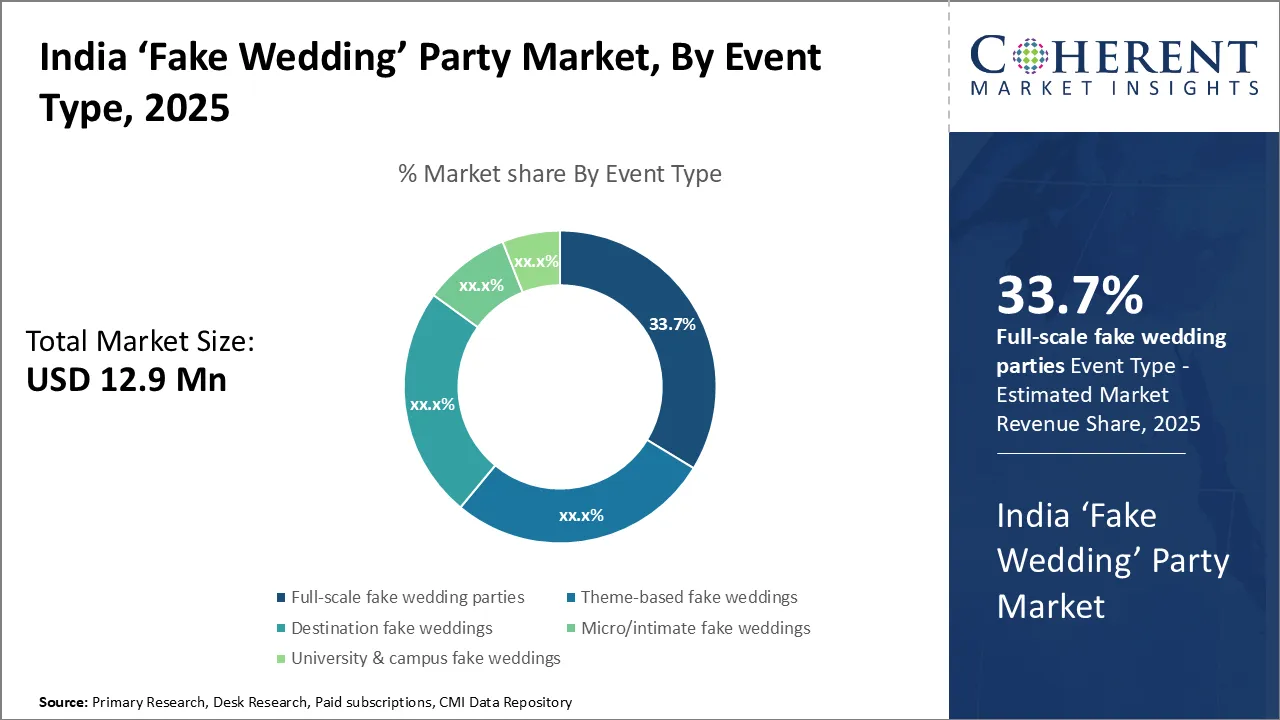
India ‘Fake Wedding’ Party Market Insights, By Event Type - Full-Scale Fake Wedding Parties Lead as they Offer Complete Experiential Immersion
Full-scale fake wedding parties segment is expected to hold 34.7% share of the India ‘fake wedding’ party market in 2026, principally due to their intricate replication of traditional wedding ceremonies and the immersive experience they provide. These full-scale events appeal widely because they capture the grandeur and cultural richness associated with Indian weddings, which are often viewed as once-in-a-lifetime social spectacles. The elaborate decorations, traditional attire, ceremonial rituals, and choreographed programs create an environment that feels authentic yet allows participants to enjoy the festivities without the associated personal commitments.
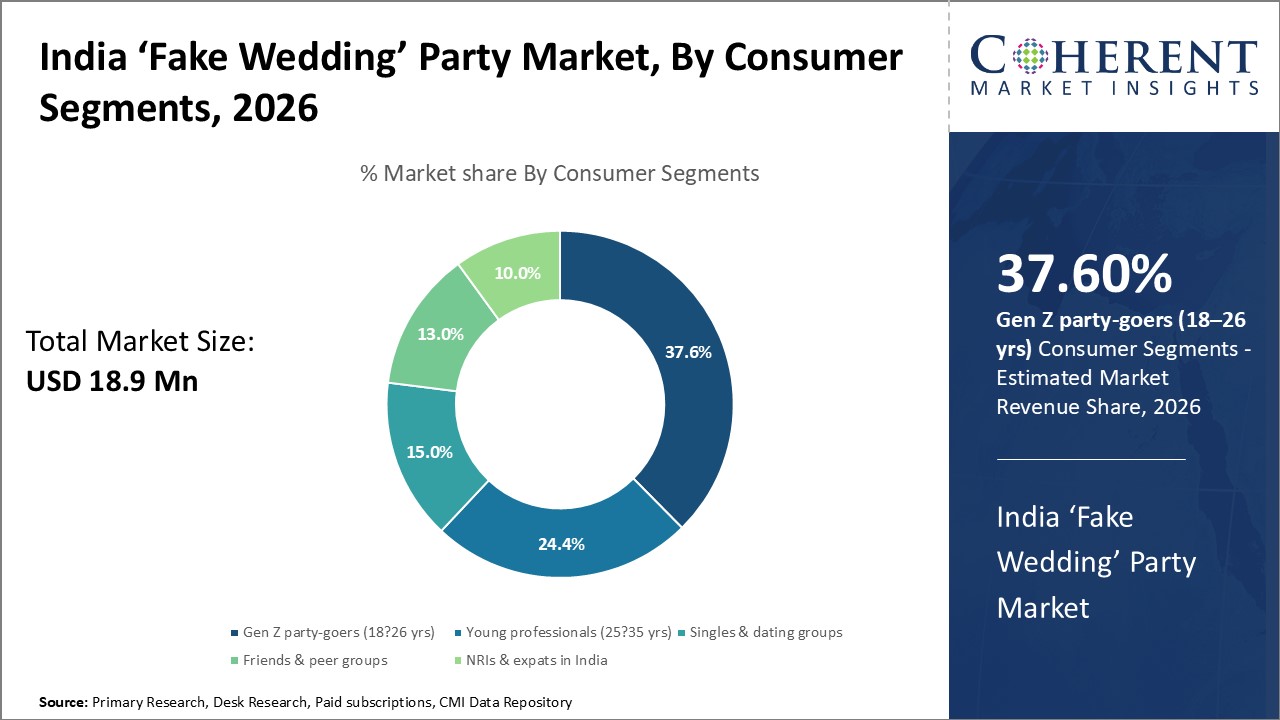
India ‘Fake Wedding’ Party Market Insights, By Consumer Segments - Gen Z party-goers (aged 18–26 years) Segment Dominates the Market Due to Desire for Unique Social Experiences
Gen Z party-goers (aged 18–26 years) segment is projected to contribute 37.6% share in the India ‘Fake Wedding’ party market in 2026, driven by their preference for immersive, unconventional, and share-worthy social experiences. This demographic, deeply influenced by digital culture and social media trends, values events that offer more than mere entertainment—they seek authenticity in novelty and a chance to express individuality within culturally familiar contexts.
Gen Z’s inclination toward experiential consumption plays a pivotal role here. Unlike traditional consumer generations who might prioritize practical purchases, Gen Z invests heavily in experiences that foster social connection, identity exploration, and memorable content creation. Fake wedding parties perfectly align with these priorities, offering an emotionally charged event format that enables attendees to step into a story, dress up, interact, and create narratives collectively.
India ‘Fake Wedding’ Party Market Insights, By Pricing Tier - Budget events (₹1,500–₹3,000) Segment Dominates as it Provides Accessible and Frequent Engagement Opportunities
Budget events (₹1,500–₹3,000) segment is expected to hold 43.6% share of the market in 2026. This dominance stems from the balance these events strike between affordability and entertainment value, making the ‘fake wedding’ experience accessible to a broader spectrum of consumers, especially students, young adults, and middle-income groups.
The affordability factor is crucial in a price-sensitive market like India, where discretionary spending on entertainment is often limited by income constraints and competing priorities. Budget fake wedding parties offer consumers a chance to partake in elaborate celebrations without a heavy financial burden. Their relatively low entry cost encourages repeat attendance and experimentation with different event formats, thus stimulating consistent demand.
Consumer Survey: India ‘Fake Wedding’ Party Market
Consumer Demographics
- Age Group: Predominantly Gen Z (18–26 years) and young millennials (27–34 years) seeking new-age social experiences.
- Income Bracket: Middle to upper-middle class, typically with discretionary income to spend on lifestyle and entertainment.
- Location: Concentrated in metro cities (Delhi NCR, Mumbai, Bengaluru), with emerging demand in Tier-2 aspirational hubs such as Pune, Jaipur, and Chandigarh.
- Lifestyle: Experience-driven, highly social media active, trend-conscious, and keen on curating a lifestyle narrative online.
Consumer Motivations
- Experience without Commitment: Enthusiastic about the fun and vibe of weddings without real obligations.
- Social Media Value: Events designed for Instagrammable aesthetics and TikTok-worthy reels.
- Community & Belonging: Often attend with friend circles or as singles to socialize and expand networks.
- Novelty Factor: Seek alternatives to routine outings such as clubs, pubs, and concerts.
- Affordability vs. Luxury:
- Budget-conscious consumers opt for ₹1,500–₹3,000 packages.
- Affluent consumers purchase premium packages ₹10,000+, including luxury décor, curated food, and exclusive access.
Behavioral Patterns
- Group Participation: Majority bookings made by friends, office colleagues, or social clubs instead of solo attendees.
- Event Frequency: Consumers attend fake weddings once in 2–3 months, treating them as special outings.
- Spending Habits: Beyond tickets, consumers spend on outfits, jewelry, makeup, and professional photography.
- Cross-Category Spending: Growth in fashion rental services, makeup artists, and content creators supporting the event ecosystem.
Digital & Social Trends
- Viral Hashtags: #ShaadiForTheVibe, #FakeShaadi, #NotGettingMarriedButStill.
- Influencer Pull: Local influencers and micro-creators amplify event visibility.
- FOMO Culture: Many join because friends or peers are posting about it.
- Dating Angle: Events act as alternative social mixers, blurring lines with dating apps.
Cultural Context
- Indian Weddings as Aspirational: Symbolize glamour, community, and status, which fake weddings replicate.
- Expats & NRIs: Indian-origin groups abroad (Dubai, Frankfurt, U.S. colleges) are hosting similar “fake shaadis.”
- Generational Shift: While older generations treat weddings as sacred, Gen Z views them as lifestyle events and content opportunities.
Market Players, Company Insights, and Competitive Intelligence
Company Insights
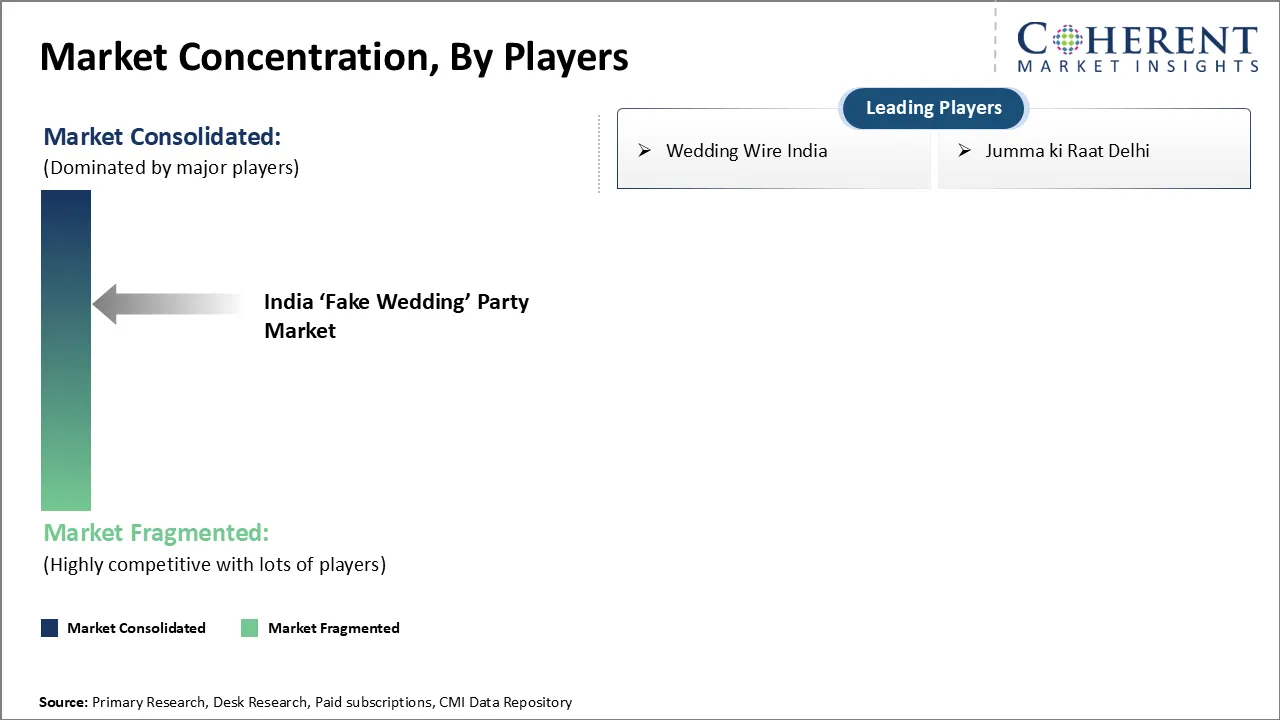
WeddingWire India (a subsidiary of The Knot Worldwide Inc.) operates as an online wedding portal offering engaged couples a one‑stop platform to plan their weddings or wedding-like events. Through its website and mobile app, it helps users search and discover vendors—including venues such as banquet halls, hotels, gardens and kalyana mandapams, as well as service providers like photographers, videographers, DJs, caterers, florists, decorators, choreographers, and more. The platform offers free-to-use planning tools—checklists, guest list managers, budget trackers, wedding websites, hashtag generators, plus features like WedShoots, which brings together all guest photos in one album.
Top Strategies Followed by India ‘Fake Wedding’ Party Market Players
Established Players: Large-Scale Event Agencies & Brands
- Large-scale event organizers and brands have capitalized on the fake wedding trend by offering full-scale, elaborate mock weddings, often costing between ₹15–50 lakh. These events are designed to replicate traditional weddings, including grand decorations, performances, and even mock ceremonies, but without a bride and groom.
- For example, Leading brands like Twamev and Satmola have partnered with these event organizers to enhance guest experiences by adding branded activities and products. Furthermore, these players have utilized upscale venues such as Radisson Blu Nashik and luxury hotels during off-peak wedding seasons to optimize venue utilization. High-end agencies such as "Jumma Ki Raat" in New Delhi have seen success by hosting events for up to 600 guests, providing full-scale wedding experiences with entertainment, food, and decor.
Mid-Scale Players: Hotels, Restaurants & Event Planners
- Mid-scale players, including local hotels, restaurants, and event planners, have leveraged this trend by organizing fake weddings with ticket prices ranging from ₹999 to ₹3,000. These events include features like mehendi corners, photobooths, and curated music for a memorable experience. Catering largely to young professionals and students, these players tap into a growing demand for affordable, high-energy social gatherings.
- For example, the restaurant Tahia in Noida hosted a fake wedding with 250 guests. Additionally, platforms like WeddingWire India have seen a rise in inquiries for fake weddings, representing about 0.5–1% of its total bookings. The mid-scale players also capitalize on social media by creating Instagram-worthy setups that encourage guests to share their experiences online, which boosts organic promotion.
Small-Scale Players: Influencers, Content Creators & Local Hosts
- Small-scale players such as influencers and local hosts are driving the grassroots-level growth of fake weddings. They organize pop-up events in unconventional spaces like college campuses, rooftops, and local bars, which are often promoted on platforms like Instagram and TikTok. These events are characterized by DIY elements and collaborations with local vendors for decor and entertainment.
- Content creators, who are central to this segment, build and share experiences of these fake weddings on social media, further fueling the trend. These events often cater to smaller, intimate groups but rely heavily on social media virality to attract attention.
Market Report Scope
India ‘Fake Wedding’ Party Market Report Coverage
| Report Coverage | Details | ||
|---|---|---|---|
| Base Year: | 2025 | Market Size in 2026: | USD 18.9 Mn |
| Historical Data for: | 2020 To 2024 | Forecast Period: | 2026 To 2033 |
| Forecast Period 2026 to 2033 CAGR: | 46.1% | 2033 Value Projection: | USD 267.8 Mn |
| Segments covered: |
| ||
| Companies covered: | Wedding Wire India and Jumma ki Raat Delhi | ||
| Growth Drivers: |
| ||
| Restraints & Challenges: |
| ||
India ‘Fake Wedding’ Party Market Dynamics
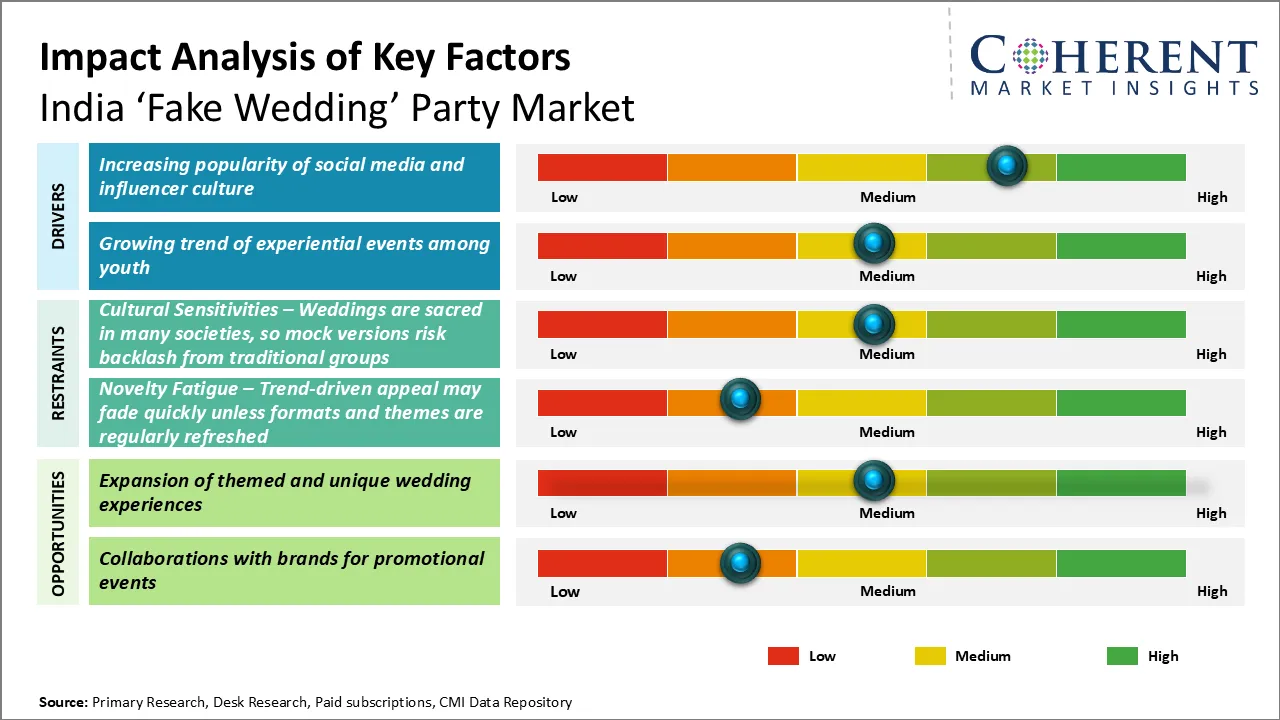
India ‘Fake Wedding’ Party Market Driver - Increasing Popularity of Social Media and Influencer Culture
The easy accessibility of the social media sites coupled with the advent of influencer culture has led to the immense popularity of false wedding parties in India. As more people look to create distinctive and visually appealing content that they can share on Instagram, TikTok, and YouTube, staging larger-than-life, but fictional wedding ceremonies has become a popular means of appealing to people and gaining a following. Caro Josephes and hopefuls tend to stage such sham weddings as a way of replicating the pomp and sentimental appeal of the classic wedding and create a form of intriguing content that has more appeal to a large audience.
India ‘Fake Wedding’ Party Market Opportunity - Expansion of Themed and Unique Wedding Experiences
The India fake wedding party’s business is registering a high potential due to the increasing popularity of a range of thematic and personalized wedding party experiences among an increasing population of consumers who want new and unforgettable social events. Although most cultures have elaborate wedding ceremonies and require the incurring of significant costs, fake weddings act as a new variation in the celebrations that combine cheerfulness with imagination, letting the people feel the atmosphere of a wedding without the life-long obligation. This possibility has been magnified by the growing market among Millennial and Gen Z consumers who are seeking novelty through experiential events and marketing more focused on personalization and the use of social media.
One notable example is the "Punjabi Wedding" themed fake party, where the venue is decorated with colorful florals and energetic lighting, and guests arrive in traditional ethnic outfits. Attendees can partake in bhangra dances to Punjabi dhol, indulge in signature North Indian dishes like butter chicken and sarso da saag, and enjoy fun party favors such as jasmine fragrance oil and sweet boxes. These celebrations feature mock rituals (like faux varmala exchanges), choreographed group dances, and immersive social media moments, offering all the exuberance of a wedding minus the life-long commitments.
Analyst Opinion (Expert Opinion)
- The burgeoning "fake wedding" party market in India reflects a unique intersection of cultural celebration and innovative entrepreneurship. By fusing traditional wedding aesthetics with contemporary party culture, the growing "fake wedding" trend in India, especially among Gen Z, is changing the event industry. Without a real bride and groom, these gatherings give guests the joyous experience of a wedding, complete with dhol beats, simulated varmala ceremonies, and sumptuous spreads, but without the emotional burden or familial responsibilities.
- These immersive experiences, which range in price from ₹1,500 to ₹15,000 in cities like New Delhi, Bengaluru, and Pune, draw young professionals looking for a laid-back celebration.
- For example, over 2,000 people attended a recent fictitious wedding in Bengaluru, which brought in a sizable sum of money for the planners. A change in social dynamics is also reflected in this trend, as customary rituals are being rethought as experiential and performative activities.
Speak to the analyst
Want personalized insights?
Take the findings above to one of our principal consultants, or have the report rebuilt around the segments, geographies and competitors you actually track.
Market Segmentation
- Event Type Insights (Revenue, USD Mn, 2021 - 2033)
- Full-scale fake wedding parties
- Theme-based fake weddings
- Destination fake weddings
- Micro/intimate fake weddings
- University & campus fake weddings
- Consumer Segment Insights (Revenue, USD Mn, 2021 - 2033)
- Gen Z party-goers (18–26 yrs)
- Young professionals (25–35 yrs)
- Singles & dating groups
- Friends & peer groups
- NRIs & expats in India
- Pricing Tier Insights (Revenue, USD Mn, 2021 - 2033)
- Budget events (₹1,500–₹3,000)
- Mid-tier experiences (₹5,000–₹10,000)
- Premium packages (₹10,000+)
- Occasion/Purpose Insights (Revenue, USD Mn, 2021 - 2033)
- Weekend entertainment
- Social media & content creation
- Corporate & group bonding
- Singles/dating experience
- Cultural rehearsals
- Venue Format Insights (Revenue, USD Mn, 2021 - 2033)
- Luxury hotels & banquet halls
- Outdoor venues (beaches, palaces, farmhouses)
- Nightlife venues (lounges, clubs, pubs)
- Campus & community halls
- Studio/indoor sets
- Key Players Insights
- Wedding Wire India
- Jumma ki Raat Delhi
Sources
Primary Research Interviews
- Event Organizers specializing in "Fake Wedding" parties in India
- Procurement Managers of event supplies and services for fake weddings
- Marketing Heads of experiential event companies offering fake wedding experiences
- Cultural Researchers studying social trends in experiential celebrations
Stakeholders
- Event Management Companies
- Experience Economy Brands focusing on themed parties and celebrations
- Vendors of wedding-related goods and services (decorators, caterers, costume designers)
- Social Media Influencers promoting fake wedding parties
- Platforms facilitating booking and promotion of such events
- Regulatory and Licensing Authorities (for event permits and safety regulations)
Databases
- India Event & Entertainment Market Reports
- Ministry of Corporate Affairs (MCA) filings of companies offering fake wedding event services
- Event Industry Associations Databases (IAEM, EEMA)
Magazines
- Eventfaqs India – Industry updates on event trends including fake weddings
- The Bride & Groom Magazine – Trends in wedding and themed celebrations
- India Today Lifestyle – Social trends and experiential party culture
- Event Marketer India – Marketing insights on the events and experiential economy
- Culture & Lifestyle Magazine – Social and cultural analysis of party trends
Journals
- Journal of Cultural Economics – Experiential consumption and event markets
- International Journal of Event and Festival Management – Themed events and social experiences
- Journal of Social and Cultural Studies – Trends in Indian social celebrations
Newspapers
- The Times of India – Lifestyle and social trends around experiential parties
- Hindustan Times – Social trends and celebrity-led fake weddings
- The Indian Express – Reports on experiential event industry growth
- Economic Times – Business and market trends in event management
- The Hindu – Cultural shifts in celebration and event experiences
Associations
- Indian Association of Event Managers (IAEM)
- Event & Entertainment Management Association (EEMA)
- National Event Suppliers Association
- India Tourism Development Corporation (for cultural event licensing)
- Ministry of Culture, Government of India
Public Domain Sources
- Ministry of Tourism, Government of India – Reports on experiential tourism and events
- Directorate of Advertising and Visual Publicity (DAVP)
- Ministry of Corporate Affairs (MCA) – Event industry company registrations
- Industry Surveys and Census data on India’s experiential economy
Proprietary Elements
- CMI Data Analytics Tool, Proprietary CMI Existing Repository of information for last 8 years.
Get access to 250+ pages report
Every segment, forecast, competitor profile and data table behind the analysis above — available for instant download.
- ESOMAR Member
- ISO 9001:2015 Certified
- D-U-N-S Registered
- GDPR & CCPA Compliant
Missing comfort of reading report in your local language? Find your preferred language:
Transform your Strategy with Exclusive Trending Reports
Frequently Asked Questions
The India ‘fake wedding’ party market is estimated to be valued at USD 18.9 Mn in 2026 and is expected to reach USD 267.8 Mn by 2033.
The CAGR of India ‘fake wedding’ party market is projected to be 46.1% from 2026 to 2033.
The wedding industry in India is one of the world’s largest, driven by cultural traditions, luxury spending, and rising demand for grand celebrations.
Increasing popularity of social media and influencer culture and growing trend of experiential events among youth are the major factors driving the growth of the India ‘fake wedding’ party market.
Cultural sensitivities – weddings are sacred in many societies, so mock versions risk backlash from traditional groups and novelty fatigue – trend-driven appeal may fade quickly unless formats and themes are regularly refreshed are the major factors hampering the growth of the India ‘fake wedding’ party market.
In terms of event type, full-scale fake wedding parties are estimated to dominate the market revenue share in 2026.
Wedding Wire India, and Jumma ki Raat Delhi are the major players.