

India Protein Bar Market Size and Forecast – 2026 To 2033
The India Protein Bar Market is expected to grow from USD 1.22 Bn in 2026 to USD 1.76 Bn by 2033, registering a compound annual growth rate (CAGR) of 6.7%. The rapid expansion of gym participation — the number of fitness facility memberships is projected to increase from around 12.3 million in 2024 to over 23.2 million by 2030, nearly doubling in six years as more Indians adopt structured exercise and wellness routines. This incline towards fitness is particularly concentrated in major metropolitan markets such as Delhi, Mumbai, Bengaluru, Pune and Hyderabad, which together account for a significant share of both fitness revenue and membership growth.
Key Takeaways from the India Protein Bar Market
- The sports nutritional bars segment is expected to be the largest type within the protein bar market in India in 2026, accounting for approximately 51.6% of the total market share. This segment is particularly strong in major metropolitan areas such as Mumbai, Delhi‑NCR, Bengaluru, Pune, and Hyderabad, where demand is driven by the high levels of gym participation, fitness awareness, and lifestyle‑focused nutrition habits. Sports nutritional bars are widely used as convenient post‑workout and recovery snacks that support muscle repair and energy restoration after physical activity. Examples of popular sports and protein bars in the Indian market, include MuscleBlaze Protein Bar, known for its high protein content and wide availability, The Whole Truth Protein Bar for its clean and transparent ingredient list, and Yoga Bar Protein Bar which combines protein with wholesome ingredients.
- The animal-based protein bars segment is expected to hold 62.6% of the market share by 2026. It is mainly used in metros and Tier-1 cities, where professional athletes, gym goers, and fitness enthusiasts favor complete proteins with enhanced bioavailability. Some whey protein-based brands, including MuscleBlaze and MyFitness, have been successful in driving the adoption of these bars due to their taste, digestibility, and post-exercise performance claims.
- The hypermarkets & supermarkets segment is expected to lead the distribution channels in 2026, capturing 30.5% of the market share. Urban and Tier-2 city consumers value the wide product variety, clear and easy-to-read nutrition labels, and the opportunity to physically explore products. Meanwhile, modern retail chains such as Reliance Fresh, Big Bazaar, and More leverage shelf placement, in-store promotions, and marketing tactics to increase brand visibility, influence purchase decisions, and encourage repeat purchases.
- Protein Nutrition Alignment: Protein bars are increasingly addressing India’s protein intake gap by offering convenient, portion-controlled nutrition for urban consumers, gym-goers, students, and working professionals. India’s average functional protein intake is estimated at around 47 grams per person per day, below the ICMR-referenced 60 grams, creating demand for daily protein snacking formats.
- Fitness and Preventive Wellness Catalysts: Rising fitness awareness, gym culture, and preventive health behavior are supporting protein supplements bar adoption as a convenient pre-workout, post-workout, and meal-replacement snack. Government-backed fitness initiatives such as Fit India also support broader awareness around physical activity and wellness-oriented lifestyles.
Segmental Insights
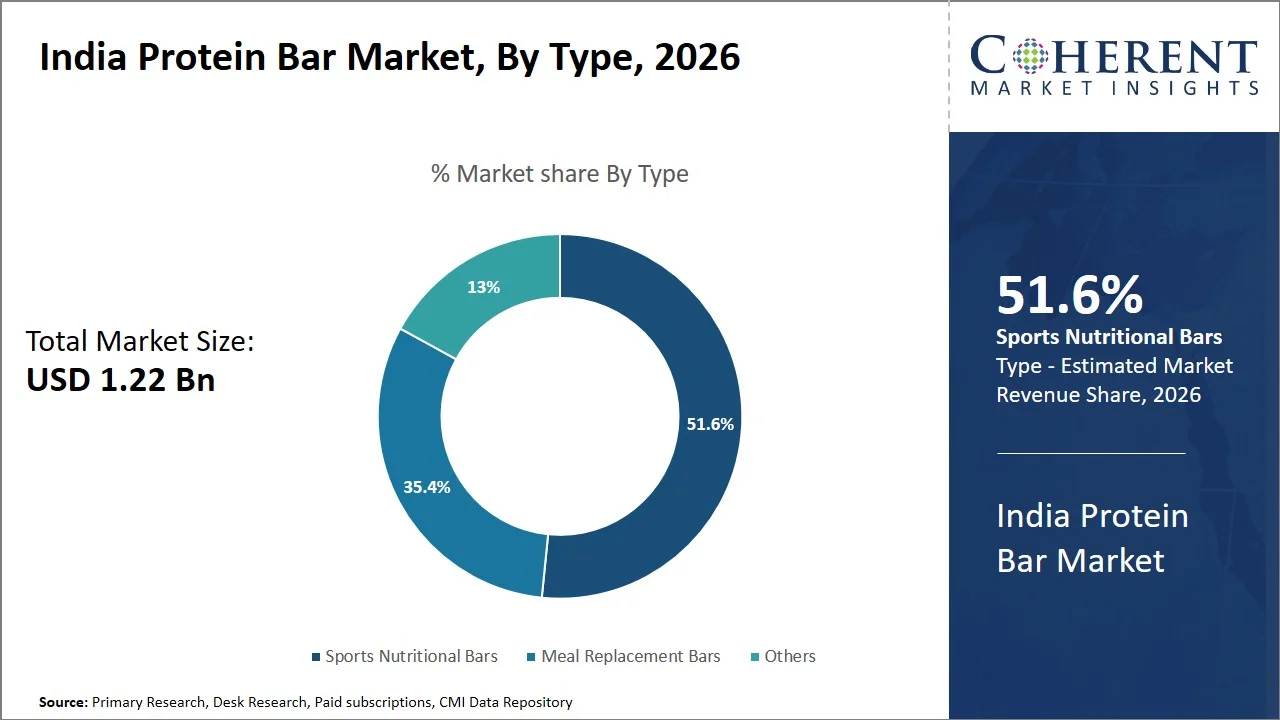
Why Does the Sports Nutritional Bars Segment Dominate the India Protein Bar Market?
The sports nutritional bars segment is projected to account for 51.6% of the India protein bar market in 2026, primarily led by a growing health-conscious population and growing trend towards an active lifestyle. Optimizing sports nutrition bars for current consumer needs requires delivering the right balance of protein, carbohydrates, and essential nutrients in formats that are both effective and convenient—attributes that particularly resonate with millennials and Gen Z consumers focused on performance and lifestyle nutrition.
As India’s fitness ecosystem evolves, membership and engagement in fitness facilities and structured exercise routines continue to grow significantly. According to the India Fitness Market Report 2025, India’s fitness facility memberships are projected to grow from around 12.3 million in 2024 to over 23 million by 2030, reflecting increasing participation in gym-based activities and structured workouts—an important factor driving demand for convenient, nutrient‑dense post‑exercise foods such as sports and protein bars.
- Current Industry Events of 2026
- Market Size Estimation
- Regional Breakdown
- Competitive Landscape
- Customer Intelligence
- Segmental Analysis
- Pricing Analysis
- Key Market Drivers, Challenges & Future Trends
- Customized Insights Section
Why Do Animal-Based Protein Bars Remain the Most Preferred Protein Source?
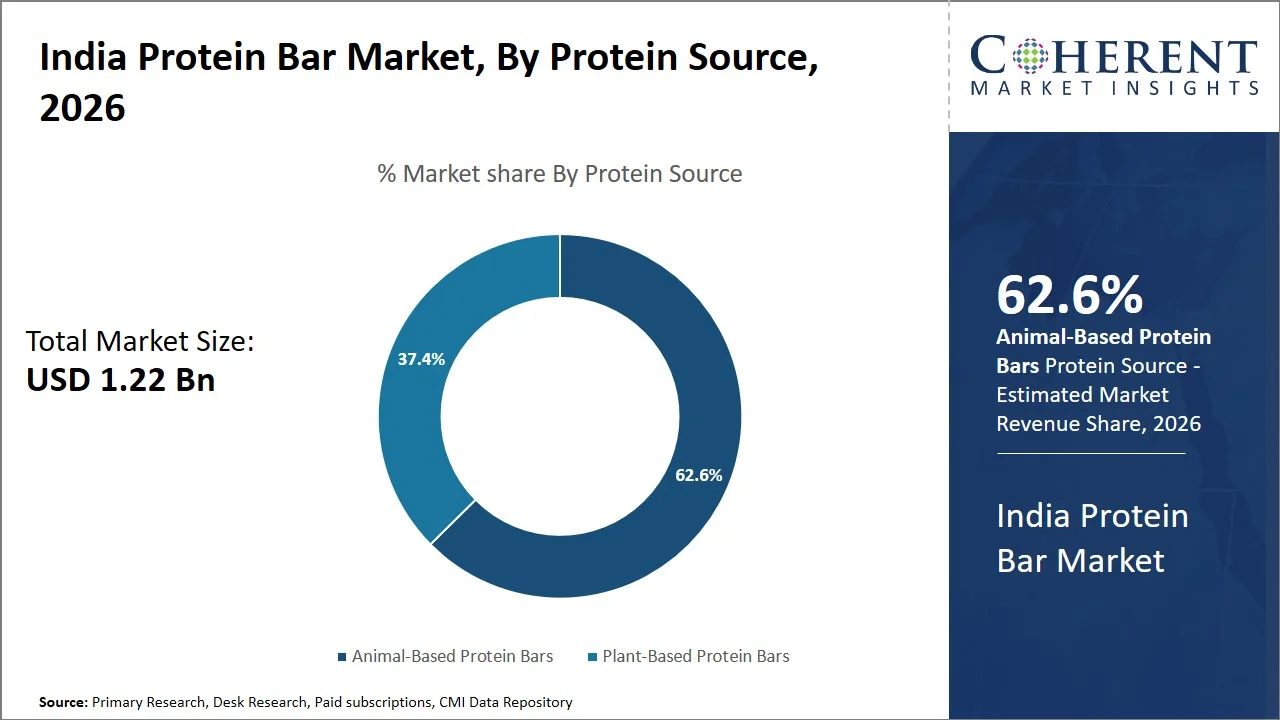
The animal-based protein bars segment is expected to hold 62.6% share of the market in 2026, due to the inherent nutritional benefits and consumer familiarity associated with animal-derived proteins. Animal protein like whey protein, casein protein, and egg proteins are complete proteins which contain all the essential amino acids required for muscle repair and growth. This is one of their natural properties and puts them in high demand amongst consumers who specialize in strength training, muscle recovery, and general physical performance. For example, MuscleBlaze Whey Protein Bars are popular among Indian fitness enthusiasts and professional athletes, as they contain whey protein isolates which are quickly absorbed and digested and provide amino acids in a short amount of time after workouts. This is for quicker muscle recovery and promotes strength training, which makes animal-based protein bars the top choice among bodybuilders, gym goers, and active people.
Hypermarkets & Supermarkets Segment Dominates the India Protein Bar Market
Hypermarkets & supermarkets segment is expected to hold 30.5% of the market in 2026. Organized retail formats such as DMart (Avenue Supermarts), MORE Supermarkets, Spencer’s Retail, and others have steadily expanded their network of stores across urban and semi‑urban India, offering brands high‑visibility shelf space and broader consumer reach.
For example, brands such as RiteBite Max Protein, Yoga Bar, and MuscleBlaze have strengthened their offline retail presence through shelf placement and in‑store promotions at these chains, which helps consumers physically compare flavors, nutrition profiles, and price points before buying—an advantage that pure online channels do not offer. (Source: RiteBite Max Protein)
Currents Events and their Impact
Current Events | Description and its Impact |
Government-backed fitness campaigns are increasing health awareness |
|
Protein is shifting from gym-focused nutrition to mainstream snacking |
|
(Source: Reuters)
India Protein Bar Market Dynamics
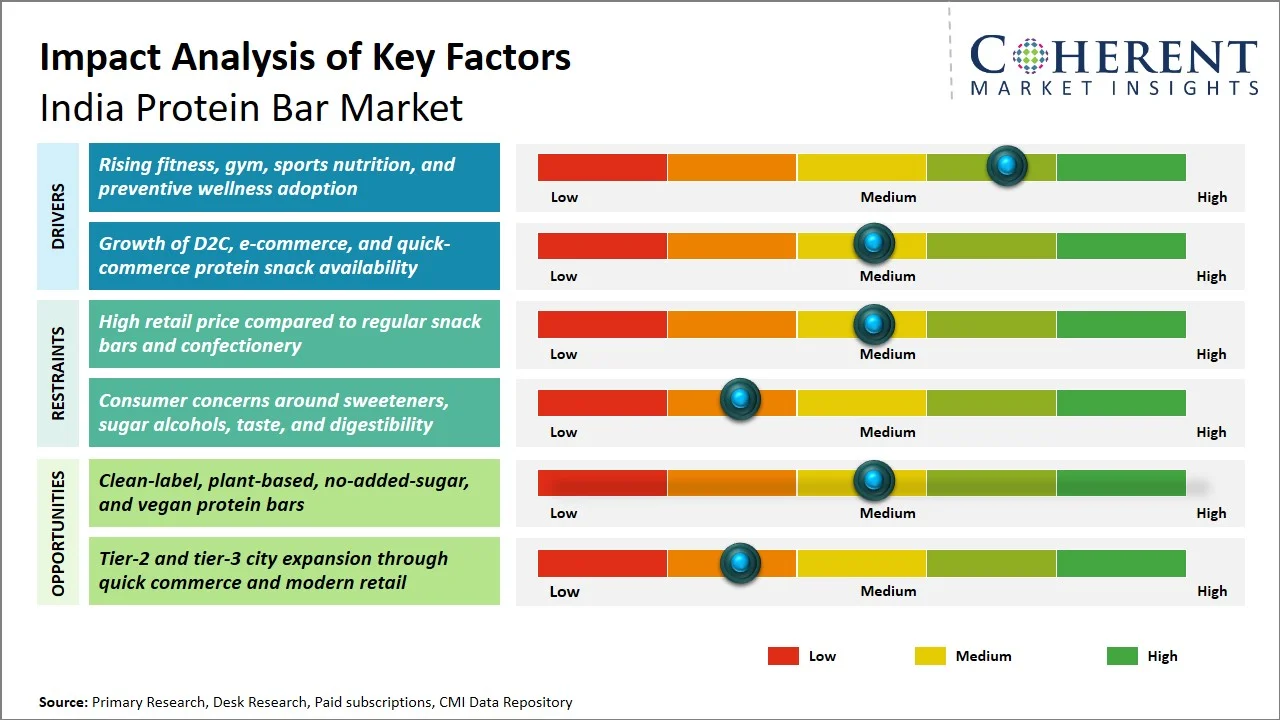
Market Driver
Growing Adoption of Fitness Lifestyles and Preventive Wellness
The rising awareness on fitness, gym culture, sports nutrition, and preventive wellness is playing a significant role in driving protein bar demand in India. With the growing trend towards prioritizing health and active lifestyles, protein bars have become a popular choice for those looking for a convenient, portable, and nutritious snack to fuel their active lives. The regular exercise habits of urban people, especially millennials and Gen Z, have contributed to the adoption of functional foods with muscle recovery benefits and long-lasting energy.
The Whole Truth, a protein delivery platform, has seen a 30% surge in multi-pack protein bar deliveries in metros during 2025 as the post-pandemic home workout trend and gym memberships are gaining momentum.
Growth of D2C, e-commerce, and quick-commerce protein snack availability
The availability of direct to consumer (D2C), ecommerce, and quick commerce protein snacks are a critical growth driver for the India protein bar market, as it allows brands to access a larger customer base and tap into the convenience-driven urban consumer base. In the metro areas, traditional retail avenues were limited to gyms, nutrition stores and supermarkets but now, digital channels have opened the door for consumers in tier-1, tier-2 and even tier-3 cities to have access to a wide range of protein bars.
The digital expansion is contributing to a lower threshold for trials and adoption, especially in younger consumers, and resulting in higher penetration rates in non-metro areas. RiteBite Max Protein for instance, has seen 25-30% growth in online sales in 2025, concentrated mainly on e-commerce and D2C subscription sales. Likewise, The Whole Truth expanded its customer base by launching multi-flavor packs and quick commerce delivery in Bangalore and Mumbai, which attracted the health-conscious millennials.
Emerging Trends
- Shift from Sports Nutrition to Everyday Protein Snacking: The India protein bar market is changing its landscape from gym consumers to the working class, students and health-conscious urban consumers. Brands are introducing 10g-20g protein bars, mini bars, and breakfast/snack bars, which are designed for more casual consumption, whereas providing support during and after exercise. The growth of health-led snacking is further bolstered by the increased use of snacks for boosted energy, mood and protein among Indian consumers (72%).
- Clean-Label, No-Added-Sugar, and Plant Based Product Innovation: With demand for better-for-you protein bars, innovation is happening in no-added-sugar, high fiber, gluten-free, vegan and plant-protein formulations. Natural ingredients, preservative-free, high protein and low sugar are just a few of the claims that brands are leveraging to target consumers who want to avoid artificial sweeteners and are focused on digestive comfort and calorie counting.
How Rising Demand for Clean-Label, Plant-Based, No-Added-Sugar, and Vegan Protein Bars is Driving Growth in India
The India protein bar market is gaining momentum as consumer interest in plant-based; clean-label, no-added-sugar, and vegan protein bars continues to rise. Increasing health awareness and the prevalence of lifestyle-related conditions such as diabetes and obesity are driving demand for healthier snacking alternatives that align with dietary goals. Protein bars with transparent ingredient lists, minimal processing, and free from artificial additives, preservatives, or synthetic flavors are particularly attractive to this segment, as consumers increasingly seek natural, wholesome, and convenient nutrition options.
Examples include Yoga Bar’s Protein+ Vegan Bars, made from pea protein and oats, and MyFitness Peanut Butter & Chocolate Vegan Bar, marketed with no added sugar and natural ingredients. International players such as The Protein Works (UK) have also begun exporting clean-label vegan bars to India via e-commerce channels, reflecting early adoption among premium urban consumers.
Macro and Micro Economic Factors for the India Protein Bar Market
Factor Type | Factor | Description |
Macro | Rising Disposable Income | Increasing income levels among urban and semi-urban populations enable spending on premium nutrition products |
Macro | Urbanization & Metro Expansion | Growing urban population and lifestyle shifts in metros drive demand for convenient, on-the-go foods |
Micro | Consumer Lifestyle Shifts | Busy lifestyles and demand for convenient snacks increase on-the-go consumption |
Micro | Product Innovation & Localization | Introduction of millet-based bars, clean-label protein bars, and Indian flavors appeals to local taste preferences |
Market Players, Key Development, and Competitive Intelligence
Key Developments
- In February 2026, UFC partnered with FoodStory Brands to develop a nutritionist‑backed high‑performance protein bar under the UFC Performance Institute, aimed at athletes and performance‑focused consumers. The new protein bar line, featuring research‑driven functional ingredients, is expected to debut later in 2026 across major retail and e‑commerce channels.
- In May 2024, Gelita introduced Optibar, a new ingredient designed for creating soft and sugar-free protein bars. This blend allows for higher protein content while maintaining a long-lasting, indulgent texture and acts as a sugar-free binder, enabling claims of "low sugar" and "no sugar."
- In April 2024, Team Ready, a leading active nutrition company, launched its new Kids Whole Grain Protein Bars, expanding its commitment to providing healthy and delicious snack options for families. The bars are designed to meet the nutritional needs of active children, offering 6 grams of protein, 8 grams of whole grains, and 20% less sugar than other leading kids' whole grain snack bars.
Competitive Landscape
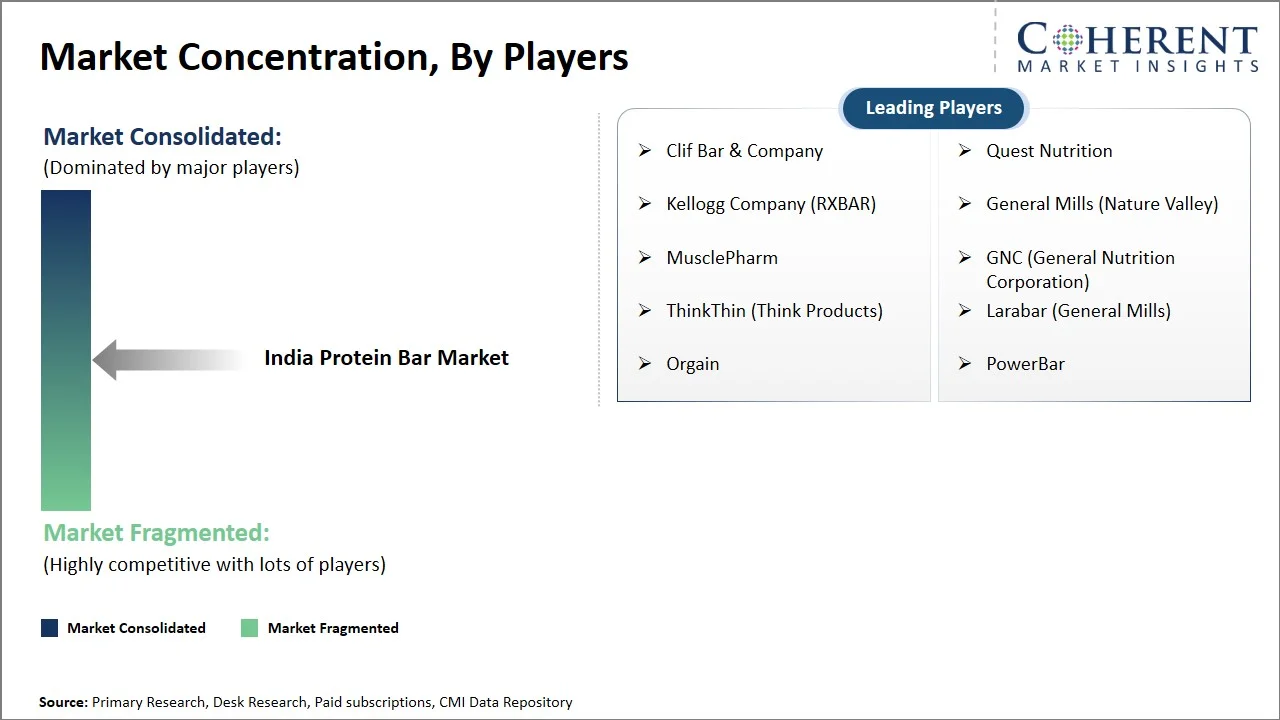
The India protein bar market is increasingly competitive, fueled by growing consumer interest in convenient, high-protein, and health-oriented snacking solutions. Leading national and international brands leverage strong distribution networks, brand recognition, and product portfolios, while smaller and emerging players differentiate through innovative flavors, premium ingredients, and pricing flexibility. Key focus areas include:
- Convenience, taste, and nutritional quality
- Product portfolio expansion and customization
- Strategic partnerships, retail expansion, and digital penetration
Market Report Scope
India Protein Bar Market Report Coverage
| Report Coverage | Details | ||
|---|---|---|---|
| Base Year: | 2025 | Market Size in 2026: | USD 1.22 Bn |
| Historical Data for: | 2020 To 2024 | Forecast Period: | 2026 To 2033 |
| Forecast Period 2026 to 2033 CAGR: | 6.7% | 2033 Value Projection: | USD 1.76 Bn |
| Segments covered: |
| ||
| Companies covered: | Clif Bar & Company, Quest Nutrition, Kellogg Company (RXBAR), General Mills (Nature Valley), MusclePharm, GNC (General Nutrition Corporation), ThinkThin (Think Products), Larabar (General Mills), Orgain, and PowerBar | ||
| Growth Drivers: |
| ||
| Restraints & Challenges: |
| ||
Analyst Opinion (Expert Opinion)
- The protein bar segment in India is in the early adoption phase and is evolving from gym products to a functional snack that is consumed on a day-to-day basis. The growth in the future will be fueled by the demand for urban consumers for convenient ways to take in protein, weight management solutions, breakfast replacement and healthier alternatives to chocolate, cookie, and fried snack options. Protein bars that align with “high protein + low sugar + good taste + acceptable price point” will fare better as protein bars migrate from niche fitness shelves to quick-commerce, modern retail, gyms, offices, pharmacies and travel retail.
- The strongest opportunity in India lies in healthy snacking, weight management, on-the-go meal replacement, and high-protein nutrition bars. Metro cities such as Mumbai, Delhi-NCR, Bengaluru, Pune, Hyderabad, and Chennai should remain the first-priority markets due to higher fitness awareness, a large base of working professionals, stronger disposable income, and rapid growth of quick-commerce platforms. Tier 2 cities are also emerging as the next growth layer, supported by expanding gym networks, premium grocery retail, and online health-focused brands. Products made with whey protein, plant protein, nuts, seeds, chocolate, peanut butter, and Indian-inspired flavors can attract both fitness-focused consumers and mainstream snack buyers.
Speak to the analyst
Want personalized insights?
Take the findings above to one of our principal consultants, or have the report rebuilt around the segments, geographies and competitors you actually track.
Market Segmentation
- Type Insights (Revenue, USD Bn, 2021 - 2033)
- Sports Nutritional Bars
- Meal Replacement Bars
- Others
- Protein Source Insights (Revenue, USD Bn, 2021 - 2033)
- Animal-Based Protein Bars
- Plant-Based Protein Bars
- Distribution Channel Insights (Revenue, USD Bn, 2021 - 2033)
- Hypermarkets & Supermarkets
- Convenience stores
- Online
- Others
- Key Players Insights
- Clif Bar & Company
- Quest Nutrition
- Kellogg Company (RXBAR)
- General Mills (Nature Valley)
- MusclePharm
- GNC (General Nutrition Corporation)
- ThinkThin (Think Products)
- Larabar (General Mills)
- Orgain
- PowerBar
Sources
Primary Research Interviews
- Protein bar manufacturer
- Supply Chain Director, FMCG/snack producer (regional contract manufacturers serving bars)
- Brand R&D / Nutrition Lead at a national protein-bar brand (e.g., The Whole Truth / Yoga Bar)
- Sustainability Officer, food ingredient certifying body (food safety and sustainable sourcing)
- Retail category manager (Modern trade) at Big Bazaar / Reliance Retail
Stakeholders
- Domestic manufacturers and brands: RiteBite (RiteBite Max Protein), The Whole Truth, Yoga Bar, Alpino, Myprotein India (local ops), MuscleBlaze (IMFL Nutrition), GNC India (bar SKUs).
- End-use Sectors
- Modern retail & hypermarkets (Reliance Retail, Big Bazaar/Future Retail, DMart) — grocery shelf placement and private-label opportunities.
- E commerce platforms and D2C: Amazon India, Flipkart, BigBasket, Cult.fit shop, brand D2C stores.
- Gyms & fitness chains: Gold’s Gym India, Talwalkars, Cult.fit — in site retail and sampling channels.
- Corporate catering and office pantries (corporate wellness programs).
- Regulatory & Certification Bodies:
- Food Safety and Standards Authority of India (FSSAI) — food regulations, labeling and allowable health/nutrition claims.
- Bureau of Indian Standards (BIS) — applicable packaging and food contact material standards.
- International certifications used by brands: USDA Organic, FSSC 22000, ISO 22000, HACCP (for manufacturing credibility).
- Advertising Standards Council of India (ASCI) — claims guidance for nutritional marketing
Databases
- UN Comtrade Database — trade flows for relevant HS codes (snack bars/cereal preparations, confectionery) for import/export analysis
- India EXIM Data (commercial EXIM portals) — imports of finished bars and ingredients (e.g., whey, soy isolates, nut pastes)
- Ministry of Commerce & Industry (DGCI&S) publications and Customs tariff reports
- Technopak / CRISIL food reports (market research subscription reports on snacking/FMCG)
Magazines
- Business of Food — India category and trends coverage (energy/protein bars)
- Food & Beverage News (FNB India) — industry news, product launches and retail listings
- ET Food & Drink / Economic Times consumer goods coverage — market moves and brand deals
- The Mint / Business Standard — larger-business coverage on packaged-food growth in India
Journals
- Journal of Food Science and Technology — formulation, shelf life, ingredient interactions
- Food Chemistry — protein sources, sensory/functional studies
- LWT — Food Science and Technology (packaging and shelf-life studies for bars)
- Nutrition journals (Indian Journal of Nutrition) — consumer protein needs and claims validation
Newspapers
- The Economic Times / Business Standard — industry growth, brand fundraising and distribution deals
- Mint — premium consumer brands and retail tie ups
- LiveMint / BusinessLine — trade and market expansion stories
Associations
- Federation of Indian Chambers of Commerce & Industry (FICCI) — food & beverage panels
- Confederation of Indian Industry (CII) — food processing division
- All India Food Processors’ Association (AIFPA) — industry networking and policy inputs
Public Domain Sources
- FSSAI official portal — labeling, nutrition claims and food safety guidance (ingredient limits, fortification rules)
- Ministry of Consumer Affairs reports on packaged foods and inflation statistics for grocery categories
Proprietary Elements
- CMI Data Analytics Tool, Proprietary CMI Existing Repository of information for last 10 years.
Get access to 250+ pages report
Every segment, forecast, competitor profile and data table behind the analysis above — available for instant download.
- ESOMAR Member
- ISO 9001:2015 Certified
- D-U-N-S Registered
- GDPR & CCPA Compliant
Missing comfort of reading report in your local language? Find your preferred language:
Transform your Strategy with Exclusive Trending Reports
Frequently Asked Questions
The India protein bar market is estimated to be valued at USD 1.22 Bn in 2026 and is expected to reach USD 1.76 Bn by 2033.
The India protein bar market includes ready-to-eat snack bars formulated with protein sources such as whey, soy, pea protein, nuts, seeds, cereals, and dairy-based ingredients. These products target fitness users, working professionals, weight-management consumers, and health-conscious snack buyers.
The CAGR of the India protein bar market is projected to be 6.7% from 2026 to 2033.
Urban consumers perceive protein bars as convenient, on-the-go, and healthier alternatives to traditional snacks. Fitness-conscious consumers focus on protein content and macronutrient balance, while general health-conscious users look for natural ingredients, low sugar, and clean labels.
Rising fitness, gym, sports nutrition, and preventive wellness adoption and growth of D2C, e-commerce, and quick-commerce protein snack availability are the major factors driving the growth of the India protein bar market.
High retail price compared to regular snack bars and confectionery and consumer concerns around sweeteners, sugar alcohols, taste, and digestibility are the major factors hampering the growth of the India protein bar market.
In terms of type, sports nutritional bars are estimated to dominate the market revenue share in 2026.