

Global Ketamine Clinic Market Size and Forecast – 2026-2033
The global ketamine clinic market is estimated to be valued at USD 1.60 Bn in 2026 and is expected to reach USD 3.42 Bn by 2033, exhibiting a compound annual growth rate (CAGR) of 11.4% from 2026 to 2033. This robust growth is driven by increasing adoption of ketamine-based treatments for mental health disorders, expanded clinic networks, and growing patient awareness about alternative therapies for conditions such as depression and post-traumatic stress disorder.
Key Takeaways of the Global Ketamine Clinic Market
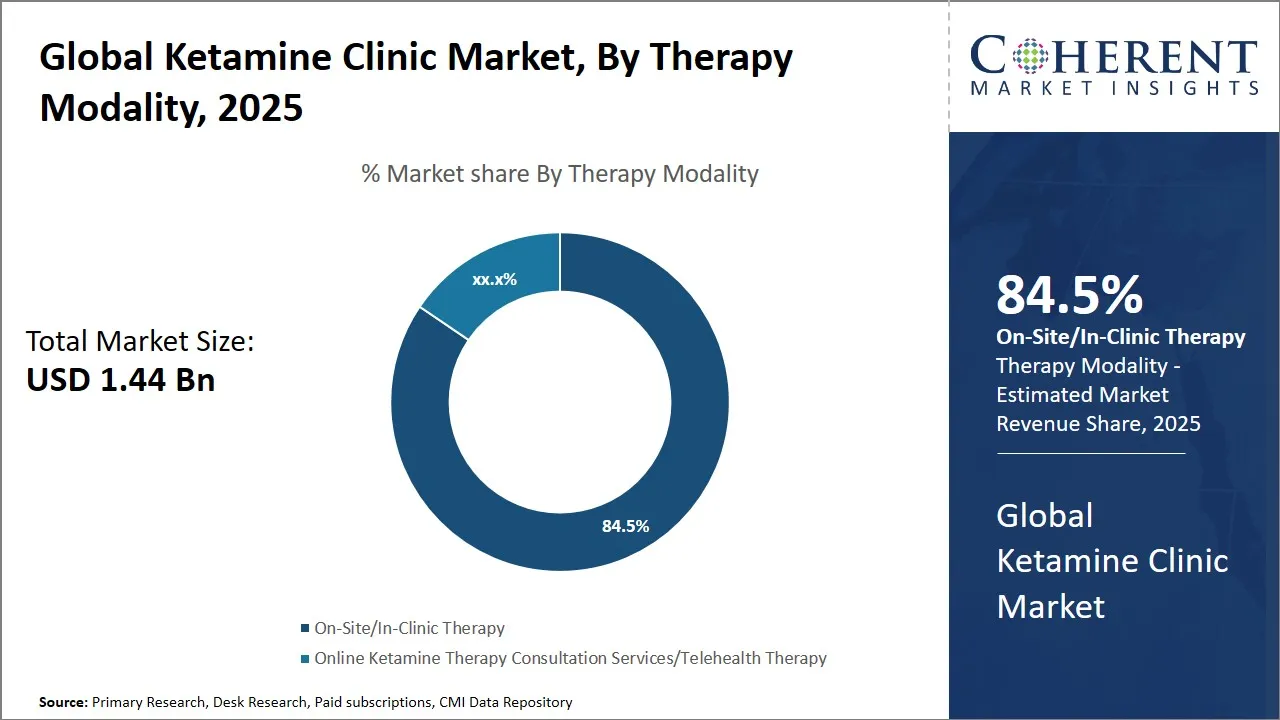
- Based on therapy modality, the on-site/in-clinic therapy segment is expected to hold the majority share, accounting for 85.5% of the market share in 2026.
- The treatment-resistant unipolar depression segment is projected to emerge as the dominant clinical indication segment, capturing a 24.2 % share in 2026.
- The oral segment is expected to represent the leading route of administration segment, accounting for 43.3 % share in 2026.
- North America is expected to lead the market, holding an estimated share of 37.3 % in 2026. Asia Pacific is anticipated to be the fastest-growing region, with a market share of 25.2% in 2026.
Market Overview
The market trends indicate a significant shift toward personalized medicine, with ketamine clinics leveraging advanced diagnostic tools and telemedicine to enhance patient outcomes. Additionally, regulatory approvals and rising investments in ketamine research are fostering innovation in treatment protocols. The focus on rapid-acting antidepressant effects and minimal side effects continues to propel the market demand, positioning ketamine clinics as a vital segment in mental healthcare services globally.
Current Events and Its Impact
Current Events | Description and its Impact |
U.S. FDA Warnings on Compounded Ketamine Safety |
|
Technological Advancements in Treatment and Monitoring |
|
Segmental Insights
- Current Industry Events of 2026
- Market Size Estimation
- Regional Breakdown
- Competitive Landscape
- Customer Intelligence
- Segmental Analysis
- Pricing Analysis
- Key Market Drivers, Challenges & Future Trends
- Customized Insights Section
Ketamine Clinic Market Insights, By Therapy Modality - On-Site/In-Clinic Therapy’s Dominance is Driven by Comprehensive Patient Care and Safety
The on-site/in-clinic therapy segment is projected to account for 85.5% share in 2026. This dominance is primarily driven by the critical need for direct patient supervision during ketamine administration, which is essential given the drug’s psychoactive effects and potential side effects. Medical professionals in clinical settings can closely monitor vital signs, manage adverse reactions promptly, and tailor dosages in real-time, ensuring both safety and efficacy. The controlled environment of clinics lends confidence to patients, especially those undergoing treatment for severe and complex conditions where ketamine’s rapid antidepressant effects are invaluable.
Additionally, the structured and repeat-visit model of in-clinic therapy facilitates personalized care pathways. Clinicians can perform comprehensive pre-treatment assessments, including mental health evaluations and physical examinations, which helps identify the suitability of ketamine therapy for individual patients. This face-to-face interaction also fosters a therapeutic alliance, enabling clinicians to provide counseling alongside pharmacological intervention, which enhances treatment outcomes and patient adherence.
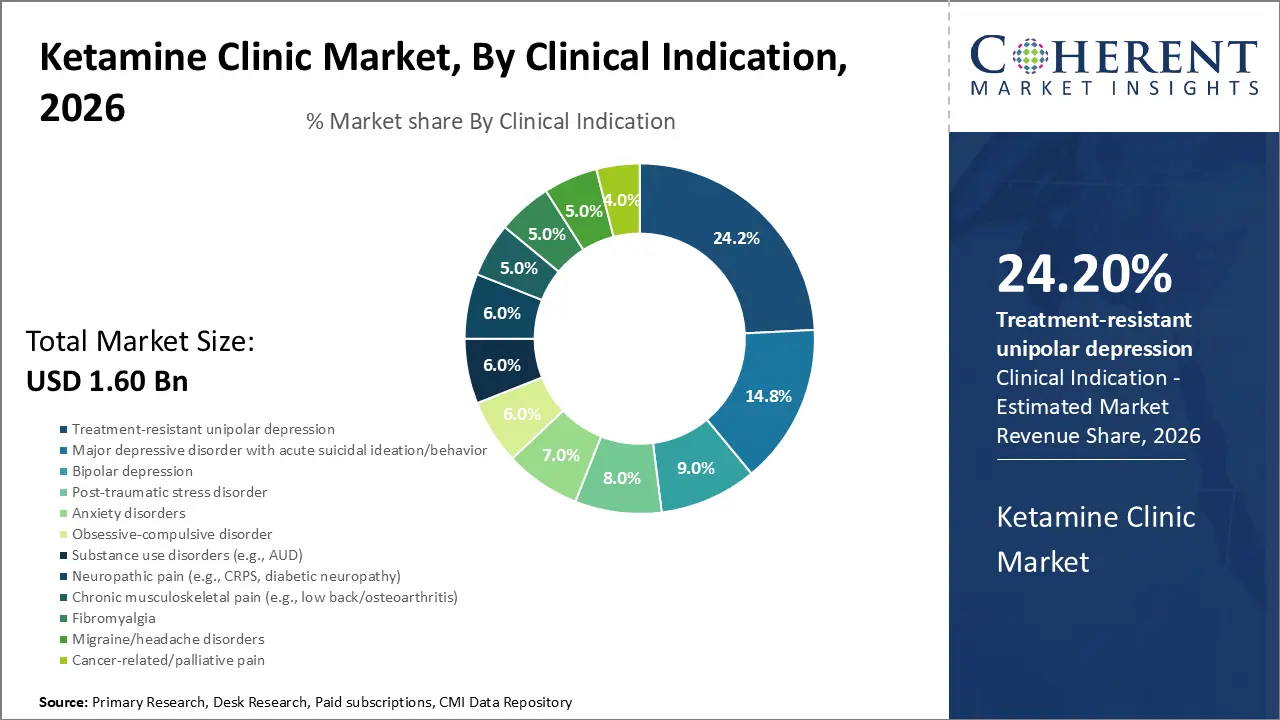
Ketamine Clinic Market Insights, By Clinical Indication – Treatment-Resistant Unipolar Depression Leads Clinical Indications due to Ketamine’s Rapid and Sustained Antidepressant Effects
The treatment-resistant unipolar depression segment is expected to capture 24.2% share in 2026. Ketamine’s unique mechanism of action, targeting glutamate neurotransmission and synaptogenesis, addresses a critical unmet need where conventional antidepressants fail. Patients with treatment-resistant depression who have shown inadequate response to multiple antidepressant regimens often experience debilitating symptoms for extended periods, making ketamine an attractive and urgent therapeutic option.
The rapid onset of ketamine’s antidepressant effect, often within hours, contrasts sharply with traditional antidepressants that require weeks to months to achieve clinical benefit. This fast efficacy is crucial for patients suffering from debilitating depression episodes, significantly improving their quality of life and reducing the risk of suicide. For many clinicians, ketamine offers a breakthrough approach capable of breaking the cycle of chronic depressive symptoms that are resistant to standard pharmacotherapies.
Ketamine Clinic Market Insights, By Route of Administration – Oral Administration Prevails Owing to Convenience, Patient Compliance, and Expanding Therapeutic Use
The oral segment is projected to hold 43.3% share in 2026, due to its ease of use and patient-friendly characteristics. Oral ketamine preparation offers a non-invasive, painless mode of delivery, which is particularly appealing for patients who are needle-averse or prefer treatment modalities that can be integrated seamlessly into daily life.
The convenience of oral dosing facilitates broader accessibility beyond specialized clinical settings, potentially allowing for maintenance therapy and repeated dosing without the need for frequent hospital visits. This flexibility improves patient adherence to treatment regimens, as individuals can self-administer under prescribed guidance, decreasing the burden on healthcare facilities.
Regional Insights
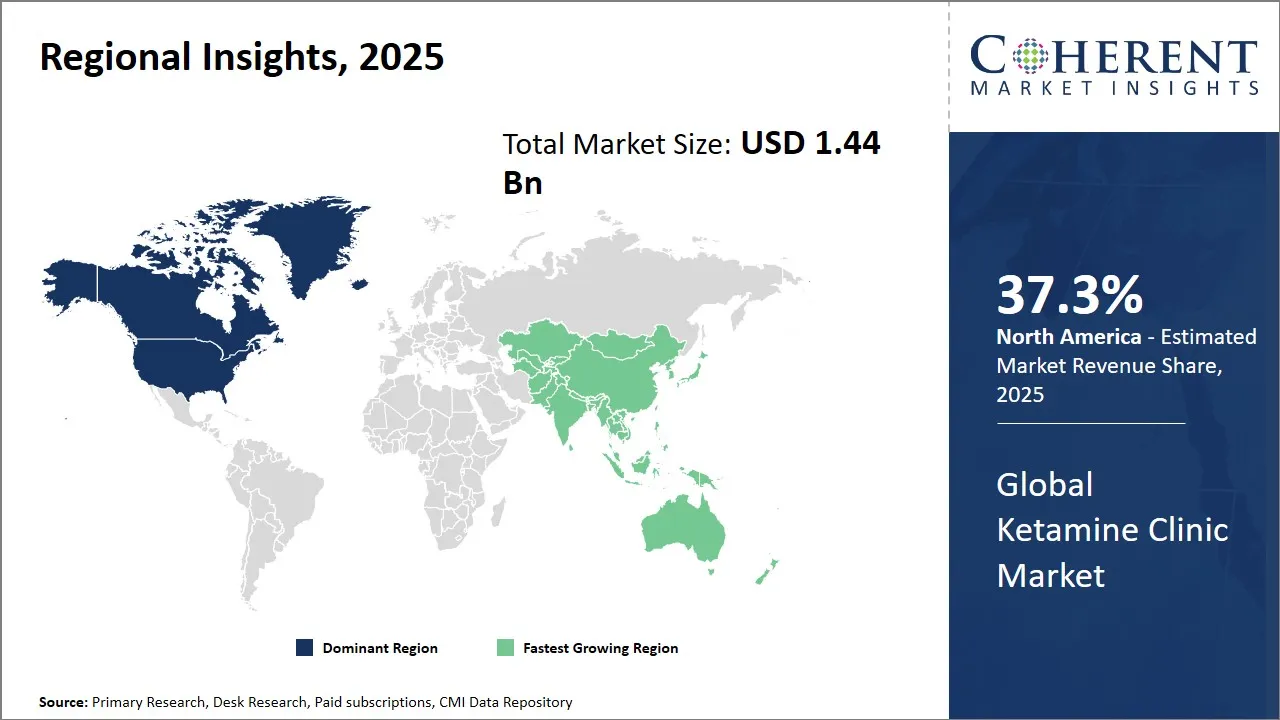
North America Ketamine Clinic Market Analysis and Trends
The North America region is projected to lead the market with a 37.3% share in 2026, driven by a well-established healthcare infrastructure, advanced medical research facilities, and progressive regulatory frameworks that support innovative mental health treatments. The region benefits from widespread awareness of ketamine’s therapeutic use in treatment-resistant depression and chronic pain management, bolstered by key government endorsements and insurance reimbursement policies.
A robust presence of specialized ketamine clinics, alongside significant investment by major players such as Johnson & Johnson (through its Janssen Pharmaceuticals division) and ATAI Life Sciences, underscores its leadership position. Furthermore, North America’s integrated market ecosystem—including academic institutions, clinical trial networks, and strong venture capital interests—facilitates rapid adoption and expansion of ketamine-based therapies.
Asia Pacific Ketamine Clinic Market Analysis and Trends
The Asia Pacific region is expected to exhibit the fastest growth owing to rising mental health awareness with 25.2% share in 2026, increasing healthcare expenditure, and gradual regulatory relaxations concerning psychotropic treatments. Countries like India, China, South Korea, and Australia are progressively embracing ketamine clinic models, supported by growing demand for alternative therapies amidst high prevalence of depression and anxiety disorders.
Trade liberalization policies have allowed greater import of pharmaceutical-grade ketamine and related medical equipment, aiding clinic establishment. Presence of forward-looking biopharmaceutical companies such as Luye Pharma Group (China) and pharmaceutical service providers in India further accelerates market development. The burgeoning middle class and expanding urban healthcare infrastructure emphasize Asia Pacific's transition from an emerging to a critical market in the ketamine clinic landscape.
Ketamine Clinic Market Outlook for Key Countries
U.S. Ketamine Clinic Market Analysis and Trends
The U.S. ketamine clinic market is characterized by a concentration of advanced ketamine clinics primarily in urban centers, supported by extensive off-label use approvals and clinical research. Leading companies like Johnson & Johnson and Mindbloom have pioneered innovative delivery methods, including nasal sprays and telemedicine services, expanding patient access. The U.S. regulatory environment provides clear guidance on ketamine use, which, combined with widespread insurance coverage, underpins market maturity and sustained demand.
In October 2021, Pasithea Therapeutics Corp., a U.S.-based biotechnology company developing innovative treatments for psychiatric and neurological disorders, announced that its U.K. arm, Pasithea Clinics (the company’s wholly owned subsidiary), has successfully treated its first patients with intravenous (IV) ketamine infusion therapy in Knightsbridge, London. The therapy, delivered in sub-anesthetic doses, targets conditions like treatment-resistant depression and PTSD, offering new hope where conventional treatments have failed.
Canada Ketamine Clinic Market Analysis and Trends
Canada ketamine clinic market reflects growing public and private healthcare sector involvement with substantial government support for mental health initiatives. Companies, such as Field Trip Health, have established comprehensive care models integrating ketamine infusions with counseling services. Accessibility remains a focus, facilitated by provincial healthcare frameworks and reimbursement policies encouraging alternative psychiatric treatments. The presence of academic medical institutions fostering clinical trials contributes to market sophistication and confidence among healthcare providers.
For example, Toronto Ketamine Clinic (TKC), a private mental health clinic, offers IV ketamine therapy for treatment-resistant depression and related conditions in Toronto and surrounding areas. With a philosophy of providing compassionate, patient-centered care, TKC has helped many clients report improved mood, reduced daily pain, and a renewed sense of balance.
Japan Ketamine Clinic Market Analysis and Trends
The Japan ketamine clinic market is emerging cautiously, shaped by the country’s strict regulatory environment and traditionally conservative approach to mental health treatments. Growing awareness of treatment-resistant depression and anxiety has opened the door for limited clinical adoption of ketamine-assisted therapies, often within research settings or specialized psychiatric practices. Japanese clinics are beginning to explore ketamine in combination with psychotherapy, while collaborations with academic institutions focus on safety, efficacy, and culturally tailored treatment models. The demand is gradually increasing as patients seek alternatives to conventional antidepressants, though stigma, high costs, and regulatory hurdles remain key challenges influencing the pace of growth.
In November 2023, Nagoya Anesthesia Clinic (a Japan-based medical center in Nagoya City, Aichi Prefecture, specializing in advanced pain management and mental health therapies), launched an inbound medical treatment program offering ketamine therapy for patients with treatment-resistant depression, chronic pain, and other mental health disorders.
Germany Ketamine Clinic Market Trends
Germany continues to lead the Europe ketamine clinic market, driven by stringent regulatory standards paired with strong incentives for innovation within its healthcare system. Health technology assessment bodies encourage adoption of evidence-based treatment modalities, supporting ketamine’s inclusion in therapy protocols for treatment-resistant depression. Firms like Grünenthal GmbH and advanced mental health clinics are at the forefront, integrating ketamine therapies with psychotherapeutic regimens. Germany’s centralized pharmaceutical market and strong doctor-patient trust dynamics enhance acceptance and use.
OVID Clinic Berlin is a specialized mental health center in Germany focused on innovative therapies for treatment-resistant conditions such as depression, anxiety, PTSD, and chronic pain. The clinic is well known for its Ketamine-Assisted Psychotherapy (KAP)
End User Feedback and Unmet Needs Ketamine Clinic Market
- End users of ketamine clinics, primarily patients and mental health practitioners, consistently highlight the value of rapid relief from treatment-resistant depression and related conditions. Positive experiences often center on the speed of improvement compared to conventional antidepressants, with many patients reporting significant reductions in suicidal thoughts and mood disorders within hours. Clinicians also appreciate ketamine’s versatility in managing conditions like PTSD and chronic pain, which has strengthened its role as a complementary therapy in mental health care. These outcomes demonstrate ketamine’s potential to meet urgent patient needs where traditional options fall short.
- At the same time, recurring concerns point to barriers that limit wider adoption. High treatment costs and inconsistent insurance coverage remain major obstacles, while accessibility challenges are noted in regions where specialized clinics are scarce. Patients also express the need for more personalized treatment protocols rather than standardized dosing models. Addressing these issues through expanded coverage, scalable pricing, and patient-centered approaches could significantly improve retention, build stronger trust in therapy, and open new opportunities for market expansion and innovation.
Market Players, Key Developments, and Competitive Intelligence
Key Developments
- On August 07, 2025, Field Trip Health (a Canada-based mental health company focused on psychedelic therapies) announced the launch of Group Ketamine-Assisted Psychotherapy (KAP) sessions in Ontario, U.S. The new program aims to make ketamine therapy more accessible and cost-effective by providing guided group sessions, while maintaining clinical oversight and therapeutic support.
- In June 2025, the University of Birmingham, working with Birmingham and Solihull Mental Health NHS Foundation Trust (BSMHFT, a leading U.K. mental health services provider) and the Midlands Translational Centre for the Mental Health Mission (funded by NIHR, the U.K.’s largest health research body), has opened a new Ketamine Clinic to help people living with severe, treatment-resistant depression.
- In February 2024, Ketamine Wellness Clinic of Orange County (a leading U.S. clinic specializing in ketamine infusion therapy for mental health and wellness), announced the acquisition of Mind Space Ketamine Infusion Clinic (a pioneering provider of ketamine-based treatments for mood disorders). The move will integrate Mind Space’s services into Ketamine Wellness Clinic’s operations in Laguna Beach, expanding care for patients across Orange County
- In March 2024, NY Ketamine Infusions, a leading U.S. clinic specializing in ketamine-based therapies for depression, anxiety, PTSD, and chronic pain), launched a new Ketamine for Alcohol Dependence (KAD) program in New York City. The initiative is designed for individuals seeking alternatives to traditional treatments like rehab, CBT, or support groups.
Top Strategies Followed by Global Ketamine Clinic Players
- Leading companies in this sector invest heavily in research and development (R&D) to innovate high-performance ketamine delivery systems and treatment methodologies. Through continuous innovation, they aim to improve patient outcomes and differentiate their offerings. Additionally, these industry leaders form strategic partnerships with major healthcare corporations, original equipment manufacturers (OEMs), and research institutions to enhance their technological capabilities and solidify market dominance.
- For example, Klarisana, a U.S.-based ketamine therapy and mental health clinic network, provides affordable care by accepting insurance and treating conditions like depression, PTSD, anxiety, and chronic pain. Its services include Spravato, intramuscular ketamine, ketamine-assisted psychotherapy, and telemedicine, all integrated into a personalized care model that supports lasting mental health improvement.
- Mid-level players in the ketamine clinic market generally focus on delivering cost-effective solutions that strike a balance between quality and affordability. By targeting price-sensitive consumers, they seek to capture a substantial share of the expanding patient base that may not afford premium-priced offerings. These mid-tier companies leverage collaborations with manufacturing partners and technology providers to enhance production efficiencies and incorporate advanced features without significantly increasing costs.
- In January 2025, Mindbloom, a U.S.-based telehealth company specializing in at-home ketamine therapy, introduced Mindbloom Injectables, a new at-home subcutaneous ketamine treatment designed to improve client outcomes. Since 2019, the company delivered nearly 600,000 sessions in 38 states, reducing treatment costs by up to 80% compared with traditional IV infusions.
- Small-scale players distinguish themselves in the competitive ketamine clinic market by carving out niche segments through specialized features or innovative product designs. Focused on innovation, these companies frequently adopt cutting-edge technologies such as digital health integration, novel drug delivery mechanisms, or unique treatment protocols to differentiate their offerings from mainstream options.
- Awakn Life Sciences (U.K./Europe), a clinical-stage biotechnology company running specialized ketamine-assisted psychotherapy programs for alcohol use disorder and other addictions. Unlike broader depression-focused clinics, Awakn targets a niche in substance use treatment, using proprietary protocols supported by clinical trial evidence.
Market Report Scope
Ketamine Clinic Market Report Coverage
| Report Coverage | Details | ||
|---|---|---|---|
| Base Year: | 2025 | Market Size in 2026: | USD 1.60 Bn |
| Historical Data for: | 2020 To 2024 | Forecast Period: | 2026 To 2033 |
| Forecast Period 2026 to 2033 CAGR: | 11.4% | 2033 Value Projection: | USD 3.42 Bn |
| Geographies covered: |
| ||
| Segments covered: |
| ||
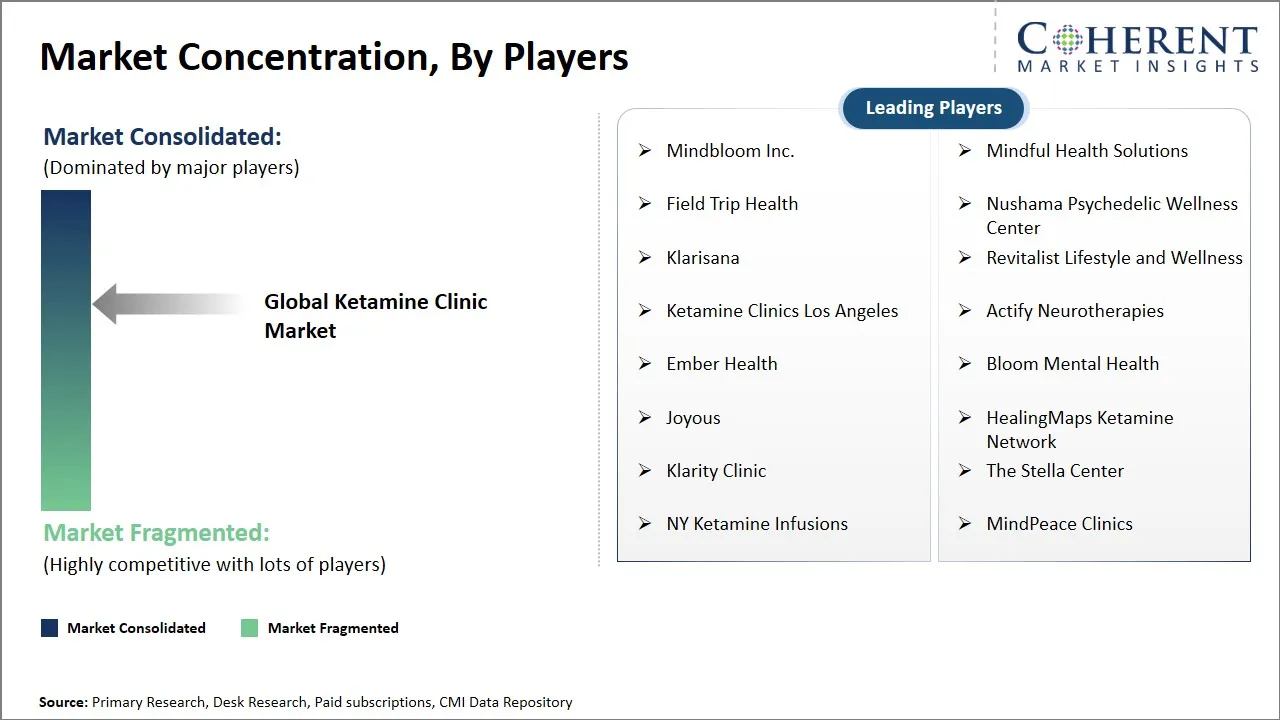
| Companies covered: | Mindbloom Inc., Mindful Health Solutions, Field Trip Health, Nushama Psychedelic Wellness Center, Klarisana, Revitalist Lifestyle and Wellness, Ketamine Clinics Los Angeles, Actify Neurotherapies, Ember Health, Bloom Mental Health, Joyous, HealingMaps Ketamine Network, Klarity Clinic, The Stella Center, NY Ketamine Infusions, and MindPeace Clinics | ||
| Growth Drivers: |
| ||
| Restraints & Challenges: |
| ||
Ketamine Clinic Market Dynamics
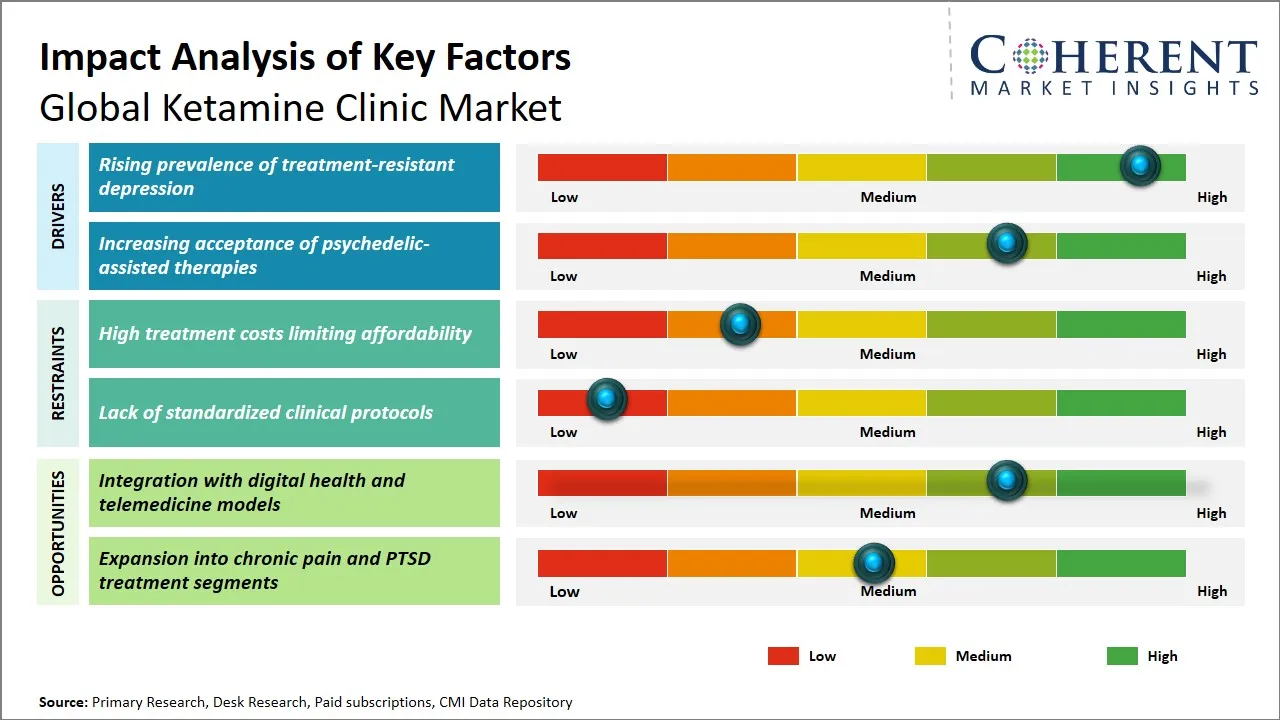
Ketamine Clinic Market Driver - Rising Prevalence of Treatment-Resistant Depression
The increasing incidence of treatment-resistant depression, emerged as a significant factor fueling the demand for ketamine clinics globally. Traditional antidepressant therapies often fail to provide adequate relief for a substantial subset of patients suffering from major depressive disorder, leading to prolonged illness and diminished quality of life. Ketamine, with its rapid-acting antidepressant properties and unique mechanism targeting the NMDA receptor, offers an effective alternative for individuals who have exhausted conventional treatment options. This growing need for novel and effective interventions is driving healthcare providers and patients toward specialized ketamine clinics that offer controlled environments for administration and monitoring. Additionally, heightened awareness and improved diagnosis rates of treatment-resistant depression, combined with increasing acceptance of ketamine therapy within medical communities, are further contributing to the expansion of the ketamine clinics.
In January 2025, Johnson & Johnson, a global healthcare leader, has received U.S. FDA approval for esketamine (Spravato) nasal spray as the first and only monotherapy for adults with Treatment-Resistant Depression (TRD). Backed by priority review, clinical trials showed rapid symptom improvement within 24 hours and remission in 22.5% of patients by week 4, compared to 7.6% with placebo.
Ketamine Clinic Market Opportunity - Integration with Digital Health and Telemedicine Models
The global ketamine clinic market stands to benefit significantly from the integration of digital health technologies and telemedicine platforms, creating a transformative opportunity to enhance accessibility and patient engagement. As mental health disorders continue to pose a significant global burden, the adoption of telehealth solutions allows ketamine clinics to extend their reach beyond traditional brick-and-mortar settings, catering to patients in remote or underserved regions. Digital health tools, such as mobile applications and wearable devices, can facilitate real-time monitoring of patient responses, adherence, and side effects, enable personalized treatment adjustments and improve overall outcomes. Moreover, telemedicine consultations streamline the initial assessment and follow-up processes, reducing the time and logistical barriers associated with in-person visits. This integration supports the scalability of ketamine therapy services and fosters continuous patient-provider communication, which is critical for managing complex mental health conditions treated by the ketamine clinics.
In January 2023, Nue Life Health, a Miami-based mental wellness platform, launched the Nue Network Partnership Program to expand access to its at-home ketamine therapy across all 50 states. The initiative allows healthcare providers to offer safe, tech-enabled treatment backed by a Frontiers in Psychiatry study, with over 7,000 patients treated to date. Partners include the Institute for Integrative Therapies (IIT), a center for alternative therapies, and Miraminds Holistic Care, an integrative mental health practice, aiming to make ketamine therapy more accessible and affordable.
Analyst Opinion (Expert Opinion)
- The ketamine clinic market is gaining momentum as growing awareness around mental health, regulatory flexibility, and advancements in treatment protocols encourage adoption. The demand has been rising as patients seek alternatives for conditions such as depression, PTSD, and chronic pain, while clinics benefit from supportive policies and improved treatment guidelines that enhance credibility. Opportunities are opening up through digital integration, group-assisted therapy models, and collaborations between healthcare providers and mental health start-ups, though industry players still face challenges around cost, uneven insurance coverage, and stigma in some regions. Over the past few years, several conferences and events such as the American Psychiatric Association (APA) Annual Meeting, the World Congress of Psychiatry, and the Psychedelic Science Conference have provided global platforms to showcase clinical evidence, discuss best practices, and shape policy directions that directly influence the evolution of ketamine-assisted therapies.
- Real-world developments underscore this momentum. Companies such as Field Trip Health have introduced group ketamine-assisted psychotherapy sessions in Canada, while U.S.-based Ketamine Wellness Clinic of Orange County expanded through acquisitions to strengthen its presence. Governments are also showing interest—pilot projects and research grants in the U.S. and Europe are supporting clinical trials and patient access models that can broaden the scope of ketamine therapies. These efforts, combined with policy discussions at major summits and regional pilot programs, are helping the market evolve from niche services toward a more structured and recognized segment within the wider mental health ecosystem.
Speak to the analyst
Want personalized insights?
Take the findings above to one of our principal consultants, or have the report rebuilt around the segments, geographies and competitors you actually track.
Market Segmentation
- Therapy Modality Insights (Revenue, USD Bn, 2021 - 2033)
- On-Site/In-Clinic Therapy
- Online Ketamine Therapy Consultation Services/Telehealth Therapy
- Clinical Indication Insights (Revenue, USD Bn, 2021 - 2033)
- Treatment-resistant unipolar depression
- Major depressive disorder with acute suicidal ideation/behavior
- Bipolar depression
- Post-traumatic stress disorder
- Anxiety disorders
- Obsessive-compulsive disorder
- Substance use disorders (e.g., AUD)
- Neuropathic pain (e.g., CRPS, diabetic neuropathy)
- Chronic musculoskeletal pain (e.g., low back/osteoarthritis)
- Fibromyalgia
- Migraine/headache disorders
- Cancer-related/palliative pain
- Route of Administration Insights (Revenue, USD Bn, 2021 - 2033)
- Oral
- Parenteral
- Nasal
- Patient Age Group Insights (Revenue, USD Bn, 2021 - 2033)
- Adolescents (13–17)
- Adults (18–64)
- Geriatric (65+)
- Care Type Insights (Revenue, USD Bn, 2021 - 2033)
- Medication-only
- Ketamine-assisted psychotherapy
- Referral Channel Insights (Revenue, USD Bn, 2021 - 2033)
- Direct-to-consumer or self-referred
- Physician-referred (psychiatry/primary care)
- Payer/case-management referred
- Business Model Insights (Revenue, USD Bn, 2021 - 2033)
- Independently owned private clinic
- Franchise-Owned clinics
- Hospital affiliated clinics
- Research and Clinical Trial Centers
- Others (Anesthesiology/psychology practice extension)
- Regional Insights (Revenue, USD Bn, 2021 - 2033)
- North America
- U.S.
- Canada
- Latin America
- Brazil
- Argentina
- Mexico
- Rest of Latin America
- Europe
- Germany
- U.K.
- Spain
- France
- Italy
- Russia
- Rest of Europe
- Asia Pacific
- China
- India
- Japan
- Australia
- South Korea
- ASEAN
- Rest of Asia Pacific
- Middle East
- GCC Countries
- Israel
- Rest of Middle East
- Africa
- South Africa
- North Africa
- Central Africa
- North America
- Key Players Insights
- Mindbloom Inc.
- Mindful Health Solutions
- Field Trip Health
- Nushama Psychedelic Wellness Center
- Klarisana
- Revitalist Lifestyle and Wellness
- Ketamine Clinics Los Angeles
- Actify Neurotherapies
- Ember Health
- Bloom Mental Health
- Joyous
- HealingMaps Ketamine Network
- Klarity Clinic
- The Stella Center
- NY Ketamine Infusions
- MindPeace Clinics
Sources
Primary Research Interviews
- Industry Stakeholders list
- Medical Directors of Ketamine Clinics
- Psychiatrists and Anesthesiologists specializing in ketamine therapy
- End Users list
- Patients with treatment-resistant depression
- Veterans with PTSD undergoing ketamine therapy
Government and International Databases
- U.S. Food and Drug Administration (FDA) – Drug Approvals & Safety Updates
- European Medicines Agency (EMA) – Clinical and Regulatory Data
- National Institute of Mental Health (NIMH) – Mental Health Statistics
- World Health Organization (WHO) – Mental Health and Substance Use Data
- Centers for Disease Control and Prevention (CDC) – Depression & Suicide Data
- United Nations Office on Drugs and Crime (UNODC) – Global Drug Control Reports
Trade Publications
- Behavioral Healthcare Executive
- Psychiatric Times
- Mental Health Weekly
- PharmaVOICE
- Drug Discovery & Development Magazine
- BioPharm International
Academic Journals
- Journal of Affective Disorders
- American Journal of Psychiatry
- The Lancet Psychiatry
- Journal of Psychopharmacology
- Frontiers in Psychiatry
- JAMA Psychiatry
Reputable Newspapers
- The New York Times – Health Section
- The Guardian – Global Health Coverage
- The Washington Post – Mental Health Reporting
- The Globe and Mail – Health & Science
- The Times (UK) – Health News
- Reuters Health
Industry Associations
- American Psychiatric Association (APA)
- American Society of Ketamine Physicians, Psychotherapists & Practitioners (ASKP3)
- International Society for Affective Disorders (ISAD)
- World Psychiatric Association (WPA)
- Anxiety & Depression Association of America (ADAA)
- Canadian Network for Mood and Anxiety Treatments (CANMAT)
Public Domain Resources
- U.S. National Library of Medicine
- ClinicalTrials.gov – Ketamine Clinical Studies
- Open Access Government Reports on Mental Health
- National Center for Biotechnology Information (NCBI)
- NIH RePORTER – Research Project Database
- Public Health England – Substance Use and Mental Health Data
Proprietary Elements
- CMI Data Analytics Tool: Proprietary analytics tool to analyze real-time market trends, consumer behavior, and technology adoption in market
- Proprietary CMI Existing Repository of Information for Last 8 Years
Get access to 250+ pages report
Every segment, forecast, competitor profile and data table behind the analysis above — available for instant download.
- ESOMAR Member
- ISO 9001:2015 Certified
- D-U-N-S Registered
- GDPR & CCPA Compliant
Missing comfort of reading report in your local language? Find your preferred language:
Transform your Strategy with Exclusive Trending Reports
Frequently Asked Questions
The global ketamine clinic market is estimated to be valued at USD 1.60 Bn in 2026 and is expected to reach USD 3.42 Bn by 2033.
The CAGR of the global ketamine clinic market is projected to be 11.4% from 2026 to 2033.
Rising prevalence of treatment-resistant depression and increasing acceptance of psychedelic-assisted therapies are the major factors driving the growth of the global ketamine clinic market.
High treatment costs limiting affordability and lack of standardized clinical protocols are the major factors hampering the growth of the global ketamine clinic market.
In terms of therapy modality, the on-site/in-clinic therapy segment is estimated to dominate the market revenue share in 2026.
They specialize in infusion therapy and psychedelic-assisted psychotherapy, offering faster-acting solutions than conventional antidepressants.
Increasing awareness about ketamine’s safety and efficacy in controlled settings is reducing stigma and driving acceptance.