

Latin America Bone Cement Market Size and Forecast – 2026 To 2033
The Latin America bone cement market is expected to grow from USD 61.8 Mn in 2026 to USD 89.0 Mn by 2033, registering a compound annual growth rate (CAGR) of 5.4% from 2026 to 2033. The Latin America bone cement market is poised for significant expansion, fueled by surging volume of joint replacement procedures, rising prevalence of degenerative joint disorders, and the increasing elderly population across the region.
According to analysis published by ScienceDirect in February 2026, a total of 410,611 hip and knee arthroplasties were performed in Brazil between 2014-2024. The considerable volume of joint replacement procedures illustrates the surging demand for orthopedic implants and associated fixation materials, including bone cement, across Latin America's largest healthcare market.
(Source: ScienceDirect)
Key Takeaways of the Latin America Bone Cement Market
- Polymethylmethacrylate (PMMA) cement is projected to hold 93.6 % of the Latin America bone cement market share in 2026, making it the dominant product type segment, due to its superior implant fixation properties, extensive clinical history, and widespread use in arthroplasty procedures. For instance, according to the National Library of Medicine, PMMA remains the most frequently utilized bone cement material in orthopedic surgery and is recognized as the gold-standard fixation medium for joint replacement procedures, supporting its continued dominance across Latin American orthopedic centers. (Source: National Library of Medicine)
- Non-antibiotic bone cement is projected to hold 68.0 % of the Latin America bone cement market share in 2026, making it the dominant type segment, owing to its broad utilization in primary joint replacement procedures and lower treatment costs compared with antibiotic-loaded alternatives. For instance, Brazil's ANVISA regulatory framework requires medical device registration and commercialization approval for orthopedic biomaterials, and multiple conventional PMMA bone cement formulations continue to be marketed for routine arthroplasty procedures, reflecting sustained demand for non-antibiotic products in standard-risk surgical cases. (Source: Agência Nacional de Vigilância Sanitária – Anvisa)
- High viscosity is projected to hold 41.8 % of the Latin America bone cement market share in 2026, making it the dominant viscosity segment, due to its improved handling characteristics, enhanced procedural control, and reduced risk of cement leakage during implantation. For instance, Heraeus Medical's PALACOS R+G, one of the most widely recognized high-viscosity bone cements used in arthroplasty procedures, continues to be promoted for orthopedic applications and is regarded as a benchmark product in cemented joint replacement surgeries. (Source: Heraeus Medical GmbH)
- Growing Adoption of Vertebral Augmentation Procedures for Osteoporotic Fractures: Rising levels of osteoporotic vertebral compression fractures are a growing trend in Latin America, fueling demand for minimally-invasive vertebral augmentation like vertebroplasty and kyphoplasty. A component of this procedure, bone cement, is used for stabilizing the fracture and mitigating pain – creating an alternative and growing use source for the material beyond its common application for hip and knee replacement. The expanding elderly population and growing burden of osteoporosis are expected to support continued growth in the number of vertebral augmentation procedures and corresponding bone cement consumption in the coming years.
- Development of Antibiotic-Loaded Bone Cement for Infection Prevention: The growing clinical demand to minimize the burden of periprosthetic joint infection (PJI) provides a substantial market for producers of antibiotic bone cement. The prevention of post-surgical infections remains a key priority for orthopedic surgeons and healthcare providers globally, driving demand for bone cement formulations that enhance procedural safety and patient outcomes. This trend is creating significant opportunities for manufacturers developing advanced bone cement products for implant fixation and localized drug delivery, particularly for revision surgeries and patients at elevated risk of infection.
Segmental Insights
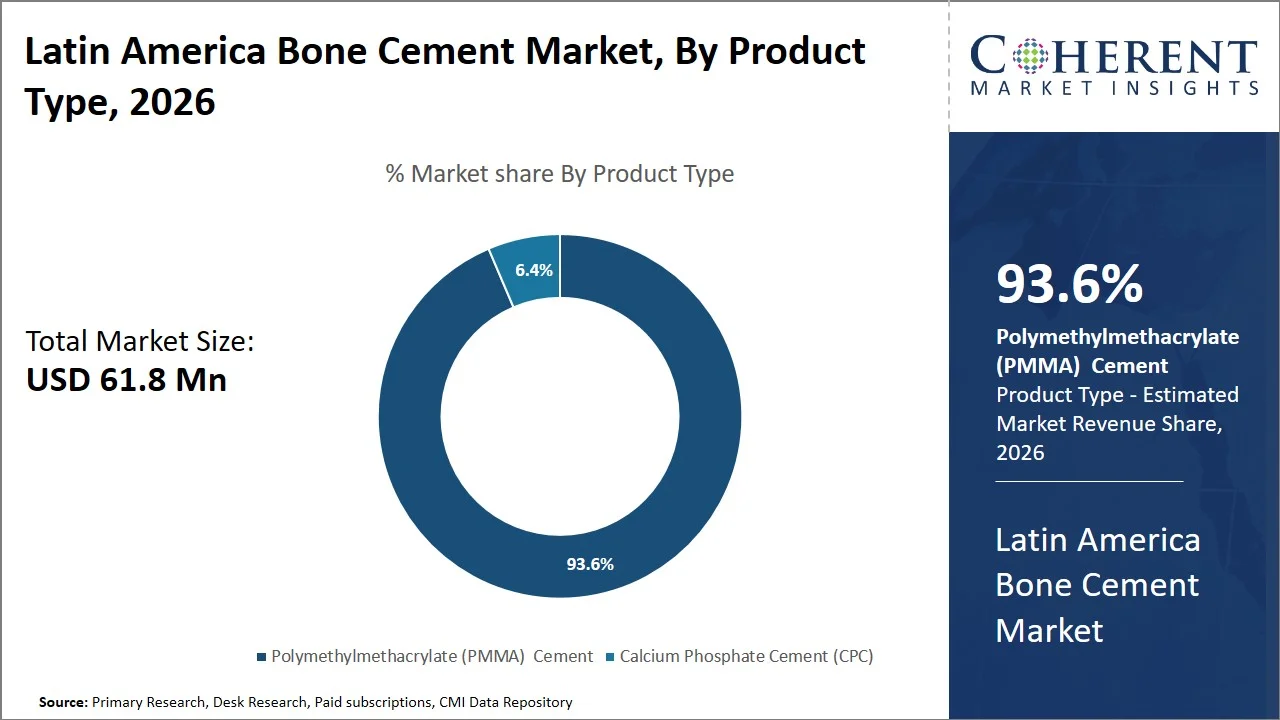
Why Does Polymethylmethacrylate (PMMA) Cement Dominate the Latin America Bone Cement Market?
Polymethylmethacrylate (PMMA) cement is projected to hold a market share of 93.6% in 2026, owing to its superior mechanical fixation, longstanding clinical reliability and popularity for use in a broad spectrum of joint replacement and revision operations. The molecularly cured PMMA cements provide an excellent immediate stability to implants and continue to retain the status of preferred cement among orthopedic surgeons on the basis of its affordable prices and outstanding clinical performance. The rising popularity of arthroplasty and infection management procedures is guiding the growth of Latin America bone cement market.
- Current Industry Events of 2026
- Market Size Estimation
- Regional Breakdown
- Competitive Landscape
- Customer Intelligence
- Segmental Analysis
- Pricing Analysis
- Key Market Drivers, Challenges & Future Trends
- Customized Insights Section
Why Does Non-Antibiotic Bone Cement Represent the Largest Type Segment in the Latin America Bone Cement Market?
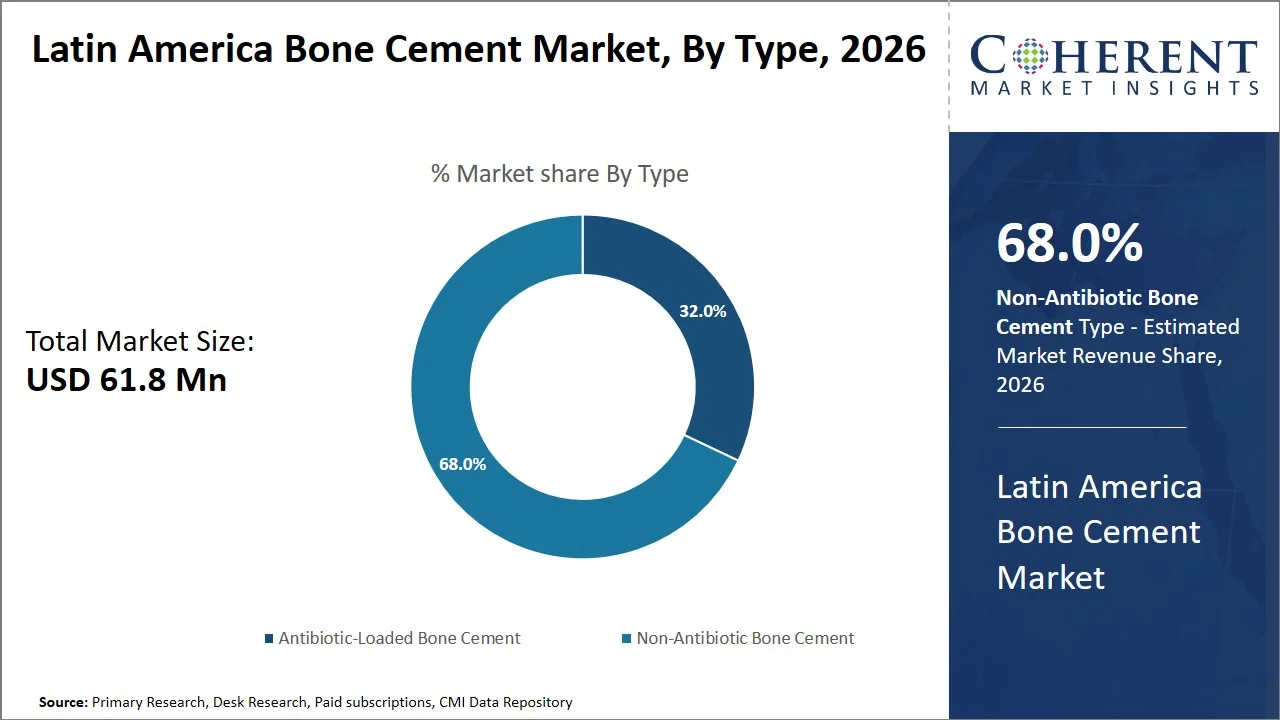
Non-antibiotic bone cement is projected to hold 68.0% of the market share in 2026, owing to the high utilization of these formulations in primary joint replacements where routine incorporation of antibiotics is generally not indicated. The consistency of high performance and long-term results with non-antibiotic formulations, reduced therapy costs and fail-safe implant fixation have favored non-antibiotic bone cement formulations since their inception in high volume orthopedic procedures. Hospitals tend to keep antibiotic loaded bone cement for revision procedures and for cases where the risk of infection is deemed to be high. The rise in primary hip and knee replacements in the region has fueled the demand for non-antibiotic bone cement.
High Viscosity Segment Dominates the Latin America Bone Cement Market
The high viscosity segment is expected to hold 41.8% of the Latin America bone cement market share in 2026, because of ease of handling, surgical control and better implant fixation during orthopedic procedures. High viscosity type has higher proportion of thicker consistency, reduction in cement leakage and application advantages during various joint replacement surgeries. There are other benefits like improved mechanical properties and consistent setting time of high viscosity type, which are vital parameters for long term success of implant.
Currents Events and their Impact
Current Events | Description and its Impact |
Mexico Expands Reliance-Based Medical Device Approval Framework (March 2026) |
|
ANVISA 2024–2025 Regulatory Agenda for Medical Devices (Brazil) |
|
(Source: Maven Regulatory Solutions, EMERGO by UL)
Latin America Bone Cement Market Dynamics
Market Drivers
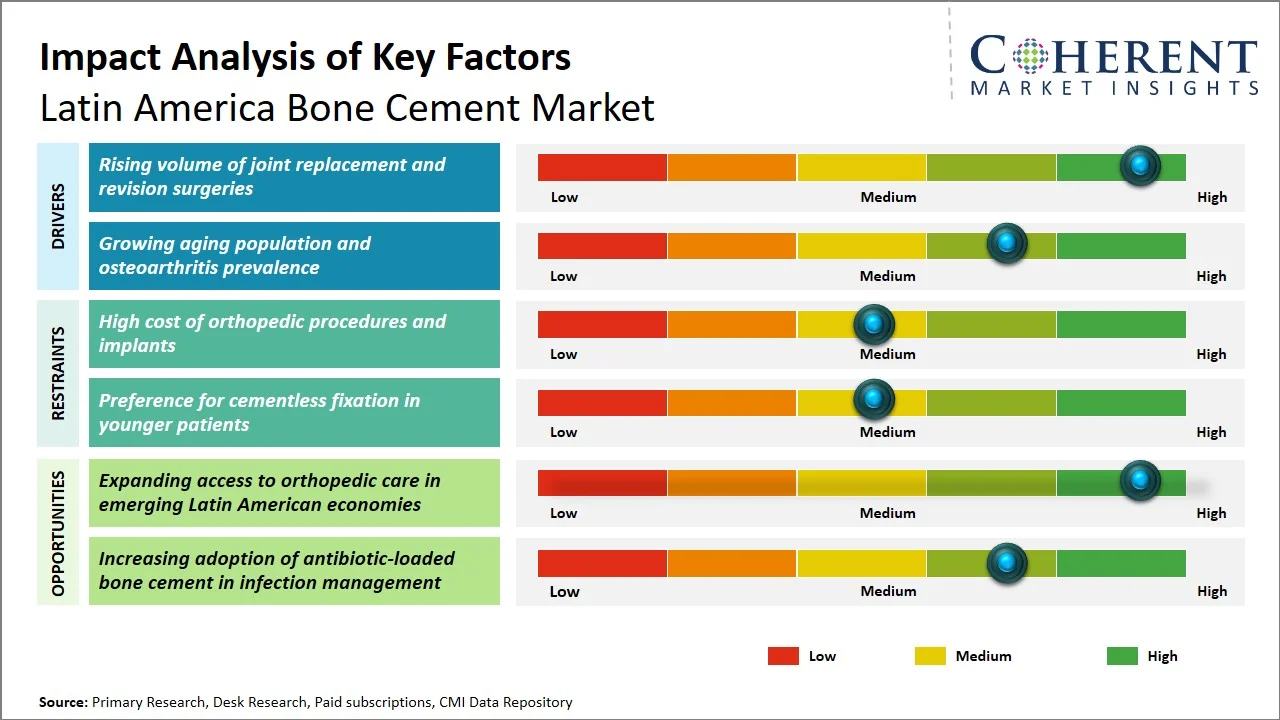
- Rising volume of joint replacement and revision surgeries: The rising number of total joint replacement and revision surgery in Latin America is fueling the demand for bone cement in the fixation and stabilization of orthopedic implants. The increasing incidence of conditions such as osteoporosis, osteoarthritis, musculoskeletal conditions associated with age is enhancing the usage of primary and revision arthroplasty surgery. The trend is further supported by need of addressing complications such as loose implant and post-surgery complications with specialized bone cements in revision surgeries. For instance, in February 2026, a study published in ScienceDirect analyzed data from Brazil's DATASUS/TABNET healthcare database, 6,047 revision surgeries related to periprosthetic joint infection (PJI) were recorded between 2014 and 2024. The escalating strain of revision arthroplasty procedures highlights the surging need for reliable implant fixation materials, including bone cement products used in complex orthopedic reconstructions.
- Growing aging population and osteoarthritis prevalence: The aging population, combined with increasing prevalence of osteoarthritis and related conditions, is fueling increased requirement for orthopedic surgeries. Elderly people, being prone to osteoporosis, chronic orthopedic disorders like osteoarthritis and mobility complications need replacements and implant fixations, such as, joint replacements in knees and hips, and bone fillings during joint revision. For instance, according to Brazil's 2022 Census published by the Brazilian Institute of Geography and Statistics (IBGE), the number of people aged 65 years and older reached 22.2 million in 2022, accounting for 10.9% of the country's population, and increased by 57.4% compared with 2010. The accelerated expansion of the elderly population is expected to mount the burden of osteoarthritis and other musculoskeletal disorders, reinforcing demand for joint replacement procedures and bone cement products. (Source: AGÊNCIA IBGE NOTÍCIAS)
Emerging Trends
- Increasing Preference for Low-Revision Orthopedic Solutions: Strong and sustained focus on orthopedic implant durability and lowering revision rates has given rise to demand from orthopedic surgeons in Latin America for bone cement solutions offering excellent fixing strength. Many health care facilities are looking to adopt a range of technologies, primarily new generation bone cements to improve patient care and manage healthcare costs, across primary as well as revision arthroplasty surgeries.
- Expansion of Private Orthopedic and Specialty Surgery Networks: The rapid adoption of private orthopedic hospitals, specialized musculoskeletal clinics and orthopedic surgical centers are transforming orthopedics in the region and unlocking new demand in joint replacement, orthopedic surgery and trauma procedures as well as in new types of premium orthopedic biomaterials and instruments.
Key Regulatory and Market Access Factors Influencing the Latin America Bone Cement Market
Framework Area | Current Scenario | Market Implication | Future Impact |
Medical Device Registration | Country-specific approvals (ANVISA, COFEPRIS, ANMAT, INVIMA) required before commercialization | Influences product launch timelines and market entry | Regulatory modernization may accelerate access to innovative products |
Hospital Tender & Procurement Systems | Public hospitals procure orthopedic biomaterials through competitive tenders | Pricing and clinical evidence are key purchasing criteria | Value-based procurement likely to gain importance |
Import Regulations | Significant reliance on imported orthopedic biomaterials and medical devices | Impacts product availability, pricing, and supply chains | Regional distribution expansion may improve access |
Quality & Biocompatibility Standards | Compliance with sterility, safety, and performance requirements is mandatory | Supports clinician confidence and patient safety | Higher standards may favor established manufacturers |
Infection Prevention Guidelines | Increasing focus on reducing periprosthetic joint infections (PJIs) | Supports adoption of advanced and antibiotic-loaded bone cement | Infection-control initiatives expected to strengthen demand |
Public Funding for Arthroplasty | Government-supported joint replacement programs influence procedure volumes | Higher procedure volumes increase bone cement utilization | Aging populations will drive continued investment in orthopedic care |
How is the expanding access to orthopedic care in emerging Latin American economies creating new growth opportunities in the Latin America bone cement market?
As healthcare access and medical capacity increase among emerging Latin American economies, demand for bone cement is set to grow at an accelerating rate. Further health sector investments for the development of healthcare infrastructure and specialist care providers have led to a rise in the patient pool who have access to specialized orthopedic consulting, trauma medical assistance, and joint arthroplasty services (using bone cement), further increasing the quantity of orthopedic interventions being performed in this rapidly developing region. For instance, in March 2023, the Government of Brazil reintroduced the Mais Médicos para o Brasil (More Doctors for Brazil) program, adding 15,000 new physician positions and USD 142.7 million (BRL 712 million) investment to support healthcare services nationwide. The program is devised to bring more doctors to rural and marginalized areas, facilitate early diagnosis and treatment of orthopedic conditions, and pave the way for greater adoption of orthopedic products. (Source: Government of Brazil)
Market Players, Company Insights, and Competitive Intelligence
Company Insights
- Zimmer Biomet
- Company Overview
- Headquarters: Indiana, U.S.
- Establishment Year: 1927
- Employee Strength: Approximately 17,000
- Leadership: Justin O. Zimmer, Founder
- Core Services/Products: Orthopedic reconstruction implants, bone cement products, sports medicine solutions, trauma devices, extremity implants, robotic-assisted surgery systems, and musculoskeletal healthcare technologies.
- SWOT Analysis
- Strengths
- Strong global presence in orthopedic reconstruction, joint replacement, and musculoskeletal care with an extensive distribution network across Latin America.
- Well-established portfolio of bone cement products, implant systems, and robotic-assisted surgical technologies supported by strong brand recognition among orthopedic surgeons.
- Weaknesses
- Significant dependence on the orthopedic implant and reconstruction segment, making revenues sensitive to fluctuations in elective surgery volumes.
- Premium product positioning may face pricing pressure in cost-sensitive healthcare markets across Latin America.
- Opportunities
- Growing demand for hip and knee arthroplasty procedures driven by aging populations and increasing prevalence of osteoarthritis in Latin America.
- Expansion of robotic-assisted surgery, revision arthroplasty, and advanced bone cement technologies creates opportunities for portfolio growth and market penetration.
- Threats
- Intense competition from global orthopedic companies such as Stryker, DePuy Synthes, Smith+Nephew, and Heraeus Medical.
- Regulatory changes, reimbursement constraints, and healthcare budget pressures may impact product adoption and procurement decisions.
- Strengths
- Company Overview
- Heraeus Medical
- Company Overview
- Headquarters: Wehrheim, Germany
- Establishment Year: 2001
- Employee Strength: Approximately 16,000 (Part of the Heraeus Group)
- Leadership: Jan Möller, President of Heraeus Medical
- Core Services/Products: Bone cement solutions, antibiotic-loaded bone cements, cement mixing and delivery systems, infection management solutions, and orthopedic biomaterials for joint replacement and revision arthroplasty procedures.
- SWOT Analysis
- Strengths
- Strong global reputation in bone cement technology with the well-established PALACOS and COPAL product portfolios used in orthopedic procedures worldwide.
- Extensive expertise in antibiotic-loaded bone cement formulations and infection prevention solutions for arthroplasty and revision surgeries.
- Weaknesses
- Greater dependence on the bone cement and orthopedic biomaterials segment compared to diversified orthopedic device manufacturers.
- Relatively lower direct presence in orthopedic implant manufacturing, limiting opportunities for integrated implant-cement offerings.
- Opportunities
- Increasing demand for joint replacement and revision arthroplasty procedures across Latin America is expected to create growth opportunities for advanced bone cement products.
- Growing clinical focus on reducing periprosthetic joint infections (PJIs) supports the adoption of antibiotic-loaded bone cement solutions.
- Threats
- Intense competition from diversified orthopedic companies such as Zimmer Biomet, Stryker, DePuy Synthes, and Smith+Nephew.
- Pricing pressures, regulatory changes, and hospital cost-containment initiatives may affect product adoption and profitability.
- Strengths
- Company Overview
Competitive Landscape
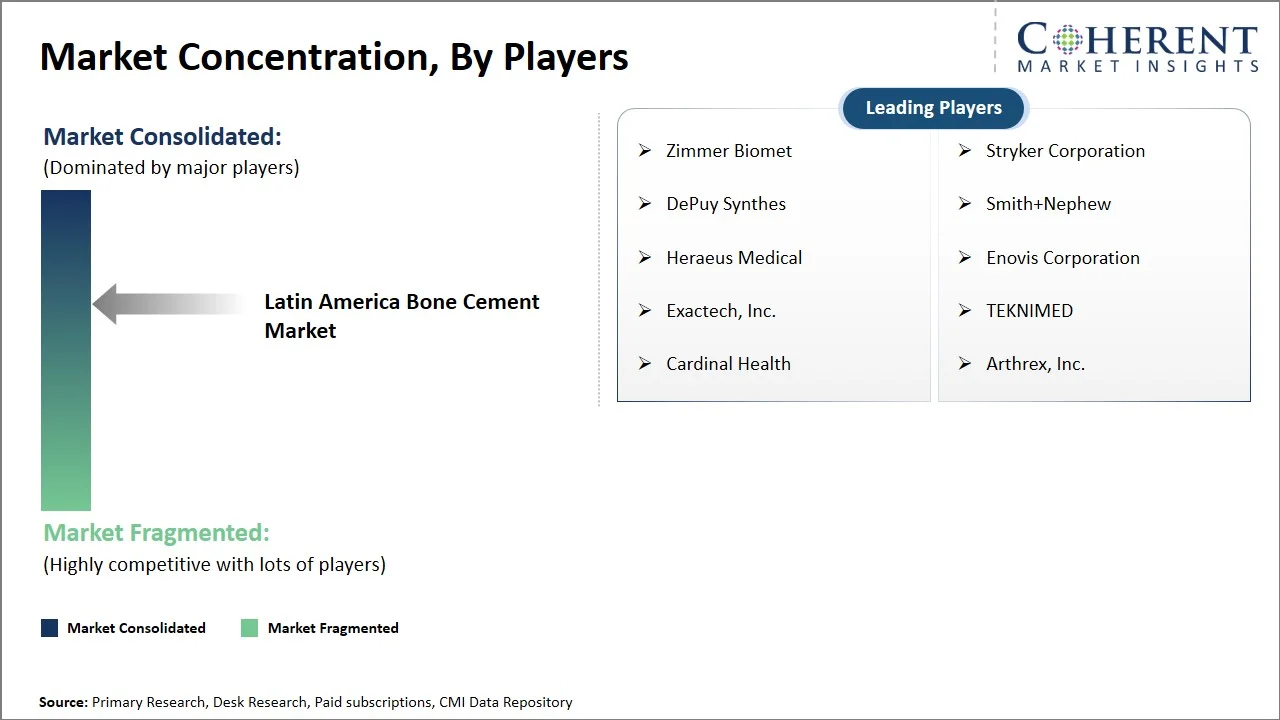
The Latin America bone cement market is moderately concentrated, with major global orthopedic implant manufacturers primarily differentiating their products on features like the performance, anti-microbial properties, U.S. FDA approval and adoption by the end users. Manufacturers also emphasize broadening their orthopedic implants portfolios, extending the distribution across LATAM regions, and facilitating training centers for surgeons to gain the most out of advanced bone cement solutions.
Key focus areas include
- Development of antibiotic-loaded and high-performance PMMA bone cement formulations
- Expansion of orthopedic and arthroplasty product portfolios
- Innovation in viscosity-controlled bone cement technologies
- Strengthening surgeon education, clinical evidence generation, and hospital engagement programs
Market Report Scope
Latin America Bone Cement Market Report Coverage
| Report Coverage | Details | ||
|---|---|---|---|
| Base Year: | 2025 | Market Size in 2026: | USD 61.8 Mn |
| Historical Data for: | 2020 To 2024 | Forecast Period: | 2026 To 2033 |
| Forecast Period 2026 to 2033 CAGR: | 5.4% | 2033 Value Projection: | USD 89.0 Mn |
| Segments covered: |
| ||
| Companies covered: | Zimmer Biomet, Stryker Corporation, DePuy Synthes, Smith+Nephew, Heraeus Medical, Enovis Corporation, Exactech, Inc., TEKNIMED, Cardinal Health, and Arthrex, Inc. | ||
| Growth Drivers: |
| ||
| Restraints & Challenges: |
| ||
Analyst Opinion (Expert Opinion)
- The future of the Latin America bone cement market will be dominated by the rising incidence of joint replacement procedures and increase in demand for minimally invasive spine surgeries coupled with ongoing innovation of advanced orthopedic biomaterials. With the expanding elderly population base across the Latin America region the incidence of osteoarthritis and other chronic joint ailments are on rise thus driving bone cement usage in implant fixation and vertebral procedures. Furthermore, concerns over infections and the growing trend towards better surgical results will increase adoption of specialized bone cements.
- The maximum growth opportunity lies within the PMMA bone cement used for arthroplasty in Brazil with, country’s high incidence of orthopedic patients and the country’s growing demand for arthroplasties along with its wide distribution network in orthopedic hospitals. Antibiotic-loaded bone cement used in the arthroplasty in revision surgeries and high-risk orthopedic surgeries should register high market growth as there is increased interest to minimize prosthetic joint infections and the incidence rate of revision.
- In order to create an advantage for themselves, the competitors should create differentiated bone cement formulations with improved handling properties, better mechanical strengths, and superior anti-infective functions. Orthopedic cement manufacturers also need to cultivate strong collaborative relationships with orthopedic hospitals, arthroplasty centers and orthopedic training centers. Furthermore, establishing and enhancing local distribution network in major Latin America Markets like, Argentina, Brazil and Mexico and collecting Latin American based clinical evidence will be important to reinforce brand building as well as enhancing market penetration.
Speak to the analyst
Want personalized insights?
Take the findings above to one of our principal consultants, or have the report rebuilt around the segments, geographies and competitors you actually track.
Market Segmentation
- Product Type Insights (Revenue, USD Mn, 2021 - 2033)
- Polymethylmethacrylate (PMMA) Cement
- Calcium Phosphate Cement (CPC)
- Type Insights (Revenue, USD Mn, 2021 - 2033)
- Antibiotic-Loaded Bone Cement
- Non-Antibiotic Bone Cement
- Viscosity Insights (Revenue, USD Mn, 2021 - 2033)
- Low Viscosity
- High Viscosity
- Medium Viscosity
- Variable-Viscosity
- Application Insights (Revenue, USD Mn, 2021 - 2033)
- Arthroplasty
- Kyphoplasty
- Vertebroplasty
- Trauma and Fracture Repair
- Others
- End User Insights (Revenue, USD Mn, 2021 - 2033)
- Hospitals
- Specialty Orthopedic Clinics
- Specialty Spine Centers
- Ambulatory Surgical Centers
- Others
- Key Players Insights
- Zimmer Biomet
- Stryker Corporation
- DePuy Synthes
- Smith+Nephew
- Heraeus Medical
- Enovis Corporation
- Exactech, Inc.
- TEKNIMED
- Cardinal Health
- Arthrex, Inc.
Sources
Primary Research Interviews
- Orthopedic Surgeons – bone cement utilization trends in hip and knee arthroplasty, cement selection criteria, and fixation preferences
- Spine Surgeons – use of bone cement in vertebroplasty, kyphoplasty, and vertebral augmentation procedures
- Arthroplasty Specialists – adoption of antibiotic-loaded versus non-antibiotic bone cement and revision surgery considerations
- Hospital Procurement Managers – purchasing patterns for orthopedic biomaterials and bone cement products
- Orthopedic Operating Room Managers – procedure volumes, surgeon preferences, and inventory management practices
- Medical Device Distributors – regional demand trends, pricing dynamics, and competitive landscape insights
Stakeholders
- Bone Cement Manufacturers (e.g., Zimmer Biomet, Heraeus Medical, Stryker, DePuy Synthes, Smith+Nephew, Enovis, Arthrex)
- Orthopedic Implant Manufacturers
- Hospitals and Orthopedic Surgery Centers
- Specialty Orthopedic and Spine Clinics
- Ambulatory Surgical Centers (ASCs)
- Medical Device Distributors and Procurement Organizations
- End-use Sectors
- Hospitals
- Orthopedic Specialty Centers
- Spine Surgery Centers
- Ambulatory Surgical Centers
- Academic Medical Institutions
- Regulatory & Health Bodies
- ANVISA (Brazil)
- COFEPRIS (Mexico)
- ANMAT (Argentina)
- INVIMA (Colombia)
- Ministry of Health, Brazil
- Pan American Health Organization (PAHO)
Databases
- DATASUS/TABNET (Brazil) – arthroplasty procedures, orthopedic hospitalizations, and healthcare utilization data
- PAHO Health Information Platform – musculoskeletal disease and healthcare statistics
- ClinicalTrials.gov – orthopedic biomaterial and bone cement clinical studies
- Scopus – orthopedic biomaterial research and publication database
- WHO Global Health Observatory – musculoskeletal health indicators and demographic data
Magazines
- Orthopedics Today – arthroplasty and orthopedic device developments
- Bone & Joint 360 – orthopedic technology and clinical practice trends
- Orthopedic Design & Technology – orthopedic implant and biomaterial innovations
- Medical Product Outsourcing – orthopedic device manufacturing and supply chain developments
- MedTech Dive – orthopedic device and regulatory updates
Journals
- The Journal of Bone & Joint Surgery (JBJS)
- Bone & Joint Journal
- Clinical Orthopedics and Related Research (CORR)
- Journal of Arthroplasty
- International Orthopedics
- The Bone & Joint Open
- Acta Orthopaedica
- Archives of Orthopedic and Trauma Surgery
Newspapers
- Financial Times – healthcare investments and medical technology industry updates
- The Wall Street Journal (Health & Business Section) – orthopedic device and healthcare market developments
- Valor Econômico (Brazil) – healthcare investments and medical device industry news
- El Economista (Mexico) – healthcare policy and medical technology developments
Associations
- Latin American Society of Orthopedics and Traumatology (SLAOT)
- Brazilian Society of Orthopedics and Traumatology (SBOT)
- Mexican College of Orthopedics and Traumatology (CMOT)
- American Academy of Orthopaedic Surgeons (AAOS)
- International Society of Orthopaedic Surgery and Traumatology (SICOT)
- AO Foundation
- Arthroplasty Society in Asia Pacific and Latin American Collaborative Networks
Public Domain Sources
- ANVISA – orthopedic biomaterial and medical device regulations
- COFEPRIS – medical device registration and market authorization data
- ANMAT – orthopedic device approvals and regulatory updates
- INVIMA – medical device registration database
- PAHO – musculoskeletal health and healthcare infrastructure statistics
- WHO – orthopedic disease burden and demographic indicators
- DATASUS – public orthopedic procedure and hospitalization data
Proprietary Elements
- CMI Data Analytics Tool, Proprietary CMI Existing Repository of information for last 10 years.
Get access to 250+ pages report
Every segment, forecast, competitor profile and data table behind the analysis above — available for instant download.
- ESOMAR Member
- ISO 9001:2015 Certified
- D-U-N-S Registered
- GDPR & CCPA Compliant
Missing comfort of reading report in your local language? Find your preferred language:
Transform your Strategy with Exclusive Trending Reports
Frequently Asked Questions
The Latin America bone cement market is estimated to be valued at USD 61.8 Mn in 2026 and is expected to reach USD 89.0 by 2033.
Polymethylmethacrylate (PMMA) cement dominates due to its superior mechanical fixation properties, long clinical track record, cost-effectiveness, and widespread use in joint replacement procedures. Its ability to provide immediate implant stability and durable fixation in hip and knee arthroplasty continues to support its dominant market position.
Bone cement is a biomaterial primarily used to anchor orthopedic implants to bone and provide mechanical stability during joint replacement and other orthopedic procedures.
The CAGR of the Latin America bone cement market is projected to be 5.4% from 2026 to 2033.
Rising volume of joint replacement and revision surgeries, and growing aging population and osteoarthritis prevalence are the major factors driving the growth of the Latin America bone cement market.
PMMA bone cement provides immediate implant fixation, distributes mechanical loads effectively, and has demonstrated long-term clinical reliability in joint replacement surgeries.
Antibiotic-loaded bone cement enables localized antibiotic delivery at the surgical site, helping reduce the risk of periprosthetic joint infections while maintaining implant fixation.