

Global Life Science Market Size and Forecast – 2026 to 2033
According to Coherent Market Insights, the life science market is estimated to be valued at USD 108.80 Bn in 2026 and is expected to reach USD 245.07 Bn by 2033, exhibiting a compound annual growth rate (CAGR) of 12.3% from 2026 to 2033. This robust growth is driven by continuous advancements in biotechnology, increased investment in pharmaceutical research, and expanding healthcare infrastructure worldwide, highlighting the market’s significant potential over the forecast period.
Key Takeaways of the Life Science Market
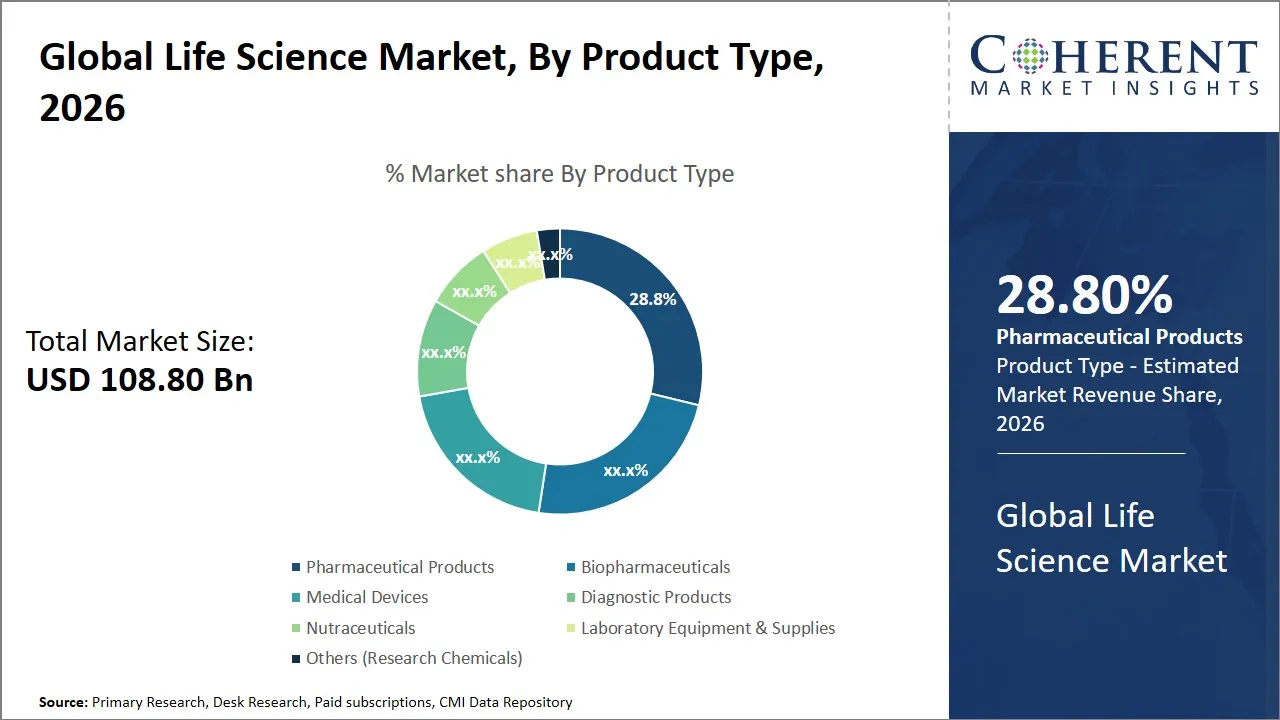
- Pharmaceutical products segment is expected to lead the global life science market, capturing 28. 80% share in 2026.
- Drug discovery segment is estimated to represent 35. 6% of the global life science market share in 2026.
- Academic and research institutes segment is projected to dominate with 38. 7% of the market share in 2026.
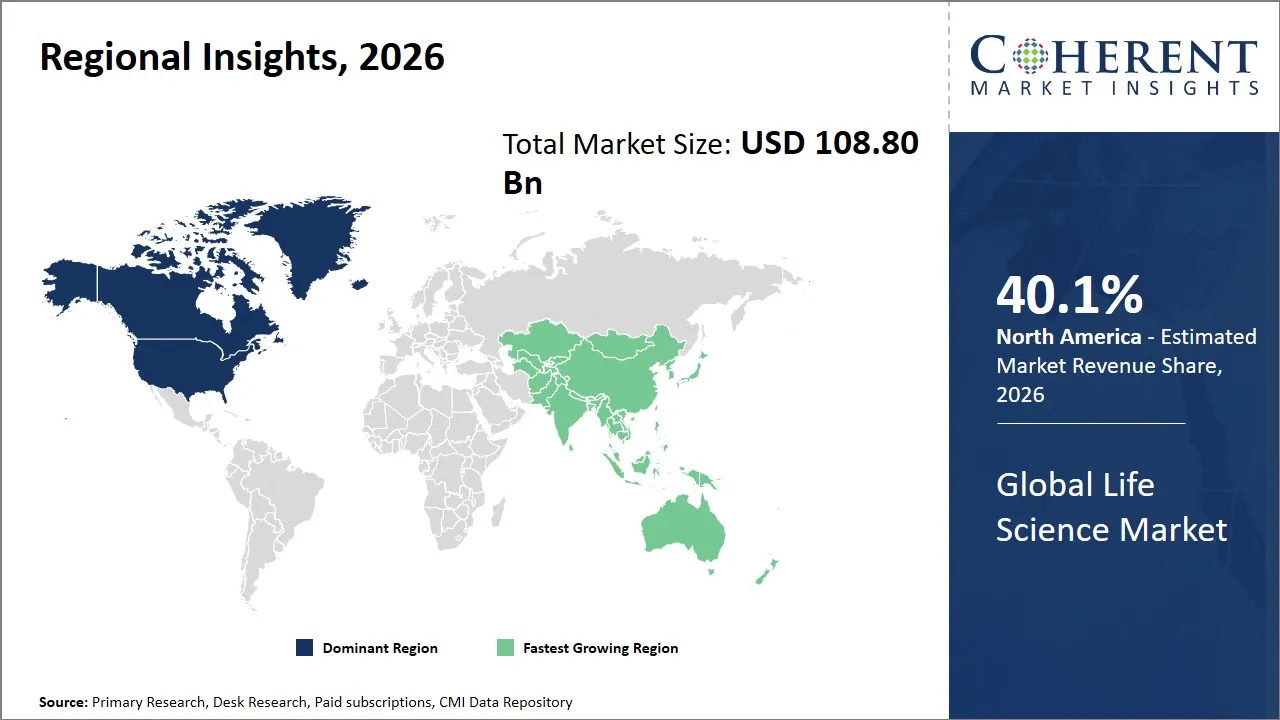
- North America is expected to lead the market, holding a share of 40. 10% in 2026. Asia Pacific is anticipated to be the fastest-growing region, with 28.40% share in 2026.
Market Overview
- The global life science market is driven by innovations in biotechnology, pharmaceuticals, and medical devices, especially with the rise of personalized medicine and AI-driven drug discovery.
- Increasing prevalence of chronic diseases and genetic disorders, coupled with an aging population, is boosting demand for advanced diagnostics, therapies, and medical research solutions.
- Significant investments in biotech startups, focusing on gene editing, regenerative medicine, and novel therapies, are fostering innovation and expanding the scope of the market.
- Despite challenges like regulatory hurdles and high development costs, emerging technologies in digital health, AI, and data analytics are poised to accelerate market growth and improve treatment efficiency.
Current Events and Its Impact
Current Events | Description and its Impact |
Launch of AI-Driven Drug Discovery Platforms |
|
Expansion of Personalized Medicine |
|
Segmental Insights
- Current Industry Events of 2026
- Market Size Estimation
- Regional Breakdown
- Competitive Landscape
- Customer Intelligence
- Segmental Analysis
- Pricing Analysis
- Key Market Drivers, Challenges & Future Trends
- Customized Insights Section
Why Does the Pharmaceutical Products Segment Dominate the Global Life Science Market in 2026?
The pharmaceutical products segment is expected to hold the largest share of 28.80% in 2026, propelled by the continuous innovation in drug development, rising prevalence of chronic and lifestyle diseases, and increasing consumer access to healthcare worldwide. Pharmaceuticals encompass a wide variety of chemical drugs that treat or prevent diseases, making them essential across virtually all healthcare systems.
One of the key growth drivers is the rapid advancement in medicinal chemistry and formulation technologies, enabling the development of novel drugs with improved efficacy and safety profiles. The surge in personalized medicine approaches encourages tailored therapies, prompting pharmaceutical companies to invest heavily in research and development. These innovations not only address unmet medical needs but also expand the product pipeline, subsequently propelling market growth.
For instance, on January 21, 2026, Johnson & Johnson reported strong pharmaceutical sales driven by cancer and autoimmune drugs, with robust quarterly results and a forecast of continued growth into 2026. Major products such as Darzalex (multiple myeloma) and Tremfya (autoimmune) contributed significantly to its performance.
Why Drug Discovery is the Largest Application in the Global Life Science Market?
The drug discovery segment is projected to dominate the market, accounting for 35.6% of the market share in 2026, driven by the urgent need for novel therapeutics and substantial investments in research and development activities globally. The pharmaceutical and biotechnological innovation is based on the drug discovery process which directly affects the success of the new treatment options.
A number of variables form the basis of the popularity of this segment. First and foremost, the combination of the innovative technologies, including artificial intelligence (AI), machine learning, and screening techniques with high throughputs, has transformed drug candidates searches and validation. The tools are efficient because they save time and cost that would be used to screen large compound libraries and predict drug-target interactions, a step that maximizes the selection of leads.
Academic and Research Institutes Lead the Life Science Market
The academic and research institutes segment is expected to capture the highest share of 38.7% in 2026, their central role in fundamental research, innovation, and the development of novel technologies that feed the broader life sciences industry. These institutes are important incubators of scientific findings at the early stage and they facilitate the breakthrough that would translate into commercialized products and therapeutic innovations.
The key element in the growth in this sector is the high investments that academic institutions get through the government bodies, business foundations, and industry partnerships in order to undertake innovative research in the fields of biotechnology, molecular biology, and other interconnected fields. Academic setting promotes the discussion of new scientific ideas, and the commercial pressure is not as urgent, therefore, the work on the edge can be performed and influence on the further usage can be shaped.
Regulatory Velocity and Approval Success Rates in Global Life Science Market
- The life science market regulatory approval process is a pivotal variable affecting the product development and introduction into the market. The healthcare providers and the manufacturers of medical devices are end-users and continuously stress on the speed and efficiency of regulatory pathways. An example is the positive feedback that has been recorded by companies in the gene therapies and biotechnology sectors in the regions where governments have introduced such fast-track approvals in their regulatory bodies such as the USFDA. This has enabled the companies to commercialize breakthrough therapies such as cell-based treatments of cancer to the market in a short period of time, when their services are needed. Conversely, the manufacturers may experience difficulties in areas where the approval process is slower or has uneven regulatory frameworks, especially in the new markets.
- Another general pitfall amongst end users is the complexity and high cost of compliance with regulatory requirements especially when it comes to new products. Indicatively, biotech companies tend to become stagnant with regard to approval challenges because of excessive documentation and clinical trial data criteria. In order to respond to these unmet requirements, manufacturers can work on prior collaboration with regulators to facilitate the approval process and shorten the time-to-market. The increase in the growth of the market and adoption of new technologies can be achieved by better regulation of innovative technologies, and the delivery of innovative healthcare technologies to patients with a better rate can lead to better patient outcomes and the availability of life-saving therapies to more people.
Regional Insights
North America Life Science Market Analysis and Trends
The North America region is projected to lead the market with a 40.10% share in 2026, driven by a highly developed healthcare infrastructure, significant investment in research and development, and a well-established ecosystem of biotech firms, pharmaceutical companies, and medical device manufacturers. The region benefits from high levels of governmental support via agencies like the NIH and FDA whereby, clinical trials, innovation and regulatory approvals are eased.
The presence of large centers of life sciences, especially in the Boston, San Francisco and San Diego regions of the U.S., encourage the partnerships between start-ups, academic and larger corporations. Such industry leaders as Johnson and Johnson, Pfizer, Thermo Fisher scientific, and Amgen are especially important as they drive innovative therapies, diagnostics, and laboratory technologies. Besides, the trade dynamics of North America, such as efficient intellectual property rights and availability of international supply chains, form the basis of its market leadership.
For instance- In October 2025, Medtronic has launched its AI-powered neurostimulation system in North America to treat chronic pain and neurological disorders. The system uses artificial intelligence to personalize treatments, aligning with the growing trend of AI-driven healthcare. This launch reflects the increasing demand for innovative, personalized treatments and highlights Medtronic's role in the expanding life science market in North America.
(Source- https://news.medtronic.com/press-releases)
Asia Pacific Life Science Market Analysis and Trends
The Asia Pacific region is expected to exhibit the fastest growth in the market contributing 28.40% share in 2026, due to rapidly expanding healthcare demands, government initiatives encouraging biotechnology and pharmaceutical innovation, and rising investments in research infrastructure. Countries like China, India, Japan and South Korea are actively developing their life science industry through providing desirable policies, tax incentives, and investments in the industry by drawing international and domestic players.
The rising incidence of chronic illnesses and ageing also contribute to the growth of the requirement to more sophisticated diagnostics and therapies. The major players who have taken enormous steps towards this region are WuXi AppTec and Shanghai Pharma, Dr. Reddy’s laboratories and Biocon, Takeda Pharmaceutical and Sysmex Corporation based in China and India respectively. Increasing the attractiveness of the region as a manufacturing and clinical trial center is also boosted by trade reforms and an increasing ease of doing business.
Global Life Science Market Outlook for Key Countries
What are the Current Trends Shaping U.S. Life Science Market?
The U.S. life science market is the global leader based on the unparalleled level of innovation capacity, investment in research, and developed healthcare ecosystem. Major players such as Pfizer, Moderna, Thermo Fisher Scientific and Medtronic are based here and therefore the U.S. is on the forefront of biopharmaceuticals, genomics and personalized medicine.
The government agencies like the NIH and FDA are making it easy to develop and approve the regulatory procedures and venture capital investments into biotech start-ups remain strong. The robust intellectual property infrastructure and the well-developed clinical trial systems in the country boost the rate of innovation in terms of new therapies.
How is China Helping in the Growth of Life Science Market?
The market of life science in China is growing tremendously with active government support by the introduction of the programmes, like Made in China 2025 and the Healthy China 2030 program, where the focus is on biotechnology and pharmaceuticals innovation. Among the major demand drivers are the rising middle class, rise in spending on healthcare and the expansion in insurance cover. Such players as WuXi AppTec, BeiGene, and Sino Biopharmaceutical are growing R&D and expanding in the international markets.
Reforms in the National Medical Products Administration have reduced the time taken in approvals, and thus, the product can be accessed faster in the market. Moreover, China is emerging as a global center of practice of contract research and manufacturing services, which is backed by the large talent base and economic operations.
Key Drivers for Germany Life Science Market Growth
Germany has maintained its lead in Europe due to its good industrial standing, robust academic research system and government confidence in innovation. The nation boasts of such reputable players as Bayer, BioNTech, and Sartorius that play a key role in pharmaceuticals, biotechnologies, and laboratory technologies.
The established clinical infrastructure and the partnership of the public research institutes and the industry in Germany lead to the emergence of new therapies and particularly in cancer and immunology. Existing positive European Union regulations and trade policies also promote the German firms in the global life science market in terms of exporting.
India Life Science Market Trends
The market of India is characterized by high population with skilled labor, cheap production facilities and a rising biotechnology sector. There are government programs like the Make in Indiana and funding of biotech parks, which is boosting industry growth. Such companies as the Laboratories of Dr. Reddy, Biocon, and Serum Institute of India are playing the significant role in providing the global markets with affordable biosimilars, vaccines, and generic drugs. There is also an increased interest in India as a clinical trial location because of the diverse patient population and the increasing healthcare facilities. Regulatory reforms have also been progressive and enhanced quality standards and compliance.
AI in Drug Discovery, Precision Medicine, and Genomic Research in Global Life Science Market
- End users, especially within the biotech and pharmaceutical industries, are turning to AI technologies to help speed up drug discovery and enhance precision medicine. Since AI has the capability of analyzing large volumes of genomic data, researchers have been able to discover new therapeutic targets, expediting and simplifying drug development. A good case study is one by Pfizer, where AI-powered algorithms have drastically decreased the amount of time necessary to come up with potential drug candidates in oncology treatments, which reduced clinical trial procedures and facilitated more tailored treatment. Nevertheless, one of the most common complaints of the users is that the AI systems are not integrated with the current healthcare infrastructures, and this results in the difficulties with the way the AI-powered solutions are implemented and slows the process of their adoption.
- The potential of AI is obvious, but it has multiple unmet needs, including the issue of data privacy, affordability, and non-standardized AI models suitable to various therapeutic fields. Smaller biotech companies, particularly in the emerging markets, usually cannot afford AI solutions and have a problem in using AI tools custom-made to meet their specific needs. To fill these gaps, it is possible to make AI solutions more affordable, interoperable, and customizable, which might give the opportunity to open new growth perspectives, especially in the context of emerging markets where the healthcare systems are developing at a high rate. The developments would also enhance customer retention through the provision of cost-effective and customized solutions that would stimulate innovation in the global life science industry.
Market Players, Key Developments, and Competitive Intelligence
Key Developments
- In January 2025, MaxisIT reported the launch of Site Copilot, the most recent technology developed on the advanced DTect AI platform as part of the MaxisIT Agentic AI portfolio to solve imperative issues that affect clinical trial sites, regulatory compliance, quality control, and patient engagement through the optimization of workflows and enhancement of sponsor-site interaction to compliance concerns, and quality and patient engagement risks.
- In April 2025, Abu Dhabi launched the groundbreaking life sciences cluster, reinforcing its position as a global hub for biotechnology, MedTech, and digital health. Developed by the Abu Dhabi Department of Economic Development, Abu Dhabi Investment Office (ADIO), and the Department of Health, Abu Dhabi, the Health, Endurance, Longevity, and Medicine (HELM) cluster is designed to drive healthcare innovation by attracting international investment and delivering lasting benefits to global populations.
- In February 2024, ArisGlobal declared the new strategic partnership deal with Nextrove, an implementation, systems integration, and data migration expert in the field of life science. The alliance forms a greater source of specialized talent that the pharmaceutical companies can use to adopt the next generation LifeSphere solutions.
Top Strategies Followed by Global Life Science Market Players
Player Type | Strategic Focus | Examples |
Established Market Leaders | Established industry leaders in the life science market invest heavily in R&D to drive innovation and stay ahead of scientific and regulatory trends. They leverage their resources to pioneer breakthroughs and form strategic partnerships with OEMs and other stakeholders to expand their product offerings and market reach. | Johnson & Johnson invests significantly in innovative medical devices and biopharmaceuticals. Through partnerships with academic institutions and global distributors, they expand their reach into emerging markets, offering cutting-edge treatments and capitalizing on increased healthcare demand in regions like Asia-Pacific. |
Mid-Level Players | Mid-level players in the life science market focus on offering affordable and reliable solutions for price-sensitive consumers, including academic institutions and small healthcare providers. They differentiate themselves by offering cost-effective products and forming strategic partnerships with technology providers and regional distributors to improve production efficiency and expand market reach. | Meril Life Sciences, a mid-sized company, offers affordable medical devices and biotech solutions tailored for smaller hospitals and research labs. By partnering with local distributors and investing in customizable solutions, they have carved out a strong market presence in Asia-Pacific and Latin America. |
Small-Scale Players | Small-scale players in the life science market differentiate themselves by focusing on specialized products or innovative features that address specific unmet needs. Their agility allows them to adopt cutting-edge technologies quickly and form local partnerships with startups, small manufacturers, and research institutions to enhance market entry and visibility. | Tendyne Technologies, a small player in the heart valve market, focuses on innovative, minimally invasive heart valve solutions. Through partnerships with local hospitals and research institutions, they have successfully penetrated underserved markets, offering customized products for specific patient needs. |
Market Report Scope
Life Science Market Report Coverage
| Report Coverage | Details | ||
|---|---|---|---|
| Base Year: | 2025 | Market Size in 2026: | USD 108.80 Bn |
| Historical Data for: | 2020 To 2024 | Forecast Period: | 2026 To 2033 |
| Forecast Period 2026 to 2033 CAGR: | 12.3% | 2033 Value Projection: | USD 245.07 Bn |
| Geographies covered: |
| ||
| Segments covered: |
| ||
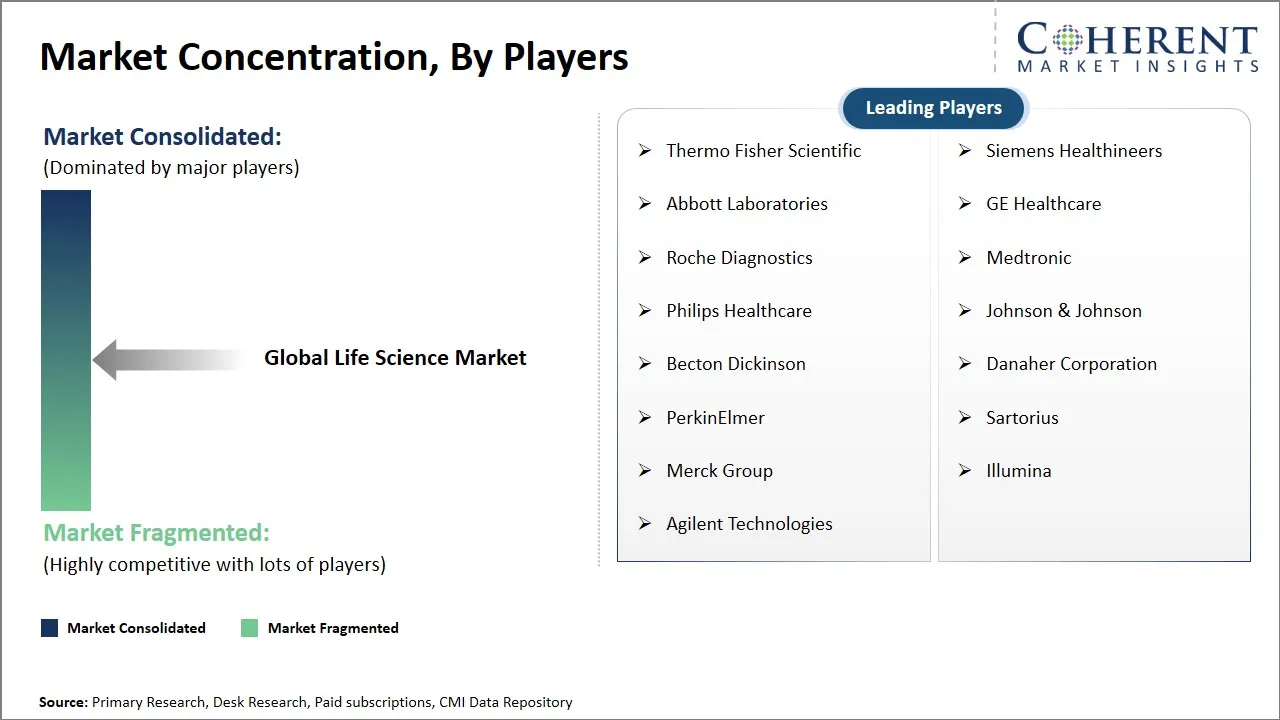
| Companies covered: | Thermo Fisher Scientific, Siemens Healthineers, Abbott Laboratories, GE Healthcare, Roche Diagnostics, Medtronic, Philips Healthcare, Johnson & Johnson, Becton Dickinson, Danaher Corporation, PerkinElmer, Sartorius, Merck Group, Illumina, and Agilent Technologies | ||
| Growth Drivers: |
| ||
| Restraints & Challenges: |
| ||
Market Dynamics
Life Science Market Driver - Rising Demand for Advanced Diagnostic and Therapeutic Tools
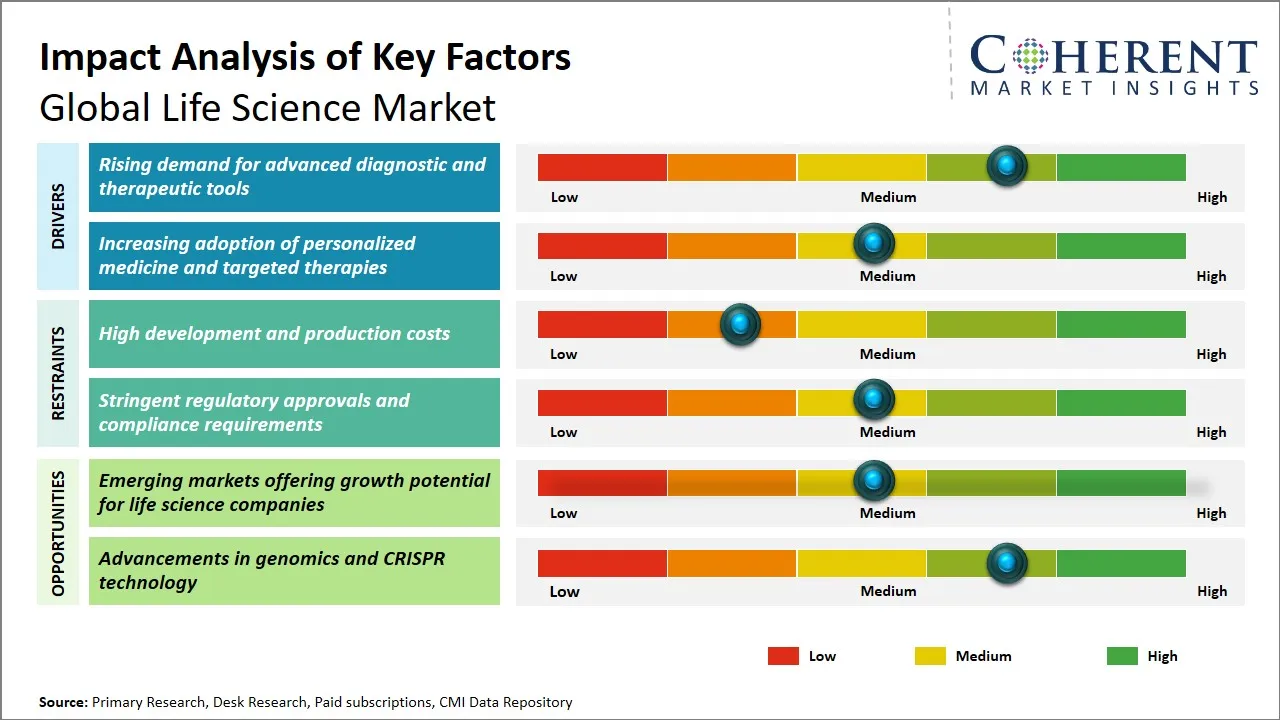
A growing demand to find more effective solutions to tackle complex and chronic health problems with more advanced diagnostic and therapeutic solutions is also driving the global life science market considerably. With the healthcare systems all over the world serving the purpose of achieving precision medicine and personalization of treatment methods, the focus on technologies that will help in early disease detection, precise diagnosis, and tailored therapy is increasing. Next generation sequencing, molecular diagnostics and digital pathology are some of the innovations, which are transforming the disease identification and monitoring process to enable prompt interventions and better patient outcomes.
Moreover, new areas of therapeutic modalities, such as biologics, genetic editing, and regenerative medicine are increasing need of innovative tools that can provide safer and more effective treatment. The combination of both the technological advancements and the increasing prevalence of lifestyle diseases and the aging population is also driving the investment in research and development which is again accelerating the rapid adoption of these advanced diagnostic and treatment systems. The given trend highlights the importance of innovation that will transform clinical decision-making and improve healthcare delivery throughout the world.
For instance, Abbott Laboratories has experienced massive demand of its diagnostic platforms such as the Alinity system providing advanced diagnostic testing in the field of genomics, infectious diseases and cardiovascular care. Their emphasis has been on offering real-time diagnostics and point-of-care solutions to serve the growing demand of rapid and precise testing, especially in the emergency treatment and distant healthcare facilities.
(Source- https://www.abbott.com/en-us/products-solutions/diagnostics-testing)
Life Science Market Opportunity - Emerging Markets Offering Growth Potential for Life Science Companies
The global life sciences industry is experiencing a major growth opportunity in emerging markets because of various important reasons that may include the growth of healthcare infrastructure, increasing disposable income, and an increase in the prevalence of chronic diseases. Nations like Asia Pacific, Latin America and other African countries are going through rapid urbanization and healthcare accessibility and as such, they are becoming a good location where life science firms can consider expanding their footprint.
The policies of the government to enhance better healthcare results, coupled with positive changes in regulations, are positive moves that drive foreign direct investment and allow quicker product approvals and access to the market. Moreover, increased acceptance of innovative healthcare solutions is being propelled by increasing awareness and demand in these regions concerning advanced diagnostics, personalized medicine, and biopharmaceuticals. Another advantage of emerging markets is that the population of the country is relatively young with a growing life expectancy, which drives the need of health care products and services.
For instance, Medtronic, one of the world leaders in the life science market, has recently spread its sources, particularly in India and China, with the primary target on affordable medical equipment and minimal invasion surgery. They have been able to overcome the growing demand of quality healthcare solutions and exploit the growing healthcare infrastructure in these countries by setting up manufacturing facilities in these countries and collaborating with the local healthcare providers.
Analyst Opinion (Expert Opinion)
- Life science market is still booming due to fast changes in technologies, regulatory environment, and growing need in innovative health care. The combination of AI, genomic research, and precision medicine is reshaping the pharmaceutical discovery and treatment approaches as well as the development timeframes given personalized treatments and shorter development times. Market development is further accelerated by regulatory organizations providing rapid access to innovative treatments, particularly biotech and gene editing. Nonetheless, there are still difficulties in the high cost of development, regulatory complexity, and the necessity of worldwide standard harmonization.
- The new opportunities are in the growing uses of digital health solutions, such as wearable technologies and telehealth platforms, particularly in the emerging economies where health care infrastructure is quickly advancing. Gene therapies, biomaterials, and AI-based diagnostics have been presented in conferences, such as the European Society of Cardiology Congress and BIO International Convention, making it easier to share knowledge and promote policy changes. Moreover, the examples of Medtronic, which has been leading in robotic surgery and wireless neurostimulation equipment, show that technology alliances and internationalization are opening the door to wider use and better healthcare results of the equipment in different locations.
Speak to the analyst
Want personalized insights?
Take the findings above to one of our principal consultants, or have the report rebuilt around the segments, geographies and competitors you actually track.
Market Segmentation
- Product Type Insights (Revenue, USD Bn, 2021 - 2033)
- Pharmaceutical Products
- Biopharmaceuticals
- Medical Devices
- Diagnostic Products
- Nutraceuticals
- Laboratory Equipment & Supplies
- Others (Research Chemicals)
- Application Insights (Revenue, USD Bn, 2021 - 2033)
- Drug Discovery
- Genomics
- Proteomics
- Cell Biology
- Microbiology
- Molecular Diagnostics
- End User Insights (Revenue, USD Bn, 2021 - 2033)
- Academic and Research Institutes
- Pharmaceutical and Biotech Companies
- Hospitals and Diagnostic Centers
- Contract Research Organizations (CROs)
- Government Agencies
- Technology Insights (Revenue, USD Bn, 2021 - 2033)
- Genomic Sequencing
- CRISPR Technology
- Mass Spectrometry
- Microscopy
- Flow Cytometry
- Polymerase Chain Reaction (PCR)
- Therapeutic Area Insights (Revenue, USD Bn, 2021 - 2033)
- Oncology
- Cardiovascular
- Neurology
- Infectious Diseases
- Immunology
- Rare Diseases
- Distribution Channel Insights (Revenue, USD Bn, 2021 - 2033)
- Online
- Offline
- Regional Insights (Revenue, USD Bn, 2021 - 2033)
- North America
- U.S.
- Canada
- Latin America
- Brazil
- Argentina
- Mexico
- Rest of Latin America
- Europe
- Germany
- U.K.
- Spain
- France
- Italy
- Russia
- Rest of Europe
- Asia Pacific
- China
- India
- Japan
- Australia
- South Korea
- ASEAN
- Rest of Asia Pacific
- Middle East
- GCC Countries
- Israel
- Rest of Middle East
- Africa
- South Africa
- North Africa
- Central Africa
- North America
- Key Players Insights
- Thermo Fisher Scientific
- Siemens Healthineers
- Abbott Laboratories
- GE Healthcare
- Roche Diagnostics
- Medtronic
- Philips Healthcare
- Johnson & Johnson
- Becton Dickinson
- Danaher Corporation
- PerkinElmer
- Sartorius
- Merck Group
- Illumina
- Agilent Technologies
Sources
Primary Research Interviews
- Industry Stakeholders
- Pharmaceutical manufacturers
- Biotech firms
- Medical device manufacturers
- Healthcare providers
- Regulatory bodies
- Original Equipment Manufacturers (OEMs)
- End Users
- Hospitals and healthcare institutions
- Patients with chronic conditions
- Research laboratories
- Medical practitioners (doctors, surgeons)
- Clinics specializing in specific treatments
- Health insurance providers
Government and International Databases
- U.S. Food and Drug Administration (FDA)
- European Medicines Agency (EMA)
- World Health Organization (WHO)
- Centers for Disease Control and Prevention (CDC)
- National Institutes of Health (NIH)
- Health Canada
Trade Publications
- Journal of Medical Devices
- Healthcare Packaging
- Medical Product Outsourcing
- BioWorld
- The Medical Device and Diagnostic Industry (MDDI)
- Pharmaceutical Technology
Academic Journals
- The Lancet
- Journal of Clinical Investigation
- Cell Stem Cell
- New England Journal of Medicine
- Journal of the American Medical Association (JAMA)
- Nature Biotechnology
Reputable Newspapers
- The New York Times
- The Guardian
- The Wall Street Journal
- Financial Times
- Reuters
- BBC New
Industry Associations
- American Heart Association (AHA)
- European Society of Cardiology (ESC)
- The Society for Cardiovascular Angiography and Interventions (SCAI)
- World Heart Federation (WHF)
- American College of Cardiology (ACC)
- Biotechnology Innovation Organization (BIO)
Public Domain Resources
- ClinicalTrials.gov
- Cochrane Library
- WIPO Patentscope
- Google Scholar
- OpenFDA
Proprietary Elements
- CMI Data Analytics Tool: Proprietary analytics tool to analyze real-time market trends, consumer behavior, and technology adoption in market
- Proprietary CMI Existing Repository of Information for Last 8 Years
Get access to 250+ pages report
Every segment, forecast, competitor profile and data table behind the analysis above — available for instant download.
- ESOMAR Member
- ISO 9001:2015 Certified
- D-U-N-S Registered
- GDPR & CCPA Compliant
Missing comfort of reading report in your local language? Find your preferred language:
Transform your Strategy with Exclusive Trending Reports
Frequently Asked Questions
The global life science market is estimated to be valued at USD 108.80 billion in 2026 and is expected to reach USD 245.07 billion by 2033.
The CAGR of global life science market is projected to be 12.3% from 2026 to 2033.
Rising demand for advanced diagnostic and therapeutic tools and increasing adoption of personalized medicine and targeted therapies are the major factors driving the growth of the global life science market.
High development and production costs and stringent regulatory approvals and compliance requirements are the major factors hampering the growth of the global life science market.
AI‑assisted drug discovery, genomic sequencing, and precision medicine platforms are accelerating research, reducing development timelines, and improving treatment targeting.
Faster approval pathways for breakthrough therapies help bring products to market more quickly, but inconsistent global regulatory standards still create challenges for cross‑border commercialization.
In terms of product type, pharmaceutical products are estimated to dominate the market revenue share in 2026.