

Global LIPITOR Market Size and Forecast – 2026 to 2033
The Global LIPITOR Market is estimated to be valued at USD 1,386.6 Mn in 2026 and is expected to reach USD 937.7 Mn by 2033, exhibiting a compound annual growth rate (CAGR) of -5.2% from 2026 to 2033. This decline reflects market challenges including patent expirations and increased competition from generic alternatives, which are influencing overall revenue contraction during the forecast period.
Key Takeaways of the Global LIPITOR Market
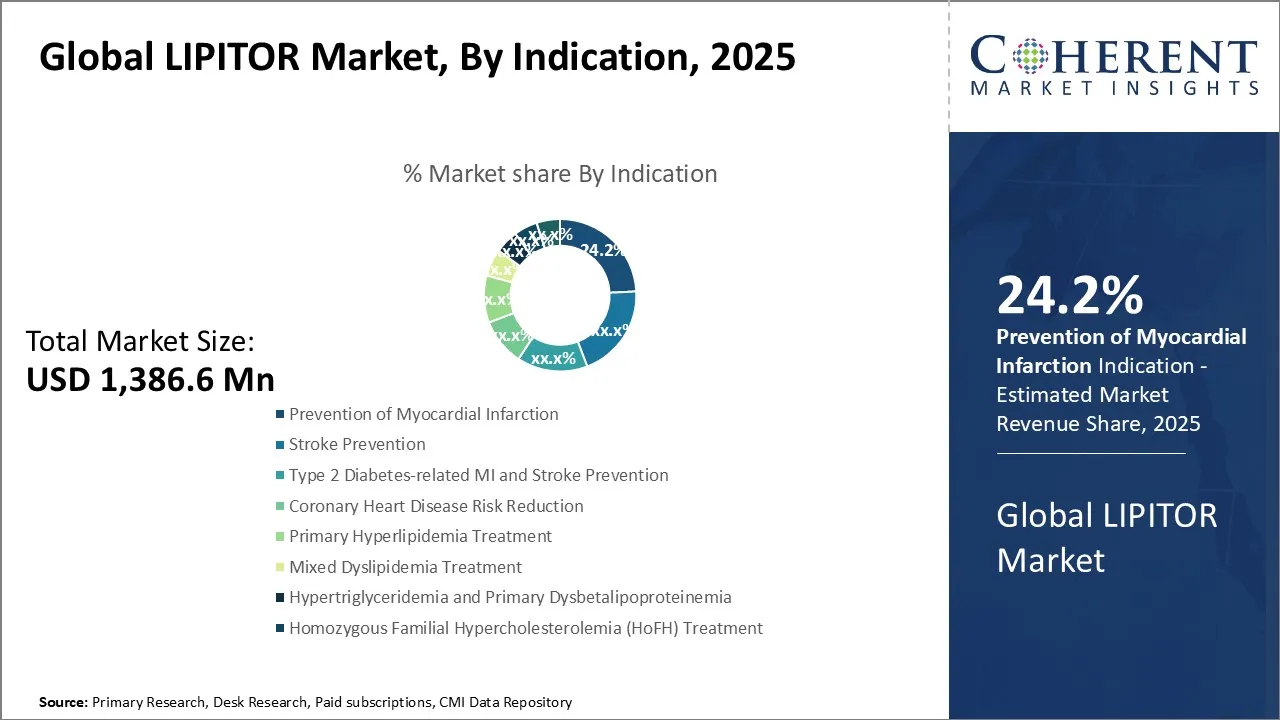
- Cardiovascular conditions, including myocardial infarction (MI), continue to be the leading segment in the global LIPITOR market, accounting for an estimated 25.2 % of the market share in 2026.
- The 10 mg dosage segment is expected to lead with a 24.2 % share in 2026, typically used as the starting dose for patients needing mild to moderate cholesterol reduction.
- Adults, particularly those in the middle to older age brackets, constitute the largest patient group for LIPITOR, representing an estimated 54.2 % of the market in 2026.
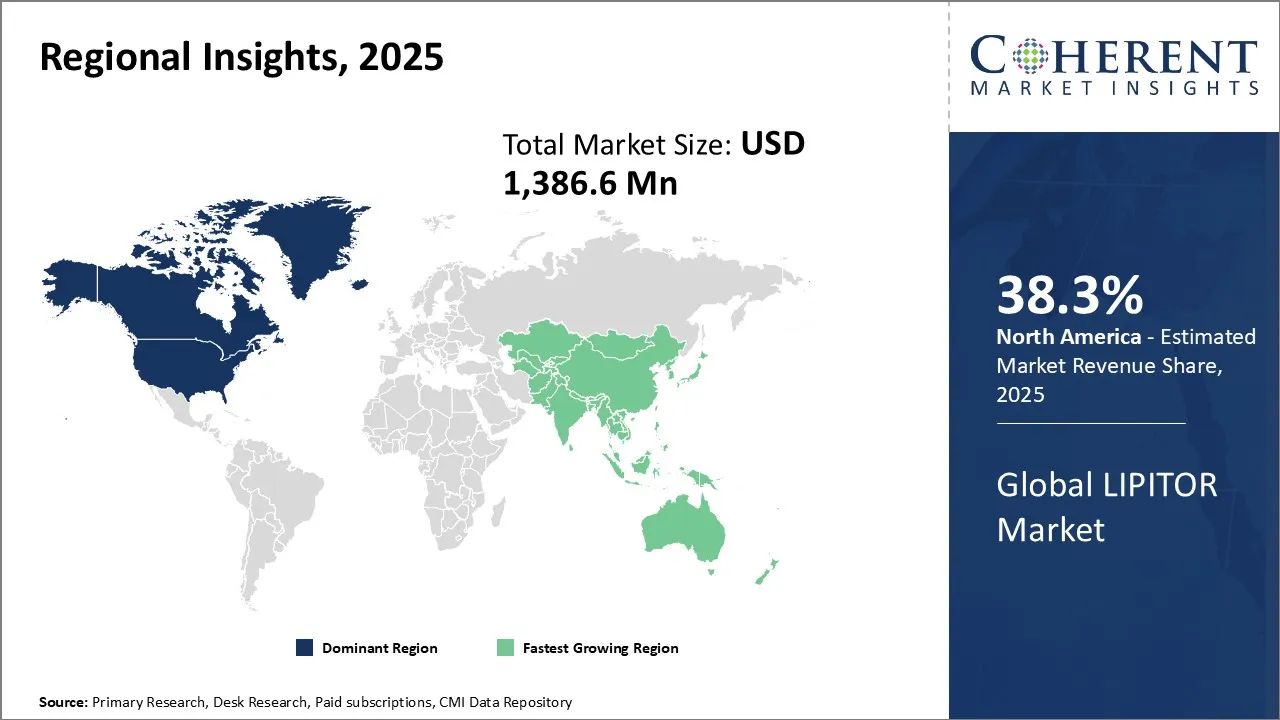
- North America is expected to lead the market, holding an estimated share of 38.3 % in 2026. Asia Pacific is anticipated to be the fastest-growing region, with a market share of 24.2% in 2026.
Market Overview
Market trends indicate a significant shift toward generic statins, with healthcare providers and patients favoring cost-effective lipid-lowering therapies over branded options like LIPITOR. Additionally, increasing emphasis on preventive healthcare and alternative treatments, including lifestyle modifications and newer cholesterol management drugs or antihyperlipidemic drugs, is reshaping the landscape. Innovations in personalized medicine and emerging drug delivery technologies may offer future growth avenues, despite the current downward trajectory in the LIPITOR market.
Current Events and Its Impact
Current Events | Description and its impact |
Patent Expiry and Generic Competition |
|
Termination of Co-promotion Agreement between Astellas Pharma and Viatris |
|
Segmental Insights
- Current Industry Events of 2026
- Market Size Estimation
- Regional Breakdown
- Competitive Landscape
- Customer Intelligence
- Segmental Analysis
- Pricing Analysis
- Key Market Drivers, Challenges & Future Trends
- Customized Insights Section
LIPITOR Market Insights, By Indication - Prevention of myocardial infarction contributes the highest share of the market owing to the increasing global prevalence of cardiovascular diseases
Cardiovascular conditions such as myocardial infarction (MI) remain the dominant segment in the global LIPITOR market, with an estimated share of 25.2% in 2026. This high prevalence drives the demand for effective lipid-lowering treatments. LIPITOR, as a well-established statin, has demonstrated significant efficacy in reducing low-density lipoprotein cholesterol (LDL-C) levels, which directly correlates with decreased incidence of MI. The high adoption of LIPITOR in both primary prevention targeting individuals at risk but without prior events and secondary prevention in patients with established cardiovascular disease—supports its substantial market share in this indication segment.
For instance, in April 2024, a systematic review and meta-analysis conducted by National Library of Medicine from 1987 to 2022 examined the prevalence of myocardial infarction (MI) in the elderly, based on 29 studies with 3.3 million participants. The overall prevalence was found to be 17.6%, with males at 16.1% and females at 12.5%. The prevalence of MI increased with publication year and the mean age of the elderly. As the elderly population grows, especially in developing countries, MI remains a critical issue, and more attention is needed for its prevention in healthcare systems.
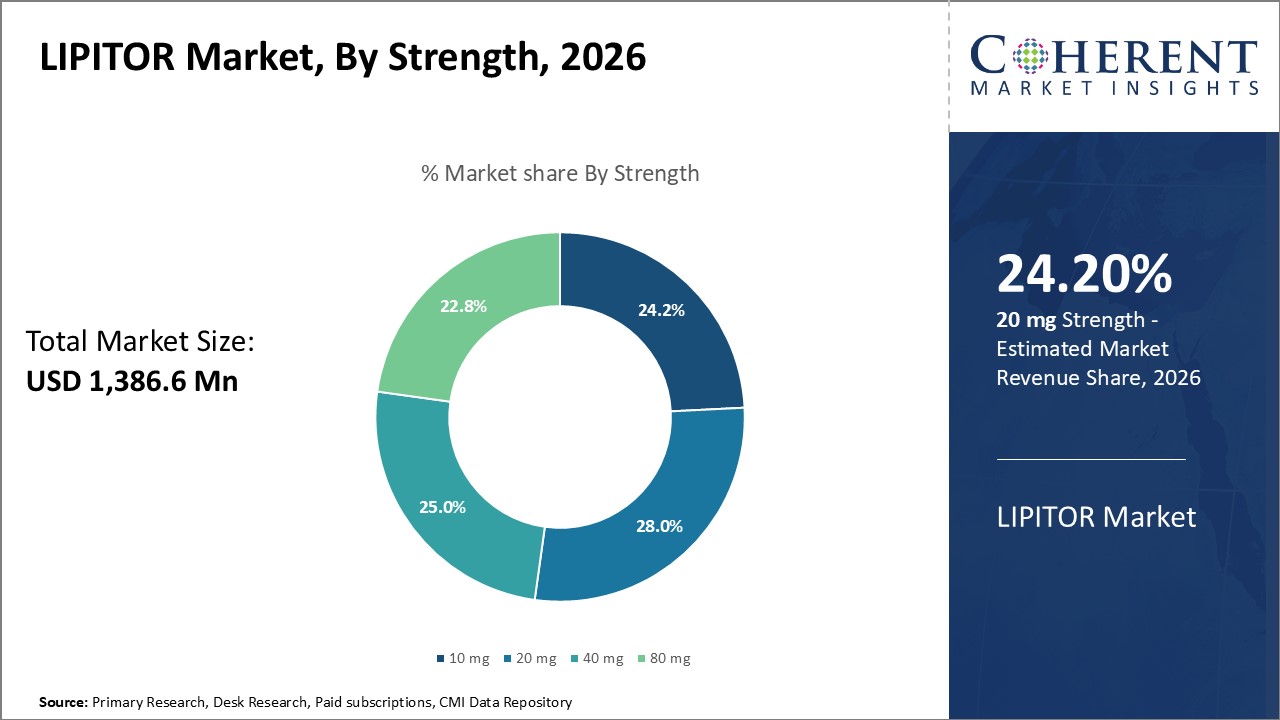
LIPITOR Market Insights, By Strength - 10 mg contributes the highest share of the market, largely due to its balance between efficacy and tolerability, making it the preferred initial dosing option in many treatment regimens
The 10 mg dosage segment is expected to hold a dominant share of 24.2% in 2026, serving as the ideal starting point for patients requiring mild to moderate cholesterol reduction, including treatment-naïve individuals or those with modest cardiovascular risk. Physicians prefer initiating therapy at this low dose to monitor patient response carefully and minimize adverse effects, particularly muscle-related symptoms often associated with statins.
This dose’s widespread use is further reinforced by its adaptability across multiple patient profiles and indications. In prevention scenarios, the 10 mg strength offers sufficient LDL-C reduction to achieve therapeutic targets without compromising safety, making it a pragmatic choice in primary care settings. Its reputation as a well-tolerated dosage encourages greater patient compliance, a critical factor in chronic treatments like dyslipidemia management where adherence directly impacts clinical outcomes.
LIPITOR Market Insights, By Age Group - Adults contribute the highest share of the market, reflecting the demographic most affected by dyslipidemia and cardiovascular diseases that require statin therapy
Adults, particularly those in middle to older age groups, represent the dominant patient population for LIPITOR, with an estimated share of 54.2% in 2026. This group is primarily diagnosed with hyperlipidemia, coronary artery disease, mixed dyslipidemia, and type 2 diabetes-associated cardiovascular risks.
Lifestyle factors prevalent in adults, including dietary habits, sedentary behavior, smoking, and stress, significantly contribute to the elevated risk of lipid abnormalities necessitating pharmacologic intervention. Healthcare providers tend to prioritize statin therapy in adults due to the well-documented benefits of improved long-term cardiovascular outcomes attributed to early and sustained cholesterol management.
Regional Insights
North America LIPITOR Market Analysis and Trends
In North America, the dominance in the global LIPITOR market is driven by a well-established healthcare infrastructure with an estimated share of 38.3% in 2026, high prevalence of cardiovascular diseases, and robust pharmaceutical R&D activities. The region benefits from strong government support through regulatory bodies like the U.S. FDA, ensuring stringent quality control and market entry for LIPITOR and its generic versions.
The presence of major pharmaceutical companies such as Pfizer, the original developer of LIPITOR, alongside a widespread network of healthcare providers and pharmacies, contributes to sustained market leadership. Advanced insurance systems and higher healthcare spending facilitate broader patient access to LIPITOR, supporting continuous demand. Furthermore, North America enjoys favorable trade policies and intellectual property protections that stimulate innovation and market stability.
Asia Pacific LIPITOR Market Analysis and Trends
Meanwhile, the Asia Pacific region is expected to exhibit the fastest growth in the LIPITOR market with a share of 24.2% in 2026, attributed to increasing awareness of cardiovascular health, rising population prevalence of cholesterol-related conditions, and expanding healthcare accessibility. Governments across countries such as China and India are implementing policies to improve healthcare infrastructure and drug affordability, including streamlined drug approvals and supportive reimbursement frameworks. The market ecosystem is enriched by a growing pharmaceutical manufacturing base, with several domestic and multinational players actively launching LIPITOR and its generics. Trade liberalization and increasing FDI inflows have bolstered the availability and distribution channels for LIPITOR throughout the region. Companies like Pfizer and local generics manufacturers, including Cipla and Dr. Reddy’s Laboratories, play pivotal roles in market expansion by adapting to local needs and pricing structures.
LIPITOR Market Outlook for Key Countries
U.S. LIPITOR Market Trends
The U.S. remains the cornerstone of the global LIPITOR market, bolstered by Pfizer’s continuous innovation and strong brand presence. A well-developed healthcare system with extensive insurance coverage ensures patient access to cardiovascular treatments. The country’s advanced clinical research environment supports ongoing drug efficacy studies and lifecycle management initiatives. Generic competition also sustains market dynamics, prompting Pfizer and rivals to engage in strategic pricing and marketing efforts. Regulatory rigor overseen by the U.S. FDA maintains high product standards, enhancing patient trust and market penetration.
China LIPITOR Market Trends
China’s LIPITOR market is witnessing rapid growth driven by escalating cardiovascular disease incidence and governmental healthcare reforms aimed at universal drug access. Policies encouraging generic drug use and faster regulatory approvals have expanded market options beyond Pfizer’s original formulation.
In June 2023, according to National Library of Medicine, Cardiovascular Diseases (CVDs) are a leading cause of death in China, accounting for nearly 45% of adult deaths. One in five adults in China has a cardiovascular condition, and the country has one of the highest CVD death rates globally. Risk factors contributing to this high burden include tobacco use (25% of the population), excessive alcohol consumption (6.7 liters per person), hypertension (27.3% prevalence), and obesity (5.7%).
India LIPITOR Market Trends
India is an emerging critical market for LIPITOR, characterized by expanding healthcare access and a large patient population requiring cholesterol management. The government’s focus on affordable medicine through initiatives such as Jan Aushadhi promotes generic alternatives alongside innovator drugs. Leading Indian pharmaceutical companies, including Cipla and Dr. Reddy’s Laboratories, contribute significantly by producing cost-effective generic LIPITOR, making treatment more accessible to low and middle-income groups. Additionally, improving healthcare infrastructure and rising health awareness are driving market growth, supported by export opportunities due to India’s strong pharmaceutical manufacture and supply chain.
Germany LIPITOR Market Trends
Germany maintains a stable LIPITOR market underpinned by its comprehensive and efficient healthcare system. Reimbursement policies favor evidence-based cardiovascular therapeutics, supporting the use of branded and generic LIPITOR formulations. Market presence is fortified by Pfizer’s German operations as well as local generics manufacturers who compete to serve a health-conscious population. The country’s strong pharmaceutical regulatory framework and active clinical research environment help sustain product quality and innovation. Collaboration between healthcare providers and pharma companies ensures ongoing patient education and adherence, thus safeguarding market performance.
Reimbursement Policy
- Viatris' reimbursement policy for LIPITOR includes several programs to help patients manage out-of-pocket costs. LIPITOR Savings Card: The LIPITOR Savings Card is designed to reduce out-of-pocket costs for eligible patients. With this card, patients may pay as little as USD 4 for each 30-day fill of brand-name LIPITOR, with savings of up to USD 150 per fill, capped at USD 1,800 per calendar year. This offer is available only at participating pharmacies and is not valid for prescriptions reimbursed by federal or state healthcare programs such as Medicare, Medicaid, TRICARE, or Veterans Affairs healthcare. Additionally, it cannot be combined with other discount programs or used if the entire cost is covered by private insurance plans.
- Viatris Patient Assistance Program (PAP): The Viatris PAP provides certain medications, including LIPITOR, free of charge to eligible patients who are uninsured or underinsured and meet specific financial criteria. To apply, patients must submit a completed application form, which includes personal and financial information, and a prescription from a licensed U.S. healthcare professional. Applications can be submitted via fax or email, and each application is individually assessed for eligibility.
Market Players, Key Developments, and Competitive Intelligence
Company Insights
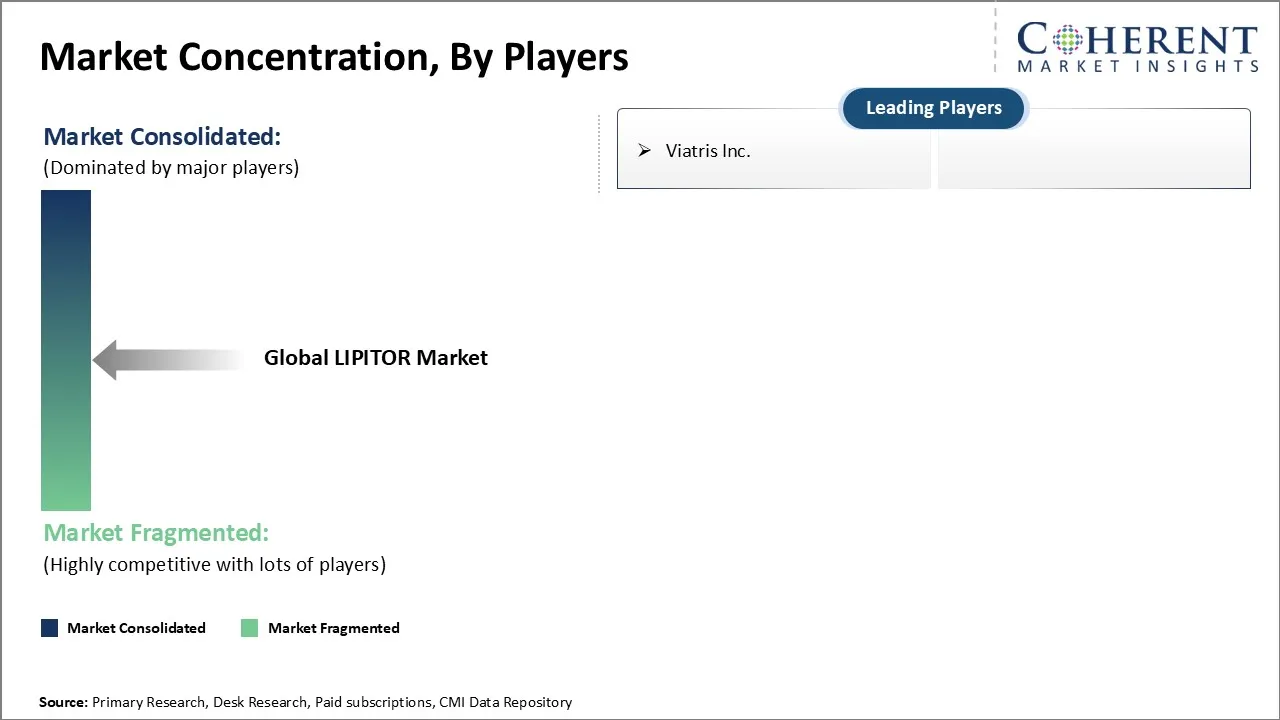
- Viatris Inc. is a global healthcare company committed to providing access to medicines, sustainable healthcare solutions, and innovative therapies. It was formed through the merger of Mylan and Upjohn, a division of Pfizer Inc., creating a robust portfolio that spans across multiple therapeutic areas. One of its flagship products is LIPITOR (atorvastatin calcium) tablets, initially approved by the U.S. FDA in 1996.
- LIPITOR is an HMG-CoA reductase inhibitor (statin) used to reduce the risk of major cardiovascular events, such as myocardial infarction (MI) and stroke, in patients with multiple risk factors for coronary heart disease (CHD) and type 2 diabetes. It is also indicated for lowering low-density lipoprotein cholesterol (LDL-C) in adults with primary hyperlipidemia and pediatric patients with familial hypercholesterolemia (HeFH) and homozygous familial hypercholesterolemia (HoFH). LIPITOR is typically taken once daily, with dosage adjusted according to patient needs, ranging from 10 mg to 80 mg per day. The product is available in tablet strengths of 10 mg, 20 mg, 40 mg, and 80 mg.
Market Report Scope
LIPITOR Market Report Coverage
| Report Coverage | Details | ||
|---|---|---|---|
| Base Year: | 2025 | Market Size in 2026: | USD 1,386.6 Mn |
| Historical Data for: | 2020 To 2024 | Forecast Period: | 2026 To 2033 |
| Forecast Period 2026 to 2033 CAGR: | -5.2% | 2033 Value Projection: | USD 937.7 Mn |
| Geographies covered: |
| ||
| Segments covered: |
| ||
| Companies covered: | Viatris Inc. | ||
| Growth Drivers: |
| ||
| Restraints & Challenges: |
| ||
LIPITOR Market Dynamics
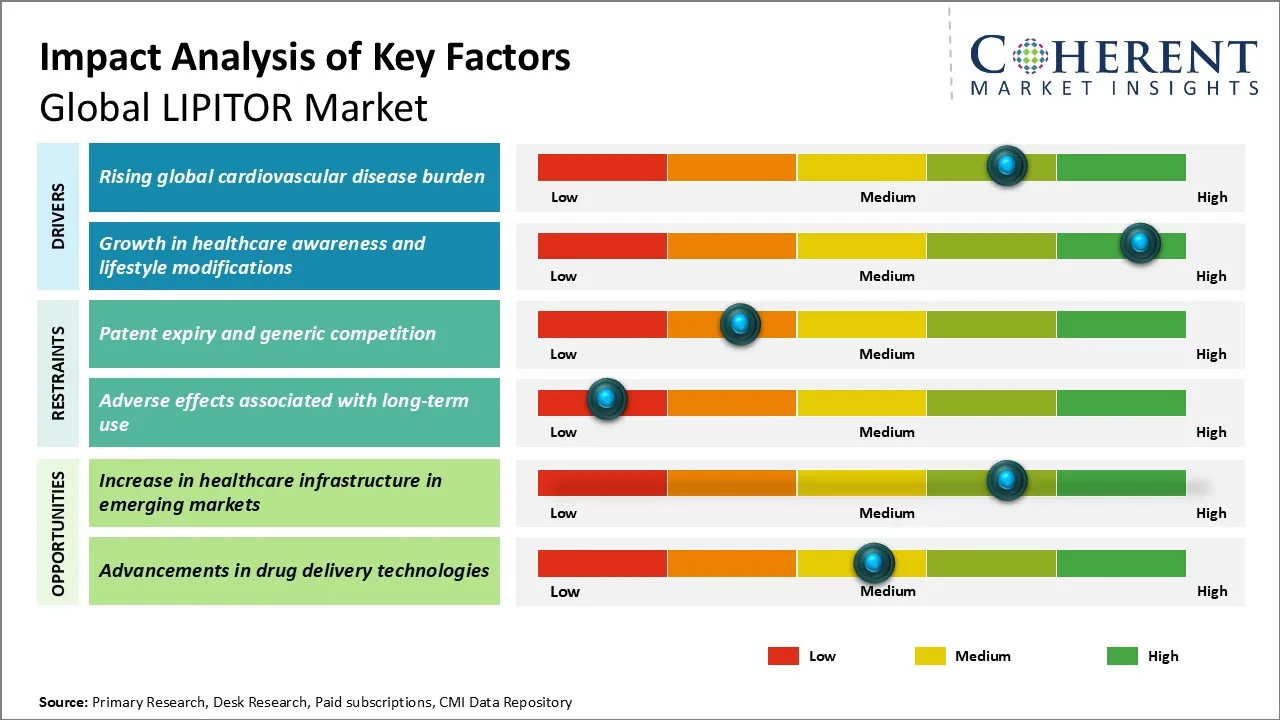
LIPITOR Market Driver - Rising Global Cardiovascular Disease Burden
The declining prevalence of new prescriptions and shifting treatment paradigms are driving the slow and steady growth of LIPITOR, a leading statin used for managing cholesterol levels and reducing the risk of heart attacks and strokes. Despite its established efficacy in controlling hypercholesterolemia, the statin market, including LIPITOR, is experiencing a negative CAGR due to the emergence of newer, more advanced treatments and generic alternatives.
The increasing focus on personalized medicine, combination therapies, and novel cholesterol-lowering agents has shifted clinical preferences away from older treatments like LIPITOR. Additionally, factors such as aging populations, increased awareness of healthy lifestyles, and the growing use of non-statin therapies have contributed to a more competitive market environment.
In May 2023, a World Heart Federation (WHF) report reveals cardiovascular disease (CVD) deaths surged from 12.1 million in 1990 to 20.5 million in 2021, with most deaths occurring in low- and middle-income countries. Key contributors include high blood pressure, tobacco use, and elevated LDL cholesterol. The report urges increased healthcare investment, implementation of CVD policies, and better data collection to reduce premature mortality from CVDs by 2030.
LIPITOR Market Opportunity - Increase in Healthcare Infrastructure in Emerging Markets
The global LIPITOR market stands to benefit significantly from the rapid expansion of healthcare infrastructure in emerging markets, presenting a substantial growth opportunity for pharmaceutical companies and stakeholders. Countries in regions such as Asia Pacific, Latin America, and Africa are witnessing considerable investments in healthcare facilities including hospitals, clinics, and diagnostic centers. This development is being driven by rising government initiatives, increased public and private sector spending, and the adoption of advanced healthcare technologies.
Improved healthcare infrastructure enhances accessibility and affordability of medical treatments, thereby broadening the patient base for chronic disease management drugs like LIPITOR, which is widely prescribed for cholesterol control and prevention of cardiovascular diseases. Additionally, growing awareness about cardiovascular health, combined with enhanced diagnostic capabilities, leads to earlier identification and treatment of hyperlipidemia and related conditions.
Analyst Opinion (Expert Opinion)
- The global LIPITOR market, while historically a cornerstone in cardiovascular disease management, is now experiencing slow and steady growth, with a negative compound annual growth rate (CAGR) in recent years. This decline is primarily driven by the rising availability of generics and biosimilars, as well as the increasing adoption of alternative cholesterol-lowering therapies. Despite these challenges, LIPITOR remains relevant in certain markets, particularly in emerging regions where statin therapies are still in demand. The market's dynamics are further influenced by evolving clinical guidelines, which now emphasize a broader range of lipid-lowering options, reducing reliance on statins like LIPITOR.
- While the market is contracting, opportunities still exist, especially in the development of combination therapies and expanded indications. However, the industry's primary challenge lies in maintaining LIPITOR’s market share amid intense competition from generics and biosimilars. Conferences like the 2022 World Heart Summit have highlighted the ongoing role of statins in cardiovascular disease management, but the focus is increasingly shifting toward newer therapies. Real-world initiatives, such as Pfizer's continued efforts to provide access to LIPITOR in low-income regions, illustrate the shifting market priorities as the product faces its slow decline in sales and relevance. As the market matures, LIPITOR’s future will depend on its ability to adapt to these changing dynamics.
Speak to the analyst
Want personalized insights?
Take the findings above to one of our principal consultants, or have the report rebuilt around the segments, geographies and competitors you actually track.
Market Segmentation
- Indication Insights (Revenue, USD Mn, 2021 - 2033)
- Prevention of Myocardial Infarction
- Stroke Prevention
- Type 2 Diabetes-related MI and Stroke Prevention
- Coronary Heart Disease Risk Reduction
- Primary Hyperlipidemia Treatment
- Mixed Dyslipidemia Treatment
- Hypertriglyceridemia and Primary Dysbetalipoproteinemia
- Homozygous Familial Hypercholesterolemia (HoFH) Treatment
- Heterozygous Familial Hypercholesterolemia (HeFH) Treatment (Pediatric)
- Strength Insights (Revenue, USD Mn, 2021 - 2033)
- 10 mg
- 20 mg
- 40 mg
- 80 mg
- Age Group Insights (Revenue, USD Mn, 2021 - 2033)
- Adults
- Pediatric
- Geriatric
- Gender Insights (Revenue, USD Mn, 2021 - 2033)
- Male
- Female
- Distribution Channel Insights (Revenue, USD Mn, 2021 - 2033)
- Hospital Pharmacies
- Retail Pharmacies
- Online Pharmacies
- Regional Insights (Revenue, USD Mn, 2021 - 2033)
- North America
- U.S.
- Canada
- Latin America
- Brazil
- Argentina
- Mexico
- Rest of Latin America
- Europe
- Germany
- U.K.
- Spain
- France
- Italy
- Russia
- Rest of Europe
- Asia Pacific
- China
- India
- Japan
- Australia
- South Korea
- ASEAN
- Rest of Asia Pacific
- Middle East
- GCC Countries
- Israel
- Rest of Middle East
- Africa
- South Africa
- North Africa
- Central Africa
- North America
- Key Players Insights
- Viatris Inc.
Sources
Primary Research Interviews
- Healthcare Professionals (Cardiologists, General Practitioners)
- Pharmacists
- Medical Researchers
- Key Opinion Leaders (KOLs) in Cardiovascular Medicine
- Healthcare Providers and Institutions
- Industry Stakeholders (Manufacturing Professionals, Automation Engineers, Technology Providers in automotive, electronics, and logistics)
Government and International Databases
- World Health Organization (WHO)
- U.S. Food and Drug Administration (FDA)
- European Medicines Agency (EMA)
- Centers for Disease Control and Prevention (CDC)
- National Institutes of Health (NIH)
- U.S. National Library of Medicine (PubMed)
- Global Health Observatory (GHO)
- National Heart, Lung, and Blood Institute (NHLBI)
- International Diabetes Federation (IDF)
- Centers for Medicare and Medicaid Services (CMS)
Trade Publications
- The Pharmaceutical Journal
- Drug Development and Delivery
- The Pharmaceutical Technology Journal
- Cardiovascular Business
- Medical Device and Diagnostic Industry (MD+DI)
- The Wall Street Journal (Pharmaceutical Section)
- Pharmaceutical Executive
Academic Journals
- The Lancet
- Journal of the American College of Cardiology (JACC)
- Circulation: Journal of the American Heart Association
- British Medical Journal (BMJ)
- American Journal of Cardiology
- Journal of Clinical Lipidology
- Journal of Pharmacology and Experimental Therapeutics
Reputable Newspapers
- The New York Times (Health Section)
- The Guardian (Health Section)
- The Washington Post (Health Section)
- Reuters Health News
- Bloomberg (Healthcare and Pharmaceuticals Section)
Industry Associations
- American Heart Association (AHA)
- European Society of Cardiology (ESC)
- National Lipid Association (NLA)
- American College of Cardiology (ACC)
- World Heart Federation (WHF)
- International Society for Pharmacoeconomics and Outcomes Research (ISPOR)
Public Domain Resources
- National Institute for Health and Care Excellence (NICE) Guidelines
- U.S. National Library of Medicine - Drug Information Portal
- Public Health Agency of Canada (PHAC)
- Health Canada - Therapeutic Products Directorate
Proprietary Elements
- CMI Data Analytics Tool: Proprietary analytics tool to analyze real-time market trends, consumer behavior, and technology adoption in market
- Proprietary CMI Existing Repository of Information for Last 8 Years
Get access to 250+ pages report
Every segment, forecast, competitor profile and data table behind the analysis above — available for instant download.
- ESOMAR Member
- ISO 9001:2015 Certified
- D-U-N-S Registered
- GDPR & CCPA Compliant
Missing comfort of reading report in your local language? Find your preferred language:
Transform your Strategy with Exclusive Trending Reports
Frequently Asked Questions
The global LIPITOR market is estimated to be valued at USD 1,386.6 Mn in 2026 and is expected to reach USD 937.7 Mn by 2033.
The CAGR of the global LIPITOR market is projected to be -5.2% from 2026 to 2033.
Rising global cardiovascular disease burden and growth in healthcare awareness and lifestyle modifications are the major factors driving the growth of the global LIPITOR market.
Patent expiry and generic competition and adverse effects associated with long-term use are the major factors hampering the growth of the global LIPITOR market.
In terms of indication, prevention of myocardial infarction is estimated to dominate the market revenue share in 2026.
Viatris Inc. is the major player in the market.
North America is expected to lead the global LIPITOR market in 2026.