

Global Liposomes Market Size and Forecast – 2026 to 2033
The global liposomes market is estimated to be valued at USD 5.86 Bn in 2026 and is expected to reach USD 11.20 Bn by 2033, exhibiting a compound annual growth rate (CAGR) of 9.7% from 2026 to 2033. This significant growth is driven by increasing applications in drug delivery systems, cosmetics, and the rising demand for targeted therapies across various medical fields, positioning the market for robust expansion over the forecast period.
Key Takeaways of the global liposomes market
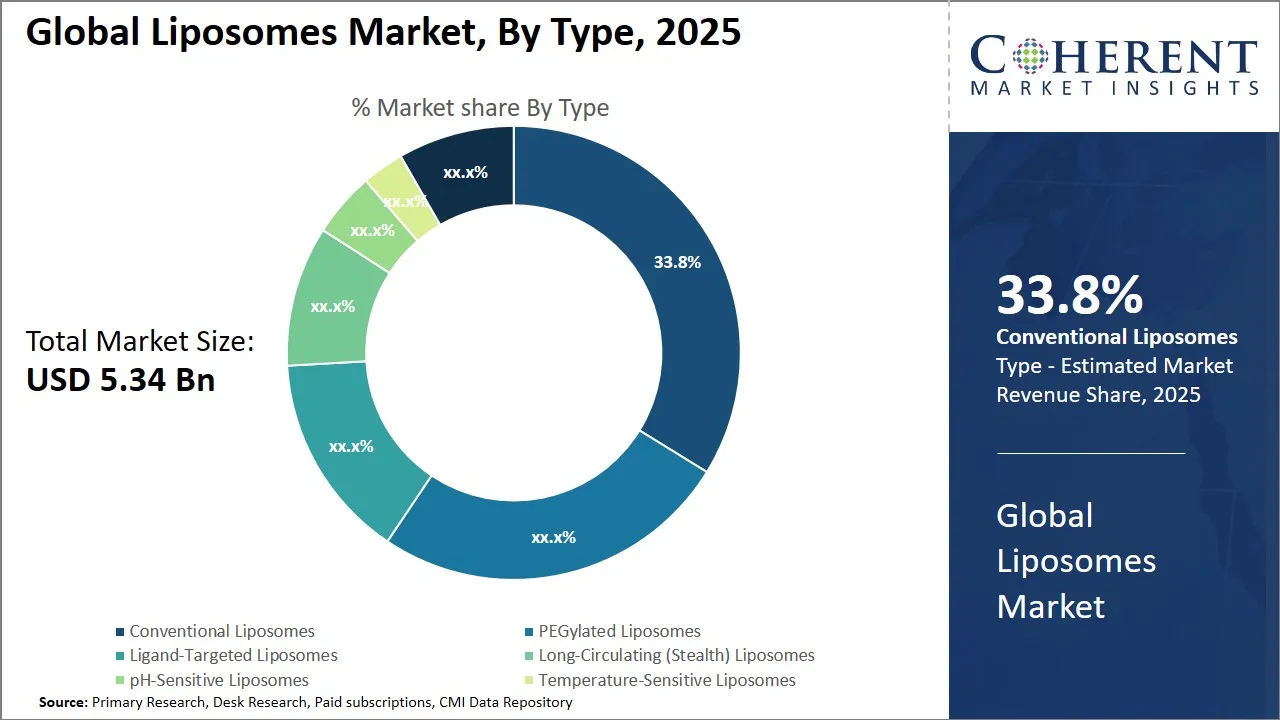
- Conventional liposomes are expected to lead the market with a 34.8% share in 2026, supported by their simplicity, compatibility, and broad utility.
- Multilamellar vesicles are projected to lead with a 33.3% share in 2026, leveraging their multilayered bilayer structure to enable high-capacity encapsulation.
- Phospholipid-based liposomes are anticipated to hold a 33.4% share in 2026, benefiting from their membrane-mimicking composition that enhances biological compatibility and delivery efficiency.
- North America is expected to lead the market, holding a share of 39.2% in 2026. Asia Pacific is anticipated to be the fastest-growing region, with an estimated market share of 24.3% in 2026.
Market Overview
Current market trends highlight a strong shift towards the development of advanced liposomal formulations aimed at enhancing drug bioavailability and reducing side effects. Innovations such as stimuli-responsive liposomes and multifunctional nanocarriers are gaining traction, while rising investments in research and development further fuel market growth. Additionally, increasing consumer preference for natural and effective skincare solutions is boosting liposome adoption in cosmetic products, underscoring the market's dynamic evolution.
Currents Events and Its Impacts
Current Events | Description and its Impact |
Pandemic-Driven mRNA Vaccine Adoption |
|
Shift Towards Targeted & Personalized Cancer Therapies |
|
Segmental Insights
- Current Industry Events of 2026
- Market Size Estimation
- Regional Breakdown
- Competitive Landscape
- Customer Intelligence
- Segmental Analysis
- Pricing Analysis
- Key Market Drivers, Challenges & Future Trends
- Customized Insights Section
Liposomes Market Insights, By Type - Conventional liposomes contribute the highest share of the market owing to their broad applicability and proven efficacy in drug delivery systems
Conventional liposomes remain the core technology in the liposomes market, holding an estimated 34.8% share in 2026. Their straightforward structure, strong biocompatibility, and broad formulation flexibility continue to anchor their widespread use. Their ability to encapsulate both hydrophilic and hydrophobic drugs allows for significant flexibility in therapeutic applications, catering to a wide range of pharmaceutical needs.
A key factor driving the dominance of conventional liposomes is their well-documented safety profile. Given their phospholipid bilayer composition, which mimics natural cell membranes, they exhibit low toxicity and immunogenicity, making them a preferred choice in clinical settings. Moreover, their ease of manufacturing and scalability supports widespread adoption, especially for generic formulations and established drug delivery approaches.
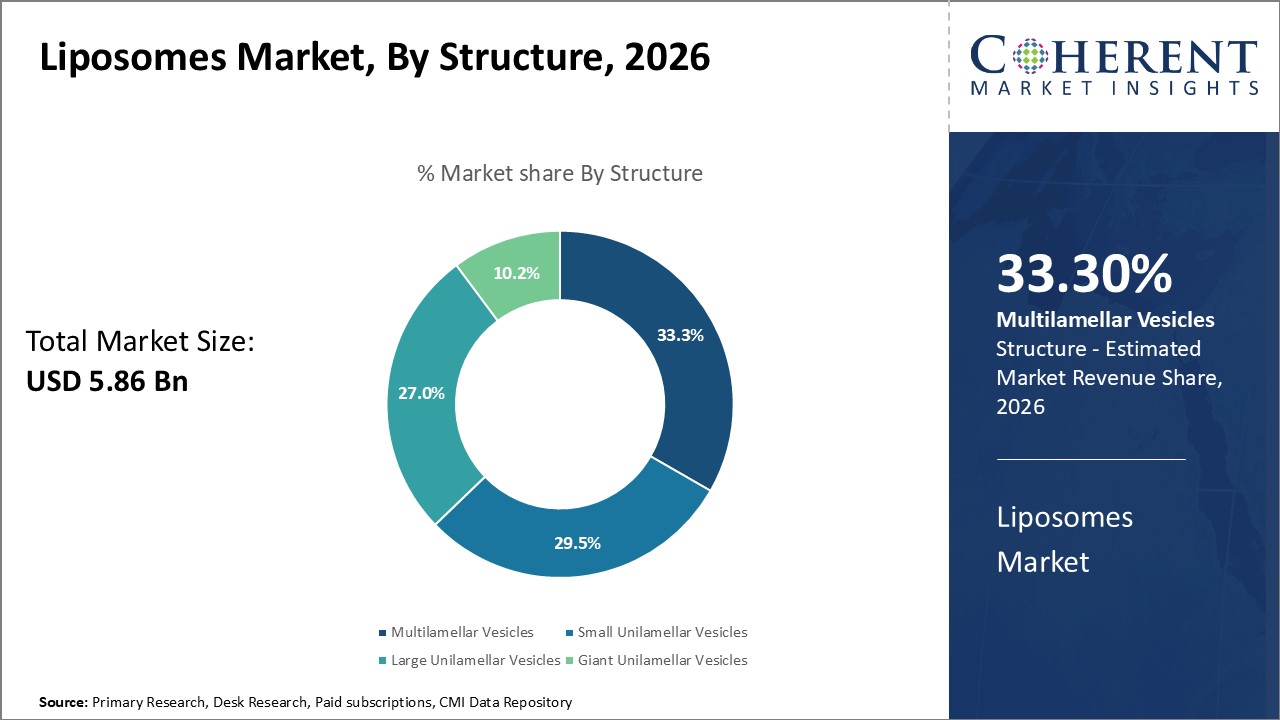
Liposomes Market Insights, By Structure - Multilamellar Vesicles (MLVs) contribute the highest share of the market due to their capacity for higher drug loading and structural robustness
The multilamellar vesicles, which are characterized by the presence of numerous concentric phospholipid layers, occupy an estimated 32.3 percent of the share in 2026. Their stratified structure enables a huge encapsulation of both hydrophilic and lipophilic molecules in between the internal aqueous spaces and the membrane structures.
Among the leading reasons that contribute to increasing the adoption of the multilamellar vesicles is that they are more stable than unilamellar vesicles. When there are numerous lipid bi layers, the chances of the rupture and leakage of lipid bi layers are reduced hence the prolonged retention of the encapsulated agents and stability of the bi layers during storage and administration. The structural integrity is especially useful in administration of drugs that have long release profiles.
Liposomes Market Insights, By Lipid Composition - Phospholipid-based liposomes dominate the market owing to their superior biocompatibility and functional versatility
A share of 2026 expressed in multilamellar vesicles consisting of several concentric phospholipids bilayers is estimated at 33.3%. Their overlapping structures enable heavy encapsulation of hydrophilic and lipophilic molecules in and among aqueous spaces and membrane structures.
Increased stability of multilamellar vesicles over unilamellar vesicles is another of the leading factors that increase the uptake of multilamellar vesicles. The presence of numerous lipid bilayers lowers the chances of breakage and spillage of lipid bilayers which means that the encapsulated agents remain long term and are stable during storage and administration. This is also of structural value in the provision of drugs that have a sustained release profile.
Liposomal Formulation Technology Benchmarking
- Liposomal formulation technologies now compete on circulation longevity, targeted delivery precision, and payload protection. PEGylated and stealth liposomes set the benchmark for extended systemic retention by minimizing opsonization and RES uptake, making them the preferred platforms for chronic therapies and oncology drugs. Cationic liposomes dominate nucleic acid delivery due to their electrostatic interaction with genetic payloads, while maintaining tunable surface charge for transfection efficiency across therapeutic categories.
- Stimuli-responsive and immunoliposomes push the market into higher-value, precision-medicine applications. Stimuli-responsive systems (pH, heat, enzymes) enable controlled, on-demand release at tumor or inflamed sites, increasing therapeutic index and reducing systemic exposure. Immunoliposomes, engineered with antibodies or ligands, lead in targeted delivery benchmarks, offering receptor-specific accumulation that supports next-generation oncology, rare-disease, and personalized therapy pipelines.
Regional Insights
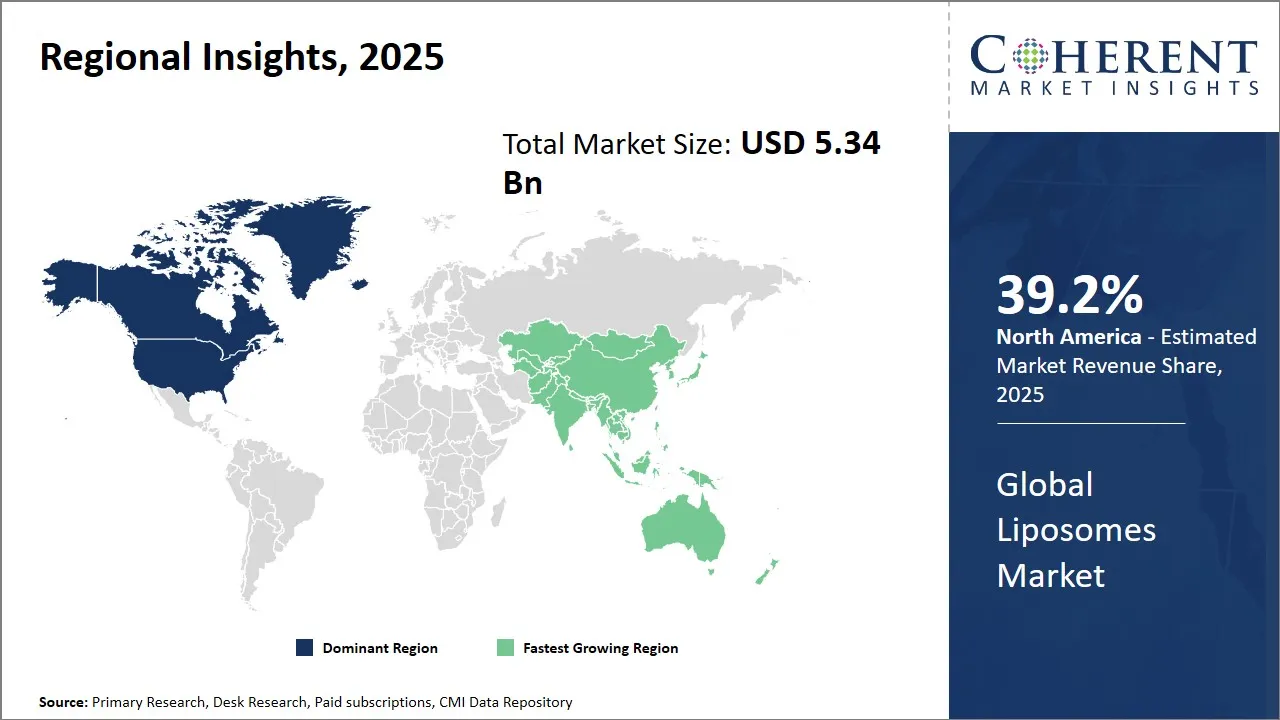
North America Liposomes Market Analysis and Trends
The leading role in the worldwide liposomes business in North America is provided by well-developed pharmaceutical and biotechnology ecosystem with an estimated market share of 39.2 in 2026 supported by sustainable R&D infrastructure and powerful regulatory systems. The availability of major industry leaders such as Lipoid GmbH (operations in the United States of America), Lipocine Inc., and CordenPharma USA is a factor contributing to the innovation and commercialization processes.
In addition, the extensive healthcare system and widespread use of innovative treatments used in North America make it easy to integrate liposome-based products. Market growth is also facilitated by trade dynamics such as conducive policies on imports and exports of drug raw materials and the active collaboration of academia and industry.
Asia Pacific Liposomes Market Analysis and Trends
The highest growth rate in the global liposomes market is projected to be in Asia Pacific due to the rising demands of the targeted drug delivery solutions in the emerging markets of China, India, Japan, and South Koreas with a projected share of 24.3% in 2026. The investment in the infrastructure of the clinical system is increased, and favorable government policies supporting the formation of biotechnological and pharmaceutical centers provide an artistic climate.
Moreover, an industrialized ecosystem that has firms such as Daewoong Pharmaceutical (South Korea), Shenzhen Fushitong Technology (China), and Lipotek India Pvt Ltd. boosts progress in the region. The dynamics of trade that is marked by growing partnerships with Western companies and export subsidies also contribute to the market momentum.
Global Liposomes Market Outlook for Key Countries
U.S. Liposomes Market Trends
The U.S. liposomes market has an established healthcare system and huge investments in biotech. Such prominent companies as Lipoid LLC and CordenPharma work on high-level liposomal formulations, which increase the drug efficacy and safety profiles. This fact is supported by the active participation of the USFDA in the regulation of novel drug delivery technologies and the subsequent approval of new technologies. Planning and developing of products in an unbroken pipeline, especially oncology and vaccines, comes about through collaborative work between academia and industry.
Beyond the well-known players, firms like Avanti Polar Lipids (part of Croda) supply high-purity lipids used in complex liposomal and LNP formulations, supporting vaccine and oncology pipelines. Pacira BioSciences advances the market with its liposomal analgesic platforms, demonstrating strong commercial adoption and continuous clinical expansion.
Germany Liposomes Market Trends
The market of liposomes in Germany has been on top of the European market, which is backed by robust pharmaceutical production industries and competencies in science. A major contributor is the companies whose involvement is in the production and supply of high-quality phospholipids and liposomal carriers, including Lipoid GmbH and Evonik Industries. The high regulatory requirements and research programs funded by the government improve the development of products and quality control, which firmly positions Germany in the European liposomes market.
Companies such as BACHEM Europe support liposome-enabled peptide therapeutics through specialized raw materials used in encapsulation processes. Leon Nanodrugs GmbH accelerates formulation innovation with its MicroJet Reactor technology, enabling scalable, high-efficiency liposomal drug development for pharma partners.
China Liposomes Market Trends
China highlights the fast market growth on massive government investments in biotechnology and pharmaceutical sectors. The major companies such as the Shenzhen Fushitong Technology and the Liposome Manufacturing companies have incorporated the latest technologies in order to achieve effective production. Policies by governments that support the establishment of partnerships between the government and the population and relaxed regulatory processes facilitate faster commercialization. The large number of patients and a growing access to healthcare in China enhances the need to have sophisticated drug delivery systems.
Foshan Nanhai Biomed Co., Ltd. manufactures liposomal nutraceutical and cosmetic formulations for domestic and export markets. Suzhou Yaqin BioPharm focuses on oncology-oriented liposomal drugs, expanding capacity for high-precision lipid encapsulation technologies as demand grows.
India Liposomes Market Trends
The India liposomes market is based on an expanding pharmaceutical industry and low manufacturing and production costs. Lipotek India Pvt Ltd and Intas Pharmaceuticals are some of the companies that devote substantial funds towards research and manufacturing of liposomal drugs. The increase in the market is accelerated by government initiatives to increase biopharmaceutical innovation, as well as the development of startup ecosystems. Market positioning is also achieved through strategic exports and partnerships with multinational corporations.
Sun Pharma progresses liposomal oncology products with global filings and manufacturing expansion. Gennova Biopharmaceuticals integrates liposomal and LNP-based delivery research into its vaccine development programs, driving innovation within India’s biologics ecosystem
End User Feedback and Unmet Needs - Liposomes Market
- End users in pharmaceutical, nutraceutical, and cosmetic applications consistently highlight the need for reliable performance and predictable release behavior. Positive feedback often centers on how long-circulating or PEGylated systems improve stability and reduce dosing frequency, with one oncology developer noting smoother trial progression after shifting to a more stable liposomal carrier. At the same time, concerns persist around batch variability, limited scalability for advanced formulations, and high input costs. A cosmetic brand recently reported that inconsistent particle size distribution disrupted product claims and forced reformulation.
- These challenges reveal clear unmet needs in manufacturing consistency, practical customization, and better technical support. Users want platforms that maintain uniform quality at scale, integrate cleanly into existing processes, and come with stronger regulatory documentation. Addressing these gaps would boost customer retention, expand adoption in precision therapies and advanced skincare, and allow suppliers to compete on dependable performance rather than niche features.
Market Players, Key Developments, and Competitive Intelligence
Key Developments
- On December 08, 2025, Moleculin Biotech, a late-stage oncology drug developer, announced a new collaboration with CIC biomaGUNE to study liposomal Annamycin for glioblastoma treatment. Moleculin will supply Annamycin, while CIC biomaGUNE, a leading Spanish biomedical research center, will run preclinical studies. The research will compare intra-arterial liposomal Annamycin with free Annamycin, Doxil, and free doxorubicin to assess tumor response in brain cancer models.
- On December 02, 2025, Natural Field, a China-based developer of botanical actives and advanced liposomal delivery systems, unveiled its Ashwagandha White Paper and won multiple awards at the Very Food Innovation Conference. The company showcased its NF Co-loading Liposome Technology, which enhances stability and absorption for functional nutrition products.
- In February 2025, Creative Biolabs, an American biotech company focused on liposomal drug systems, announced new liposome solutions to support advanced drug delivery needs. The company expanded its portfolio with customized cationic, long-circulating, and immunoliposomes designed to improve stability and targeting for complex therapeutics. Its scientists also enhanced characterization capabilities through particle size testing and encapsulation analysis to ensure safety and performance.
- In February 2024, the U.S. FDA approved the liposomal therapy Onivyde for first-line metastatic pancreatic cancer treatment. Ipsen Biopharmaceuticals, a global oncology drug developer, manufactures Onivyde and leads research in complex formulations. The approval followed the NAPOLI 3 trial, which showed improved survival with the NALIRIFOX regimen using irinotecan liposome compared with standard Gem+NabP therapy.
Top Strategies Followed by Global Liposomes Market Players
- The established firms control the space, which has resulted in high-performance liposomal products developed through the extensive investment of research and development (R&D), according to the strict quality and efficacy criteria. The major stakeholders are driving rapid formulation innovation to enhance delivery, target and stability and keep up with the regulatory demands. They are also enhancing their footing by concentrating their resources on partnership with industry players, OEMs and research laboratories to speed up technological advancement and penetration of the market.
- Incumbent firms lead innovation based on R&D which is heavy and develop higher lipid technologies. Evonik Health Care is downsizing high-purity lipids to deliver complex drugs. Merck KGaA (MilliporeSigma) is expanding GMP lipid production of oncology and mRNA-targeted liposomal systems by strategic biotech acquisitions.
- Mid-level market players in the liposomes business adopt a more balanced strategy as their core strategy is to present affordable, yet quality solutions. The basic target market will consist of price-sensitive customers, healthcare providers, and pharmaceutical firms that need quality but affordable alternatives.
- Mid-tier competitors are concerned with cost-effective, dependable liposomal ingredients. Lipoid GmbH provides low cost phospholipids in pharma and cosmetics. CD Bioparticles provides cost-effective liposome assays that can be suitable to meet the needs of mid-scale formulators who could want to have quality but do not have to pay the premium price.
- Small-scale players of the global liposomes market target the creation of specific niches with the focus on innovation and speediness. Such companies may create liposomal systems with distinctive or highly specialized attributes, like targeted drug delivery to rare pathologies, or cosmetic products, by exploiting state-of-the-art technologies such as new lipid materials or encapsulation methods.
- Small players seek opportunities of niche, high specialization. Transferra Nanosciences is a company that designs bespoke liposomal platforms in pipelines of rare diseases. NanoSphere Health Sciences is a cosmetic and nutraceutical company that is aimed at using nano-liposomal delivery to enhance absorption.
Market Report Scope
Liposomes Market Report Coverage
| Report Coverage | Details | ||
|---|---|---|---|
| Base Year: | 2025 | Market Size in 2026: | USD 5.86 Bn |
| Historical Data for: | 2020 To 2024 | Forecast Period: | 2026 To 2033 |
| Forecast Period 2026 to 2033 CAGR: | 9.7% | 2033 Value Projection: | USD 11.20 Bn |
| Geographies covered: |
| ||
| Segments covered: |
| ||
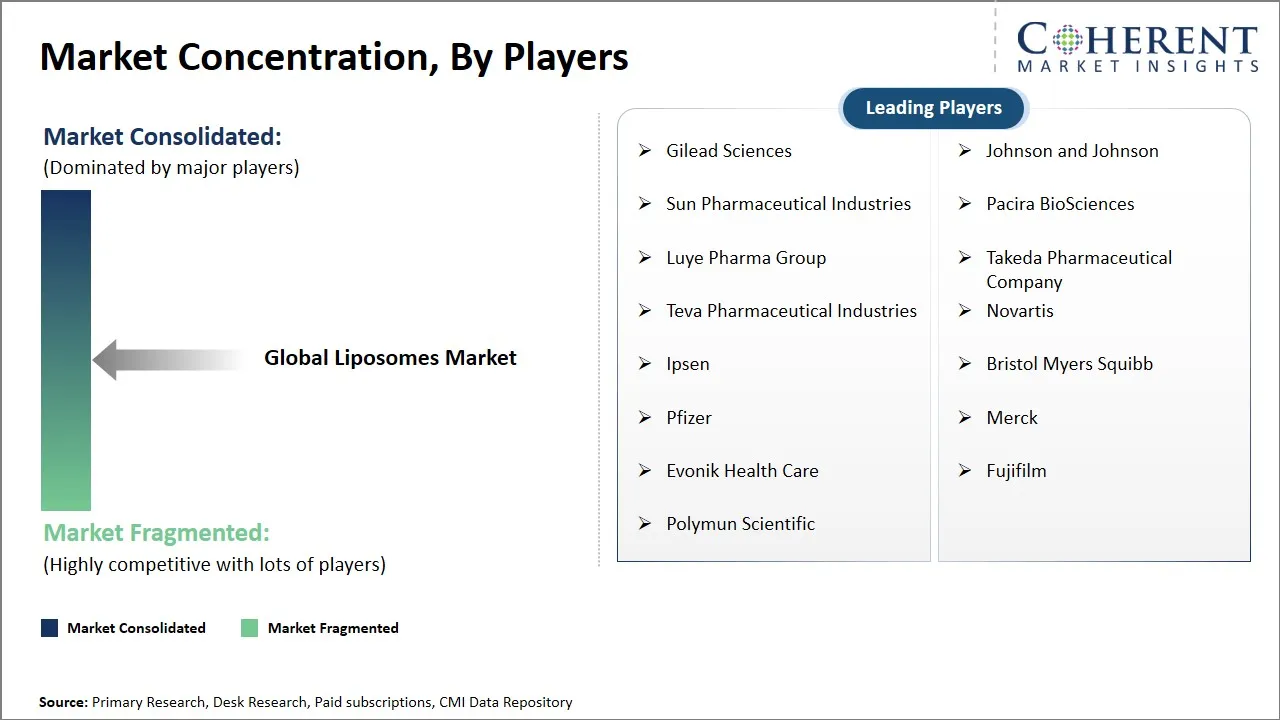
| Companies covered: | Gilead Sciences, Johnson and Johnson, Sun Pharmaceutical Industries, Pacira BioSciences, Luye Pharma Group, Takeda Pharmaceutical Company, Teva Pharmaceutical Industries, Novartis, Ipsen, Bristol Myers Squibb, Pfizer, Merck, Evonik Health Care, Fujifilm, and Polymun Scientific | ||
| Growth Drivers: |
| ||
| Restraints & Challenges: |
| ||
Liposomes Market Dynamics
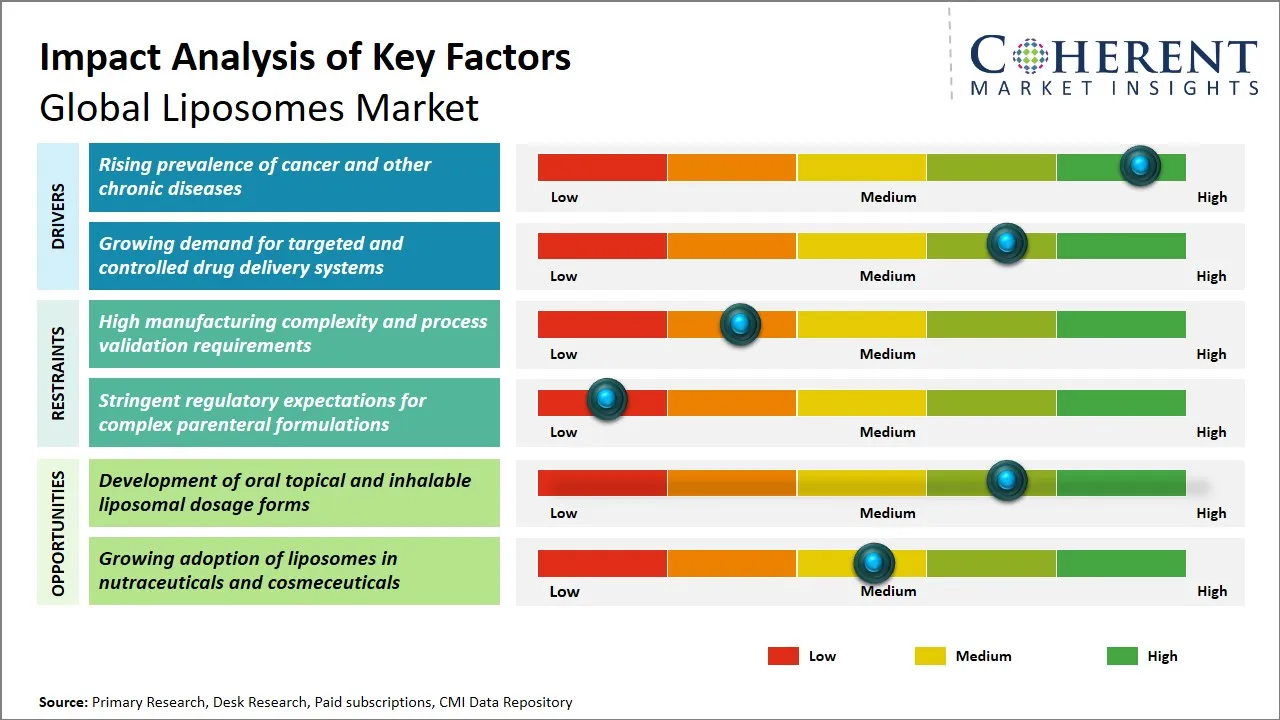
Liposomes Market Driver - Rising Prevalence of Cancer and Other Chronic Diseases
The rising rate of cancer and other chronic diseases in the entire world is a major opportunity that has increased the need to adopt new drug delivery systems such as liposomes. Poor drug solubility, rapid degradation and systemic toxicity are challenges that are usually associated with the traditional methods of treatment and may hinder the therapeutic advantages and patient adherence.
The technology of liposome is a promising solution as it provides the possibility to deliver therapeutic agents directly and release them under the control which contributes to the increased bioavailability of drugs and reduced side effects. In addition, the capacity of liposomes to entrap hydrophilic and lipophilic drugs renders them versatile vectors of an extensive variety of anticancer and chronic illness therapies. The demand to develop safe and efficient systems of drug delivery is increasing as the number of individuals in the global population grows older and diseases that are attributed to lifestyle such as cardiovascular diseases, diabetes, and autoimmune diseases become more common.
For instance, in September 2025, the World Health Organization (WHO) reported a sharp rise in the global burden of chronic or noncommunicable diseases, which claimed around 43 million lives in 2021—accounting for 75% of non-pandemic-related deaths. The data highlighted cardiovascular diseases, cancers, chronic respiratory conditions, and diabetes as the leading causes, with 80% of premature deaths occurring in low- and middle-income countries.
For instance, in February 2025, according to WHO, cancer remains a leading global cause of death, accounting for nearly 10 million deaths in 2020. The most common cancers in 2020 were breast (2.26 million cases), lung (2.21 million cases), colon and rectum (1.93 million cases), prostate (1.41 million cases), skin (non-melanoma) (1.20 million cases), and stomach (1.09 million cases). Tobacco use, alcohol, obesity, poor diet, and physical inactivity contribute to one-third of cancer deaths.
Liposomes Market Opportunity - Development of Oral, Topical, and Inhalable Liposomal Dosage Forms
There is a high growth potential in the global liposomes market by creating and commercializing oral, topical and inhalable liposomal dosage forms. Historically, liposomal technologies have been largely applied in injectable preparations since they are able to improve drug delivery as well as decrease systemic toxicity.
Nonetheless, the extension to other forms of application like oral, topical and inhalable administration can open up new horizons of untapped patients and therapeutic fields. Orally administered liposomal preparations provide better bioavailability to drugs with low solubility, which in turn may be the key to treating chronic diseases as they are easier to administer and the patient is more likely to adhere to it.
For example, several innovators are advancing oral, topical, and inhalable liposomal systems. Enoc Pharma and Lipoid Kosmetik AG are developing topical liposomes to enhance dermal penetration for dermatology and cosmetic actives. Ananda Scientific and NanoSomiX are pushing oral liposomal technologies to improve bioavailability and support neurotherapeutic delivery. In inhalation, Aradigm Corporation has progressed liposomal ciprofloxacin for respiratory diseases, while Inex Innovate is exploring aerosolized liposomes for targeted women’s health applications.
Analyst Opinion (Expert Opinion)
- The liposomes market is progressing with the focuses of drug developers on targeted delivery concerning oncology, vaccines, and dermatology. Better lipid design, enabling regulatory pathways, and increasing demand of safer formulations are driving adoption, whereas costly manufacturing and sterility requirements continue to be major challenges. Scientific exchange has been reinforced by industry conferences like Controlled Release Society Annual Meeting, AACP PharmSci 360, and Liposome Research Days where emerging liposomal technologies are also promoted.
- Recent is the current collaboration on liposomal vaccines and cancer drugs through biotech CDMOs and the government funding to increase the production of lipids and nanocarriers in the region. The use of liposomal chemotherapy alternatives in place of standard treatment has been associated with reduced toxicity in hospitals that piloted the treatment and this supports the value of the clinical treatment. These efforts along with sustained innovations processes across the globe still continue to define a market that is increasingly being oriented towards wider therapeutic integration.
Speak to the analyst
Want personalized insights?
Take the findings above to one of our principal consultants, or have the report rebuilt around the segments, geographies and competitors you actually track.
Market Segmentation
- Type Insights (Revenue, USD Bn, 2021 - 2033)
- Conventional Liposomes
- PEGylated Liposomes
- Ligand-Targeted Liposomes
- Long-Circulating (Stealth) Liposomes
- pH-Sensitive Liposomes
- Temperature-Sensitive Liposomes
- Cationic Liposomes
- Structure Insights (Revenue, USD Bn, 2021 - 2033)
- Multilamellar Vesicles
- Small Unilamellar Vesicles
- Large Unilamellar Vesicles
- Giant Unilamellar Vesicles
- Lipid Composition Insights (Revenue, USD Bn, 2021 - 2033)
- Phospholipid-Based Liposomes
- Cholesterol-Enriched Liposomes
- Sphingomyelin-Based Liposomes
- Synthetic Lipid Liposomes (DSPC, DOPC, others)
- Natural Lipid Liposomes
- Technique of Preparation Insights (Revenue, USD Bn, 2021 - 2033)
- Thin Film Hydration
- Reverse-Phase Evaporation
- Ethanol Injection
- Microfluidics-Based Production
- Detergent Removal
- Freeze–Thaw Method
- High-Pressure Homogenization
- Drug Loading Method Insights (Revenue, USD Bn, 2021 - 2033)
- Passive Loading
- Active Loading (pH Gradient, Ammonium Sulfate Gradient)
- Application Insights (Revenue, USD Bn, 2021 - 2033)
- Drug Delivery
- Oncology
- Infectious Diseases
- Cardiovascular Diseases
- Neurological Disorders
- Dermatology
- Gene Delivery
- Vaccine Delivery
- Cosmetics and Personal Care
- Nutraceuticals
- Diagnostics and Imaging
- Route of Administration Insights (Revenue, USD Bn, 2021 - 2033)
- Intravenous
- Intramuscular
- Subcutaneous
- Oral
- Topical
- Inhalation
- End User Insights (Revenue, USD Bn, 2021 - 2033)
- Pharmaceutical and Biotechnology Companies
- Academic and Research Institutes
- Hospitals and Clinics
- Cosmetics and Personal Care Manufacturers
- Contract Research and Manufacturing Organizations (CROs/CMOs)
- Regional Insights (Revenue, USD Bn, 2021 - 2033)
- North America
- U.S.
- Canada
- Latin America
- Brazil
- Argentina
- Mexico
- Rest of Latin America
- Europe
- Germany
- U.K.
- Spain
- France
- Italy
- Russia
- Rest of Europe
- Asia Pacific
- China
- India
- Japan
- Australia
- South Korea
- ASEAN
- Rest of Asia Pacific
- Middle East
- GCC Countries
- Israel
- Rest of Middle East
- Africa
- South Africa
- North Africa
- Central Africa
- North America
- Key Players Insights
- Gilead Sciences
- Johnson and Johnson
- Sun Pharmaceutical Industries
- Pacira BioSciences
- Luye Pharma Group
- Takeda Pharmaceutical Company
- Teva Pharmaceutical Industries
- Novartis
- Ipsen
- Bristol Myers Squibb
- Pfizer
- Merck
- Evonik Health Care
- Fujifilm
- Polymun Scientific
Sources
Primary Research Interviews
Industry Stakeholders List
- R&D Directors from Pharmaceutical Manufacturers
- Formulation Scientists from Biotechnology Companies
- Quality & Regulatory Managers in Drug Delivery Firms
- Contract Manufacturing Organizations (CMO/CDMO) Technical Leads
- Lipid Excipient Producers
- Technology & Innovation Officers in Nanomedicine Firms
End Users List
- Hospital Pharmacy Heads
- Oncology Clinicians Using Liposomal Drugs
- Clinical Trial Investigators
- Academic Researchers in Nanomedicine and Drug Delivery
- Procurement Heads in Specialty Clinics
- University Laboratory Technicians Working on Lipid Nanocarriers
Government and International Databases
- U.S. Food and Drug Administration (FDA)
- European Medicines Agency (EMA)
- World Health Organization (WHO)
- National Institutes of Health (NIH)
- ClinicalTrials.gov
- (U.S. National Library of Medicine)
Trade Publications
- Pharmaceutical Technology
- Drug Development & Delivery
- Pharmaceutical Manufacturing
- BioPharm International
- PharmaTimes
- Pharmaceutical Online
Academic Journals
- Journal of Controlled Release
- International Journal of Pharmaceutics
- Nanomedicine: Nanotechnology, Biology & Medicine
- Journal of Liposome Research
- Advanced Drug Delivery Reviews
- Pharmaceutical Research
Reputable Newspapers
- The Wall Street Journal (Healthcare & Pharma Section)
- Financial Times (Pharmaceuticals Coverage)
- The Guardian (Science & Health)
- The New York Times (Health & Science)
- Reuters Health
- Bloomberg (Healthcare Reporting)
Industry Associations
- International Pharmaceutical Excipients Council (IPEC)
- Parenteral Drug Association (PDA)
- American Association of Pharmaceutical Scientists (AAPS)
- Controlled Release Society (CRS)
- International Society for Nanomedicine (ISNM)
- European Federation for Pharmaceutical Sciences (EUFEPS)
Public Domain Resources Analysis and Trends
- U.S. National Library of Medicine (NLM)
- National Center for Biotechnology Information (NCBI)
- World Bank Open Data
- OECD Data Portal
Proprietary Elements
- CMI Data Analytics Tool: Proprietary analytics tool to analyze real-time market trends, consumer behavior, and technology adoption in market
- Proprietary CMI Existing Repository of Information for Last 8 Years
Get access to 250+ pages report
Every segment, forecast, competitor profile and data table behind the analysis above — available for instant download.
- ESOMAR Member
- ISO 9001:2015 Certified
- D-U-N-S Registered
- GDPR & CCPA Compliant
Missing comfort of reading report in your local language? Find your preferred language:
Transform your Strategy with Exclusive Trending Reports
Frequently Asked Questions
The global liposomes market is estimated to be valued at USD 5.86 Bn in 2026 and is expected to reach USD 11.20 Bn by 2033.
The CAGR of the global liposomes market is projected to be 9.7% from 2026 to 2033.
Rising prevalence of cancer and other chronic diseases and growing demand for targeted and controlled drug delivery systems are the major factors driving the growth of the global liposomes market.
High manufacturing complexity and process validation requirements and stringent regulatory expectations for complex parenteral formulations are the major factors hampering the growth of the global liposomes market.
In terms of type, conventional liposomes are estimated to dominate the market revenue share in 2026.
Gilead Sciences, Johnson and Johnson, Sun Pharmaceutical Industries, Pacira BioSciences, Luye Pharma Group, Takeda Pharmaceutical Company, Teva Pharmaceutical Industries, Novartis, Ipsen, Bristol Myers Squibb, Pfizer, Merck, Evonik Health Care, Fujifilm, and Polymun Scientific are the major players.
North America is expected to lead the global liposomes market in 2026.