

Global Mupirocin Ointment Market Size and Forecast – 2026-2033
According to Coherent Market Insights, the global mupirocin ointment market is estimated to be valued at USD 550.0 Mn in 2026 and is expected to reach USD 894.8 Mn by 2033, exhibiting a compound annual growth rate (CAGR) of 7.2% from 2026 to 2033. This growth is driven by increasing prevalence of skin infections and rising awareness about effective topical antibiotic treatments worldwide, particularly in emerging markets where healthcare infrastructure is rapidly advancing.
Key Takeaways of the Global Mupirocin Ointment Market
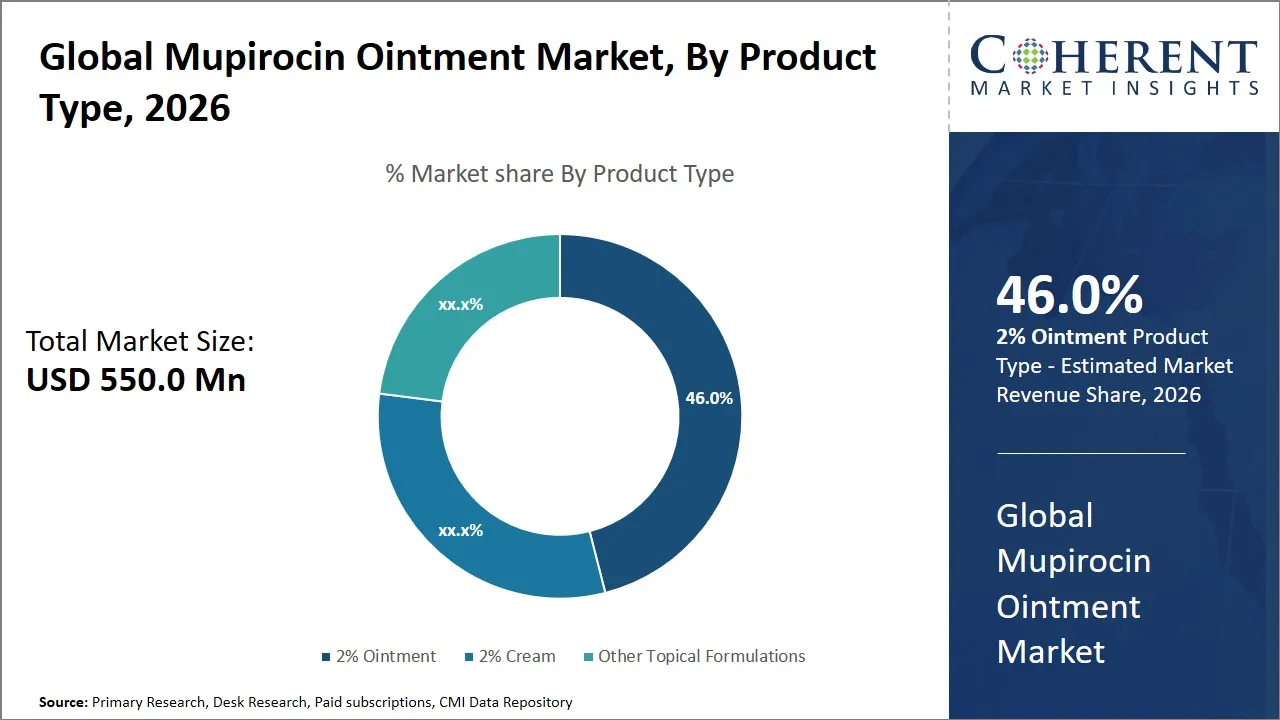
- 2% ointment segment is expected to lead the mupirocin ointment market, capturing 46% share in 2026.
- Skin infection treatment segment is estimated to represent 39% of the mupirocin ointment market share in 2026.
- Hospitals segment is projected to dominate with 32% of the global mupirocin ointment market share in 2026.
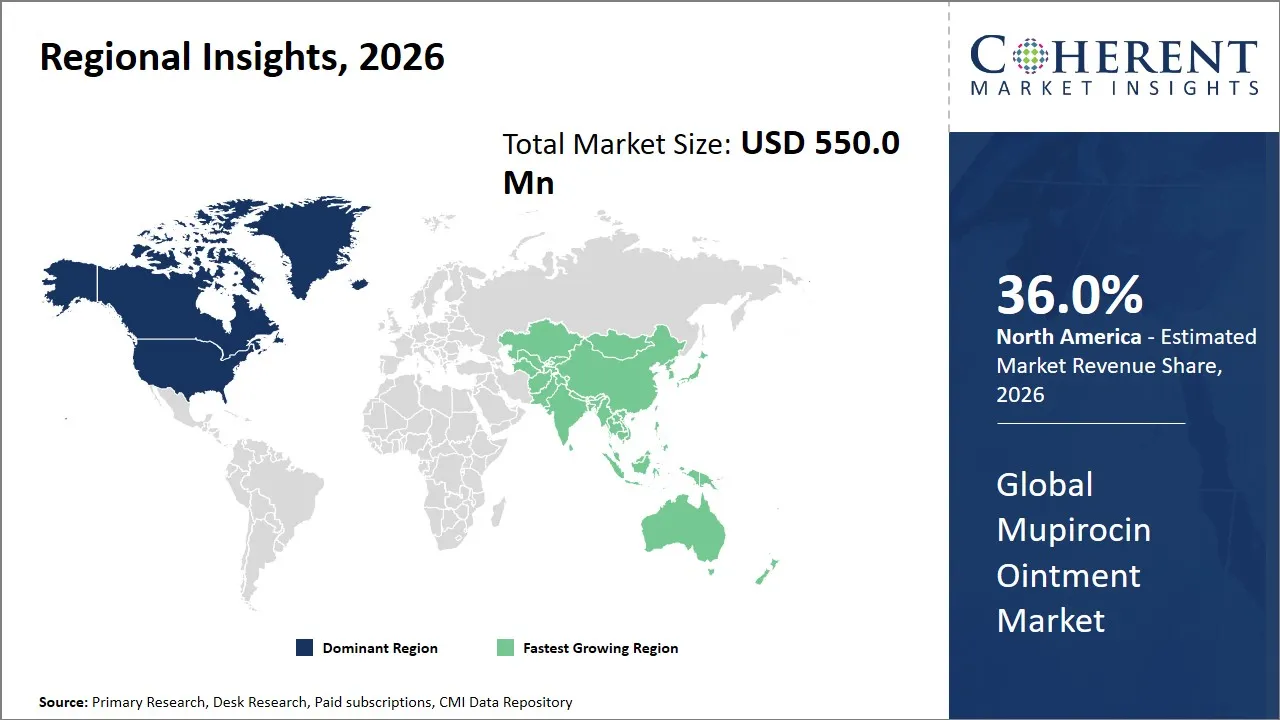
- North America is expected to lead the market, holding a share of 36% in 2026. Asia Pacific is anticipated to be the fastest-growing region, with 24% share in 2026.
Market Overview
- Major factors driving market growth include the rise in skin infections, particularly in urban populations, increased awareness of antimicrobial resistance (AMR), the demand for non-invasive, effective treatments, and the expanding healthcare infrastructure in emerging markets.
- The mupirocin ointment market faces strong competition from generic versions as several pharmaceutical companies, including Teva Pharmaceuticals and Mylan, are producing affordable alternatives, resulting in price pressures but also increasing market availability.
- The aging global population, especially in developed regions, is more susceptible to bacterial infections and chronic conditions, leading to higher demand for topical antibiotics like mupirocin for infection prevention and treatment.
- Companies are engaging in strategic partnerships and acquisitions to enhance product offerings, expand regional presence, and increase manufacturing capacities. Collaborations with healthcare providers and distributors are also helping to increase product availability in underserved markets.
Currents Events and their Impact
Current Events | Description and its Impact |
Global Surge in Antimicrobial Resistance (AMR) Awareness |
|
Technological Advancements in Drug Formulation |
|
Segmental Insights
- Current Industry Events of 2026
- Market Size Estimation
- Regional Breakdown
- Competitive Landscape
- Customer Intelligence
- Segmental Analysis
- Pricing Analysis
- Key Market Drivers, Challenges & Future Trends
- Customized Insights Section
Why Does the 2% Ointment Segment Dominate the Global Mupirocin Ointment Market in 2026?
The 2% ointment segment is expected to hold the largest share of 46% in 2026, due to its superior therapeutic efficacy and widespread clinical acceptance. The 2% ointment formulation provides a strong concentration of the active ingredient mupirocin, which is critical in effectively attacking a wide and diverse variety of gram-positive bacterial infections, particularly those caused by resistant strains such as methicillin-resistant Staphylococcus aureus (MRSA). This strength qualifies the 2% ointment a must-have option among medical practitioners and patients who want to have quick and dependable infection management.
Why Does the Skin Infection Treatment Segment Dominate the Global Mupirocin Ointment Market in 2026?
The skin infection treatment segment is expected to hold 39% share in 2026, driven predominantly by the increasing prevalence of superficial skin infections worldwide. The potent antibacterial range of Mupirocin especially against staphylococcal and streptococcal bacteria renders it a very important ingredient in the management of infections (Impetigo, folliculitis, and other minor skin afflictions that weaken the skin barrier).
The increasing number of diseases that contribute to predisposition of people to skin infections, including diabetes, obesity, and immunosuppressive diseases has increased the pressure to find effective topical antibacterial agents. In addition, the increasing prevalence of antibiotic-resistant skin bacteria is leading to the need to have strong topical therapy treatments that are able to effectively eliminate resistant colonies without necessarily using systemic antibiotics. This has made mupirocin have a unique position as front line therapy in most clinical guidelines.
For instance, Surgical Site Infections (SSIs) are common complications following surgeries, and 2% mupirocin ointment is frequently used as part of decolonization protocols before surgeries. A 2021 study showed that preoperative mupirocin ointment application in patients who tested positive for nasal S. aureus reduced the risk of SSIs by 30%. The application of mupirocin reduced bacterial colonization, minimizing infection risks post-surgery.
(Source - https://pmc.ncbi.nlm.nih.gov/articles/PMC7967856/)
The Hospitals Segment Dominates the Global Mupirocin Ointment Market
The hospitals segment is expected to hold the largest share of 32% in 2026, due to the critical role this formulation plays in institutional infection control practices and the management of complex and severe skin infections. Hospitals are at the forefront in the treatment of post-surgical wounds, burns, and surgical site infections all of which requires effective topical antibiotics in prevention of secondary colonization with bacteria and wound healing.
Hospital guidelines usually require mupirocin ointment as a standard topical antimicrobial agent to be used as an infection prevention bundle, especially in intensive care units (ICUs) and burn units where bacterial transmission is high. This large number of patients in the hospitals with wounds that topical antimicrobial intervention is necessary presents a steady and high demand.
Technological Advancements in Mupirocin Ointment Formulation: Enhancing Efficacy and Patient Compliance
- Nanotechnology in Mupirocin Ointment Formulation: The recent nanotechnology advancements have enabled the creation of mupirocin formulations in nanoemulsions. These formulae increase the penetration of mupirocin through the skin, and this increases its effectiveness in selection of bacterial infections in the skin. Nanoparticles allow the release of the active ingredient to be controlled, providing a prolonged effect of the therapeutic effect, thus, possibly decreasing the number of applications, which enhances adherence to a treatment. The technology as well increases the bioavailability of the drug, which makes it better in targeting the deeper parts of the skin or when managing chronic wound care.
- Sustained-Release and Multi-Action Formulations: It has changed to sustained-release mupirocin ointments that have an extended effect over time, so as to minimize frequent re-application. This prescription increases patient adherence and the therapeutic outcome of such diseases as chronic skin infections. There are also new mupirocin preparations that combine antimicrobial effects with skin-soothing properties and thus the treatment will help not only in fighting the bacterial infection but also in healing and regeneration of the skin. These multifunctional formulations are useful in solving several dermatology problems like infection management, inflammation and wound healing.
Regional Insights
North America Mupirocin Ointment Market Analysis and Trends
The North America region is projected to lead the market with a 36% share in 2026, driven by a highly advanced healthcare infrastructure and strong pharmaceutical industry presence. The presence of leading market players such as Pfizer Inc., GlaxoSmithKline, and Mylan Pharmaceuticals supports extensive research and development activities, facilitating the introduction of innovative formulations and generic alternatives.
Furthermore, stringent regulatory frameworks enforced by the FDA ensure high product quality and safety, boosting clinician and consumer confidence. Government initiatives aimed at combating antibiotic resistance through the appropriate use of topical antibiotics also contribute to steady demand. Additionally, high healthcare expenditure and widespread awareness about skin infection treatments strengthen market dominance in this region.
For instance, in the U.S., 2% mupirocin ointment remains one of the most prescribed topical antibiotics for impetigo, folliculitis, and minor wound infections, with usage particularly high in dermatology clinics and primary care settings. Clinical guidelines from major U.S. healthcare institutions continue to recommend mupirocin as a first‑line treatment for Staphylococcus aureus skin infections, which contributes to sustained demand in the region.
Asia Pacific Mupirocin Ointment Market Analysis and Trends
The Asia Pacific region is expected to exhibit the fastest growth in the mupirocin ointment market contributing 24% share in 2026, due to rapid urbanization, improving healthcare access, and increasing prevalence of skin infections. The developing markets such as India and China are increasing their medical institutions and drug producing potential which is promoting healthy markets.
Favorable government policies that facilitate the development of the healthcare infrastructure and the ease of doing business are some of the factors that encourage international pharmaceutical firms to set up manufacturing facilities and collaboration in the area.
Mupirocin ointment formulations have been made affordable by companies like Sun Pharmaceutical Industries Ltd., Lupin Limited and Cipla and this has played a significant role in serving the large number of people. In addition, the demand is heightened by higher healthcare awareness spending and higher income levels of the middle classes. The fast growth of the markets in the region is also enabled by the dynamic trade environment that has seen reduced regulatory approvals and export incentives.
Global Mupirocin Ointment Market Outlook for Key Countries
How is the U.S. Helping in the Growth of the Mupirocin Ointment Market?
The U.S. mupirocin ointment market is a leader because of the advanced pharmaceutical research and development, good healthcare system, and strict regulatory guidelines. Large corporations such as Pfizer and Mylan have managed to set up a good presence due to the provision of branded and generic mupirocin ointment. Constant emphasis on antimicrobial stewardship initiatives and the increase in skin infections including impetigo support constant demand. Further market proliferation is facilitated by changes and developments in topical drug delivery technologies as well as the growing outpatient treatment environments.
How is India Helping in the Growth of the Mupirocin Ointment Market?
The mupirocin ointment market in India is expanding with a high rate, as more people have started creating awareness on infections of the skin, and with greater access to health services in both rural and urban regions. Domestic and foreign markets are served by local pharmaceutical giants in the form of Sun Pharmaceutical Industries and Cipla producing inexpensive and efficient formulations of mupirocin ointment.
The emphasis of the government on the development of primary healthcare and the regulations promoting the export of pharmaceuticals have also facilitated the increase of production and consumption. Also, the increasing rate of antibiotic-resistant bacteriological infections intensifies the use of such topical antibiotics as mupirocin.
Key Drivers for the Growth of the Germany Mupirocin Ointment Market
Germany has been the market leader in Europe due to its high standards of healthcare and good pharmaceutical manufacturing. Bayer AG and Stada Arzneimittel are some companies that are critical in supplying high quality mupirocin ointments that are modified to meet the regulations of the Europeans. The quality of patient safety and wide access to effective topical antibiotics can be achieved due to the high rate of health insurance coverage and attention to patient safety in the country. In addition, the aspect of German focus on antimicrobial resistance studies affects the process of creating better mupirocin formulas.
China Mupirocin Ointment Market Trends
The mupirocin ointment market in China is characterized by fast growth due to the government investments to develop better healthcare systems and make more pharmaceuticals locally. The domestic top pharmaceutical industries, like Shanghai Pharmaceuticals and CSPC Pharmaceutical Group, have increased the production capacity of mupirocin ointment to satisfy the massive demand among the consumers. Reform regulation has made it easier to approve drugs and this has promoted the introduction of new generic products. The widening market comes with increasing urbanization and prevalence of skin infections, whereas the international partnerships increase technology transfer and availability of products.
End User Feedback and Unmet Needs in the Global Mupirocin Ointment Market
- End users, especially healthcare professionals and patients, tend to report high satisfaction with the mupirocin ointment 2% effectiveness in treating most forms of bacterial skin infections in the body such as impetigo and folliculitis. The reason is that a positive example can be found in the dermatologists of North America, where mupirocin has a good action and low resistance profile leading to its widespread use as a treatment option, which makes the healing process quicker and the patients more compliant. The physicians like the ease of application and the low side effects of the ointment and this has brought good responses in the outpatient area. But there is often the fear of affordability especially in those areas where generic substitutes are yet to be fully incorporated into the healthcare systems. In developing markets, the patients usually cannot afford high out-of-pocket expenses, and hence, cannot have this effective treatment.
- The unmet needs in this market are most related to the barrier of cost, absence of the availability regionally and the availability of more personalized formulations. Although the universal applicability of mupirocin cannot be underestimated, there is an increase in the need of cheap generics and more specific solutions, which would be directly related to regional health issues. These gaps would create a potential to penetrate the market among the emerging economies and benefit accessibility. The manufacturers were able to promote the loyalty of customers in the long run, increase the market growth, and satisfy the needs of various patients populations by concentrating on reducing costs, enhancing the distribution channels, and experimenting with drug delivering systems.
Market Players, Key Developments, and Competitive Intelligence
Key Developments
- In November 2025, Pelthos Therapeutics expanded its dermatology portfolio through acquisition of Xepi Cream, a topical antibacterial for impetigo, indicating broader market interest in skin antibiotic products adjacent to mupirocin ointment demand.
- In January 2025, Medroots Biopharma announced the launch of its advanced Mupirocin ointment, MUPZUP, in India. The newly formulated topical antibacterial solution features improved skin penetration and enhanced resistance profile, designed to address a broad range of bacterial skin infections.
- In June 2024, Glenmark Pharmaceuticals introduced SUPIROCIN (mupirocin) antibacterial cream in the Australian market as part of its product portfolio expansion, marking a strategic effort to enhance dermatology treatment options in the Asia Pacific region.
Top Strategies Followed by Global Mupirocin Ointment Market Players
Player Type | Strategic Focus | Examples |
Established Market Leaders | Established market leaders in the mupirocin ointment sector invest heavily in R&D to develop innovative formulations that improve efficacy, delivery mechanisms, and patient compliance. This innovation helps maintain a competitive edge and meet evolving regulatory standards. | Teva Pharmaceuticals partnered with local manufacturers in India to expand its reach and meet rising demand in emerging markets, driven by increased healthcare access and growing skin infection cases. |
Mid-Level Players | Mid-level companies in the mupirocin ointment market focus on cost-effective solutions that offer a balance between quality and affordability, targeting price-sensitive segments in developing markets. These companies often form strategic partnerships with contract manufacturers and regional distributors to expand production and improve product availability efficiently. | Mylan Pharmaceuticals collaborates with local distributors in Asia Pacific to offer affordable generic mupirocin ointments, meeting growing demand while maintaining competitive pricing in price-sensitive regions. |
Small-Scale Players | Small-scale players in the mupirocin ointment market focus on niche differentiation through specialized formulations or innovative delivery technologies to cater to users seeking unique treatments. By adopting advanced manufacturing and quality control techniques, they ensure regulatory compliance despite limited resources. | Bioron Pharmaceuticals partnered with local distributors in Europe to offer organic mupirocin ointments, appealing to customers looking for natural, eco-friendly alternatives while navigating regulatory challenges efficiently. |
Market Report Scope
Mupirocin Ointment Market Report Coverage
| Report Coverage | Details | ||
|---|---|---|---|
| Base Year: | 2025 | Market Size in 2026: | USD 550.0 Mn |
| Historical Data for: | 2020 To 2024 | Forecast Period: | 2026 To 2033 |
| Forecast Period 2026 to 2033 CAGR: | 7.2% | 2033 Value Projection: | USD 894.8 Mn |
| Geographies covered: |
| ||
| Segments covered: |
| ||
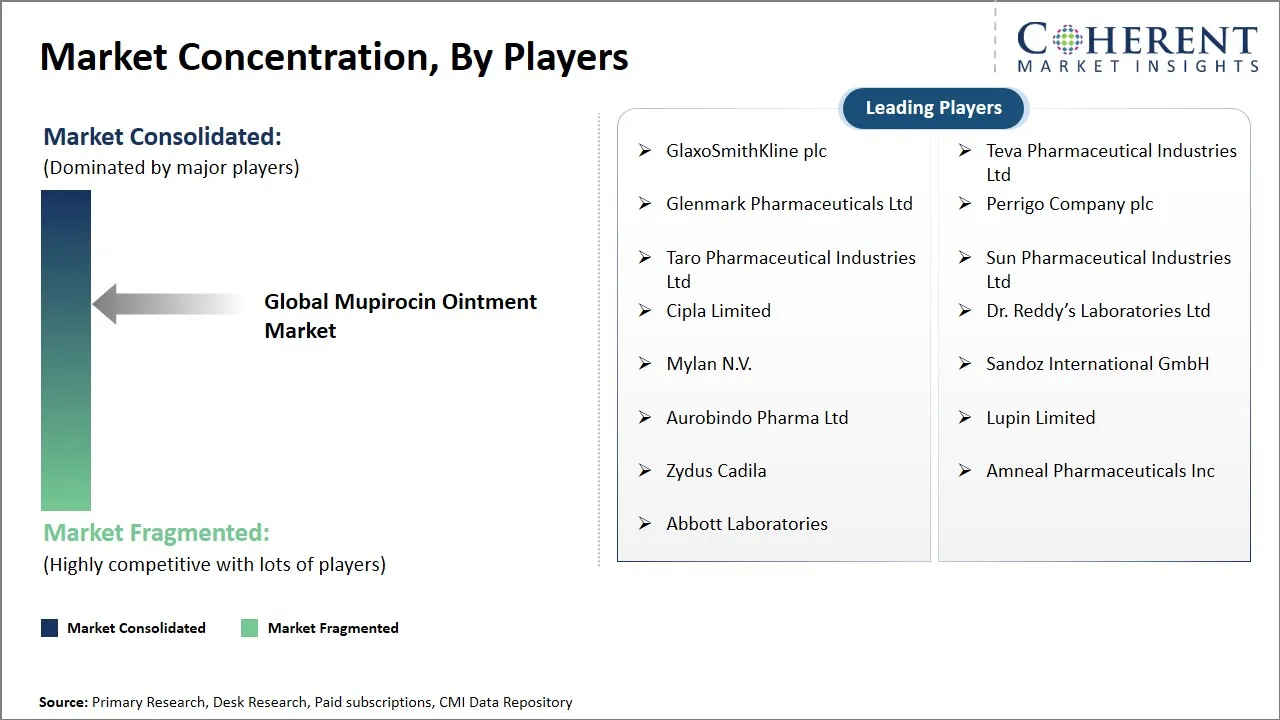
| Companies covered: | GlaxoSmithKline plc, Teva Pharmaceutical Industries Ltd, Glenmark Pharmaceuticals Ltd, Perrigo Company plc, Taro Pharmaceutical Industries Ltd, Sun Pharmaceutical Industries Ltd, Cipla Limited, Dr. Reddy’s Laboratories Ltd, Mylan N.V., Sandoz International GmbH, Aurobindo Pharma Ltd, Lupin Limited, Zydus Cadila, Amneal Pharmaceuticals Inc, and Abbott Laboratories | ||
| Growth Drivers: |
| ||
| Restraints & Challenges: |
| ||
Global Mupirocin Ointment Market Dynamics
Mupirocin Ointment Market Driver - Increasing Use of Mupirocin in MRSA Decolonization Protocols
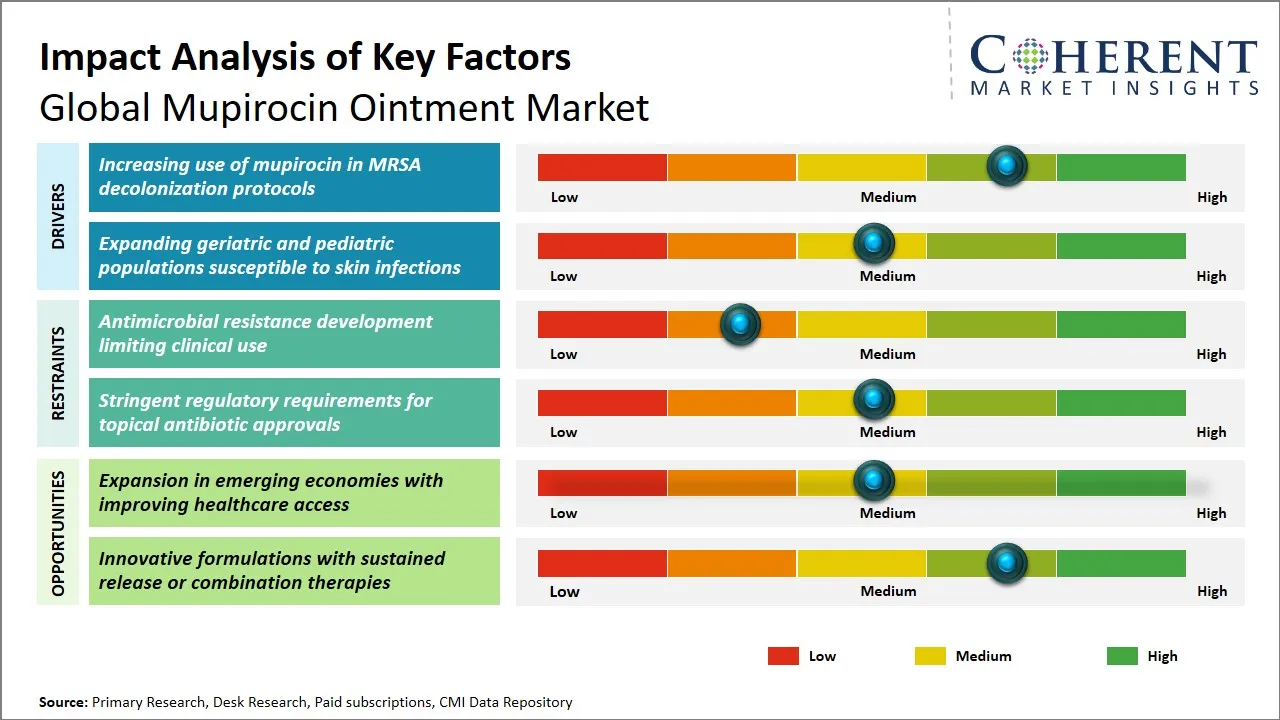
The increasing rate of Methicillin-resistant Staphylococcus aureus (MRSA) infections worldwide has greatly driven the demand of effective decolonization agent with mupirocin ointment becoming the first line agent in a clinical setting. The fact that Mupirocin has strong antibacterial activity, especially its ability to prevent nasal colonies of MRSA, is what renders it an irreplaceable part of infection control measures that can be used to minimize the occurrence of hospital-acquired infections.
Health facilities are progressively incorporating mupirocin ointment in the prevention measures to reduce the chances of transmitting MRSA between patients and the health care workers too. This increased attention to infection control interventions, along with the desperate necessity to reduce antibiotic-resistant bacteria, has contributed to the increase in the use of mupirocin both in hospitals and outpatient settings.
For instance, hospitals, especially in the U.S., are increasingly using 2% mupirocin nasal ointment to decolonize MRSA in patients before surgery to reduce the risk of surgical site infections (SSIs). A study published in 2020 showed that applying mupirocin to the nasal passages of MRSA-positive patients reduced the incidence of post-surgical infections by 40%, highlighting its growing role in infection prevention strategies. This practice is now common in many hospitals as part of standardized infection control protocols, helping to improve patient outcomes and reduce healthcare-associated infections.
Mupirocin Ointment Market Opportunity - Expansion in Emerging Economies with Improving Healthcare Access
The global mupirocin ointment market is a great growth opportunity considering that it is expanding to the emerging economies wherein the growth of healthcare facilities and the rising access to medical care is creating the need to have efficient treatments of the topical antibacterial agents. The various nations in the Asia Pacific, Latin America, and even parts of Africa are experiencing high rates of urbanization and increasing disposable incomes coupled with the increased government investment in medical systems, which are factors that are causing more patients to be more knowledgeable and diagnosed with skin infections that need mupirocin ointment.
Moreover, the increasing incidence of resistant antibiotic-based bacterial infections in these areas has increased the demand for strong topical antibiotics, which increases the commercial viability of mupirocin-based drugs. With the increased access to healthcare associated with efforts taken to increase insurance accessibility and the introduction of primary care centers, a greater number of patients will receive dermatological care that was formerly only available in developed countries.
Analyst Opinion (Expert Opinion)
- The mupirocin ointment market is expanding as a result of technological advancements and the increase in the occurrence of skin infections as well as the assistance of regulatory bodies. The delivery of drugs through new methods, as well as the growth in healthcare availability in new economies, are promising opportunities. Nevertheless, such issues as antibiotic resistance and cost pressure are present.
- Mupirocin was presented in the light of the International Conference on Dermatology and Skin Care in 2023. Through joint ventures such as Teva Pharmaceuticals cooperating with distributors in India, the company is broadening its reach in areas where the infection level is high, promoting market growth and innovation.
Speak to the analyst
Want personalized insights?
Take the findings above to one of our principal consultants, or have the report rebuilt around the segments, geographies and competitors you actually track.
Market Segmentation
- Product Type Insights (Revenue, USD Mn, 2021 - 2033)
- 2% Ointment
- 2% Cream
- Other Topical Formulations
- Application Insights (Revenue, USD Mn, 2021 - 2033)
- Skin Infection Treatment
- Impetigo
- Folliculitis
- Eczema-Related Infections
- Wound Care
- Cuts and Abrasions
- Surgical Site Infections
- Burns
- Others
- Skin Infection Treatment
- End User Insights (Revenue, USD Mn, 2021 - 2033)
- Hospitals
- Clinics
- Retail Pharmacies
- Online Pharmacies
- Ambulatory Care Centers
- Distribution Channel Insights (Revenue, USD Mn, 2021 - 2033)
- Hospital Pharmacy
- Retail Pharmacy
- E-Commerce / Online Pharmacy
- Regional Insights (Revenue, USD Mn, 2021 - 2033)
- North America
- U.S.
- Canada
- Latin America
- Brazil
- Argentina
- Mexico
- Rest of Latin America
- Europe
- Germany
- U.K.
- Spain
- France
- Italy
- Russia
- Rest of Europe
- Asia Pacific
- China
- India
- Japan
- Australia
- South Korea
- ASEAN
- Rest of Asia Pacific
- Middle East
- GCC Countries
- Israel
- Rest of Middle East
- Africa
- South Africa
- North Africa
- Central Africa
- North America
- Key Players Insights
- GlaxoSmithKline plc
- Teva Pharmaceutical Industries Ltd
- Glenmark Pharmaceuticals Ltd
- Perrigo Company plc
- Taro Pharmaceutical Industries Ltd
- Sun Pharmaceutical Industries Ltd
- Cipla Limited
- Reddy’s Laboratories Ltd
- Mylan N.V.
- Sandoz International GmbH
- Aurobindo Pharma Ltd
- Lupin Limited
- Zydus Cadila
- Amneal Pharmaceuticals Inc
- Abbott Laboratories
Sources
Primary Research Interviews
- Industry Stakeholders List
- Healthcare Providers (Doctors, Dermatologists)
- Pharmaceutical Distributors
- End Users List
- Patients (using mupirocin ointment)
- Pharmacists
Government and International Databases
- World Health Organization (WHO)
- Centers for Disease Control and Prevention (CDC)
- National Institutes of Health (NIH)
- European Medicines Agency (EMA)
- U.S. Food and Drug Administration (FDA)
- Indian Health Ministry
Trade Publications
- Pharmaceutical Technology
- Dermatology Times
- The Pharmaceutical Journal
- Global Dermatology News
- Pharma Manufacturing
- Medical News Today
Academic Journals
- The Lancet Infectious Diseases
- Journal of the American Academy of Dermatology
- International Journal of Dermatology
- Antimicrobial Agents and Chemotherapy
- Journal of Clinical Microbiology
- British Journal of Dermatology
Reputable Newspapers
- The New York Times
- The Guardian
- The Wall Street Journal
- The Washington Post
- Financial Times
- The Times of India
Industry Associations
- American Academy of Dermatology (AAD)
- International Society of Dermatology (ISD)
- European Academy of Dermatology and Venereology (EADV)
- American Pharmaceutical Association (APhA)
- International Pharmaceutical Federation (FIP)
- Global Antibiotic Resistance Partnership (GARP)
Public Domain Resources
- National Library of Medicine (NLM)
- Google Scholar
- U.S. National Library of Medicine
- ClinicalTrials.gov
- CDC Data & Statistics
Proprietary Elements
- CMI Data Analytics Tool: Proprietary analytics tool to analyze real-time market trends, consumer behavior, and technology adoption in market
- Proprietary CMI Existing Repository of Information for Last 8 Years
Get access to 250+ pages report
Every segment, forecast, competitor profile and data table behind the analysis above — available for instant download.
- ESOMAR Member
- ISO 9001:2015 Certified
- D-U-N-S Registered
- GDPR & CCPA Compliant
Missing comfort of reading report in your local language? Find your preferred language:
Transform your Strategy with Exclusive Trending Reports
Frequently Asked Questions
The global mupirocin ointment market is estimated to be valued at USD 550.0 million in 2026 and is expected to reach USD 894.8 million by 2033.
The CAGR of the global mupirocin ointment market is projected to be 7.2% from 2026 to 2033.
Increasing use of mupirocin in MRSA decolonization protocols and expanding geriatric and pediatric populations susceptible to skin infections are the major factors driving the growth of the global mupirocin ointment market.
Yes, mupirocin ointment can be used in combination with systemic antibiotics for more comprehensive treatment, especially in cases of severe or widespread infections. It is commonly used topically for localized skin infections, while systemic antibiotics may be prescribed for more extensive or deeper infections. Always follow medical guidance when combining treatments.
Antimicrobial resistance development limiting clinical use and stringent regulatory requirements for topical antibiotic approvals are the major factors hampering the growth of the global mupirocin ointment market.
Mupirocin ointment is often preferred for MRSA infections, while fusidic acid ointment is commonly used for less resistant strains of staph. Both treat skin infections, but mupirocin is more effective for conditions like impetigo, while fusidic acid is popular in Europe for staph skin infections.
In terms of product type, 2% ointment is estimated to dominate the market revenue share in 2026.