

Global Netherton Syndrome Market Size and Forecast – 2026 to 2033
The global Netherton syndrome market is estimated to be valued at USD 29.4 Mn in 2026 and is expected to reach USD 65.3 Mn by 2033, exhibiting a compound annual growth rate (CAGR) of 12.1% from 2026 to 2033. This steady growth reflects increasing awareness, advancements in diagnostic techniques, and the development of targeted therapies that are expected to drive the market expansion over the forecast period.
Key Takeaways of the Global Netherton Syndrome Market
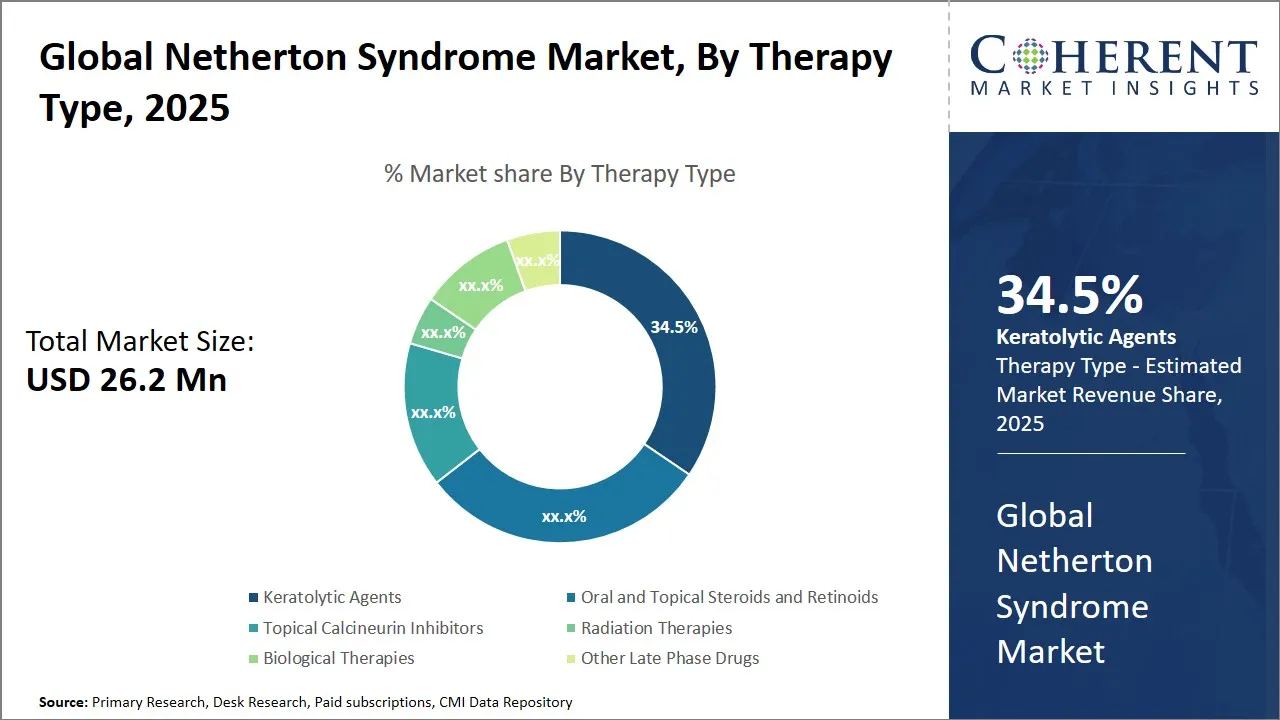
- Keratolytic agents are projected to be the leading therapy type in the global Netherton syndrome market, capturing a 35.5 % share in 2026.
- Regarding the route of administration, the oral route is expected to dominate, accounting for 54.4 % of the market share in 2026.
- The adult segment is anticipated to make the largest contribution to the global Netherton syndrome market, holding an 81.4 % share in 2026.
- North America is expected to lead the market, holding a share of 38.3 % in 2026. Asia Pacific is anticipated to be the fastest-growing region, with an estimated market share of 23.5% in 2026.
Market Overview
Key trends in the Netherton syndrome market include a rising investment in research and development focused on genetic therapies and personalized medicine. Additionally, the adoption of novel biologics and improved treatment protocols are enhancing patient outcomes. Growing collaborations between pharmaceutical companies and research institutions are also accelerating innovation. Furthermore, increasing patient awareness and better healthcare infrastructure in emerging markets contribute to the expanding demand for effective management solutions.
Current Events and Its Impact
Current Events | Description and its Impact |
Advances in Genetic Sequencing and Diagnostics |
|
U. S. FDA Grants Breakthrough Therapy Designation to a New Topical Therapy |
|
Segmental Insights
- Current Industry Events of 2026
- Market Size Estimation
- Regional Breakdown
- Competitive Landscape
- Customer Intelligence
- Segmental Analysis
- Pricing Analysis
- Key Market Drivers, Challenges & Future Trends
- Customized Insights Section
Netherton Syndrome Market Insights, By Therapy Type - Keratolytic Agents Contributes the Highest Share of the Market Owning to their Targeted Efficacy and Wide Applicability in Managing Netherton Syndrome Symptoms
Keratolytic agents have come out on top as the main type of therapy within the global market for Netherton syndrome, accounting for 35.5% of the market share in 2026. This is mainly because of their active role in curing the disorder. Patients having Netherton Syndrome face the problem of skin barrier function being undermined and thus suffer from severe skin peeling; keratolytic agents provide an immediate way to rid the skin of excess keratin deposit through desquamation and thus improving skin texture and also helping in retaining moisture.
For example, Leading companies involved in the development and distribution of keratolytic agents for Netherton Syndrome treatment include Galderma and L'Oréal. Galderma's Azelex (a topical treatment with azelaic acid, another keratolytic agent) and L'Oréal's range of products containing urea are examples of therapies widely used for patients with compromised skin barriers like those seen in Netherton Syndrome.
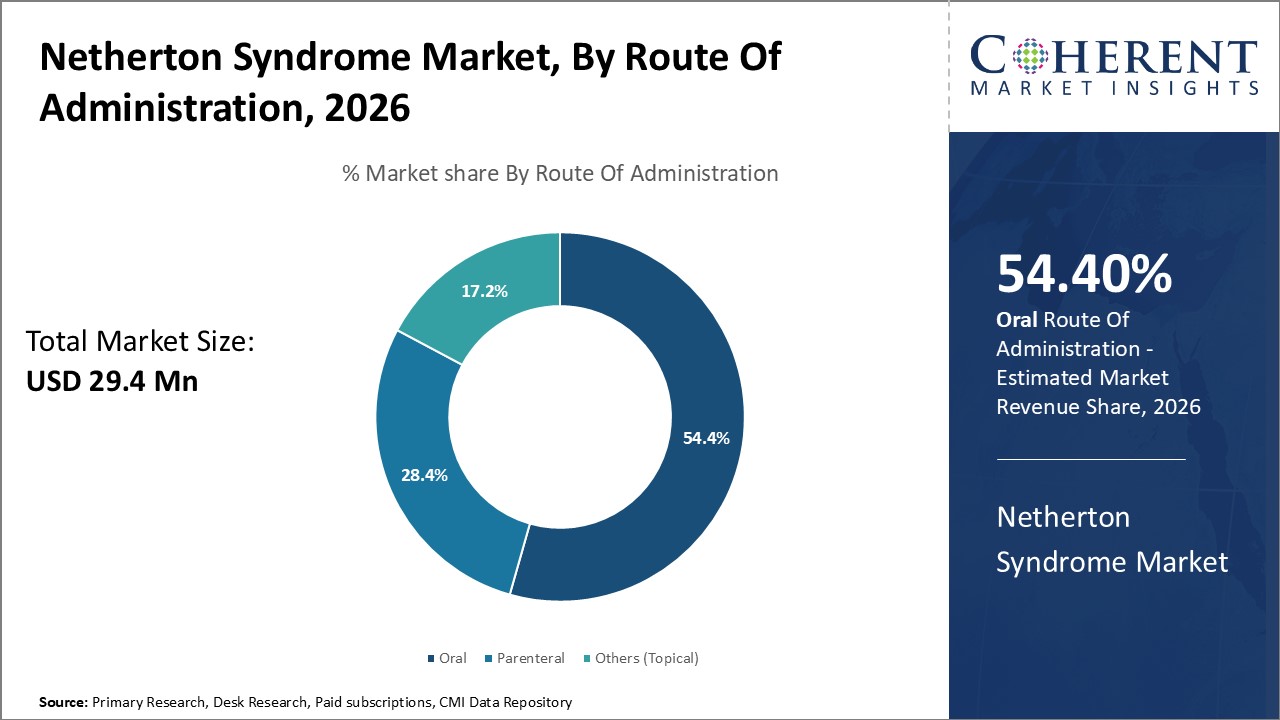
Netherton Syndrome Market Insights, By Route of Administration - Oral Route Contributes the Highest Share of the Market Driven by Systemic Treatment Needs and Patient Adherence Benefits
The major area of Netherton syndrome treatments is the oral route, which will have a 54.4% share in 2026, thus acknowledging the importance of systemic therapy in managing such a multi-systemic disorder. In contrast to topical treatment, oral administration of drugs helps to provide broader immunomodulatory and anti-inflammatory effects, which are very important in the case of the chronic inflammation and immune dysregulation conditions typical of Netherton Syndrome.
This being said, in the course of the treatments, the patients have the benefit of the administration being easy which is particularly helpful when dealing with the long term treatment regimens that are required for chronic diseases. With this route the patient does not have to put up with the hassle of frequent topical applications and thus patient's compliance is improved, especially with the pediatric and adult populations where adherence is very important for disease control, as it is also in the case of the adults where they only need to take the oral medications.
Netherton Syndrome Market Insights, In terms of By Age Group - Adult segment contributes the highest share of the market due to greater therapeutic intervention and disease management complexity in adults
The dominance of the adult segment in the global Netherton syndrome market, which accounts for 81.4% share in 2026, due to the difficulties in dealing with the disorder's long-term effects and the need for extensive and costly treatment options. People who have Netherton Syndrome, a chronic skin disease, go through a lot of painful suffering and have to face skin damage, infections and more serious health issues that require continuous and complex treatments. The market demand for such products is thereby increasing.
Adult patients usually need a personalized treatment plan that consists of both topical and systematic therapies, which are usually started or increased as the disease and its complications worsen over time. In addition, adults usually have better access to health care and are more likely to try to get advanced therapies like off-label and novel drug options which all together result in greater market penetration.
Regional Insights
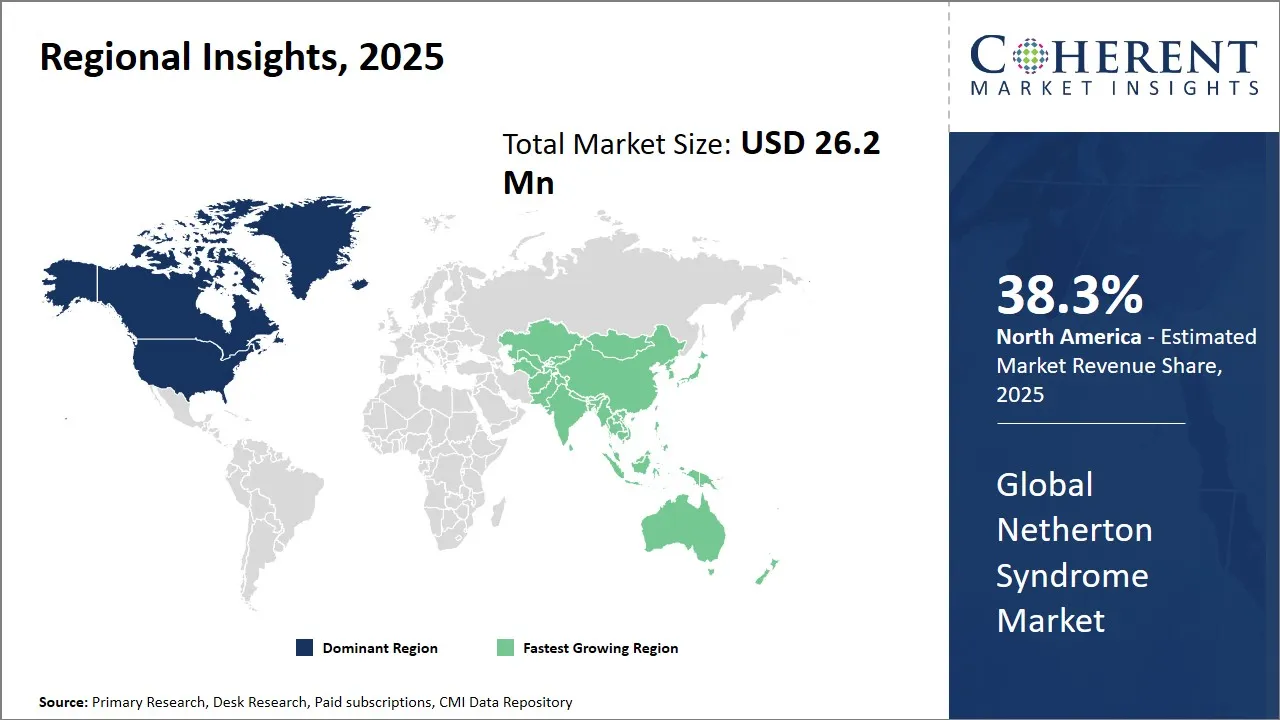
North America Netherton Syndrome Market Analysis and Trends
North America is going to be the leading region in the global Netherton syndrome market with 38.3% share in 2026, due to an advanced healthcare infrastructure, and strong government support for rare disease research, and a rich ecosystem of pharmaceutical and biotech companies. Moreover, the U.S. has very favorable regulatory frameworks that encourage pharmaceutical companies to get involved in developing drugs for rare diseases by providing them with benefits such as market exclusivity and funding opportunities.
In January 2026, Skinvisible Pharmaceuticals, Inc., a company specializing in topical and transdermal drug delivery technology, announced significant progress made by its licensee, Quoin Pharmaceuticals, in clinical studies for Netherton syndrome. Quoin's product, QRX003, which uses Skinvisible's Invisicare technology, showed positive results in ongoing clinical trials, including improved disease classification from "severe" to "mild" in subjects after six weeks of treatment.
Asia Pacific Netherton Syndrome Market Analysis and Trends
The Asia Pacific region is predicted to present the fastest growth rate in the Netherton syndrome market as a result of better healthcare infrastructure with 23.5% share in 2026, increase in the awareness of rare diseases as well as the ability of the pharmaceutical industry to produce drugs.
Countries such as Japan and China have decided to make their approval processes easier and the marketing of medicines for rare diseases faster by forming supportive regulations.
Netherton Syndrome Market Outlook for Key Countries
U.S. Netherton Syndrome Market Analysis and Trends
The U.S. stays at the forefront of Netherton syndrome innovations owing to a sizeable and well-organized health care infrastructure, combined with federal programs like the NIH and FDA’s Orphan Drug Program, which are beneficial for the Netherton Syndrome research. To be more specific, the pharmaceutical giants are engrossed in finding cures and creating drugs for rare diseases like Netherton Syndrome.
For example, Regeneron Pharmaceuticals and Sanofi are important influences in this area, working on drug and gene therapy for skin diseases associated with Netherton Syndrome. The National Organization for Rare Disorders (NORD) is one such advocacy group that is working incognito yet tirelessly in publicizing and also in making research funding available.
Germany Netherton Syndrome Market Analysis and Trends
The Netherton syndrome market in Germany is defined by its strong pharmaceutical manufacturing base and progressive healthcare policies that are rare disease-oriented. The social health insurance system of Germany further helps the patient in getting the therapy for Netherton Syndrome, which is the latest in tech. Being a trade hub in Europe, Germany is also able to collaborate with others in the field and so the innovation ecosystem that supports new drug development continues to thrive.
For example, the statutory health insurance system ensures that patients have access to advanced treatments for Netherton Syndrome. Bayer AG, a leading company in dermatology research, continues to invest in innovations in rare skin diseases.
Japan Netherton Syndrome Market Analysis and Trends
Japan is the leading country in Asia Pacific with increasing attention given to rare diseases, namely Netherton syndrome. The Orphan Drug Designation Program and tax benefits for the biotech startups are all positive government policies that are delightful for the firms' innovation activities. The well-maintained patient registry systems and the robust healthcare delivery network in the country are most suitable for the swift diagnosis and treatment of patients.
For example, Mitsubishi Tanabe Pharma is at the forefront, advancing biologics and gene therapies tailored to the Japanese population. The country’s patient registry systems and strong healthcare network help facilitate early diagnosis and the adoption of new treatments.
U.K. Netherton Syndrome Market Analysis and Trends
The NHS centralized healthcare system is a great advantage for the U.K., as it allows the implementation of structured pathways for the diagnosis and management of rare diseases, such as Netherton syndrome. Government-driven incentives and support schemes are the main drivers behind research in rare skin diseases.
For instance, UCB Pharma stands out as one of the major pharmaceutical companies that invest heavily in the clinical studies and the development of drugs for inherited skin disorders, particularly Netherton Syndrome.
End user Feedback and Unmet Needs for the Global Netherton Syndrome Market
- Market participants for the Netherton syndrome, especially the patients and medical practitioners, have given both good and bad opinions regarding the existing therapies. A good number of the patients are in favor of keratolytic agents, salicylic acid and urea-based creams, in particular, for their role in skin scaling reduction and texture improvement. There is a case of one patient who used a urea-based product and consequent to which made a great vanishing of dryness and discomfort. On the other hand, a frequent complaint is the gradual effect of the treatment and the requirement of a long period to show the result, which for some people is too hard to stick to consistently.
- There are noticeable gaps in the market, particularly concerning personalization and cost. Consumers of the products have been vocal about wanting solutions that can give relief from all the symptoms at once and the price keeps many away from the treatment. Companies that come up with drugs that not only cure but are also economical can make good profits, attract patients and also bring in new ideas for Netherton syndrome treatment.
Market Players, Key Developments, and Competitive Intelligence
Key Developments
- In October 2025, Quoin Pharmaceuticals, Inc. announced that its lead product, QRX003, received Orphan Drug Designation from the European Medicines Agency (EMA) for the treatment of Netherton syndrome. This designation provides several benefits, including regulatory incentives, fee reductions, and a potential 10-year market exclusivity in Europe upon approval. QRX003, a topical kallikrein inhibitor, is currently undergoing late-stage clinical trials, with positive efficacy and safety results reported.
- In October 2025, Azitra, Inc., a clinical-stage biopharmaceutical company focused on precision dermatology, announced that Travis Whitfill, Ph.D., Co-Founder and Chief Operating Officer, will participate in a Dermatologic Rare Disease Panel at the Maxim Growth Summit in New York City. During the event, Azitra will highlight its lead program, ATR-12, currently undergoing a Phase 1b clinical trial for treating Netherton syndrome, a rare skin disease with no approved treatments.
- In October 2024, BioCryst Pharmaceuticals, Inc., a biopharmaceutical company specializing in innovative therapies, announced the enrollment of the first participant in a Phase 1 trial for BCX17725, a KLK5 inhibitor aimed at treating Netherton syndrome. This investigational treatment targets the underlying causes of the disease, offering potential as a best-in-class, disease-modifying therapy.
Top Strategies Followed by Global Netherton Syndrome Market Players
- Market leaders are the established firms that have made huge investments in research and development (R&D), which results in the development of high-performance products that could deal with the complicated needs of the patients suffering from Netherton Syndrome. These companies aim at the introduction of cutting-edge therapeutic solutions and diagnostic tools that not only enhance the patient experience but also increase the efficiency of the treatment.
- Established companies in the Netherton syndrome market, such as AbbVie and Amgen, lead with substantial investments in R&D to create high-performance treatments. AbbVie’s Dupixent (dupilumab), a biologic therapy, has shown promise for managing chronic inflammatory skin conditions like Netherton Syndrome. Amgen has also been at the forefront, developing innovative biologics such as Enbrel (etanercept), which addresses immune-mediated skin disorders.
- The mid-level players in the Netherton syndrome market are the ones who will mainly carry out the strategies that are focused on the product quality and cost-effectiveness at the same time and thus, will be appealing to the price-sensitive customers, which includes the patients in underdeveloped countries or those without extensive insurance coverage. These companies target the development of affordable treatment options and management solutions that are effective yet very accessible, thus the establishment of a significant market niche.
- Mid-level players, like BioMarin Pharmaceutical and Eli Lilly, focus on striking a balance between affordability and efficacy. BioMarin offers therapies for rare diseases, including enzyme replacement treatments, which are less expensive than cutting-edge biologics but still highly effective. Eli Lilly has developed treatments aimed at both reducing the cost for underserved populations and improving outcomes.
- On the other hand, small players normally have a tendency to form very small niches within the global Netherton syndrome market by their focus on the innovative and unique product features for certain patient needs or regional preferences. They adopt the latest technology such as advanced biotechnology, personalized medicine, and digital health integrations to supply their customers with the distinctive solution that is easy to spot in the competitive market.
- Small-scale companies such as Inovio Pharmaceuticals and Thermo Fisher Scientific are carving out specialized niches within the Netherton Syndrome market by leveraging cutting-edge technologies. Inovio is exploring gene therapies for rare skin conditions, including Netherton Syndrome, using DNA vaccines as a potential treatment.
Market Report Scope
Netherton Syndrome Market Report Coverage
| Report Coverage | Details | ||
|---|---|---|---|
| Base Year: | 2025 | Market Size in 2026: | USD 29.4 Mn |
| Historical Data for: | 2020 To 2024 | Forecast Period: | 2026 To 2033 |
| Forecast Period 2026 to 2033 CAGR: | 12.1% | 2033 Value Projection: | USD 65.3 Mn |
| Geographies covered: |
| ||
| Segments covered: |
| ||
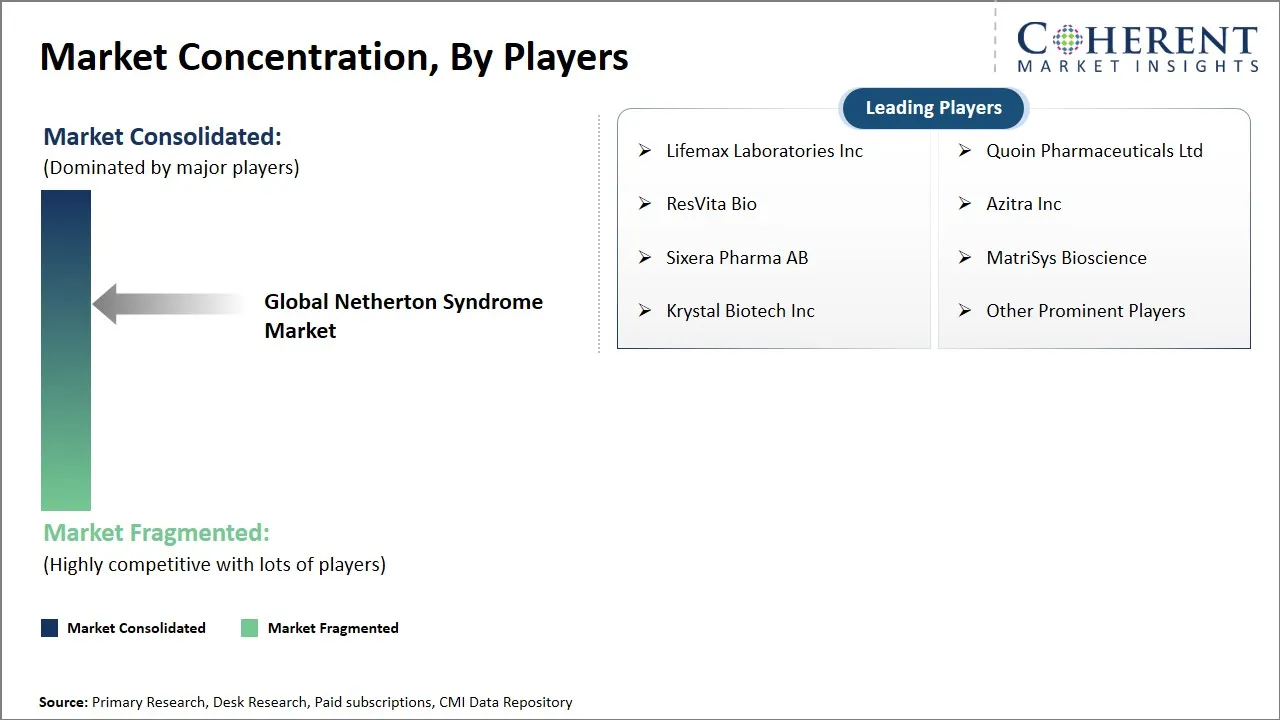
| Companies covered: | Lifemax Laboratories Inc, Quoin Pharmaceuticals Ltd, ResVita Bio, Azitra Inc, Sixera Pharma AB, MatriSys Bioscience, Krystal Biotech Inc, and Other Prominent Players | ||
| Growth Drivers: |
| ||
| Restraints & Challenges: |
| ||
Netherton Syndrome Market Dynamics
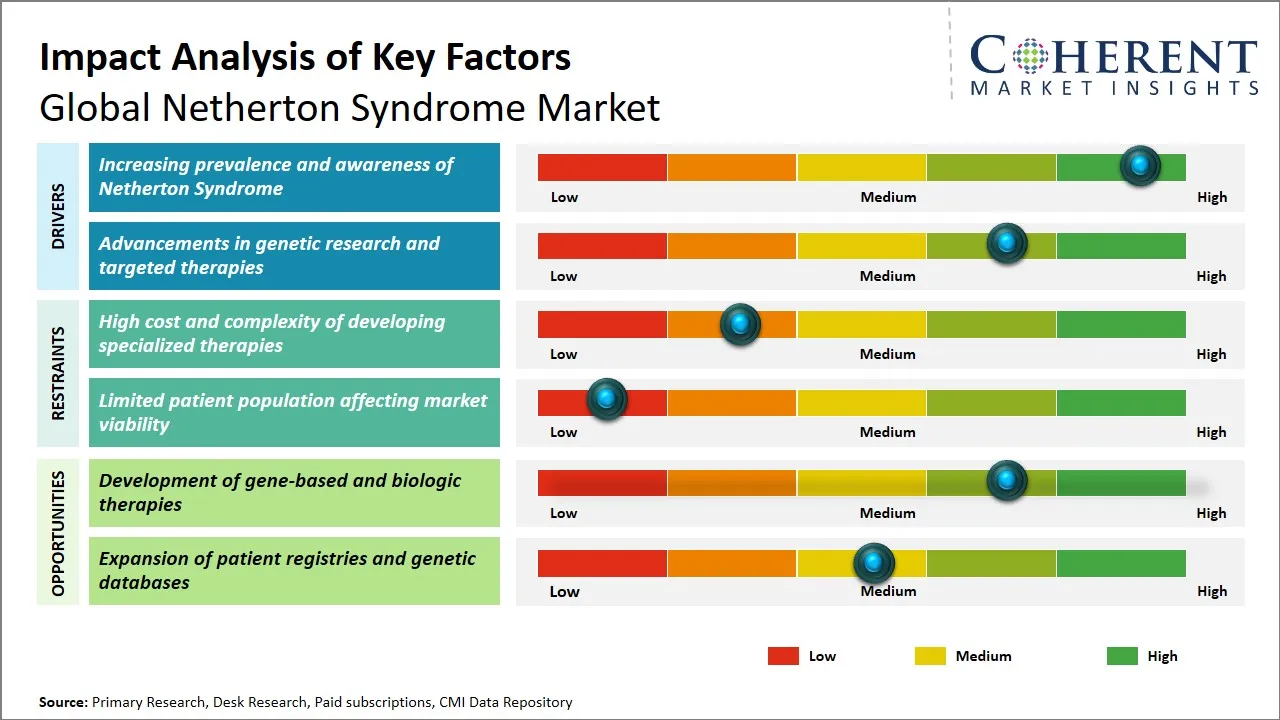
Netherton Syndrome Market Driver - Increasing Prevalence and Awareness of Netherton Syndrome
The increasing worldwide prevalence of Netherton syndrome, a rare genetic skin disorder marked by chronic inflammation, scaling, and hair defects- is one of the main reasons for the huge demand in the global market. As the era of diagnosis advances, more and more cases are being found by the doctors which, in turn, leads to the creation of a broader patient pool seeking treatment options. Alongside that, the growing awareness among both doctors and patients about the effects of the disease has raised the demand for the advanced treatments and management solutions aimed at making the patient's quality of life better.
For example, according to study published by Boehringer Ingelheim International GmbH, Netherton Syndrome is a rare genetic disorder caused by a mutation in the SPINK5 gene, affecting an estimated 1 to 9 individuals per million people. However, its actual prevalence may be higher due to misdiagnosis and early mortality in newborns. Diagnosing the condition is challenging, as symptoms vary and overlap with other skin conditions. In newborns, Netherton Syndrome can be life-threatening, with a mortality rate of 10% to 20%. Awareness of the disease remains low, contributing to delayed diagnosis and treatment.
Netherton Syndrome Market Opportunity - Development of Gene-Based and Biologic Therapies for Netherton Syndrome
The coming up of new gene-based and biologic therapies market as a global Netherton syndrome market has huge advantages. Netherton syndrome is a rare hereditary disease which incubates skin inflammation and immune system imbalance and has very few treatment options that are primarily just for symptom management. The development of directed gene and biologic therapies that tackle the root cause with molecular biology and genomics has increased tremendously. The potential of these new therapies, among them gene-editing such as CRISPR-Cas and recombinant biologics, is to bring about changing the patient’s outcome by either correcting their genetic mutations or switching their immune response from aberrant to normal.
In February 2025, ResVita Bio, a therapeutics company, announced that the USFDA granted Orphan Drug Designation to RVB-003 for Netherton Syndrome. The treatment, based on a continuous protein therapy platform, aims to address the skin barrier breakdown caused by the SPINK5 gene mutation. This marks a significant step in the development of gene-based and biologic therapies for Netherton Syndrome. The designation provides ResVita Bio with U.S. FDA incentives and enhanced collaboration to fast-track RVB-003, offering hope for this rare, underserved condition.
Analyst Opinion (Expert Opinion)
- The Netherton syndrome market is upsurging with the technological developments in genetic research and diagnosis as well as the growing demand for individualized therapies being the main drivers. The government’s endorsement of the rare diseases sector is another factor facilitating the market growth. On the other hand, the high treatment costs, small number of patients, and lack of adequate therapies for the complex symptoms are some of the challenges that still persist. The future seems bright for gene therapies and precision medicine whose potential to enhance patient’s lives and the market significantly is already being recognized.
- World Orphan Drug Congress and Rare Disease Day have been instrumental to the past so far in keeping the dialogue going on rare genetic disorders like Netherton Syndrome. Conferences of this nature have been very helpful in exchanging knowledge, creating policies, and also letting people see the latest technologic innovations. Besides, the Rare Disease Patient Advocacy Network and similar projects have been working hard to make treatments more accessible and to get changes in the policy that will certainly affect the Netherton syndrome market positively in the future.
Speak to the analyst
Want personalized insights?
Take the findings above to one of our principal consultants, or have the report rebuilt around the segments, geographies and competitors you actually track.
Market Segmentation
- Therapy Type Insights (Revenue, USD Mn, 2021 - 2033)
- Keratolytic Agents
- Oral and Topical Steroids and Retinoids
- Topical Calcineurin Inhibitors
- Radiation Therapies
- Biological Therapies
- Other Late Phase Drugs
- Route Of Administration Insights (Revenue, USD Mn, 2021 - 2033)
- Oral
- Parenteral
- Others (Topical)
- Age Group Insights (Revenue, USD Mn, 2021 - 2033)
- Adult
- Pediatric
- Development Stage Insights (Revenue, USD Mn, 2021 - 2033)
- Discovery
- Preclinical
- Clinical (Phase I–III)
- Marketed
- Distribution Channel Insights (Revenue, USD Mn, 2021 - 2033)
- Hospital Pharmacies
- Retail Pharmacies
- Online Pharmacies
- Regional Insights (Revenue, USD Mn, 2021 - 2033)
- North America
- U.S.
- Canada
- Latin America
- Brazil
- Argentina
- Mexico
- Rest of Latin America
- Europe
- Germany
- U.K.
- Spain
- France
- Italy
- Russia
- Rest of Europe
- Asia Pacific
- China
- India
- Japan
- Australia
- South Korea
- ASEAN
- Rest of Asia Pacific
- Middle East
- GCC Countries
- Israel
- Rest of Middle East
- Africa
- South Africa
- North Africa
- Central Africa
- North America
- Key Players Insights
- Lifemax Laboratories Inc
- Quoin Pharmaceuticals Ltd
- ResVita Bio
- Azitra Inc
- Sixera Pharma AB
- MatriSys Bioscience
- Krystal Biotech Inc
- Other Prominent Players
Sources
Primary Research Interviews
Industry Stakeholders
- Hospital laboratory heads
- Diagnostic center managers
- Clinical chemists
- Pathologists
- Molecular biologists
- Procurement heads across leading global markets
End users
- Physicians
- Cardiologists
- Diabetologists
- Clinical laboratory technicians
- Patients undergoing lipid panel testing
- Healthcare administrators
Government and International Databases
- Centers for Medicare & Medicaid Services (CMS)
- U.S. Food and Drug Administration (FDA)
- World Health Organization (WHO)
- National Institutes of Health (NIH)
- European Medicines Agency (EMA)
- Indian Council of Medical Research (ICMR)
Trade Publications
- Clinical Chemistry
- The Journal of Clinical Investigation
- The Lancet
- JAMA Cardiology
- Circulation
- American Journal of Clinical Nutrition
Academic Journals
- Journal of Lipid Research
- Atherosclerosis
- Journal of Clinical Lipidology
- European Heart Journal
- Journal of the American College of Cardiology
- Diabetes Care
Reputable Newspapers
- The New York Times
- The Guardian
- The Wall Street Journal
- The Washington Post
- Financial Times
- The Times of India
Industry Associations
- American Heart Association (AHA)
- American College of Cardiology (ACC)
- International Atherosclerosis Society (IAS)
- European Society of Cardiology (ESC)
- National Lipid Association (NLA)
- Indian Society of Atherosclerosis Research (ISAR)
Public Domain Resources
- National Center for Biotechnology Information (NCBI)
- U.S. National Library of Medicine
- ClinicalTrials.gov
- Open Access Journals
- Government Health Portals
Proprietary Elements
- CMI Data Analytics Tool: Proprietary analytics tool to analyze real-time market trends, consumer behavior, and technology adoption in market
- Proprietary CMI Existing Repository of Information for Last 8 Years
Get access to 250+ pages report
Every segment, forecast, competitor profile and data table behind the analysis above — available for instant download.
- ESOMAR Member
- ISO 9001:2015 Certified
- D-U-N-S Registered
- GDPR & CCPA Compliant
Missing comfort of reading report in your local language? Find your preferred language:
Transform your Strategy with Exclusive Trending Reports
Frequently Asked Questions
The global Netherton syndrome market is estimated to be valued at USD 29.4 Mn in 2026 and is expected to reach USD 65.3 Mn by 2033.
The CAGR of the global Netherton syndrome market is projected to be 12.1% from 2026 to 2033.
Increasing prevalence and awareness of Netherton syndrome and advancements in genetic research and targeted therapies are the major factor driving the growth of the global Netherton syndrome market.
High cost and complexity of developing specialized therapies and limited patient population affecting market viability are the major factor hampering the growth of global Netherton syndrome market.
In terms of therapy type, keratolytic agents segment is estimated to dominate the market revenue share in 2026.
Lifemax Laboratories Inc, Quoin Pharmaceuticals Ltd, ResVita Bio, Azitra Inc, Sixera Pharma AB, MatriSys Bioscience, Krystal Biotech Inc, and Other Prominent Players are the major players.
Treatment mainly focuses on symptom management, including skin care, topical medications, and sometimes immunosuppressants.