

Immunosuppressant Drugs Market Size and Share Analysis- 2026 To 2033
The Immunosuppressant Drugs Market size is anticipated to grow at a CAGR of 9.8%, with a market value of USD 56.25 Bn in 2026, and is expected to reach approximately USD 108.57 Bn by 2033. The primary drivers are largely defined by the rising prevalence of autoimmune disorders, increasing number of organ transplantation procedures, growing adoption of biologic and targeted immunosuppressive therapies, and continued development of novel drugs with improved efficacy and safety profiles. According to United Network for Organ Sharing (UNOS), January 28, 2026, the U.S. performed 49,064
Key Takeaways
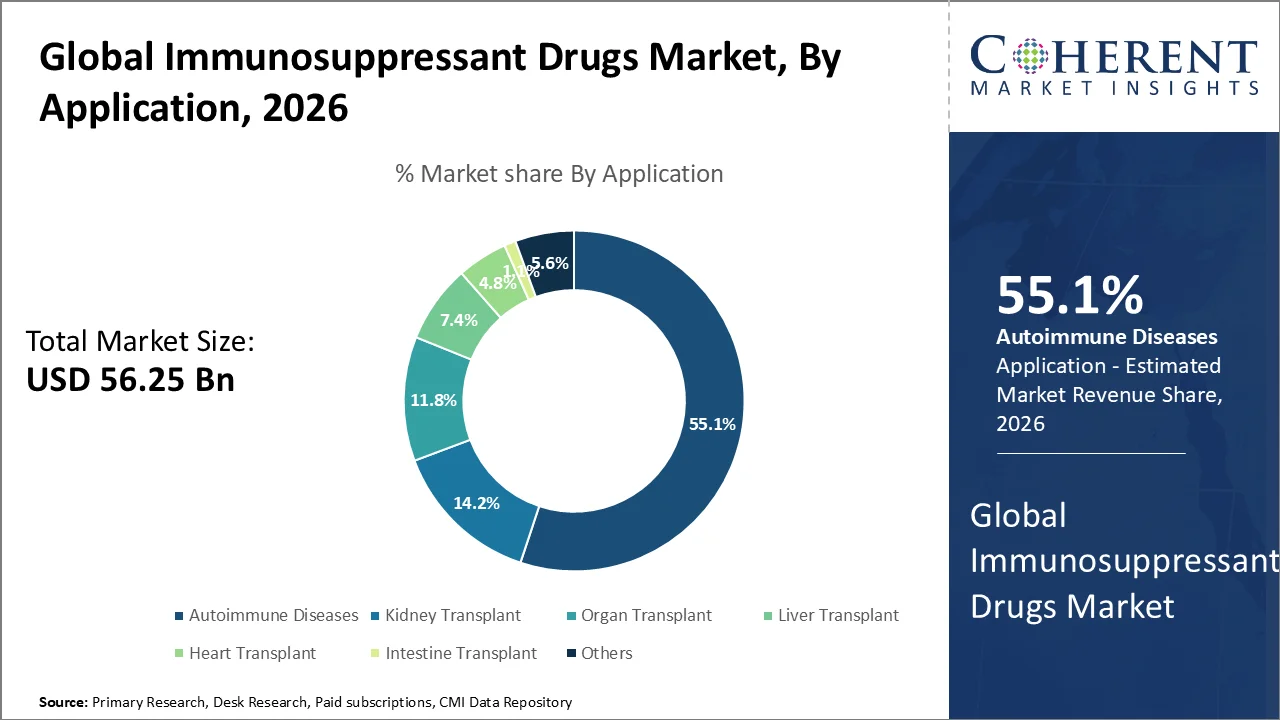
- The autoimmune diseases segment is likely to dominate the market with approximately 55.1% in 2026. The segment’s growth is owing to the large patient pool affected by chronic autoimmune disorders, increasing use of immunosuppressive therapies in rheumatoid arthritis, inflammatory bowel disease, psoriasis, lupus, and other immune-mediated conditions, and continued introduction of targeted immune-modulating drugs. According to the National Institute of Allergy and Infectious Diseases (NIAID), on March 20, 2025, an estimated 8% of the U.S. population has an autoimmune disease, while researchers recognize approximately 80–150 autoimmune diseases.
- The calcineurin inhibitors segment is set to lead with approximately 43.8% in 2026. The segment’s dominance is attributed to the extensive usage of tacrolimus and cyclosporine as backbone therapies for preventing organ rejection, especially after kidney, liver, heart, and lung transplantation. Tacrolimus with mycophenolate and steroids accounted for 58.1% of kidney-transplant maintenance regimens, and tacrolimus with mycophenolate accounted for 34.0%, showing the strong clinical penetration of tacrolimus-based calcineurin-inhibitor therapy (OPTN/SRTR 2024 Annual Data Report, published June 12, 2026).
- The tablets segment is estimated to dominate the dosage-type category with approximately 52.0% in 2026. The segment’s growth is owing to the requirement for prolonged maintenance immunosuppression, convenient outpatient administration, established use of oral immunosuppressive agents, and availability of multiple oral solid formulations across major drug classes. According to the OPTN/SRTR 2024 Annual Data Report, 87.9% of lung-transplant recipients receiving maintenance immunosuppression were treated with the triple regimen of tacrolimus, mycophenolate, and steroids.
- The hospitals segment is likely to lead the end-user category with approximately 58.0% in 2026. The segment’s dominance is owing to the concentration of transplant procedures, induction immunosuppression, therapeutic drug monitoring, treatment modification, and management of complex autoimmune and transplant patients within hospital settings. According to the United Network for Organ Sharing (UNOS), on June 26, 2025, there were 251 hospitals in the U.S. accredited to perform transplantation of at least one organ type, highlighting the substantial institutional infrastructure supporting immunosuppressant utilization.
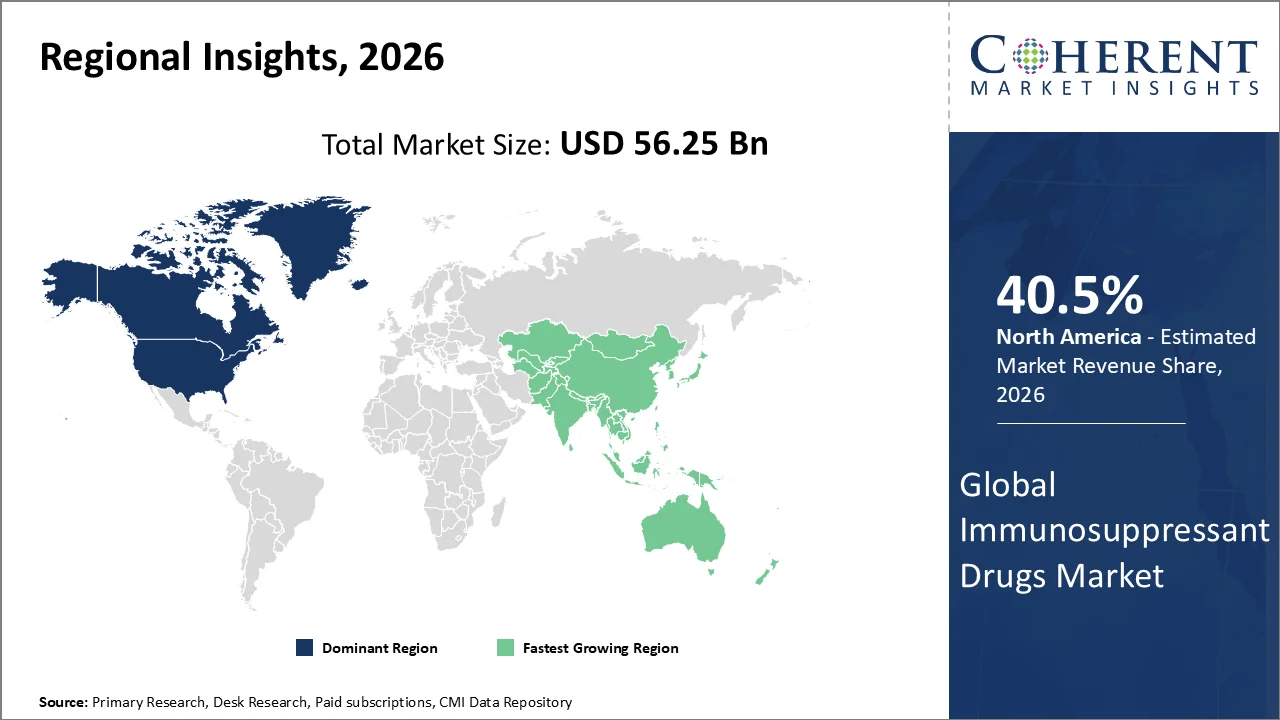
- North America will lead the global Immunosuppressant Drugs Market with a share of around 40.5% in 2026. The region’s leadership is supported by a large patient population with autoimmune diseases, high use of advanced biologics and immunosuppressive therapies, a strong transplant infrastructure and wide access to specialty medicines. In 2025, the U.S. Centers for Disease Control and Prevention (CDC) estimated that approximately 10.6 million U.S. adults had rheumatoid arthritis and approximately 1.0 million had psoriatic arthritis, which may represent significant patient populations that may require immune-modulating or immunosuppressive therapy.
Market Drivers
Expansion of Biologics and Biosimilars is Improving Treatment Availability
The increasing availability of biologic and biosimilar immunomodulators is additionally driving the market growth by providing increased therapeutic choice and competition in the treatment of chronic inflammatory and autoimmune diseases.
In May 2026, the U.S. FDA approved Immgolis (golimumab-sldi) and Immgolis Intri (golimumab-sldi) as the first interchangeable biosimilars to Simponi and Simponi Aria, respectively. These products are approved across immune-mediated indications including rheumatoid arthritis and ulcerative colitis.
Current Events and Their Impact on the Immunosuppressant Drugs Market
Current Event | Description and its Impact |
CMS Maintains Extended Medicare Coverage for Immunosuppressive Drugs Following Kidney Transplantation (2026) |
|
CMS Maintains Extended Medicare Coverage for Immunosuppressive Drugs Following Kidney Transplantation (2026) |
|
- Current Industry Events of 2026
- Market Size Estimation
- Regional Breakdown
- Competitive Landscape
- Customer Intelligence
- Segmental Analysis
- Pricing Analysis
- Key Market Drivers, Challenges & Future Trends
- Customized Insights Section
Segmental Insights
Why are Autoimmune Diseases Acquiring the Largest Share?
On the basis of application, the autoimmune diseases segment is projected to account for the largest Immunosuppressant Drugs Market share of approximately 55.1% in 2026. The segment’s dominance is owing to the large chronic patient population, long treatment duration, recurrence of disease activity, and widespread use of corticosteroids, antiproliferative agents, calcineurin inhibitors, biologics, and other immune-modulating therapies across multiple autoimmune conditions.
A 2025 study published in The Journal of Clinical Investigation (JCI) estimated that more than 15 million people, representing 4.6% of the U.S. population, had been diagnosed with at least one of 105 autoimmune diseases. Furthermore, 34% of diagnosed patients had more than one autoimmune disease.
In March 2026, Johnson & Johnson, the U.S. FDA approved ICOTYDE (icotrokinra) for moderate-to-severe plaque psoriasis in adults and adolescents aged 12 years and older.
Why are Calcineurin Inhibitors Acquiring the Largest Share?
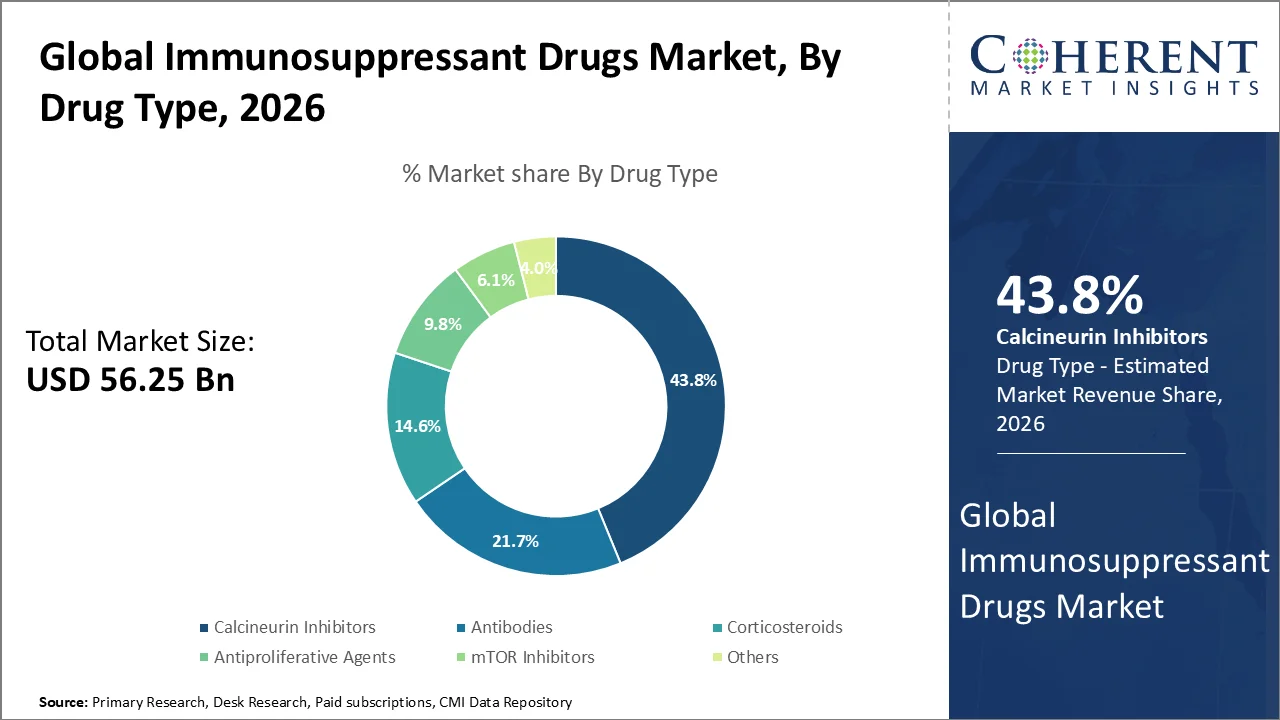
On the basis of drug type, the calcineurin inhibitors segment is estimated to lead the Immunosuppressant Drugs Market with approximately 43.8% share in 2026. The segment’s dominance is primarily attributed to the established position of tacrolimus and cyclosporine as backbone immunosuppressive therapies following solid-organ transplantation, their use in multidrug maintenance regimens, and the requirement for continued suppression of graft-directed immune responses.
According to the OPTN/SRTR 2024 Annual Data Report showed the US did a record 27,660 kidney transplants in 2024 versus 27,351 in 2023. 143,982 adult candidates for kidney transplantation in 2024, highlighting a large pool of patients in the transplant-care pathway, the report also noted.
In July 2026, Aurinia Pharmaceuticals announced the initiation of PRESERVE, a multicenter, Phase 4 study of LUPKYNIS (voclosporin) in combination with belimumab, obinutuzumab or alirocumab in patients with lupus nephritis.
Why are Tablets Acquiring the Largest Share?
On the basis of dosage type, the tablets segment is estimated to account for the largest Immunosuppressant Drugs Market share of approximately 52.0% in 2026. The segment’s dominance is owing to the long-term nature of maintenance immunosuppression, convenient outpatient administration, availability of established generic products, and routine oral dosing of major immunosuppressive agents such as mycophenolate, tacrolimus, sirolimus, everolimus, and corticosteroids.
Current U.S. FDA/DailyMed prescribing information, updated June 30, 2025, specifies mycophenolate mofetil as a 500 mg tablet. For adult kidney-transplant recipients, the recommended regimen is 1 g orally twice daily, equivalent to 2 g per day.
In March 2026, Bristol Myers Squibb, U.S. FDA approved SOTYKTU (deucravacitinib) for adults with active psoriatic arthritis. SOTYKTU is a once-daily oral selective TYK2 inhibitor and became the first TYK2 inhibitor approved for psoriatic arthritis.
Why are Hospitals Acquiring the Largest Share?
On the basis of end user, the hospitals segment is projected to lead the Immunosuppressant Drugs Market with approximately 58.0% share in 2026. The segment’s dominance is owing to the concentration of organ-transplant procedures, induction immunosuppression, treatment initiation, therapeutic drug monitoring, management of rejection episodes, and treatment of severe autoimmune conditions within hospital and specialist settings.
The OPTN/SRTR 2024 Annual Data Report states that induction immunosuppression was used in 94.3% of kidney transplants performed in 2024, demonstrating that immunosuppressive drug administration is deeply integrated into hospital-based transplant procedures.
In December 2025, Nexus Pharmaceuticals announced the commercial launch of Tacrolimus Injection, USP 5 mg/mL, supplied in a single-dose vial. Tacrolimus is a critical immunosuppressant indicated for the prevention of organ rejection in liver and kidney transplant patients.
Immunosuppressant Drugs Market Trends
- The shift toward targeted, calcineurin-inhibitor-sparing immunosuppression is emerging as an important trend in transplantation. Developers are increasingly avoiding broad immunosuppression and instead targeting specific immune co-stimulation pathways. In June 2026, Eledon Pharmaceuticals announced positive results from its Phase 2 BESTOW extension study of the CD40L-targeted therapy tegoprubart, which showed a mean kidney function (eGFR) of 74 mL/min/1.73 m2 at Month 18 compared to 61 mL/min/1.73 m2 with tacrolimus.
- Pharmacogenomics and therapeutic drug monitoring are increasingly applied to guide personalized immunosuppressant dosing, particularly for tacrolimus. In a 2025 study in Clinical Transplantation, 148 kidney-transplant recipients were genotyped for CYP3A5 and dosed with extended-release tacrolimus, resulting in an average of four dose adjustments versus six in the first 90 days and time in the therapeutic range increased from 47% to 59%.
- The expansion of precision biologics into additional autoimmune diseases is strengthening the immunosuppressant and immunomodulator pipeline. In August 2026, argenx announced that VYVGART Hytrulo met the primary endpoint in the Phase 3 ALKIVIA study in autoimmune myositis, with a statistically significant result of p=0.0011.
Regional Insights
North America Dominates Owing to Advanced Transplant Infrastructure and Strong Access to Immunosuppressive Therapies
North America is estimated to account for approximately 40.5% of the global Immunosuppressant Drugs Market in 2026. The region’s dominance is owing to its well-established organ-transplant infrastructure, high utilization of advanced immunosuppressive and biologic therapies, established reimbursement pathways, and strong presence of pharmaceutical companies developing therapies for autoimmune and transplant indications.
Moreover, the U.S. Health Resources and Services Administration (HRSA) continued to modernize the Organ Procurement and Transplantation Network in 2026 in the areas of technology infrastructure, oversight, transparency, and transplant-system performance.
In June 2026, Asahi Kasei’s Veloxis Pharmaceuticals announced five research presentations at the 2026 American Transplant Congress in Boston, Massachusetts, including real-world studies comparing ENVARSUS XR (tacrolimus extended-release tablets) to immediate-release tacrolimus in adult U.S. liver-transplant recipients.
Asia Pacific Immunosuppressant Drugs Market Trends
Asia Pacific is expected to be the fastest-growing region in the Immunosuppressant Drugs Market, with the underlying market assessment estimating a 10.58% CAGR. Growth is supported by expanding transplant capacity, improving healthcare infrastructure, increasing availability of immunosuppressive therapies, and broader access to treatment across China, India, Japan, South Korea, and Australia.
India provides particularly strong evidence of this expansion. According to the Government of India’s Ministry of Health and Family Welfare, on August 3, 2026, the country performed 20,138 organ transplants in 2025, the highest annual total recorded.
In July 2025, Biocon Biologics announced the launch of Nepexto (etanercept biosimilar) in Australia through its local partner Generic Health. Etanercept is a TNF inhibitor used for chronic immune-mediated diseases including rheumatoid arthritis, psoriatic arthritis, ankylosing spondylitis, and plaque psoriasis.
Strong Regulatory Approvals and Targeted Immunotherapy Innovation are Strengthening the U.S. Immunosuppressant Drugs Market
The U.S. Immunosuppressant Drugs Market is set for continued growth due to rapid regulatory approval of targeted immunotherapies, continued innovation in autoimmune disease treatment and growing use of combination immunosuppressive regimens. Pharmaceutical companies are increasingly developing therapies that more selectively target B cells and other immune pathways, expanding treatment beyond conventional corticosteroids and broad-spectrum immunosuppressants.
In October 2025, the U.S. FDA approved Genentech/Roche’s GAZYVA (obinutuzumab) for adults with active lupus nephritis receiving standard therapy. In the Phase III REGENCY study involving 271 patients, 46.4% of patients receiving GAZYVA plus standard therapy achieved complete renal response compared with 33.1% receiving standard therapy alone.
China Immunosuppressant Drugs Market Trends
China is expected to witness strong growth in the Immunosuppressant Drugs Market, supported by its substantial autoimmune-disease population, growing development of domestic biologics and biosimilars, and regulatory reforms aimed at accelerating innovative drug development. The country’s treatment landscape is expanding with increasing use of newer immunosuppressants and biologics for systemic lupus erythematosus, lupus nephritis, rheumatoid arthritis and other immune-mediated diseases.
Recent Chinese clinical evidence suggests that approximately 50–60% of Chinese patients with systemic lupus erythematosus have renal involvement, resulting in a significant demand for corticosteroids, mycophenolate, calcineurin inhibitors, biologics, and other immunosuppressive therapies.
In August 2026, Shanghai-based Henlius Biotech and Sandoz announced a strategic collaboration covering up to 10 proposed biosimilar products, including a Henlius-developed belimumab biosimilar intended for systemic lupus erythematosus and lupus nephritis.
Who are the Major Companies in Immunosuppressant Drugs Industry
Some of the major key players in Immunosuppressant Drugs Market are Novartis AG, Accord Healthcare, AstellaPharma, Watson Pharmaceuticals, Genzyme Co., Bristol-Myers Squibb, Mylan Laboratories Inc., GlaxoSmithKline Plc, and Roche.
Key News
- In May 2026, Accord BioPharma announced the U.S. FDA approval of IMMGOLIS (golimumab-sldi) and IMMGOLIS INTRI, the first biosimilars to Simponi and Simponi Aria. The therapies target TNF and are indicated for immune-mediated conditions including rheumatoid arthritis and ulcerative colitis, expanding Accord’s immunology biosimilar portfolio.
- In December 2024, Astellas Pharma announced a U.S. voluntary recall of one lot each of PROGRAF 0.5 mg tacrolimus and ASTAGRAF XL 0.5 mg extended-release tacrolimus, after certain bottles were identified as potentially containing empty capsules.
Market Report Scope
Immunosuppressant Drugs Market Report Coverage
| Report Coverage | Details | ||
|---|---|---|---|
| Base Year: | 2025 | Market Size in 2026: | USD 56.25 Bn |
| Historical Data for: | 2020 To 2024 | Forecast Period: | 2026 To 2033 |
| Forecast Period 2026 to 2033 CAGR: | 9.8% | 2033 Value Projection: | USD 108.57 Bn |
| Geographies covered: |
| ||
| Segments covered: |
| ||
| Companies covered: | Novartis AG, Accord Healthcare, AstellaPharma, Watson Pharmaceuticals, Genzyme Co., Bristol-Myers Squibb, Mylan Laboratories Inc., GlaxoSmithKline Plc, and Roche | ||
| Growth Drivers: |
| ||
| Restraints & Challenges: |
| ||
Analyst Opinion
- The Immunosuppressant Drugs Market is shifting toward targeted, steroid-sparing therapies and more convenient administration formats, particularly across autoimmune diseases. In April 2026, the U.S. FDA approved AstraZeneca’s SAPHNELO Pen for self-administration in systemic lupus erythematosus.
- The transplantation segment will remain a stable long-term demand base for calcineurin inhibitors, antiproliferative agents, corticosteroids, and other maintenance immunosuppressants. On April 1, 2026, the U.S. Health Resources and Services Administration reported that more than 100,000 people in the U.S. were waiting for an organ transplant, while approximately 170 million people were registered organ donors.
- Biosimilar competition is expected to improve treatment accessibility while increasing pricing pressure on established immunosuppressive biologics. The U.S. FDA’s biosimilar database, updated on August 4, 2026, shows eight new biosimilar approvals between January and July 2026, including Zimrixby (rituximab-cdxx) in July 2026.
Speak to the analyst
Want personalized insights?
Take the findings above to one of our principal consultants, or have the report rebuilt around the segments, geographies and competitors you actually track.
Market Segmentation
- By Application (Revenue, USD Bn, 2021-2033)
- Autoimmune diseases
- Organ transplant
- Kidney transplant
- Liver transplant
- Heart transplant
- Intestine transplant
- Others
- By Drug Type (Revenue, USD Bn, 2021-2033)
- Calcineurin inhibitors
- Antibodies
- Corticosteroids
- Antiproliferative agents
- mTOR inhibitors
- Others
- By Dosage Type (Revenue, USD Bn, 2021-2033)
- Tablets
- Liquid
- Injectable
- By End User (Revenue, USD Bn, 2021-2033)
- Hospitals
- Clinics
- Transplant centers
- By Region (Revenue, USD Bn, 2021-2033)
- North America
- U.S.
- Canada
- Latin America
- Brazil
- Mexico
- Argentina
- Rest of Latin America
- Europe
- Germany
- U.K.
- France
- Italy
- Spain
- Russia
- Rest of Europe
- Asia Pacific
- China
- India
- Japan
- Australia
- South Korea
- ASEAN
- Rest of Asia Pacific
- Middle East
- GCC
- Israel
- Rest of Middle East
- Africa
- South Africa
- Central Africa
- North Africa
- North America
Sources
Primary Research Interviews
- Transplant surgeons and transplant physicians
- Rheumatologists and clinical immunologists
- Nephrologists and hepatologists
- Hospital pharmacists and transplant pharmacists
- Immunosuppressant drug manufacturers
- Biologics and biosimilar manufacturers
- Hospital and transplant-center procurement managers
- Key opinion leaders (KOLs) in autoimmune diseases and transplantation
Databases
- U.S. Food and Drug Administration (FDA)
- European Medicines Agency (EMA)
- World Health Organization (WHO)
- ClinicalTrials.gov
- PubMed / National Library of Medicine
- Global Observatory on Donation and Transplantation (GODT)
- Scientific Registry of Transplant Recipients (SRTR)
- Organ Procurement and Transplantation Network (OPTN)
Magazines
- The Pharmaceutical Journal
- Pharmaceutical Technology
- BioPharma Dive
- Drug Discovery & Development
- Pharmaceutical Executive
- European Pharmaceutical Review
Journals
- American Journal of Transplantation
- Transplantation
- Clinical Transplantation
- The Journal of Clinical Investigation
- Journal of Autoimmunity
- Arthritis & Rheumatology
- Clinical Immunology
Newspapers
- The Wall Street Journal
- Financial Times
- Reuters
- The New York Times
- The Guardian
- The Economic Times
Associations
- American Society of Transplantation (AST)
- The Transplantation Society (TTS)
- American College of Rheumatology (ACR)
- European Alliance of Associations for Rheumatology (EULAR)
- International Society of Nephrology (ISN)
- United Network for Organ Sharing (UNOS)
- European Society for Organ Transplantation (ESOT)
Public Domain Sources
- Company Annual Reports and Investor Presentations
- FDA Drug Approval and Prescribing Information
- EMA Marketing Authorization and Assessment Reports
- Government Organ Transplantation Statistics
- Clinical Trial Registries and Published Trial Results
- Hospital and Transplant-Center Publications
- Peer-reviewed Autoimmune Disease and Transplantation Studies
- Company Press Releases on Drug Approvals, Launches, and Pipeline Developments
Proprietary Elements
- CMI Data Analytics Tool
- Proprietary CMI Existing Repository of Information for the Last 10 Years
Get access to 250+ pages report
Every segment, forecast, competitor profile and data table behind the analysis above — available for instant download.
- ESOMAR Member
- ISO 9001:2015 Certified
- D-U-N-S Registered
- GDPR & CCPA Compliant
Missing comfort of reading report in your local language? Find your preferred language:
Transform your Strategy with Exclusive Trending Reports
Frequently Asked Questions
The Immunosuppressant Drugs Market is expected to reach approximately USD 108.57 Bn by 2033, increasing from USD 56.25 Bn in 2026.
Major players operating in the global Immunosuppressant Drugs Market include Novartis AG, Accord Healthcare, AstellaPharma, Watson Pharmaceuticals, Genzyme Co., Bristol-Myers Squibb, Mylan Laboratories Inc., GlaxoSmithKline Plc, and Roche.
The high risk of infections and treatment-related adverse effects and long-term drug toxicity and organ complications are key factors hampering market growth.
The increasing prevalence of autoimmune diseases and rising number of organ transplantation procedures are major factors driving the Immunosuppressant Drugs Market. Growing adoption of biologic and targeted immunosuppressive therapies is further supporting demand.
The Immunosuppressant Drugs Market is anticipated to grow at a CAGR of approximately 9.8% between 2026 and 2033.
Among regions, North America is estimated to dominate the global Immunosuppressant Drugs Market with approximately 40.5% share in 2026, supported by established transplant infrastructure, high utilization of advanced immunosuppressive therapies, and broad access to specialty medicines.
Asia Pacific is expected to be the fastest-growing region, supported by expanding transplant capacity, improving healthcare infrastructure, and increasing availability of immunosuppressive therapies across China, India, Japan, South Korea, and Australia.