

Global Oil Breather Tank Market Size and Forecast – 2026-2033
The Global Oil Breather Tank Market is estimated to be valued at USD 2.24 Bn in 2026 and is expected to reach USD 3.34 Bn by 2033, exhibiting a compound annual growth rate (CAGR) of 5.8% from 2026 to 2033.
Key Takeaways of the Oil Breather Tank Market
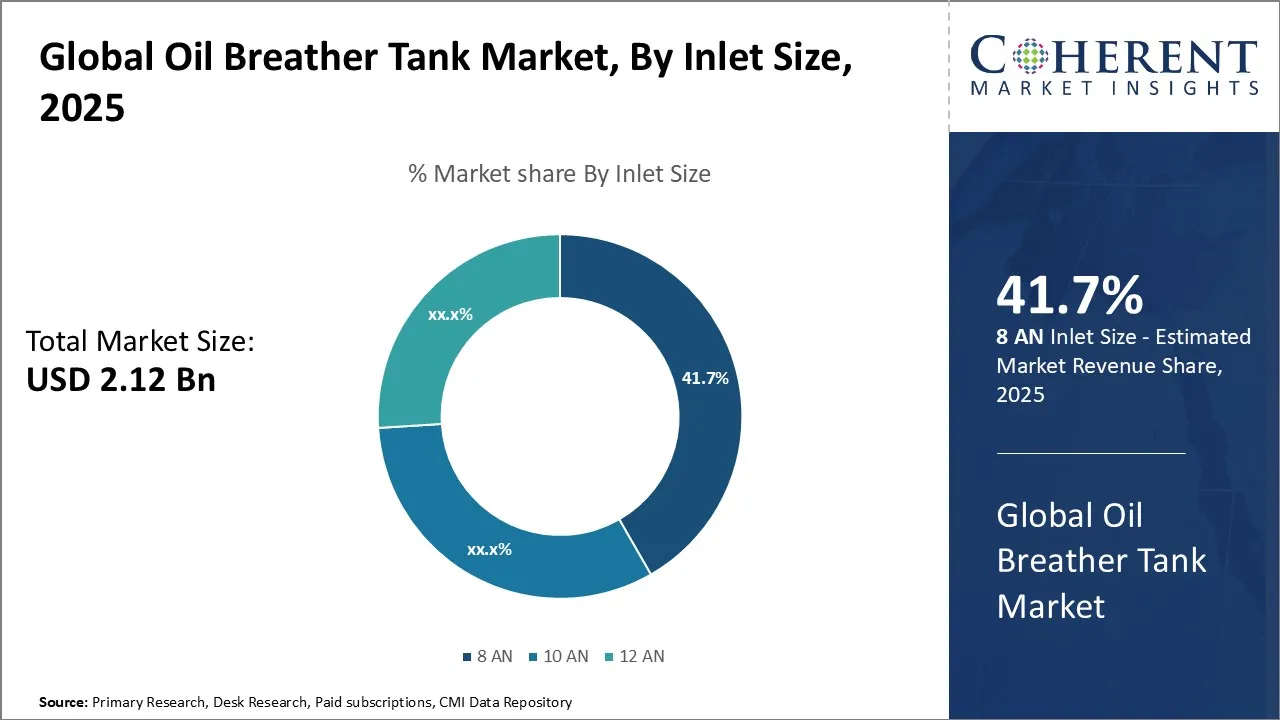
- The 8 AN segment is projected to account for 42.7 % of the global oil breather tank market in 2026, driven by its well-balanced design features that make it highly suitable for a wide spectrum of automotive applications.
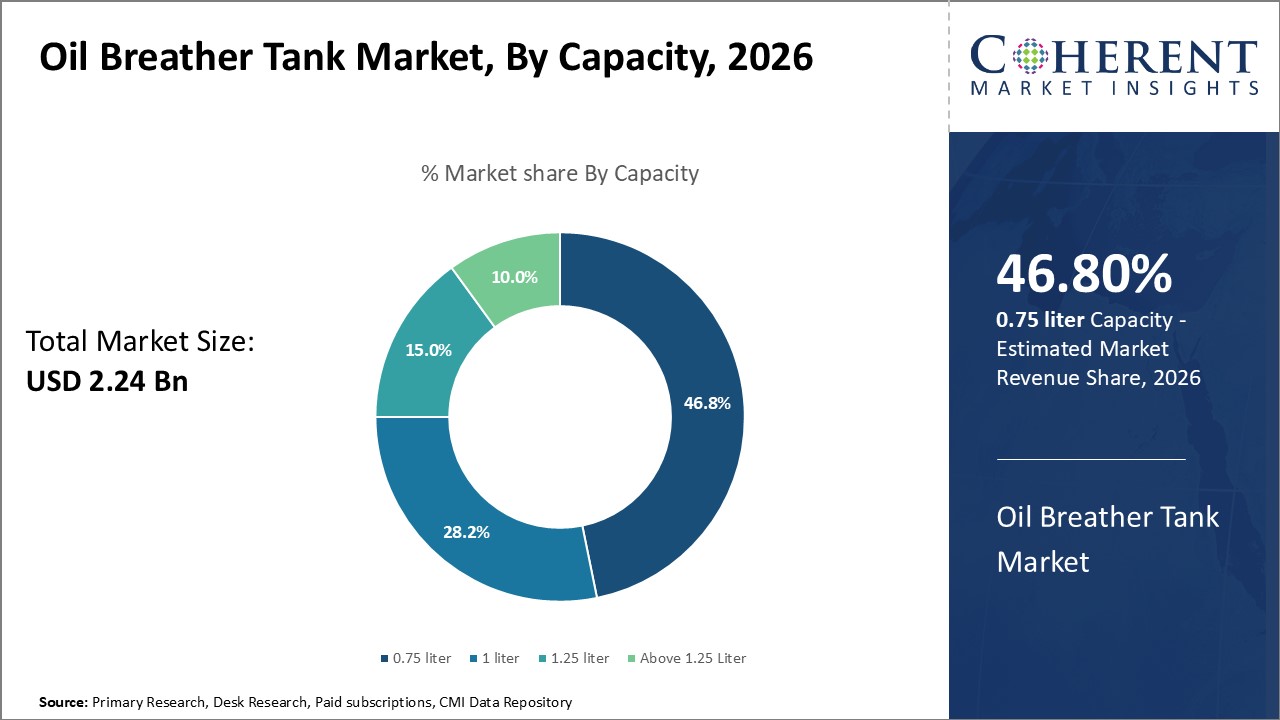
- The 0.75 liter segment is projected to capture 46.8 % of the global oil breather tank market in 2026, largely due to its compatibility with modern vehicle engine designs that emphasize compactness, space optimization, and reduced weight.
- The passenger segment is expected to command 68.8 % of the global oil breather tank market in 2026, supported by the vast global fleet of passenger cars and the growing stringency of regulations aimed at improving automotive emissions control and overall performance.
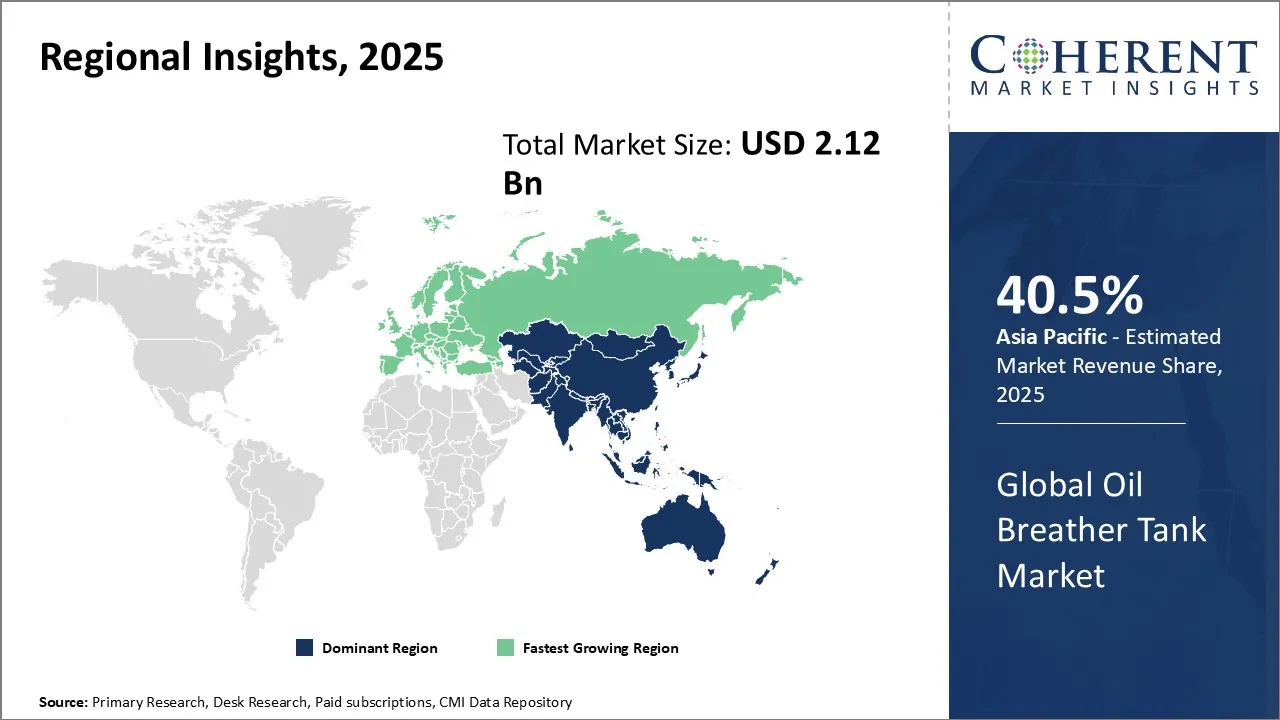
- Asia Pacific is expected to lead the global oil breather tank market in 2026 with a 40.5 % share, driven by the rapid expansion of the automotive and industrial sectors, along with the rising demand for efficient emission control systems. Europe, with a 23.5% share, will be the fastest-growing region, propelled by stringent environmental regulations, advancements in automotive technologies, and strong initiatives to promote sustainable and cleaner vehicle operations.
Market Overview
Current market trends highlight a shift towards advanced material usage and integration of smart monitoring technologies in oil breather tanks, enhancing durability and operational performance. Additionally, the rising demand for transformer breathers in power transformers is contributing to market expansion, as these components are essential for maintaining oil quality and preventing moisture ingress. Growing environmental regulations and the need for emission control are further driving the adoption of eco-friendly breather solutions, while expanding industrial activities and infrastructural developments continue to boost global demand.
Current Events and Its Impact
Current Events | Description and its impact |
Regulatory Expansion in Emissions Control |
|
Surge in High-Performance Engine Adoption |
|
Segmental Insights
- Current Industry Events of 2026
- Market Size Estimation
- Regional Breakdown
- Competitive Landscape
- Customer Intelligence
- Segmental Analysis
- Pricing Analysis
- Key Market Drivers, Challenges & Future Trends
- Customized Insights Section
Oil Breather Tank Market Insights, By Inlet Size - 8 AN Segment Dominates the Market due to its Optimal Balance of Performance and Versatility
The 8 AN segment is expected to hold 42.7% share of the global oil breather tank market in 2026, primarily due to its balanced design characteristics, which cater effectively to a broad range of automotive applications. This inlet size strikes a crucial balance between compactness and flow efficiency, making it a preferred choice among manufacturers and end-users alike. The 8 AN configuration offers sufficient flow capacity to handle the vapor and pressure release requirements for most passenger and light commercial vehicles without the complexity or bulk associated with larger inlet sizes.
One of the key driving factors behind the prominence of the 8 AN inlet size is its ability to integrate seamlessly with various engine designs and oil management systems. The compatibility with standard fittings and components supports easier manufacturing processes and aftermarket upgrades, thus enhancing its appeal across OEMs and vehicle service providers. Moreover, the 8 AN inlet size is often favored for its ability to maintain pressure stability within the breather tank, which is critical for engine efficiency and longevity. This has led vehicle manufacturers to rely heavily on this specification when meeting increasingly stringent emission norms and engine performance standards.
Oil Breather Tank Market Insights, By Capacity - 0.75 Liter Segment Dominates the Market Driven by their Suitability for Compact Engine Designs and Enhanced Space Efficiency
The 0.75 liter segment is projected to hold 46.8% share of the global oil breather tank market in 2026, because it fits the evolving design specifications of modern vehicle engines that prioritize space efficiency and weight reduction. As automotive engineering trends gravitate toward downsized, turbocharged engines, there is a growing requirement for compact, yet effective, breather tanks that do not compromise on performance. The 0.75-liter tanks address this need by offering an ideal volume that balances vapor containment and pressure regulation while occupying minimal space within the engine bay.
Oil Breather Tank Market Insights, By Vehicle Type - The Passenger Vehicle Segment Dominates the Market due to Widespread Global Ownership and Stringent Emission Standards
The passenger segment is expected to hold 68.8% share of the global oil breather tank market in 2026, because of both the sheer volume of passenger cars on the road worldwide and the intensifying regulations governing automotive emissions and performance. Passenger vehicles include a broad spectrum ranging from compact cars to luxury sedans, all of which require reliable oil breather tanks to manage engine blow-by gases and maintain optimal engine health. The rising global vehicle ownership, especially in emerging economies, drives high demand for breather tanks designed specifically to meet the needs of these vehicles.
Regional Insights
Asia Pacific Oil Breather Tank Market Analysis and Trends
The Asia Pacific region is projected to lead the market with a 40.5% share in 2026, due to rapid industrialization, expanding oil and gas exploration activities, and increasing investments in infrastructure development. The region’s growing energy demand and the emergence of new refineries and petrochemical plants create a substantial market opportunity. Supportive government initiatives aimed at enhancing industrial efficiency and environmental compliance further stimulate demand.
Additionally, the expanding manufacturing base and the entry of international players driven by competitive labor and production costs contribute to accelerated market growth. Key players such as Alfa Laval AB, Mann + Hummel Group, and Parker Hannifin have increasingly focused on this region, establishing partnerships and localized manufacturing to cater to evolving market requirements.
Europe Oil Breather Tank Market Analysis and Trends
The Europe region is expected to exhibit the fastest growth in the market contributing 23.5% share in 2026, driven by the region’s strong emphasis on sustainability, stringent environmental legislation, and advanced engineering capabilities. The European Union’s strict regulations on emissions and volatile organic compounds (VOCs) push industries to adopt high-efficiency breather tanks, particularly across petrochemicals, automotive, and heavy machinery sectors. The region also benefits from a well-established manufacturing base and robust R&D ecosystem, with companies continuously developing lightweight, corrosion-resistant, and environmentally compliant solutions.
Prominent companies such as Eaton Corporation plc (Ireland), MAHLE GmbH (Germany), and Donaldson Company, Inc. (operating extensively in Europe) are leading players in the regional market. These firms focus on tailoring their offerings to regional regulatory requirements and customer expectations, including compact designs, improved filtration performance, and digital monitoring integration.
Oil Breather Tank Market Outlook for Key Countries
U.S. Oil Breather Tank Market Trends
The U.S. oil breather market thrives on its advanced oilfield infrastructure and stringent environmental legislation that demands effective breather tanks to control emissions and maintain operational safety. Major industry players like Donaldson Company and Eaton focus on technological innovation and product durability to meet the rigorous standards of the market in the U.S. The country’s emphasis on reducing the carbon footprint of oil and gas operations accelerates the adoption of breather tanks integrated with the latest filtration and emission control technologies.
China Oil Breather Tank Market Trends
China’s oil breather market is growing rapidly due to massive expansion in oil refining capacity and urban industrialization. Government policies targeting improved environmental standards are driving the adoption of breather tanks that comply with stringent emission norms. Companies such as Alfa Laval and Mann + Hummel have established local manufacturing and R&D centers to customize solutions for China’s unique requirements in heavy industry sectors. Additionally, China’s domestic production capacity supports competitive pricing and availability of components.
Canada Oil Breather Tank Market Trends
Canada continues to lead in the adoption of oil breather tanks through its well-established oil sands operations and offshore drilling activities. The country’s regulatory framework prioritizes environmental protection which mandates the use of breather tanks to minimize VOC emissions. Leading companies like Parker Hannifin provide robust and specialized products tailored to withstand harsh climatic and operational conditions prevalent in Canada’s oilfields, reinforcing market stability.
India Oil Breather Tank Market Trends
India’s oil breather market is on an upward trajectory powered by fast-growing oil exploration and refinery capacities, coupled with rising awareness of environmental impacts. Supportive government reforms aimed at modernizing energy infrastructure encourage the integration of efficient breather tank systems. International and local players, including Eaton and local manufacturers, are increasingly investing in production facilities and distribution networks to meet the surging demand in India’s diverse industrial landscape.
Saudi Arabia Oil Breather Tank Market Trends
Saudi Arabia’s oil breather market benefits from its position as a leading oil producer with significant investments in refining and petrochemical plants. Government initiatives aimed at diversifying energy-related industries and improving environmental compliance have increased the uptake of oil breather tanks. Multinational companies like Donaldson and Parker Hannifin have a strong presence here, offering high-performance products that meet the region’s operational standards and climatic challenges, supporting the robust growth of the market.
Macro and Micro Economic Factors Impacting on Oil Breather Tank Market Growth
Macroeconomic Factors
- Geopolitical Tensions: Events in major oil-producing regions impact global oil supply chains, which in turn influence demand for oil breather tanks used in machinery and industrial equipment.
- Economic Growth and Industrialization: Rapid expansion in emerging economies drives up the need for advanced machinery and reliable equipment, boosting demand for oil breather tanks.
- Trade Policies and Regulations: Tariffs, sanctions, and changing trade agreements affect industrial imports and exports, impacting supply and pricing for breather tanks and related components.
- Environmental Norms: Stringent emission control standards (like Euro 6 in Europe and Tier 3 in the U.S.) require manufacturers to adopt better oil management and crankcase ventilation solutions, accelerating breather tank market growth.
- Energy Transition: The shift from fossil fuels to renewable energy alters investment patterns in oil-based sectors, affecting expected market size and innovation cycles for breather tanks.
Microeconomic Factors
- Technological Innovations: Advancements in filtration materials, smart sensors, IoT integration, and modular designs improve tank performance and make maintenance easier, increasing adoption across sectors.
- Sector-Specific Demand: Growth in turbocharged, high-performance engines in motorsports, aftermarket automotive, and electric vehicle (EV) powertrains generates niche demand for specialized breather tanks.
- Consumer Preferences: End users increasingly favor solutions that enhance machinery reliability and energy efficiency, affecting product design and manufacturer strategies.
- Competitive Landscape: Market is shaped by players offering differentiated features, with regional customization impacting adoption rates—e.g., regulations in North America versus EU standards.
- Price Volatility and Costs: Changes in oil prices and raw material costs directly affect manufacturing and equipment installation, thus influencing overall market dynamics.
Market Players, Key Development, and Competitive Intelligence
Key Developments
- In August 2025, a New York-based ship management company was fined USD 32,000 for a 2023 incident in which nearly 200 gallons of waste oil were discharged into Puget Sound near Manchester during an internal transfer on a U.S.-flagged car carrier.
- In 2024, the Navy Closure Task Force-Red Hill, U.S. began venting the fourth of 14 tanks at the Red Hill Bulk Fuel Storage Facility, following the transfer of closure responsibilities from the Joint Task Force-Red Hill, which had drained 104 million gallons of fuel. The final closure process involves four main phases: sludge removal, tank cleaning, dismantling of over 10 miles of pipeline, and environmental remediation at the site.
Top Strategies Followed by Global Oil Breather Tank Market Players
- Established industry leaders in the Oil Breather Tank Market allocate substantial R&D budgets toward developing low-emission, high-durability tanks that comply with EPA and Euro 7 emission norms. Key innovations include the use of nanofiber filtration media, lightweight composite housings, and integrated sensor technologies that improve efficiency and environmental performance. In parallel, these players build strategic alliances with automotive and heavy-machinery OEMs, ensuring early adoption of advanced designs across passenger vehicles, commercial fleets, and off-road equipment.
- For example, Donaldson has introduced advanced filtration systems with improved breather tank efficiency, helping industries comply with stricter emission standards. These players prioritize innovation in materials, design, and functionality, such as corrosion-resistant alloys and lightweight composites, to enhance durability and environmental compliance.
- Mid-level players in the oil breather tank market primarily focus on striking a balance between quality and affordability to attract price-sensitive customers without compromising reliability and operational efficiency. Their key competitive strategy involves offering cost-effective solutions designed to meet the essential needs of various end users, particularly in industrial and automotive sectors where budget constraints are paramount.
- For example, several regional manufacturers such as Trico Corporation and Des-Case budget-line breather products provide basic desiccant breathers with replaceable cartridges at competitive prices. These models eliminate unnecessary advanced features while still ensuring protection against moisture and particulate contamination, making them highly accessible for small workshops, mid-sized factories, and fleet operators that prioritize maintenance cost savings.
- Small-scale players carve out their niche in the competitive global oil breather tank market by focusing on specialized product features or innovation-driven solutions that differentiate them from larger rivals. They often leverage cutting-edge technologies like advanced composites, smart sensors, or modular designs to develop unique offerings that address specific needs such as enhanced monitoring, lightweight construction, or environmental sustainability.
- For example, Parker Hannifin is a key player in the oil breather tank market, offering a wide range of reservoir and breather solutions designed to improve system performance, reliability, and protection. The company manufactures advanced oil reservoir tanks for aerospace and hydraulic applications, which are built with aluminum or stainless steel and can achieve up to 99% air separation efficiency.
Market Report Scope
Oil Breather Tank Market Report Coverage
| Report Coverage | Details | ||
|---|---|---|---|
| Base Year: | 2025 | Market Size in 2026: | USD 2.24 Bn |
| Historical Data for: | 2020 To 2024 | Forecast Period: | 2026 To 2033 |
| Forecast Period 2026 to 2033 CAGR: | 5.8% | 2033 Value Projection: | USD 3.34 Bn |
| Geographies covered: |
| ||
| Segments covered: |
| ||
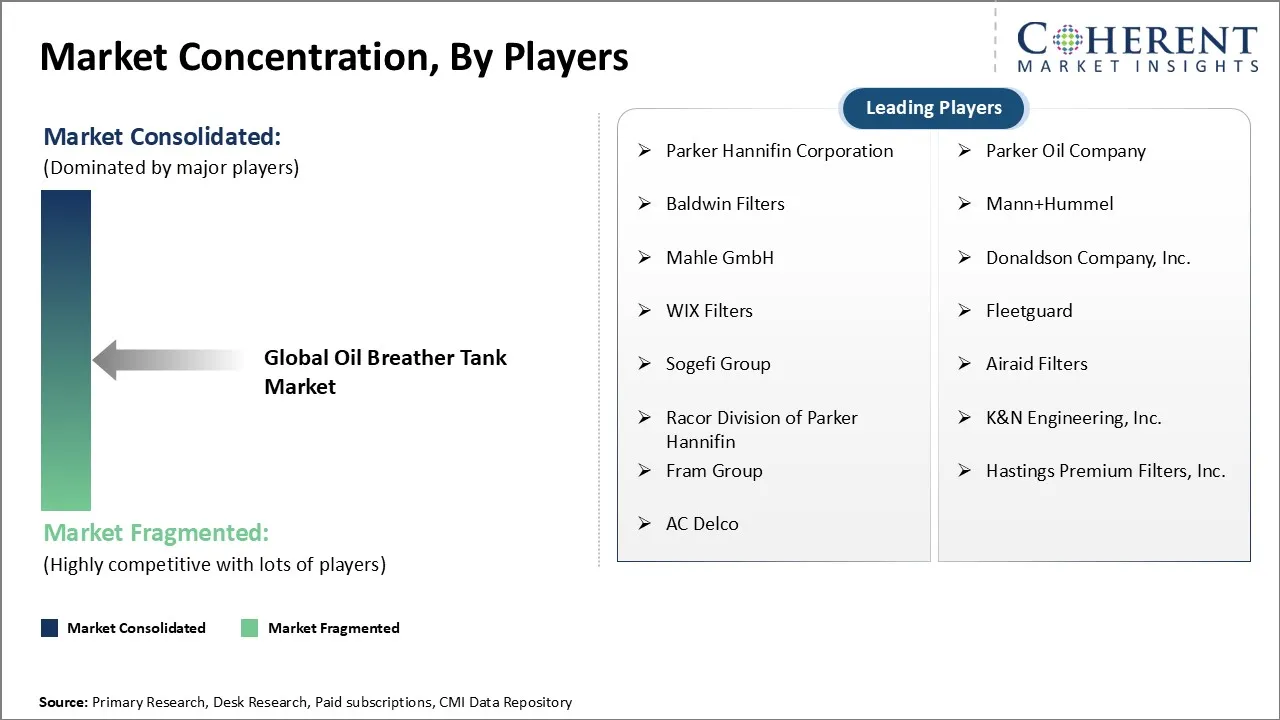
| Companies covered: | Parker Hannifin Corporation, Parker Oil Company, Baldwin Filters, Mann+Hummel, Mahle GmbH, Donaldson Company, Inc., WIX Filters, Fleetguard, Sogefi Group, Airaid Filters, Racor Division of Parker Hannifin, K&N Engineering, Inc., Fram Group, Hastings Premium Filters, Inc., and AC Delco | ||
| Growth Drivers: |
| ||
| Restraints & Challenges: |
| ||
Oil Breather Tank Market Dynamics
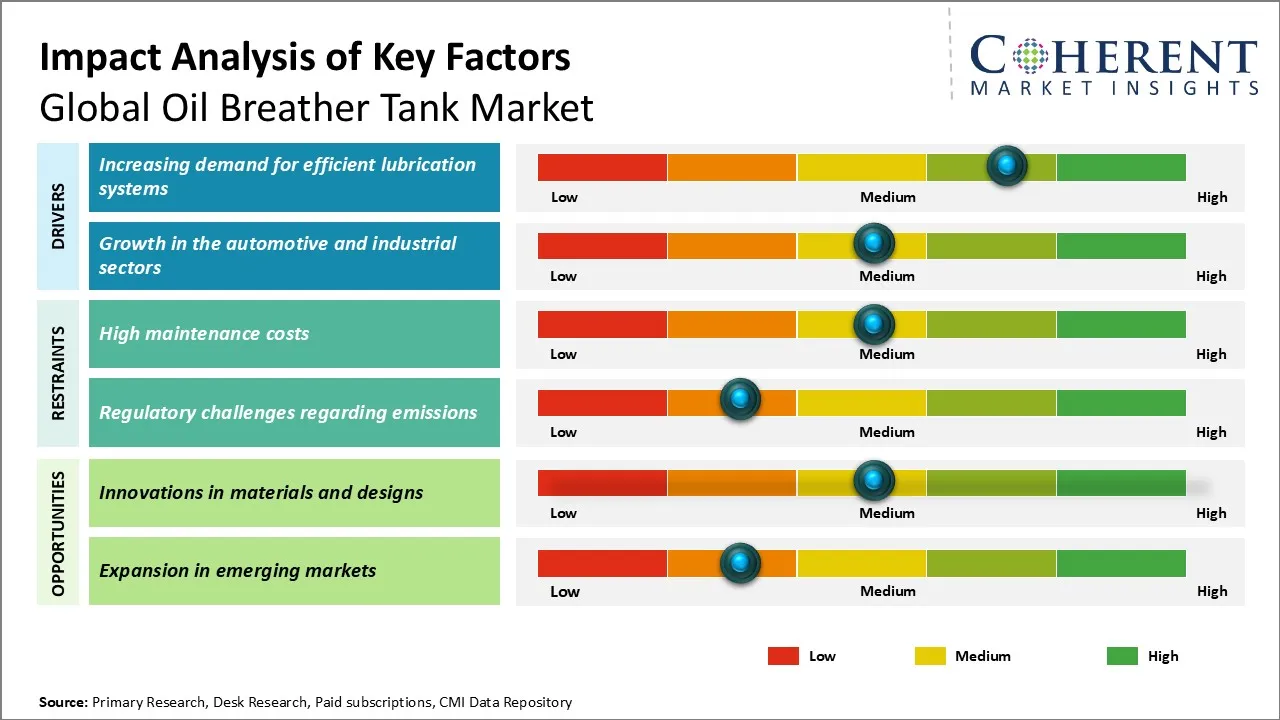
Oil Breather Tank Market Driver - Increasing Demand for Efficient Lubrication Systems
The rising need for efficient lubrication systems is a significant driver propelling the global oil breather tank market. Modern machinery and industrial equipment require advanced lubrication solutions to enhance operational efficiency, reduce friction, and prevent wear and tear of components. Oil breather tanks play a crucial role in maintaining the quality and cleanliness of lubricants by facilitating the separation of air and contaminants from oil, ensuring that only clean lubricants circulate within the system. As industries increasingly focus on minimizing downtime and extending the lifespan of their machinery, the demand for reliable breather tanks that can effectively manage ventilation and oil vapor recovery has surged.
For instance, in the automotive industry, leading OEMs such as Caterpillar and Volvo have integrated advanced breather tank solutions in their heavy-duty vehicles to minimize oil vapor emissions and maintain lubricant integrity.
Oil Breather Tank Market Opportunity - Innovations in Materials and Designs for the Global Oil Breather Tank Market
The global oil breather tank market is poised to benefit significantly from ongoing innovations in materials and design technologies. Traditional breather tanks have predominantly utilized conventional metals and basic polymer composites, which, while functional, present limitations in terms of durability, environmental resistance, and weight. Advancements in material science, such as the development of high-performance composites, advanced polymers, and corrosion-resistant alloys, are enabling manufacturers to produce lighter, stronger, and more chemically resilient breather tanks. These innovations contribute not only to enhanced operational efficiency and longer asset life but also to improved environmental compliance by minimizing leaks and emissions.
For example, Parker Hannifin has introduced innovative breather systems integrating lightweight alloys and advanced coatings, making them suitable for harsh environments such as marine and offshore drilling. In the renewable energy sector, wind turbine manufacturers are increasingly adopting composite-based breather tanks to ensure reliability in gearboxes exposed to fluctuating climates, thereby reducing maintenance costs and unplanned downtime.
Analyst Opinion (Expert Opinion)
- The global oil breather tank market is set for notable growth, driven by the increasing emphasis on equipment longevity and environmental compliance in industrial applications. Insights from the International Oil and Gas Exhibition (2023) and the Global Manufacturing Summit (2022) highlighted key innovations, with companies like Parker Hannifin and Donaldson Company leading the charge in developing advanced breather tank solutions.
- Parker Hannifin’s recent introduction of a modular breather tank design, which enhances filtration efficiency while reducing maintenance costs, showcases the industry's focus on performance and sustainability. Discussions at these events emphasized the rising demand for breather solutions that mitigate contamination risks in hydraulic and lubrication systems, especially in sectors like construction and heavy machinery. However, challenges such as regulatory complexities and the need for standardization were identified as potential hurdles.
- Companies that invest in R&D to enhance product reliability and explore smart technologies for monitoring will likely gain a competitive edge. Additionally, forming strategic alliances with key players in the oil and gas sector can facilitate market penetration. Ultimately, the oil breather tank market's trajectory will hinge on its ability to innovate while addressing environmental and operational challenges effectively.
Speak to the analyst
Want personalized insights?
Take the findings above to one of our principal consultants, or have the report rebuilt around the segments, geographies and competitors you actually track.
Market Segmentation
- Inlet Size Insights (Revenue, USD Bn, 2021 - 2033)
- 8 AN
- 10 AN
- 12 AN
- Capacity Insights (Revenue, USD Bn, 2021 - 2033)
- 75 liter
- 1 liter
- 25 liter
- Above 1.25 Liter
- Vehicle Type Insights (Revenue, USD Bn, 2021 - 2033)
- Passenger
- Commercial
- Regional Insights (Revenue, USD Bn, 2021 - 2033)
- North America
- U.S.
- Canada
- Latin America
- Brazil
- Argentina
- Mexico
- Rest of Latin America
- Europe
- Germany
- U.K.
- Spain
- France
- Italy
- Russia
- Rest of Europe
- Asia Pacific
- China
- India
- Japan
- Australia
- South Korea
- ASEAN
- Rest of Asia Pacific
- Middle East
- GCC Countries
- Israel
- Rest of Middle East
- Africa
- South Africa
- North Africa
- Central Africa
- North America
- Key Players Insights
- Parker Hannifin Corporation
- Parker Oil Company
- Baldwin Filters
- Mann+Hummel
- Mahle GmbH
- Donaldson Company, Inc.
- WIX Filters
- Fleetguard
- Sogefi Group
- Airaid Filters
- Racor Division of Parker Hannifin
- K&N Engineering, Inc.
- Fram Group
- Hastings Premium Filters, Inc.
- AC Delco
Sources
Primary Research Interviews
- R&D Head – Leading Automotive Component Manufacturer
- Procurement Manager – Major Heavy Equipment OEM
- Product Development Manager – Industrial Engine Systems Manufacturer
- Sustainability & Compliance Manager – Automotive Emissions Regulatory Body
Stakeholders
- Manufacturers (Oil breather tank producers, OEMs, aftermarket suppliers)
- End-use Sectors:
- Automotive (Passenger Cars, Commercial Vehicles)
- Heavy Equipment (Construction, Mining, Agriculture)
- Industrial Engines & Generators
- Regulatory & Certification Bodies (Emission & Safety Regulators)
- Distributors & Retailers (Automotive parts suppliers, aftermarket retailers)
- Technology Providers (Advanced filtration, emissions control, and materials suppliers)
Databases
- UN Comtrade Database
- India Import Export (EXIM) Database
- OECD Trade Statistics – Engine and filtration component data
Magazines
- Automotive World – Industry innovations in engine parts and emissions
- Heavy Equipment News – Trends in construction/mining engine systems
- Engine Technology International – Advances in engine breathing and lubrication systems
- Automotive Components & Accessories Magazine – Market updates in auto parts
- Diesel Progress International – Powertrain & breather system developments
Journals
- Journal of Mechanical Engineering Science – Engine component design research
- SAE International Journal of Engines – Studies on crankcase ventilation & oil mist control
- Journal of Automotive Engineering – Oil breather system efficiency studies
- Industrial Lubrication and Tribology – Lubrication and ventilation system research
Newspapers
- The Financial Times – Automotive and industrial equipment market trends
- The Economic Times – Auto Section – Indian automotive component market growth
- Automotive News Europe – European auto part regulations & trends
- Nikkei Asia – Asia-Pacific automotive component industry insights
- The Wall Street Journal – Automotive Section – U.S. market updates and supply chain trends
Associations
- Society of Automotive Engineers (SAE International)
- Automotive Component Manufacturers Association of India (ACMA)
- European Automobile Manufacturers Association (ACEA)
- Original Equipment Suppliers Association (OESA)
- American Society of Mechanical Engineers (ASME)
Public Domain Sources
- U.S. Environmental Protection Agency (EPA) – Engine emissions & ventilation regulations
- European Commission – Automotive Emissions Standards
- World Health Organization (WHO) – Impact of vehicular emissions on health
- ISO Standards – Ventilation, emissions, and safety guidelines for automotive components
Proprietary Elements
- CMI Data Analytics Tool, Proprietary CMI Existing Repository of information for last 8 years.
Get access to 250+ pages report
Every segment, forecast, competitor profile and data table behind the analysis above — available for instant download.
- ESOMAR Member
- ISO 9001:2015 Certified
- D-U-N-S Registered
- GDPR & CCPA Compliant
Missing comfort of reading report in your local language? Find your preferred language:
Transform your Strategy with Exclusive Trending Reports
Frequently Asked Questions
The global oil breather tank market is estimated to be valued at USD 2.24 Bn in 2026 and is expected to reach USD 3.34 Bn by 2033.
The CAGR of global oil breather tank market is projected to be 5.8% from 2026 to 2033.
Increasing demand for efficient lubrication systems and growth in the automotive and industrial sectors are the major factors driving the growth of the global oil breather tank market.
High maintenance costs and regulatory challenges regarding emissions are the major factors hampering the growth of the global oil breather tank market.
In terms of inlet size, 8 AN is estimated to dominate the market revenue share in 2026.
Parker Hannifin Corporation, Parker Oil Company, Baldwin Filters, Mann+Hummel, Mahle GmbH, Donaldson Company, Inc., WIX Filters, Fleetguard, Sogefi Group, Airaid Filters, Racor Division of Parker Hannifin, K&N Engineering, Inc., Fram Group, Hastings Premium Filters, Inc., and AC Delco are the major players.
Asia Pacific is expected to lead the global oil breather tank market in 2026.