

Global Organic Skincare Market Size and Forecast – 2026-2033
The global organic skincare market is estimated to be valued at USD 14.78 Bn in 2026 and is expected to reach USD 27.02 Bn by 2033, exhibiting a compound annual growth rate (CAGR) of 9.0% from 2026 to 2033.
Key Takeaways of the Organic Skincare Market
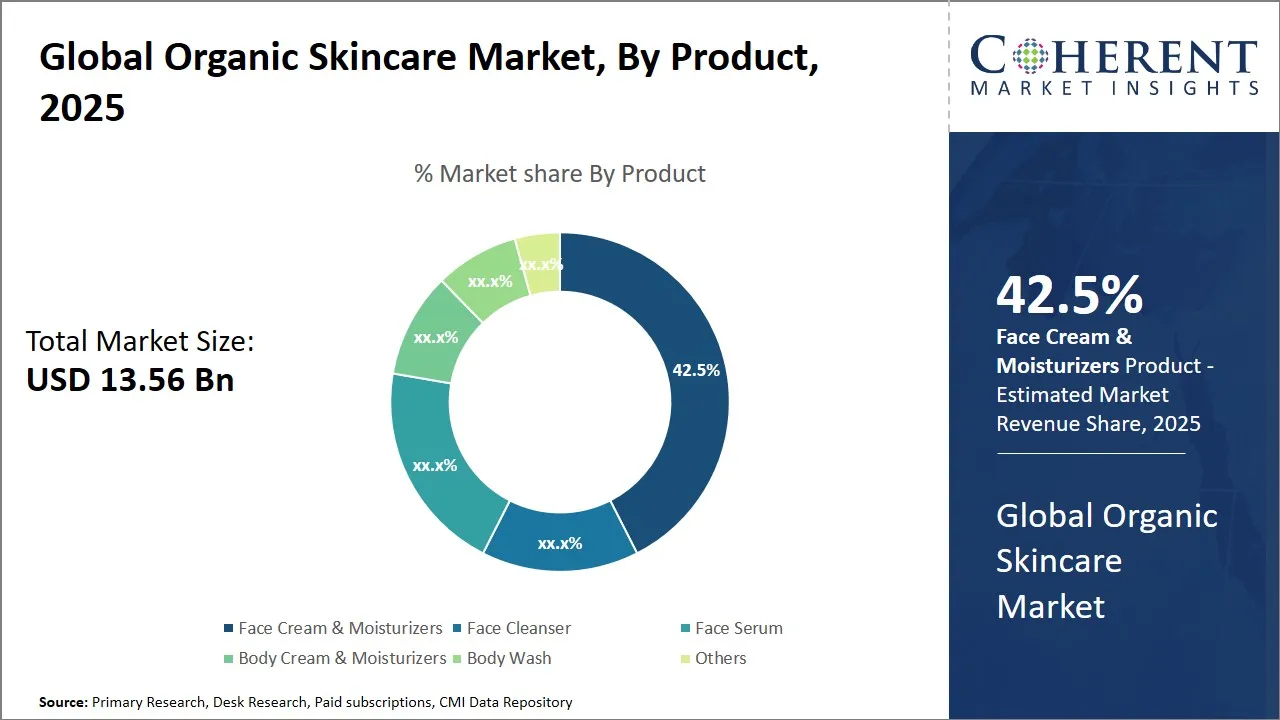
- The face cream & moisturizers segment is expected to capture 43.5 % of the organic skincare market share in 2026.
- The natural oils segment is projected to hold a 34.8 % of the market share in 2026.
- Supermarket/hypermarket segment is expected to account for 32.7 % of the global organic skincare market share in 2026.
- Asia Pacific is set to lead the global organic skincare market in 2026 with a 39.2 % share. North America, with an estimated share of 21.5% in 2026, will be the fastest-growing region.
Market Overview
The transition in the market trends is very noticeable when it comes to the clean beauty concept; thus, consumers are going for products that are transparent in terms of both the ingredients used and the formulation of the product. The development of the organic skincare segment to the use of biotechnology and plant-based actives has also been a major factor in the market growth. In addition, the increase in online shopping and the application of various digital marketing techniques are allowing manufacturers to easily access specific consumer groups which is, in turn, resulting in the quicker spread and acceptance of the market on global scale.
Current Events and Its Impact
Current Events | Description and its Impact |
Surge in sustainability and clean‑beauty driven consumption |
|
Economic headwinds & slowing demand in mature markets |
|
Segmental Insights
- Current Industry Events of 2026
- Market Size Estimation
- Regional Breakdown
- Competitive Landscape
- Customer Intelligence
- Segmental Analysis
- Pricing Analysis
- Key Market Drivers, Challenges & Future Trends
- Customized Insights Section
Organic Skincare Market Insights, By Product - Face Cream & Moisturizers Segment Dominates the Market Due to Rising Consumer Demand for Hydration and Anti-Aging Benefits
The face cream & moisturizers segment is expected to account for 43.5% of the market share in 2026, due to the increasing consumers’ awareness about skin hydration and anti-aging treatments. Today, consumers are much more aware of the fact that skin moistening is very crucial in the process of preventing the skin from getting dried, irritated, and aged prematurely. Organic face creams and moisturizers can be viewed as the natural counterparts of synthetic products in that they tackle the chemical exposure issue and render the skin healthier. This coincides with the increasing consumer trend that favors products with no parabens, sulfates, or synthetic fragrances.
For example, brands like Tata Harper have successfully captured the attention of eco-conscious consumers by offering an organic face moisturizer that is free from synthetic chemicals, promoting skin hydration and offering anti-aging benefits. This aligns with the rising demand for products that provide both beauty and wellness, showcasing the effectiveness of organic ingredients in preserving youthful skin.
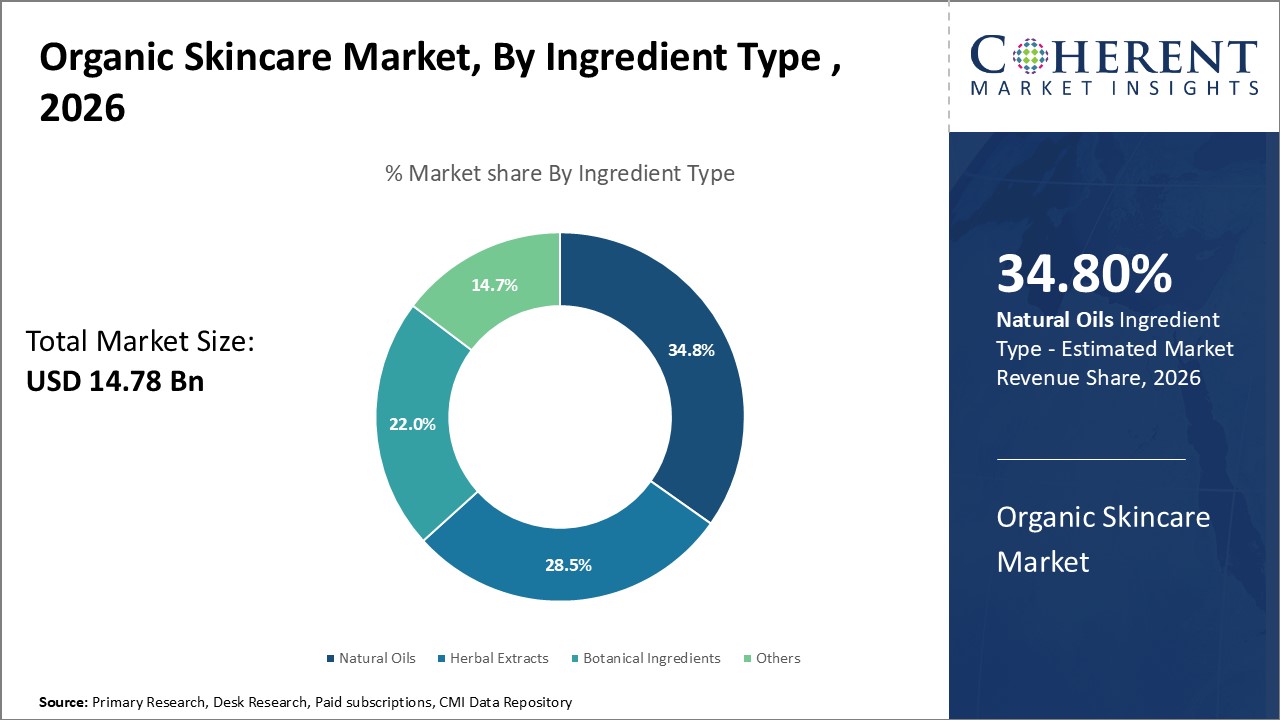
Organic Skincare Market Insights, By Ingredient Type - Natural Oils Segment Dominates the Market Driven by Potent Therapeutic and Multifunctional Properties
The natural oils segment will hold a 34.8% of the market share in 2026, which is an indication of their great benefits and established presence in the skincare routines. The oils like jojoba, argan, coconut, and rosehip not only provide intensive hydration and skin barrier restoration but also become major sources of nutrients due to their already rich nutrient profiles of essential fatty acids, vitamins, and antioxidants.
Natural oils are the choice of the consumers due to their multi-functionality – they can be used as moisturizers, makeup removers, and even mild cleansers, thus eliminating the need for many products and making skincare regimens simpler. The light texture and non-comedogenic property of certain oils such as argan and jojoba make them suitable not only for sensitive or acne-prone skin but also for the general population, which offers them another plus point.
Organic Skincare Market Insights, By Distribution Channel – Supermarket/Hypermarket Segment Lead Due to its Wide Accessibility and Consumer Trust
The supermarket/hypermarket segment is expected to account for 32.7% of the organic skincare market share in 2026. This is mainly because they are the most convenient places to buy and have already gained the trust of the consumers. These types of retail outlets provide customers with the opportunity to do all their shopping in one place; they can easily compare and choose from different products the same way they would do in a regular store. Consumers are always looking for convenience but this is especially true for the busy ones who want nothing more than a fast-shopping trip and enjoy the experience of testing the products before buying.
Supermarkets and hypermarkets die to their very nature have large organic and natural sections dedicated to the cosmetics and skin-care lines. Furthermore, they use various means such as advertising, demos, and giveaways to make different brands and products of organic skincare very visible to the consumers. Their stations are widespread throughout the cities and towns thus they are able to attract consumers from both communities and suburbs making it very possible for everyone from a first-timer to a dedicated customer of organic skincare products to reach them.
Regional Insights
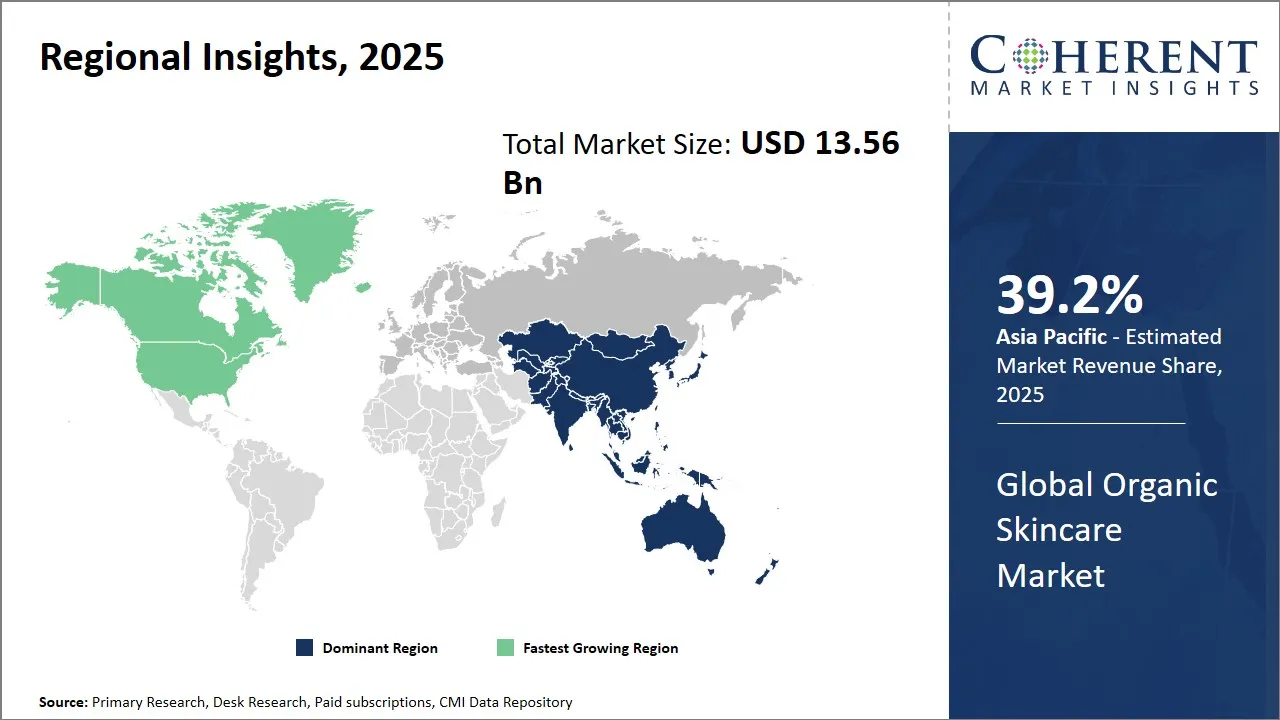
Asia Pacific Organic Skincare Market Analysis and Trends
The Asia Pacific region will be the major market that is predicted to hold 39.2% of the market share in 2026, this growth being attributed to increased disposable income, better health awareness, and the younger population increasingly preferring natural and organic personal care products. Governments in countries such as India, China, and South Korea are taking actions to support organic farming and the use of herbal ingredients, which in turn, is facilitation of traditional medicinal practices like Ayurveda and Traditional Chinese Medicine.
The industry in Asia Pacific is growing at a fast pace and the competition is getting stronger with the entry of major players such as Innisfree (South Korea) and Forest Essentials (India) and the establishment of manufacturing bases and research centers by global corporations. Besides, the trade dynamics are supported by the growing export of unusual natural ingredients like shea butter and green tea extracts and the improvement in the openness of the supply chain.
North America Organic Skincare Market Analysis and Trends
North America is the region that would account for the smallest share of the market with 21.5% in 2026, but at the same time, it would also be the fastest-growing region due to the sophisticated market ecosystem which mostly consists of organic and natural products alongside the fact that there is a solid consumer preference for clean beauty. Participation of the region in the market is further assured by the presence of strict government regulations (such as the USDA Organic certification) that not only enhance but also promote product transparency.
North America hosts numerous established industry players, including Johnson & Johnson, Kiehl’s (owned by L’Oréal), and Burt’s Bees (a Clorox company), which have significantly contributed to expanding market reach through innovation and extensive distribution networks.
Additionally, the well-developed retail infrastructure, including specialty organic stores and e-commerce platforms, supports product accessibility. The trade dynamics here favor imports of high-quality raw organic materials while also maintaining strong domestic production standards, making North America the epicenter for research and development in organic skincare formulations.
Organic Skincare Market Outlook for Key Countries
U.S. Organic Skincare Market Trends
The organic skincare market in the U.S. has not only been the leader throughout North America, but also the main competitor globally due to its excellent regulatory framework and a very sophisticated consumer base that is willing to pay for clean-label, effective products. Some of the biggest names in the market are Dr. Bronner's and Tata Harper, who persistently focus on sustainability and ethical sourcing in their certified organic skincare ranges.
The lords of the retail kingdom are Sephora and Whole Foods Market, whose presence signals big and strong distribution channels. The innovation in organic formulations paired with steady consumer education campaigns become the major forces that not only keep the U.S. market critical for product launches and brand growth but also transform it into a battlefield for competitors to fight over and win.
Germany Organic Skincare Market Trends
Germany is the beating heart of Europe in the organic skincare market since it has very strict EU organic standards and a consumer culture that puts health and environment at the top. What are the major brands in this market? Weleda and Dr. Hauschka, which are very well known for the combination of their methods of herbal treatment and modern skincare. The German market is supported by a strong support system of organic certification bodies and government policies that encourage ecological farming. Different retail formats such as specialized organic shops and pharmacy channels have the demand for organic skincare products to be one of their major roles.
India Organic Skincare Market Trends
The India organic skincare market is heavily dependent on the Ayurvedic and herbal remedies that, besides being the country's rich heritage, are also the foundations of organic beauty. Local companies such as Forest Essentials and Boutique leverage traditional ingredients and authentic formulations that resonate with domestic and international consumers. The government’s promotion of organic farming and export incentives for herbal products assist in sustaining ingredient supply chains and enhancing quality standards. Rapid digital adoption and increasing middle-class affluence further fuel the market growth, particularly in metropolitan areas.
China Organic Skincare Market Trends
China organic skincare market is developing alongside the changing consumer perceptions that go for products that are health-oriented and eco-friendly. The changes in regulation concerning the safety of products and labeling of organic products have started to instill confidence in customers. The international big players, like L'Oréal, as well as local pioneers, such as Herborist, are all heavily committing their resources into this sector, fusing state-of-the-art technology with herbal extracts from China. E-commerce platforms like Tmall Organic have become the channel for small and mid-size organic brands to be heard and, therefore, the widening of their audience is enabled.
Brazil Organic Skincare Market Trends
The organic skincare market in Brazil is supported by the country's rich biodiversity and the trend of consumers increasingly choosing eco-friendly and socially responsible products. Brazilian beauty brands like Natura have been key players in the incorporation of Amazonian natural ingredients into the company's product lines, where they are giving emphasis on sustainability and biocertified methods of obtaining the raw materials. The government is supporting the organic farming practices through various measures that target rural development and promotion of organic certification.
Trade conditions are good for both import substitution and export growth, with Brazil’s organic resources having gained an increasing acceptance as an integral part of the global skincare supply chain. Besides, the increasing knowledge of the consumers in the urban areas is one of the factors that is fueling the demand for organic and cruelty-free skincare products.
Ingredient Sourcing & Certification (USDA Organic, COSMOS, ECOCERT, etc.)
- Certification bodies such as ECOCERT and the COSMOS‑standard set criteria for organic/natural cosmetics.
- Under COSMOS: to claim “COSMOS ORGANIC”, at least 95 % of the plant‑based ingredients must be organic, and at least 20 % of the total formula (10 % for rinse‑off) must be organic.
- For raw materials: certified organic ingredient sourcing demands traceability of origin, avoidance of synthetic fertilizers/pesticides, compliance with ecological/green‑chemistry rules.
Regulatory & Compliance Impact (Labelling, Claims, Ingredients)
- In the EU Regulation (EC) No 1223/2009 cosmetics framework: manufacturers must ensure safety of cosmetic products, carry out a safety assessment, have a “Responsible Person” in the EU market.
- Ingredient restrictions: EU maintains annexes listing prohibited and restricted substances (e.g., certain parabens, certain UV filters) for cosmetics.
- In India: The Central Drugs Standard Control Organization (CDSCO) oversees cosmetics under the Drugs & Cosmetics Act 1940 and the Cosmetics Rules 2020. Products require registration (import/manufacture), ingredient list compliance (BIS standards), labelling requirements.
Market Players, Key Development, and Competitive Intelligence
Key Developments
- In July 2025, Sky Organics, the Castor Oil brand in the U.S. and a Certified B Corporation known for its natural and certified organic personal care products, proudly announces the launch of a radiant new facial skincare collection, available exclusively at Whole Foods Market locations nationwide.
- In May 2025, Natural Grocers, the nation's leading family-operated organic and natural grocery retailer, unveils a new house brand skincare collection designed for everyday luxury. Crafted with small-batch precision, Natural Grocers’ body washes, scrubs, butters, and body creams feature carefully selected ingredients—delivering quality and potency at an always affordable price.
- In February 2025, organic skincare company, Puddles, introduced a skincare range for teenagers. The product line features plant-based ingredients with scientific validation, targeting common teenage skin concerns, including acne, while providing gentle and effective skincare solutions.
- In January 2025, Real Skin Care, a trusted innovator in organic skincare, has unveiled an expanded lineup of handmade, all-natural products. Celebrating 23 years of sustainable skincare excellence, the company's growth reflects its dedication to meeting the increasing demand for clean, ethical beauty solutions.
Top Strategies Followed by Global Organic Skincare Market Players
- The major players of the world market are mainly the ones who have opened the door to high-investment R&D (i.e., the process of getting new and improved products that fit the changing needs of the consumer's taste through continuous innovation). The companies are committed to developing mixtures that use up to 100% of the world’s best plants and provide the maximum skin care benefits. They also take care of the environment as they are eco-conscious and avoid using sustainability- and skincare-demanding ingredients.
- For example, The Body Shop, a prime example of promoting sustainable use of ingredients and ethical sourcing with their Community Fair Trade program, which benefits farmers all over the world while also boosting the quality of their products.
- The mid-tier players of the organic skincare sector choose a practical way, emphasizing the delivery of solutions that are cost-effective and simultaneously of good quality and affordable. These brands have developed consumer-friendly organic products that do not skimp on essential ingredients and skills recognizing the high price sensitivity of certain consumers. By means of such a strategy, a wider audience is attracted, and at the same time, the organic trend is exploited to the fullest. The mid-level companies often team up with tech providers, contract manufacturers, or regional distributors to strengthen production capabilities and improve their market standing.
- For instance, Burt's Bees offers organic skincare products at a comparatively lower price range, thus being able to access a vast market of consumers while at the same time pushing their natural ingredients as the selling point.
- Small-scale players: Exploit their unique position via the organic skincare market by zooming in on particular features or making innovative products that get them noticed by the bigger players. Often, such brands use special components, artisan ways of production or specific skincare products, which attract small consumers groups with their demand for authenticity and exclusivity. Moreover, these small-scale businesses keep up with the competition by going for among the latest technologies available, such as Artificial Intelligence based formulations, eco-friendly packaging, or blockchain for supply chain transparency.
- For example, True Botanicals is a small organic skincare brand that focuses on high-quality and sustainable ingredients like Moroccan Argan Oil and Turmeric to make luxury and efficacious products.
Market Report Scope
Organic Skincare Market Report Coverage
| Report Coverage | Details | ||
|---|---|---|---|
| Base Year: | 2025 | Market Size in 2026: | USD 14.78 Bn |
| Historical Data for: | 2020 To 2024 | Forecast Period: | 2026 To 2033 |
| Forecast Period 2026 to 2033 CAGR: | 9.0% | 2033 Value Projection: | USD 27.02 Bn |
| Geographies covered: |
| ||
| Segments covered: |
| ||
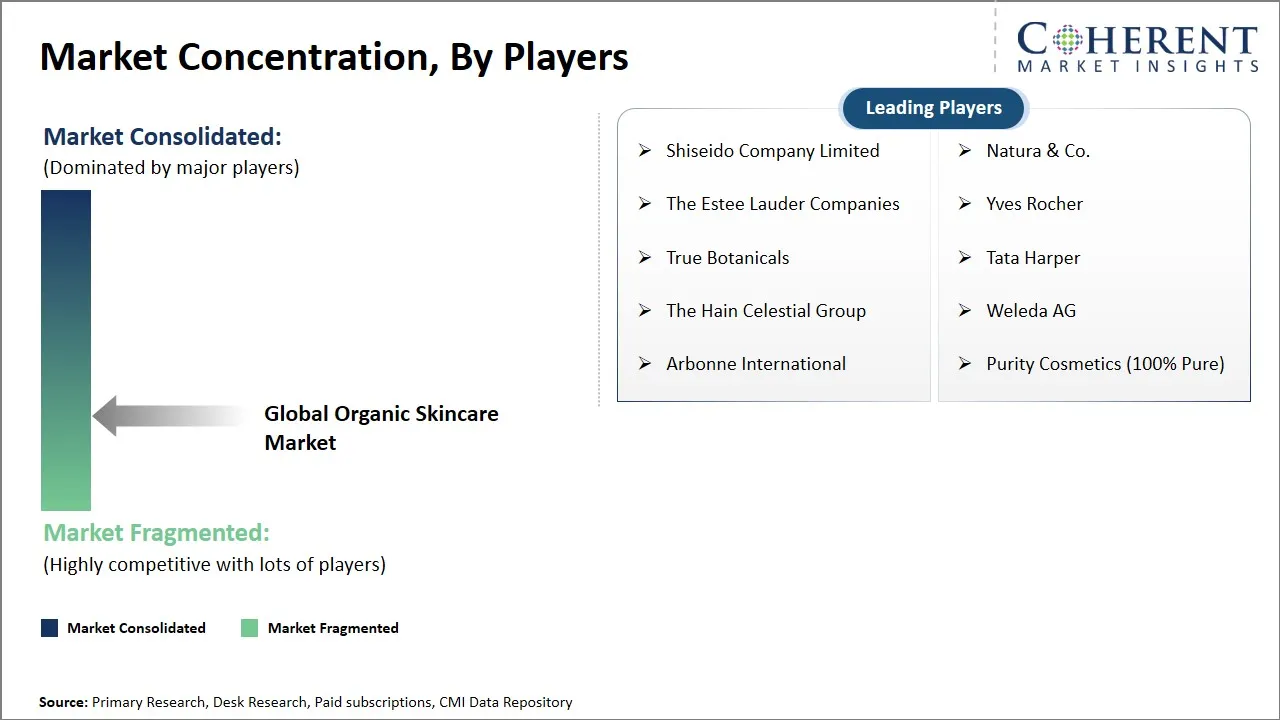
| Companies covered: | Shiseido Company Limited, Natura & Co., The Estee Lauder Companies, Yves Rocher, True Botanicals, Tata Harper, The Hain Celestial Group, Weleda AG, Arbonne International, and Purity Cosmetics (100% Pure) | ||
| Growth Drivers: |
| ||
| Restraints & Challenges: |
| ||
Organic Skincare Market Dynamics
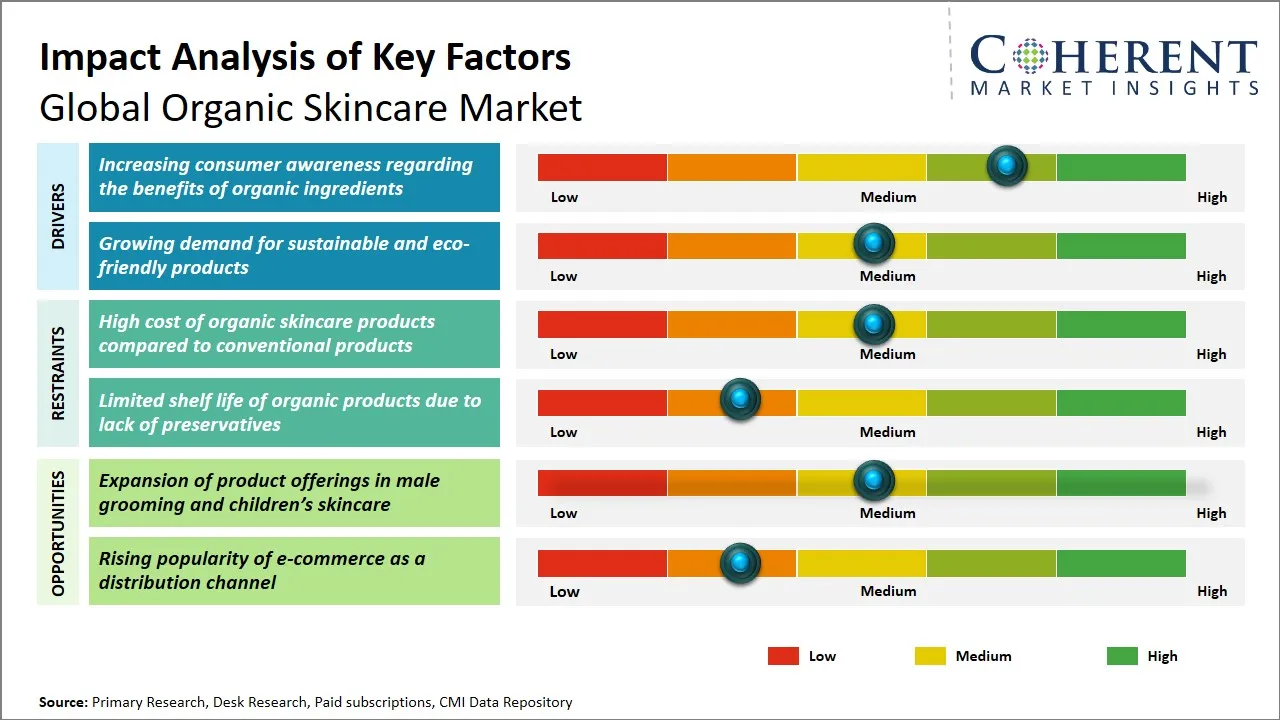
Organic Skincare Market Driver - Increasing Consumer Awareness Regarding the Benefits of Organic Ingredients
The continuous rise in consumer awareness regarding the health and environmental benefits of organic ingredients has been a major factor in pushing the demand for organic skincare products. Nowadays, people are very much concerned about the side effects caused by synthetic chemicals often used in skin care products, for example, parabens and sulfates as well as artificial fragrance that may cause skin irritations or even long-term health issues. On the opposite side, organic skin care products that are made from natural plant-based ingredients are regarded as safe, gentle, and more nourishing for the skin.
The escalating consumer awareness about organic skin care is seen as an example of the increasing popularity of brands like Tata Harper and Dr. Hauschka. These brands have gained their recognition mainly through the promotion of the advantages of organic ingredients like essential oil, plant extracts, and natural antioxidants over synthetic ones in their products.
Organic Skincare Market Opportunity - Expansion of Product Offerings in Male Grooming and Children’s Skincare Segments
The worldwide organic skincare market is a huge opportunity for growth by introducing new products aimed at male grooming and children's skincare. The organic skincare industry has always been female-dominated and marketed primarily to women which in turn has created a huge gap in the market of these underserved groups. The increasing awareness of the benefits of natural and chemical-free products is the main reason for men to switch over and one of the reasons the males' skincare routine is getting more complex with the inclusion of cleansing, moisturizing, and even applying sunscreen. Men's grooming industry is now offering a wide range of products like moisturizers, sunscreens, and anti-aging treatments which carry organic variants through the door because of their perceived safety and eco-friendliness.
For instance, Mustela, a brand that specializes in natural and organic formulations, has created an entire product line appropriate for babies and toddlers, targeting the children's skincare market. Products such as organic baby creams, oils, and lotions are included in this range and they address parents' worries about sensitive skin as well as the need for using safe, nontoxic ingredients on their children.
Analyst Opinion (Expert Opinion)
- The organic skincare market is experiencing an extraordinary increase in sales and it is mainly powered by customers' growing understanding of the harmfulness of synthetic ingredients and a robust demand for pure, eco-friendly beauty products. The Natural Products Expo (2023) and the Organic Beauty and Wellness Summit (2022) provided a window into the future of skincare, where the likes of Drunk Elephant and RMS Beauty are confirming the innovations in organic formulations with their active participation in the market.
- Drunk Elephant's recent introduction of a certified organic product line, for instance, serves as a good example of the strategies that the companies are adopting to strengthen their promises to clean beauty and simultaneously attract green consumers. The talks held at these events pointed out the very issue of transparency as being at the core of consumer expectation, in conjunction with the effective and non-polluting approaches to ingredient sourcing, thereby marking shifts in consumer preferences.
- The market gaining saturation, the enforcement of compliance with organic certifying regulations, and the like were cited as frequent barriers to growth by the industry. However, those who are going to be the winners are the ones creating an organic customer base through storytelling and possibly strong brand narratives. The organic skincare market fate ultimately depends on its capacity to be innovative and to change with the consumers' safety, ethical and environmental responsibility in beauty choices preferences.
Speak to the analyst
Want personalized insights?
Take the findings above to one of our principal consultants, or have the report rebuilt around the segments, geographies and competitors you actually track.
Market Segmentation
- Product Insights (Revenue, USD Bn, 2021 - 2033)
- Face Cream & Moisturizers
- Face Cleanser
- Face Serum
- Body Cream & Moisturizers
- Body Wash
- Others
- Ingredient Type Insights (Revenue, USD Bn, 2021 - 2033)
- Natural Oils
- Herbal Extracts
- Botanical Ingredients
- Others
- Distribution Channel Insights (Revenue, USD Bn, 2021 - 2033)
- Supermarket/Hypermarket
- Pharmacy & Drugstore
- Online
- Others
- Regional Insights (Revenue, USD Bn, 2021 - 2033)
- North America
- U.S.
- Canada
- Latin America
- Brazil
- Argentina
- Mexico
- Rest of Latin America
- Europe
- Germany
- U.K.
- Spain
- France
- Italy
- Russia
- Rest of Europe
- Asia Pacific
- China
- India
- Japan
- Australia
- South Korea
- ASEAN
- Rest of Asia Pacific
- Middle East
- GCC Countries
- Israel
- Rest of Middle East
- Africa
- South Africa
- North Africa
- Central Africa
- North America
- Key Players Insights
- Shiseido Company Limited
- Natura & Co.
- The Estee Lauder Companies
- Yves Rocher
- True Botanicals
- Tata Harper
- The Hain Celestial Group
- Weleda AG
- Arbonne International
- Purity Cosmetics (100% Pure)
Sources
Primary Research Interviews
- R&D Director – Leading Organic Skincare Manufacturer
- Procurement Manager – Major Natural/Organic Beauty Retailer
- Product Innovation Head – Top Organic Skincare Brand
- Sustainability Manager – Cosmetics Certification Agency
Stakeholders
- Manufacturers (Organic Skincare Brands, OEM/ODM Firms)
- End-use Sectors
- Retail & E-commerce (Beauty, Health, and Natural Products Stores)
- Beauty Salons & Spas emphasizing organic treatments
- Personal Care & Wellness Brands
- Regulatory & Certification Bodies (USDA Organic, COSMOS, Ecocert, NATRUE)
- E-commerce Platforms and Retailers (Amazon, Ulta, Sephora, iHerb)
- Technology Integration Players: AI/tech-driven personalized skincare solution providers
Databases
- UN Comtrade Database
- India Import Export (EXIM) Database
- Mintel GNPD (Global New Products Database)
- Euromonitor International (Passport)
Magazines
- Organic Spa Magazine – Industry trends and consumer awareness in organic skincare
- Cosmetics Design (Europe, Asia, North America) – Market developments and insights
- Global Cosmetic Industry (GCI) – Innovations in clean beauty and organic formulations
- Happi Magazine – Market updates and brand launches in natural/organic beauty
- Natural Beauty News – Key happenings in the organic personal care segment
Journals
- International Journal of Cosmetic Science – Advances in organic and natural skincare
- Journal of Cleaner Production – Sustainability studies in cosmetic manufacturing
- Cosmetics & Toiletries – Formulation breakthroughs for organic skincare
- Journal of Dermatological Science – Efficacy of organic ingredients in skincare
- Clinical, Cosmetic and Investigational Dermatology – Consumer response to organic skincare
Newspapers
- The Financial Times – Natural beauty and organic skincare market analysis
- The Guardian – Consumer and regulatory trends in green beauty
- Asia Beauty Journal – Organic beauty product market in Asia
- European Cosmetics News – Regulation, growth, and innovation for organic skincare
- The New York Times – Consumer movement towards organic and clean beauty
Associations
- Organic Trade Association (OTA)
- Soil Association (UK)
- COSMOS-standard AISBL
- Personal Care Products Council (PCPC)
- Natural & Organic Health and Beauty Alliance (NOHBA)
- Ecocert Group
Public Domain Sources
- FDA – Regulations for “organic” labeling on cosmetics in the U.S.
- European Commission – Cosmetics Regulation, natural and organic cosmetics frameworks
- USDA – Organic Certification for personal care products
- World Health Organization – Health implications of personal care product ingredients
Proprietary Elements
- CMI Data Analytics Tool, Proprietary CMI Existing Repository of information for last 8 years.
Get access to 250+ pages report
Every segment, forecast, competitor profile and data table behind the analysis above — available for instant download.
- ESOMAR Member
- ISO 9001:2015 Certified
- D-U-N-S Registered
- GDPR & CCPA Compliant
Missing comfort of reading report in your local language? Find your preferred language:
Transform your Strategy with Exclusive Trending Reports
Frequently Asked Questions
The global organic skincare market is estimated to be valued at USD 14.78 Bn in 2026 and is expected to reach USD 27.02 Bn by 2033.
The CAGR of the global organic skincare market is projected to be 9.0% from 2026 to 2033.
Increasing consumer awareness regarding the benefits of organic ingredients and growing demand for sustainable and eco-friendly products are the major factors driving the growth of the global organic skincare market.
High cost of organic skincare products compared to conventional products and limited shelf life of organic products due to lack of preservatives are the major factors hampering the growth of the global organic skincare market.
In terms of product, the face cream & moisturizers segment is estimated to dominate the market revenue share in 2026.
Shiseido Company Limited, Natura & Co., The Estee Lauder Companies, Yves Rocher, True Botanicals, Tata Harper, The Hain Celestial Group, Weleda AG, Arbonne International, and Purity Cosmetics (100% Pure) are the major players.
Asia Pacific is expected to lead the global organic skincare market in 2026.