

Global Prostaglandin Analogs Market Size and Forecast: 2026-2033
According to Coherent Market Insights, the global prostaglandin analogs market is estimated to be valued at USD 3.85 Bn in 2026 and is expected to reach USD 5.90 Bn by 2033, exhibiting a compound annual growth rate (CAGR) of 6.3% from 2026 to 2033. This growth is driven by the increasing prevalence of glaucoma and other ocular diseases, along with advancements in drug delivery technologies and rising awareness about early diagnosis and treatment.
Key Takeaways of the Prostaglandin Analogs Market
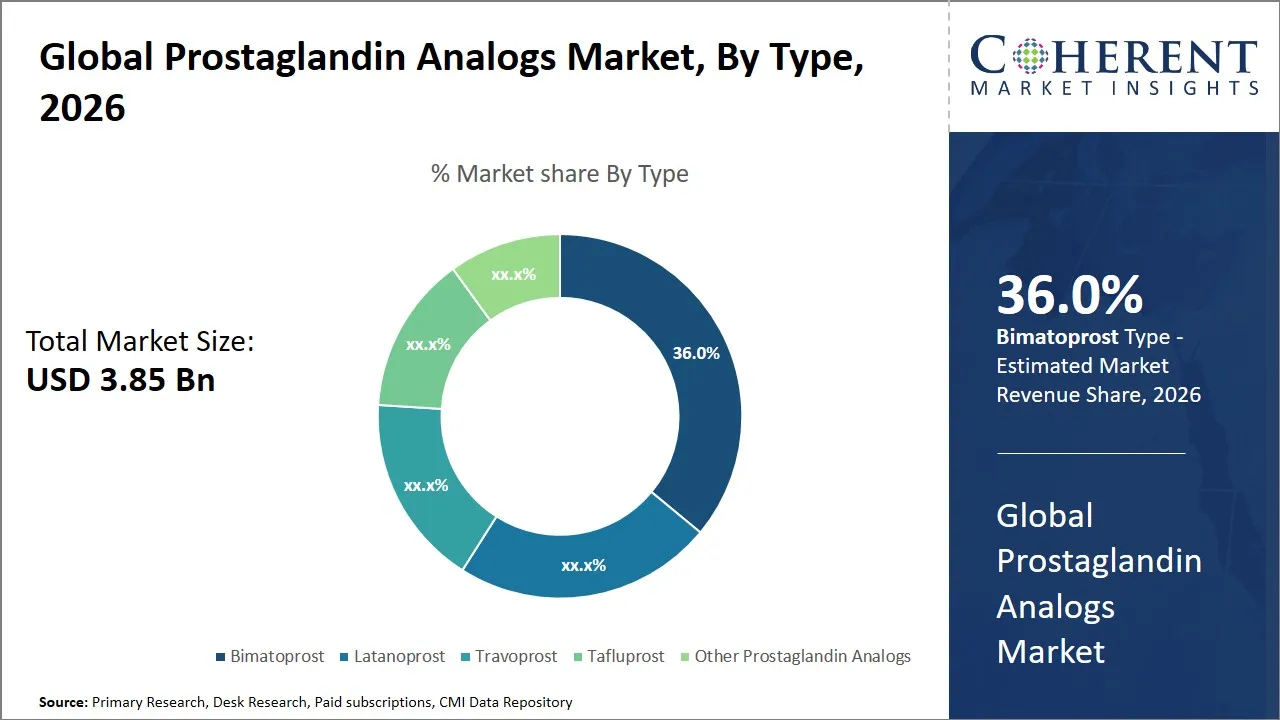
- Bimatoprost segment is expected to lead the prostaglandin analogs market capturing 36% share in 2026.
- Glaucoma & Ocular Hypertension Treatment segment is estimated to represent 39.8% of the market share in 2026.
- Topical segment is projected to dominate with 47.8% of the global prostaglandin analogs market share in 2026.
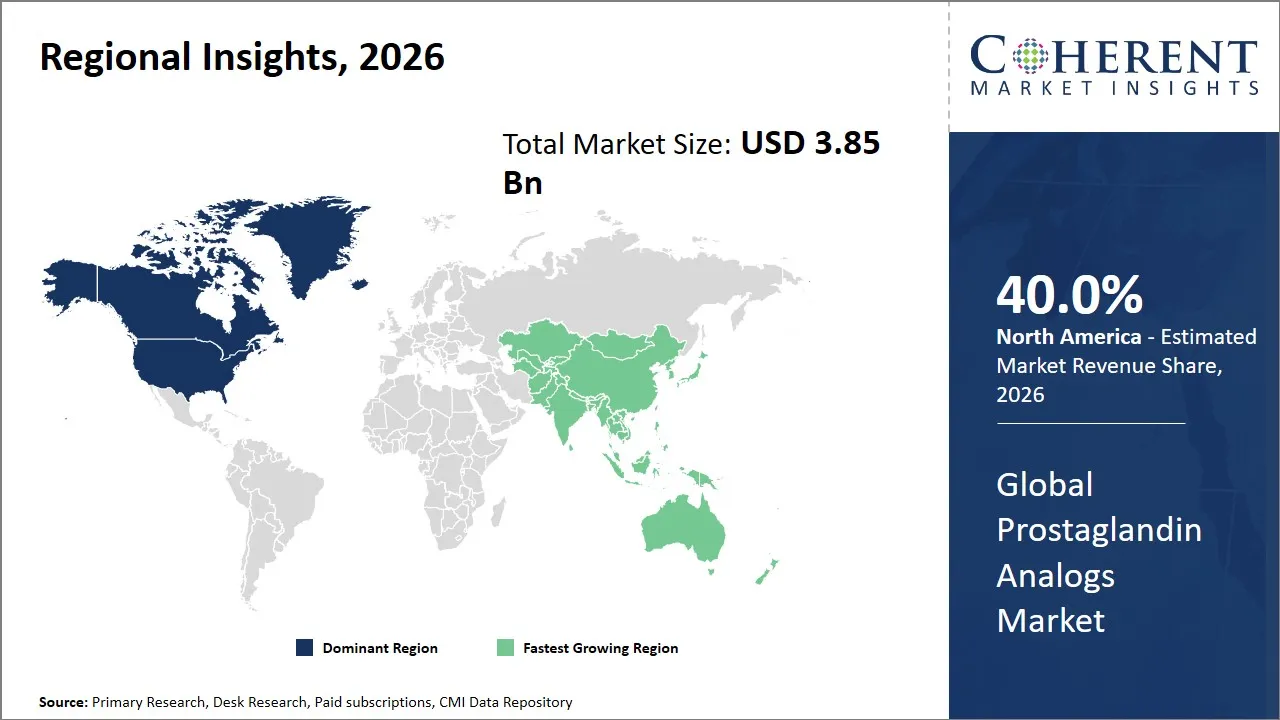
- North America is expected to lead the market, holding a share of 40% in 2026. Asia Pacific is anticipated to be the fastest-growing region, with 26% share in 2026.
Market Overview
- The rise in glaucoma prevalence, especially among the aging population, and increasing healthcare access globally are major drivers for the market growth.
- Prostaglandin analogs are the leading treatment class for glaucoma, capturing a significant share of the global prostaglandin analogs market.
- Advances in drug formulations and sustained-release technologies, coupled with patent expirations and generic product launches, are reshaping the competitive landscape.
- The development of preservative-free and fixed-dose combination therapies has improved patient adherence, driving demand for prostaglandin analog treatments.
Currents Events and Its Impact
Current Events | Description and its Impact |
Regulatory Approvals for New Glaucoma Treatments |
|
Introduction of Preservative-Free Formulations |
|
Segmental Insights
- Current Industry Events of 2026
- Market Size Estimation
- Regional Breakdown
- Competitive Landscape
- Customer Intelligence
- Segmental Analysis
- Pricing Analysis
- Key Market Drivers, Challenges & Future Trends
- Customized Insights Section
Why Does the Bimatoprost Segment Dominate the Global Prostaglandin Analogs Market in 2026?
The bimatoprost segment is expected to hold the largest share of 36% in 2026, primarily driven by its proven clinical effectiveness in lowering intraocular pressure. This medication has a strong mechanism of action that increases the volume of aqueous humor through uveoscleral pathway rendering it one of the most useful drugs to patients with glaucoma and ocular hypertension. This has proven its preference by ophthalmologists due to its ability to overcome cases where other analogs of prostaglandins fail. In addition, the Bimatoprost specific chemical structure permits the increased level of lipophilicity, which increases the therapeutic effect and corneal penetration, which is reflected in patient outcomes.
For instance, Bimatoprost, marketed as Lumigan by Allergan (now part of AbbVie), is widely used to treat glaucoma by lowering intraocular pressure. Additionally, Allergan launched Latisse, a bimatoprost formulation for eyelash growth, expanding its use beyond glaucoma treatments and driving the market growth.
Why Does the Glaucoma & Ocular Hypertension Treatment Segment Dominate the Global Prostaglandin Analogs Market in 2026?
The glaucoma & ocular hypertension treatment segment is projected to hold the largest share of 39.8% in 2026, propelled by the increasing global burden of these chronic eye disorders. Glaucoma is among the major causes of irreversible blindness in different parts of the world, and thus, there is a high demand for effective treatment solutions to avoid the loss of vision. The intraocular pressure-lowering effect of prostaglandin analogs together with a favorable safety profile has promoted them as the first-line treatment regimen in the management of the conditions and this directly drives the segment growth.
For instance, in March 2019, Aerie Pharmaceuticals’ Rocklatan, a fixed-dose combination of latanoprost and netarsudil, was approved by the U.S. Food and Drug Administration (FDA) for treating glaucoma and ocular hypertension. This once-daily treatment improves patient adherence and effectively lowers intraocular pressure.
(Source - https://glaucoma.org/articles/fda-approves-rocklatan-eye-drop-for-open-angle-glaucoma)
Topical Dominates the Global Prostaglandin Analogs Market
Topical segment is expected to capture the highest share of 47.8% in 2026, driven by the inherent advantages that ocular surface delivery systems provide. This technique delivers the medicine directly to the eye, making it work faster by avoiding the rest of the body. This helps maximize the effect of the drug and reduce side effects. Self-administration by eye drops increases patient autonomy and compliance, which is an important factor to control chronic ocular diseases, such as glaucoma and ocular hypertension, in which the long-term adherence to treatment is required.
Advancements in Drug Delivery Systems for Prostaglandin Analogs Market
Event | Description | Impact |
Advancements in Sustained-Release Implants | Development of sustained-release implants like iDose TR and Durysta for glaucoma treatments. | These implants allow for prolonged drug release, reducing the frequency of treatment administration and improving patient adherence, especially for chronic conditions. |
Introduction of Preservative-Free Formulations | Launch of preservative-free versions of latanoprost and other glaucoma medications for patients with ocular sensitivity. | These formulations reduce irritation and improve patient comfort, particularly in long-term glaucoma treatment, leading to better adherence and enhanced therapeutic outcomes. |
Combination Therapies with Drug Delivery Systems | Development of fixed-dose combination therapies such as ROCKLATAN, combining prostaglandin analogs and Rho kinase inhibitors. | Combination therapies offer more effective treatment by targeting different mechanisms, improving patient outcomes, and simplifying treatment regimens for better compliance. |
Use of Nanotechnology in Drug Delivery | Increasing use of nanotechnology in drug delivery systems for more efficient and targeted treatment, especially in ophthalmology. | Nanotechnology allows for more precise delivery of drugs, reducing side effects and improving therapeutic effectiveness by targeting specific sites in the eye, leading to better clinical outcomes. |
Regional Insights
North America Prostaglandin Analogs Market Analysis and Trends
The North America region is projected to lead the market with a 40% share in 2026, driven by a well-established healthcare infrastructure coupled with robust pharmaceutical and biotechnology industries. The U.S. being one of the major markets in the region enjoys the advantages of high investments in ophthalmic research and development, especially with regards to glaucoma and other eye-associated disorders where the prostaglandin analogs are required. The policies of the government favoring drug approval through the U.S. FDA provide speedy track arrangements, which prompt innovation and market delivery of sophisticated analog drugs.
For instance, the launch of IYUZEH (preservative‑free latanoprost), the first and only preservative‑free latanoprost formulation approved in the U.S. strengthens treatment options for primary open‑angle glaucoma and ocular hypertension patients, likely enhancing patient comfort and adherence.
(Source- https://www.reviewofophthalmology.com/article/thea-launches-iyuzeh)
Asia Pacific Prostaglandin Analogs Market Analysis and Trends
The Asia Pacific region is expected to exhibit the fastest growth in the market contributing 26% share in 2026, due to rapidly improving healthcare infrastructure, increasing awareness about eye diseases, and expanding geriatric populations prone to conditions treated by prostaglandin analogs. Governments of China, India, Japan, and South Korea have made proactive moves to promote pharmaceutical innovation as well as accelerate regulatory approvals. Efforts like making investments in biotechnology hubs and the government-industry collaborations have encouraged local manufacturing and minimized the reliance on imports.
Global Prostaglandin Analogs Market Outlook for Key Countries
What are the Current Trends Shaping the U.S. Prostaglandin Analogs Market?
The U.S. is the giant in the field of prostaglandin analogs as a result of the state-of-the-art research centers and a regulatory climate where innovations are valued. Large companies like AbbVie, Bausch + Lomb, and Pfizer dominate the product development and commercialization. Due to the dense healthcare network in the country, there is a high level of access to these drugs. A substantial amount of funds is invested in research in ophthalmology, which constantly advances new analogs with a better effect and an improved safety profile. The collaboration of academia and the industry enhances clinical innovations, which cement the leadership of the U.S. prostaglandin analogs market.
How is China Helping in the Growth of the Prostaglandin Analogs Market?
The changing nature of the Chinese prostaglandin analogs market is driven by improved regulatory conditions and government subsidies to advance pharmaceutical research and development of local firms, including CSPC Pharmaceutical Group, which is majorly engaged in generic and innovative products of prostaglandin analog. The modernization of healthcare in the government programs such as the Healthy China 2030 lifts the healthcare demand both in urban and rural settings. Also, multinational companies have become much more accessible by establishing joint ventures and local production plants thus making them more accessible and affordable.
Key Drivers for the Growth of the Japan Prostaglandin Analogs Market
Japan is still the frontrunner in the Asia Pacific region with an advanced health care system and an extensive understanding of ocular conditions. Through the strict quality measures required by the regulatory authorities and a large aging population which has high aging structures, the market is advantaged. Senesino Pharmaceutical and Novolab Pharmaceutical are some of the main companies in the field that have made a contribution to the region in terms of innovation and vast product portfolios that meet the needs of patients. The Japanese focus on research and development is keeping the market vibrant especially with the new formulation of prostaglandin analog.
India Prostaglandin Analogs Market Trends
There is a significant growth in the prostaglandin analogs market in India due to the rising healthcare access and the widening population with whom the product can be used. Other pharmaceutical companies like Lupin and Sun Pharmaceutical, are the local companies that have done a lot of progress in producing generic drugs as an alternative which can be used at a cheaper price. The government programs to better health facilities in rural areas and simplifying the process of approving drugs have led to the market growth. Also, increasing partnership between Indian firms and international pharmaceutical players facilitate technology transfer and the availability of products in different geographical locations.
Global Prevalence and Adoption of Prostaglandin Analogs in Glaucoma Treatment
- Glaucoma is currently on the rise with the world having close to an estimated number of 80 million individuals having the disease especially among the older people. This growing incidence has resulted in a greater need to find effective treatment modalities and this has prompted the massive use of prostaglandin analogs. These are the treatments that have been known to reduce intraocular pressure, which is necessary in the management of glaucoma and avoidance of the vision destruction.
- In the board of directors, the first-line treatment of glaucoma is prostaglandin analogs, because they have been proven to be effective and can be used in a once-a-day treatment. Due to increased awareness on glaucoma and a greater number of patients being diagnosed with the disease, there has been a growth in the use of these therapies making them a key component to glaucoma treatment in developed and developing markets. This tendency is likely to persist as the healthcare systems will become better and new patients will want the effective and long-term solutions to the problem of ocular hypertension.
Market Players, Key Developments, and Competitive Intelligence
Key Developments
- On January 28, 2026, Glaukos received the U.S. FDA approval for an NDA labeling supplement allowing for the repeat administration of iDose TR (travoprost intracameral implant) in patients with open-angle glaucoma or ocular hypertension. This update permits physicians to re-administer the sustained-release implant, providing greater flexibility compared to the previous, single-use limitation.
- In September 2025, Bausch Health Companies Inc. launched a new fixed-dose combination eye drop that combines a prostaglandin analog with a beta-blocker. This product aims to improve patient adherence and minimize side effects.
- In December 2024, Fresenius Kabi AG has signed a licensing agreement with SamChunDang Pharm (SCD) to expand its biopharma portfolio. The agreement focuses on developing and commercializing biosimilars, leveraging SCD's manufacturing expertise. This partnership strengthens Fresenius Kabi’s position in the global biopharmaceutical market.
Top Strategies Followed by Global Prostaglandin Analogs Market Players
Player Type | Strategic Focus | Examples |
Established Market Leaders | Established companies dominate the prostaglandin analogs market by investing heavily in R&D to improve product efficacy, reduce side effects, and create patient-friendly formulations. They also form strategic partnerships and expand into emerging markets like Asia Pacific and Latin America to increase market share and drive growth. | Alcon, a market leader, focuses on developing innovative glaucoma treatments and expanding its distribution in emerging markets, solidifying its global presence. |
Mid-Level Players | Mid-level players in the prostaglandin analogs market focus on offering cost-effective solutions with adequate efficacy to attract price-sensitive consumers. They enhance their competitiveness through strategic collaborations, scaling up production and entering new markets with reduced risk. | Gland Pharma, a mid-tier player, offers affordable generics of prostaglandin analogs, leveraging partnerships to expand production and reach new markets, effectively competing with premium brands. |
Small-Scale Players | Smaller-scale players in the prostaglandin analogs market focus on niche strategies by developing innovative products with unique features to address unmet needs. They leverage partnerships with regional players to expand visibility and navigate local regulations, increasing their market presence despite limited resources. | SilvaTeam, a smaller player, focuses on developing bioengineered prostaglandin analogs and collaborates with regional pharmaceutical companies to enter new markets and expand locally. |
Market Report Scope
Prostaglandin Analogs Market Report Coverage
| Report Coverage | Details | ||
|---|---|---|---|
| Base Year: | 2025 | Market Size in 2026: | USD 3.85 Bn |
| Historical Data for: | 2020 To 2024 | Forecast Period: | 2026 To 2033 |
| Forecast Period 2026 to 2033 CAGR: | 6.3% | 2033 Value Projection: | USD 5.90 Bn |
| Geographies covered: |
| ||
| Segments covered: |
| ||
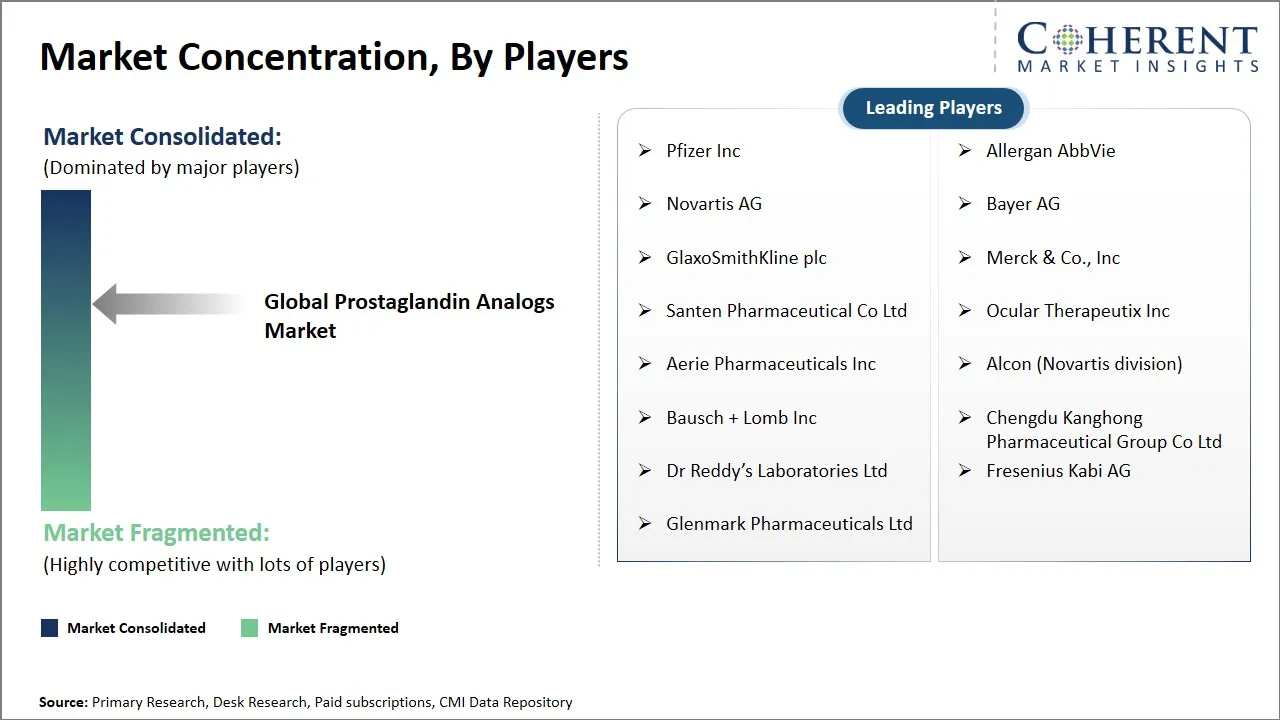
| Companies covered: | Pfizer Inc, Allergan AbbVie, Novartis AG, Bayer AG, GlaxoSmithKline plc, Merck & Co., Inc, Santen Pharmaceutical Co Ltd, Ocular Therapeutix Inc, Aerie Pharmaceuticals Inc, Alcon (Novartis division), Bausch + Lomb Inc, Chengdu Kanghong Pharmaceutical Group Co Ltd, Dr Reddy’s Laboratories Ltd, Fresenius Kabi AG, and Glenmark Pharmaceuticals Ltd | ||
| Growth Drivers: |
| ||
| Restraints & Challenges: |
| ||
Market Dynamics
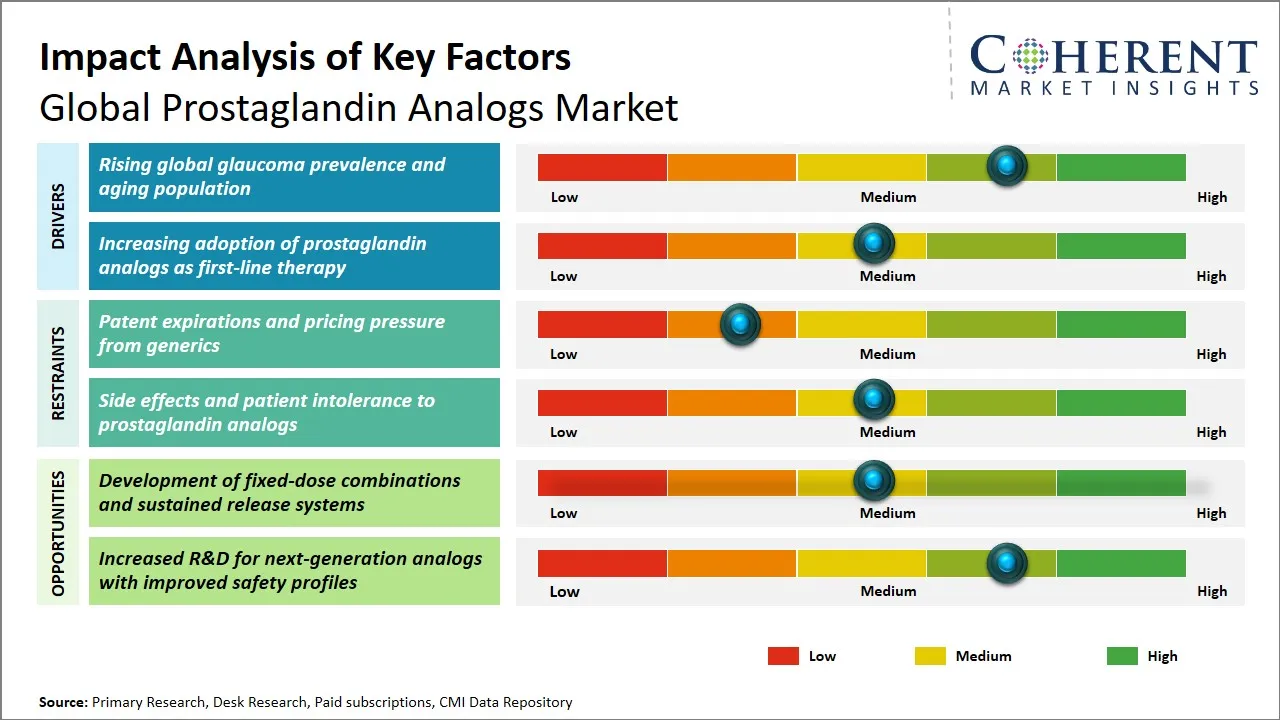
Prostaglandin Analogs Market Driver - Rising Global Glaucoma Prevalence and Aging Population
The rising cases of glaucoma globally especially among the older population are a major cause of high demand for prostaglandin analogs in the pharmaceutical market. Glaucoma is a disease marked by high levels of intraocular pressure which causes damage of optic nerves; the disease is mostly common in older adults, and the likelihood increases with an increase in life expectancy around the world. The prevalence rate of age-associated eye disorders, such as glaucoma, has increased dramatically as populations become older, which has exacerbated the demand for viable treatment solutions. The use of prostaglandin analogs as the first-line treatment is the best because of its effectiveness in lowering the intraocular pressure that has little side effects.
For instance, in October 2025, Santen Pharmaceutical launched SETANEO Ophthalmic Solution 0.002% in Japan for the treatment of glaucoma and ocular hypertension. This new solution aims to provide an effective treatment option to lower intraocular pressure in patients, improving their eye health management. The launch marks a significant step in expanding Santen’s portfolio of eye care therapies in the Japanese market.
(Source- https://www.santen.com/en/news/2025/2025_1/20251023)
Prostaglandin Analogs Market Opportunity: Development of Fixed-Dose Combinations and Sustained Release Systems
The creation of fixed-dose combinations (FDCs) and sustained release drug delivery systems will benefit the global market for prostaglandin analogs by resolving the issues of adherence within the patient population and therapeutic efficacy. Combination fixed-dose regimens that include prostaglandin analogs with other intraacceleration pressure-reducing medications, including beta-blockers or carbonic anhydrase inhibitors, provide an easier to use treatment option, cutting down on the daily doses. This can be achieved through consolidation which can only increase compliance of the patient and reduce chances of making medication errors, which leads to overall better clinical outcomes in the management of glaucoma and ocular hypertension.
For instance, in August 2022, Alcon announced its acquisition of Aerie Pharmaceuticals, Inc., enhancing its ophthalmic pharmaceutical portfolio. This strategic acquisition allows Alcon to strengthen its position in the eye care market, particularly in the treatment of glaucoma and ocular diseases, by adding Aerie's innovative therapies to its existing product offerings. The move aligns with Alcon’s commitment to advancing its eye care solutions globally.
(Source - https://www.alcon.com/media-release/)
Analyst Opinion (Expert Opinion)
- The market for prostaglandin analogs is undergoing a strong growth due to a number of reasons, such as technological solutions to the drug formulations and the fact that there is progressing support of innovative treatments by regulations. The need of these drugs is on the increase especially in the treatment of glaucoma and other eye diseases because they have been proven effective in lowering the intraocular pressure. Moreover, the change in more personalized medicine coupled with new methods of delivery (e.g., nanotechnology-based preparations) is likely to drive the market further. Nevertheless, limitations of the market are still posed by low cost of treatment, possible side effects, and competition with alternative therapies.
- Also, recent conferences and events in the industry have been important in influencing the market through the exchange of knowledge and facilitating the development of policies. Conferences such as the American Academy of Ophthalmology (AAO) yearly conference have also given avenues under which the new developments in the field of prostaglandin analogs and other eye care therapies can be discussed. The existing activities to increase the market scope are also evidenced by cooperative programs, including those launched by the government to provide access to glaucoma treatments in developing countries. Such initiatives, along with new product launches and better regulation systems, will most probably impact the direction of the market in the next few years.
Speak to the analyst
Want personalized insights?
Take the findings above to one of our principal consultants, or have the report rebuilt around the segments, geographies and competitors you actually track.
Market Segmentation
- Type Insights (Revenue, USD Bn, 2021 - 2033)
- Bimatoprost
- Latanoprost
- Travoprost
- Tafluprost
- Other Prostaglandin Analogs
- Application Insights (Revenue, USD Bn, 2021 - 2033)
- Glaucoma & Ocular Hypertension Treatment
- Uveitis
- Dry Eye Disease
- Others
- Route Of Administration Insights (Revenue, USD Bn, 2021 - 2033)
- Topical
- Oral
- Injectable
- Distribution Channel Insights (Revenue, USD Bn, 2021 - 2033)
- Hospital Pharmacies
- Retail Pharmacies
- Online Pharmacies
- End User Insights (Revenue, USD Bn, 2021 - 2033)
- Hospitals & Clinics
- Homecare Settings
- Ambulatory Surgical Centers
- Regional Insights (Revenue, USD Bn, 2021 - 2033)
- North America
- U.S.
- Canada
- Latin America
- Brazil
- Argentina
- Mexico
- Rest of Latin America
- Europe
- Germany
- U.K.
- Spain
- France
- Italy
- Russia
- Rest of Europe
- Asia Pacific
- China
- India
- Japan
- Australia
- South Korea
- ASEAN
- Rest of Asia Pacific
- Middle East
- GCC Countries
- Israel
- Rest of Middle East
- Africa
- South Africa
- North Africa
- Central Africa
- North America
- Key Players Insights
- Pfizer Inc
- Allergan AbbVie
- Novartis AG
- Bayer AG
- GlaxoSmithKline plc
- Merck & Co., Inc
- Santen Pharmaceutical Co Ltd
- Ocular Therapeutix Inc
- Aerie Pharmaceuticals Inc
- Alcon (Novartis division)
- Bausch + Lomb Inc
- Chengdu Kanghong Pharmaceutical Group Co Ltd
- Dr Reddy’s Laboratories Ltd
- Fresenius Kabi AG
- Glenmark Pharmaceuticals Ltd
Sources
Primary Research Interviews
Industry Stakeholders List
- Ophthalmologists and Healthcare Providers
- Pharmaceutical Manufacturers
End Users List
- Glaucoma Patients
- Healthcare Institutions
Government and International Databases
- U.S. Food and Drug Administration (FDA)
- European Medicines Agency (EMA)
- World Health Organization (WHO)
- National Institutes of Health (NIH)
- Centers for Disease Control and Prevention (CDC)
- National Health Service (NHS)
Trade Publications
- Pharmaceutical Technology
- Drug Development and Delivery
- The Pharmaceutical Journal
- Ophthalmology Times
- EyeWorld
- Pharmaceutical Manufacturing and Packing Sourcer
Academic Journals
- Journal of Glaucoma
- British Journal of Ophthalmology
- American Journal of Ophthalmology
- Investigative Ophthalmology & Visual Science
- Journal of Ocular Pharmacology and Therapeutics
- Current Eye Research
Reputable Newspapers
- The New York Times
- The Guardian
- The Washington Post
- Financial Times
- The Wall Street Journal
- The Times
Industry Associations
- American Academy of Ophthalmology (AAO)
- International Glaucoma Association (IGA)
- World Glaucoma Association (WGA)
- European Glaucoma Society (EGS)
- Pharmaceutical Research and Manufacturers of America (PhRMA)
- American Pharmacists Association (APhA)
Public Domain Resources
- National Institutes of Health (NIH) Public Access
- ClinicalTrials.gov
- U.S. National Library of Medicine
- European Clinical Trials Database
- National Center for Biotechnology Information (NCBI)
Proprietary Elements
- CMI Data Analytics Tool: Proprietary analytics tool to analyze real-time market trends, consumer behavior, and technology adoption in market
- Proprietary CMI Existing Repository of Information for Last 8 Years
Get access to 250+ pages report
Every segment, forecast, competitor profile and data table behind the analysis above — available for instant download.
- ESOMAR Member
- ISO 9001:2015 Certified
- D-U-N-S Registered
- GDPR & CCPA Compliant
Missing comfort of reading report in your local language? Find your preferred language:
Transform your Strategy with Exclusive Trending Reports
Frequently Asked Questions
The global prostaglandin analogs market is estimated to be valued at USD 3.85 Bn in 2026 and is expected to reach USD 5.90 Bn by 2033.
The CAGR of global prostaglandin analogs market is projected to be 6.30% from 2026 to 2033.
Rising global glaucoma prevalence and aging population and increasing adoption of prostaglandin analogs as first‑line therapy are the major factors driving the growth of the global prostaglandin analogs market.
Patent expirations and pricing pressure from generics and side effects and patient intolerance to prostaglandin analogs are the major factors hampering the growth of the global prostaglandin analogs market.
In terms of type, bimatoprost is estimated to dominate the market share in 2026.
Pfizer Inc, Allergan AbbVie, Novartis AG, Bayer AG, GlaxoSmithKline plc, Merck & Co., Inc, Santen Pharmaceutical Co Ltd, Ocular Therapeutix Inc, Aerie Pharmaceuticals Inc, Alcon (Novartis division), Bausch + Lomb Inc, Chengdu Kanghong Pharmaceutical Group Co Ltd, Dr Reddy’s Laboratories Ltd, Fresenius Kabi AG, and Glenmark Pharmaceuticals Ltd are the major players.
North America is expected to lead the global prostaglandin analogs market in 2026.