

Global Remote Medical Dosimetry Solutions Market Size and Forecast – 2026-2033
The global remote medical dosimetry solutions market is estimated to be valued at USD 3,838.2 Mn in 2026 and is expected to reach USD 5,469.9 Mn by 2033, exhibiting a compound annual growth rate (CAGR) of 7.2% from 2026 to 2033. This steady growth reflects the increasing adoption of remote dosimetry services, driven by advancements in telemedicine technologies and the growing need for efficient radiation therapy planning across healthcare institutions worldwide.
Key Takeaways of the Global Remote Medical Dosimetry Solutions Market
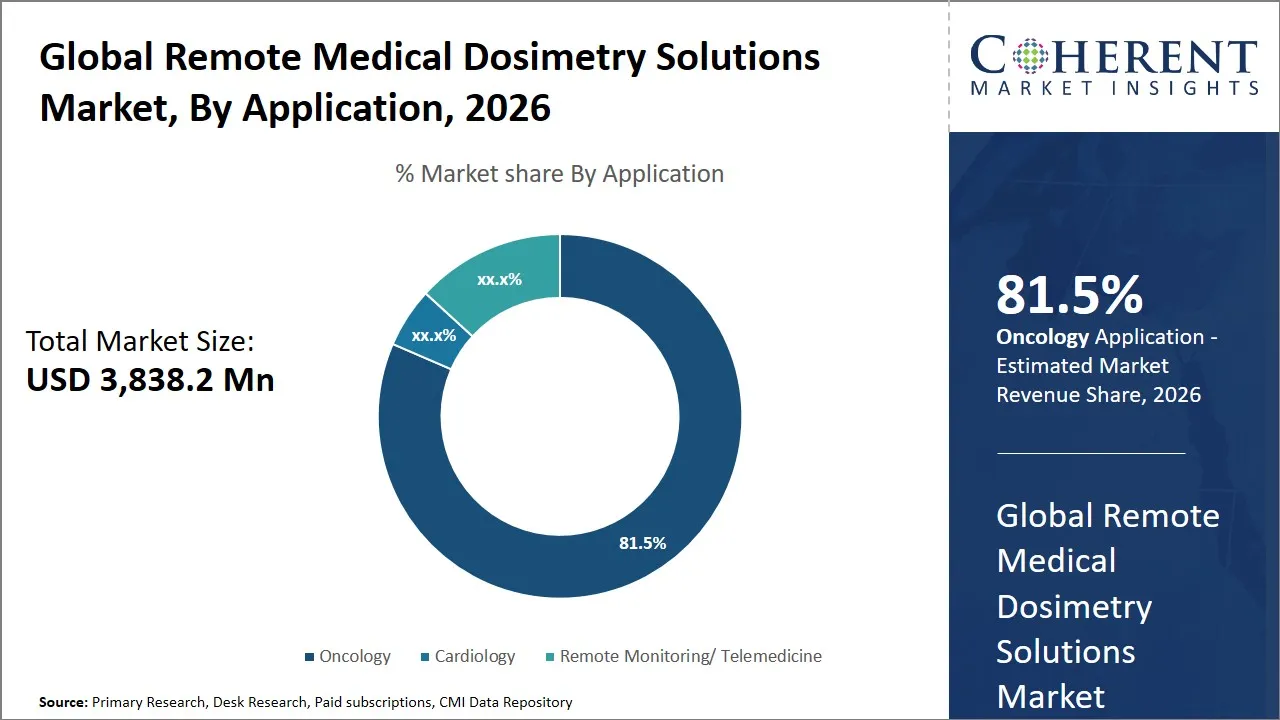
- Oncology segment is expected to lead the global remote medical dosimetry solutions market, capturing 81.5% share in 2026.
- Software segment is estimated to represent 69.1% of the global remote medical dosimetry solutions market share in 2026.
- Cloud-based segment is projected to dominate with 73.7% of the global remote medical dosimetry solutions market share in 2026.
- North America is expected to lead the market, holding a share of 38.1% in 2026. Europe is anticipated to be the fastest-growing region, with 23.1% share in 2026.
Market Overview
- Global remote medical dosimetry solutions market is expanding steadily due to rising global cancer incidence and the growing volume of radiotherapy procedures across hospital and cancer care settings.
- Global remote medical dosimetry solutions market is being driven by the shortage of skilled medical dosimetrists and medical physicists, which is pushing providers to adopt remote planning and treatment support models.
- The market is benefiting from the increasing adoption of cloud-based oncology platforms, AI-assisted treatment planning, and digital quality assurance tools that improve workflow speed and consistency.
- Global remote medical dosimetry solutions market is seeing stronger demand from community hospitals, multi-site oncology networks, and underserved regions that need expert dosimetry support without building full in-house teams.
Currents Events and their Impact
Current Events | Description and its Impact |
Expansion of remote treatment planning services |
|
Growing adoption of AI-enabled radiotherapy workflows |
|
Segmental Insights
- Current Industry Events of 2026
- Market Size Estimation
- Regional Breakdown
- Competitive Landscape
- Customer Intelligence
- Segmental Analysis
- Pricing Analysis
- Key Market Drivers, Challenges & Future Trends
- Customized Insights Section
Why Does the Oncology Segment Dominate the Global Remote Medical Dosimetry Solutions Market in 2026?
The oncology segment is expected to hold the largest market share of 81.5% in 2026, driven by rising cancer prevalence and advanced treatment integration. Oncology therapies tend to have dose calculations that need to be done accurately and precision in order to destroy the cancerous cells as much as possible without causing harm to the normal tissues. Remote medical dosimetry solutions are enabling the planners and the medical physicists to remotely plan, verify, and optimize the radiation therapy doses, as a response to the necessity to enhance accuracy and safety in cancer treatment.
This development has also been supported by the introduction of advanced radiation therapy methods like Intensity Modulated Radiation Therapy (IMRT), Three-dimensional Conformal Radiation Therapy (3D-CRT) and Stereotactic Body Radiation Therapy (SBRT) that are mainly applied during oncology treatments. These sophisticated modalities necessitate the use of thorough dosimetric analysis, which may be effectively administered via remote environments, where co-ordination between oncologists, dosimetrists and physicists can be executed without any geographical limitations. It has been especially applicable in areas that are inaccessible to the expertise of specialized oncologies, and remote dosimetry solutions aid in the provision of high-quality care remotely.
For instance, in May 2025, RaySearch Laboratories launched RayStation v2025, the latest version of its radiotherapy treatment planning software featuring machine-learning-based automated treatment planning and extended capabilities for specialized patient positioning during therapy. The upgrade reflects the growing integration of AI and automation in oncology planning platforms that support remote and collaborative dosimetry workflows.
(Source- RaySearch Laboratories)
Why Does the Software Segment Dominate the Global Remote Medical Dosimetry Solutions Market in 2026?
The software segment is expected to hold 69.1% of the market share in 2026, owing to advanced analytical capabilities and integration flexibility. Remote dosimetry software offers detailed platforms of dose computation, planning of therapy, quality management and data handling, which are part of ensuring accuracy and effectiveness of radiation treatment. These software packages embrace different radiation modalities, visualization of data, and interconnectivity with hospital information systems and electronic medical records, which increase the efficiency of the workflow.
The software, which is capable of integrating machine learning, artificial intelligence, and cloud computing technologies, is driving the growth of the software segment, allowing automated verification of doses, detection of errors, and predictive analytics. These abilities have a significant minimization of manual errors and enhancement in the precision of treatment that is a crucial component in radiation oncology and cardiology. The versatility of software also makes it customizable to suit certain clinical and regulatory needs to suit different health systems around the globe.
For instance, in October 2024, Brainlab introduced the Elements Spine SRS software update, designed to enhance automated treatment planning and dose calculation for stereotactic radiosurgery procedures. The update improves digital workflow efficiency and supports advanced software-driven radiotherapy planning, which is closely aligned with the growing role of software platforms in remote medical dosimetry solutions.
The Cloud-based Segment Dominates the Global Remote Medical Dosimetry Solutions Market
The cloud-based segment is expected to hold the largest market share of 73.7% in 2026, due to scalability, accessibility, and enhanced data security. The scalability of cloud deployment is also very beneficial, as the healthcare providers are able to deal with changing workloads and abilities to be increased without spending much on the hardware located on-premises and staff training. This is especially needed in dosimetry, where variable computation resources are needed due to complex computations and large datasets.
The access of cloud-based platforms is unmatched as medical teams are located on different locations and still access dosimetric data and cooperate in real-time, streamlining treatment planning and quality assurance processes. This feature is imperative in providing continuity of care particularly where a treatment team is placed in different clinics or countries. Moreover, cloud solutions allow delivering updates on time, maintaining high availability, and deploying new features fast, keeping users in line with the latest clinical guidelines and security recommendations.
Cloud Based Treatment Planning System Penetration
- Cloud based treatment planning system is in the developing phase and not yet fully saturated all over the world but there has been an evident trend to adopt cloud-based treatment planning as radiation oncology providers seek faster cooperation, centralized knowledge base, and workflow assistance at a distance. The best adoption is occurring in multi-site cancer networks, smaller practices requiring stable hosted infrastructure and centers attempting to alleviate the load on in house planning teams. Elekta now sells treatment planning environments that are Internet-based to support online and offline processes and is also able to provide secure cloud infrastructure to radiation oncology practices, indicating that the market is moving away in favor of less rigid deployment models.
- In fact, it is not yet universal penetration but the increase of practical acceptance. Recent clinical and operational experience indicates that cross location collaboration and remote plan development is already being supported using secure cloud-based systems and new research in 2025 and 2026 is still proving the effectiveness of cloud based and automated treatment planning in radiotherapy. It implies that penetration is expanding in the first place where providers require speed, flexibility of the workforce, and scalable digital infrastructure, and is likely to expand even more in the future as the cybersecurity, interoperability, and regulatory confidence increases.
Regional Insights
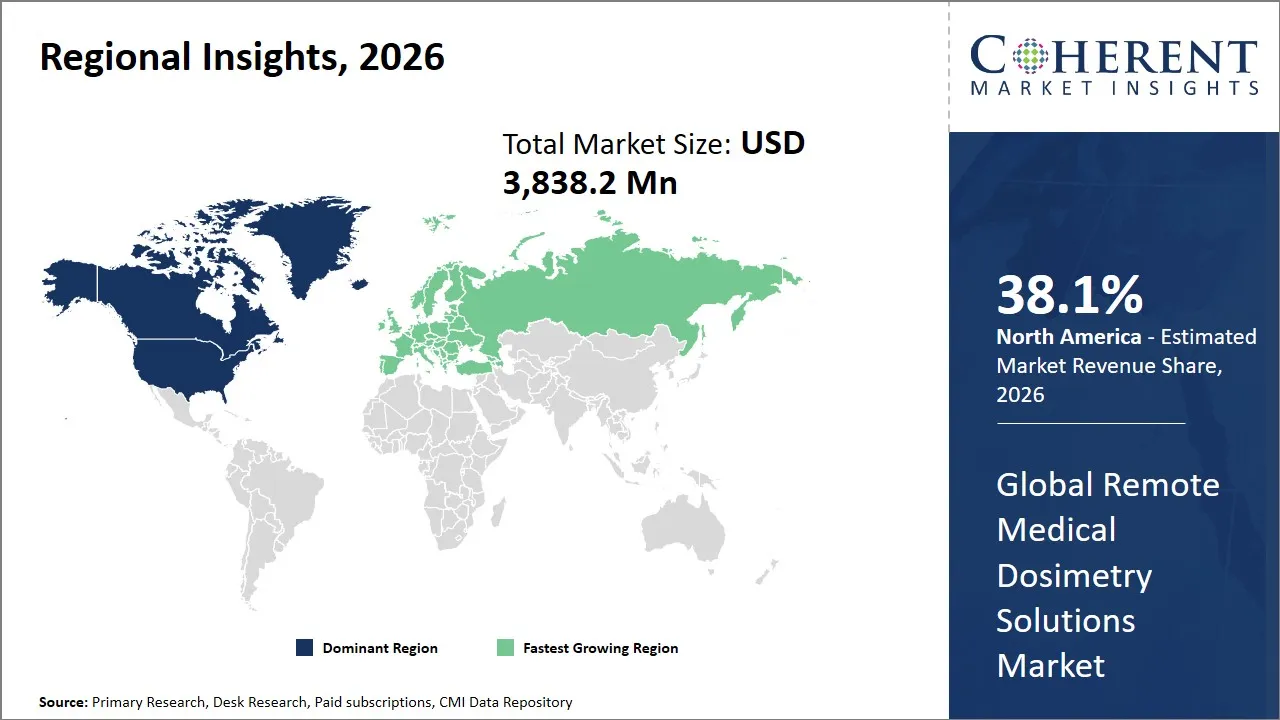
North America Remote Medical Dosimetry Solutions Market Analysis and Trends
The North America region is projected to lead the market with a 38.1% share in 2026, driven by a mature healthcare infrastructure combined with advanced technology adoption and strong regulatory frameworks. The existence of the established healthcare providers and the top cancer treatment centers forms a strong ecosystem that is willing to adopt remote dosimetry services that maximize the safety and effectiveness of radiation treatments.
The development of telehealth and digital health innovation is reinforced by government programs and reimbursement policies in the U.S. and Canada are further stimulating the adoption of telehealth. This has been complemented by such notable companies as Varian Medical Systems (a Siemens Healthineers company), RaySearch Laboratories, and Sun Nuclear Corporation, which have been providing comprehensive and integrated remote dosimetry platforms, software, and services that meet institutional requirements.
For instance, in April 2024, Sun Nuclear, a U.S.-based radiation therapy quality management company, announced SunCHECK Version 5.0, a major software update that added new treatment plan assessment capabilities, stronger treatment planning system and oncology information system integration, expanded QA device control, and a worklist-based user interface.
(Source- Sun Nuclear)
Europe Remote Medical Dosimetry Solutions Market Analysis and Trends
The Europe region is expected to exhibit the fastest growth in the remote medical dosimetry solutions market, contributing 23.1% share in 2026, owing to a solid clinical and policy foundation, supported by the region’s mature radiotherapy infrastructure, strong oncology standards, and growing push for digital cancer care. The need to enhance the efficiency of treatment planning, address workforce shortages and gaps, and enable the more interconnected workflows in multi-site radiotherapy networks are pushing demand. The Beating Cancer Plan of Europe and the associated EU health programmes remain in the reinforcement of investment in cancer care modernization and vendors are also developing software-based oncology platforms which render remote planning and dosimetry support more feasible at hospitals and cancer centers.
For instance, in October 2025, KeV Medical Imaging and Telix Pharmaceuticals announced the European launch of QDOSE medical dosimetry software after receiving certification under the European Union Medical Device Regulation (EU MDR). The software supports personalized radiation dose calculation and treatment planning for theranostic procedures and can now be adopted by hospitals across Europe.
(Source- Telix Pharmaceuticals)
Global Remote Medical Dosimetry Solutions Market Outlook for Key Countries
How is the U.S. Helping in the Growth of the Remote Medical Dosimetry Solutions Market?
The U.S. remote medical dosimetry solutions market is very developed where remote medical dosimetry solutions have been extensively adopted in every academic medical center, hospital network, and radiation oncology clinic. The largest technology players like Varian Medical Systems and RaySearch Laboratories have also developed good presence by incorporating artificial intelligence and automatization in their dosimetry systems.
Favorable regulatory guidelines of FDA and reimbursement policies contribute to the adoption of remote services. The partnerships between technology vendors and health organizations aim at enhancing the precision of treatment and efficiency of workflow, so the U.S. is a pioneer in the field of innovations and the quality of services.
How is China Helping in the Growth of the Remote Medical Dosimetry Solutions Market?
The remote medical dosimetry solutions market in China is also experiencing a high rate of adoption due to the investment of the government in cancer care infrastructure and digital health programs as part of the Healthy China 2030 strategy of the country. The growing number of cancer clients has put pressure on hospitals to find a far solution to dosimetry to reduce staffing levels and improve the time taken to treat patients.
Multinationals such as Elekta and Varian have collaborated with the local healthcare institutions in developing solutions tailored to regulatory needs and clinical issues. Moreover, new domestic start-ups are using AI and cloud technology to deliver affordable and scalable dosimetry services.
Key Drivers for the Growth of the Germany Remote Medical Dosimetry Solutions Market
Germany has retained the first position in the continent with a well-developed market that consists of innovative radiation oncology facilities and a deep focus on quality assurance in radiotherapy. The national healthcare policies encourage the digitalization of medical services, and remote dosimetry is one of the ways to increase accuracy and adherence. Firms like RaySearch Laboratories and Elekta are not transient, and they do provide customized solutions to converge with the strict European Union data protection laws. The large medical device manufacturing network is conducive to a continuous development of the products and clinical research projects.
India Remote Medical Dosimetry Solutions Market Trends
The market in India reflects dynamic growth influenced by rising healthcare expenditures, expanding oncology centers, and increasing awareness of advanced cancer treatments. The remote dosimetry segment benefits from government-backed initiatives aimed at increasing accessibility and efficiency in cancer care, especially in tier-2 and tier-3 cities. Partnerships between international companies like Varian Medical Systems and domestic technology firms have facilitated the deployment of remote dosimetry services adapted for variable infrastructure settings. The push toward digital health and telemedicine is helping to address geographical disparities in specialized cancer treatment.
Global Radiotherapy Infrastructure Overview
- Worldwide radiotherapy capacity now spans more than 8,500 treatment centers, showing how broad the global cancer care network has become. The IAEA’s DIRAC database also tracks more than 20,000 radiotherapy units globally, which confirms the scale of installed treatment infrastructure across both developed and emerging healthcare markets.
- Within this base, the global installed LINAC fleet is estimated at roughly 15,000 units, making linear accelerators the core equipment backbone for modern external beam radiotherapy. The overall picture is clear: infrastructure has expanded, but access remains uneven across regions, which keeps investment in radiotherapy capacity and related dosimetry solutions highly relevant.
Market Players, Key Developments, and Competitive Intelligence
Key Developments
- In May 2025, Elekta AB introduced a new brachytherapy planning software within the Elekta ONE oncology platform, featuring AI-supported segmentation and workflow improvements to accelerate radiation treatment planning and dosimetry processes. The launch strengthens digital and remote radiotherapy planning capabilities across oncology departments.
- In April 2025, Mirion Technologies (via its subsidiary Sun Nuclear) acquired Oncospace, a provider of cloud-based AI software for radiation oncology analytics and treatment planning. The acquisition expands Mirion’s capabilities in data-driven radiotherapy planning and supports development of advanced remote dosimetry and oncology workflow solutions.
- In March 2024, IBA Group strengthened its dosimetry portfolio through the acquisition of Radcal, a company specializing in radiation measurement and quality-assurance solutions used in medical imaging and radiotherapy. The deal enhanced IBA’s global capabilities in radiation measurement technologies and dosimetry systems.
Top Strategies Followed by Global Remote Medical Dosimetry Solutions Market Players
Player Type | Strategic Focus | Examples |
Established Market Leaders | Leading companies in the global remote medical dosimetry solutions market stay ahead by investing in advanced software, AI-enabled analytics, cloud-based workflows, and higher-accuracy Quality Assurance (QA) tools. They also build strategic partnerships to widen clinical reach, strengthen integration with radiation oncology ecosystems, and expand faster in emerging markets where cancer care infrastructure is improving. These moves help them defend share in mature markets while opening new demand in Asia Pacific, Latin America, and Africa. | On April 30, 2025, Sun Nuclear’s acquisition of Oncospace added cloud-based and AI-powered radiation oncology capabilities to its portfolio and strengthened its position in digital, remote, and software-led dosimetry workflows. Another example, on June 20, 2024, Accuray’s agreement with TrueNorth Medical Physics, aimed at expanding radiation oncology support capabilities through external specialist collaboration. |
Mid-Level Players | Mid-level companies in the remote medical dosimetry solutions market usually compete on practical value rather than premium positioning. Their focus is to offer dependable QA and dosimetry solutions at a more accessible price point, while improving usability, workflow efficiency, and service flexibility for hospitals and cancer centers that cannot justify the highest end systems. To stay competitive, they lean on selective innovation, tighter operating models, and partnerships that help them expand reach without carrying the same cost base as larger players. | IBA’s strategic alliance with ScandiDos for radiation therapy patient QA dosimetry, alongside its acquisition of Modus QA, helped broaden its dosimetry offering and strengthen its position through collaboration instead of pure scale expansion. That is exactly how many mid-tier players compete in this market: better price to performance, smarter partnerships, and targeted portfolio expansion. |
Small-Scale Players | Small scale players in the remote medical dosimetry solutions market usually win by focusing on niche clinical needs that larger companies do not prioritize. They stay competitive through specialized software, modality-specific QA tools, and flexible solutions designed for areas such as adaptive radiotherapy, pediatric use cases, or smaller treatment centers with limited resources. Their advantage is speed, customization, and the ability to form local partnerships that help them enter underserved markets more effectively. | Medscint, which has built its position around specialized plastic scintillation dosimetry and real-time radiotherapy QA rather than trying to compete across the full market. Its focus on advanced, niche dosimetry technology shows how smaller players create relevance through innovation in targeted applications instead of scale. |
Market Report Scope
Remote Medical Dosimetry Solutions Market Report Coverage
| Report Coverage | Details | ||
|---|---|---|---|
| Base Year: | 2025 | Market Size in 2026: | USD 3,838.2 Mn |
| Historical Data for: | 2020 To 2024 | Forecast Period: | 2026 To 2033 |
| Forecast Period 2026 to 2033 CAGR: | 7.2% | 2033 Value Projection: | USD 5,469.9 Mn |
| Geographies covered: |
| ||
| Segments covered: |
| ||
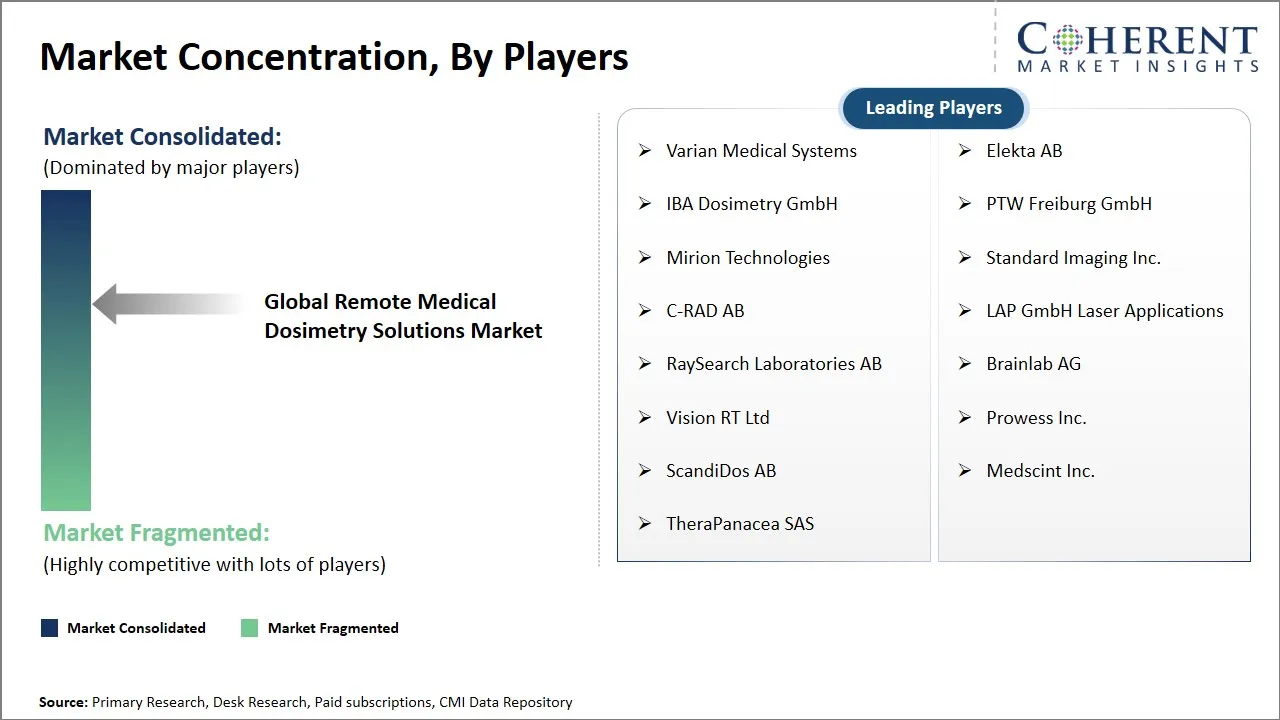
| Companies covered: | Varian Medical Systems, Elekta AB, IBA Dosimetry GmbH, PTW Freiburg GmbH, Mirion Technologies, Standard Imaging Inc., C-RAD AB, LAP GmbH Laser Applications, RaySearch Laboratories AB, Brainlab AG, Vision RT Ltd, Prowess Inc., ScandiDos AB, Medscint Inc., and TheraPanacea SAS | ||
| Growth Drivers: |
| ||
| Restraints & Challenges: |
| ||
Global Remote Medical Dosimetry Solutions Market Dynamics
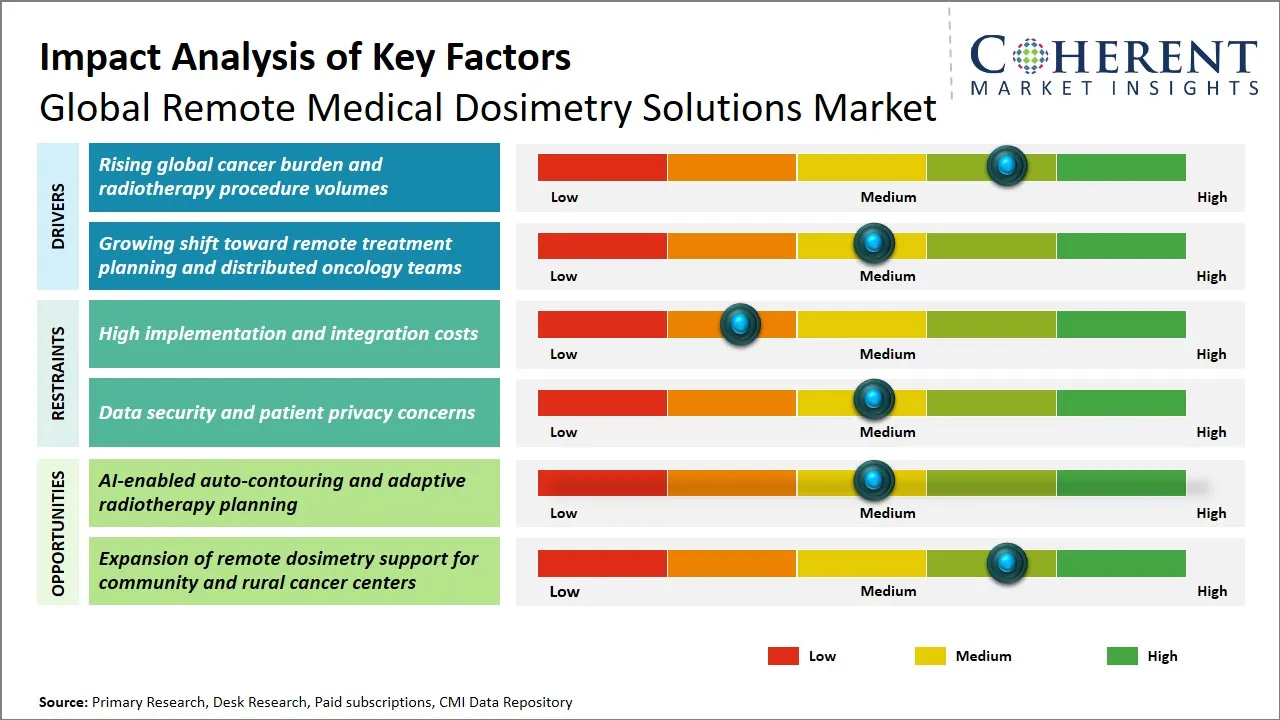
Global Remote Medical Dosimetry Solutions Market Driver - Rising Global Cancer Burden and Increasing Radiotherapy Procedure Volumes
The escalating prevalence of cancer worldwide has significantly contributed to the growing demand for remote medical dosimetry solutions. As cancer incidence continues to rise, healthcare systems are witnessing an upsurge in the number of patients undergoing radiotherapy, one of the most critical and widely used treatment modalities for managing various malignancies. Radiotherapy requires precise calculation and delivery of radiation doses to maximize tumor control while minimizing harm to surrounding healthy tissues. This necessity underscores the importance of accurate dosimetry, which has increasingly shifted towards remote services to optimize efficiency and accessibility. Remote medical dosimetry facilitates the involvement of specialized dosimetrists regardless of geographic limitations, enabling healthcare providers to manage the heightened treatment load effectively.
Moreover, advancements in radiotherapy techniques and complex treatment protocols demand enhanced dosimetric expertise, further driving the adoption of remote solutions in clinical settings to ensure precision and improve patient outcomes amid the growing cancer burden.
For instance, in May 2025, GE HealthCare announced at ESTRO 2025 that it would expand its radiation oncology portfolio and introduce new AI-enabled solutions designed to improve radiation therapy planning efficiency and precision. This product launch is relevant to the rising global cancer burden and increasing radiotherapy procedure volumes because providers are under growing pressure to handle more cases with faster planning turnaround and better workflow efficiency.
(Source- GE HealthCare)
Global Remote Medical Dosimetry Solutions Market Opportunity - AI-Enabled Auto-Contouring and Adaptive Radiotherapy Planning
The integration of AI-enabled auto-contouring and adaptive radiotherapy planning presents a significant growth opportunity within the global remote medical dosimetry solutions market. Traditionally, medical dosimetry requires meticulous manual contouring of tumors and surrounding organs at risk, a process that is both time-consuming and prone to inter-operator variability. AI-powered auto-contouring technologies leverage advanced machine learning algorithms and deep learning models to automate this critical step with high precision and consistency, thereby enhancing treatment accuracy while reducing planning time.
Furthermore, adaptive radiotherapy planning, which dynamically adjusts treatment plans based on real-time patient anatomy and tumor response, is increasingly being facilitated by AI-driven platforms. These solutions enable more personalized treatment regimens, improving patient outcomes and minimizing radiation exposure to healthy tissues.
For instance, in September 2024, Siemens Healthineers introduced new AI-enabled radiation therapy planning capabilities integrated with its imaging and oncology workflow solutions at the American Society for Radiation Oncology (ASTRO) Annual Meeting 2024. The innovation focuses on improving automated image segmentation and treatment planning efficiency in radiation oncology.
Analyst Opinion (Expert Opinion)
- The global remote medical dosimetry solutions market is gaining momentum as cancer centers face rising treatment volumes, workforce shortages, and a stronger need for faster digital planning support. Remote dosimetry is becoming more practical because vendors are building connected treatment planning and online workflow platforms, while hospitals are looking for ways to extend expert support without expanding full in-house teams. Elekta is actively promoting remote planning services to help centers optimize clinical resources, which reflects where the market is heading. The biggest opportunities are in community and underserved oncology settings, while the main challenges remain system integration, data security, and the shortage of trained dosimetry professionals.
- Industry visibility is also improving through major radiation oncology events and real-world market moves. ESTRO 2025 in Vienna focused on collaboration and advancing multidisciplinary cancer care, reinforcing its role as a major platform for technology showcase and knowledge exchange. On the commercial side, Sun Nuclear acquired Oncospace on April 30, 2025, to strengthen its AI-driven radiation oncology software capabilities, a clear sign that cloud and analytics-led dosimetry solutions are becoming more important. Public initiatives such as the IAEA’s Rays of Hope Forum 2025 in Ethiopia are also shaping the market by pushing broader access to cancer care infrastructure, training, and international cooperation.
Speak to the analyst
Want personalized insights?
Take the findings above to one of our principal consultants, or have the report rebuilt around the segments, geographies and competitors you actually track.
Market Segmentation
- Application Insights (Revenue, USD Mn, 2021 - 2033)
- Oncology
- Radiation Therapy
- Three-dimensional Conformal Radiation Therapy
- Intensity Modulated Radiation Therapy
- Stereotactic Body radiation Therapy
- Brachytherapy
- Cardiology
- Remote Monitoring/ Telemedicine
- Oncology
- Product Type Insights (Revenue, USD Mn, 2021 - 2033)
- Software
- Hardware
- Deployment Model Insights (Revenue, USD Mn, 2021 - 2033)
- Cloud-based
- On-Premise
- Type Insights (Revenue, USD Mn, 2021 - 2033)
- Point dosimetry
- 2D dosimetry
- 3D dosimetry
- End User Insights (Revenue, USD Mn, 2021 - 2033)
- Hospitals
- Cancer Treatment Centers
- Home Healthcare Settings
- Contract Research Organizations
- Others (Academia and Research Institutes)
- Regional Insights (Revenue, USD Mn, 2021 - 2033)
- North America
- U.S.
- Canada
- Latin America
- Brazil
- Argentina
- Mexico
- Rest of Latin America
- Europe
- Germany
- U.K.
- Spain
- France
- Italy
- Russia
- Rest of Europe
- Asia Pacific
- China
- India
- Japan
- Australia
- South Korea
- ASEAN
- Rest of Asia Pacific
- Middle East
- GCC Countries
- Israel
- Rest of Middle East
- Africa
- South Africa
- North Africa
- Central Africa
- North America
- Key Players Insights
- Varian Medical Systems
- Elekta AB
- IBA Dosimetry GmbH
- PTW Freiburg GmbH
- Mirion Technologies
- Standard Imaging Inc.
- C-RAD AB
- LAP GmbH Laser Applications
- RaySearch Laboratories AB
- Brainlab AG
- Vision RT Ltd
- Prowess Inc.
- ScandiDos AB
- Medscint Inc.
- TheraPanacea SAS
Sources
Primary Research Interviews
Industry Stakeholders
- Medical Dosimetrists
- Medical Physicists
- Radiation Oncologists
- Hospital Radiotherapy Administrators
- Radiotherapy Software and IT Integration Experts
- Regulatory and Quality Assurance Specialists
End-users
- Cancer Hospitals
- Radiotherapy Centers
- Academic Medical Centers
- Community Oncology Clinics
- Specialty Cancer Institutes
- Government Cancer Care Facilities
Government and International Databases
- World Health Organization
- International Atomic Energy Agency
- International Agency for Research on Cancer
- U.S. Food and Drug Administration
- European Medicines Agency
- National Cancer Institute
Trade Publications
- Radiation Oncology News
- AuntMinnie
- DOTmed HealthCare Business News
- MedTech Dive
- Health Imaging
- Physics World
Academic Journals
- International Journal of Radiation Oncology Biology Physics
- Radiotherapy and Oncology
- Medical Physics
- Physics in Medicine and Biology
- Journal of Applied Clinical Medical Physics
- Strahlentherapie und Onkologie
Reputable Newspapers
- The Wall Street Journal
- Financial Times
- The New York Times
- The Guardian
- The Washington Post
- Nikkei Asia
Industry Associations
- American Association of Physicists in Medicine
- American Society for Radiation Oncology
- European Society for Radiotherapy and Oncology
- Society of Medical Dosimetrists
- European Federation of Organisations for Medical Physics
- International Organization for Medical Physics
Public Domain Resources
- ClinicalTrials.gov
- World Bank Data
- OECD Health Statistics
- United Nations Data
- Eurostat
Proprietary Elements
- CMI Data Analytics Tool: Proprietary analytics tool to analyze real-time market trends, consumer behavior, and technology adoption in market
- Proprietary CMI Existing Repository of Information for Last 8 Years
Get access to 250+ pages report
Every segment, forecast, competitor profile and data table behind the analysis above — available for instant download.
- ESOMAR Member
- ISO 9001:2015 Certified
- D-U-N-S Registered
- GDPR & CCPA Compliant
Missing comfort of reading report in your local language? Find your preferred language:
Transform your Strategy with Exclusive Trending Reports
Frequently Asked Questions
The global remote medical dosimetry solutions market is estimated to be valued at USD 3,838.2 million in 2026 and is expected to reach USD 5,469.9 million by 2033.
The CAGR of global remote medical dosimetry solutions market is projected to be 7.2% from 2026 to 2033.
Rising global cancer burden and radiotherapy procedure volumes and growing shift toward remote treatment planning and distributed oncology teams are the major factors driving the growth of the global remote medical dosimetry solutions market.
High implementation and integration costs and data security and patient privacy concerns are the major factors hampering the growth of the global remote medical dosimetry solutions market.
Hospitals and cancer centers are adopting remote dosimetry solutions to improve planning efficiency, access specialized expertise, support underserved locations, and reduce pressure on in-house radiation oncology teams.
Cancer hospitals, radiotherapy centers, academic medical centers, and community oncology clinics are expected to generate the strongest demand due to their increasing need for flexible and digitally connected treatment planning support.
In terms of application, oncology is estimated to dominate the market revenue share in 2026.