

Global Reproductive Genetics Market Size and Forecast – 2026 to 2033
The Global Reproductive Genetics Market is estimated to be valued at USD 8.24 Bn in 2026 and is expected to reach USD 19.02 Bn by 2033, exhibiting a compound annual growth rate (CAGR) of 12.7% from 2026 to 2033. This significant growth reflects the increasing demand for advanced genetic testing and reproductive healthcare solutions, driven by technological advancements and rising awareness about genetic disorders and infertility issues worldwide.
Key Takeaways of the Global Reproductive Genetics Market
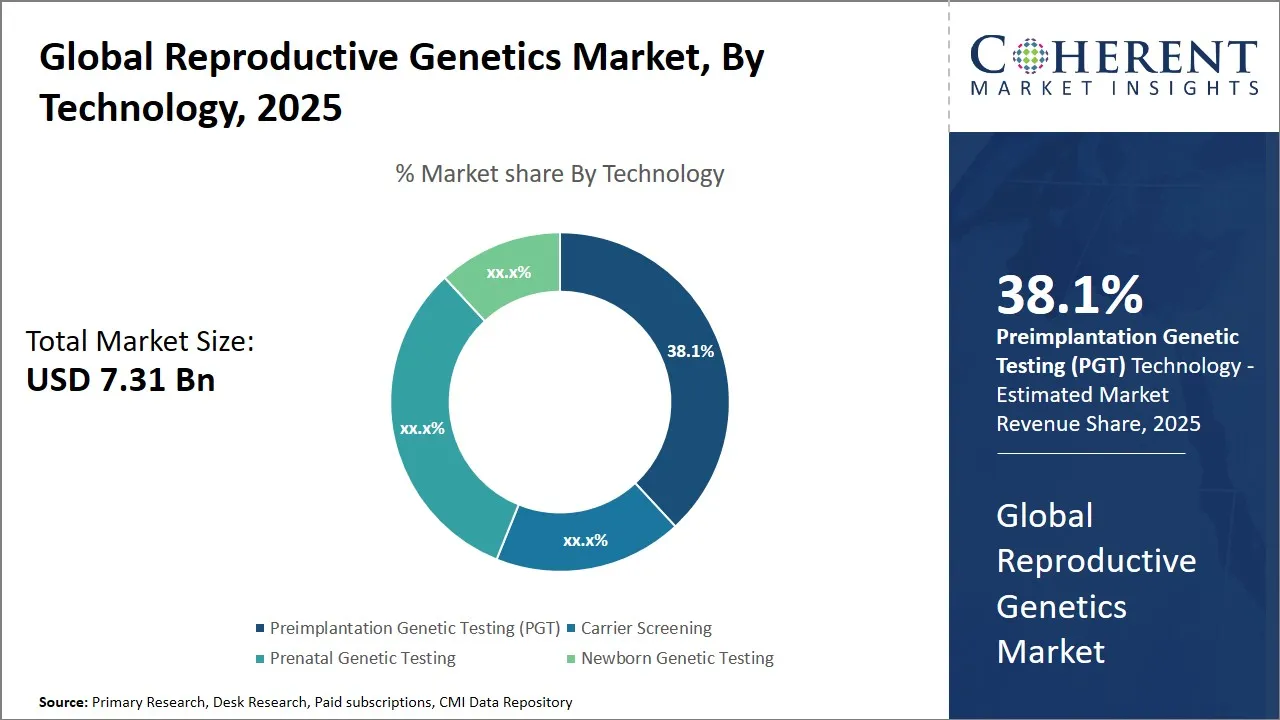
- In 2026, Preimplantation Genetic Testing (PGT) is expected to hold the largest share of the global reproductive genetics market, accounting for 39.1 %.
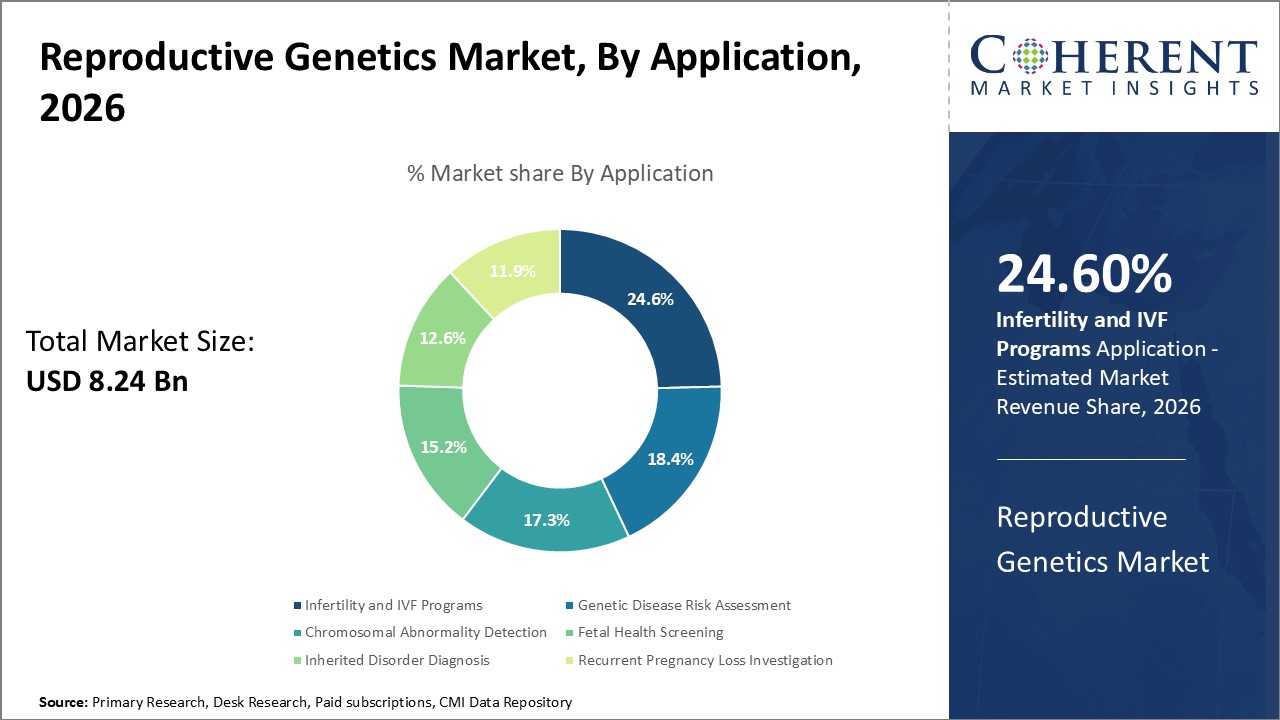
- Within the application segment, infertility and IVF programs are expected to dominate with a share of 24.6 % in 2026.
- In the product type segment, the instruments and systems sub-segment is expected to lead the market with a significant share of 41.4 % in 2026.
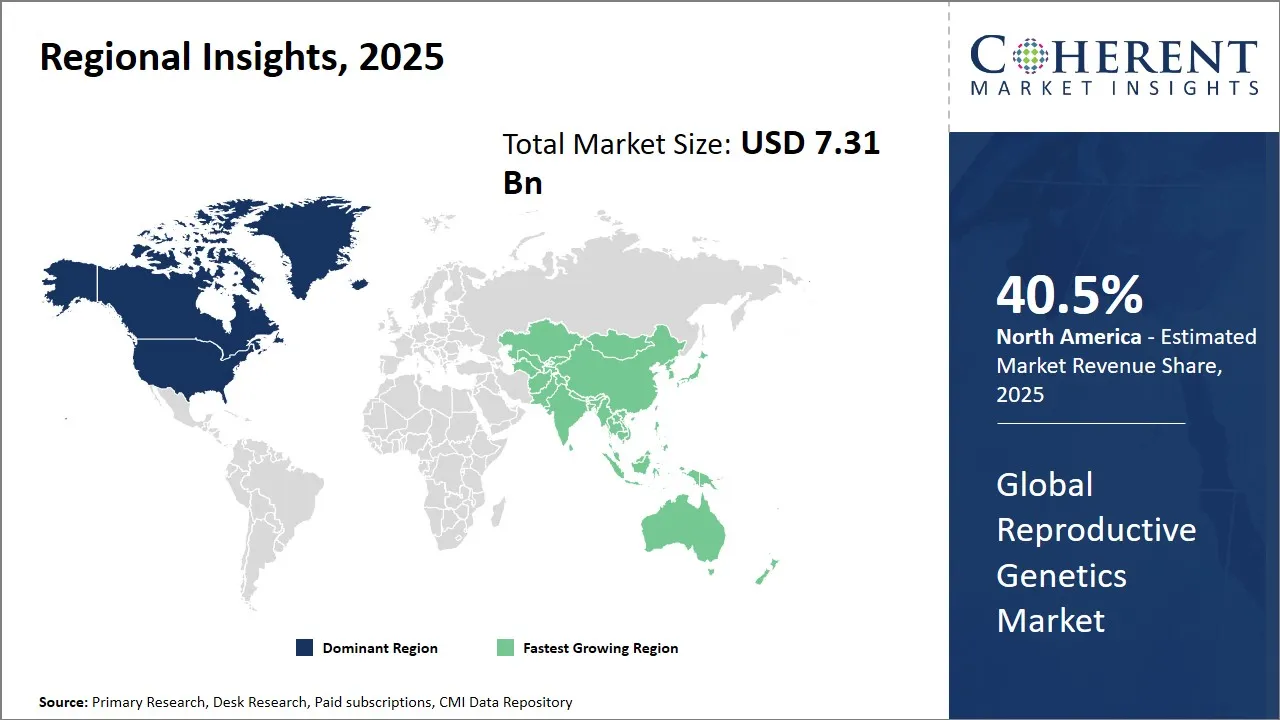
- North America is expected to lead the market, holding a share of 40.5 % in 2026. Asia Pacific is anticipated to be the fastest-growing region, with a market share of 24.5% in 2026.
Market Overview
Key market trends include the integration of next-generation sequencing (NGS) technologies and expanded carrier screening techniques, which enable more precise and early detection of genetic abnormalities. Additionally, personalized medicine approaches and increased investments in R&D are propelling market expansion. The rise in infertility cases, government initiatives supporting genetic research, and growing adoption of preimplantation genetic testing (PGT) are further shaping the promising trajectory of the reproductive genetics market.
Current Events and Its Impact
Current Events | Description and its Impact |
Launch of Abu Dhabi's Newborn Genetic Screening Programme |
|
Advancements in Next-Generation Sequencing (NGS) and AI in Genetic Testing |
|
Segmental Insights
- Current Industry Events of 2026
- Market Size Estimation
- Regional Breakdown
- Competitive Landscape
- Customer Intelligence
- Segmental Analysis
- Pricing Analysis
- Key Market Drivers, Challenges & Future Trends
- Customized Insights Section
Reproductive Genetics Market Insights, By Technology - Advanced Genetic Diagnostics is Transforming Reproductive Success: Preimplantation Genetic Testing (PGT) Leads Technology Adoption
Preimplantation Genetic Testing (PGT), being the most advanced tech of the times, is expected to hold the largest market share of 39.1% in 2026 when considering the global reproductive genetics market. Its application in screening embryos before implanting is the main reason for its popularity as it helps in recognizing chromosomal abnormalities, single-gene disorders, and structural rearrangements.
Moreover, the segment’s dominance is the result of a continually increasing demand for the most personalized and precise reproductive interventions, especially among IVF patients who want to have better chances of successful pregnancy and lesser chances of miscarriages.
Reproductive Genetics Market Insights, By Application - IVF and Infertility Solutions Drive Application Demand: Focus on Personalized Reproductive Health
In the application segment, infertility and IVF programs are projected to account for the largest share of the global reproductive genetics market with 24.6% in 2026. The reason is that reproductive genetics is one of the main contributors in solving the infertility problem faced by people globally. The demand for genetic testing in IVF is being pushed by the rise in the number of people with infertility problems due to genetic abnormalities, on the one hand, and the widespread acceptance of art on the other. Embryo selection is enhanced by genetic screening and diagnosis, lessens the possibility of implantation failure, and discloses genetic factors behind infertility, thus, facilitating patient-specific treatment plans.
In December 2023, reproductive technology startup, Orchid, launched a groundbreaking whole genome sequencing test for embryos, designed to help couples undergoing in vitro fertilization (IVF) identify genetic risks before pregnancy. The test can detect birth defects, neurological disorders, chromosomal abnormalities, and both pediatric and adult-onset cancers, offering parents crucial information that was previously only available after birth.
Reproductive Genetics Market Insights, By Product Type - Precision Tools and Technologies Catalyze Genetic Testing Efficiency: Instruments and Systems Lead Product Type Demand
In the product type segment, instruments and systems are expected to account for the biggest share of the global reproductive genetics market with 41.4% in 2026, as they reflect the growing demand for high-performance diagnostic systems that are both accurate and fast in genetic testing.
These instruments include a list of all the essential technological tools like sequencers, PCR systems, and microarray platforms, which are the foundation of the whole reproductive genetic testing process.
Role of Artificial Intelligence (AI) in the Global Reproductive Genetics Market
- AI is transforming the global reproductive genetics market by improving the accuracy of genetic testing and personalizing treatment plans. AI-based predictive analytics enable companies to detect genetic disorders earlier, enhance IVF methods, and deliver individualized care, resulting in significantly improved patient outcomes. Additionally, the automation of repetitive tasks boosts operational efficiency. AI reduces costs and shortens process times, providing companies with a competitive edge. For instance, Illumina uses AI in gene sequencing, enhancing both precision and affordability.
- The integration of AI in genetic testing is opening new doors for innovation, allowing companies to offer personalized services and optimize customer interactions. AI-driven platforms, such as those from GenePeeks, help predict genetic outcomes, offering patients crucial insights. However, while AI presents substantial benefits, challenges like data privacy and algorithmic bias must be addressed to ensure ethical practices. Furthermore, companies must comply with regulatory frameworks as they adopt AI technologies.
Regional Insights
North America Reproductive Genetics Market Analysis and Trends
The global reproductive genetics market in North America will continue to dominate with an estimated share of 40.5% in 2026. The reason for this market dominance is mainly due to a combination of factors like a well-established healthcare infrastructure, the presence of a strong research and development ecosystem as well as the government providing favorable policies that support genetic testing and personalized medicine. Top biotech and diagnostic companies such as Myriad Genetics, Invitae Corporation, and Natera are some of the important factors that maintain the strength of the market.
In May 2026, Centogene, a leading North American provider of fertility solutions, announced the launch of its Pre-implantation Genetic Test for Aneuploidy (PGT-A), designed to enhance IVF treatments with precision genetics. The PGT-A test, powered by a vast genetic database of over 1,000,000 sequences, offers results within 24 hours, allowing physicians and families to make informed decisions quickly.
Asia Pacific Reproductive Genetics Market Analysis and Trends
The Asia Pacific region is expected to hold the largest market share of 24.5% in 2026 which is indicated by its speedy growth in the reproductive genetics market. The key drivers of this trend include increasing healthcare awareness, improvements in healthcare infrastructure, and greater government support for genetic research. The countries that are leading in this regard are China, India, Japan, and South Korea who are heavily investing in biotechnologies and precision medicine.
Additionally, the region's large population, higher prevalence of genetic diseases, and rising infertility rates are driving the demand. Governments are also creating more favorable regulatory environments and offering subsidies to genetic testing companies, encouraging them to establish operations, conduct research, and grow their businesses.
Global Reproductive Genetics Market Outlook for Key Countries
U.S. Reproductive Genetics Market Trends
The U.S. reproductive genetics market is characterized by strong innovation, extensive R&D investments, and widespread integration of reproductive genetics in clinical practice. Key players such as Myriad Genetics and Invitae are driving advancements in non-invasive prenatal testing (NIPT) and expanded carrier screening.
The country benefits from a large patient pool and high awareness levels among patients and healthcare providers. Federal support via agencies like the national institutes of health promotes genetic research and clinical trials, enhancing product pipelines and diagnostic offerings.
China Reproductive Genetics Market Trends
China’s reproductive genetics market is rapidly evolving due to government-backed initiatives promoting biotechnology and precision medicine, including significant investments in genome projects. Local companies like BGI Group are pivotal in advancing next-generation sequencing (NGS) technologies and making reproductive genetic tests more accessible and affordable. The growing urban middle class, higher infertility rates, and increased awareness about reproductive health are prime factors boosting demand.
In February 2026, China announced new guidelines to advance its biotech cultivation sector, focusing on gene-editing tools and developing new crop varieties. The 2024-2028 plan aims to strengthen food security by creating "independent and controllable" seed sources for key crops like wheat, corn, and soybeans.
India Reproductive Genetics Market Trends
The market for reproductive genetics in India is characterized by the easy accessibility of advanced diagnostics and the aggressive expansion of healthcare services in urban and semi-urban areas. The MedGenome and Strand Life Sciences companies are leading the charge, providing a variety of services from targeted carrier screening to prenatal diagnostics that are specifically designed for the vast genetic diversity of the Indian population. The government schemes that support the development of digital health and genetic research are also a boost to the market.
In August 2026, the Association of Reproductive Genetics & Immunology (ARGI) was launched in India to revolutionize fertility care by focusing on precision immunogenetics. The initiative, which brings together over 350 IVF specialists, immunologists, geneticists, and researchers, aims to address unexplained infertility, recurrent implantation failure (RIF), and recurrent pregnancy loss (RPL).
Germany Reproductive Genetics Market Trends
Germany is still on top of Europe with a powerful market ecosystem which is characterized by strict regulations and high healthcare spends. The presence of major companies like Qiagen and Eurofins Scientific is a major driver of innovation in the field of reproductive genetics and they offer very sophisticated genetic screening and diagnostic solutions. The country's strong health insurance system is the reason for the widespread use of genetic tests in both public and private healthcare sectors.
In August 2023, Berlin-based start-up, Fertilly, a leader in reproductive genetics, became the first company in Europe to launch an at-home fertility test kit using dried blood microsampling devices. The test measures anti-müllerian hormone (AMH) levels, providing women with crucial insights into their egg cell reserve.
Market Players, Key Developments, and Competitive Intelligence
Key Developments
- In August 2025, the Association of Reproductive Genetics & Immunology (ARGI) was launched in India to revolutionize fertility care with a focus on precision immunogenetics. Founded by over 350 IVF specialists, geneticists, and researchers, ARGI aims to address the challenges of unexplained infertility, recurrent implantation failure (RIF), and recurrent pregnancy loss (RPL).
- In May 2025, a groundbreaking step in reproductive genetics was announced with the launch of the Pre-implantation Genetic Test for Aneuploidy (PGT-A) and Carrier Services. These advanced tests, designed for embryos created through IVF, leverage a genetic database of over 1,000,000 sequences and proprietary technologies, offering enhanced traceability, sensitivity, and diagnostic accuracy.
- In January 2025, Colossal Biosciences, the world’s first de-extinction company, announced a USD 200 million Series C funding round, bringing its total funding to USD 435 million and placing the company at a USD 10.2 billion valuation. The investment, led by TWG Global, will support the expansion of Colossal’s labs, teams, and the development of additional species candidates for de-extinction. Colossal will continue to advance its genetic engineering technologies, with applications extending beyond de-extinction to species preservation and human healthcare.
- In October 2024, Myriad Genetics, a leader in genetic testing and precision medicine, and Ultima Genomics, known for its innovative UG 100 sequencing platform, announced a collaboration to explore how Ultima’s low-cost, high-fidelity sequencing could enhance Myriad’s clinical test offerings. Myriad aims to improve its Precise Molecular Residual Disease (MRD) test, which tracks cancer-specific variants, and launch its FirstGene Multiple Prenatal Screen, using Ultima’s technology to reduce costs and improve performance.
- In July 2024, the European Society of Human Reproduction and Embryology (ESHRE) launched the Female Reproductive Genetics Initiative (FeRGI) to integrate genetic research into the clinical practice of infertility diagnosis and treatment. FeRGI aims to equip clinicians and biologists with the necessary tools and knowledge to address female infertility more effectively by utilizing recent advancements in genetic research.
Top Strategies Followed by Global Reproductive Genetics Market Players
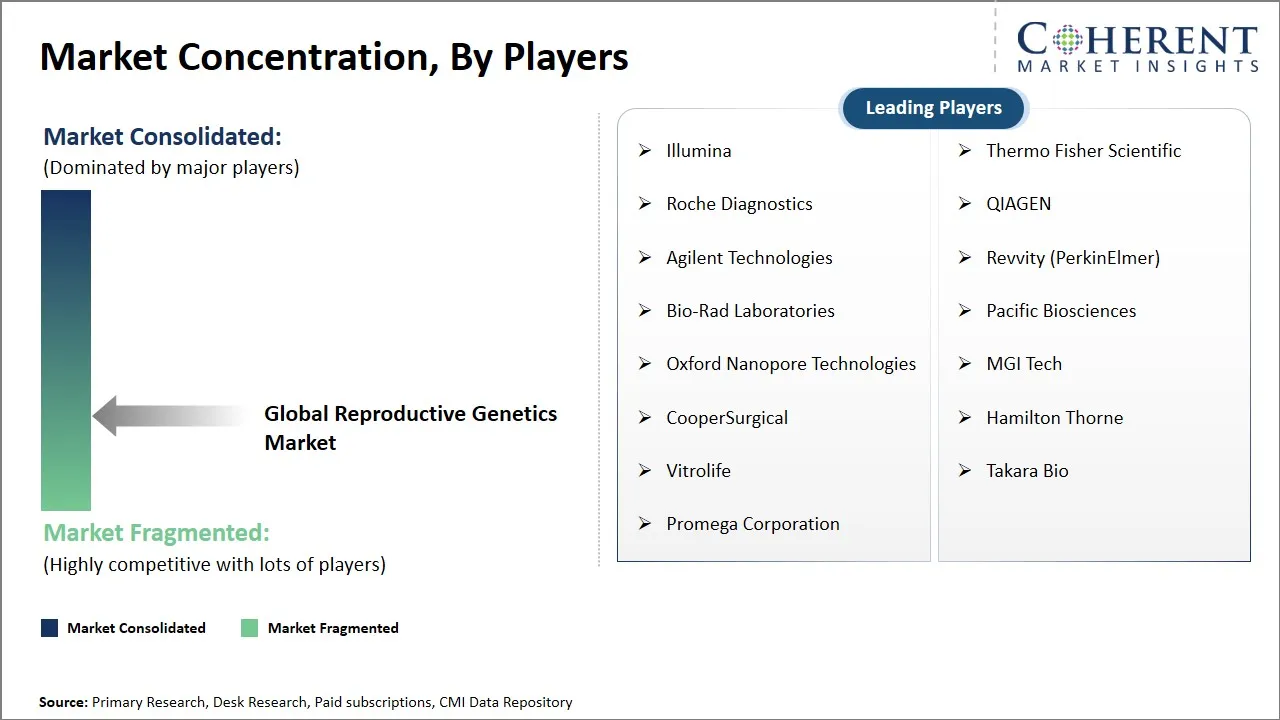
- Established industry leaders dominate through significant investments in research and development (R&D), aiming to innovate high-performance, cutting-edge genetic testing products and services. This focus on innovation not only facilitates the launch of advanced reproductive genetic solutions but also ensures compliance with evolving regulatory standards and enhances diagnostic accuracy. Moreover, these top-tier players strategically form partnerships and collaborations with major industry stakeholders, including original equipment manufacturers (OEMs), healthcare providers, and research institutions.
- In October 2023, NextGen Genetics, a prominent provider of genetic testing services in the reproductive health sector, announced its integration into Luminary Life Sciences, a growing portfolio of life science services. This collaboration will lead to the creation of Luminary Genetics, a new entity focused on precision fertility, prenatal vitamins, donor gamete and surrogacy services, medical devices, and cryogenic storage solutions.
- Mid-level companies in the reproductive genetics sector adopt a distinct strategy focused on providing cost-effective solutions that balance quality with affordability. Recognizing the growing demand among price-sensitive consumers, these players tailor their product offerings to meet essential requirements without compromising performance, making reproductive genetic testing more accessible to a broader demographic.
- In September 2024, MGM Healthcare launched its dedicated 'Varam IVF Centre' in Chennai, India, offering advanced and cost-effective fertility treatments and personalized care. The center provides comprehensive services, including ovarian stimulation, intrauterine insemination (IUI), in vitro fertilization (IVF), and intracytoplasmic sperm injection (ICSI).
- Small-scale players in the global reproductive genetics market often distinguish themselves by focusing on specialized features or highly innovative products that cater to specific clinical needs or underserved regional segments. These companies leverage cutting-edge technologies such as artificial intelligence, machine learning, and advanced genomic sequencing to develop unique offerings that differentiate them from larger competitors.
- In January 2025, the Singapore National Eye Centre (SNEC) launched the Ocular Genetics Service (OGS), the largest of its kind in Southeast Asia, to provide specialized care for patients with hereditary eye conditions. Established in October 2024, OGS offers genetic testing and counselling, addressing the previously fragmented care for genetic retinal and ocular conditions.
Market Report Scope
Reproductive Genetics Market Report Coverage
| Report Coverage | Details | ||
|---|---|---|---|
| Base Year: | 2025 | Market Size in 2026: | USD 8.24 Bn |
| Historical Data for: | 2020 To 2024 | Forecast Period: | 2026 To 2033 |
| Forecast Period 2026 to 2033 CAGR: | 12.7% | 2033 Value Projection: | USD 19.02 Bn |
| Geographies covered: |
| ||
| Segments covered: |
| ||
| Companies covered: | Illumina, Thermo Fisher Scientific, Roche Diagnostics, QIAGEN, Agilent Technologies, Revvity (PerkinElmer), Bio-Rad Laboratories, Pacific Biosciences, Oxford Nanopore Technologies, MGI Tech, CooperSurgical, Hamilton Thorne, Vitrolife, Takara Bio, and Promega Corporation | ||
| Growth Drivers: |
| ||
| Restraints & Challenges: |
| ||
Reproductive Genetics Market Dynamics
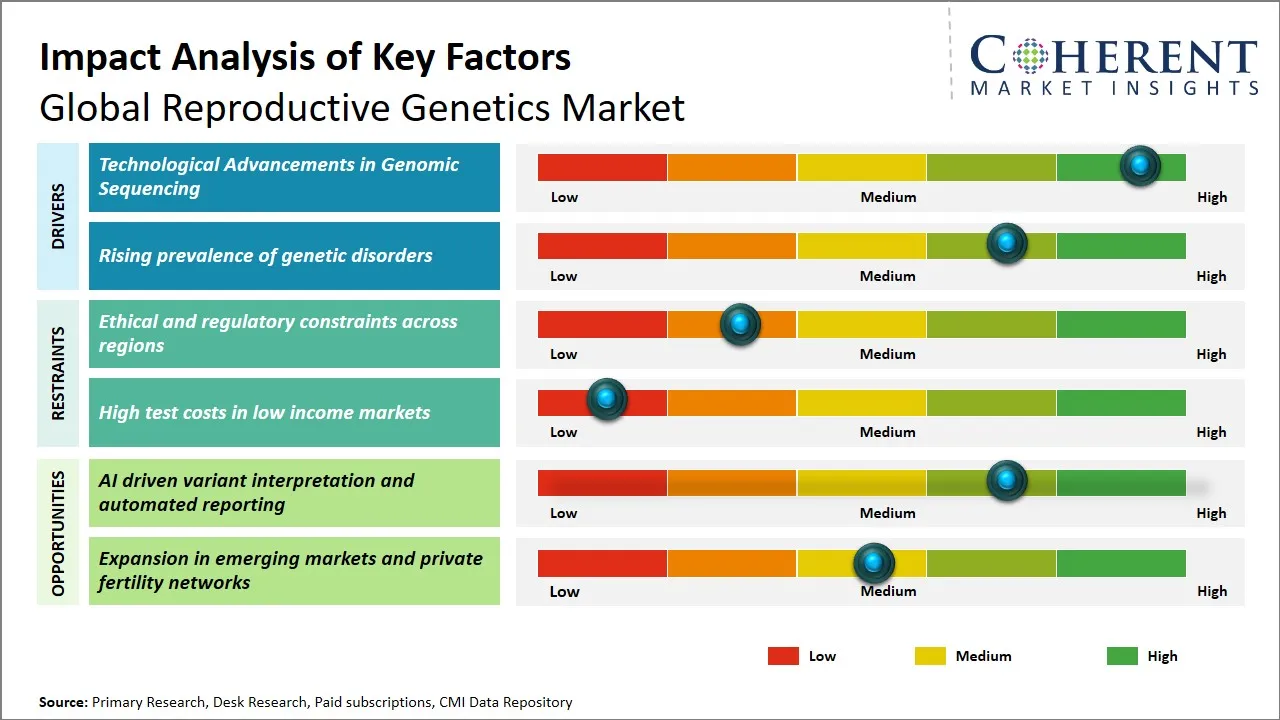
Reproductive Genetics Market Driver - Technological Advancements in Genomic Sequencing
The unceasing progress of genomic sequencing technologies has greatly altered the reproductive genetics area and has been the main factor in market expansion as it made way for more accurate and thorough genetic analyses. Next-generation sequencing (NGS) and whole-exome sequencing (WES) are among the techniques that have greatly improved the detection's accuracy and speed of identification of genetic mutations, chromosomal abnormalities, and single-gene disorders found in embryos, gametes, and potential parents. These breakthroughs not only help in the early detection and decision-making during assisted reproductive techniques like in vitro fertilization (IVF) but also increase pregnancy rates and decrease the chances of hereditary diseases.
For example, Phase Genomics introduced its new RUO cytogenomics platform, CytoTerra, during a webinar discussing advancements in reproductive genetics and oncology. Phase Genomics, a leader in next-generation sequencing (NGS) solutions, leverages ultra-long-range sequencing technology to improve the detection of chromosomal abnormalities.
Reproductive Genetics Market Opportunity - AI-Driven Variant Interpretation and Automated Reporting in the Global Reproductive Genetics Market
The adoption of artificial intelligence (AI) in variant interpretation and automated reporting is a major factor that may drive the global market of reproductive genetics. Genetic data is becoming more voluminous and complex, and the traditional methods of analyzing them are turning out to be labor-intensive and subject to human mistakes. AI-based tools can improve the accuracy and speed of variant interpretation by using machine learning algorithms to analyze huge datasets, recognize the genetic mutations that are clinically relevant, and forecast their effects on reproductive health.
In September 2023, QIAGEN expanded its QIAGEN Clinical Insight Interpret (QCI Interpret) software, integrating advanced AI capabilities to enhance clinical exome interpretation, including in reproductive genetics. The new features include AI-driven literature extraction for thousands of rare disease genes, which complements QIAGEN’s human-certified content for a more complete bibliographic coverage.
Analyst Opinion (Expert Opinion)
- The global reproductive genetics market has been experiencing robust growth, driven by advancements in genetic testing technologies, such as next-generation sequencing (NGS) and CRISPR-based innovations. The growth of the market is primarily driven by three factors: increased awareness of genetic screening among both women and men, peer acceptance, and the rising demand for personalized healthcare. One key way to communicate regulatory support is by creating a more favorable environment for genetic testing companies, which is currently taking place in regions such as North America and Europe. Besides, the improved accuracy and affordability of tests have opened access to a wider population, thus leading to an upsurge in the demand for pre-conception, prenatal, and pre-implantation genetic testing services.
- The emerging opportunities in reproductive genetics are focusing on widening the range of conditions tested, and especially those which were hard to diagnose previously. The ground-breaking AI analytics innovations are bringing about the cheaper and faster genetic data interpretation akin to what is happening in QIAGEN or Orchid. Among others, the Danish National Genome Center’s regional initiative is also promoting the development of genomics and opening up more avenues for the application of AI in large-scale genetic data analysis.
Speak to the analyst
Want personalized insights?
Take the findings above to one of our principal consultants, or have the report rebuilt around the segments, geographies and competitors you actually track.
Market Segmentation
- Technology Insights (Revenue, USD Bn, 2021 - 2033)
- Preimplantation Genetic Testing (PGT)
- PGT-A (Aneuploidy)
- PGT-M (Monogenic Disorders)
- PGT-SR (Structural Rearrangements)
- Carrier Screening
- Targeted Mutation Panels
- Expanded Carrier Screening
- Prenatal Genetic Testing
- Non-Invasive Prenatal Testing (NIPT)
- Invasive Testing (Amniocentesis, Chorionic Villus Sampling)
- Newborn Genetic Testing
- Whole Exome Sequencing
- Targeted Gene Panels
- Preimplantation Genetic Testing (PGT)
- Application Insights (Revenue, USD Bn, 2021 - 2033)
- Infertility and IVF Programs
- Genetic Disease Risk Assessment
- Chromosomal Abnormality Detection
- Fetal Health Screening
- Inherited Disorder Diagnosis
- Recurrent Pregnancy Loss Investigation
- Product Type Insights (Revenue, USD Bn, 2021 - 2033)
- Instruments and Systems
- Sequencers
- PCR Systems
- Microarray Platforms
- Consumables and Reagents
- DNA Extraction Kits
- Amplification Reagents
- Hybridization Probes
- Software and Services
- Genetic Data Analysis Tools
- Counseling and Interpretation Services
- Instruments and Systems
- Sample Type Insights (Revenue, USD Bn, 2021 - 2033)
- Embryo
- Amniotic Fluid
- Maternal Blood
- Buccal Swab
- Cord Blood
- End User Insights (Revenue, USD Bn, 2021 - 2033)
- Fertility Clinics and IVF Centers
- Hospitals and Diagnostic Laboratories
- Research and Academic Institutes
- Genetic Counseling Centers
- Methodology Insights (Revenue, USD Bn, 2021 - 2033)
- Next-Generation Sequencing (NGS)
- Polymerase Chain Reaction (PCR)
- Fluorescence In Situ Hybridization (FISH)
- Comparative Genomic Hybridization (CGH)
- Microarray Analysis
- Regional Insights (Revenue, USD Bn, 2021 - 2033)
- North America
- U.S.
- Canada
- Latin America
- Brazil
- Argentina
- Mexico
- Rest of Latin America
- Europe
- Germany
- U.K.
- Spain
- France
- Italy
- Russia
- Rest of Europe
- Asia Pacific
- China
- India
- Japan
- Australia
- South Korea
- ASEAN
- Rest of Asia Pacific
- Middle East
- GCC Countries
- Israel
- Rest of Middle East
- Africa
- South Africa
- North Africa
- Central Africa
- North America
- Key Players Insights
- Illumina
- Thermo Fisher Scientific
- Roche Diagnostics
- QIAGEN
- Agilent Technologies
- Revvity (PerkinElmer)
- Bio-Rad Laboratories
- Pacific Biosciences
- Oxford Nanopore Technologies
- MGI Tech
- CooperSurgical
- Hamilton Thorne
- Vitrolife
- Takara Bio
- Promega Corporation
Sources
Primary Research Interviews
Industry Stakeholders list
- OEM manufacturers’ C-suite
- Tier-1 component suppliers’ product heads
- Channel/distribution partners’ sales leads
- Raw-material procurement managers at producers
- Quality/Regulatory affairs leaders at producers
- Logistics/3PL operations managers
End users list
- Enterprise buyers (category managers)
- SME owners/operators
- Public-sector procurement officers
- Clinicians/technicians or plant operators
- Maintenance/after-sales service heads
- IT/OT systems administrators
Government and International Databases
- World Bank Data
- IMF Data
- UN Comtrade
- OECD Data
- Eurostat
- U.S. Census Bureau: Economic & Trade
Trade Publications
- IEEE Spectrum
- MIT Technology Review
- Chemical & Engineering News
- BioPharma Dive
- Supply Chain Quarterly
- Renewable Energy World
Academic Journals
- Nature
- Science
- Proceedings of the National Academy of Sciences (PNAS)
- The Lancet
- JAMA
- IEEE Transactions (e.g., Industrial Informatics)
Reputable Newspapers
- Financial Times
- The Wall Street Journal
- The New York Times
- The Guardian
- Reuters
- Bloomberg News
Industry Associations
- GSMA
- SEMI
- SAE International
- Biotechnology Innovation Organization (BIO)
- American Chemistry Council (ACC)
Public Domain Resources
- Data.gov
- EU Open Data Portal
- arXiv
- World Bank Open Data
- UN Data
- Eurostat
Proprietary Elements
- CMI Data Analytics Tool: Proprietary analytics tool to analyze real-time market trends, consumer behavior, and technology adoption in market
- Proprietary CMI Existing Repository of Information for Last 8 Years
Get access to 250+ pages report
Every segment, forecast, competitor profile and data table behind the analysis above — available for instant download.
- ESOMAR Member
- ISO 9001:2015 Certified
- D-U-N-S Registered
- GDPR & CCPA Compliant
Missing comfort of reading report in your local language? Find your preferred language:
Transform your Strategy with Exclusive Trending Reports
Frequently Asked Questions
The global reproductive genetics market is estimated to be valued at USD 8.24 Bn in 2026 and is expected to reach USD 19.02 Bn by 2033.
The CAGR of the global reproductive genetics market is projected to be 12.7% from 2026 to 2033.
Current trends include increasing adoption of non-invasive prenatal testing (NIPT), expanding genetic counseling services, and integration of AI in diagnostics.
Genetic testing is used for prenatal screening, identifying genetic disorders, and improving IVF success rates.
Technological advancements in genomic sequencing and rising prevalence of genetic disorders are the major factors driving the growth of the global reproductive genetics market.
Ethical and regulatory constraints across regions and high test costs in low income markets are the major factors hampering the growth of the global reproductive genetics market.
In terms of technology, Preimplantation Genetic Testing (PGT) is estimated to dominate the market revenue share in 2026.