

Global Restriction Endonucleases Market Size and Forecast: 2026 to 2033
The global restriction endonucleases market is estimated to be valued at USD 354.7 Mn in 2026 and is expected to reach USD 569.6 Mn by 2033, exhibiting a compound annual growth rate (CAGR) of 7.0% from 2026 to 2033. This growth reflects increasing adoption of genetic research and molecular diagnostics applications, driving demand for precise DNA modification tools. Advancements in biotechnology and expanding applications in diagnostics and therapeutics are fueling market expansion during this period.
Key Takeaways of the Global Restriction Endonucleases Market
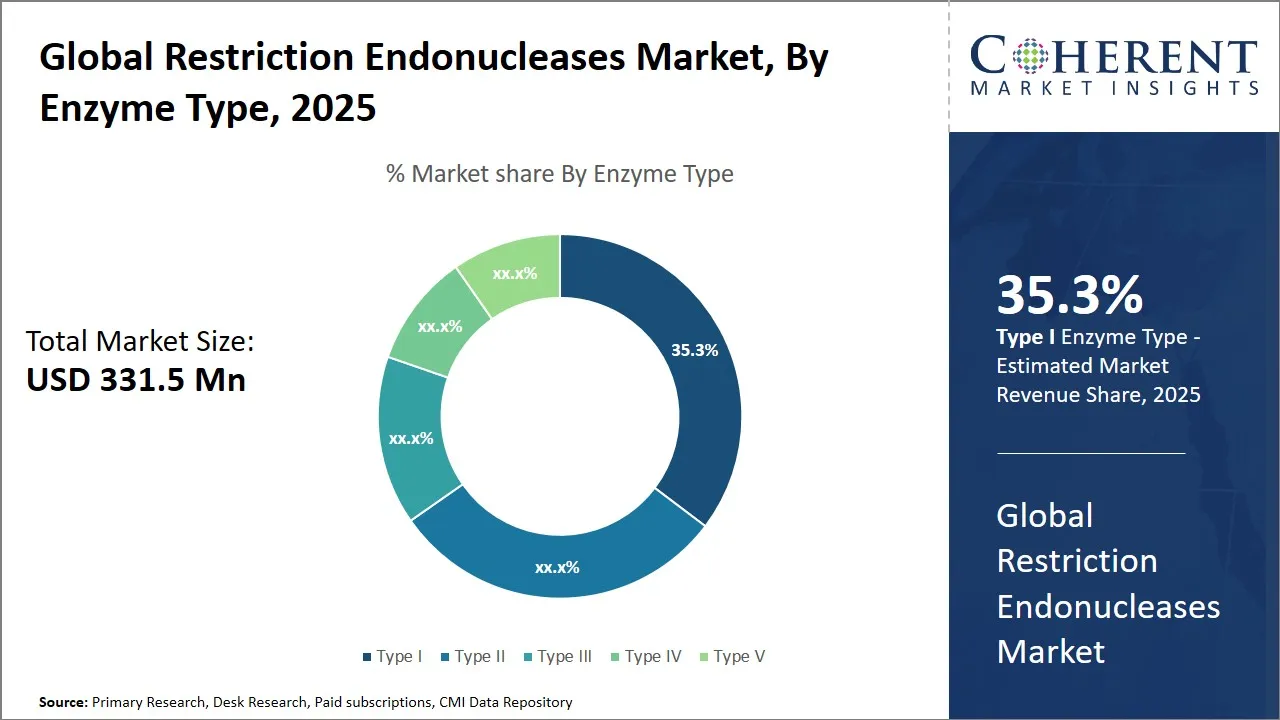
- In terms of enzyme type, type I segment is expected to dominate the market, holding a share of 36.3% in 2026.
- Within the product type segment, the natural restriction endonucleases (isolated from bacterial strains) segment is projected to lead the market with a share of 68.10% in 2026.
- The molecular cloning segment is projected to account for 35.5% of the market share in 2026.
- North America is expected to lead the market, holding a share of 39.6% in 2026. Asia Pacific is anticipated to be the fastest-growing region, with an estimated market share of 24.5% in 2026.
Market Overview
Current market trends indicate a strong shift towards the development of engineered restriction endonucleases with enhanced specificity and efficiency, supporting advanced gene editing technologies like CRISPR. Moreover, rising investments in personalized medicine and synthetic biology are accelerating innovation. Increasing integration with genomic sequencing technologies and growing collaborations between biotech firms and research institutions are also shaping the market landscape, ensuring sustained growth and technological evolution in restriction endonuclease applications.
Currents Events and Its Impact
Current Events | Description and its Impact |
Expansion of molecular biology and genomic R&D funding globally (rise in demand for enzymes/reagents) |
|
Dominance of CRISPR-Cas9 in Gene Editing |
|
Segmental Insights
- Current Industry Events of 2026
- Market Size Estimation
- Regional Breakdown
- Competitive Landscape
- Customer Intelligence
- Segmental Analysis
- Pricing Analysis
- Key Market Drivers, Challenges & Future Trends
- Customized Insights Section
Restriction Endonucleases Market Insights, By Enzyme Type - Dominance of Type I Segment in the Market Owing to Multifunctional Activity and Broad Specificity
The Type I segment is expected to dominate the restriction endonucleases market with 36.3% share in 2026 due to multifunctional properties and the uniqueness of the mode of action. Contrary to other types that specifically cleave DNA at designated recognition sites Type I enzymes integrate restriction and modification activities into a single complex and thus they are able to cleave and methylate DNA.
This versatility enhances their usefulness particularly in tasks where a measure of control of DNA interaction and manipulation is needed. Type I enzymes can bind definite sequences of DNA and cleave DNA at random sites, which are not related to recognition sequences using ATP-dependent translocation processes.
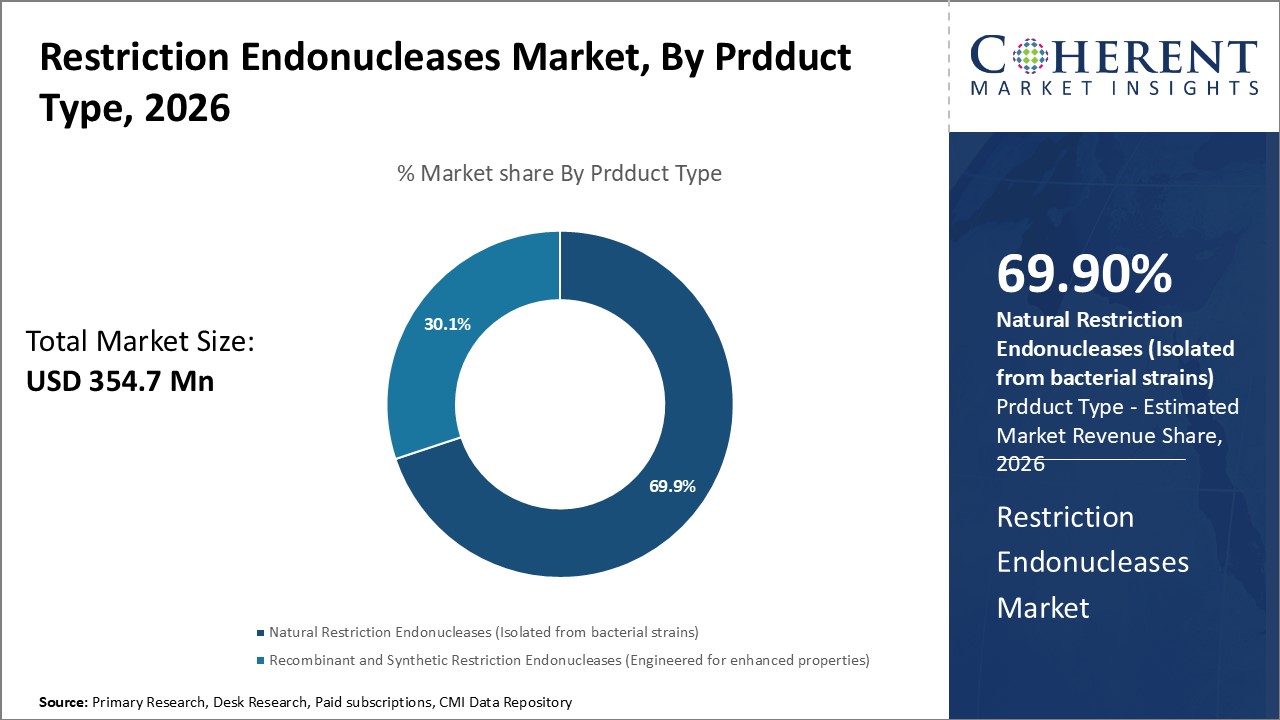
Restriction Endonucleases Market Insights, By Product Type - Preference for Natural Restriction Endonucleases (Isolated from Bacterial Strains) Due to Proven Performance and Cost-Effectiveness
Natural restriction endonucleases (isolated in bacteria strains) will dominate the market, accounting for an estimated 69.9% of the market share in 2026. This supremacy is driven by various elements with the dominant being around reliability, specificity and cost-effectiveness.
For example, SibEnzyme Ltd. is a specialist in molecular-biology enzymes based in Russia, with more than 150 different restriction endonucleases, many of bacterial origin. Its research and development in new endonucleases expands the internal enzyme portfolio in the world.
Restriction Endonucleases Market Insights, By Application - Molecular Cloning as a Primary Application Segment is Fueled by Expanding Genetic Engineering and Biotechnology Research
In the year 2026, molecular cloning is projected to capture the largest market share of 35.5% due to its underlying application in gene manipulation and synthetic biology. Molecular cloning entails the production of recombinant DNA molecules which involve sharp cleavage and assembly of DNA segments an activity of the restriction endonuclease.
The method is also essential in elementary studies, pharmaceutical design and agricultural biotechnology. The increased research in the area of genetic engineering and synthetic biology has had the direct effect of increasing the demand of high quality restriction enzymes that are designed to meet the requirements of cloning processes.
Investment Trends and Funding Opportunities in Gene Editing for the Restriction Endonucleases Market
- The investment and funding landscape in gene editing and precision medicine has experienced significant growth in recent years, with a substantial increase in venture capital, private equity, and strategic partnerships. Capital is being heavily invested in advancing CRISPR technologies, gene therapies, and precision medicine for genetic disorders, cancer, and other complex diseases.
- As gene editing techniques continue to evolve, the need for tools like restriction endonucleases is expected to rise, particularly as they are essential in molecular research, diagnostics, and the creation of targeted therapies.
- Funding in gene editing technologies is set to rise, with billions being invested in biotech startups and established companies. This trend highlights the increasing demand for high-quality molecular tools, such as restriction endonucleases, to advance gene therapy, precision diagnostics, and personalized medicine.
- As these therapies become more widespread, the restriction endonucleases market will benefit from increased research activity, expanding the market's scope and its role in the development of innovative, life-saving medical solutions.
Regional Insights
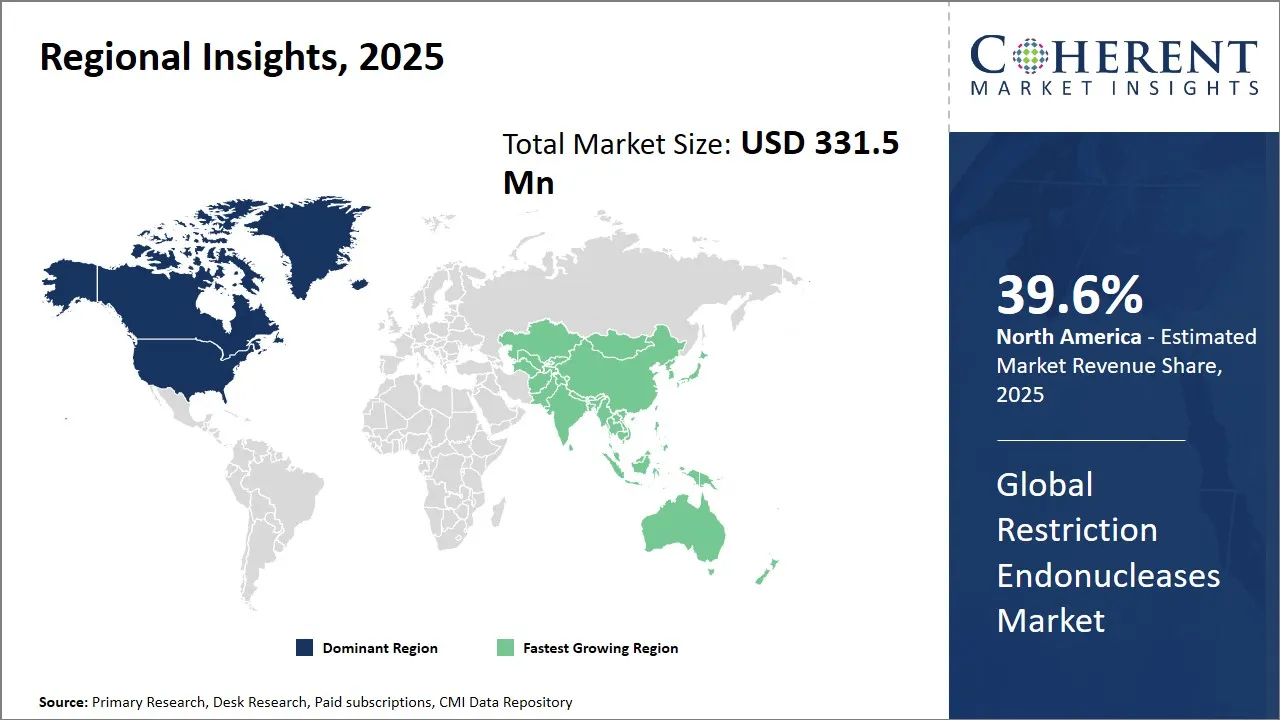
North America Restriction Endonucleases Market Analysis and Trends
North America dominates the restriction endonucleases market with an estimated share of 39.6% in 2026 due to a strong research base and strong government and commercial support. Existence of top educational establishments and centers of biotechnology encourages novelty in enzyme technologies which drives the urgency of sophisticated molecular instrumentation like restriction endonucleases.
Furthermore, North America is advantageous of a rich industrial base comprising of major participants in the market including New England Biolabs, Thermo Fisher Scientific and Promega Corporation that have continued to launch new enzymes and reagent kits. In terms of trade, everything is good since there are established channels of distribution and the availability of good quality enzymes is always timely to the academic and industrial sectors.
Asia Pacific Restriction Endonucleases Market Analysis and Trends
The restriction endonucleases market growth in Asia Pacific will grow the fastest because of the growing life sciences research with an estimated share of 24.5% in 2026. This growth can be attributed to increasing government investments in biotechnology and expansion in pharmaceutical manufacturing centers. Countries such as China, India, Japan, and South Korea are improving their genetic engineering and synthetic biology, and this increases the demand of research tools such as restriction endonucleases.
The market base is enhanced by supportive government policies, such as grants of funding and incentives encouraging innovation. Such notables as Takara Bio (Japan), MBI Fermentas (India, acquired by Thermo Fisher) and New England Biolabs have developed their strong presence in the region, which is based on the lower production expenses and increased customer base.
Restriction Endonucleases Market Outlook for Key Countries
U.S. Restriction Endonucleases Market Trends
The U.S. restriction endonucleases market will continue to be the platform of innovation with great investment in genomics, gene editing, and molecular diagnostics. The New England Biolabs and Thermo Fisher Scientific are the key companies here making product development in respect to high quality restriction enzymes that are used in research and industry. Also, partnerships between biotech start-ups and universities to develop more enzyme-based technologies enhance market leadership in the U.S. market.
The U.S. market continues to be a hub of innovation in the genomics and gene-editing sectors. Leading companies, such as New England Biolabs (NEB), provide a broad range of restriction endonucleases used extensively in both academic and industrial research.
China Restriction Endonucleases Market Trends
The booming biotech industry in China is changing its restriction endonucleases market by increasing government funding and other strategic plans such as the Made in China 2026 plan. To satisfy the research and biomanufacturing demands which are soaring, local companies, and multinational subsidiaries are working on the production of economical enzyme solutions. Adoption is greatly driven by the growth of gene therapy and synthetic biology programs.
China's biotech sector is rapidly growing, fueled by government initiatives like “Made in China 2026.” Local firms such as Biosharp and Yeasen Biotech are producing cost-effective restriction enzymes to meet research and biomanufacturing needs. Multinational companies like Thermo Fisher Scientific are also expanding operations to cater to the increasing demand for gene therapy and synthetic biology.
Germany Restriction Endonucleases Market Trends
Germany has a close presence in the European market which is backed by a well-developed pharmaceutical industry and an established research infrastructure. The availability of specialized restriction enzymes is facilitated by companies like the Bio-Rad Laboratories and the New England Biolabs European affiliates. The regulatory environment of Germany promotes quality and innovation, which is beneficial to maintain stable demand in academic and industrial research
Germany is a key player in Europe, with strong support from its pharmaceutical and biotechnology sectors. Companies like Bio-Rad Laboratories and New England Biolabs provide high-quality restriction enzymes for research and industrial applications. The country's regulatory environment and skilled workforce ensure continued demand for advanced molecular biology tools.
India Restriction Endonucleases Market Trends
The market growth of India is also backed by the new biotechnology enterprise of low-priced research answers, as well as the increased biopharma production. The domestic manufacturing of restriction endonucleases and other molecular biology-related reagents is stimulated by government programs such as the Make in India. The domestic firms and foreign partnerships are critical in diversification of the products and availability.
India’s biotech market is growing rapidly, driven by local companies like Bangalore Genei and Jena Bioscience India. Government initiatives such as “Make in India” are encouraging domestic production of molecular biology tools. This growth, supported by international collaborations, is enhancing accessibility to high-quality restriction endonucleases.
End User Feedback and Unmet Needs - Restriction Endonucleases Market
- Feedback from end users in the global restriction endonucleases market highlights satisfaction with high-performance enzymes like those from New England Biolabs (NEB), especially for molecular cloning. These products are valued for their precision and reliability, helping researchers achieve consistent results in gene-editing projects.
- However, affordability remains a concern, particularly for smaller labs and startups, as high enzyme costs limit scalability. Users also seek more customizable solutions to better suit specific research needs. Addressing these issues, such as offering more flexible and affordable products, could boost growth, enhance customer retention, and inspire innovation in the biotech sector.
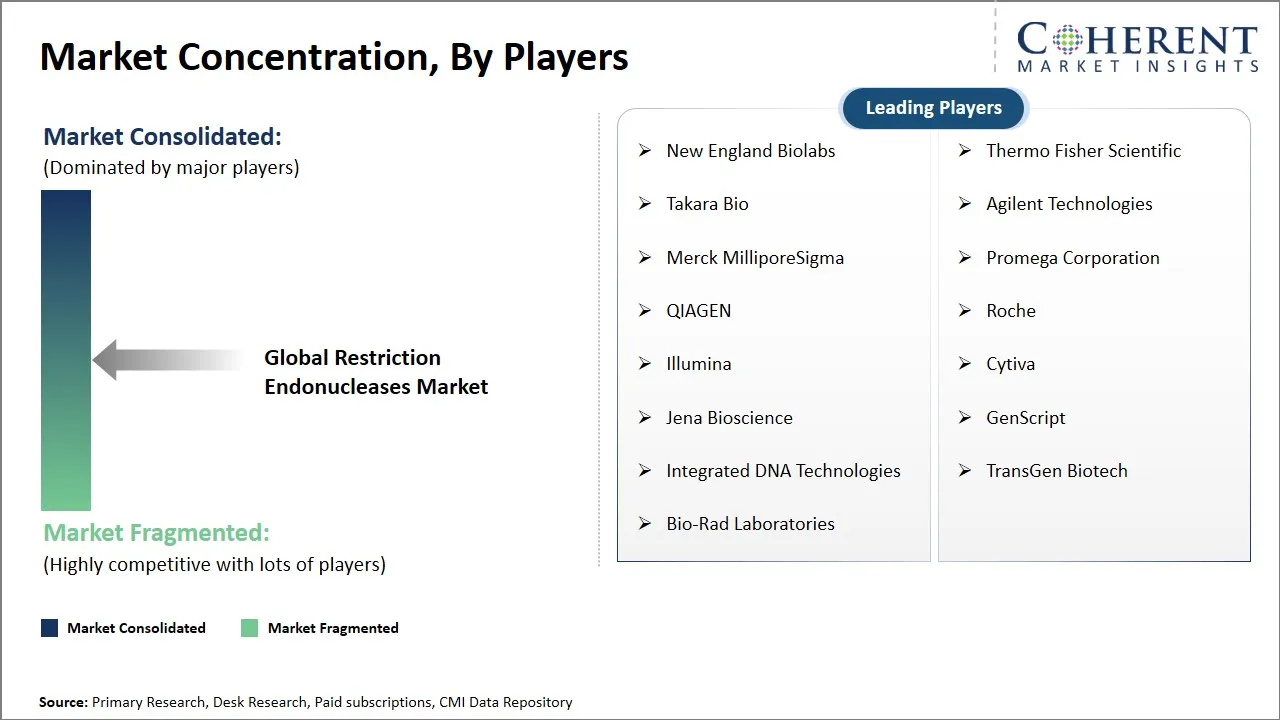
Market Players, Key Developments, and Competitive Intelligence
Key Developments
- On November 11, 2025, Sanyou Bio and Yugong Bio have signed a strategic cooperation agreement to deepen their collaboration in the development of high-end synthetic molecular enzymes. Sanyou Bio, known for its expertise in biopharmaceutical discovery and development, joins forces with Yugong Bio, which specializes in enzyme engineering and large-scale production. The partnership will focus on the entire enzyme product R&D, production, and application chain.
- In February 2024, New England Biolabs (NEB) launched the NEBNext Enzymatic 5hmC-seq Kit. This novel, enzyme-based method enables the specific detection of 5hmC sites, offering high yields and quality data with inputs from 100 pg to 200 ng. The kit overcomes the limitations of bisulfite-based methods by minimizing DNA damage and accurately distinguishing 5hmC from unmodified cytosine and 5mC. NEB, a leader in enzyme production for molecular biology, focuses on providing tools for genomic research and next-generation sequencing applications.
- In August 2022, diagnostics and research startup MedGenome raised USD 50 million, led by life science-focused Novo Holdings. The company utilizes genomic sequencing platforms to aid in diagnostics and drug discovery, employing restriction endonucleases in its genomic sequencing processes.
- In March 2022, Roche CustomBiotech launched the restriction enzyme Xba I. This enzyme plays a crucial role upstream of the in-vitro mRNA synthesis step in mRNA therapeutics and vaccine manufacturing.
Top Strategies Followed by Global Restriction Endonucleases Market Players
- The market is controlled by established players who have undertaken huge investments in research and development (R&D) in order to innovate high-performance products that can address the changing customer needs. The development of enzyme specificity, stability, and efficiency has been the focus of these firms to ensure they remain ahead of technology change in the field of genomics and molecular biology research. Moreover, they are also engaged in establishing strategic alliances and relationships with key stakeholders in the industry such as original equipment manufacturers (OEMs), biotechnology companies and schools.
- Established players, such as Thermo Fisher Scientific and New England Biolabs (NEB), dominate the market through extensive R&D investments and technological advancements. Thermo Fisher has been leading the way with innovations in enzyme specificity and efficiency, particularly with their restriction endonuclease products designed for a range of applications in genomics and molecular biology research.
- Mid-level players in the market of restriction endonucleases also use a different strategy which is based on the idea of providing the market with cost-effective solutions balancing between quality and the cost. Understanding the increased presence of price-sensitive market players to include academic researchers, small biotech companies, and diagnostic labs with budget constraints these players are creating enzyme products that offer customers reliable performance but do not offer premium prices.
- Mid-level players, such as Promega Corporation and Takara Bio, target cost-conscious customers, particularly those in academia or small biotech firms. These companies offer restriction endonucleases that deliver reliable performance at competitive prices, ensuring accessibility for price-sensitive segments like research labs and diagnostic companies.
- Small-scale entrants into the worldwide market of restriction endonucleases tend to adopt a niche differentiation strategy, focusing on the creation of unique functionality or new forms of enzymes to respond to the specific needs of the individual customer groups. Most of these new companies are embracing new technologies including synthetic biology and protein engineering and developing new endonucleases that are more selective or have a wider range of applications.
- Small-scale players like EpiCypher and Synthego typically focus on niche market segments. EpiCypher specializes in innovative histone modification analysis tools, creating enzymes with specialized applications. Synthego, leveraging synthetic biology, focuses on gene-editing tools and custom CRISPR-based restriction enzymes, catering to specific research needs that larger players may not address.
Market Report Scope
Global Restriction Endonucleases Market Report Coverage
| Report Coverage | Details | ||
|---|---|---|---|
| Base Year: | 2025 | Market Size in 2026: | USD 354.7 Mn |
| Historical Data for: | 2020 To 2024 | Forecast Period: | 2026 To 2033 |
| Forecast Period 2026 to 2033 CAGR: | 7.0% | 2033 Value Projection: | USD 569.6 Mn |
| Geographies covered: |
| ||
| Segments covered: |
| ||
| Companies covered: | New England Biolabs, Thermo Fisher Scientific, Takara Bio, Agilent Technologies, Merck MilliporeSigma, Promega Corporation, QIAGEN, Roche, Illumina, Cytiva, Jena Bioscience, GenScript, Integrated DNA Technologies, TransGen Biotech, and Bio-Rad Laboratories | ||
| Growth Drivers: |
| ||
| Restraints & Challenges: |
| ||
Restriction Endonucleases Market Dynamics
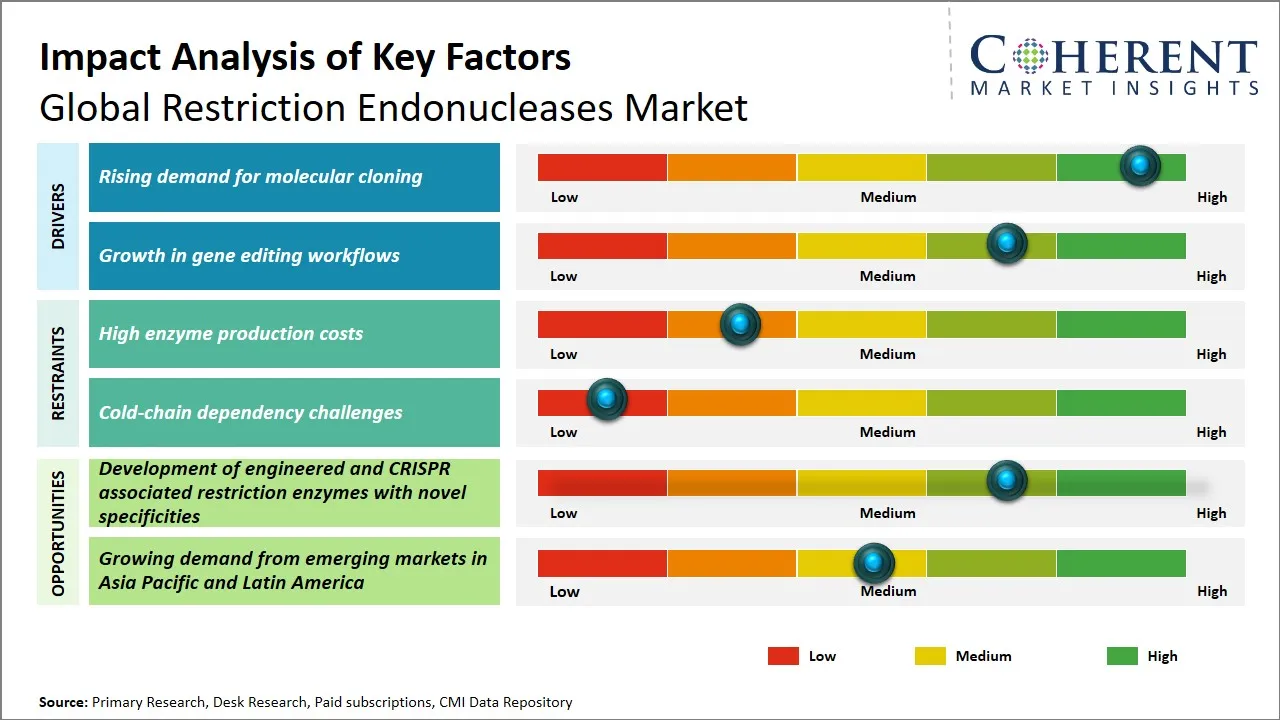
Restriction Endonucleases Market Driver - Rising Demand for Molecular Cloning
The increasing need to use the methods of molecular cloning in numerous studies and biopharmaceutical practices is a major force that drives the market of restriction endonucleases worldwide. Accurate cutting and manipulation of DNA sequences is essential to molecular cloning, where restriction endonucleases play an essential role, as they allow specific breaks to be made along a specific nucleotide sequences. Genetic engineering, synthetic biology, and recombinant DNA technology developments have again increased the demand to have efficient and reliable restriction enzymes to simplify the process of splicing genes, cloning of gene, and sequencing of any gene.
In January 2025, Sapio Sciences launched Release 24.12, adding tools for chemistry, molecular biology, GMP workflows, and immunogenicity. The update includes an automated Immunogenicity module, enhanced GMP workflows, and advanced stereoisomer management. Rising demand for molecular cloning is met with new batch cloning and sequence assembly features, alongside a protein sequencer viewer. These updates streamline workflows and accelerate scientific discovery.
Restriction Endonucleases Market Opportunity - Development of Engineered and CRISPR-Associated Restriction Enzymes with Novel Specificities
The restriction endonucleases market has a great growth potential by designing and commercializing engineered restriction enzyme and CRISPR-associated nucleases with new specificities. Conventional restriction enzymes, though essential in the field of molecular biology in DNA manipulation, is limited by fixed recognition sequences and therefore, their use is restricted to a number of genomic targets. These limitations have been overcome with the development of endonuclease designs that are custom-designed to recognize and cut DNA at specific sequences due to advancements in protein engineering and CRISPR-Cas technology. Customized engineered restriction enzymes may be engineered to be high-specificity, less off-target or reduced-off-target, and more stable to diverse conditions, which makes them appealing to the precision genome editing, synthetic biology, and therapeutic use.
On November 04, 2025, Caszyme, a European gene-editing company, launched Cas12l nucleases, a next-generation CRISPR tool. Cas12l’s compact design allows efficient delivery and up to 100% editing accuracy, surpassing standard Cas9. This breakthrough is helping companies like Integra Therapeutics, a Barcelona-based biotechnology firm, develop advanced therapies for genetic diseases, cancer, and autoimmune disorders. Caszyme offers licensing opportunities to expand the use of Cas12l in therapeutic editing.
Analyst Opinion (Expert Opinion)
- The market of restriction endonuclease is increasing because of the development in genomics and molecular biology in response to the need to be precise in genetic research and diagnostics. Major drivers are technological advances in enzyme efficiency/specificity and high regulation of biotechnology. New opportunities are seen in gene-editing technology such as CRISPR, and the issues are high innovation costs and the threat of next-generation sequencing technology.
- Such conferences as the American Society of Gene & Cell Therapy Annual Meeting and International Conference on Molecular Biology had helped share knowledge and cooperate, foster innovations in molecular biology. Research is also being enhanced by programs such as the Horizon 2020 in the EU to aid in developing restriction endonucleases and in defining the future of the market. All these activities and programs are important in ensuring expansion and policy formulation within the industry.
Speak to the analyst
Want personalized insights?
Take the findings above to one of our principal consultants, or have the report rebuilt around the segments, geographies and competitors you actually track.
Market Segmentation
- Enzyme Type Insights (Revenue, USD Mn, 2021 - 2033)
- Type I
- Type II
- Type III
- Type IV
- Type V
- Product Type Insights (Revenue, USD Mn, 2021 - 2033)
- Natural Restriction Endonucleases (Isolated from bacterial strains)
- Recombinant and Synthetic Restriction Endonucleases (Engineered for enhanced properties)
- Application Insights (Revenue, USD Mn, 2021 - 2033)
- Molecular cloning
- PCR and fragment analysis
- Gene editing workflows
- DNA mapping and fingerprinting
- NGS library preparation
- Synthetic biology
- Diagnostics and assay development
- End User Insights (Revenue, USD Mn, 2021 - 2033)
- Academic and research institutes
- Biotechnology companies
- Pharmaceutical companies
- Contract research organizations
- Diagnostic laboratories
- Delivery Format Insights (Revenue, USD Mn, 2021 - 2033)
- Liquid enzymes
- Lyophilized enzymes
- Master mix formulations
- Custom enzyme blends
- Distribution Channel Insights (Revenue, USD Mn, 2021 - 2033)
- Online
- Offline
- Regional Insights (Revenue, USD Mn, 2021 - 2033)
- North America
- U.S.
- Canada
- Latin America
- Brazil
- Argentina
- Mexico
- Rest of Latin America
- Europe
- Germany
- U.K.
- Spain
- France
- Italy
- Russia
- Rest of Europe
- Asia Pacific
- China
- India
- Japan
- Australia
- South Korea
- ASEAN
- Rest of Asia Pacific
- Middle East
- GCC Countries
- Israel
- Rest of Middle East
- Africa
- South Africa
- North Africa
- Central Africa
- North America
- Key Players Insights
- New England Biolabs
- Thermo Fisher Scientific
- Takara Bio
- Agilent Technologies
- Merck MilliporeSigma
- Promega Corporation
- QIAGEN
- Roche
- Illumina
- Cytiva
- Jena Bioscience
- GenScript
- Integrated DNA Technologies
- TransGen Biotech
- Bio-Rad Laboratories
Sources
Primary Research Interviews
Industry Stakeholders
- Senior R&D heads at biotech labs
- Procurement/manufacturing leads at biotech firms
End Users
- Lead scientists in academic research institutes
- Lab managers at diagnostic centers
Government and International Databases
- REBASE (restriction enzyme database)
- BRENDA (enzyme database)
- The Lens (patent and scholarly database)
- NIH Grants Database
- NCBI Genomics Database
- European Genome Database
Trade Publications
- MDPI (molecular biology journals)
- ScienceDirect (biochemistry journals)
- PubMed Central (research articles)
- Nature Biotechnology
- Journal of Molecular Biology
- BioTechniques
Academic Journals
- MDPI (restriction enzyme reviews)
- Nature Communications (biochemical research)
- BMC Molecular Biology
- Nucleic Acids Research
- Journal of Molecular Evolution
- FEMS Microbiology Reviews
Reputable Newspapers
- Nature News
- Science Magazine
- The New York Times (science section)
- The Guardian (global science trends)
- The Financial Times (biotech industry)
- The Wall Street Journal (industry news)
Industry Associations
- IUBMB (enzyme nomenclature)
- American Society for Biochemistry and Molecular Biology (ASBMB)
- Biotechnology Innovation Organization (BIO)
- International Society for Molecular Biology
- European Federation for Biotechnology (EFB)
- American Chemical Society (ACS)
Public Domain Resources
- REBASE — public database of restriction and modification enzymes
- BRENDA — public enzyme database with biochemical and molecular data
- The Lens — open patent and scholarly literature database
- Preprint servers (bioRxiv, medRxiv) for early‑stage research on new enzyme discovery or application.
- Institutional repositories/university publication archives.
- Open‑access journals and open‑data platforms providing enzyme kinetics, microbial genomics, and molecular biology research.
Proprietary Elements
- CMI Data Analytics Tool: Proprietary analytics tool to analyze real-time market trends, consumer behavior, and technology adoption in market
- Proprietary CMI Existing Repository of Information for Last 8 Years
Get access to 250+ pages report
Every segment, forecast, competitor profile and data table behind the analysis above — available for instant download.
- ESOMAR Member
- ISO 9001:2015 Certified
- D-U-N-S Registered
- GDPR & CCPA Compliant
Missing comfort of reading report in your local language? Find your preferred language:
Transform your Strategy with Exclusive Trending Reports
Frequently Asked Questions
The global restriction endonucleases market is estimated to be valued at USD 354.7 Mn in 2026 and is expected to reach USD 569.6 Mn by 2033.
The CAGR of global restriction endonucleases market is projected to be 7.0% from 2026 to 2033.
Rising demand for molecular cloning and growth in gene editing workflows are the major factors driving the growth of the global restriction endonucleases market.
High enzyme production costs and cold-chain dependency challenges are the major factors hampering the growth of the global restriction endonucleases market.
In terms of enzyme type, Type I is estimated to dominate the market revenue share in 2026
New England Biolabs, Thermo Fisher Scientific, Takara Bio, Agilent Technologies, Merck MilliporeSigma, Promega Corporation, QIAGEN, Roche, Illumina, Cytiva, Jena Bioscience, GenScript, Integrated DNA Technologies, TransGen Biotech, and Bio-Rad Laboratories are the major players.
North America is expected to lead the global restriction endonucleases market in 2026.