

Global Revlimid Market Size and Forecast – 2026 - 2033
The global Revlimid market is estimated to be valued at USD 10.80 Bn in 2026 and is expected to reach USD 4.77 Bn by 2033, exhibiting a negative compound annual growth rate (CAGR) of -10.8% from 2026 to 2033.
Key Takeaways of the Global Revlimid Market
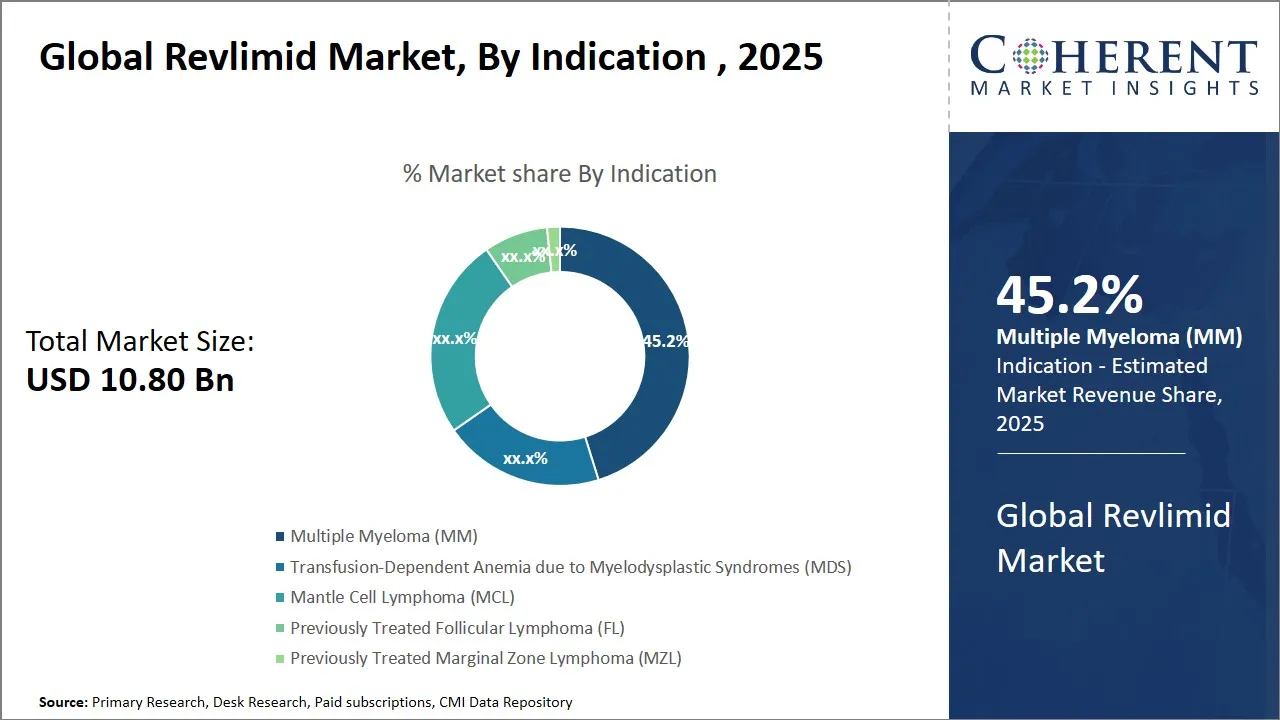
- Multiple Myeloma (MM) holds the largest market share by indication, accounting for an expected 46.2 % in 2026.
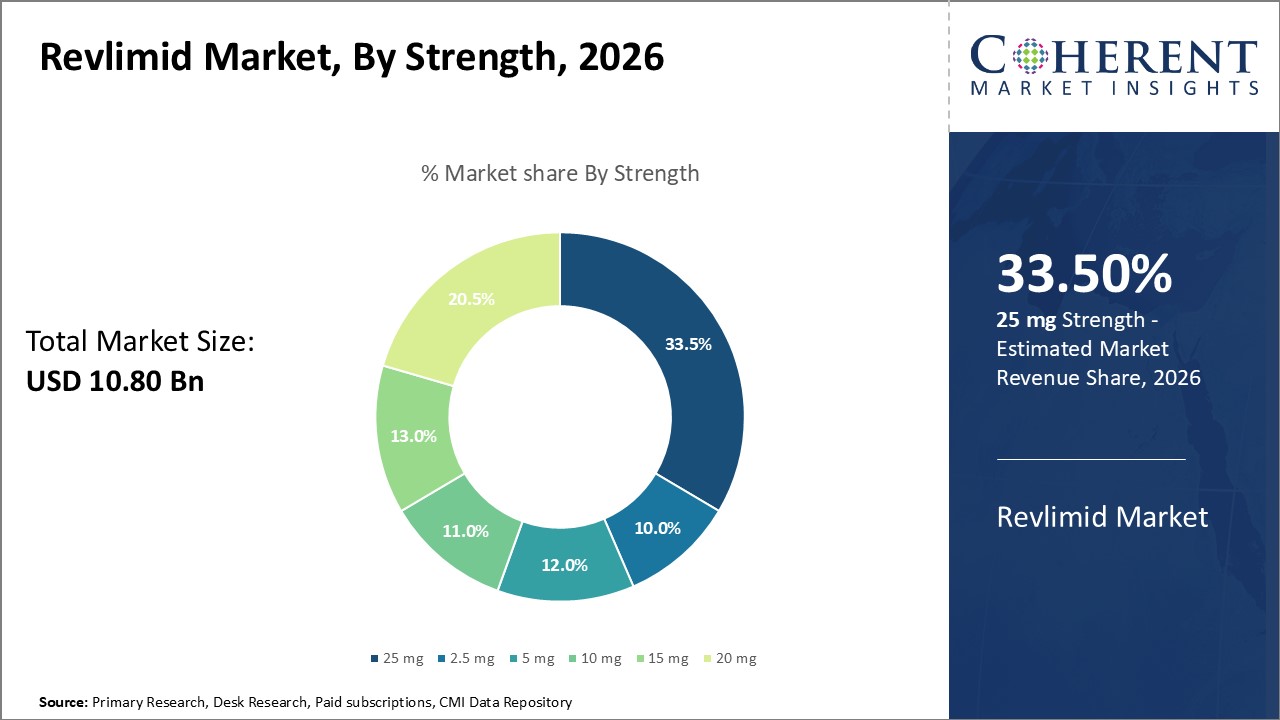
- In terms of strength, the 25 mg segment is expected to lead the market with a 33.5 % share in 2026.
- As for age group, the adults segment is expected to dominate, contributing 68.1 % to the global Revlimid market in 2026.
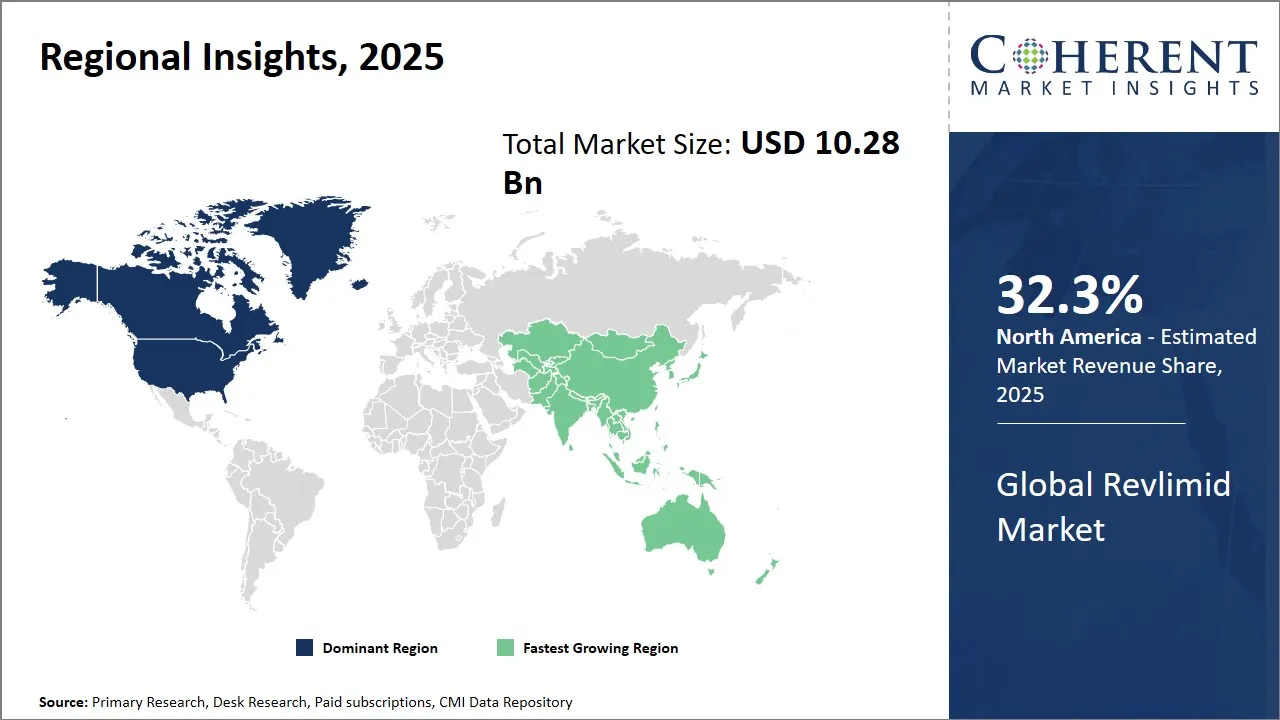
- North America is expected to lead the market, holding a share of 32.3 % in 2026.
- Asia Pacific is anticipated to be the fastest-growing region, with a market share of 25.5 % in 2026.
Market Overview
The global Revlimid market, once a multi-billion-dollar blockbuster for Bristol-Myers Squibb, has experienced a significant decline in recent years. This downturn is primarily driven by the loss of patent exclusivity, the rapid entry of generic competitors, and evolving treatment landscapes in hematologic cancers. Revlimid, a key drug for multiple myeloma, myelodysplastic syndromes (MDS), and mantle cell lymphoma, dominated the market for over a decade. However, its revenue has sharply decreased since 2022, when the first generics entered the market in the U.S., followed by expansions in Europe and other regions.
Current Events and Its Impact
Current Events | Description and its impact |
U.S. Food and Drug Administration (FDA) Approves Amneal’s Generic Lenalidomide, Accelerating Pressure on Branded Revlimidd |
|
Bristol-Myers Squibb’s Revlimid Revenue Declines 5.3% in 2024 Amid Rising Generic Competition |
|
Segmental Insights
- Current Industry Events of 2026
- Market Size Estimation
- Regional Breakdown
- Competitive Landscape
- Customer Intelligence
- Segmental Analysis
- Pricing Analysis
- Key Market Drivers, Challenges & Future Trends
- Customized Insights Section
Revlimid Market Insights, By Indication – Multiple Myeloma Leads due to the Established Standard of Care in Multiple Myeloma Treatment
The Multiple Myeloma (MM) segment continues to anchor Revlimid's (lenalidomide) commercial performance, representing an estimated 46.2% in 2026 of its total usage—far surpassing other approved indications like Transfusion-Dependent Anemia due to Myelodysplastic Syndromes (MDS), Mantle Cell Lymphoma (MCL), Follicular Lymphoma (FL), and Marginal Zone Lymphoma (MZL). This dominance reflects Revlimid’s entrenched role as a foundational therapy in MM, where it remains widely prescribed in combination regimens and maintenance therapy, particularly for newly diagnosed patients and those post-transplants. Its sustained demand in MM stems from its proven efficacy, established safety profile, and integration into global treatment guidelines, even as newer therapies emerge.
However, Revlimid’s stronghold in Multiple Myeloma contrasts sharply with its declining share in other indications, where generic competition and alternative treatments have made deeper inroads. In MDS, therapies like luspatercept (Reblozyl) and erythropoiesis-stimulating agents have reduced reliance on Revlimid, while in MCL and FL, novel BTK inhibitors and CD19-directed therapies have shifted treatment paradigms. These dynamics, compounded by the availability of cheaper generics, have accelerated Revlimid’s overall market contraction.
Despite Multiple Myeloma’s resilience, the broader Revlimid market continues to shrink, with global sales falling as generics capture larger shares across all indications. While Multiple Myeloma delays the full impact of this decline, the drug’s era as a blockbuster is unmistakably waning, underscoring the broader industry shift toward next-generation therapies and cost-driven generic adoption. The question now is not whether Revlimid will fade, but how quickly—and whether BMS can offset these losses with its pipeline of innovative oncology treatments.
Revlimid Market Insights, By Strength – 2.4 Mg Strength Solidifying Its Position as the Maintenance Dose of Choice and Standard Treatment Protocol.
The 25 mg dosage strength of Revlimid (lenalidomide) has become the most prescribed formulation, capturing an estimated 33.5% of the drug's market share in 2026, significantly outpacing other available strengths (2.5 mg, 5 mg, 10 mg, 15 mg, and 20 mg). This preference stems from several clinical and practical factors. First, the 25 mg dose aligns with standard treatment protocols for multiple myeloma, particularly in induction and maintenance therapy, where higher doses are often required for optimal efficacy. Second, physicians frequently titrate patients to this strength for better disease control in aggressive cases, making it a cornerstone of treatment regimens. Additionally, the 25 mg capsule reduces pill burden compared to multiple lower-dose tablets, improving patient compliance, a critical factor in long-term cancer management.
While the 25 mg segment shows relative strength, the broader Revlimid market continues to face steady decline due to generic erosion and patent expirations. As more affordable lenalidomide alternatives enter global markets, branded Revlimid's overall sales are contracting across all dosage forms, including the once-dominant 25 mg strength. This downward trend reflects the larger industry shift toward cost-saving generics, even as specific segments like high-dose formulations maintain temporary resilience. The 25 mg strength's current market leadership thus represents not growth, but rather the last stronghold of a drug transitioning from blockbuster status to generic commodity.
Revlimid Market Insights, By Age Group – Adult Age Group Leads Revlimid Market Share Due to Higher Prevalence of Multiple Myeloma in Adults
The adults segment has emerged as the dominant demographic for Revlimid therapy, capturing a an estimated 68.1% market share in 2026 compared to geriatric patients. This pronounced preference stems from several key factors in clinical practice. First, the higher prevalence of multiple myeloma, Revlimid's primary indication - in middle-aged adults creates natural demand within this demographic. Second, adult patients typically demonstrate better tolerance for combination therapies and more aggressive treatment regimens that incorporate Revlimid at optimal doses. Additionally, adults' generally stronger physiological reserve allows for longer duration therapy and better management of potential side effects, making them ideal candidates for Revlimid's maintenance protocols.
The adult segment's dominance also reflects real-world prescribing patterns, where hematologists often reserve Revlimid-based regimens for younger patients who can better withstand the drug's hematologic toxicities and derive maximum benefit from its immunomodulatory effects. While geriatric patients still account for a significant portion of Revlimid use, dose adjustments and concerns about comorbidities frequently limit its application in this population.
This demographic distribution persists even as the overall Revlimid market faces contraction due to patent expirations and generic competition. The adult segment's strong position represents not market growth, but rather the core remaining patient population for branded Revlimid as it transitions from a blockbuster therapy to a generic alternative. The drug's gradual decline across all age groups continues unabated, with even the robust adult segment unable to reverse the broader trend of decreasing branded Revlimid utilization.
Reimbursement and Coding for Revlimid
- NDC Codes & Packaging:
Strength | Package Size | NDC Code |
2.5 mg capsules
| 28 capsules per bottle | 59572-0402-28 |
100 capsules per bottle | 59572-0402-00 | |
5 mg capsules | 28 capsules per bottle | 59572-0405-28 |
100 capsules per bottle | 59572-0405-00 | |
10 mg capsules | 28 capsules per bottle | 59572-0410-28 |
100 capsules per bottle | 59572-0410-00 | |
15 mg capsules | 21 capsules per bottle | 59572-0415-21 |
100 capsules per bottle | 59572-0415-00 | |
20 mg capsules | 21 capsules per bottle | 59572-0420-21 |
100 capsules per bottle | 59572-0420-00 | |
25 mg capsules | 21 capsules per bottle | 59572-0425-21 |
100 capsules per bottle | 59572-0425-00 |
- Key Reimbursement Considerations
- Prior Authorization (PA) Requirements
- Most insurers require prior authorization for Revlimid, particularly for off-label uses.
- Documentation must include:
- ICD-10-CM codes supporting the approved indication (e.g., C90.0 for multiple myeloma)
- Treatment history (e.g., failed therapies, transplant status)
- Dose justification (e.g., 25 mg for induction, lower doses for maintenance)
- Medicare & Medicaid Coverage
- Medicare Part B: Covers Revlimid for MDS (D46.9) when administered in a hospital or clinic.
- Medicare Part D: Covers outpatient prescriptions but may require tiered formulary placement (Tier 4/5), leading to higher patient copays.
- Medicaid: Varies by state; some programs prefer generics or impose quantity limits.
- Commercial Insurance Policies
- Many commercial plans now exclude branded Revlimid unless generics are contraindicated.
- Step therapy may require patients to try cheaper alternatives (e.g., thalidomide) before approval.
- Patient Assistance Programs
- BMS Access Support: Offers copay assistance for eligible commercially insured patients.
- Free Drug Program: For uninsured/underinsured patients meeting income criteria.
- Prior Authorization (PA) Requirements
Regional Insights
North America Revlimid Market Analysis and Trends
Revlimid is expected to hold a significant 32.3% market share in the North America Revlimid market, reflecting its dominant position in therapies for conditions like multiple myeloma and myelodysplastic syndromes. However, the overall market for Revlimid is declining, likely due to factors such as generic competition, pricing pressures, and shifts toward newer therapies. Despite its strong foothold, the erosion of exclusivity and biosimilar entries are contributing to reduced revenue growth. For instance, in March 2022, Teva Pharmaceuticals, a U.S. affiliate of Teva Pharmaceutical Industries Ltd., announced the launch of a first generic version of Revlimid (lenalidomide capsules), in 5mg, 10mg, 15mg, and 25mg strengths, in the United States. This trend suggests that while Revlimid remains a key player, its long-term market position may weaken unless strategic adjustments are made to counter the decline.
Asia Pacific Revlimid Market Analysis and Trends
Revlimid is expected to maintain a 25.5% market share in Asia Pacific in 2026 underscoring its continued importance in treating conditions like multiple myeloma and myelodysplastic syndromes. However, the overall market for Revlimid is declining, driven by factors such as increasing generic competition, loss of exclusivity, and the emergence of newer therapies. For instance, pricing pressures and payer restrictions have also contributed to shrinking revenues. While Revlimid remains a key revenue generator, its market dominance is eroding, signaling a need for strategic shifts, such as expanded indications or pricing adjustments, to mitigate further decline in a competitive landscape.
Global Revlimid Market Outlook for Key Countries
U.S. Revlimid Market Analysis and Trends
Despite Revlimid (lenalidomide) remaining a top-performing drug in the U.S., the franchise has faced significant erosion due to generic competition. The drug, once a cornerstone of multiple myeloma treatment, saw its U.S. market share decline sharply after the 2022 launch of first generics, with sales dropping by approximately 38.9% in 2023. This decline reflects broader pressures in the branded oncology segment, where patent expirations and payer cost containment have squeezed revenue. While BMS offset some losses through volume-based pricing strategies and lifecycle management (e.g., newer therapies like Reblozyl), Revlimid’s downturn underscores the challenges of sustaining blockbuster drugs in an increasingly competitive and cost-conscious market.
Canada Revlimid Market Analysis and Trends
Revlimid, a blockbuster multiple myeloma drug from Bristol Myers Squibb, has seen a notable decline in the market in Canada due to increasing generic competition and pricing pressures. While Revlimid once dominated Canada’s hematology-oncology space, its market share has been shrinking since the 2023 entry of generic alternatives, including Apotex’s and Teva’s lenalidomide versions.
Despite its historical dominance, Revlimid’s decline in Canada has been accelerated by aggressive pricing strategies from generic manufacturers and stringent cost-control measures from government health agencies. Provincial drug plans, such as Quebec’s RAMQ and Alberta’s Blue Cross, have actively promoted generic substitution through preferential formulary placements, further eroding Bristol Myers Squibb market position. Additionally, the Canadian Agency for Drugs and Technologies in Health (CADTH) has recommended lenalidomide generics as first-line options in multiple myeloma treatment, reducing Revlimid’s clinical differentiation. As a result, BMS has faced declining patient retention rates, with many oncologists transitioning to lower-cost alternatives even in cases where Revlimid was previously the standard of care. This shift highlights the growing influence of pharmacoeconomic evaluations in Canada’s drug reimbursement landscape, where cost savings often outweigh brand loyalty in therapeutic decision-making
China Revlimid Market Analysis and Trends
The Revlimid market in China has experienced significant growth in recent years, driven by increasing demand for innovative cancer treatments, particularly for multiple myeloma and myelodysplastic syndromes. As a key immunomodulatory drug, Revlimid has become a cornerstone therapy in hematologic malignancies, with its adoption rising due to improving healthcare infrastructure, greater access to specialty drugs, and a growing aging population susceptible to blood cancers.
One of the major trends in China's Revlimid market is the expansion of reimbursement policies. The drug was included in China’s National Reimbursement Drug List (NRDL), significantly improving patient affordability and market penetration. Additionally, the rise of domestic biosimilars and generics has intensified competition, with local pharmaceutical companies developing lenalidomide alternatives following the expiration of Celgene’s (now Bristol-Myers Squibb) patent exclusivity. This has led to price reductions, making treatment more accessible.
Japan Revlimid Market Analysis and Trends
The Revlimid market in Japan has experienced significant growth in recent years, driven by its widespread use in treating multiple myeloma, myelodysplastic syndromes (MDS), and other hematologic malignancies. As a key immunomodulatory drug, Revlimid has become a cornerstone therapy in Japan, supported by its strong clinical efficacy and inclusion in treatment guidelines. The market expansion has been further propelled by the aging population, which increases the prevalence of blood cancers, and the growing adoption of advanced therapies in oncology.
Market Players, Key Developments, and Competitive Intelligence
Company Insights
- Bristol-Myers Squibb Company is one of the global biopharmaceutical leaders focused on discovering, developing, and delivering innovative medicines for serious diseases, including cancer, cardiovascular disorders, and immunological conditions. One of its key products, Revlimid (lenalidomide), is an oral immunomodulatory drug primarily used to treat multiple myeloma, myelodysplastic syndromes (MDS), and mantle cell lymphoma.
- Acquired through BMS’s 2019 acquisition of Celgene, Revlimid has been a cornerstone of the company’s oncology portfolio, generating significant revenue due to its high efficacy and widespread use. However, with patent expirations leading to generic competition, BMS has been strategically diversifying its oncology pipeline while managing Revlimid’s lifecycle. The drug remains critical to BMS’s financial performance, even as the company emphasizes next-generation therapies like cell therapies and targeted treatments to sustain long-term growth.
- Revlimid has played a significant role in advancing treatment standards for blood cancers, particularly as a maintenance therapy for multiple myeloma patients. Its mechanism of action, combining immunomodulatory, anti-angiogenic, and direct anti-tumor effects—has made it a versatile option in combination regimens. However, BMS has faced scrutiny over pricing and market exclusivity practices, especially as Revlimid was one of the top-selling drugs globally for years. To mitigate revenue declines from generics, BMS has accelerated the development of newer therapies, such as Abecma (ide-cel) and Reblozyl (luspatercept), while also expanding Revlimid’s use in emerging markets. The company continues to invest in research to explore additional indications for lenalidomide, ensuring its legacy endures even as the competitive landscape evolves.
Market Report Scope
Revlimid Market Report Coverage
| Report Coverage | Details | ||
|---|---|---|---|
| Base Year: | 2025 | Market Size in 2026: | USD 10.80 Bn |
| Historical Data for: | 2020 To 2024 | Forecast Period: | 2026 To 2033 |
| Forecast Period 2026 to 2033 CAGR: | -10.8% | 2033 Value Projection: | USD 4.77 Bn |
| Geographies covered: |
| ||
| Segments covered: |
| ||
| Companies covered: | Bristol Myers Squibb | ||
| Growth Drivers: |
| ||
| Restraints & Challenges: |
| ||
Revlimid Market Dynamics
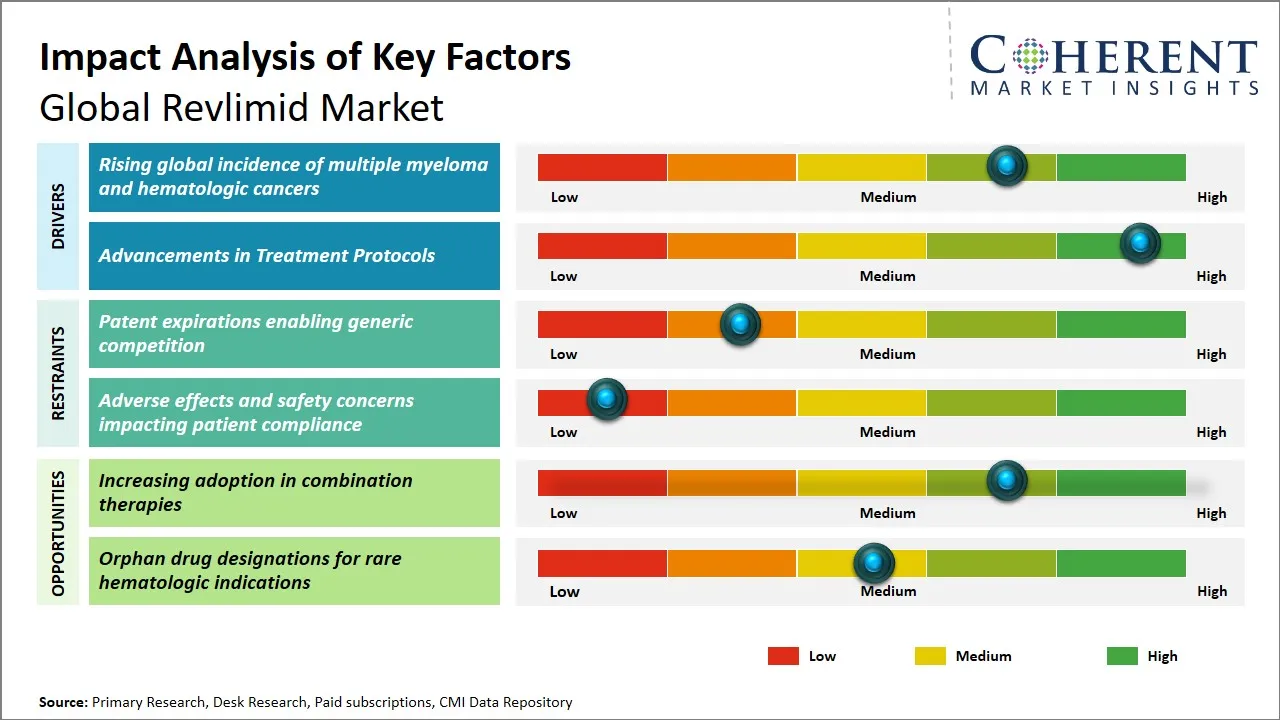
Revlimid Market Driver - Rising Global Incidence of Multiple Myeloma and Hematologic Cancers
While the global incidence of multiple myeloma and other hematologic malignancies has been on the rise in recent years, the demand for therapeutic options like Revlimid (lenalidomide) is witnessing slower growth, with a negative compound annual growth rate (CAGR) in the market. Multiple myeloma, a cancer of plasma cells primarily affecting older adults, is becoming more prevalent due to aging populations and improved diagnostic capabilities. However, despite the growing number of cases, the market for treatments like Revlimid is experiencing a decrease, attributed to factors such as increasing competition, patent expirations, and shifts towards newer treatment modalities. This has led to a decline in market value despite the rising patient population.
According to the World Health Organization’s (WHO) International Agency for Research on Cancer (IARC) data released in 2023, approximately 176,404 new cases of multiple myeloma were reported globally in 2020, marking a noticeable increase compared to previous years. Additionally, hematologic cancers as a category, which include lymphomas, leukemias, and myelomas, have shown a rising trajectory, placing increased urgency on the healthcare community to utilize innovative treatments. Revlimid, an immunomodulatory drug that plays a crucial role in the management of these cancers, has gained distinct prominence due to its ability to not only improve survival rates but also enhance the quality of life for patients, thereby reinforcing its pivotal place in therapeutic protocols.
Examining current treatment paradigms further reveals why rising incidences bolster Revlimid’s market presence. The drug’s broad applicability across different stages of multiple myeloma—including newly diagnosed patients and those with relapsed or refractory disease—makes it a cornerstone in hematology-oncology treatment guidelines endorsed by agencies such as the U.S. National Cancer Institute and the European Society for Medical Oncology. For example, the National Cancer Institute’s (NCI) surveillance data shows a consistent increase in the number of patients living with multiple myeloma post-treatment, underscoring both the disease’s growing prevalence and the ongoing need for maintenance therapies like Revlimid.
Revlimid Market Opportunity - Increasing Adoption in Combination Therapies
The increasing adoption of combination therapies represents a significant growth opportunity in the global Revlimid market, particularly due to the drug’s pivotal role in treating multiple myeloma alongside other hematologic malignancies. Revlimid (lenalidomide), primarily used as a monotherapy, has shown enhanced efficacy when combined with other agents such as dexamethasone, bortezomib, and monoclonal antibodies. This combination approach helps in overcoming drug resistance mechanisms while improving patient outcomes through synergistic effects.
For instance, clinical guidelines now often recommend lenalidomide paired with monoclonal antibodies like daratumumab, which has been shown to significantly improve progression-free survival rates. The increasing preference for these regimens in clinical practice highlights a shift in therapeutic strategies towards multi-drug protocols, driving demand for Revlimid in more complex treatment frameworks.
he impact of combination therapies on the growth trajectory of the global Revlimid market is multi-dimensional. By enabling broader clinical indications and enhancing treatment efficacy, these regimens drive increased prescription volumes and longer treatment durations. Additionally, the push toward incorporating Revlimid with emerging immunotherapies and targeted treatments positions it at the forefront of evolving oncologic care paradigms. This synergy not only fortifies Revlimid’s market foothold but also encourages investment in research and development aimed at novel combinations, thereby fostering innovation. As healthcare systems worldwide increasingly adopt combination therapies endorsed by authoritative bodies such as the WHO and NCI, the global Revlimid market is poised to benefit substantially from this trend in both clinical acceptance and sustained demand growth.
Analyst Opinion (Expert Opinion)
- The global Revlimid market, which has been driven by the growing prevalence of hematologic cancers like multiple myeloma and lymphoma, is experiencing slower growth due to several key factors. While technological advancements in targeted therapies and regulatory support have historically fueled market expansion, the market is now facing challenges. Patent expirations, increasing competition from biosimilars, and shifting treatment paradigms towards personalized medicine and biologics have led to a gradual market decline.
- Despite Revlimid’s strong market penetration, particularly in North America and Europe, and its continued presence due to extended indications, the rising patient demand is no longer enough to offset the competitive pressure. With a negative CAGR, the market is transitioning to a phase where Revlimid’s future growth will be constrained unless it adapts to new therapeutic areas and differentiates itself in the evolving treatment landscape.
- In recent years, various global conferences, including the American Society of Hematology (ASH) Annual Meeting and the European Hematology Association (EHA) Congress, have provided platforms for discussions on innovations in hematologic oncology, including the role of Revlimid in combination therapies. These events foster knowledge exchange and highlight the latest advancements, policy formulation, and technological showcases. Notably, collaborations between Bristol-Myers Squibb and global research institutes aim to enhance Revlimid’s therapeutic applications. Regional initiatives focused on improving access to cancer treatments in emerging markets are expected to influence the market outlook by increasing Revlimid’s reach and affordability.
Speak to the analyst
Want personalized insights?
Take the findings above to one of our principal consultants, or have the report rebuilt around the segments, geographies and competitors you actually track.
Market Segmentation
- Indication Insights (Revenue, USD Bn, 2021 - 2033)
- Multiple Myeloma (MM)
- Transfusion-Dependent Anemia due to Myelodysplastic Syndromes (MDS)
- Mantle Cell Lymphoma (MCL)
- Previously Treated Follicular Lymphoma (FL)
- Previously Treated Marginal Zone Lymphoma (MZL)
- Strength Insights (Revenue, USD Bn, 2021 - 2033)
- 5 mg
- 5 mg
- 10 mg
- 15 mg
- 20 mg
- 25 mg
- Age Group Insights (Revenue, USD Bn, 2021 - 2033)
- Adults
- Geriatric
- End User Insights (Revenue, USD Bn, 2021 - 2033)
- Hospitals
- Specialized Cancer Centers
- Rehabilitation Centers
- Specialty Pharmacy
- Others (Research and Academic Institutions, etc.)
- Regional Insights (Revenue, USD Bn, 2021 - 2033)
- North America
- U.S.
- Canada
- Latin America
- Brazil
- Argentina
- Mexico
- Rest of Latin America
- Europe
- Germany
- U.K.
- Spain
- France
- Italy
- Russia
- Rest of Europe
- Asia Pacific
- China
- India
- Japan
- Australia
- South Korea
- ASEAN
- Rest of Asia Pacific
- Middle East
- GCC Countries
- Israel
- Rest of Middle East
- Africa
- South Africa
- North Africa
- Central Africa
- North America
- Key Players Insights
- Bristol Myers Squibb
Sources
Primary Research Interviews
- Interviews with healthcare providers
- Interviews with key opinion leaders (KOLs)
- Interviews with pharmacists and medical professionals
- Interviews with patients using Revlimid and other therapies
Databases
- National Health Service (NHS) U.K.
- U.S. National Institutes of Health (NIH)
- Centers for Disease Control and Prevention (CDC)
- World Health Organization (WHO)
- European Medicines Agency (EMA)
- National Institute for Health and Care Excellence (NICE)
Magazines
- Pharmaceutical Technology
- BioPharma Reporter
- The Pharmaceutical Journal
Journals
- Multiple Myeloma Research Foundation (MMRF)
- Journal of Clinical Medicine
- Haematologica
- American Cancer Society
- The American Journal of Medicine
- The New England Journal of Medicine
Newspapers
- The Guardian (UK)
- The New York Times
- The Financial Times
- The Washington Post
- The Times (UK)
- The Wall Street Journal
Associations
- International Myeloma Foundation (IMF)
- International Myeloma Society
- MDS Foundation
- The Aplastic Anemia & Myelodysplasia Association of Canada (AAMAC)
- The Leukemia & Lymphoma Society (LLS)
- Association of Cancer Care Centers
Public Domain Sources
- U.S. National Library of Medicine
- UK National Health Service (NHS) Resources
- National Health Interview Survey (NHIS)
- Centers for Disease Control and Prevention (CDC) Data
- National Institute for Health and Care Excellence (NICE) Guidelines
Proprietary Elements
- CMI Data Analytics Tool: Proprietary analytics tool to analyze real-time market trends, consumer behavior, and technology adoption in market
- Proprietary CMI Existing Repository of Information for the Last 8 Years.
Get access to 250+ pages report
Every segment, forecast, competitor profile and data table behind the analysis above — available for instant download.
- ESOMAR Member
- ISO 9001:2015 Certified
- D-U-N-S Registered
- GDPR & CCPA Compliant
Missing comfort of reading report in your local language? Find your preferred language:
Transform your Strategy with Exclusive Trending Reports
Frequently Asked Questions
The global Revlimid market is estimated to be valued at USD 10.80 Bn in 2026 and is expected to reach USD 4.77 Bn by 2033.
The CAGR of global Revlimid market is projected to be -10.8% from 2026 to 2033.
Rising global incidences of multiple myeloma and hematologic cancers and advancements in treatment protocols are the major factors driving the growth of the global Revlimid market.
Patent expirations enabling generic competition and adverse effects and safety concerns impacting patient compliance are the major factors hampering the growth of the global Revlimid market.
In terms of Indication, Multiple Myeloma (MM) is estimated to dominate the market revenue share in 2026.
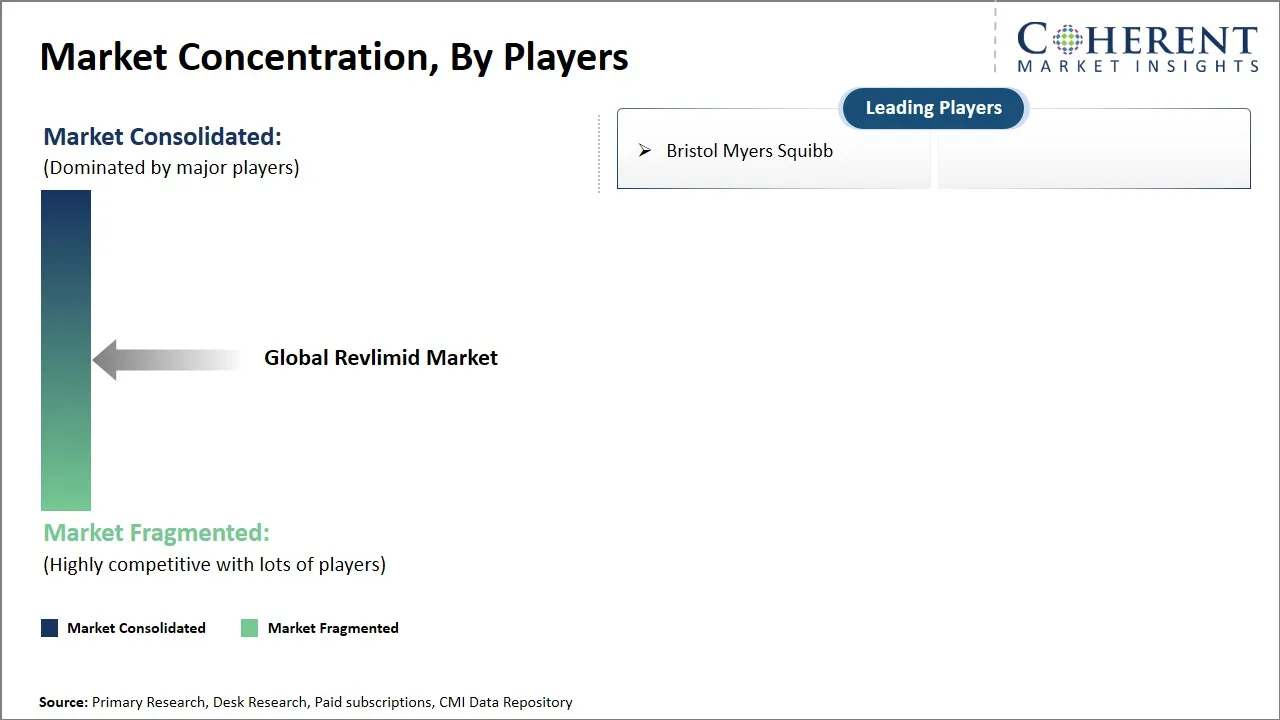
Bristol-Myers Squibb Company is the only player in the global Revlimid market.
North America is expected to lead the global Revlimid market in 2026.