

Global Rice Wine Market Size and Forecast – 2026-2033
The Global Rice Wine Market is estimated to be valued at USD 5.52 Bn in 2026 and is expected to reach USD 7.67 Bn by 2033, exhibiting a compound annual growth rate (CAGR) of 4.8% from 2026 to 2033.
Key Takeaways of the Rice Wine Market
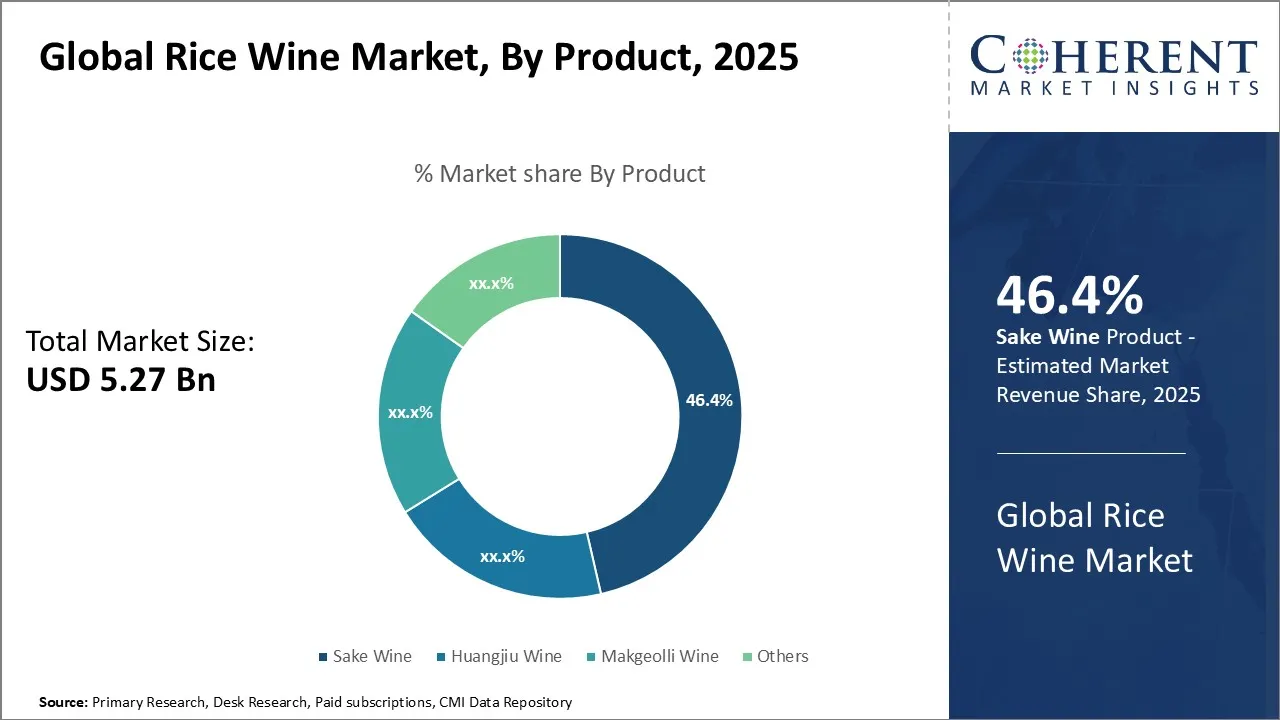
- The Sake Wine segment is expected to account for 47.4 % of the global rice wine market in 2026.
- The culinary applications segment is expected to hold 46.6% share of the market in 2026, capitalizing on rice wine’s unique qualities as a key ingredient in a wide range of Asian cuisines and its growing use in Western cooking.
- The offline segment is projected to capture 64.6% of the rice wine market in 2026.
- Asia Pacific is projected to lead the global rice wine market in 2026 with a 75. 2% share. North America, holding a 12.5% share in 2026, is expected to be the fastest-growing region.
Market Overview
A notable trend in the rice wine segment of the alcoholic beverages is the rising demand for organic and artisanal rice wines, which cater to health-conscious consumers seeking natural and authentic flavors. Additionally, innovations in packaging, including the rise of canned alcoholic beverages, and the introduction of diverse flavor variations are enhancing consumer appeal. Collaborations between traditional producers and modern brands are also creating new market opportunities. Furthermore, growing export activities and the increasing global popularity of Asian cuisine are driving the market’s expansion into untapped regions, fostering sustained demand and intensifying competitive dynamics within the broader alcoholic beverages industry.
Current Events and Its Impact
Current Events | Description and its impact |
Surge in Global Demand for Craft and Premium Rice Wines |
|
Vietnam’s Crackdown on Unlicensed Rice Wine Production |
|
Segmental Insights
- Current Industry Events of 2026
- Market Size Estimation
- Regional Breakdown
- Competitive Landscape
- Customer Intelligence
- Segmental Analysis
- Pricing Analysis
- Key Market Drivers, Challenges & Future Trends
- Customized Insights Section
Rice Wine Market Insights, By Product - Sake Wine Segment Dominates due to its Cultural Significance and Versatile Appeal
Sake wine segment is expected to contribute 47.4% share of the global rice wine market in 2026, primarily due to its deep-rooted cultural heritage and increasing recognition beyond its traditional Japanese origins. The centuries-old tradition of sake brewing has positioned it as more than just an alcoholic beverage; it embodies craftsmanship, ritual, and premium quality that appeals to both domestic and international consumers. This cultural resonance has helped sake carve out a distinct niche, particularly among premium and luxury alcohol segments where authenticity and unique origin stories are highly valued.
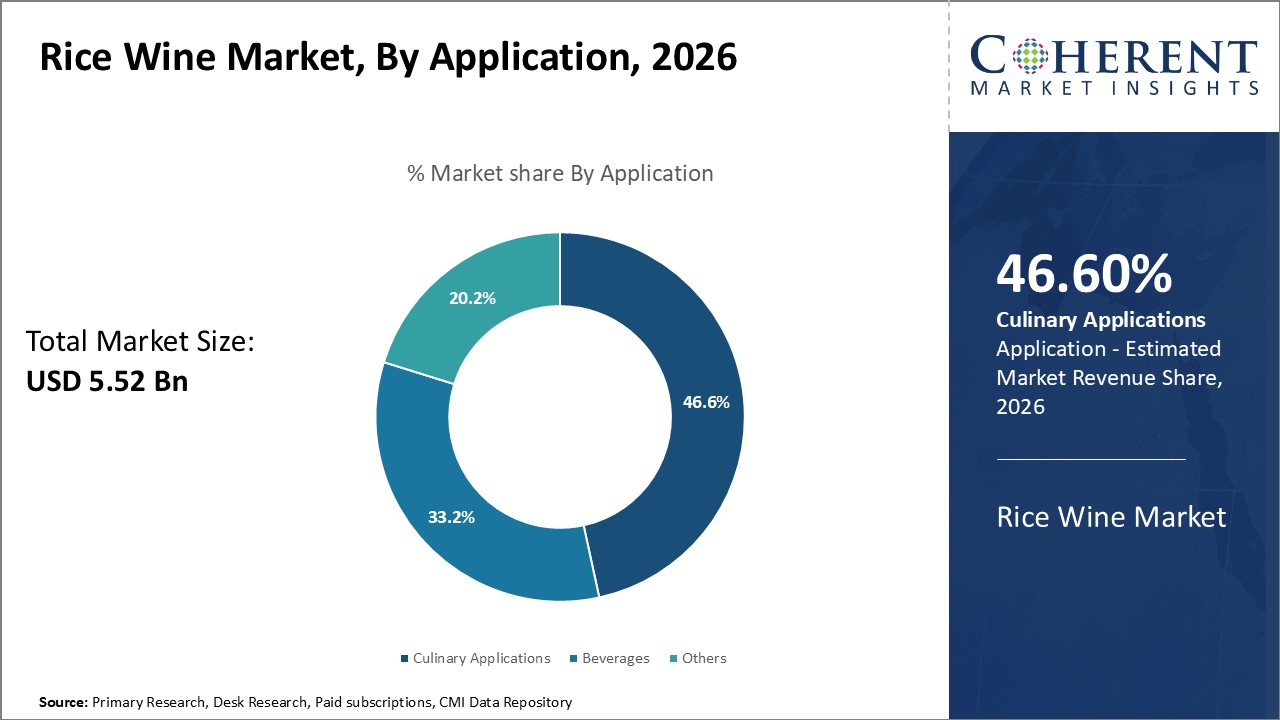
Rice Wine Market Insights, By Application - Culinary Applications Segment Dominates due to the Integration of Rice Wine in Global Gastronomy and Food Preparation
Culinary applications segment is projected to contribute 46.6% share of the market in 2026, by leveraging the intrinsic properties of rice wine as an essential ingredient in cooking across multiple Asian and increasingly Western cuisines. Its role extends beyond a mere beverage to a foundational cooking component that enhances flavor, aroma, and texture in dishes. Rice wine, particularly varieties like sake and huangjiu, is prized for its ability to tenderize meats, balance strong odors, and add subtle sweetness or umami notes, making it indispensable in culinary traditions.
Rice Wine Market Insights, By Distribution Channel – Offline Segment Dominates Driven by Consumer Buying Preferences and Experiential Purchasing Behavior
Offline segment is expected to contribute 64.6% share of the rice wine market in 2026, due to several consumer-centric and operational factors that favor traditional retail formats. The preference for offline purchases largely stems from the sensory and experiential elements involved in buying rice wine. Consumers often seek to visually inspect the bottle, appreciate label designs, and sometimes taste samples, which are experiences not easily replicated through online platforms. These sensory factors play a crucial role in purchasing decisions for premium and culturally significant products like sake and huangjiu.
Regional Insights
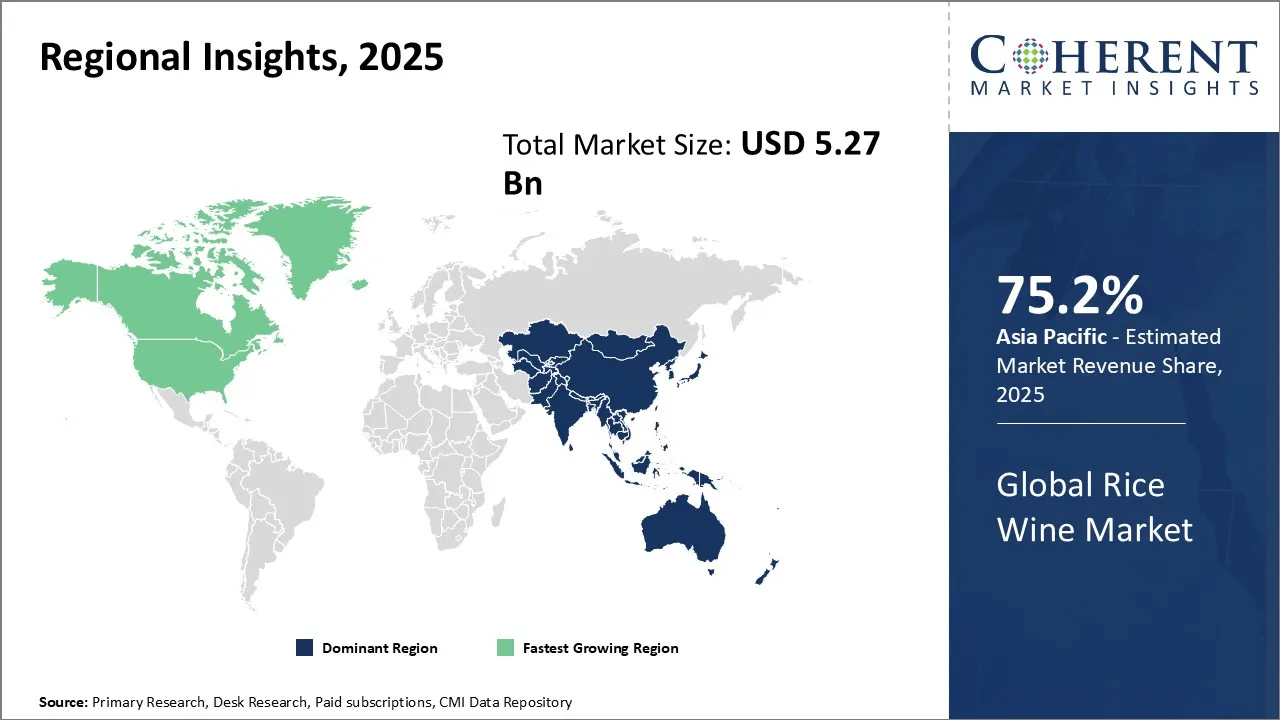
Asia Pacific Rice Wine Market Analysis and Trends
The Asia Pacific region is projected to lead the market with a 75.2% share in 2026, deeply rooted in the traditional and cultural significance of rice wine consumption, especially in countries like China, Japan, and South Korea. This region benefits from a well-established market ecosystem with numerous local producers and entrenched consumer preferences.
Government policies in several APAC countries often support domestic alcohol industries through subsidies and protective tariffs, which help maintain competitive advantages. The region also hosts a dense concentration of industry players such as Kikkoman Corporation (Japan), Shaoxing Wine Group (China), and Chung Ha Brewery Co. (South Korea), who have played significant roles in product innovation and distribution network expansion. Strong trade dynamics, including intra-Asia trade agreements and export relationships with neighboring regions, sustain the market’s prominent position globally.
North America Rice Wine Market Analysis and Trends
The North America region is expected to exhibit the fastest growth in the market contributing 12.5% share in 2026 driven primarily by rising consumer awareness of Asian cuisine and beverages, increasing multicultural populations, and growing health-conscious choices favoring traditional and artisanal alcoholic beverages. The market ecosystem here is evolving, with an expanding number of craft producers and importers enhancing product variety.
Government regulations are generally favorable but focused on stringent quality controls, ensuring premium standards that encourage consumer confidence. Key companies like Plum Wine Company and Gekkeikan Sake USA play critical roles in introducing authentic rice wine varieties and innovating in flavor profiles suited to local tastes. Import tariffs and trade agreements with Asia Pacific also facilitate easier access to raw materials and end products, fueling market expansion.
Global Rice Wine Market Outlook for Key Countries
China Rice Wine Market Trends
China's rice wine market retains a commanding lead due to indigenous production traditions, with regions such as Shaoxing renowned for centuries-old rice wine brewing methods. The government supports traditional alcoholic beverages through cultural initiatives and export incentives. Major companies like Shaoxing Wine Group dominate domestic consumption and also push for exports, leveraging economies of scale and advanced manufacturing technologies. The country’s extensive rice cultivation further stabilizes supply chains, while growing urban demand fosters premium segment growth.
Japan Rice Wine Market Trends
Japan continues to lead in premium and specialty rice wine production, especially sake, with its well-developed industry infrastructure and significant government backing through tourism and export promotion policies. Key players like Kikkoman Corporation and Dassai Breweries emphasize high-quality craftsmanship and global branding, helping to elevate Japan’s rice wine profile internationally. Local consumer loyalty combined with increasing overseas demand for Japanese cuisine sustains the country’s market strength.
South Korea Rice Wine Market Trends
South Korea’s rice wine market is characterized by its unique rice wine varieties such as Makgeolli, enjoying both traditional and modern popularity. Government initiatives promoting local alcoholic beverages and supportive startup ecosystems have enabled diversification among smaller craft producers alongside established firms like Chung Ha Brewery Co. South Korea’s innovative marketing strategies and a rising wellness trend underpin growing domestic consumption and export potential.
U.S. Rice Wine Market Trends
The U.S. rice wine market reflects dynamic growth driven by a fusion of cultural trends, where the rise of Asian cuisine and craft alcoholic beverage appreciation intersect. Key players like Plum Wine Company and various craft producers are expanding portfolios with both imported and domestically produced rice wine, focusing on organic and flavored variants. Regulatory frameworks ensure high product safety, and partnerships among distributors and restaurants enhance market penetration. Rising import volumes from Asia Pacific also contribute to broader availability and consumer awareness.
Consumer Behavior Analysis
- Consumer behavior analysis in the rice wine market reveals a complex interplay of psychological, cultural, and practical factors that shape purchasing decisions. Consumers typically begin their journey with the recognition of a need, which may be influenced by cultural traditions, social occasions, or health considerations. Once the need is recognized, individuals proceed to search for information about different rice wine brands, varieties, and qualities, often relying on word-of-mouth, online reviews, or recommendations from peers. Brand awareness plays a significant role in this stage, as consumers are more likely to consider products that are familiar or have a strong reputation for quality and authenticity.
- The evaluation of alternatives is a critical phase, where buyers compare rice wine options based on factors such as taste profile, price, packaging, and perceived health benefits. Psychological drivers, including personal preferences, attitudes, and beliefs about traditional versus modern products, heavily influence this evaluation. Social and cultural influences are particularly strong in the rice wine market, as consumption is often tied to festivals, family gatherings, and cultural rituals, making certain brands or types more desirable within specific communities.
- After the purchase, the consumer’s experience with the product—flavor satisfaction, perceived value, and overall enjoyment—determines the likelihood of repeat purchases and brand loyalty. Companies in the rice wine market can leverage these behavioral insights by tailoring marketing strategies, improving product offerings, and enhancing the customer experience to foster long-term loyalty and increase market share.
Market Players, Key Development, and Competitive Intelligence
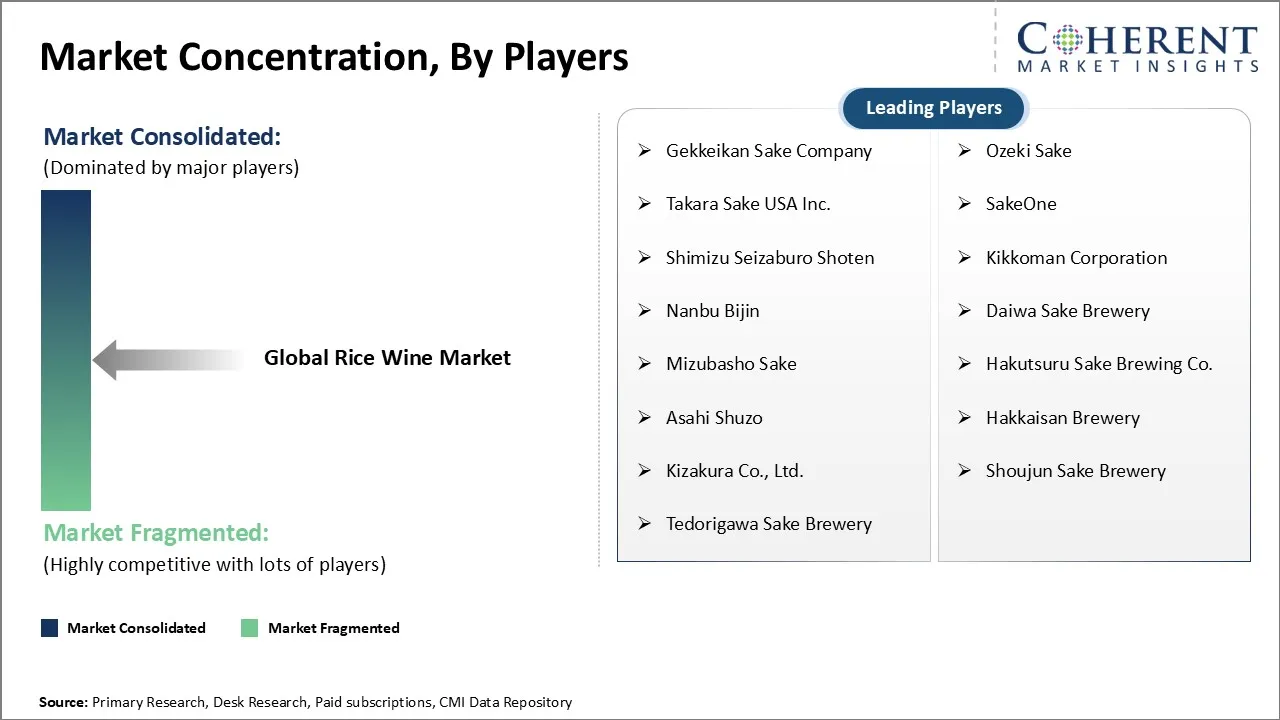
Key Developments
- In February 2024, South Korean ballad singer Mr. Sung Si-kyung introduced a new Korean rice wine through a collaboration with the startup brewery J1, launching it under his newly established liquor brand, Kyungtakju.
- In January 2023, Dassai Inc. announced plans to establish a sake production facility on the U.S. East Coast, investing USD 53 million. This move aimed to strengthen the company’s market presence and expand its reach within the U.S. rice wine market.
- In March 2024, Filipino researchers successfully developed an improved method to enhance the traditional process of making Philippine rice wine, known as “tapuy.” This optimized technique not only preserves the cultural heritage of the beverage but also significantly boosts its nutritional value, resulting in a product that is potentially a superfood. The enhanced tapuy is enriched with high levels of anti-aging compounds and antioxidants, which may offer various health benefits and contribute to longevity. This breakthrough represents a fusion of traditional craftsmanship and modern scientific innovation aimed at promoting wellness through a time-honored Filipino drink.
Top Strategies Followed by Global Rice Wine Market Players
- Established players in the industry primarily focus on heavy investments in research and development (R&D) to innovate and introduce high-performance products that meet evolving consumer preferences. This constant innovation helps them maintain a competitive edge by enhancing product quality, flavor profiles, and packaging aesthetics.
- For instance, Kikkoman has launched innovative rice wine blends with enhanced flavor profiles targeting younger consumers who seek unique tasting experiences. These firms also emphasize packaging aesthetics, offering stylish bottles that appeal to modern shoppers.
- Mid-level players in the global rice wine market adopt a pragmatic approach that centers around offering cost-effective solutions designed to appeal to price-sensitive consumers without compromising on quality. Their key strategy involves striking the right balance between affordability and product excellence, allowing them to capture significant market segments that prioritize value. To scale operations and enhance their offerings, these mid-sized companies actively seek partnerships and collaborations with other firms, including suppliers and technology providers.
- For example, Takara Sake USA, for example, offers competitively priced products targeting budget-conscious markets in the U.S., balancing affordability with consistent flavor. To scale operations and improve offerings, mid-level players form partnerships with local suppliers and technology firms. Chung Jung One recently collaborated with a fermentation technology provider to enhance production efficiency and product consistency, enabling broader market reach without significant capital investment.
- Small-scale players in the rice wine market differentiate themselves by carving out niche segments through specialized product features or innovative innovations tailored to specific consumer preferences. Unlike their larger counterparts, these companies tend to focus on unique qualities such as artisanal production methods, organic ingredients, or distinct flavor profiles that appeal to a discerning clientele. To stay competitive, small-scale players are quick to adopt cutting-edge technologies and automation tools that improve product consistency and reduce costs.
- For example, a boutique producer in Japan, Tsuki no Katsura Brewery, emphasizes traditional artisanal methods and organic rice sourcing to appeal to discerning customers who prioritize authenticity and quality over mass production. These companies are quick to adopt automation and advanced fermentation technologies to maintain product consistency and reduce costs despite smaller volumes.
Market Report Scope
Rice Wine Market Report Coverage
| Report Coverage | Details | ||
|---|---|---|---|
| Base Year: | 2025 | Market Size in 2026: | USD 5.52 Bn |
| Historical Data for: | 2020 To 2024 | Forecast Period: | 2026 To 2033 |
| Forecast Period 2026 to 2033 CAGR: | 4.8% | 2033 Value Projection: | USD 7.67 Bn |
| Geographies covered: |
| ||
| Segments covered: |
| ||
| Companies covered: | Gekkeikan Sake Company, Ozeki Sake, Takara Sake USA Inc., SakeOne, Shimizu Seizaburo Shoten, Kikkoman Corporation, Nanbu Bijin, Daiwa Sake Brewery, Mizubasho Sake, Hakutsuru Sake Brewing Co., Asahi Shuzo, Hakkaisan Brewery, Kizakura Co., Ltd., Shoujun Sake Brewery, and Tedorigawa Sake Brewery | ||
| Growth Drivers: |
| ||
| Restraints & Challenges: |
| ||
Rice Wine Market Dynamics
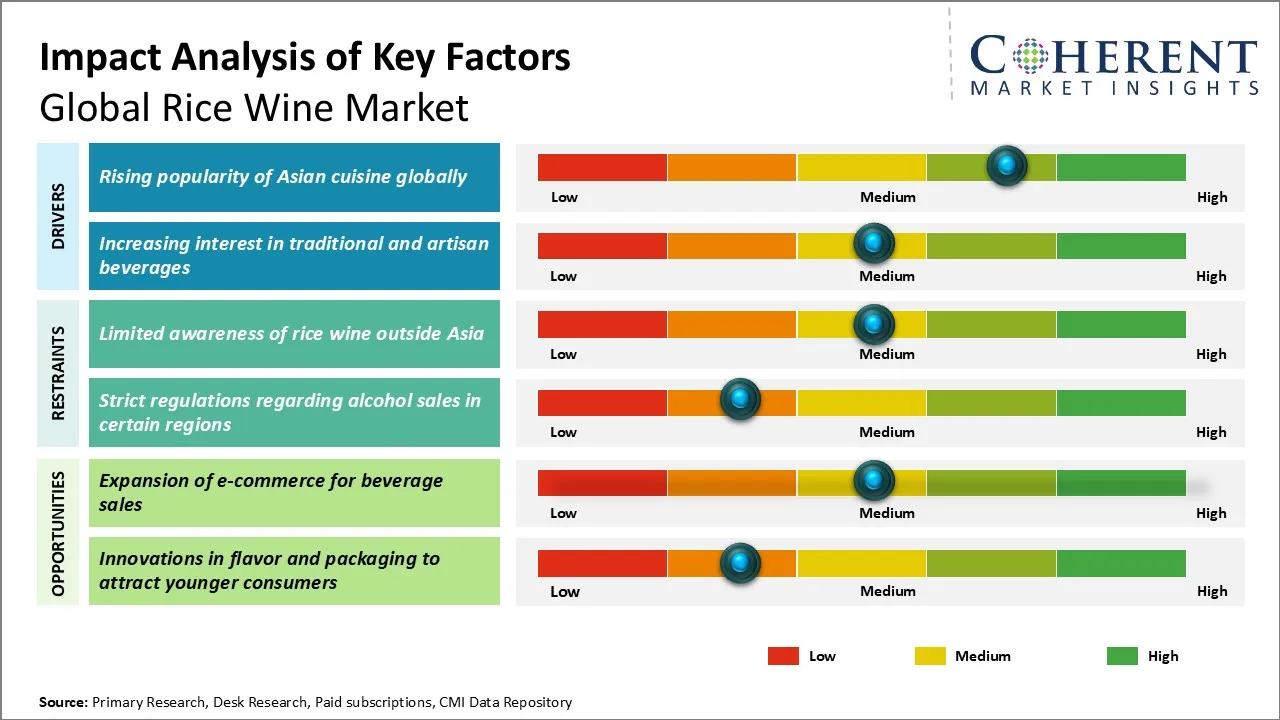
Rice Wine Market Driver - Rising Popularity of Asian Cuisine Globally
The growing global enthusiasm for Asian cuisine has significantly contributed to the increasing demand for rice wine across various markets. As consumers continue to explore diverse culinary experiences, traditional Asian dishes from countries such as China, Japan, and South Korea have gained widespread acceptance beyond their native regions. This culinary expansion has naturally elevated the demand for authentic accompaniments, with rice wine being a quintessential beverage and cooking ingredient in many Asian recipes. The unique flavor profiles of rice wine complement a wide array of dishes, from sushi and dim sum to Korean barbecue, enhancing the overall dining experience.
For instance, according to the United Nations Food and Agriculture Organization (FAO), rice production reached 522 million tons in 2022, with significant portions being utilized for fermented beverage production across Asian markets, reflecting the deep-rooted cultural significance of rice wine in traditional cuisines. This cultural authenticity has become a driving force as consumers worldwide embrace not just the food, but the complete dining experience that includes traditional beverages. The integration of rice wine into fusion cuisines has further amplified its appeal, with chefs and restaurateurs recognizing its versatility in both cooking applications and beverage pairings, creating new market segments and consumption occasions.
Rice Wine Market Opportunity - Expansion of E-Commerce for Beverage Sales
The rapid expansion of e-commerce platforms presents a significant opportunity for growth in the global rice wine market. With increasing internet penetration and smartphone adoption, consumers are progressively shifting towards online shopping for convenience, variety, and competitive pricing. E-commerce channels allow rice wine manufacturers and distributors to reach a wider audience beyond traditional retail outlets, including younger, tech-savvy consumers who prefer digital purchasing.
For example, Rice wine brands such as Ozeki and Takara capitalized on this shift by enhancing their digital presence, offering targeted promotions, and participating in seasonal online campaigns. As a result, some brands saw double-digit growth in their online sales channels, driven largely by younger consumers aged 25–40 who were increasingly exploring traditional beverages like sake and makgeolli through digital platforms.
Analyst Opinion (Expert Opinion)
- The global rice wine market is witnessing a renaissance, propelled by the growing interest in traditional and artisanal beverages among consumers. Brands like Mizkan and Kikkoman are innovating with unique flavor profiles and premium offerings, tapping into the craft beverage trend.
- Recent events, such as the Sake Expo (2023) and the International Wine & Spirits Fair (2022), have underscored the rising popularity of rice wine, showcasing successful pairings with gourmet cuisine that enhance its appeal. Case studies presented at these conferences demonstrated how rice wine is increasingly being embraced in mixology, expanding its use beyond traditional settings.
- The cultural significance of rice wine, particularly in Asian markets, has spurred demand in Western countries, where consumers are eager to explore diverse culinary experiences. As producers focus on quality and authenticity, the global rice wine market is well-positioned for growth, driven by a blend of tradition and innovation that resonates with modern consumers seeking unique and culturally rich beverage options.
Speak to the analyst
Want personalized insights?
Take the findings above to one of our principal consultants, or have the report rebuilt around the segments, geographies and competitors you actually track.
Market Segmentation
- Product Insights (Revenue, USD Bn, 2021 - 2033)
- Sake Wine
- Huangjiu Wine
- Makgeolli Wine
- Others
- Application Insights (Revenue, USD Bn, 2021 - 2033)
- Culinary Applications
- Beverages
- Others
- Distribution Channel Insights (Revenue, USD Bn, 2021 - 2033)
- Offline
- Supermarkets and Hypermarkets
- Convenience Stores
- Liquor Stores
- Restaurants and Bars
- Online
- Regional Insights (Revenue, USD Bn, 2021 - 2033)
- North America
- U.S.
- Canada
- Latin America
- Brazil
- Argentina
- Mexico
- Rest of Latin America
- Europe
- Germany
- U.K.
- Spain
- France
- Italy
- Russia
- Rest of Europe
- Asia Pacific
- China
- India
- Japan
- Australia
- South Korea
- ASEAN
- Rest of Asia Pacific
- Middle East
- GCC Countries
- Israel
- Rest of Middle East
- Africa
- South Africa
- North Africa
- Central Africa
- North America
- Key Players Insights
- Gekkeikan Sake Company
- Ozeki Sake
- Takara Sake USA Inc.
- SakeOne
- Shimizu Seizaburo Shoten
- Kikkoman Corporation
- Nanbu Bijin
- Daiwa Sake Brewery
- Mizubasho Sake
- Hakutsuru Sake Brewing Co.
- Asahi Shuzo
- Hakkaisan Brewery
- Kizakura Co., Ltd.
- Shoujun Sake Brewery
- Tedorigawa Sake Brewery
Sources
Primary Research Interviews
- Production Manager – Leading Rice Wine Manufacturer
- Export Manager – Major Asian Rice Wine Exporter
- Product Development Head – Renowned Rice Wine Brand
- Quality Control Manager – Traditional Rice Wine Cooperative
Stakeholders
- Rice Wine Producers (Artisanal and Industrial)
- Distributors and Importers
- End-use Sectors:
- Beverage Retailers and Specialty Alcohol Stores
- Restaurants and Bars specializing in Asian Cuisine
- Export Markets (East Asia, Southeast Asia, Western Countries)
- Regulatory Authorities (Alcohol and Food Safety)
- Packaging and Logistics Providers
- E-commerce Platforms for Alcoholic Beverages
Databases
- UN Comtrade Database
- India Import Export (EXIM) Database
- National Alcohol Regulatory Bodies’ Data (e.g., Japan, South Korea, and China)
Magazines
- Beverage Industry Magazine – Trends in fermented alcoholic beverages
- Wine & Spirits Journal – Innovations in rice wine production and marketing
- Asian Alcohol Review – Market updates on traditional rice wines
- Drinks International – Global market trends in specialty alcoholic beverages
Journals
- Journal of Food Science & Technology – Fermentation and quality of rice wine
- International Journal of Fermented Foods – Microbial and biochemical studies in rice wine
- Journal of Ethnic Foods – Cultural significance and consumption of rice wines
- Food Chemistry – Chemical composition and health benefits of rice wine
Newspapers
- The Financial Times – Market growth and international trade of rice wines
- South China Morning Post – Consumer trends in Asian traditional alcoholic drinks
- The Japan Times – Domestic rice wine production and export policies
Associations
- International Wine & Spirits Research (IWSR)
- Asian Beverage Association
- Brewers Association of Asia
- National Alcohol Beverage Control Associations (Japan, South Korea, China)
Public Domain Sources
- World Health Organization – Alcohol consumption guidelines and health impact studies
- Food and Agriculture Organization (FAO) – Fermentation processes and safety standards
- National Food Safety Authorities (Japan, South Korea, and China) – Regulations on rice wine production
Proprietary Elements
- CMI Data Analytics Tool, Proprietary CMI Existing Repository of information for last 8 years
Get access to 250+ pages report
Every segment, forecast, competitor profile and data table behind the analysis above — available for instant download.
- ESOMAR Member
- ISO 9001:2015 Certified
- D-U-N-S Registered
- GDPR & CCPA Compliant
Missing comfort of reading report in your local language? Find your preferred language:
Transform your Strategy with Exclusive Trending Reports
Frequently Asked Questions
The global rice wine market is estimated to be valued at USD 5.52 Bn in 2026 and is expected to reach USD 7.67 Bn by 2033.
The CAGR of the global rice wine market is projected to be 4.8% from 2026 to 2033.
Rising popularity of Asian cuisine globally and increasing interest in traditional and artisan beverages are the major factors driving the growth of the global rice wine market.
Limited awareness of rice wine outside Asia and strict regulations regarding alcohol sales in certain regions are the major factors hampering the growth of the global rice wine market.
In terms of product, Sake Wine is estimated to dominate the market revenue share in 2026.
Gekkeikan Sake Company, Ozeki Sake, Takara Sake USA Inc., SakeOne, Shimizu Seizaburo Shoten, Kikkoman Corporation, Nanbu Bijin, Daiwa Sake Brewery, Mizubasho Sake, Hakutsuru Sake Brewing Co., Asahi Shuzo, Hakkaisan Brewery, Kizakura Co., Ltd., Shoujun Sake Brewery, and Tedorigawa Sake Brewery are the major players.
Asia Pacific is expected to lead the global rice wine market in 2026.