

Global Sarcoidosis Drug Market Size and Forecast – 2026 to 2033
According to Coherent Market Insights, the global sarcoidosis drug market is estimated to be valued at USD 8.93 Bn in 2026 and is expected to reach USD 13.61 Bn by 2033, expanding at a compound annual growth rate (CAGR) of 6.2% from 2026 to 2033. This steady growth is driven by increasing awareness, advancements in drug development, and rising prevalence of sarcoidosis worldwide. Growing investments in research and new therapeutic pipelines also contribute to the expanding market landscape during this period.
Key Takeaways of the Sarcoidosis Drug Market
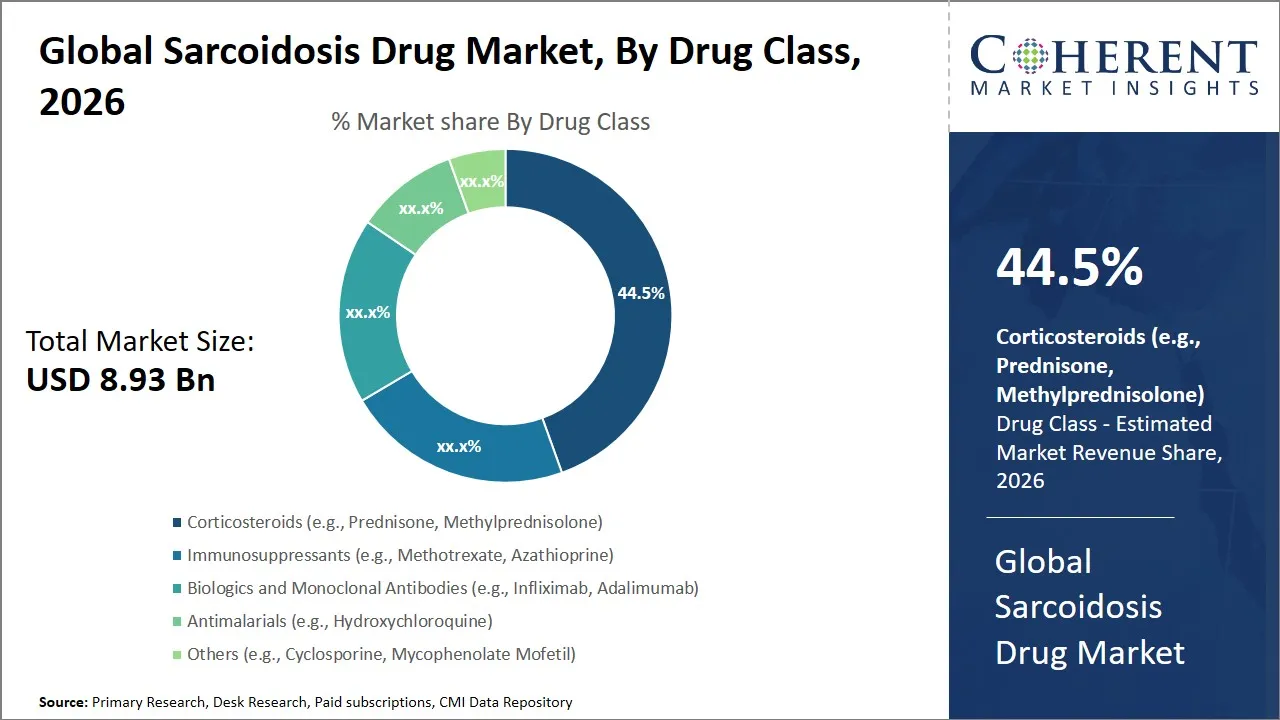
- Corticosteroids (e.g., Prednisone, Methylprednisolone) segment is expected to hold 44. 5% of the sarcoidosis drug market share in 2026.
- Oral segment is expected to dominate with a 65. 8% of the market share in 2026.
- Pulmonary sarcoidosis segment is projected to account for 62. 5% of the global sarcoidosis drug market share in 2026.
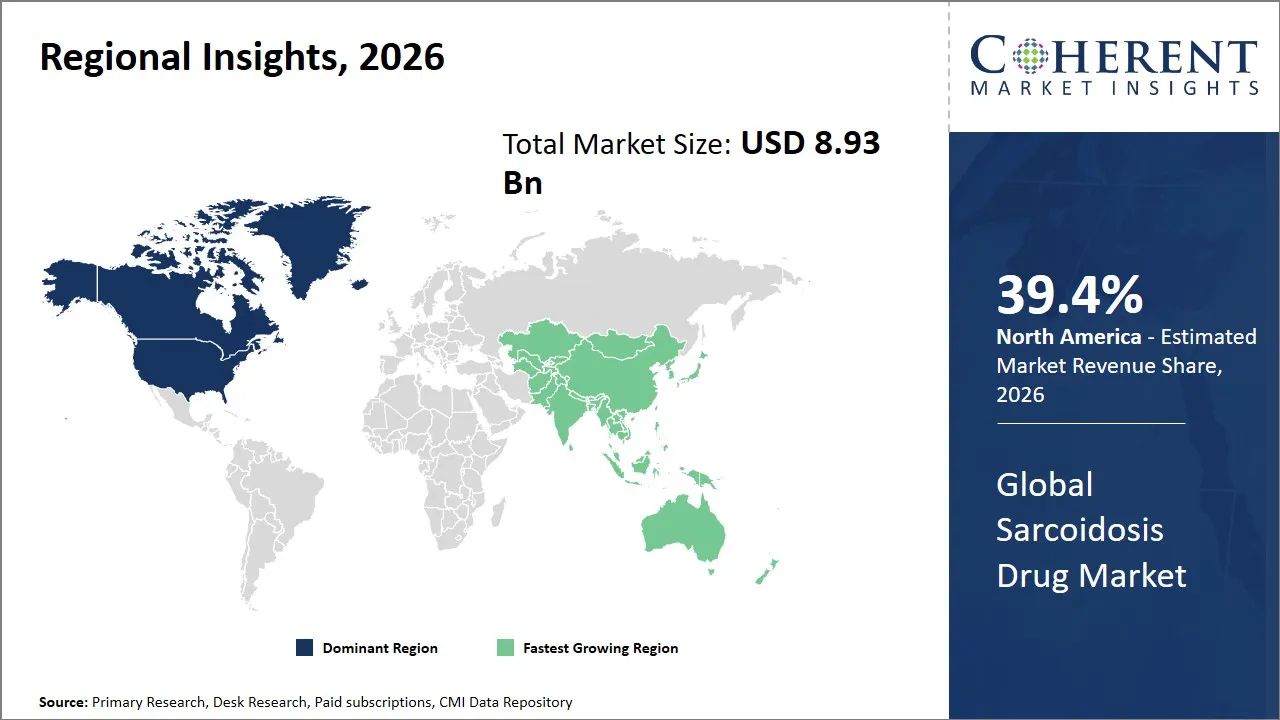
- North America is expected to lead the market, holding a share of 39. 4% in 2026. Asia Pacific is anticipated to be the fastest-growing region, with 24.3% share in 2026.
Market Overview
- Market trends reveal a shift towards personalized and targeted therapies, driven by enhanced understanding of the disease’s immunopathology.
- Biologic drugs and novel immunomodulators are gaining traction, offering improved efficacy and safety profiles. Additionally, the integration of digital health technologies for monitoring and managing sarcoidosis patients is becoming prevalent, enhancing treatment adherence and outcomes.
- Furthermore, emerging markets are witnessing increased healthcare expenditure and better diagnostic capabilities, further boosting the market growth.
Current Events and Its Impact
Current Events | Description and its Impact |
Late-Stage Clinical Trial Failure Leading to Discontinuation of a Novel Biologic |
|
Global shift toward personalized and chronic-care management models |
|
Segmental Insights
- Current Industry Events of 2026
- Market Size Estimation
- Regional Breakdown
- Competitive Landscape
- Customer Intelligence
- Segmental Analysis
- Pricing Analysis
- Key Market Drivers, Challenges & Future Trends
- Customized Insights Section
Why Does Corticosteroids Dominate the Sarcoidosis Drug Market in 2026?
Corticosteroids (e.g., Prednisone, Methylprednisolone) segment is estimated to hold 44.5% of the market share in 2026, because they have proven effectiveness in the management of the inflammatory processes that are at the heart of sarcoidosis.
The first-line therapy of sarcoidosis has long been known to be corticosteroids; it is an anti-inflammatory and immunosuppressant that has a strong effect. This widespread clinical validation can be attributed to their years of application and a long history of clinical evidence of their abilities to mitigate granulomatous inflammation which defines sarcoidosis and therefore suppress symptoms and delay the progression of the disease.
In July 2021, Mallinckrodt plc, a biopharmaceutical company, announced Acthar Gel inclusion in ERS sarcoidosis guidelines. The European Respiratory Society, a respiratory medicine organization, endorsed the sarcoidosis drug for selected pulmonary patients. Guidelines highlighted Acthar Gel as a steroid-sparing option when standard therapies fail or are intolerable.
Source: https://www.mallinckrodt.com/about/news-and-media/news-detail/?id=27341
Why is Oral Segment Preferred Across Age Groups in the Sarcoidosis Drug Market?
The oral segment is projected to dominate with a 65.8% of the market share in 2026, because it is convenient and easy to administer in the long-term. Oral drugs are self-administered by patients without the need to visit hospitals frequently thus they are appropriate in management of chronic diseases. This is quite compatible with outpatient care models and minimizes the burden of treatment.
There is also the effect of oral dosing enhancing patient compliance, which is extremely important in a variable disease such as sarcoidosis. Regular consumption is what helps to manage the symptoms and avoid the outbreak of the disease. Consequently, clinicians still prefer oral therapies as the first-line therapies.
What Drives the Dominance of Pulmonary Sarcoidosis in Sarcoidosis Drug Market?
When examining the indication-based segmentation of the global sarcoidosis drug market, pulmonary sarcoidosis will be seen as the main segment due to its high prevalence and high clinical impact with a share of 62.5% in 2026. The lungs are the most commonly involved organ in sarcoidosis with pulmonary involvement being reported in most patients diagnosed with the disease.
The high prevalence is translated into high need of pharmacological interventions to control breathing difficulties, stop the disease progression and preserve pulmonary functions, as these significantly deteriorate the quality of life of patients.
Reimbursement Variability Constraining Access and Adoption of Advanced Sarcoidosis Therapies
- Reimbursement variability remains a major constraint in the sarcoidosis drug market due to fragmented payer policies, indication-specific coverage, and step-therapy requirements. While corticosteroids benefit from broad reimbursement, access to biologics and ACTH-based therapies varies widely by geography and payer, resulting in delayed treatment initiation and uneven patient access.
- This inconsistency skews prescribing toward reimbursed generics, even for refractory or steroid-intolerant patients. Companies such as AbbVie, Janssen Pharmaceuticals, and Pfizer face conditional coverage tied to disease severity or prior therapy failure, limiting uptake of advanced treatments despite demonstrated clinical need.
Regional Insights
North America Sarcoidosis Drug Market Analysis and Trends
North America’s leadership in the global sarcoidosis drug market is pegged largely by a strong healthcare system bearing 39.4% share in 2026, high disease awareness, and massive research and development programs on pharmaceutical research. The region also has a well-developed biotech and pharmaceutical company ecosystem, together with good government policies that promote innovation in this region, including accelerated drug regulatory clearances and robust intellectual property rights.
The U.S. Food and Drug Administration (FDA) actively encourages the development of rare diseases drugs by offering such programs as the Orphan Drug Act that stimulates companies to invest in treating sarcoidosis. The key players in the industry such as Gilead Sciences, Pfizer, and Mallinckrodt Pharmaceuticals are operating in North America and they have played significant roles in the development of new therapies and increasing treatment options of sarcoidosis.
Asia Pacific Sarcoidosis Drug Market Analysis and Trends
Asia Pacific has the highest & fastest growth in the sarcoidosis drug market with a share of 24.3% in 2026, due to the bettering healthcare infrastructure, growing awareness regarding sarcoidosis, and growing interest in the government towards rare diseases. China, India, Japan and South Korea are trying to improve regulatory systems, improve drug approval processes and increase local drug production and the region is very appealing to multinational companies, as well as to local companies.
Rapid urbanization and expanding healthcare insurance coverage are further widening the patient base. Notable companies contributing to this growth include Japan's Eisai Co., Ltd., China's Innovent Biologics, and South Korea’s Hanmi Pharmaceutical. These players are actively engaging in drug development collaborations, licensing agreements, and strategic partnerships aimed at addressing the unmet needs in sarcoidosis treatment.
Sarcoidosis Drug Market Outlook for Key Countries
What are the Key Trends Shaping the U.S. Sarcoidosis Drug Market?
The pharmaceutical innovation and the network of clinical research on sarcoidosis in the U.S. has been high, which defines the market for sarcoidosis drugs. The market is propelled by the presence of major companies like Gilead Sciences and Mallinckrodt Pharmaceuticals that manufacture high-level biologics and anti-inflammatory agents.
The enabling regulatory framework of orphan drugs created by the FDA has led to the development of new treatment modalities. Furthermore, a significant level of governmental and non-governmental investments helps improve the capacities of research and development, making the U.S. one of the pioneers in the field of dealing with this multisystem condition.
How is the Sarcoidosis Drug Market Evolving in Germany?
Germany is still the European sarcoidosis drug market leader because of the well-developed pharmaceutical industry and overall healthcare system. The governments encourage early diagnostics and management of sarcoidosis, as well as have strong reimbursement systems which motivate the use of new treatment.
Major players like Bayer AG and Boehringer Ingelheim are the players who make a contribution of continuous research and distribution channels. The prioritization towards personalized medicine in Germany also increases the effectiveness of treatment in the sarcoidosis treatment.
China Sarcoidosis Drug Market Trends
The sarcoidosis drug market in China is developing at a high rate due to the government policies in enhancing accessibility of drugs and empowering the local pharmaceutical industry. The focus on rare diseases in the health policies of countries has boosted access to therapies of sarcoidosis.
Emerging domestic biotech companies such as Innovent Biologics are increasing the pace at which biologics and targeted drug discoveries are developed with regulatory change expected to speed up approvals. Furthermore, the increase in the number of hospitals and patient awareness leads to the increasing demand.
Japan Sarcoidosis Drug Market Trends
Japan has a developed market environment where pharmaceutical companies such as Eisai Co., Ltd contribute a lot. The Orphan Drug System has allowed the creation and uptake of a treatment of sarcoidosis because the government prioritizes rare diseases.
The high healthcare spending in Japan and excellent healthcare system guarantee extensive access to innovative healthcare to patients. Besides, effective cooperation between academia and industry enhances clinical innovation and drug discovery in this domain.
Biologic & Immunomodulator Adoption in Sarcoidosis
- The biologic and immunomodulator adoption curve in the sarcoidosis drug market remains gradual, reflecting their positioning primarily in refractory or severe cases rather than first-line therapy. Corticosteroids continue to dominate initial treatment due to rapid symptom control, low cost, and broad reimbursement, while biologics such as TNF-α inhibitors are typically introduced only after steroid failure or intolerance. This stepwise treatment paradigm slows early uptake and confines biologic use to a narrower patient subset.
- Biologic adoption in sarcoidosis is rising as steroid toxicity, relapse risk, and unmet needs become clearer in chronic disease. Increasing real-world evidence and physician familiarity are gradually moving biologics from niche, late-line use toward more defined roles in complex cases.
- Selective biologic uptake is evident through Roche with rituximab used off-label in refractory neurosarcoidosis and cardiac sarcoidosis, and Novartis with secukinumab explored in investigational or compassionate-use settings for chronic inflammatory cases. This trend is reflected in targeted use of rituximab by Roche for refractory neuro- and cardiac sarcoidosis, exploratory use of secukinumab by Novartis, and limited abatacept adoption linked to Bristol Myers Squibb, confirming late-line but expanding biologic penetration.
Market Players, Key Developments, and Competitive Intelligence
Key Developments
- In July 2025, aTyr Pharma, a clinical-stage biotechnology company focused on immunology innovation, announced the completion of patient visits in its Phase 3 EFZO-FIT study evaluating efzofitimod, a novel sarcoidosis drug for pulmonary sarcoidosis. The global trial enrolled 268 patients across the U.S., Europe, Japan, and Brazil and assessed steroid reduction outcomes.
- In May 2024, Oxford University Hospitals NHS Foundation Trust, a leading U.K. public healthcare provider, administered infliximab as the first approved biologic Sarcoidosis Drug for pulmonary sarcoidosis in over 50 years. The treatment was delivered at John Radcliffe Hospital following NHS England commissioning supported by NICE. Infliximab targets TNF-alpha and aims to reduce long-term dependence on corticosteroids and broad immunosuppressants.
- In November 2023, Xentria Inc. announced EMA Orphan Drug Designation for XTMAB-16, a Sarcoidosis Drug targeting pulmonary sarcoidosis. The designation coincided with enrollment of the first U.S. patient in its Phase 1b/2a global study. XTMAB-16 is an anti-TNFα monoclonal antibody developed to reduce granuloma-driven inflammation beyond steroid-based care.
- In July 2023, Molecure S.A., a clinical-stage biotechnology company developing first-in-class small-molecule therapies, received the USFDA approval to begin Phase II trials of OATD-01, a novel Sarcoidosis Drug for pulmonary sarcoidosis. The U.S. study marks the first clinical use of a CHIT1 inhibitor targeting disease modification. Molecure plans parallel Phase II approvals in Europe, with topline results expected by mid-2025.
Top Strategies Followed by Global Sarcoidosis Drug Market Players
Player Type | Strategic Focus | Examples |
Established Market Leaders | Heavy R&D investment in next-generation sarcoidosis therapies; focus on biologics and targeted immunomodulators with improved safety profiles; extensive clinical trial pipelines; strategic alliances with biotech firms for novel mechanisms; aggressive geographic expansion into Asia-Pacific and Latin America to capture rising diagnosis rates | Mallinckrodt advances Acthar positioning through expanded clinical evidence; AbbVie and Roche leverage immunology biologics for refractory sarcoidosis use cases |
Mid-Level Players | Emphasis on cost-effective treatment options including generics and biosimilars; strong focus on steroid-sparing immunosuppressants; partnerships with CMOs and research institutions to optimize development costs; licensing and joint ventures to enter new regional markets with controlled risk | Teva and Astellas expand immunosuppressant portfolios through regional manufacturing tie-ups; UCB collaborates to broaden immunology reach beyond core markets |
Small-Scale Players | Niche focus on innovative and mechanism-driven therapies for specific sarcoidosis manifestations; investment in novel targets and personalized medicine approaches; reliance on local alliances with research centers and hospitals; agile regulatory and development strategies | aTyr Pharma develops efzofitimod targeting immune regulation; early-stage biotech firms partner with academic institutions for sarcoidosis-specific innovation |
Market Report Scope
Sarcoidosis Drug Market Report Coverage
| Report Coverage | Details | ||
|---|---|---|---|
| Base Year: | 2025 | Market Size in 2026: | USD 8.93 Bn |
| Historical Data for: | 2020 To 2024 | Forecast Period: | 2026 To 2033 |
| Forecast Period 2026 to 2033 CAGR: | 6.2% | 2033 Value Projection: | USD 13.61 Bn |
| Geographies covered: |
| ||
| Segments covered: |
| ||
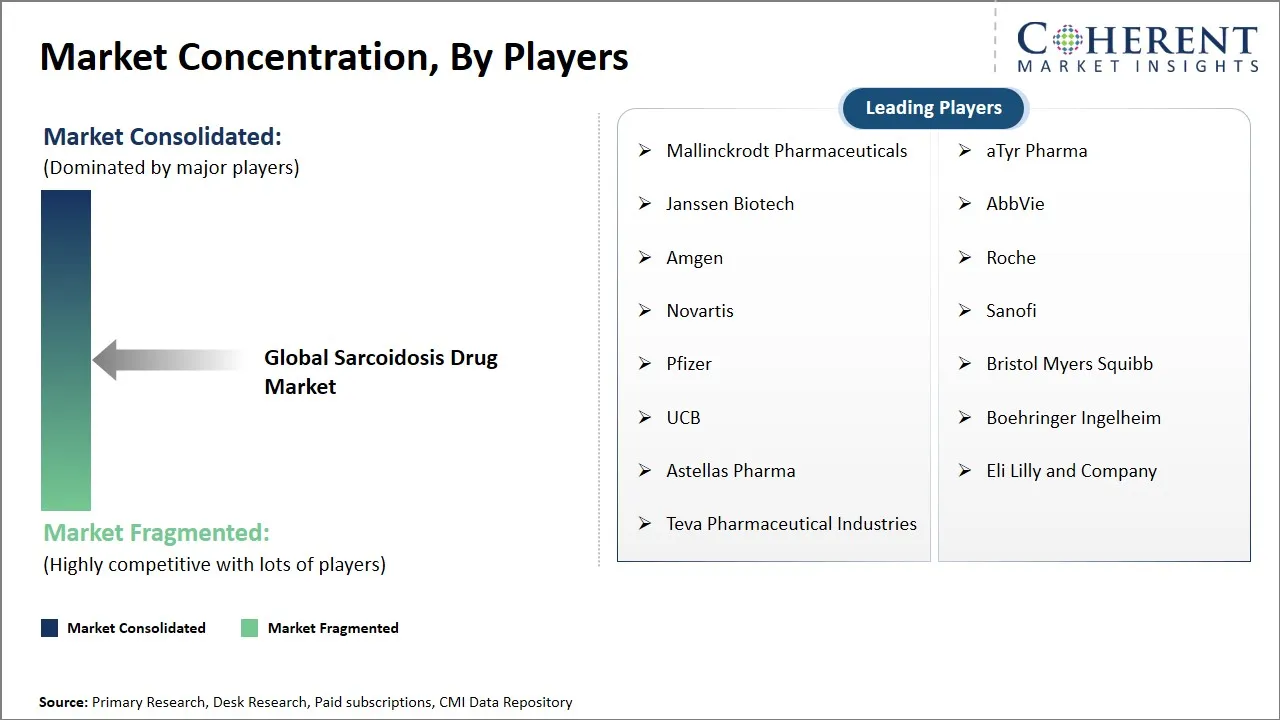
| Companies covered: | Mallinckrodt Pharmaceuticals, aTyr Pharma, Janssen Biotech, AbbVie, Amgen, Roche, Novartis, Sanofi, Pfizer, Bristol Myers Squibb, UCB, Boehringer Ingelheim, Astellas Pharma, Eli Lilly and Company, and Teva Pharmaceutical Industries | ||
| Growth Drivers: |
| ||
| Restraints & Challenges: |
| ||
Sarcoidosis Drug Market Dynamics
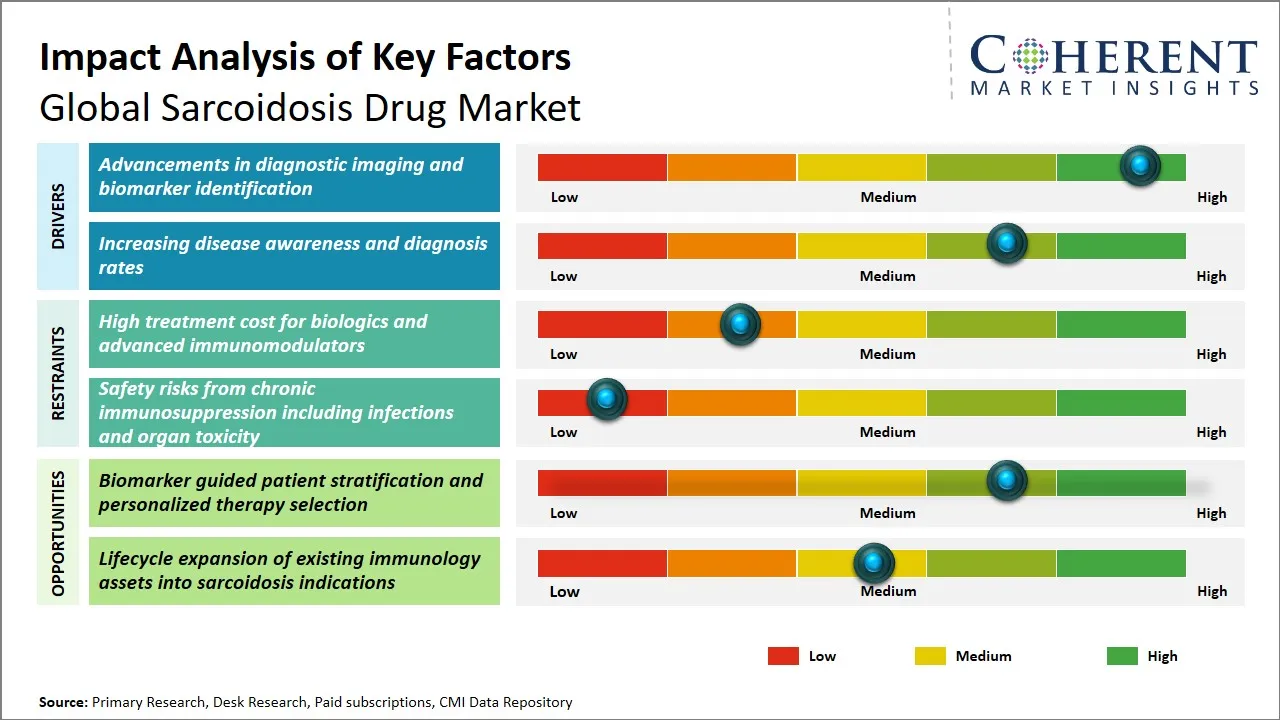
Sarcoidosis Drug Market Driver - Advancements in Diagnostic Imaging and Biomarker Identification
The advances in technologies of diagnostic imaging and identification of biomarkers have also influenced the diagnosis and treatment of sarcoidosis greatly and have led to innovations in the drug market. High-resolution computed tomography (HRCT) and positron emission tomography (PET) also facilitate more effective and prompt identification of granulomatous inflammation typical of sarcoidosis that will allow clinicians to detect the latter at earlier stages and assess therapeutic response better.
At the same time, the discovery of new biomarkers with the progress of molecular and genetic studies has made it easier to distinguish sarcoidosis among other granulomatous diseases, and, accordingly, more specific therapeutic interventions are conducted. These do not just increase diagnostic accuracy, but also help in personalized medicine strategies, whereby drug developers would be in a position to design drugs depending on the unique biomarker patterns of the patients.
In September 2024, University of Pennsylvania researchers identified ILC1 cells as a key biomarker for sarcoidosis diagnosis. The study revealed a twelvefold increase of ILC1 levels in sarcoidosis patients. Targeting the CXCR4 pathway may enable future Sarcoidosis Drug development with fewer steroid-related side effects.
Sarcoidosis Drug Market Opportunity - Biomarker-Guided Patient Stratification and Personalized Therapy Selection
The global sarcoidosis drug market has a high growth potential in the incorporation of patient stratification based on biomarkers and personalized choice of the therapy. Sarcoidosis is a heterogeneous and complicated disease with unstable clinical presentation and organ involvement that makes it rather difficult to achieve optimal treatment outcomes.
Such stratification enables clinicians to customize treatment protocols to a better extent, limiting trial-and-error methods and avoiding negative outcomes of generalized care. Individualized choice of therapy with the aid of biomarker profiles can increase the effectiveness of the available sarcoidosis medications, as well as the design of new targeted therapy. Example Roche is employing immune bio-markers to stratify patients with granulomatous disease to receive targeted therapy. Boehringer Ingelheim uses fibrosis biomarkers in interstitial lung disease programs to customize the choice of treatment.
For Example, Sanofi, which leverages cytokine and fibrosis markers from immunology research to refine patient stratification. Regeneron Pharmaceuticals also uses genomic and proteomic profiling to identify responder populations, supporting more personalized treatment approaches in complex inflammatory diseases.
Analyst Opinion (Expert Opinion)
- Sarcoidosis drug market is moving away towards generalized steroid-based control to disease-modifying agents. Development is facilitated through the better diagnosis, biomarker discovery and regulatory incentives to rare diseases. Biologics and new immunomodulators are becoming more popular as clinicians are seeking steroid-sparing agents but heterogeneity of disease and complexity of trials remain sluggish in approvals. The most promising opportunity is precision medicine, whereas the main limitation is the pressure on reimbursement and lack of long-term data.
- The clinical alignment and innovation has been spurred by the recent global conferences like the World Association of Sarcoidosis and Other Granulomatuous Disorders Congress, American Thoracic Society Conference, and European Respiratory Society Congress. Persistent end of life trials, orphan drug designs and biomarker breakthroughs by academia are shaping treatment pathways. North American and European health systems are progressively endorsing conditional Sarcoidosis Drug intake in which definite clinical advantage has been illustrated.
Speak to the analyst
Want personalized insights?
Take the findings above to one of our principal consultants, or have the report rebuilt around the segments, geographies and competitors you actually track.
Market Segmentation
- Drug Class Insights (Revenue, USD Bn, 2021 - 2033)
- Corticosteroids (e.g., Prednisone, Methylprednisolone)
- Immunosuppressants (e.g., Methotrexate, Azathioprine)
- Biologics and Monoclonal Antibodies (e.g., Infliximab, Adalimumab)
- Antimalarials (e.g., Hydroxychloroquine)
- Others (e.g., Cyclosporine, Mycophenolate Mofetil)
- Route of Administration Insights (Revenue, USD Bn, 2021 - 2033)
- Oral
- Parenteral
- Indication Insights (Revenue, USD Bn, 2021 - 2033)
- Pulmonary Sarcoidosis
- Extrapulmonary Sarcoidosis
- Age Group Insights (Revenue, USD Bn, 2021 - 2033)
- Adult
- Pediatric
- Geriatric
- Distribution Channel Insights (Revenue, USD Bn, 2021 - 2033)
- Hospital pharmacy
- Retail pharmacy
- Online pharmacy
- End User Insights (Revenue, USD Bn, 2021 - 2033)
- Hospitals
- Specialty Clinics
- Ambulatory Surgical Centers
- Home Care Settings
- Regional Insights (Revenue, USD Bn, 2021 - 2033)
- North America
- U.S.
- Canada
- Latin America
- Brazil
- Argentina
- Mexico
- Rest of Latin America
- Europe
- Germany
- U.K.
- Spain
- France
- Italy
- Russia
- Rest of Europe
- Asia Pacific
- China
- India
- Japan
- Australia
- South Korea
- ASEAN
- Rest of Asia Pacific
- Middle East
- GCC Countries
- Israel
- Rest of Middle East
- Africa
- South Africa
- North Africa
- Central Africa
- North America
- Key Players Insights
- Mallinckrodt Pharmaceuticals
- aTyr Pharma
- Janssen Biotech
- AbbVie
- Amgen
- Roche
- Novartis
- Sanofi
- Pfizer
- Bristol Myers Squibb
- UCB
- Boehringer Ingelheim
- Astellas Pharma
- Eli Lilly and Company
- Teva Pharmaceutical Industries
Sources
Primary Research Interviews
Industry Stakeholders
- Pulmonary Fibrosis Foundation
- Foundation for Sarcoidosis Research
- American Thoracic Society
- European Respiratory Society
- World Association of Sarcoidosis and Other Granulomatous Disorders
- British Thoracic Society
End Users
- National Institutes of Health
- National Health Service
- Veterans Health Administration
- Mayo Clinic
- Cleveland Clinic
- Johns Hopkins Medicine
Government and International Databases
- U.S. Food and Drug Administration
- European Medicines Agency
- World Health Organization
- National Institute for Health and Care Excellence
- Centers for Disease Control and Prevention
- ClinicalTrials.gov
Trade Publications
- Nature Reviews Drug Discovery
- The Lancet Respiratory Medicine
- STAT
- Endpoints News
- BioCentury
- PharmaTimes
Academic Journals
- Journal of Clinical Investigation
- American Journal of Respiratory and Critical Care Medicine
- European Respiratory Journal
- Chest Journal
- The New England Journal of Medicine
- Frontiers in Immunology
Reputable Newspapers
- The New York Times
- The Guardian
- The Wall Street Journal
- Financial Times
- Reuters
- Associated Press
Industry Associations
- American Lung Association
- European Lung Foundation
- International Society for Pharmacoeconomics and Outcomes Research
- Drug Information Association
- International Rare Diseases Research Consortium
- National Organization for Rare Disorders
Public Domain Resources
- MedlinePlus
- OpenFDA
- EU Open Data Portal
- Data.gov
- WHO Global Health Observatory
Proprietary Elements
- CMI Data Analytics Tool: Proprietary analytics tool to analyze real-time market trends, consumer behavior, and technology adoption in market
- Proprietary CMI Existing Repository of Information for Last 8 Years
Get access to 250+ pages report
Every segment, forecast, competitor profile and data table behind the analysis above — available for instant download.
- ESOMAR Member
- ISO 9001:2015 Certified
- D-U-N-S Registered
- GDPR & CCPA Compliant
Missing comfort of reading report in your local language? Find your preferred language:
Transform your Strategy with Exclusive Trending Reports
Frequently Asked Questions
The global sarcoidosis drug market is estimated to be valued at USD 8.93 Bn in 2026 and is expected to reach USD 13.61 Bn by 2033.
The CAGR of global sarcoidosis drug market is projected to be 6.2% from 2026 to 2033.
Advancements in diagnostic imaging and biomarker identification and increasing disease awareness and diagnosis rates are the major factors driving the growth of the global sarcoidosis drug market.
High treatment cost for biologics and advanced immunomodulators and safety risks from chronic immunosuppression including infections and organ toxicity are the major factors hampering the growth of the global sarcoidosis drug market.
In terms of drug class, corticosteroids (e.g., prednisone, methylprednisolone) segment is estimated to dominate the market revenue share in 2026.
Long-term steroid use causes significant side effects and quality-of-life issues.
Yes biomarker-guided and targeted therapies are gaining momentum.