

Global Tumor Blood Testing Market Size and Forecast – 2026 to 2033
The global tumor blood testing market is estimated to be valued at USD 10.69 Bn in 2026 and is expected to reach USD 27.59 Bn by 2033, exhibiting a compound annual growth rate (CAGR) of 14.5% from 2026 to 2033. This robust growth is driven by increasing cancer prevalence, technological advancements in liquid biopsy techniques, and rising demand for non-invasive diagnostic solutions, positioning the market as a critical component in modern oncology diagnostics and personalized medicine.
Key Takeaways of the Global Tumor Blood Testing Market
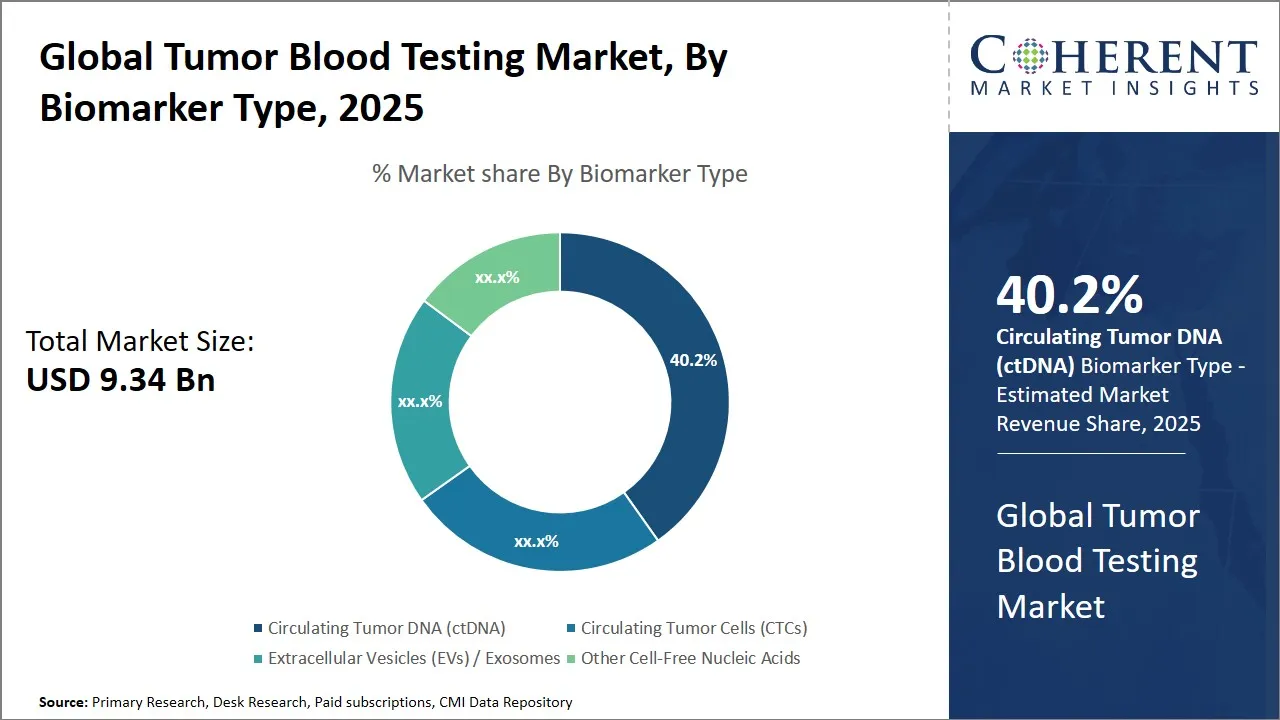
- In the global tumor blood testing market, Circulating Tumor DNA (ctDNA) is expected to dominate with the largest share of 41.2 % in 2026.
- The Polymerase Chain Reaction (PCR)-based testing is projected to hold the highest market share, accounting for 33.4 % in 2026.
- The early detection/cancer screening segment is anticipated to contribute the largest share to the market, with a share of 35.3 % in 2026.
- North America is expected to lead the market, holding a share of 41.3 % in 2026. Asia Pacific is anticipated to be the fastest-growing region, with an estimated market share of 23.4% in 2026.
Market Overview
A market trends highlight a significant shift towards precision medicine and early cancer detection through liquid biopsies, which are gaining traction due to their minimally invasive nature and ability to monitor tumor dynamics in real-time. Additionally, growing investments in R&D, collaborations between biotech firms and healthcare providers, and supportive regulatory frameworks are accelerating innovation in tumor blood testing. The integration of artificial intelligence and machine learning for enhanced data analysis is further enhancing diagnostic accuracy and patient outcomes, shaping the future trajectory of this promising market.
Current Events and Its Impact
Current Events | Description and its Impact |
Surge in Liquid Biopsy R&D and AI Integration |
|
Government Initiatives for Cancer Detection |
|
Segmental Insights
- Current Industry Events of 2026
- Market Size Estimation
- Regional Breakdown
- Competitive Landscape
- Customer Intelligence
- Segmental Analysis
- Pricing Analysis
- Key Market Drivers, Challenges & Future Trends
- Customized Insights Section
Tumor Blood Testing Market Insights, By Biomarker Type - Circulating Tumor DNA (ctDNA) is dominant due to its high sensitivity and non-invasive nature for detecting tumor mutations.
In terms of biomarker type, Circulating Tumor DNA (ctDNA) holds the largest share in the global tumor blood testing market with 41.2% share in 2026, a trend driven primarily by its unparalleled ability to provide comprehensive and dynamic insights into tumor genetics through a minimally invasive approach. ctDNA consists of small fragments of DNA shed from tumor cells into the bloodstream, offering real-time snapshots of the tumor’s genetic landscape.
On October 20, 2026, a study led by Johns Hopkins Kimmel Cancer Center revealed that ctDNA can guide chemotherapy for Stage 3 colon cancer. The DYNAMIC-III trial showed that ctDNA-negative patients received less chemotherapy with fewer side effects, while ctDNA-positive patients had escalated therapy, though outcomes didn’t improve. This research, supported by the National Institutes of Health and Marcus Foundation, highlights ctDNA’s potential in personalized cancer treatment.
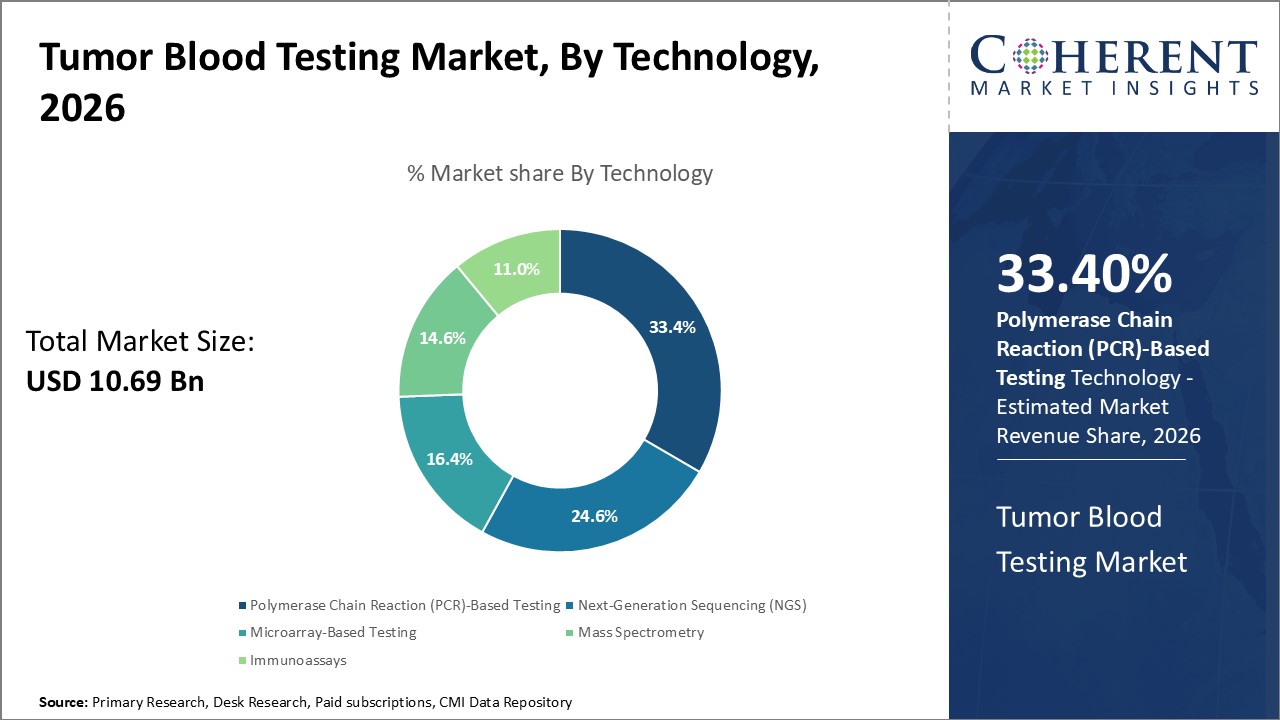
Tumor Blood Testing Market Insights, By Technology - Polymerase Chain Reaction (PCR)-Based Testing is dominant due to its precision, reliability, and ability to detect low levels of tumor markers
Polymerase Chain Reaction (PCR)-based technology takes the biggest market share of 33.4% in 2026, out of technologies used in tumor blood testing, which is an indication of its strength, adaptability, and affordability. The main advantage of PCR is that it can be used to detect small amounts of genetic material, such as a single mutation, methylation state, or gene rearrangement, which is related to tumors, even when the circulating biomarker is at very low concentrations.
The ease with which the technology can be integrated within the existing diagnostic workflow and the fact that it has well known protocols has helped the extensive clinical adoption of the technology. PCR-based tests have fast turnaround times, which is very important in clinical decision-making where interventions that require urgency are necessary.
Tumor Blood Testing Market Insights, By Clinical Application - Early detection/cancer screening is dominant due to its potential for improved prognosis and treatment outcomes in cancer patients
The clinical application market of tumor blood is dominated by the segment of early detection/cancer screening that will have the largest share of 35.3% in 2026, due to the growing global interest in detecting cancer at its initial and most manageable stages. early diagnosis using tumor biomarkers in blood provides a radical change in the paradigm of diagnosis based on symptoms to an active approach to managing cancer, and this aspect greatly changes the prognosis of patients.
This change is driven by an increase in the understanding of the advantages of early diagnosis such as less complex treatment, higher survival rates, and lower healthcare expenses related to managing cancer at an advanced stage. Early detection tests on blood are particularly desirable because of their non-invasive, sample collection, and possibly large population-wide screening programs.
Role of Artificial Intelligence (AI) in the Global Tumor Blood Testing Market
- The global tumor blood testing market is evolving with the application of Artificial Intelligence that increases the accuracy, efficiency and cost-effectiveness of cancer detection and diagnostics. Through advanced algorithms of machine learning, AI has the ability to perform large-scale and complex analyses of blood to identify circulating tumor DNA and other biomarkers of early cancer. Corporations like GRAIL, DELFI Diagnostics, and Guardant Health are using AI-based algorithms to identify the risk of cancer and plan diagnostics. The automation is time-saving in the hand interpretation process, more reliable, and cost-reducing on the operational cost besides enhancing the speed of screening and patient outcomes.
- The AI is also introducing new business models and innovations in the market. Due to predictive analytics and real-time data insights, labs and diagnostic companies can offer personalized monitoring, early medical treatment recommendations, and AI-assisted test results interpretation. The integration of genomics and digital pathology is bringing a tailored healthcare system in the form of AI powered oncology infrastructure via systems like PathAI and Tempus Labs. However, despite the benefits of the scalability and information processing capabilities provided by AI to be linked to long-term growth benefits, there exist barriers, especially in the data privacy, model transparency, and regulatory compliance. Nonetheless, AI usage can also be regarded as the shift in the direction of data-driven and personalized cancer therapy by shaping tumor blood analysis.
Regional Insights
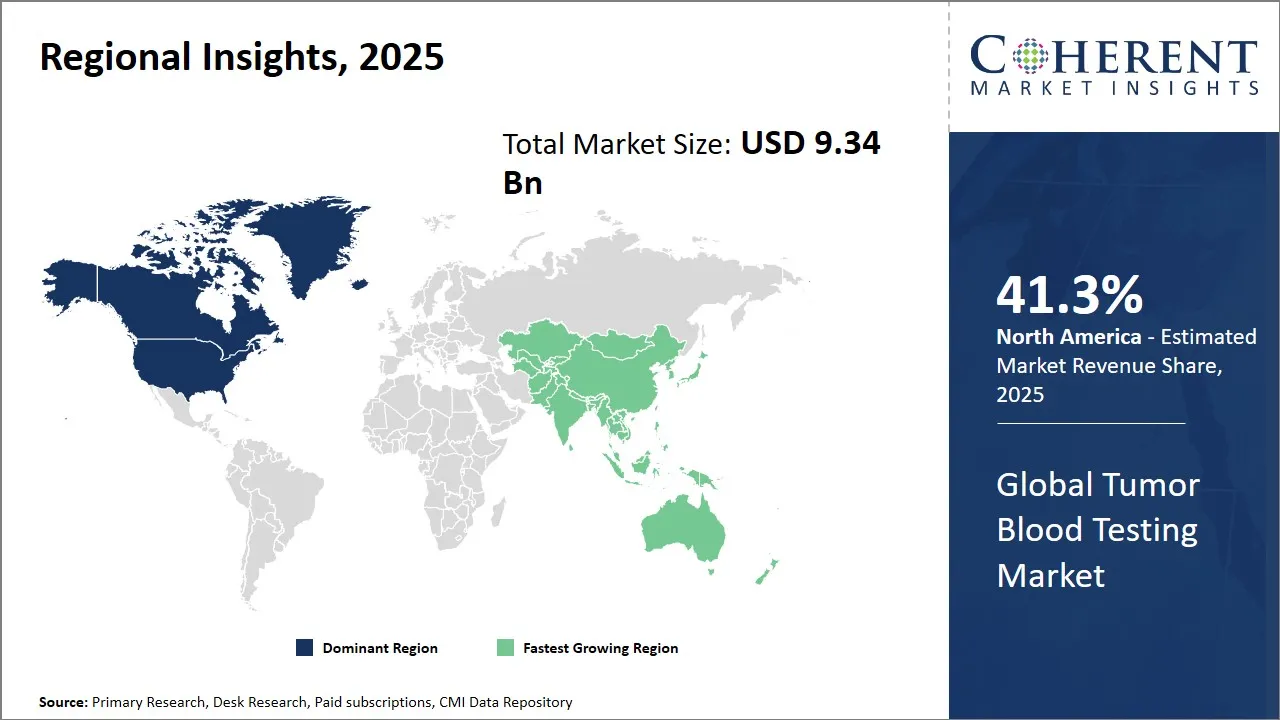
North America Tumor Blood Testing Market Analysis and Trends
In North America, the dominance in the global tumor blood testing market is primarily driven by a well-established healthcare infrastructure with share of 41.3% in 2026, robust R&D activities, and significant government support through agencies like the National Institutes of Health (NIH) and the U.S. FDA’s progressive regulatory frameworks. The region benefits from a mature market ecosystem with advanced diagnostic laboratories, numerous cancer research centers, and substantial private and public funding.
On October 20, 2026, GRAIL, Inc., a healthcare company focused on early cancer detection, announced positive results from its PATHFINDER 2 study, which tested the Galleri® multi-cancer early detection (MCED) blood test. The study showed that adding Galleri to standard cancer screenings increased cancer detection rates more than seven-fold. Notably, Galleri detected cancers earlier, with over half of the cancers found being in stages I or II.
Asia Pacific Tumor Blood Testing Market Analysis and Trends
Asia Pacific will also dominate the tumor blood testing market with the highest growth of 23.4% in 2026. This expansion can be attributed to the rising healthcare expenditures, rising occurrence of cancer, and widening of healthcare facilities in the emerging markets such as China and India. The government programs such as Healthy China 2030 and the National Cancer Control Programme in China and India are driving early detection of cancer that is increasing the demand of diagnostic solutions.
The area also has an advantage of competitive environment as there are multinational corporations as well as developing local companies such as BGI Genomics and ChromaCode. The increasing awareness, access to the market and the increased prevalence of chronic illnesses further hasten the use of tumor blood testing technologies.
Global Tumor Blood Testing Market Outlook for Key Countries
U.S. Tumor Blood Testing Market Analysis and Trends
The tumor blood testing market is still at the forefront of the U.S. with considerable investments in liquid biopsy and precision medicine. The first to push the limits with groundbreaking circulating tumor DNA (ctDNA) assays to allow non-invasive cancer detection and monitoring have been companies such as Guardant Health and Foundation Medicine. Positive reimbursement systems, existence of developed healthcare systems also increase innovation.
In September 2026, Exact Sciences Corp., a U.S leader in cancer diagnostics, launched Cancerguard, the first multi-cancer early detection blood test to analyze multiple biomarker classes. Available as a laboratory-developed test, Cancerguard is designed to detect over 50 cancer types, including high-mortality cancers like pancreatic, ovarian, and lung cancer.
China Tumor Blood Testing Market Analysis and Trends
The tumor blood testing market in China is a rapidly growing market because of the high number of patients and the high efforts by the government to encourage the early diagnosis of cancer. Next-generation sequencing technologies can now be used with affordable pricing models provided by local companies such as BGI Genomics, increasing its accessibility. The market is driven by the regulatory modernization of the Chinese government and investment on genomics research.
In August 2024, Chinese researchers announced a breakthrough in early gastric cancer detection, achieving 90% accuracy with a new blood test. The test detects cell-free DNA (cfDNA) from both healthy and tumor cells circulating in the bloodstream, offering a less invasive and more accurate alternative to traditional methods like endoscopies and serum markers.
Germany Tumor Blood Testing Market Analysis and Trends
The tumor blood testing market of Germany has a robust healthcare system, which has been known to have quality diagnostics and cancer treatment. The policies and incentives of reimbursement that have been introduced by the government to encourage individual medicine contribute towards market expansion. The major players like Qiagen and Roche Diagnostics have a presence in large numbers in Germany, which has provided proprietary biomarker assays to detect and monitor tumors.
On October 17, 2026, MVZ HPH Institute for Pathology and Hematopathology GmbH in Hamburg, Germany, introduced the HPH MRD test, a new ctDNA blood test for detecting minimal residual disease (MRD) in solid tumor cancer patients. The test, based on Haystack MRD technology from Quest Diagnostics, uses whole-genome sequencing to offer highly sensitive and specific detection of residual or recurrent disease
India Tumor Blood Testing Market Analysis and Trends
The tumor blood testing market in India is on its way to success due to the increased cases of cancer and growing healthcare facilities in urban and semi-urban regions. The government emphasis on cancer awareness and accessibility of diagnosis programs such as Ayushman Bharat aids in making the adoption. MedGenome and Strand Life Sciences are domestic companies that are developing cost-effective molecular diagnostic solutions on tumor markers that affordability and accessibility gaps.
On October 17, 2026, Prerna, a leading healthcare innovation company from Hyderabad, India, launched Cantel, India’s first microRNA-based blood test for breast cancer screening. This groundbreaking test offers a simple, convenient, and highly accurate alternative to traditional methods, aiming to address the critical gap in early detection and reduce late-stage diagnoses of breast cancer in India.
Market Players, Key Developments, and Competitive Intelligence
Key Developments
- On October 17, 2025, PrecisionRNA Biotech Pvt Ltd (Prerna), a healthcare innovation company from Hyderabad, launched Cantel, a microRNA-based blood test for breast cancer screening. This test offers a non-invasive, simple, and accurate alternative to traditional methods, aiming to improve early detection rates in India. Designed for women aged 30 and above, Cantel is a highly sensitive and specific screening tool, particularly useful for those with dense breast tissue or a family history of cancer.
- In September 2025, Guardant Health, a leader in precision oncology, announced an update on its Shield blood-based colorectal cancer (CRC) screening test. The latest algorithm, Shield V2, demonstrated a sensitivity of 84% for CRC detection, with a specificity of 90%. For stage I CRC, the sensitivity was 62%. The performance was validated using an expanded clinical cohort from the landmark ECLIPSE study. Shield is the first USFDA-approved blood test for primary CRC screening and has been recognized in various prestigious awards.
- In August 2025, Dana-Farber Cancer Institute unveiled a groundbreaking blood test for multiple myeloma (MM) using a method called SWIFT-seq. This innovative test, which profiles circulating tumor cells (CTCs) through single-cell sequencing, offers a non-invasive alternative to painful bone marrow biopsies.
- In July 2025, Fred Hutch Cancer Center announced the launch of the Vanguard Study, a national trial focused on multi-cancer detection (MCD) blood tests. The study aims to evaluate the effectiveness of blood tests that can screen for multiple cancers, including bladder, breast, colorectal, and more, in individuals aged 45 to 75. This is the first study under the Cancer Screening Research Network (CSRN), funded by the National Cancer Institute.
Top Strategies Followed by Global Tumor Blood Testing Market Players
- The leaders of the established market heavily invest in research and development (R&D) to launch new innovative and high-performance diagnostic products of high-quality clinical standards in a continuous stream. These corporations take the opportunity to use their high financial assets to not only increase the sensitivity and specificity of tumor blood tests, but also introduce a combination of advanced technologies, including liquid biopsy, next-generation sequencing, and AI-based analytics.
- In October 2023, DELFI Diagnostics, a U.S.-based developer of accessible blood-based cancer detection tests, launched FirstLook Lung, a new blood test aimed at improving Tumor Blood Testing for lung cancer. The test uses whole-genome machine learning to analyze fragments of cell-free DNA, identifying unique cancer patterns in blood with a 99.7% negative predictive value.
- The approach to the mid-level companies operating in the tumor blood testing market is a somewhat different one, as it is more oriented toward providing cost-effective diagnostic measures that provide a moderate balance between quality and cost. With the sensitivity of price of some consumer groups especially in the developing economies, these players differentiate their products to suit the need of the price-sensitive healthcare providers and patients without having to reduce their offerings in the area of accuracy and reliability.
- In July 2025, Sentara Health, a mid-sized healthcare provider, has launched the Vanguard Study to evaluate multi-cancer detection (MCD) tests. This national study, recruiting participants from Virginia’s Hampton Roads and Blue Ridge regions, aims to determine if these blood tests can help detect multiple types of cancer at early stages, when treatment is most effective.
- The smaller devastating companies in the tumor blood testing game often pick out very specific market segments or innovative technological features that would make their products the clear choice over the ones from big players. Their business patter often compels them to apply the most modern technologies such as microfluidics, biomarker multiplexing or new test methods to create super-sensitive or rapid testing systems.
- In December 2022, PredOmix, a healthcare innovation company, launched OncoVeryx-F, a blood test designed for early cancer detection in women. Utilizing a combination of metabolomics and artificial intelligence, the test accurately detects four major female-specific cancers breast, endometrial, cervical, and ovarian with over 98% accuracy.
Market Report Scope
Tumor Blood Testing Market Report Coverage
| Report Coverage | Details | ||
|---|---|---|---|
| Base Year: | 2025 | Market Size in 2026: | USD 10.69 Bn |
| Historical Data for: | 2020 To 2024 | Forecast Period: | 2026 To 2033 |
| Forecast Period 2026 to 2033 CAGR: | 14.5% | 2033 Value Projection: | USD 27.59 Bn |
| Geographies covered: |
| ||
| Segments covered: |
| ||
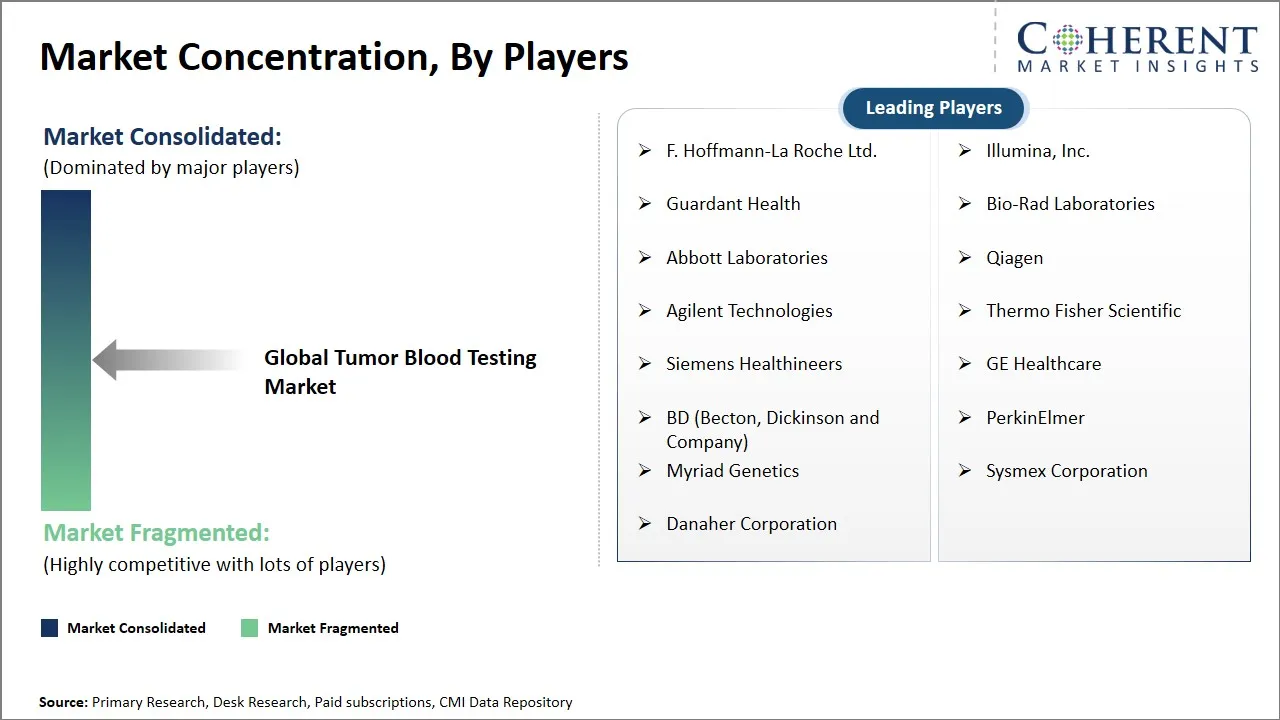
| Companies covered: | F. Hoffmann-La Roche Ltd., Illumina, Inc., Guardant Health, Bio-Rad Laboratories, Abbott Laboratories, Qiagen, Agilent Technologies, Thermo Fisher Scientific, Siemens Healthineers, GE Healthcare, BD (Becton, Dickinson and Company), PerkinElmer, Myriad Genetics, Sysmex Corporation, and Danaher Corporation | ||
| Growth Drivers: |
| ||
| Restraints & Challenges: |
| ||
Tumor Blood Testing Market Dynamics
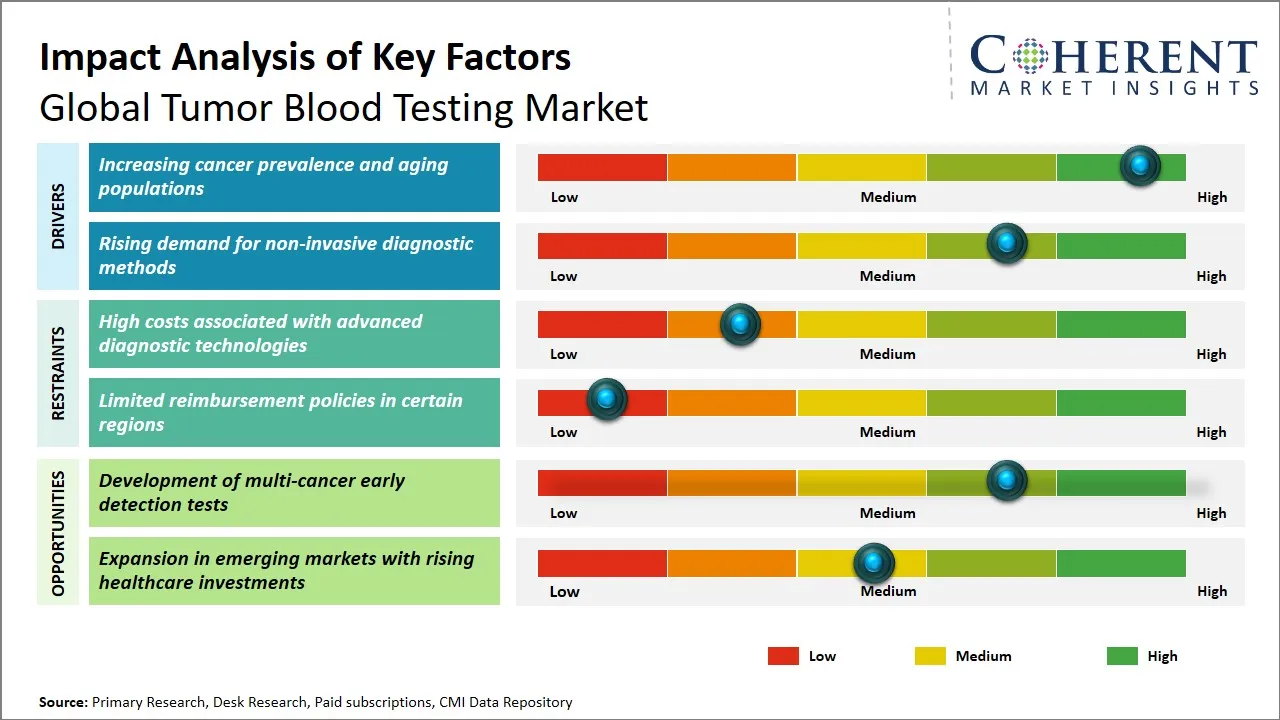
Tumor Blood Testing Market Driver - Increasing Cancer Prevalence and Aging Populations
The tumor blood testing market is significantly growing due to the increasing global cancer cases as well as the fast aging population. Cancer is mainly an age-related disease and the global population getting older not only increases the number of cancer patients that are going to need the discovery, monitoring, and personalized treatment strategies, but also the installation of non-invasive tumor blood testing technologies as they are the most desirable ones among these patients for the above reasons.
In February 2025, according to WHO, Cancer caused nearly 10 million deaths globally in 2020, with the most common types being breast, lung, colon, prostate, skin, and stomach cancers. Lung cancer led to the highest number of deaths, followed by colon, liver, stomach, and breast cancers. Around 400,000 children are diagnosed with cancer each year, highlighting its widespread impact.
Tumor Blood Testing Market Opportunity - Development of Multi-Cancer Early Detection Tests
Cancer patients that are going to require detection, monitoring, and personalized treatment strategies in which the non-invasive tumor blood testing technologies are going to be the main provider and thereby causing its demand to rise, and among them are the patients that suffer from cancer related to aging as the global life expectancy is increasing the percentage of the elderly that has cancer is also increasing. Through the development and marketing of multi-cancer early detection (MCED) tests the global tumor blood testing market is looking to gain a great deal of growth. MCED tests take advantage of advanced genomic and proteomic technologies, in contrast to traditional single-cancer detection methods, to detect various cancers at the same time by only using a blood sample.
On October 17, 2025, Samsung C&T, a global leader in construction and investment, and Samsung Electronics, a major player in consumer electronics, announced a strategic partnership with GRAIL, Inc., a healthcare company focused on early cancer detection. Samsung will invest USD 110 million into GRAIL to help bring its Galleri multi-cancer early detection test to Asia Pacific, starting in South Korea, with potential expansion to Japan and Singapore.
Analyst Opinion (Expert Opinion)
- The tumor blood testing market is experiencing significant growth, driven by technological advancements in liquid biopsy and biomarker discovery. Government initiatives, like China’s Healthy China 2030 and India’s National Cancer Control Programme, are boosting early cancer detection efforts and creating a favorable environment for market expansion. Increased spending on healthcare along with the rising cancer rates in the developing world will continue to drive the demand for these diagnostic solutions. On the other hand, the market has to deal with some challenges like high pricing, regulatory difficulties, and the need for consistent testing practices which have to be implemented in all regions.
- However, the growth areas are opening up in the form of allowing more access to the market in the regions which are not being served and the increased personalization of medicine trend. The companies like BGI Genomics and ChromaCode are the first ones to come up with the most innovative solutions. The industry events such as the AACR conference have been critical in developing partnerships and demonstrating new technology. One of the factors that are contributing to the adoption and reshaping the future view of blood-based tumor testing technologies, especially in the Asia Pacific region, is the collaboration between the public and private sectors as well as the pilot programs.
Speak to the analyst
Want personalized insights?
Take the findings above to one of our principal consultants, or have the report rebuilt around the segments, geographies and competitors you actually track.
Market Segmentation
- Biomarker Type Insights (Revenue, USD Bn, 2021 - 2033)
- Circulating Tumor DNA (ctDNA)
- Circulating Tumor Cells (CTCs)
- Extracellular Vesicles (EVs) / Exosomes
- Other Cell-Free Nucleic Acids
- Technology Insights (Revenue, USD Bn, 2021 - 2033)
- Polymerase Chain Reaction (PCR)-Based Testing
- Next-Generation Sequencing (NGS)
- Microarray-Based Testing
- Mass Spectrometry
- Immunoassays
- Clinical Application Insights (Revenue, USD Bn, 2021 - 2033)
- Early Detection/Cancer Screening
- Diagnosis
- Therapy Selection
- Treatment Monitoring
- Minimal Residual Disease (MRD) Detection
- Recurrence Monitoring/Prognosis
- Cancer Type Insights (Revenue, USD Bn, 2021 - 2033)
- Lung Cancer
- Breast Cancer
- Colorectal Cancer
- Prostate Cancer
- Bladder Cancer
- Melanoma
- Other Cancers (e.g., Ovarian, Pancreatic, Leukemia, Lymphoma)
- End User Insights (Revenue, USD Bn, 2021 - 2033)
- Hospitals
- Specialty Clinics
- Diagnostic Laboratories
- Academic and Research Institutes
- Pharmaceutical and Biotechnology Companies
- Regional Insights (Revenue, USD Bn, 2021 - 2033)
- North America
- U.S.
- Canada
- Latin America
- Brazil
- Argentina
- Mexico
- Rest of Latin America
- Europe
- Germany
- U.K.
- Spain
- France
- Italy
- Russia
- Rest of Europe
- Asia Pacific
- China
- India
- Japan
- Australia
- South Korea
- ASEAN
- Rest of Asia Pacific
- Middle East
- GCC Countries
- Israel
- Rest of Middle East
- Africa
- South Africa
- North Africa
- Central Africa
- North America
- Key Players Insights
- Hoffmann-La Roche Ltd.
- Illumina, Inc.
- Guardant Health
- Bio-Rad Laboratories
- Abbott Laboratories
- Qiagen
- Agilent Technologies
- Thermo Fisher Scientific
- Siemens Healthineers
- GE Healthcare
- BD (Becton, Dickinson and Company)
- PerkinElmer
- Myriad Genetics
- Sysmex Corporation
- Danaher Corporation
Sources
Primary Research Interviews
- Industry Stakeholders
- National Cancer Institute (NCI)
- European Society for Medical Oncology (ESMO)
- End Users
- American Society of Clinical Oncology (ASCO)
- National Comprehensive Cancer Network (NCCN)
Government and International Databases
- World Health Organization (WHO)
- Centers for Disease Control and Prevention (CDC)
- National Institutes of Health (NIH)
- European Medicines Agency (EMA)
- U.S. Food and Drug Administration (FDA)
- Indian Council of Medical Research (ICMR)
Trade Publications
- Clinical Chemistry
- Journal of Clinical Oncology
- Cancer Research
- The Lancet Oncology
- JAMA Oncology
- Nature Reviews Cancer
Academic Journals
- Journal of Clinical Oncology
- Lancet Oncology
- Nature Reviews Cancer
- Cancer Research
- Clinical Cancer Research
- Journal of Hematology & Oncology
Reputable Newspapers
- The New York Times
- The Washington Post
- The Guardian
- The Times of India
- The Economic Times
- The Wall Street Journal
Industry Associations
- American Association for Cancer Research (AACR)
- American Society of Clinical Oncology (ASCO)
- European Society for Medical Oncology (ESMO)
- International Agency for Research on Cancer (IARC)
- National Comprehensive Cancer Network (NCCN)
- Indian Society of Medical and Pediatric Oncology (ISMPO)
Public Domain Resources
- National Cancer Institute (NCI) Cancer Trends Progress Report
- World Health Organization (WHO) Global Health Observatory
- Centers for Disease Control and Prevention (CDC) Cancer Data and Statistics
- European Medicines Agency (EMA) Public Assessment Reports
- U.S. Food and Drug Administration (FDA) Drug Approval Reports
Proprietary Elements
- CMI Data Analytics Tool: Proprietary analytics tool to analyze real-time market trends, consumer behavior, and technology adoption in market
- Proprietary CMI Existing Repository of Information for Last 8 Years
Get access to 250+ pages report
Every segment, forecast, competitor profile and data table behind the analysis above — available for instant download.
- ESOMAR Member
- ISO 9001:2015 Certified
- D-U-N-S Registered
- GDPR & CCPA Compliant
Missing comfort of reading report in your local language? Find your preferred language:
Transform your Strategy with Exclusive Trending Reports
Frequently Asked Questions
The global tumor blood testing market is estimated to be valued at USD 10.69 Bn in 2026 and is expected to reach USD 27.59 Bn by 2033.
The CAGR of the global tumor blood testing market is projected to be 14.5% from 2026 to 2033.
Increasing cancer prevalence and aging populations and rising demand for non-invasive diagnostic methods are the major factors driving the growth of the global tumor blood testing market.
High costs associated with advanced diagnostic technologies and limited reimbursement policies in certain regions are the major factors hampering the growth of the global tumor blood testing market.
In terms of biomarker type, the Circulating Tumor DNA (ctDNA) segment is estimated to dominate the market revenue share in 2026.
Advancements in non-invasive liquid biopsy technologies, integration of AI for data analysis, and increased focus on multi-cancer early detection
MRD testing enables early detection of cancer recurrence, allowing for timely intervention and improved patient outcomes