

Global Tuna Fish Market Size and Forecast – 2026-2033
The global tuna fish market is estimated to be valued at USD 44.70 Bn in 2026 and is expected to reach USD 65.46 Bn by 2033, exhibiting a compound annual growth rate (CAGR) of 5.6% from 2026 to 2033.
Key Takeaways of the Tuna Fish Market
- The canned segment is expected to capture 48.7 % share of the market in 2026.
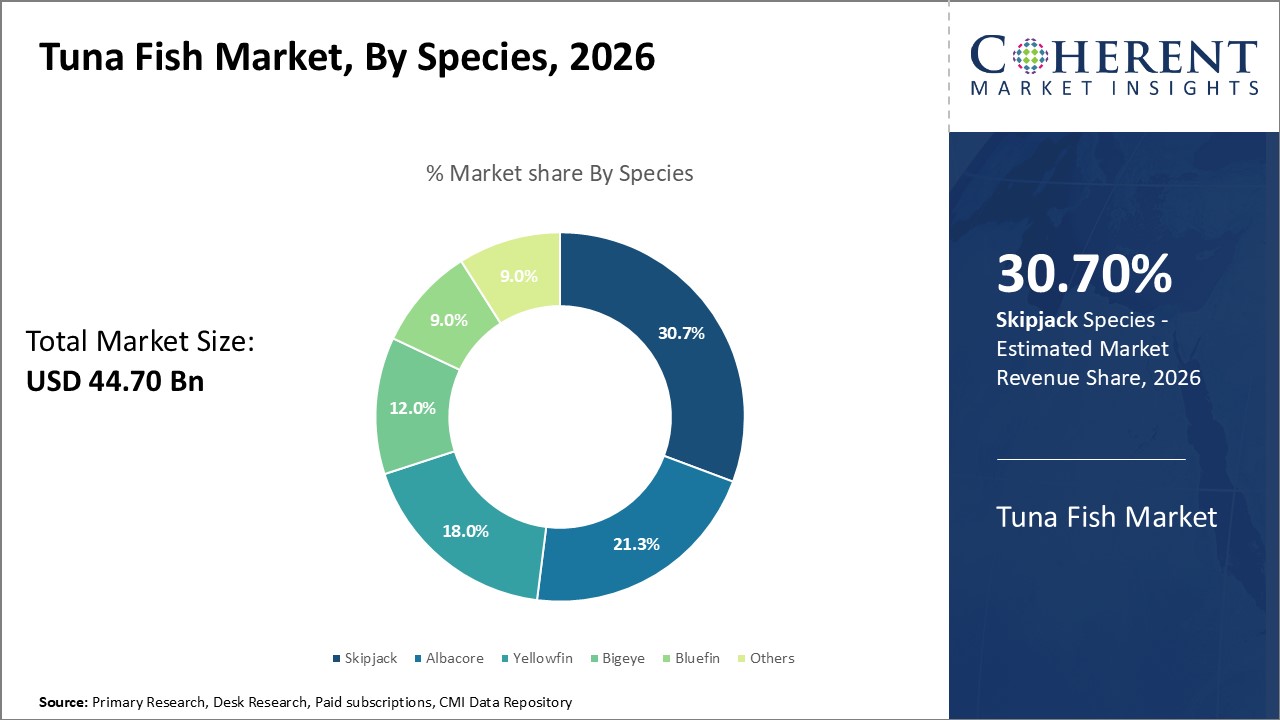
- The skipjack segment is projected to hold a 30.7 % share of the market in 2026.
- Hypermarkets & supermarkets segment is expected to dominate the market with a 43.7 % of share in 2026.
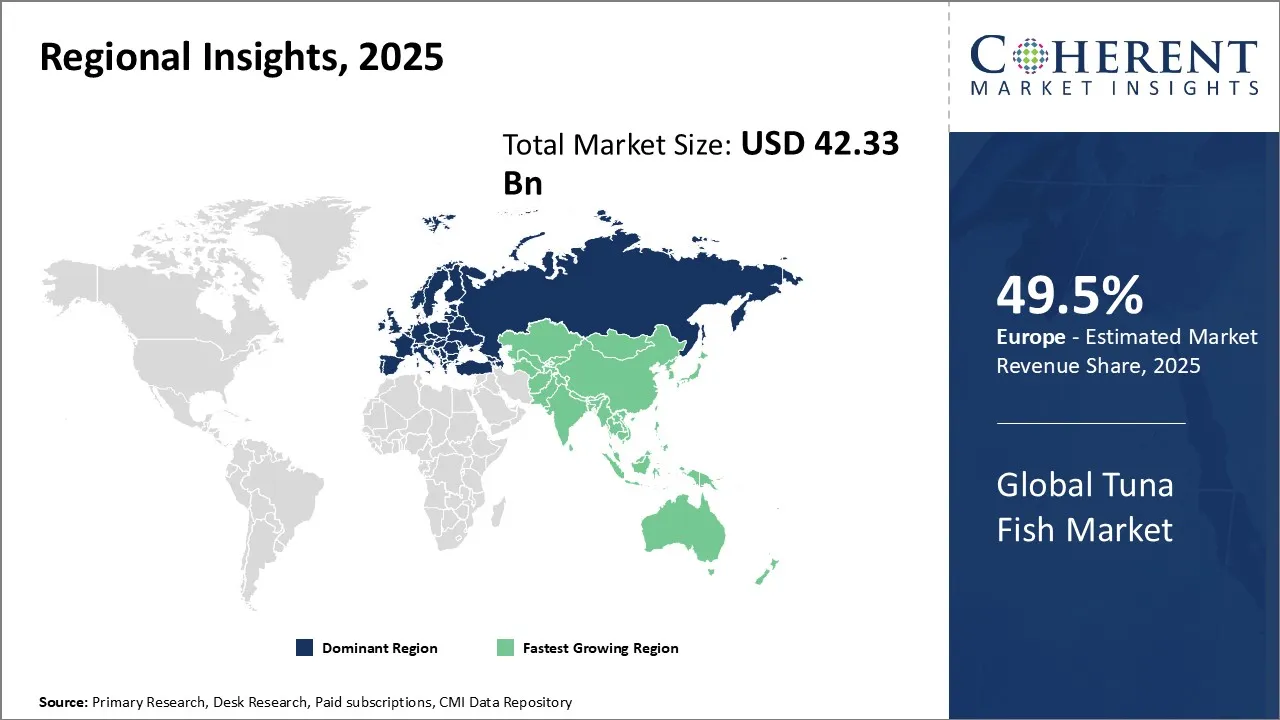
- Europe is set to lead the market with a projected share of 49.5 % in 2026. Asia Pacific is expected to hold a share of 22.5% in 2026, and it is the fastest-growing region.
Market Overview
Market trends indicate a significant shift toward sustainable and eco-friendly tuna sourcing practices, driven by environmental regulations and consumer preferences for responsibly harvested seafood. There is also a growing inclination towards processed and convenience-based tuna products, such as canned and ready-to-cook options, catering to busy lifestyles. Additionally, the rising demand for omega-3 products is becoming a key focus, as consumers seek health benefits associated with omega-3 fatty acids. Furthermore, emerging markets in the Asia Pacific region are witnessing increased tuna consumption due to rising disposable incomes and urbanization, fueling demand growth in the global tuna fish market.
Current Events and Its Impact
Current Events | Description and Its Impact |
Climate-Induced Tuna Migration in Pacific Islands |
|
U.S. Reciprocal Tariffs on Tuna Imports |
|
Segmental Insights
- Current Industry Events of 2026
- Market Size Estimation
- Regional Breakdown
- Competitive Landscape
- Customer Intelligence
- Segmental Analysis
- Pricing Analysis
- Key Market Drivers, Challenges & Future Trends
- Customized Insights Section
Tuna Fish Market Insights, by Type - Canned Segment Dominates the Market Due to Convenience and Shelf Stability
The canned segment is expected to hold 48.7% of the market share in 2026, due to factors centered around consumer convenience and extended shelf life. Canned tuna offers unparalleled ease of storage compared to fresh and frozen counterparts, making it an attractive option for consumers across diverse geographies, particularly in urban and semi-urban areas. Unlike fresh tuna, which requires adequate refrigeration and has a limited usage window, canned tuna benefits from thermal processing that ensures longer preservation without compromising nutritional value or safety, thereby appealing to consumers looking for ready-to-eat or easy-to-prepare protein sources.
A leading example of the growing popularity of canned tuna is the rise of the "Sustainably Sourced Tuna" product line by Bumble Bee Foods. The company’s introduction of canned tuna with eco-friendly packaging and sustainable fishing practices has significantly boosted consumer demand, particularly in North America and Europe, where convenience and environmental concerns are key driving factors.
Tuna Fish Market Insights, by Species – Skipjack Segment Dominates the Market Due to Sustainable Sourcing and Versatility
Skipjack segment is projected to hold 30.7% of the market share in 2026, due to its sustainability credentials, affordability, and culinary versatility. Skipjack is widely recognized for its relatively faster growth cycles and higher abundance in tropical and subtropical waters compared to other tuna species. This natural abundance translates into consistent supply streams, making Skipjack an economically viable option for canning and processing industries worldwide. The broad acceptance of Skipjack across multiple regional cuisines, especially in Asia Pacific and North America, also bolsters its demand.
Tuna Fish Market Insights, by Distribution Channel - Hypermarkets & Supermarkets Segment Dominates the Market due to Broad Consumer Reach and Reliability
Hypermarkets & supermarkets segment is expected to dominate the market with a 43.7% of share in 2026, supported by their vast consumer footfall, product variety, and reliable supply chains. These large-format retailers have evolved as the preferred shopping destinations offering assured quality, brand diversity, and competitive pricing under one roof, which significantly enhances consumer trust and convenience. Their capability to maintain extensive inventory, including multiple types and species of tuna, makes them a one-stop shop for consumers seeking a broad selection.
Regional Insights
Europe Tuna Fish Market Analysis and Trends
The Europe region is projected to lead the market with a 49.5% share in 2026, with countries like Spain, Italy, and France at the forefront of tuna fishing and processing. The region’s growth is supported by advancements in processing technologies, strong supply chain networks, and high consumer demand for both canned and fresh tuna. Additionally, the European Union’s sustainability policies and regulations, such as the Marine Strategy Framework Directive, have driven a push towards responsible fishing practices.
Leading companies like Iberconsa and Thai Union are actively investing in sustainable sourcing, with an increasing emphasis on traceability and eco-friendly certifications. European consumers’ preference for premium, high-quality tuna products, including value-added options, further drives the market's expansion. Strong export relationships, particularly with North America and Asia Pacific, also contribute to Europe's growing presence in the global tuna fish market.
Asia Pacific Tuna Fish Market Analysis and Trends
The Asia Pacific region is expected to exhibit the fastest growth in the market contributing 22.5% share in 2026. Driven by the region's vast coastline, rich marine biodiversity, and well-established fishing industries, particularly in countries like Japan, Indonesia, and the Philippines. The region benefits from an extensive market ecosystem where both traditional tuna fisheries and advanced aquaculture operations coexist.
Government policies in several Asia Pacific nations actively support sustainable fishing practices and exports, fostering a thriving industry environment. Major companies such as Toyo Reizo Co., Ltd. and PT. Japfa Comfeed Indonesia have significantly contributed to the region’s dominance by investing in technology and supply chain improvements. Furthermore, robust intra-regional trade and export opportunities to markets like the U.S. and Europe bolster Asia Pacific’s leading position.
Global Tuna Fish Market Outlook for Key Countries
Japan Tuna Fish Market Analysis and Trends
Japan tuna fish market remains a cornerstone of the global industry due to its cultural affinity for tuna, especially in traditional cuisines like sushi and sashimi. The country’s advanced fishing fleets and processing technologies enhance product quality and diversify offerings. Companies such as Maruha Nichiro Corporation have a strong presence, promoting sustainable fishery practices and innovation in tuna product lines. Japan continues to lead in premium tuna consumption and export-oriented production, supporting its influence over the global tuna fish market trends.
Indonesia Tuna Fish Market Analysis and Trends
Indonesia tuna fish market thrives on its extensive archipelagic geography, which supports a diverse range of tuna species and fishing methods. Government policies encourage sustainable fishing and international trade, benefiting exporters by reducing barriers and enhancing product standards. Leading firms like PT Central Proteinaprima are pivotal in driving market expansion, focusing on both domestic consumption and exports. Indonesia’s strategic location along key shipping routes also facilitates market access and trade efficiency, cementing its role as a key player in the global tuna industry.
Ecuador Tuna Fish Market Analysis and Trends
Ecuador stands out as a major competitor in Latin America due to its robust tuna fishery sector. The country’s advancements in cold storage and fish processing have positioned it well for exporting canned and frozen tuna products. Empresa Pesquera Industrial ATLANTIDA and Atunec S.A. are notable contributors, emphasizing sustainable fisheries and product quality to meet stringent international requirements. Ecuador’s government supports the seafood sector with incentives and regulatory frameworks that encourage sustainable harvests and expanded market outreach, particularly targeting Asian and North American markets.
U.S. Tuna Fish Market Analysis and Trends
The U.S. tuna fish market benefits from strong consumer demand for canned and fresh tuna, supplemented by innovative product development. Though domestic tuna fishing is relatively limited, companies like Bumble Bee Foods and Starkist efficiently capitalize on imports, processing, and distribution within a mature retail ecosystem. Government regulations focus on sustainable sourcing and traceability, aligning with consumer preferences for responsibly sourced seafood. The U.S. plays a significant role in shaping global supply chains and demand trends through its large-scale consumption and stringent quality standards.
Philippines Tuna Fish Market Analysis and Trends
The Philippines is a vital market due to its significant tuna fishing tradition and export-oriented industry. The government’s focus on sustainable fisheries management and infrastructure upgrades has enhanced its competitive position. Major companies such as Alliance Select Foods International support expansion with investments in processing technology and market diversification. The nation’s strong regional trade links and participation in free trade agreements amplify export opportunities. As a result, the Philippines continues to strengthen its footprint in both regional and global tuna fish market by balancing traditional practices with modern industry requirements.
Consumer Behavior Analysis for the Tuna Fish Market
Key Drivers of Tuna Consumption
- Health Awareness: Consumers are increasingly choosing tuna for its high protein content, low fat levels, and rich omega-3 fatty acids, making it attractive to health-conscious buyers across global markets.
- Convenience and Versatility: Tuna's popularity is boosted by its convenience—especially in canned and pouch formats—and its versatility in recipes such as salads, sandwiches, sushi, and ready-to-eat meals, catering to busy and urban lifestyles.
- Affordability: Canned tuna remains a staple due to its relatively low price and long shelf-life, making it accessible to a wide range of income groups.
Factors Influencing Purchasing Decisions
- Sustainability: Eco-labels and certifications (such as MSC) are strongly influencing buying choices, with a significant share of consumers willing to pay more for sustainably sourced products. Retailers increasingly stock certified sustainable tuna in response to demand and regulatory pressures.
- Health Concerns: Nutritional benefits drive consumption, but concerns about mercury in larger tuna species affect choices.
Market Players, Key Development, and Competitive Intelligence

Key Developments
- In May 2025, Sojitz Corporation posted a gross profit of USD 2,392.91 million (JPY 346,793 million) in its Retail and Consumer Service division, supported by strong performance in frozen tuna processing.
- In April 2025, BlueNalu expanded its collaboration with Nomad Foods to advance the commercialization of cell-cultivated seafood in the U.K. and EU, tapping into growing consumer demand for alternative bluefin toro.
- In October 2024, Nissui Group completed the consolidation of its domestic aquaculture business under the newly established Nissui Maguro, streamlining operational efficiency.
- In January 2024, the Australian Fisheries Management Authority implemented upgraded VMS (Vessel Monitoring System) standards across Commonwealth fleets to strengthen sustainable fishing practices.
Top Strategies Followed by Global Tuna Fish Market Players
- Established industry leaders heavily invest in research and development to innovate high-performance products that meet evolving consumer preferences for sustainability, health benefits, and convenience. Furthermore, these players aggressively pursue global expansion by broadening their distribution networks, particularly targeting emerging markets in Asia-Pacific, Latin America, and Africa, where rising disposable incomes and growing awareness of healthy protein sources are fueling demand.
- For instance, Thai Union has committed to offering 100% of its tuna products sourced from sustainable fisheries, backed by their collaboration with the Marine Stewardship Council (MSC). This sustainability-focused innovation has positioned them as leaders in the market.
- Mid-level players in the global tuna fish market adopt a slightly different approach focused on delivering cost-effective yet quality-balanced products designed to appeal to price-sensitive consumers. These companies prioritize optimizing operational efficiencies and streamlining production to minimize costs without compromising on quality, allowing them to capture a sizable segment of value-conscious buyers. To strengthen their market presence and enhance production capabilities, many mid-tier firms seek collaborative agreements with suppliers, technology innovators, or even larger players to tap into advanced processing methods and expand their distribution footprints.
- For example, Bumble Bee Foods, LLC and Chicken of the Sea adopt a strategy of delivering cost-effective yet quality-balanced products designed to appeal to price-sensitive consumers. These companies emphasize operational efficiencies and streamlined production processes to minimize costs without compromising quality
- Small-scale players within the tuna fish market often differentiate themselves by focusing on niche or specialized product features that cater to specific consumer demands such as organic certification, sustainable fishing practices, or innovative packaging solutions. To stay competitive in a saturated market, these players adopt cutting-edge technologies like blockchain for traceability, advanced cold-chain logistics, or eco-friendly processing techniques that enhance product appeal and safety.
- For instance, Wild Planet Foods sources its tuna exclusively from pole-and-line fishing, a sustainable practice that appeals to eco-conscious consumers. Their focus on using innovative packaging solutions, such as BPA-free cans, further enhances their product appeal.
Market Report Scope
Report Coverage
| Report Coverage | Details | ||
|---|---|---|---|
| Base Year: | 2025 | Market Size in 2026: | USD 44.70 Bn |
| Historical Data for: | 2020 To 2024 | Forecast Period: | 2026 To 2033 |
| Forecast Period 2026 to 2033 CAGR: | 5.6% | 2033 Value Projection: | USD 65.46 Bn |
| Geographies covered: |
| ||
| Segments covered: |
| ||
| Companies covered: | Bolton Group, Century Pacific Foods Inc., The Jealsa Rianxeira S.A.U. Group, Grupo Albacore S.A., ITOCHU Corporation, Thai Union Group Inc., Dongwon Enterprises Co. Ltd., IBL Ltd., FCF Co. Ltd., and Sea Delight | ||
| Growth Drivers: |
| ||
| Restraints & Challenges: |
| ||
Tuna Fish Market Dynamics
Tuna Fish Market Driver - Increasing Consumer Demand for Seafood and Health-Conscious Diets
The growing global inclination towards healthier eating habits has significantly boosted the demand for seafood, with tuna fish emerging as a favored choice among consumers. As health awareness continues to deepen, individuals are increasingly seeking functional protein, protein-rich, low-fat, and nutrient-dense food options, making tuna an ideal inclusion in many diets. Tuna offers a rich source of omega-3 fatty acids, which are linked to improved cardiovascular health, brain function, and anti-inflammatory benefits. Moreover, the versatility of tuna in culinary applications—from fresh cuts to canned products—caters well to diverse consumer lifestyles and meal preferences.
For instance, according to the Food and Agriculture Organization (FAO) of the United Nations, global tuna consumption reached approximately 7.9 million tonnes in 2022, representing a notable increase from previous years, with skipjack tuna accounting for the largest share at around 58% of total tuna catches, highlighting the sustained demand across different tuna species.
Tuna Fish Market Opportunity - Expansion of E-commerce Platforms for Seafood Distribution
The growing expansion of e-commerce platforms presents a significant opportunity for the global tuna fish market to enhance distribution channels and reach a wider consumer base. With increased internet penetration and the rising trend of online grocery shopping, consumers are increasingly seeking convenient and quick access to fresh seafood products, including tuna. E-commerce platforms enable seafood suppliers and retailers to bypass traditional intermediaries, thereby streamlining the supply chain and reducing costs. This digital transformation also allows for better inventory management, real-time tracking, and enhanced traceability of tuna products, which are critical factors in ensuring freshness and quality.
For instance, platforms like Amazon Fresh and Walmart’s online grocery service have made it easier for consumers to purchase fresh and canned tuna directly from their homes, thereby increasing the reach of tuna suppliers. In Asia, platforms such as Alibaba’s Tmall and JD.com have also seen a surge in the online purchase of seafood products, including tuna, due to their robust delivery infrastructure and widespread consumer trust.
Analyst Opinion (Expert Opinion)
- The global tuna fish market is poised for significant growth, driven by rising consumer demand for healthy protein sources and sustainable seafood options. Insights from the Seafood Expo Global (2023) and the International Tuna Conference (2022) highlighted the increasing popularity of responsibly sourced tuna, with brands like Wild Planet and Bumble Bee Foods leading the charge by promoting their sustainable fishing practices.
- Wild Planet's recent initiatives to certify its products under sustainable fisheries standards have resonated well with environmentally conscious consumers. Additionally, discussions at these conferences emphasized the importance of traceability and transparency in the supply chain, crucial for building consumer trust in seafood products. However, challenges such as overfishing and regulatory pressures on fishing quotas were noted, necessitating strategic adaptations from industry players.
- Companies that prioritize innovation in processing and packaging, such as convenient ready-to-eat tuna meals, will likely capture a larger market share. Ultimately, the future of the tuna fish market will hinge on its ability to balance consumer demands for sustainability and quality while addressing the pressing environmental challenges facing the fishing industry.
Speak to the analyst
Want personalized insights?
Take the findings above to one of our principal consultants, or have the report rebuilt around the segments, geographies and competitors you actually track.
Market Segmentation
- Type Insights (Revenue, USD Bn, 2021 - 2033)
- Canned
- Fresh
- Frozen
- Species Insights (Revenue, USD Bn, 2021 - 2033)
- Skipjack
- Albacore
- Yellowfin
- Bigeye
- Bluefin
- Others
- Distribution Channel Insights (Revenue, USD Bn, 2021 - 2033)
- Hypermarkets & Supermarkets
- Specialty Stores
- Online Stores
- Regional Insights (Revenue, USD Bn, 2021 - 2033)
- North America
- U.S.
- Canada
- Latin America
- Brazil
- Argentina
- Mexico
- Rest of Latin America
- Europe
- Germany
- U.K.
- Spain
- France
- Italy
- Russia
- Rest of Europe
- Asia Pacific
- China
- India
- Japan
- Australia
- South Korea
- ASEAN
- Rest of Asia Pacific
- Middle East
- GCC Countries
- Israel
- Rest of Middle East
- Africa
- South Africa
- North Africa
- Central Africa
- North America
- Key Players Insights
- Bolton Group
- Century Pacific Foods Inc.
- The Jealsa Rianxeira S.A.U. Group
- Grupo Albacore S.A.
- ITOCHU Corporation
- Thai Union Group Inc.
- Dongwon Enterprises Co. Ltd.
- IBL Ltd.
- FCF Co. Ltd.
- Sea Delight
Sources
Primary Research Interviews
- Procurement Head – Leading Tuna Processing Company
- Operations Director – Major Tuna Canning Manufacturer
- Sustainability Manager – Global Seafood Certification Body
- Supply Chain Manager – Large-Scale Seafood Retailer
- Export Manager – Tuna Fishing & Processing Firm
Stakeholders
- Manufacturers & Processors
- End-use Sectors:
- Foodservice & Restaurants
- Retail Chains & Supermarkets
- Online Seafood Delivery Platforms
- Regulatory & Certification Bodies (Marine Stewardship Council, FDA, EFSA)
- Distributors & Exporters
- Technology Providers (Cold Chain Logistics, Sustainable Fishing Tech, Traceability Platforms)
Databases
- UN Comtrade Database (global tuna trade flows)
- FAO Fisheries & Aquaculture Statistics
- India Import Export (EXIM) Database
Magazines
- SeafoodSource – Global tuna market news and trends
- Intrafish – Tuna industry updates and trade insights
- Undercurrent News – Tuna pricing, sourcing, and sustainability
- Seafood Business Journal – Tuna product and retail market updates
- World Fishing & Aquaculture – Tuna harvesting & processing technology
Journals
- Marine Policy – Sustainability and regulations in tuna fishing
- Fisheries Research – Tuna stock assessments and catch data
- Aquaculture Reports – Tuna farming and aquaculture trends
- Journal of Food Science & Technology – Tuna preservation and processing methods
Newspapers
- The Financial Times – Global seafood and tuna market economics
- The Guardian – Sustainability and overfishing in tuna industry
- Nikkei Asia – Tuna consumption and export in Asia-Pacific
- The Japan Times – Tuna auction and fishing trends in Japan
Associations:
- International Seafood Sustainability Foundation (ISSF)
- Marine Stewardship Council (MSC)
- Global Aquaculture Alliance (GAA)
- Indian Ocean Tuna Commission (IOTC)
- Western & Central Pacific Fisheries Commission (WCPFC)
Public Domain Sources
- Food and Agriculture Organization (FAO) – Global tuna stock & fisheries reports
- International Commission for the Conservation of Atlantic Tunas (ICCAT) – Tuna catch limits and quotas
- NOAA Fisheries – Tuna regulations and U.S. imports
- European Commission – DG MARE – Tuna trade & regulations
Proprietary Elements
- CMI Data Analytics Tool, Proprietary CMI Existing Repository of information for last 8 years.
Get access to 250+ pages report
Every segment, forecast, competitor profile and data table behind the analysis above — available for instant download.
- ESOMAR Member
- ISO 9001:2015 Certified
- D-U-N-S Registered
- GDPR & CCPA Compliant
Missing comfort of reading report in your local language? Find your preferred language:
Transform your Strategy with Exclusive Trending Reports
Frequently Asked Questions
The global tuna fish market is estimated to be valued at USD 44.70 Bn in 2026 and is expected to reach USD 65.46 Bn by 2033.
The CAGR of the global tuna fish market is projected to be 5.6% from 2026 to 2033.
Increasing consumer demand for seafood and health-conscious diets and growing popularity of ready-to-eat and convenience food products are the major factors driving the growth of the global tuna fish market.
Overfishing and sustainability concerns affecting supply and regulatory challenges related to fishing quotas and environmental impact are the major factors hampering the growth of the global tuna fish market.
In terms of type, the canned segment is estimated to dominate the market revenue share in 2026.
Bolton Group, Century Pacific Foods Inc., The Jealsa Rianxeira S.A.U. Group, Grupo Albacore S.A., ITOCHU Corporation, Thai Union Group Inc., Dongwon Enterprises Co. Ltd., IBL Ltd., FCF Co. Ltd., and Sea Delight are the major players.
Europe is expected to lead the global tuna fish market in 2026.