

Collagen Supplements Market Size and Trends - 2026 to 2033
The collagen supplements market is estimated to be valued at USD 2.62 Bn in 2026 and is expected to reach USD 3.91 Bn by 2033, exhibiting a compound annual growth rate (CAGR) of 5.9% from 2026 to 2033.
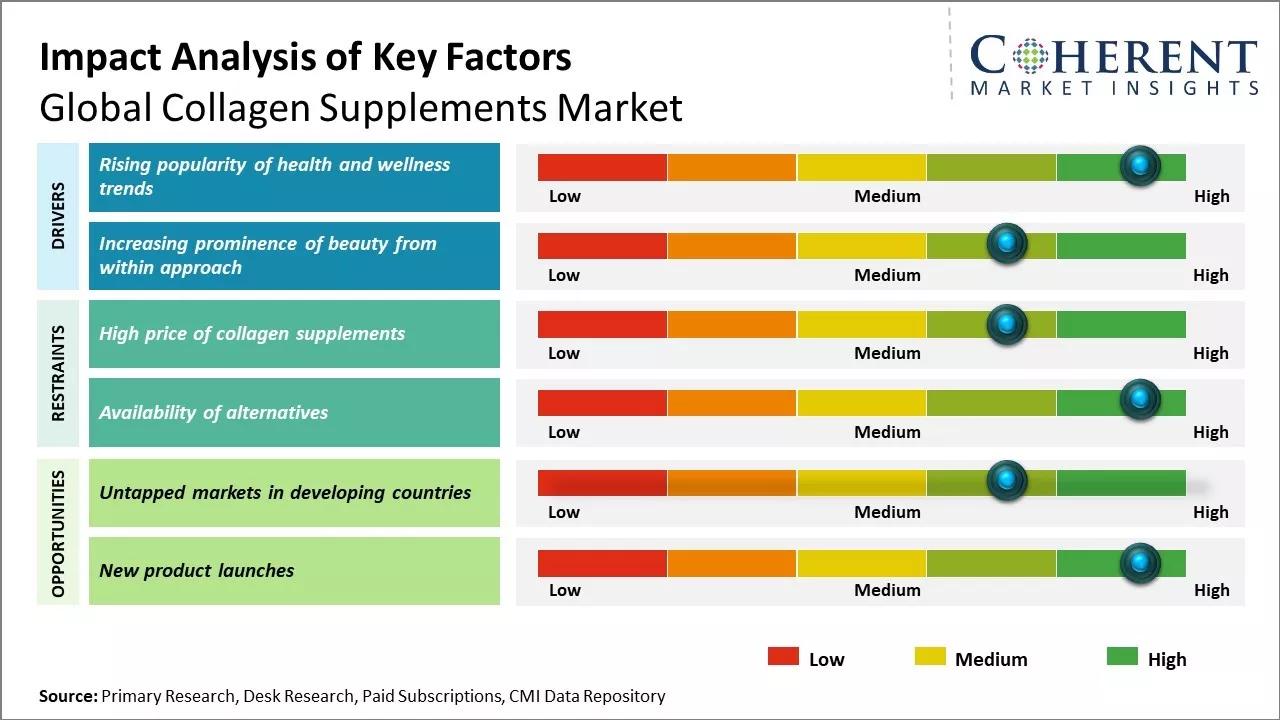
Key Takeaways
- Based on Form, the Pills and Gummies segment is expected to hold 68.1% share of the market in 2026, offered by unmatched convenience, consistency, and discreet daily use.
- Based on Distribution Channel, the Pharmacy segment is projected to account for 51.2% share in 2026, offering by trusted guidance, easy access, and health credibility.
- Based on Region, North America is set to lead the market with 36.3% share in 2026. While, Asia Pacific is anticipated to be the fastest growing region.
Market Overview
The collagen supplements market is expected to witness positive growth over the forecast period. Collagen supplements aid in improving skin and joint health, which has increased their overall demand. Rising health consciousness and the growing geriatric population have further driven the consumption of collagen-based supplements. Moreover, the increasing adoption of collagen in various application industries, such as food & beverage, cosmetics & personal care, is expected to boost the collagen supplements market growth during the forecast period. Players are investing heavily in product innovations such as collagen gummies and convenient packaging which are gaining traction among millennials and working professionals. However, stringent regulations on the branding and marketing of supplements and availability of alternative proteins may hamper the market growth during the analysis period.
Current Events and their Impact on the Collagen Supplements Market
Current Event | Description and its Impact |
Regulatory Developments in Key Markets |
|
Technological Innovations in Collagen Production |
|
Vegan Collagen Supplements
The rising availability and acceptance of vegan collagen supplements is a key driver of Collagen Supplements Market growth. As consumers become more health-conscious and seek plant-based, sustainable alternatives, demand for vegan formulations has accelerated. These products appeal to individuals with dietary restrictions, ethical preferences, or concerns about animal-derived ingredients. Advances in biotechnology and fermentation-based production have also improved the quality and efficacy of vegan collagen, making it more comparable to traditional options.
The rising availability and acceptance of vegan collagen supplements is a key driver of Collagen Supplements Market growth. As consumers become more health-conscious and seek plant-based, sustainable alternatives, demand for vegan formulations has accelerated. These products appeal to individuals with dietary restrictions, ethical preferences, or concerns about animal-derived ingredients. Advances in biotechnology and fermentation-based production have also improved the quality and efficacy of vegan collagen, making it more comparable to traditional options.
- Current Industry Events of 2026
- Market Size Estimation
- Regional Breakdown
- Competitive Landscape
- Customer Intelligence
- Segmental Analysis
- Pricing Analysis
- Key Market Drivers, Challenges & Future Trends
- Customized Insights Section
Segmental Insights
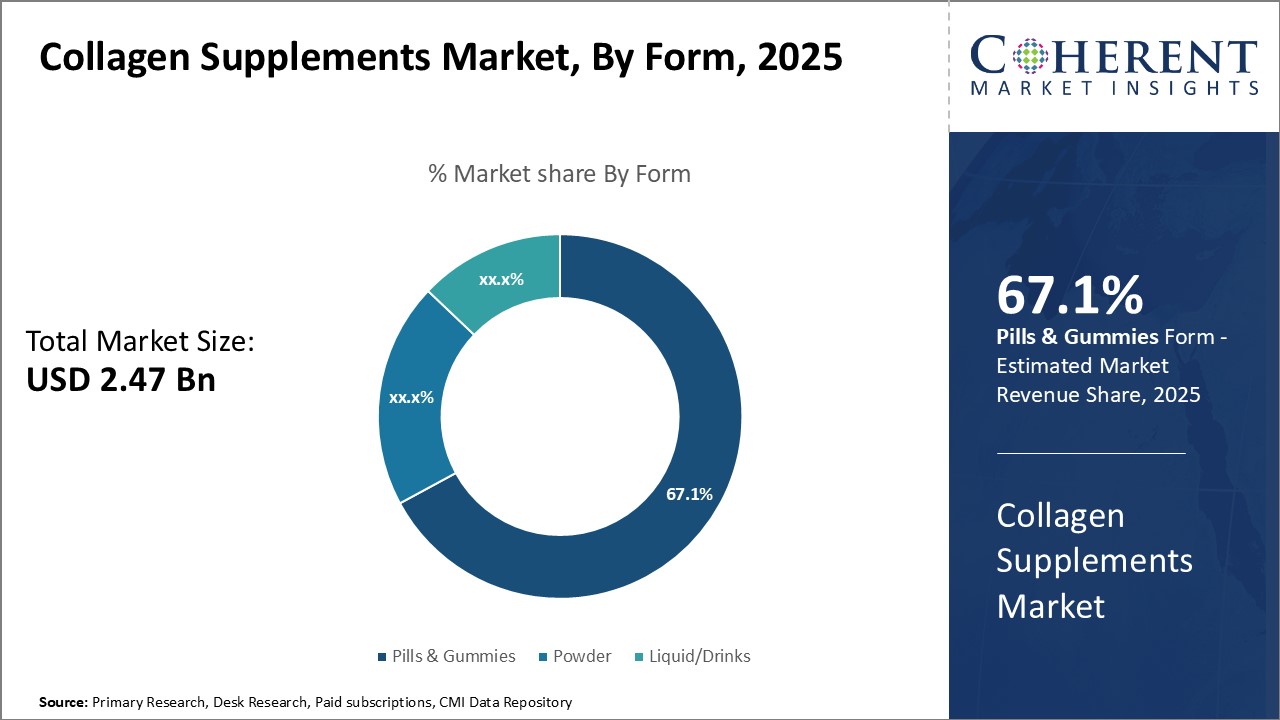
Collagen Supplements Market Insights, By Form: Pills and Gummies Dominance Is Offered Unmatched Convenience, Consistency, And Discreet Daily Use
The pills & gummies segment is expected to contribute 68.1% share of the collagen supplements market in terms of form in 2026. Their popularity stems from convenience, consistent dosing, and ease of integration into daily routines. Unlike powders or liquids, pills and gummies offer precise, hassle-free intake, ideal for busy lifestyles. Their discreet format supports regular use, especially for anti-aging benefits, without drawing attention.
Consumers value the uniformity and portability, which enhance compliance and make supplementation seamless. As time-crunched schedules persist, this segment is well-positioned to maintain its lead by aligning with modern preferences for simplicity and reliability in health routines.
For instance, in June 2025, Dabur entered the nutraceuticals space with its new digital-first wellness brand, Siens, offering products in capsules, gummies, and effervescent formats. Targeting health-conscious consumers, Siens focuses on convenience and modern lifestyles. The launch aligns with growing demand for functional supplements like collagen, especially in pill and gummy forms, which dominate the market for their ease of use.
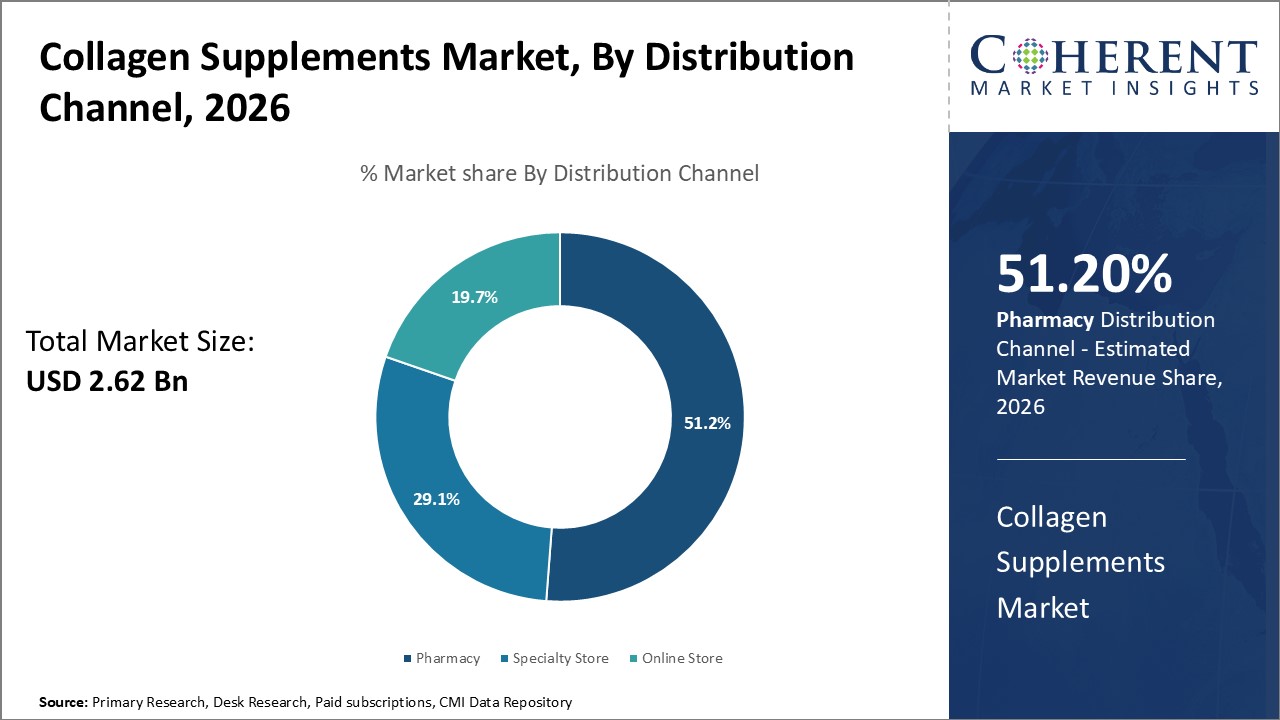
Collagen Supplements Market Insights, By Distribution Channel: Pharmacy Lead by Offering Trusted Guidance, Easy Access, And Health Credibility
In terms of distribution channel, the pharmacy segment is expected to account for 51.2% share of the collagen supplements market in 2026. Their dominance stems from consumer trust in pharmacists as credible health advisors. Collagen products positioned alongside pharmaceuticals reinforce their role in wellness, especially for joint and skin benefits. Pharmacies offer expert guidance, legitimacy, and easy access, encouraging trial and repeat purchases. Full shelves and familiar settings reduce barriers, while rising health awareness drives foot traffic.
As consumers seek holistic support, pharmacies remain the preferred channel, outperforming specialty and online stores by aligning supplements with trusted healthcare environments and consistent professional recommendations.
For instance, in November 2025, AFT Pharmaceuticals launched a next-generation liposomal collagen and wellness range in the U.S. market. The new line, designed for enhanced absorption and efficacy, will be distributed through pharmacy channels. This move strengthens the pharmacy segment’s role in collagen supplements, aligning with consumer demand for scientifically advanced, trusted health and beauty products.
Regional Insights
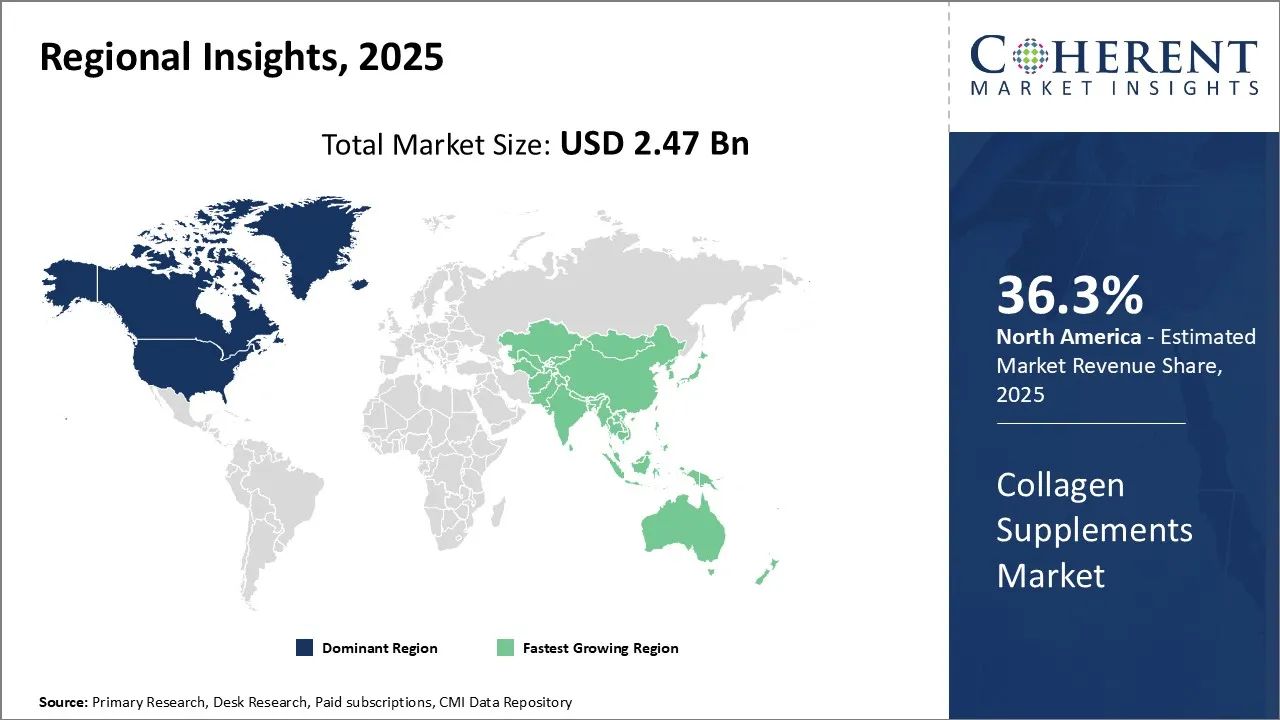
North America Collagen Supplements Market Analysis & Trends
North America has established itself as the dominant region in the global collagen supplements market. The region is expected to account for 36.3% of the market share in 2026. The large consumer base with higher health awareness and spending on nutritional supplements has boosted the market exponentially. The U.S. accounts for the major share owing to the presence of major manufacturers and distributors. The easy availability of collagen supplements across all distribution channels like pharmacies, hypermarkets, online stores, etc. has fueled its popularity. Moreover, changing lifestyle and busy schedules have compelled consumers to look for convenient supplements to fulfil their daily nutrient requirements.
For instance, in October 2026, Caldic partnered with Lonza Capsugel to distribute UC-II® Collagen across North America. The exclusive agreement brings clinically supported undenatured type II collagen to dietary supplements and functional foods, targeting joint health and mobility. The collaboration highlights growing demand for science-backed collagen ingredients and expands Caldic’s presence in the U.S. and Canadian wellness markets.
Asia Pacific Collagen Supplements Market Analysis & Trends
The Asia Pacific region is emerging as the fastest growing market for collagen supplements. The growing middle-class population with increasing disposable income in countries like China, India, and South Korea is driving higher demand. Collagen supplements are considered effective for joint and bone health which is a major concern for the aging population in countries like Japan and China. This is encouraging domestic manufacturers to foray into the collagen supplement business to tap into the market potential.
For instance, in September 2026, Meiji launched a new NMN-collagen supplement in Japan, combining nicotinamide mononucleotide with collagen peptides to target beauty and healthy aging. The product supports skin health and cellular vitality, aligning with Japan’s growing demand for advanced functional supplements. This innovation reflects the trend toward multi-functional nutraceuticals in the premium collagen market.
Collagen Supplements Market Outlook Country-Wise
The U.S. Collagen Supplements Market Trends
In 2026, the U.S. collagen supplements market is booming due to rising health awareness, aging demographics, and strong demand for beauty-from-within solutions. Consumers seek benefits like improved skin elasticity, joint support, and gut health. Convenient formats like pills and gummies, combined with influencer marketing and pharmacy trust, drive widespread adoption across wellness-focused lifestyles.
For instance, in November 2026, Germany’s top-selling liquid collagen supplement, Elasten, entered the U.S. market, targeting the growing demand for ingestible skincare. Formulated with VERISOL® collagen peptides, Elasten supports skin elasticity and hydration. Its launch reflects rising consumer interest in beauty-from-within solutions and strengthens the premium collagen segment in the U.S. wellness and anti-aging market.
South Korea Collagen Supplements Market Trends
In 2026, South Korea’s collagen supplement market is booming due to rising consumer focus on beauty, wellness, and healthy aging. Demand is driven by the popularity of “inner beauty” trends, increased awareness of collagen’s benefits for skin and joint health, and innovation in formulations and sustainable sourcing.
For instance, in September 2026, Coupang partnered with U.S. wellness brand Lemme to launch its products in South Korea, expanding access to collagen-based supplements like Lemme Glow. Co-founded by Kourtney Kardashian, Lemme offers beauty-from-within solutions targeting skin health. The move taps into South Korea’s booming wellness market and growing demand for premium, functional beauty products.
Market Report Scope
Collagen Supplements Market Report Coverage
| Report Coverage | Details | ||
|---|---|---|---|
| Base Year: | 2025 | Market Size in 2026: | USD 2.62 Bn |
| Historical Data for: | 2020 To 2024 | Forecast Period: | 2026 To 2033 |
| Forecast Period 2026 to 2033 CAGR: | 5.9% | 2033 Value Projection: | USD 3.91 Bn |
| Geographies covered: |
| ||
| Segments covered: |
| ||
| Companies covered: | Fermentis Life Sciences, Optimum Nutrition, Inc, BioTechUSA, TCI CO., LTD, Further Food, Vital Proteins LLC, Shiseido Co. Ltd, The Clorox Company, Codeage LLC, Everest NeoCell LLC, The Clorox Company, The Bountiful Company, Glanbia Plc, Hunter & Gather Foods Ltd., Vitaquest International LLC., SMP Nutra, Nutrabytes, Absolute Collagen, A M Nutratech Private Limited, and Eucare Pharmaceuticals Private Limited. | ||
| Growth Drivers: |
| ||
| Restraints & Challenges: |
| ||
Collagen Supplements Market Driver
Rising popularity of health and wellness trends
The global demand for collagen supplements is being driven by widespread awareness of the various health benefits of collagen peptides and growing popularity of wellness trends. Collagen supplements are gaining traction among consumers who are actively looking to improve joint health, skin elasticity and gut health through daily dietary changes. Rising disposable incomes particularly in developing regions of Asia Pacific and Latin America have empowered consumers to invest in premium health and beauty products. This growing health consciousness is a key driver as consumers increasingly recognize collagen as an important ingredient for overall wellness and preventive healthcare.
Furthermore, lifestyle changes such as growing deskbound work culture and greater time spent sitting have increased risk of joint problems and back pain. Collagen supplements are being seen as a convenient option to support joint and bone health through daily consumption. The supplement is also finding favor among athletes and body builders aiming for faster muscle and tissue recovery. Various social media influencers highlighting the anti-aging benefits of collagen have further boosted its popularity among the mass segment. Brands are actively leveraging these trends by positioning collagen under the umbrella of wellness and launching new product categories such as gummies and ready-to-drink formats for on-the-go consumers. The functional foods revolution is aiding the expansion of collagen in different food and beverage products as well.
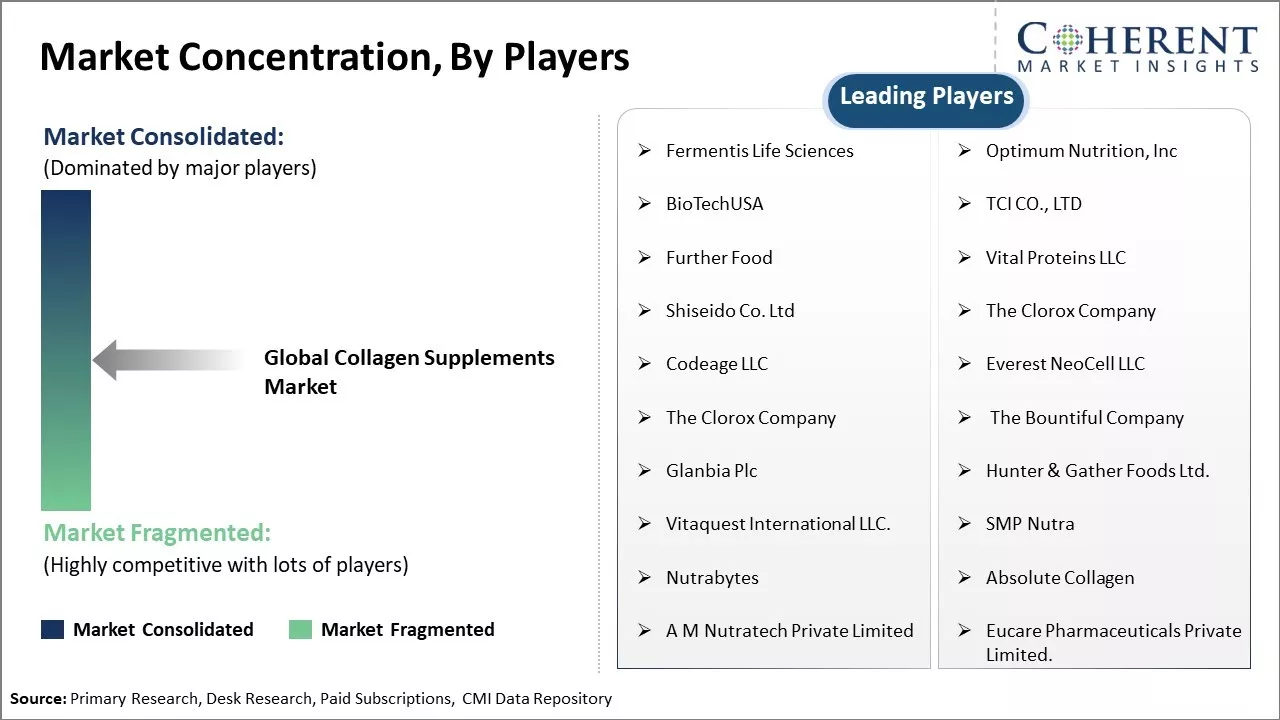
Market Concentration and Competitive Landscape
Increasing prominence of beauty from within approach
The collagen supplements market is witnessing compelling growth opportunities resulting from evolving beauty perceptions. There is a marked shift in focus towards internal nourishment and long-term results rather than quick fixes. This is benefitting collagen peptide suppliers who are able to capitalize on the widespread recognition of collagen's efficacy in supporting youthful appearance from within. Consumers today place higher emphasis on natural products that promote skin hydration and elasticity through dietary routes rather than highly synthetic cosmetic creams and serums. Collagen supplements are perfectly positioned to tap into this trend, being derived from natural sources like bovine, marine, and plant variants.
Manufacturers have been actively promoting collagen peptides for their anti-aging properties through indicators such as reduced wrinkles, improved skin tone, and texture. Successful formulas with multi-collagen sources are inspiring consumer confidence in collagen as a mainstream nutricosmetic ingredient. Leading brands strategically highlight scientific research proving absorption of collagen peptides in the body and their skin remodeling benefits. This underlying credibility boosts the supplements' popularity compared to other replenishing cosmetics.
Collagen Supplements Market Opportunities
Untapped markets in developing countries
Untapped markets in developing countries provide significant growth opportunities for collagen supplements manufacturers. Population growth and increasing health awareness are two major drivers propelling the demand for collagen peptides in countries like India, Brazil, Indonesia and others.
Analyst Opinion (Expert Opinion)
The collagen supplements market value in 2025 is driven by rising demand for skin health, joint support, and anti-aging benefits. Clinical studies show that consuming 2.5–10 grams of hydrolyzed collagen daily improve skin elasticity and hydration within 8–12 weeks. Type I collagen, sourced from bovine and marine origins, remains dominant due to its high bioavailability. Formulations increasingly include synergistic ingredients like hyaluronic acid, vitamin C, and biotin to enhance absorption and efficacy.
Consumer behavior is shifting toward digital platforms, with over 60% of purchases occurring online. Influencer marketing, subscription models, and personalized wellness apps are accelerating this trend. The demographic range has expanded, with consumers aged 20 to 60 adopting collagen supplements for beauty and mobility benefits. Asia-Pacific favors collagen drinks and powders, while North America leans toward gummies and capsules.
Vegan-friendly collagen boosters using plant-based ingredients are also emerging. Regulatory bodies are tightening oversight on labeling claims, requiring scientific substantiation. Certifications like NSF and Informed-Sport are influencing consumer trust.
Looking ahead, multi-functional collagen products targeting gut health, immunity, and cognitive support are expected to shape the next wave of innovation, alongside fermentation-based collagen production.
Speak to the analyst
Want personalized insights?
Take the findings above to one of our principal consultants, or have the report rebuilt around the segments, geographies and competitors you actually track.
Collagen Supplements Industry News
- In September 2025, Shed launched Triple Beauty Blend, a three-in-one supplement in the U.S. market targeting skin, hair, and joint health. The formula combines collagen, biotin, and hyaluronic acid to support beauty and wellness from within. This multifunctional product reflects growing consumer demand for convenient, all-in-one solutions in the collagen supplement and personal care space.
- In July 2025, Koru Pharma launched Renoxome+, a next-generation skin booster in South Korea, featuring hydrolysed collagen, PDRN, hyaluronic acid, and plant-derived exosomes. Designed for deep skin healing and regeneration, it targets fine lines and barrier repair. The product supports aesthetic treatments like mesotherapy and microneedling, expanding collagen’s role in advanced dermatological care.
- In May 2025, Life Time’s LTH supplement line introduced its third collagen-based product, the Refuel Protein Bar, in the U.S. market. Infused with collagen peptides, the bar supports muscle recovery, joint health, and skin vitality. This launch reflects the growing trend of incorporating collagen into functional foods for active, health-conscious consumers seeking convenient wellness solutions.
Market Segmentation
- Form Insights (Revenue, USD Bn, 2026 - 2033)
- Pills & Gummies
- Powder
- Liquid/Drinks
- Distribution Channel Insights (Revenue, USD Bn, 2026 - 2033)
- Pharmacy
- Specialty Store
- Online Store
- Regional Insights (Revenue, USD Bn, 2026 - 2033)
- North America
- U.S.
- Canada
- Latin America
- Brazil
- Argentina
- Mexico
- Rest of Latin America
- Europe
- Germany
- U.K.
- Spain
- France
- Italy
- Russia
- Rest of Europe
- Asia Pacific
- China
- India
- Japan
- Australia
- South Korea
- ASEAN
- Rest of Asia Pacific
- Middle East & Africa
- GCC Countries
- Israel
- Rest of Middle East & Africa
- Key Players Insights (Revenue, USD Bn, 2021 - 2033)
- Fermentis Life Sciences
- Optimum Nutrition, Inc
- BioTechUSA
- TCI CO., LTD
- Further Food
- Vital Proteins LLC
- Shiseido Co. Ltd
- The Clorox Company
- Codeage LLC
- Everest NeoCell LLC
- The Clorox Company
- The Bountiful Company
- Glanbia Plc
- Hunter & Gather Foods Ltd.
- Vitaquest International LLC.
- SMP Nutra
- Nutrabytes
- Absolute Collagen
- A M Nutratech Private Limited
- Eucare Pharmaceuticals Private Limited.
Sources
Primary Research Interviews
- Collagen Supplement Manufacturers (e.g., Vital Proteins, NeoCell, Garden of Life, Sports Research executives)
- Nutraceutical Product Formulators and R&D Scientists
- Dietary Supplement Distributors and Retailers
- Dermatologists and Anti-Aging Specialists
- Functional Food and Beverage Product Developers
- Regulatory Experts in Nutritional Labeling and Claims
- Others
Databases
- Global Collagen Supplements Market Intelligence Database
- Nutraceuticals Industry Analytics Platform
- Collagen Ingredient Trade Statistics Database
- Dietary Supplement Certification and Compliance Database
- Others
Magazines
- Nutraceuticals World
- WholeFoods Magazine
- Natural Products Insider
- Food & Beverage Insider
- Others
Journals
- Journal of Functional Foods
- International Journal of Cosmetic Science
- Journal of Dietary Supplements
- Food Hydrocolloids
- Others
Newspapers
- NutraIngredients (Americas, Asia, Europe editions)
- FoodNavigator
- Healthline (Nutrition & Supplements section)
- Business Wire (Nutraceutical Product Releases)
- Others
Associations
- Council for Responsible Nutrition (CRN)
- Natural Products Association (NPA)
- International Society of Sports Nutrition (ISSN)
- American Nutrition Association (ANA)
- Others
Public Domain Sources
- U.S. Food and Drug Administration (FDA) Dietary Supplement Regulations
- National Institutes of Health (NIH) Office of Dietary Supplements Reports
- European Food Safety Authority (EFSA) Collagen Safety Assessments
- Indian Food Safety and Standards Authority (FSSAI) Nutraceutical Guidelines
- Others
Proprietary Elements
- CMI Data Analytics Tool
- Proprietary CMI Existing Repository of information for last 8 years
Definition: The collagen supplements market consists of oral supplements containing hydrolyzed collagen peptides that are taken to support joints, skin, hair, and nails. Collagen supplements are promoted to consumers wanting anti-aging benefits and trying to slow signs of aging by increasing their body's natural collagen production. These supplements come from cows, fish, horses, or other animals and are widely available in capsules, powders, beverages and gummies to provide protein and amino acids to strengthen connective tissues throughout the body.
Get access to 250+ pages report
Every segment, forecast, competitor profile and data table behind the analysis above — available for instant download.
- ESOMAR Member
- ISO 9001:2015 Certified
- D-U-N-S Registered
- GDPR & CCPA Compliant
Missing comfort of reading report in your local language? Find your preferred language:
Transform your Strategy with Exclusive Trending Reports
Frequently Asked Questions
The Collagen Supplements Market is estimated to be valued at USD 2.62 Bn in 2026, and is expected to reach USD 3.91 Bn by 2033.
The CAGR of the Collagen Supplements Market is projected to be 5.9% from 2026 to 2033.
Rising popularity of health and wellness trends and increasing prominence of beauty from within approach are the major factors driving the growth of the global collagen supplements market.
High price of collagen supplements and availability of alternatives are the major factors hampering the growth of the global collagen supplements market.
In terms of form, pills & gummies is estimated to dominate the market revenue share in 2026.
Fermentis Life Sciences, Optimum Nutrition, Inc, BioTechUSA, TCI CO., LTD, Further Food, Vital Proteins LLC, Shiseido Co. Ltd, The Clorox Company, Codeage LLC, Everest NeoCell LLC, The Clorox Company, The Bountiful Company, Glanbia Plc, Hunter & Gather Foods Ltd., Vitaquest International LLC., SMP Nutra, Nutrabytes, Absolute Collagen, A M Nutratech Private Limited, and Eucare Pharmaceuticals Private Limited. are the major players.
North America is expected to lead the global collagen supplements market.