

Global Urometer Market Size and Forecast – 2026 to 2033
The Global Urometer Market is estimated to be valued at USD 624.2 Mn in 2026 and is expected to reach USD 1028.9 Mn by 2033, exhibiting a compound annual growth rate (CAGR) of 7.4% from 2026 to 2033. This growth reflects increasing demand driven by the rising incidence of urinary disorders and the growing adoption of advanced medical devices in healthcare facilities worldwide, highlighting substantial opportunities for key stakeholders and market players.
Key Takeaways of the Global Urometer Market
- In 2026, urine output measurement is expected to lead urometer applications with a 23.1 % share due to its vital role in patient monitoring.
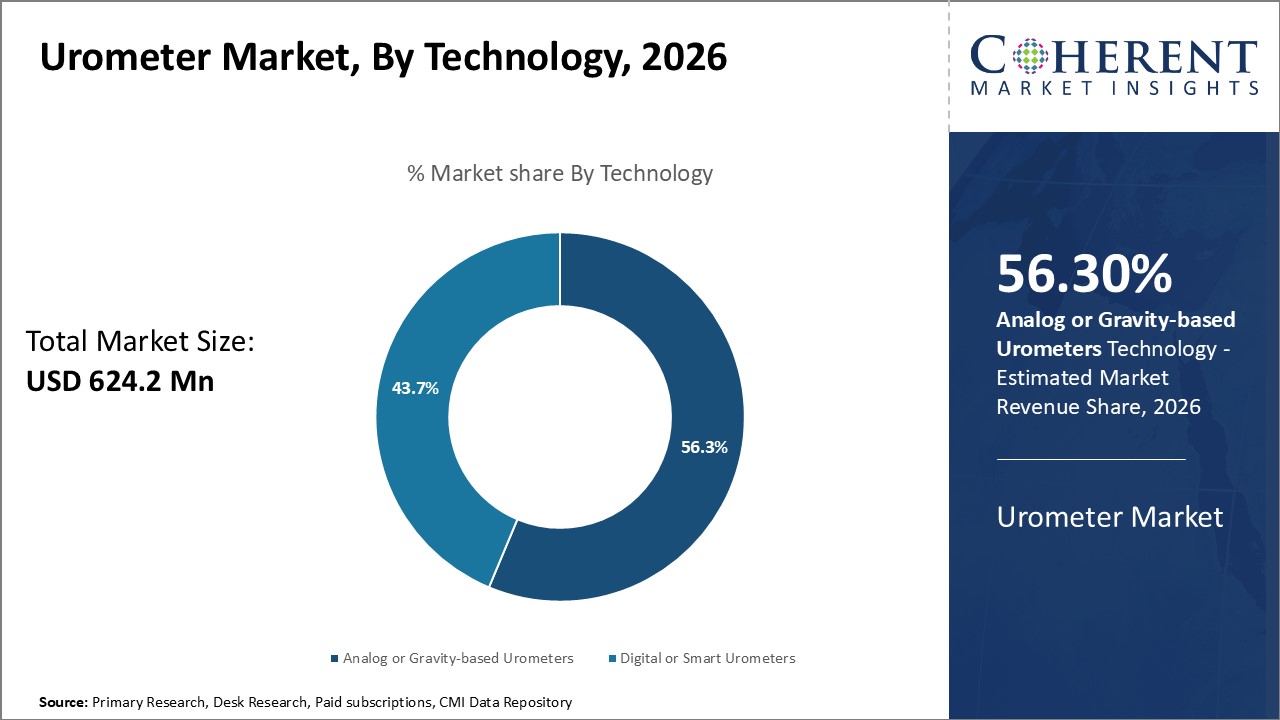
- Analog or gravity-based urometers dominate technology adoption at an estimated 56.3% share in 2026.
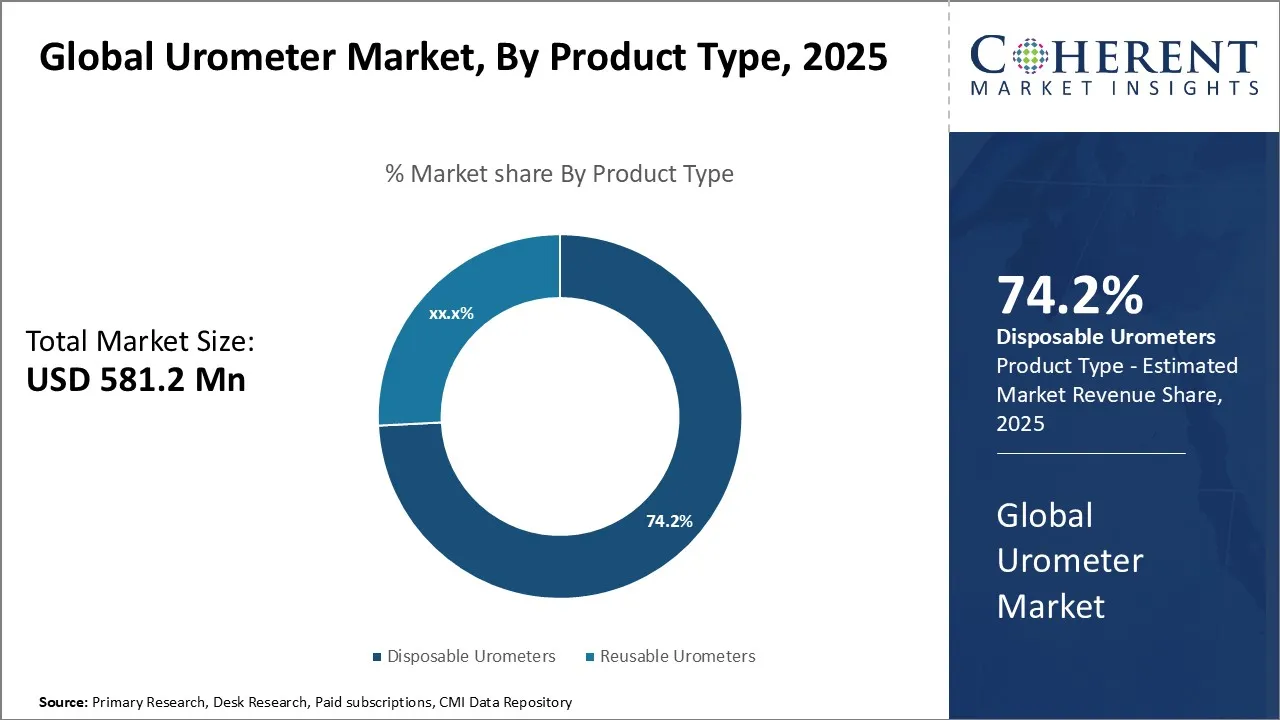
- Disposable urometers are expected to hold the largest market share at 75.2% in 2026.
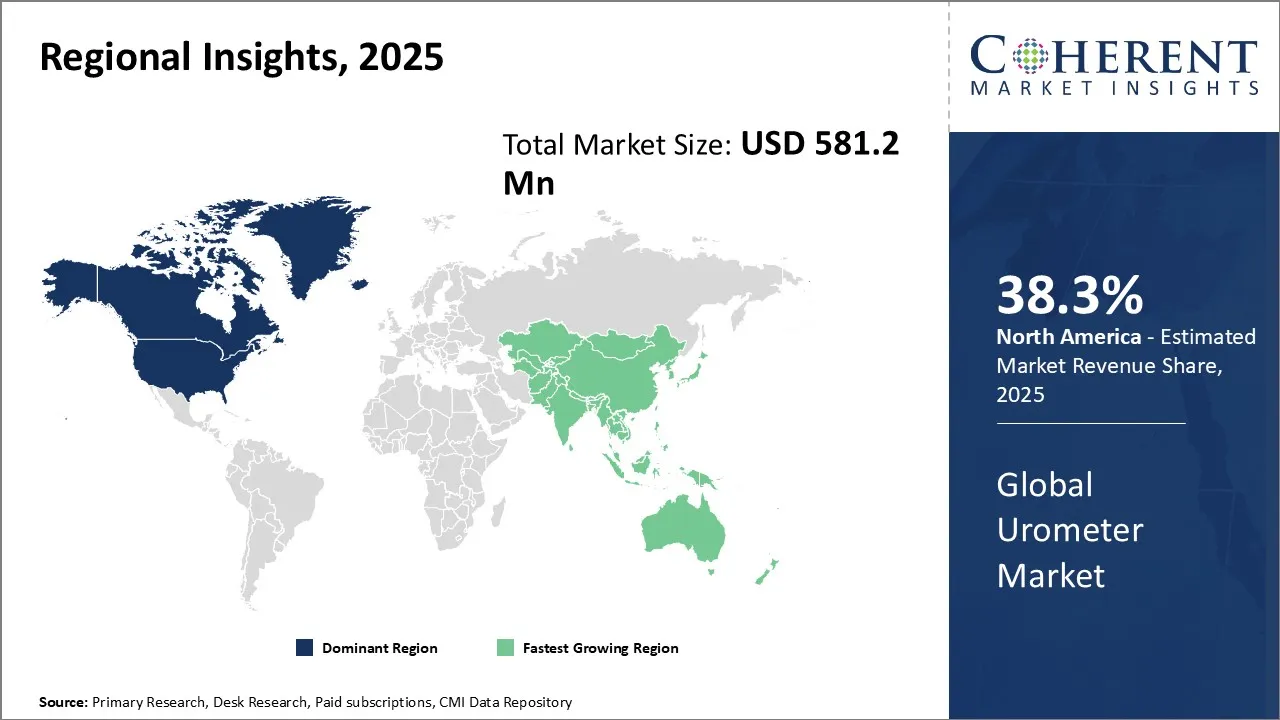
- North America is expected to lead the market, holding a share of 38.3 % in 2026. Asia Pacific is anticipated to be the fastest-growing region, with a market share of 26.2% in 2026.
Market Overview
Current trends in the urometer market indicate a strong focus on the integration of smart technologies, such as IoT-enabled and wireless monitoring systems, enhancing real-time data accuracy and patient convenience. Additionally, the shift towards minimally invasive and automated urometry devices is gaining momentum, driven by technological innovation and increasing healthcare infrastructure improvements, especially in emerging economies. This trend supports improved patient outcomes and efficiency in urological diagnostics and treatment procedures.
Current Events and Its Impact
Current Events | Description and its impact |
Rise in Hospital-Acquired Infections (HAIs) Control Programs in the U.S. and EU |
|
Technological Advancements in Smart Urometry Devices |
|
Segmental Insights
- Current Industry Events of 2026
- Market Size Estimation
- Regional Breakdown
- Competitive Landscape
- Customer Intelligence
- Segmental Analysis
- Pricing Analysis
- Key Market Drivers, Challenges & Future Trends
- Customized Insights Section
Urometer Market Insights, By Product Type Insights: Disposable Urometers Maintain Dominance Due to Hygiene and Cost-Effectiveness
In the global urometer market, the segment of disposable urometers holds the largest market share with an estimated 75.2% in 2026, primarily fueled by its critical benefits around hygiene, convenience, and operational efficiency in clinical settings. Hospitals, clinics, and long-term care facilities increasingly favor disposable urometers because they significantly reduce the risk of cross-contamination and healthcare-associated infections (HAIs). This is especially important in environments where patient safety is paramount, such as intensive care units and post-operative wards. With disposable urometers, the need for sterilization protocols and the associated labor costs or turnaround time for reusable instruments are eliminated, enhancing workflow and patient throughput.
Moreover, disposable urometers offer cost-effectiveness in volume procurement and usage, particularly for healthcare providers who need to manage large patient inflows without compromising on sanitary standards. The single-use nature ensures consistent accuracy by avoiding cumulative wear and tear or calibration drift that can affect reusable devices over time. This is critical in maintaining precise urine measurement for patient care assessment. Additionally, the biodegradability and improvement in material technology have made disposables more environment-friendly, alleviating prior concerns related to medical waste.
Urometer Market Insights, By Technology: Analog or Gravity-Based Urometers Lead Due to Simplicity and Reliability
Analog or gravity-based urometers maintain the highest share in terms of technology adoption within the global urometer market with an estimated share of 56.3% in 2026. Their dominance is primarily attributed to their inherent simplicity, reliability, and cost-effectiveness, factors that have sustained clinician preference over time despite the advancement of digital technologies. These devices operate on straightforward mechanical principles, utilizing gravity to measure urine volume without requiring electronics or batteries, which can fail or require technical support.
The analog urometers’ ease of use makes them universally applicable across diverse clinical environments, including resource-limited and rural healthcare settings, where access to sophisticated digital infrastructure might be limited. Their robust design ensures durability under harsh conditions, reducing maintenance needs and operational interruptions. Furthermore, analog urometers offer immediate visual readings without dependency on digital calibration or software support, which appeals to healthcare professionals requiring quick, on-the-spot measurement and monitoring.
Urometer Market Insights, By Application: Urine Output Measurement Remains Dominant Due to Its Critical Role in Routine Clinical Monitoring, Especially in Intensive Care Units (ICUs), etc.
Among various applications of urometers, urine output measurement emerges as the leading contributor in the market with an estimated share of 23.1% in 2026 because of its fundamental role in patient monitoring and clinical decision-making across a broad spectrum of medical scenarios. Precise urine output measurement is essential for evaluating kidney function, hydration status, and the overall hemodynamic state of hospitalized patients, making it a routine yet crucial procedure in healthcare.
In acute care environments such as emergency departments, ICUs, and surgical units, continuous urine output monitoring provides real-time insights that help prevent organ failure and guide fluid management strategies. Its importance is underscored in scenarios involving septic patients, those under anesthesia, or individuals experiencing major trauma, where sudden changes in urine production can indicate complications or therapeutic efficacy. The widespread medical consensus regarding its diagnostic and prognostic value fuels consistent demand for reliable urometers.
Regional Insights
North America Urometer Market Analysis and Trends
North America’s dominance in the global urometer market, with an estimated share of 38.3% in 2026, is driven by a well-established healthcare infrastructure, advanced technological integration, and strong presence of key medical device manufacturers. The region benefits from robust government healthcare initiatives, regulatory frameworks supportive of innovation, and high adoption rates of advanced diagnostic and monitoring devices.
Additionally, the presence of major companies such as Medline Industries, Inc., Cardinal Health, and Smiths Medical, which offer a broad portfolio of urometers and related products, strengthens market leadership. Trade dynamics in North America favor streamlined distribution and cross-border collaborations, enhancing accessibility and supply chain efficiency. Furthermore, ongoing investments in hospital infrastructure and outpatient care facilities contribute to sustained market demand across the U.S. and Canada.
Asia Pacific Urometer Market Analysis and Trends
Asia Pacific is expected to exhibit the fastest growth in the global urometer market, propelled by increasing healthcare awareness, expanding hospital networks, and rising government expenditure on healthcare infrastructure with a share of 26.2% in 2026. Rapid urbanization and growing geriatric populations in countries like China and India are creating substantial demand for urological diagnostic equipment.
Supportive policies focusing on improving medical device regulations and incentivizing domestic manufacturing have further accelerated market expansion. The region is also witnessing increased participation from multinational corporations and local manufacturers, such as B. Braun Melsungen AG’s regional subsidiaries, and Shenzhen Mindray Bio-Medical Electronics Co., Ltd, facilitating technology transfer and competitive pricing. Trade agreements and improved logistics networks help bridge market gaps, allowing faster penetration into emerging markets like Southeast Asia and Oceania.
Global Urometer Market Outlook for Key Countries
U.S. Urometer Market Trends
The U.S. urometer market leads in innovation and adoption of sophisticated urometry devices supported by strong R&D activities and healthcare funding. Government programs aimed at reducing hospital-acquired infections also promote the use of advanced, sterile urometers, bolstering demand. Regulatory agencies such as the USFDA ensure high standards, fostering trust and market stability.
The U.S. urometer market is dominated by major healthcare suppliers like Cardinal Health and Medline Industries, both of which manufacture their own extensive ranges of urometers and urine collection systems. These companies leverage strong R&D, comprehensive product portfolios, and vast distribution networks to meet the demand for innovative, sterile devices driven by hospitals and infection control programs under USFDA oversight.
Germany Urometer Market Trends
Germany urometer market is characterized by its strong manufacturing base and healthcare excellence. The country’s healthcare system emphasizes patient safety and precision diagnostics, which drives the adoption of state-of-the-art equipment. Supportive government policies and reimbursement frameworks facilitate widespread use of these devices in hospitals and rehabilitation centers. Germany’s export-oriented trade policies also help distribute products across the European region.
Braun Melsungen AG and Fresenius SE & Co. KGaA are prominent German manufacturers offering premium urometers designed for high-precision urine output monitoring. These companies leverage Germany’s strong engineering and clinical standards to produce devices widely adopted across Europe.
China Urometer Market Trends
China’s urometer market is rapidly expanding due to government initiatives aimed at modernizing healthcare infrastructure and increasing accessibility in rural areas. Additionally, improved regulatory pathways and foreign direct investment allow multinational companies to establish stronger footholds. The large population base and increasing health awareness underpin rising demand, while strategic collaborations between private and public sectors accelerate the market growth.
Mindray stands out as a leading domestic manufacturer driving China's rapid urometer market growth. The company offers technologically advanced yet cost-effective solutions, aligning with government initiatives to modernize healthcare infrastructure and increase accessibility. Mindray's products, alongside those of multinationals establishing local footholds, cater to the vast population's rising demand.
India Urometer Market Trends
India’s growing healthcare sector and rising incidence of urological conditions propel the demand for efficient monitoring devices. The government’s push for affordable healthcare and increasing private investments in hospital infrastructure support market expansion. Regulatory improvements and expanding telemedicine initiatives also facilitate better market penetration, particularly in tier-2 and tier-3 cities.
Indian firms, such as Angiplast Pvt. Ltd. and Romsons, manufacture and supply a broad range of affordable urometers suitable for government and private hospitals. Their locally produced devices are tailored to diverse economic segments and are also exported to emerging markets.
U.K. Urometer Market Trends
The U.K. urometer market is shaped by its highly developed National Health Service (NHS), which emphasizes evidence-based procurement and cost-effectiveness. Government policies prioritizing patient care and infection control stimulate consistent demand. Additionally, the U.K. serves as a gateway for innovation within Europe due to its strong links with manufacturers and distributors across neighboring countries.
Key suppliers to the NHS include Smiths Medical (manufacturer of Portex systems, with major U.K. operations) and Medline UK (supplying its Medline branded urometers). These companies focus on delivering sterile, reliable, and cost-effective urometry solutions that meet the U.K.'s stringent health, safety, and evidence-based procurement standards, particularly for infection control within the NHS.
End User Feedback and Unmet Needs
- End users across hospitals, ambulatory surgical centers, and critical care units consistently highlight the importance of urometers in maintaining accurate fluid balance monitoring, particularly in post-operative and ICU settings. A frequently cited positive experience involves the use of disposable urometers with anti-reflux valves in high-dependency units, where clinicians appreciated the ease of use, reduced risk of infection, and enhanced hygiene. The integration of clear, graduated measurement scales with anti-spill designs has received favorable feedback for enabling quick assessments and minimizing caregiver workload. In such environments, reliability and simplicity continue to be key drivers of user satisfaction, especially where rapid clinical decision-making is critical.
- However, recurring challenges persist across both developed and developing healthcare infrastructures. A commonly reported issue is the lack of integration between analog urometers and electronic health record (EHR) systems, which creates manual documentation burdens and increases the risk of transcription errors. Many users also express dissatisfaction with the limited options for pediatric and neonatal applications, pointing to a lack of size-appropriate designs. Affordability and supply chain inconsistencies, particularly in public healthcare facilities in low- to middle-income countries, further exacerbate accessibility challenges. These unmet needs ranging from limited customization and interoperability to supply and cost barriers present tangible growth opportunities for manufacturers. Addressing them through modular designs, digital compatibility, and localized production could not only enhance customer retention but also drive innovation in patient monitoring technologies and improve clinical outcomes globally.
Market Players, Key Developments, and Competitive Intelligence

Company Insights
- Romsons is a leading India-based manufacturer of disposable medical devices, offering a wide range of products for urology, critical care, and general healthcare. In the urometer market, its Urocare range includes single-use, closed-system urine collection devices with features like calibrated chambers, anti-reflux valves, and sampling ports, designed for accurate output monitoring in ICU and post-operative care. Backed by ISO 13485-certified manufacturing and strong domestic and international distribution, Romsons is recognized for its quality, innovation, and role as a trusted provider of infection-preventive healthcare disposables.
- Angiplast Pvt Ltd based in Ahmedabad, India is primarily recognized as a manufacturer and global supplier of medical disposable products, with a focused segment in urology care. The company offers a range of urometers (urine meters/urimeters) as part of its broader urological portfolio, alongside urine drainage bags, Foley catheters, and urine collection accessories. Its urometers are designed for efficient urine output monitoring and are generally used in post-operative and intensive care settings. While Angiplast may not be deeply involved in product innovation within the urometer space, it ensures availability of cost-effective, standard-compliant devices for healthcare providers. The company's operations emphasize sterile, single-use products and ISO-certified manufacturing practices, making it a reliable supplier for both domestic hospitals and international clients looking for essential urological monitoring equipment.
- Labtron Equipment Ltd headquartered in the U.K., is primarily engaged in the supply of laboratory, analytical, and scientific testing instruments catering to sectors like pharmaceuticals, food, biotechnology, and healthcare. While Labtron does offer some basic medical consumables and patient monitoring devices, its role in the dedicated urometer market is limited. Any available urine measurement devices or urinometers are likely offered as supplementary products within their broader catalog, rather than as a core focus area.
Top Strategies Followed by Global Urometer Market Players
- Established companies in the market invest heavily in research and development (R&D) to drive innovation in high-performance products. Their focus lies in enhancing measurement accuracy, reliability, and user-friendliness to meet the evolving demands of end users. In addition to R&D, they actively pursue strategic partnerships with major industry players and Original Equipment Manufacturers (OEMs), which help them reinforce their market position and extend their technological capabilities. These collaborations also facilitate the integration of advanced features, catering to specialized applications across sectors such as manufacturing, automotive, and pharmaceuticals.
- For example, BD (Becton, Dickinson and Company), via Bard Medical, manufactures the Bard Urometer, known for precision and infection prevention features. Backed by strong R&D, global distribution, and hospital partnerships, BD offers a comprehensive urology portfolio. ConvaTec produces the OptiFlo Connect system with digital output monitoring and traditional urometer bags. It focuses on digital integration, infection control, and global reach through major healthcare partnerships.
- Mid-level players in the urometer market adopt a distinct approach centered on delivering cost-effective solutions that maintain a balance between quality and affordability. Targeting price-sensitive customer segments, they tailor their product offerings to appeal to small and medium-sized enterprises that require reliable yet economical measurement tools.
- Medline Industries, LP offers Medline Urine Meters in various styles, focusing on reliable, cost-effective solutions for the North American urometer It competes on value and service, leveraging strong distributor ties and bundled product offerings across healthcare systems.
- Small-scale players focus on carving out their niche within the competitive urometer market by emphasizing specialized features or innovative product designs that differentiate them from larger rivals. These companies often target specific patient needs, such as enhanced comfort, ease of use, or compatibility with home-care settings. By leveraging customer-centric innovation, they are able to offer value-added solutions that address gaps overlooked by larger players, especially in niche or underserved segments.
- Hollister Incorporated manufactures the ActiveLife Urine Meter and related drainage systems, with a strong focus on continence care. While not as broad-based as giants like BD, Hollister maintains a specialized presence in the urometer market, offering niche-focused, patient-centered solutions with an emphasis on comfort and reliability.
Market Report Scope
Urometer Market Report Coverage
| Report Coverage | Details | ||
|---|---|---|---|
| Base Year: | 2025 | Market Size in 2026: | USD 624.2 Mn |
| Historical Data for: | 2020 To 2024 | Forecast Period: | 2026 To 2033 |
| Forecast Period 2026 to 2033 CAGR: | 7.4% | 2033 Value Projection: | USD 1028.9 Mn |
| Geographies covered: |
| ||
| Segments covered: |
| ||
| Companies covered: | Angiplast Pvt Ltd, Labtron Equipment Ltd., Romsons, Becton, Dickinson and Company (BD), Omex Medical Technology, Dispowell Surgicals, Teleflex Incorporated, ConvaTec Group PLC, B. Braun Melsungen AG, Cardinal Health, Inc., Medline Industries, Inc., APEX MEDICAL DEVICES, Hollister Incorporated, Coloplast A/S, and Fresenius Medical Care AG & Co. KGaA | ||
| Growth Drivers: |
| ||
| Restraints & Challenges: |
| ||
Urometer Market Dynamics
Urometer Market Driver - Rising Prevalence of Urological Disorders
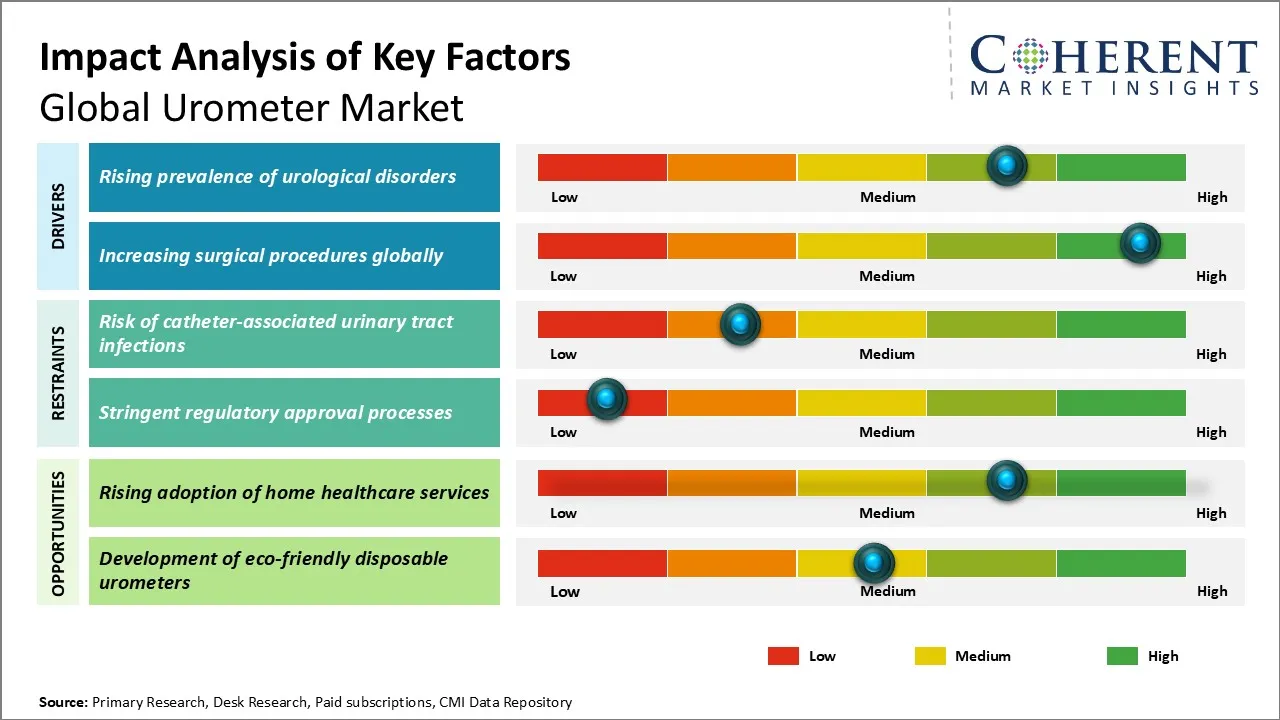
The increasing incidence of urological disorders such as urinary incontinence, bladder dysfunction, urinary tract infections (UTIs), and prostate-related conditions is significantly fueling the demand for urometers globally. As populations age and lifestyle-related risk factors like obesity, diabetes, and sedentary habits become more widespread, the prevalence of these disorders has escalated, resulting in a growing need for effective diagnostic and monitoring tools. Urometers, which enable accurate measurement of urine flow rate and volume, play a critical role in the clinical assessment and management of such conditions. Moreover, heightened awareness among healthcare providers and patients regarding early detection and continuous monitoring has further intensified the adoption of urometers in hospitals, clinics, and homecare settings.
For instance, in May 2024, a study presented at the National Kidney Foundation's 2024 Spring Clinical Meetings revealed a steady rise in the prevalence of several relatively uncommon kidney diseases in the U.S. from 2016 to 2020. Conditions such as polycystic kidney disease (PKD), Alport syndrome, lupus nephritis (LN), and focal segmental glomerulosclerosis (FSGS) all showed increased diagnosis rates among commercially insured patients, according to data from nearly 100 million enrollees in the Optum Clinformatics database. PKD prevalence rose from 36.3 to 42.3 per 100,000; LN from 12.9 to 18.3; FSGS from 3.7 to 6.2; and Alport syndrome from 1.6 to 2.0. Healthcare spending also surged, particularly for FSGS and PKD, driven largely by rising prescription drug costs due to newer treatment options. The findings underscore a growing health and economic burden, calling for deeper research into cost drivers and disease management strategies.
Urometer Market Opportunity - Rising Adoption of Home Healthcare Services
One of the significant opportunities driving growth in the global urometer market is the rising adoption of home healthcare services. The shift towards home-based patient care, fueled by increasing healthcare costs and patient preference for comfort and convenience, has boosted demand for portable and easy-to-use urometers. Home healthcare settings require devices that enable accurate monitoring of urinary output without the constant presence of medical professionals, making urometers an essential tool for managing patients with urinary conditions, post-surgical recovery, or chronic illnesses such as urinary incontinence and chronic kidney diseases.
Technological advancements have led to the development of user-friendly, compact, and reliable urometers that can be easily operated by non-medical caregivers and patients themselves. Additionally, the increasing prevalence of elderly populations worldwide, coupled with a rise in chronic disease incidence, has expanded the pool of patients requiring continuous monitoring outside hospital environments.
For instance, in March 2021, I-O Urology Corp., a leading provider of digital diagnostic solutions for remote urologic care, launched its CarePath platform, the first complete digital diagnostic system designed for real-time, remote monitoring of uroflow and urine output. Developed since 2015, CarePath enhances patient engagement, improves treatment compliance, and standardizes care for lower urinary tract symptoms (LUTS), affecting over 58 million Americans. The portable, cost-effective system supports remote patient monitoring reimbursement and provides clinicians with accurate, real-time data to guide therapy decisions and reduce dropout rates.
Analyst Opinion (Expert Opinion)
- The global urometer market is experiencing steady growth driven by increasing surgical volumes, a rising prevalence of renal and urological disorders, and the need for accurate urine output monitoring in critical care. Technological advancements, such as anti-reflux urometer systems and closed urine collection devices, are improving infection control and patient safety, gaining traction across developed and emerging economies alike. Regulatory initiatives promoting patient safety and infection prevention, particularly in catheter-associated urinary tract infections (CAUTIs), are further strengthening market adoption. However, challenges such as pricing pressure in low-income markets and a lack of skilled personnel in underdeveloped regions persist. Emerging opportunities include the integration of smart monitoring systems and automation in fluid management, especially in intensive care units.
- Recent industry activity underscores the market’s evolution. For instance, companies like Medline and Teleflex have expanded their urology portfolios with more user-friendly, sterile solutions to address CAUTI concerns. Conferences such as MEDICA (Germany), Arab Health (UAE), and World Congress of Nephrology (WCN) have increasingly featured discussions around urological care and innovations in urine monitoring. These platforms have proven vital in showcasing advanced technologies and fostering cross-border collaborations. Moreover, health authorities in the U.S., EU, and India have rolled out pilot programs aimed at improving hospital infection control and monitoring standards, including the use of digital urine meters, which are anticipated to accelerate product adoption globally.
Speak to the analyst
Want personalized insights?
Take the findings above to one of our principal consultants, or have the report rebuilt around the segments, geographies and competitors you actually track.
Market Segmentation
- Product Type Insights (Revenue, USD Mn, 2021 - 2033)
- Disposable Urometers
- Reusable Urometers
- Technology Insights (Revenue, USD Mn, 2021 - 2033)
- Analog or Gravity-based Urometers
- Digital or Smart Urometers
- Application Insights (Revenue, USD Mn, 2021 - 2033)
- Urine Output Measurement
- Post-operative Monitoring
- Critical Care Analysis (ICU/CCU)
- Chronic Disease Management (e.g., CKD, CHF)
- Material Insights (Revenue, USD Mn, 2021 - 2033)
- Plastic Urometers
- Glass Urometers
- Urometer Capacity Insights (Revenue, USD Mn, 2021 - 2033)
- 100 mL to 500 mL
- 500 mL to 1,000 mL
- 1,000 mL to 2,000 mL
- 2,000 mL and above
- Patient Demographics Insights (Revenue, USD Mn, 2021 - 2033)
- Adult
- Pediatric or Neonatal
- Geriatric
- End User Insights (Revenue, USD Mn, 2021 - 2033)
- Hospitals
- Ambulatory Surgical Centers
- Specialty Clinics
- Diagnostic Laboratories
- Home Care Settings
- Others (Research Institutions, etc.)
- Sales Channel Insights (Revenue, USD Mn, 2021 - 2033)
- Online
- Offline
- Regional Insights (Revenue, USD Mn, 2021 - 2033)
- North America
- U.S.
- Canada
- Latin America
- Brazil
- Argentina
- Mexico
- Rest of Latin America
- Europe
- Germany
- U.K.
- Spain
- France
- Italy
- Russia
- Rest of Europe
- Asia Pacific
- China
- India
- Japan
- Australia
- South Korea
- ASEAN
- Rest of Asia Pacific
- Middle East
- GCC Countries
- Israel
- Rest of Middle East
- Africa
- South Africa
- North Africa
- Central Africa
- North America
- Key Players Insights
- Angiplast Pvt Ltd
- Labtron Equipment Ltd.
- Romsons
- Becton, Dickinson and Company (BD)
- Omex Medical Technology
- Dispowell Surgicals
- Teleflex Incorporated
- ConvaTec Group PLC
- Braun Melsungen AG
- Cardinal Health, Inc.
- Medline Industries, Inc.
- APEX MEDICAL DEVICES
- Hollister Incorporated
- Coloplast A/S
- Fresenius Medical Care AG & Co. KGaA
Sources
Primary Research Interviews
- Hospital Procurement Managers
- Urologists and Nephrologists
- Biomedical Engineers
- Clinical Research Coordinators
- Infection Control Specialists
- Nursing Staff in ICU and Postoperative Care
Government and International Databases
- World Health Organization (WHO)
- Centers for Disease Control and Prevention (CDC)
- U.S. Food and Drug Administration (FDA)
- European Medicines Agency (EMA)
- National Institutes of Health (NIH)
- Organisation for Economic Co-operation and Development (OECD)
- World Bank
- Eurostat
- National Health Service (NHS)
- Ministry of Health, Labour and Welfare (Japan)
- Central Drugs Standard Control Organization (CDSCO – India)
Trade Publications
- Medical Device and Diagnostic Industry (MD+DI)
- MedTech Dive
- FierceBiotech
- HealthTech Magazine
- Medical Design & Outsourcing
- 24x7 Magazine (Healthcare Technology Management)
Academic Journals
- The Lancet
- Journal of Urology
- BMJ (British Medical Journal)
- American Journal of Kidney Diseases
- Nephrology Dialysis Transplantation
- Journal of Clinical Monitoring and Computing
- International Urology and Nephrology
Reputable Newspapers
- The New York Times – Health Section
- The Guardian – Healthcare
- The Washington Post – Health
- Reuters Health
- BBC Health
- The Hindu – Sci-Tech/Health
- The Economic Times – Healthcare
Industry Associations
- American Urological Association (AUA)
- European Association of Urology (EAU)
- International Society of Nephrology (ISN)
- Association for the Advancement of Medical Instrumentation (AAMI)
- International Federation of Medical and Biological Engineering (IFMBE)
- Urological Society of India (USI)
Public Domain Resources
- WHO Global Health Observatory
- Open Access Government Health Reports
- U.S. National Library of Medicine
- Google Scholar
Proprietary Elements
- CMI Data Analytics Tool: Proprietary analytics tool to analyze real-time market trends, consumer behavior, and technology adoption in market
- Proprietary CMI Existing Repository of Information for Last 8 Years
Get access to 250+ pages report
Every segment, forecast, competitor profile and data table behind the analysis above — available for instant download.
- ESOMAR Member
- ISO 9001:2015 Certified
- D-U-N-S Registered
- GDPR & CCPA Compliant
Missing comfort of reading report in your local language? Find your preferred language:
Transform your Strategy with Exclusive Trending Reports
Frequently Asked Questions
The global urometer market is estimated to be valued at USD 624.2 Mn in 2026 and is expected to reach USD 1028.9 Mn by 2033.
The CAGR of the global urometer market is projected to be 7.4% from 2026 to 2033.
Rising prevalence of urological disorders and increasing surgical procedures globally are the major factors driving the growth of the global urometer market.
Risk of catheter-associated urinary tract infections and stringent regulatory approval processes are the major factors hampering the growth of the global urometer market.
In terms of product type, disposable urometers segment is estimated to dominate the market revenue share in 2026.
Angiplast Pvt Ltd, Labtron Equipment Ltd., Romsons, Becton, Dickinson and Company (BD), Omex Medical Technology, Dispowell Surgicals, Teleflex Incorporated, ConvaTec Group PLC, B. Braun Melsungen AG, Cardinal Health, Inc., Medline Industries, Inc., APEX MEDICAL DEVICES, Hollister Incorporated, Coloplast A/S, and Fresenius Medical Care AG & Co. KGaA are the major players.
North America is expected to lead the global urometer market in 2026.