

Global Water for Injection Market Size and Forecast – 2026 to 2033
The global water for injection market is estimated to be valued at USD 35.72 Bn in 2026 and is expected to reach USD 62.82 Bn by 2033, exhibiting a compound annual growth rate (CAGR) of 8.4% from 2026 to 2033. This significant growth highlights rising demand across the pharmaceutical and healthcare sectors for high-purity water used in drug formulation and medical procedures, driven by increasing investments in biopharmaceutical production and stringent regulatory standards.
Key Takeaways of the Global Water for Injection Market
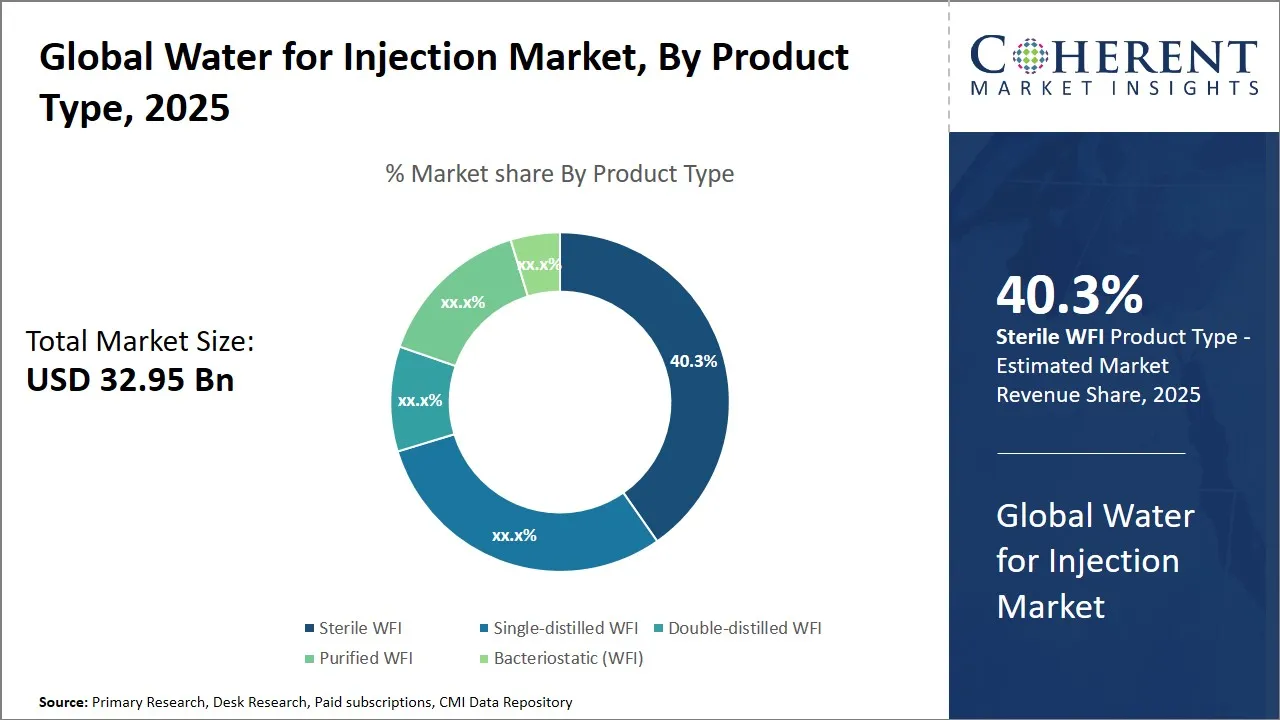
- By product type, sterile WFI is distinguished by its superior purity and sterility, making it crucial for parenteral drug formulations and critical medical applications, holding an estimated 41.3 % of the market share in 2026.
- Vials and ampoules are projected to lead the packaging segment for water for injection, capturing 35.5 % share in 2026.
- Distillation (traditional) is expected to continue to be the preferred production method for water for injection, owing to its effectiveness in reliably removing pyrogens, with a share of 52.5 % in 2026.
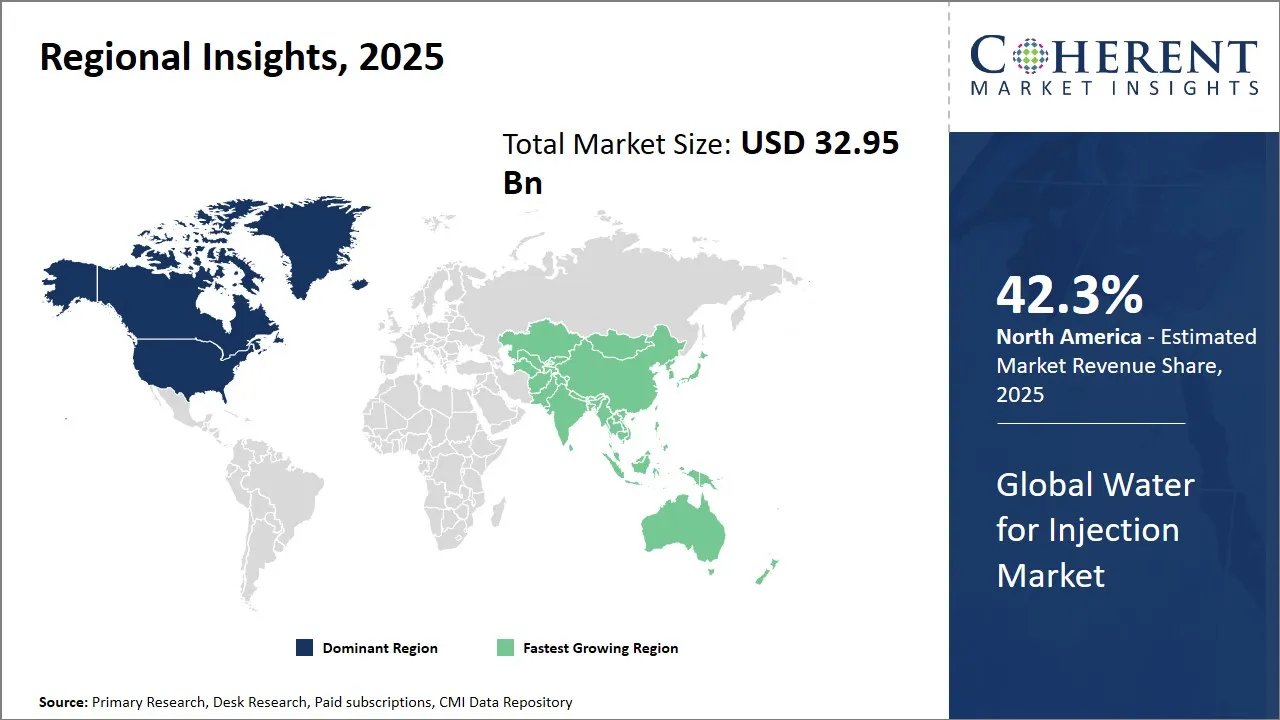
- North America is expected to lead the market, holding a share of 42.3 % in 2026. Asia Pacific is anticipated to be the fastest-growing region, with a market share of 24.6% in 2026.
Market Overview
A key trend in the water for injection market is the adoption of advanced purification technologies that improve water quality and process efficiency. The surge in biopharmaceutical manufacturing and injectable drug development has accelerated demand. Growing awareness of contamination risks in medical applications further drives this trend. Industry players are focusing on sustainable, cost-effective production methods, leveraging automation and real-time monitoring to ensure compliance with evolving regulations.
Current Events and Its Impact
Current Events | Description and its Impact |
Growth in biologics, biosimilars & injectable therapies |
|
Accelerated Adoption of Continuous Manufacturing |
|
Segmental Insights
- Current Industry Events of 2026
- Market Size Estimation
- Regional Breakdown
- Competitive Landscape
- Customer Intelligence
- Segmental Analysis
- Pricing Analysis
- Key Market Drivers, Challenges & Future Trends
- Customized Insights Section
Water for Injection Market Insights, By Product Type - Sterile WFI contributes the highest market share owing to its critical role in ensuring product safety and compliance with stringent pharmaceutical standards
Sterile WFI is noted for its great purity and sterility qualities, thus it becomes very important for parenteral drug formulations and critical medical applications, with an estimated market share of 41.3% in 2026. The regulatory demands set across global healthcare industries are the main source of sterile WFI's market power. These regulations require that WFI must be free from pyrogens and particulate matter at all times.
In May 2026, Angels for Change, a non-profit patient advocacy organization, announced Fagron Sterile Services US (FSS) as the recipient of the 2025 Project PROTECT grant to produce Sterile Water for Injection (SWFI), addressing critical shortages. The grant will enable Fagron to quickly produce and distribute SWFI, enhancing emergency preparedness following disruptions like Hurricane Helene and Milton in 2024.
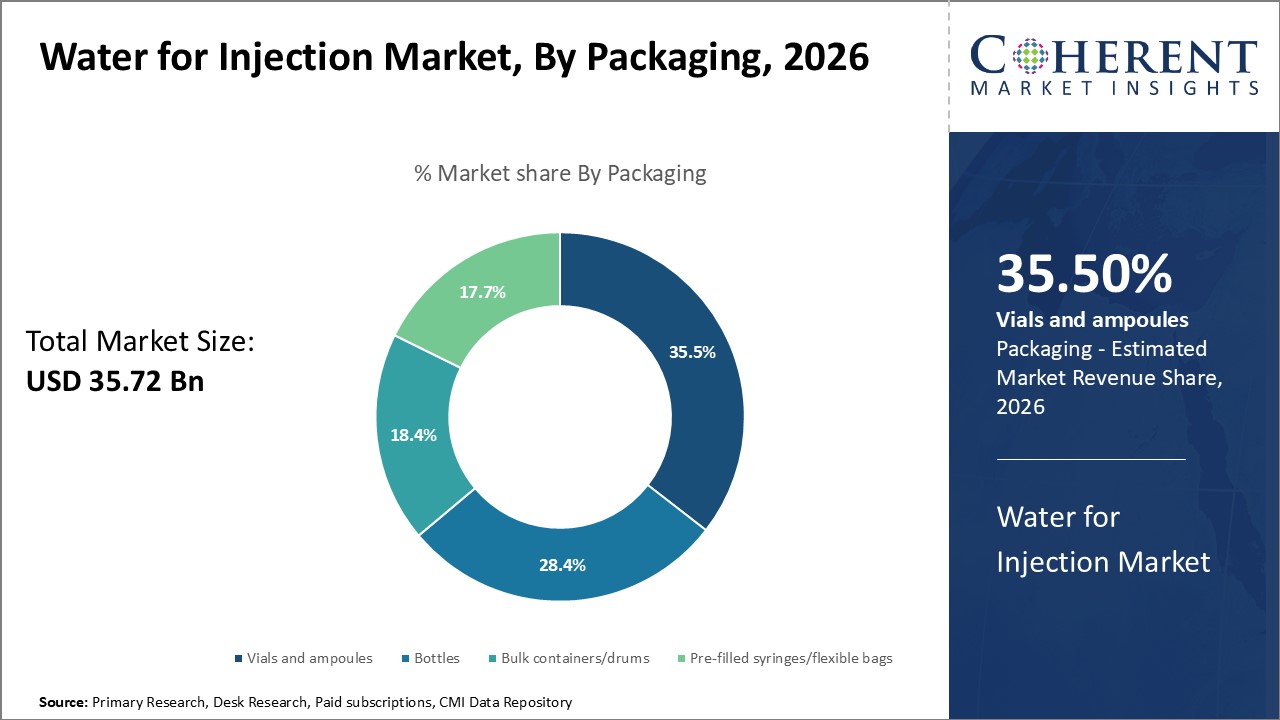
Water for Injection Market Insights, By Packaging - Vials and ampoules contribute the highest market share due to their compatibility with precise dosing and established usage in injectable drug delivery
Water for injection is expected to be mainly packed in vials and ampoules with a 35.5% share in 2026 which are the most widely used in hospitals and clinics offering a convenient, sterile, and economical solution for packaging. Water packed in vials and ampoules provides individual unit doses which contribute to the lowering of the risk of microbial contamination during drug preparation which is very important when using WFI in sensitive pharmaceutical processes.
The airtight nature of the vials and ampoules seals the water and keeps it uncontaminated and stable until usage which is a very important factor for maintaining the integrity of formulations prepared at the point of care.
Water for Injection Market Insights, By Production Technology - Distillation (traditional) contributes the highest market share owing to its proven effectiveness and compliance with regulatory standards for producing ultrapure water
Conventional distillation remains the most preferred technology for WFI manufacturing due to its reliability. It effectively removes pyrogens, bacteria, and impurities, ensuring the product meets pharmacopeial specifications with a 52.5% share in 2026. In the distillation process, the water is boiled to produce steam, which is then cooled to turn it back into liquid, thus leaving the contaminants and ensuring the super purity levels.
This process is well-established and has been continuously tested for years. It is accepted by regulatory authorities worldwide, making it the preferred choice for manufacturers seeking consistent product quality.
Comparison of Water for Injection Production Technologies: MED, VC, and RO-EDI Hybrid Systems
Aspect | Multi-Effect Distillation (MED) | Vapor Compression (VC) | RO-EDI Hybrid Systems |
Energy Efficiency | Moderate to high; reuses steam across multiple effects, reducing steam demand | High; recycles latent heat via mechanical vapor compression, significantly reducing energy usage | High; uses electrical energy mainly for membranes and EDI, lower overall energy consumption |
Cost-Effectiveness | Lower capital cost than VC; moderate operational costs due to steam use | Higher capital cost but lower operational costs due to energy savings | Moderate capital investment; lower operating costs due to reduced energy and chemical usage |
Environmental Impact | Reduced CO₂ emissions due to energy reuse | Lower carbon footprint with efficient heat recycling and reduced steam use | Lowest carbon footprint due to absence of thermal processes and chemical-free purification |
Water Quality Output | High purity WFI meeting pharmacopeial standards; effective endotoxin removal | High purity WFI with strong degassing and sterilization; suitable for both hot and cold WFI | High purity WFI; effective removal of ions and organic contaminants; membrane integrity critical |
Maintenance Requirements | Moderate; involves heat exchangers, pumps, and controls | Lower than MED; fewer moving parts, reduced maintenance | Moderate; periodic membrane and EDI module replacement needed |
Regional Insights
North America Water for Injection Market Analysis and Trends
North America is the largest market for water for injection globally, with an estimated share of 42.3% in 2026. This is supported by a well-trained healthcare system and significant investment in pharmaceutical manufacturing infrastructure. The presence of the U.S. FDA and other major regulatory agencies ensures that WFI standards for quality and purity are highly stringent, thus boosting the trust and confidence of the market.
In September 2023, Actylis, a worldwide leader in vital raw materials and performance ingredients for life sciences, announced the introduction of a new cGMP Water for Injection (WFI) generation, storage, and distribution system compliant at its Baie d’Urfé site in Montreal, Canada. The new system, which is compliant with ISO 14644-1 Class 7 clean environment standards, is aimed to fulfill USP and PhEur/BP specifications for water for injection purposes.
Asia Pacific Water for Injection Market Analysis and Trends
The Asia Pacific region is the fastest-growing market for water for injection, with an estimated share of 24.6% in 2026, backed by the development of the healthcare infrastructure, the rise of pharmaceutical manufacturing and continuous government support to the healthcare sector. Countries like China, India, and South Korea are rapidly developing their biopharmaceutical industries, backed by government policies that facilitate access to essential medicines and advanced drug formulations.
Moreover, the increasing incidence of long-term illnesses as well as the injection of huge amounts of money from international pharmaceutical firms into the outsourcing of production and the setting up of research centers are significant factors. Massive companies like Piramal Healthcare (India), Sino Biopharmaceutical (China), and Samsung Biologics (South Korea) are constantly expanding their WFI production to cater or meet the domestic and export market demand.
Water for Injection Market Outlook for Key Countries
U.S. Water for Injection Market Trends
The U.S. water for injection market is very advanced and centered on innovation and compliance. Pharmaceutical giants like Pfizer, Merck, and Baxter International not only lead the domestic market but also set global standards through their best manufacturing practices. The stringent nature of the country's regulations guarantees constant demand for high-quality purified water for injection formulations.
In June 2024, Xylem, a global leader in water technology solutions, introduced its MemGEN water generation solution, designed to address the challenges of traditional pharma purification systems. The MemGEN solution provides reliable purified water (PW) and Water for Injection (WFI), helping pharmaceutical companies accelerate time to market while ensuring compliance with Global Pharmacopeia Standards.
China Water for Injection Market Trends
The water for injection market of China is undergoing a fast-paced growth, which is the direct effect of an active government support in the likes of "Made in China 2026" and local production policies. Some of the companies that are very active in the field of water for injection are Sino Biopharmaceutical and CSPC Pharmaceutical Group, which are improving their purification and formulation capabilities thus leading to better-quality injectables.
Yaguang Co., Ltd., a top Chinese manufacturer of pharmaceutical machinery, is set to unveil its latest injection water generation apparatus at the 65th CIPM celebration in Xiamen, China in November 2024. The company is going to focus on its MVR energy-saving technology that it regards as the solution to major problems in the production of injection water and at the same time the technology that is contributing to making the pharmaceutical industry environmental friendly by using low-carbon methods.
India Water for Injection Market Trends
India is still the world's major producer of pharmaceutical injectables, especially of WFI, with its companies such as Piramal Healthcare, Aurobindo Pharma, and Biocon playing a significant role in the market's growth. The country has a very strong base for WFI demand provided by cost-effective manufacturing, large contract manufacturing organizations (CMOs), and government support that is specially targeted at the injectables market of generics.
India continues to be a leading production hub for pharmaceutical injectables, driven by major players like Piramal Healthcare, Aurobindo Pharma, and Biocon, which are actively contributing to the growth of the Water for Injection (WFI) market.
Germany Water for Injection Market Trends
Germany is a significant player in the water for injection market and has a very high-quality pharmaceutical manufacturing characterized by the presence of large multinationals such as Bayer and Boehringer Ingelheim. The strict quality control regulations imposed by the European Medicines Agency (EMA) stimulate the demand for WFI in the sterile drug production area. The country’s well-developed pharmaceutical supply chain and focus on biopharmaceutical innovation are the factors that continuously drive technological advancements in water purification processes.
In July 2022, ILC Dover, a company specializing in single-use solutions for biopharmaceuticals, introduced multi-compendial Water for Injection (WFI) to serve the biotherapeutics market. This addition expands ILC Dover's offerings across the pharmaceutical manufacturing workflow, complementing its recent acquisition of KSE Scientific
Adoption of Membrane-Based Water for Injection Systems: Enhancing Efficiency and Sustainability
- Membrane-based water for injection systems are gaining traction due to their environmental and operational benefits. These systems, such as reverse osmosis combined with electrode ionization (RO-EDI), operate at lower temperatures, reducing energy consumption compared to traditional distillation methods. This results in a smaller carbon footprint and higher water recovery rates. For example, Veolia’s membrane solutions have proven to reduce utility usage and installation time due to their compact, modular designs, which are ideal for pharmaceutical applications.
- Case studies from companies like Merck and Sartorius show that membrane systems offer significant lifecycle cost reductions. Merck, for instance, transitioned from traditional distillation to membrane-based systems and found notable energy savings, while maintaining WFI quality standards. As seen in Veolia’s work with biopharma clients, membrane systems are proving to be more sustainable and cost-effective, making them a preferred choice as regulatory confidence in these technologies grows.
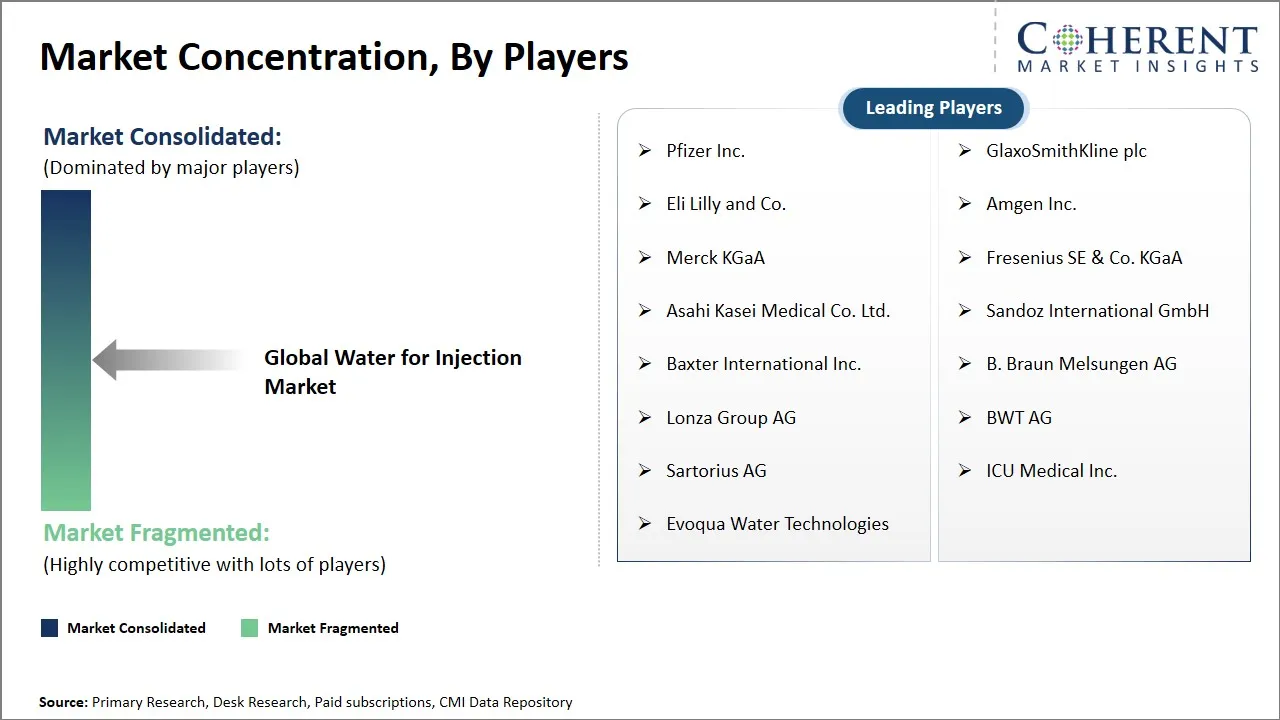
Market Players, Key Developments, and Competitive Intelligence
Key Developments
- In December 2024, CN Water, a leading provider of water treatment solutions, unveiled its Cold/Ambient Water for Injection (WFI) technology at CPHI-PMEC in Noida. Developed with its long-term partner BWT Pharma & BioTech, this new system significantly reduces energy consumption compared to traditional methods. CN Water also launched a remote monitoring solution for pharmaceutical water systems, aiming to improve efficiency and proactive maintenance by offering real-time data.
- In June 2024, Zydus announced that it would make its Biotax 1g injection available with 10ml sterile water after objections from Nepal's regulatory authorities. The company’s decision addresses regulatory concerns and ensures the product’s compliance and availability in the market, enabling it to meet safety requirements for administration in Nepal's healthcare system.
- In June 2024, Asahi Kasei Corp., a leading company in water treatment and filtration solutions, launched a new membrane system for producing Water for Injection (WFI). The system, utilizing the Microza hollow-fiber membrane, offers an energy-efficient alternative to conventional distillation methods, significantly reducing CO2 emissions and costs.
- In February 2024, Veolia Water Technologies, a leader in water treatment solutions, launched its latest generation of Polaris systems, designed for pharmaceutical Water for Injection (WFI) and pure steam production. The Polaris 2.0 range includes Multiple Effect Distillers (MED) and Pure Steam Generators (PSG), engineered to meet European, Japanese, and US Pharmacopoeia standards. These units offer a wide range of capacities, ensuring reliable, high-quality WFI and steam while reducing utility consumption.
Top Strategies Followed by Global Water for Injection Market Players
- The water for injection market is mainly occupied by the well-established companies who are also the ones that invest the most in R&D to be able to produce and sell high-performance products satisfying the stringent regulatory standards. The technologies they employ for the purification process and the packaging improvements done, all contribute in a way to the product’s reliability and safety. Additionally, these companies are already forming strategic partnerships with OEMs and suppliers, integrating into the pharmaceutical and biotechnology supply chains, thus ensuring that the demand for their products will always be there.
- In January 2025, Onyx Biotec Limited, a well-known biotech company, revealed an important five-year agreement with Innova Captab Limited for the manufacturing and supplying of sterile water for injection. This partnership coincides with the timing of Onyx Biotec’s announcement of its FY2025 third-quarter financial results.
- The companies in the middle category are quite different when it comes to cost, and that is the only difference that they have when it comes to price-sensitive customers, such as small pharmaceutical firms and CMOs. These middle-tier players strive through the formation of alliances to make the most of production capacity and to receive the new technology that goes with it at the least cost by sharing the R&D expense of the new product development.
- Nichrome Packaging Solutions is an Indian firm that manufactures packaging machinery and offers cost-effective solutions to small and medium enterprises engaged in food and pharmaceuticals.
- Small-scale firms may at the same time concentrate on sophistication in features or on innovation, and thus be able to circumvent any disadvantage they might face in terms of technology bottlenecks, by introducing advanced filtration or automated systems, for example. These players have also tailored their offerings to the needs of specific regional markets, thus they can compete by providing personalized service and meeting the particular requirements of the customer.
- KEL India Filters Pvt. Ltd. and Plastiflex are small-scale companies that supply specialized and innovative solutions. KEL India focuses on custom filtration for pharma, while Plastiflex provides high-performance conduits for niche markets like renewable energy.
Market Report Scope
Water for Injection Market Report Coverage
| Report Coverage | Details | ||
|---|---|---|---|
| Base Year: | 2025 | Market Size in 2026: | USD 35.72 Bn |
| Historical Data for: | 2020 To 2024 | Forecast Period: | 2026 To 2033 |
| Forecast Period 2026 to 2033 CAGR: | 8.4% | 2033 Value Projection: | USD 62.82 Bn |
| Geographies covered: |
| ||
| Segments covered: |
| ||
| Companies covered: | Pfizer Inc., GlaxoSmithKline plc, Eli Lilly and Co., Amgen Inc., Merck KGaA, Fresenius SE & Co. KGaA, Asahi Kasei Medical Co. Ltd., Sandoz International GmbH, Baxter International Inc., B. Braun Melsungen AG, Lonza Group AG, BWT AG, Sartorius AG, ICU Medical Inc., and Evoqua Water Technologies | ||
| Growth Drivers: |
| ||
| Restraints & Challenges: |
| ||
Water for Injection Market Dynamics
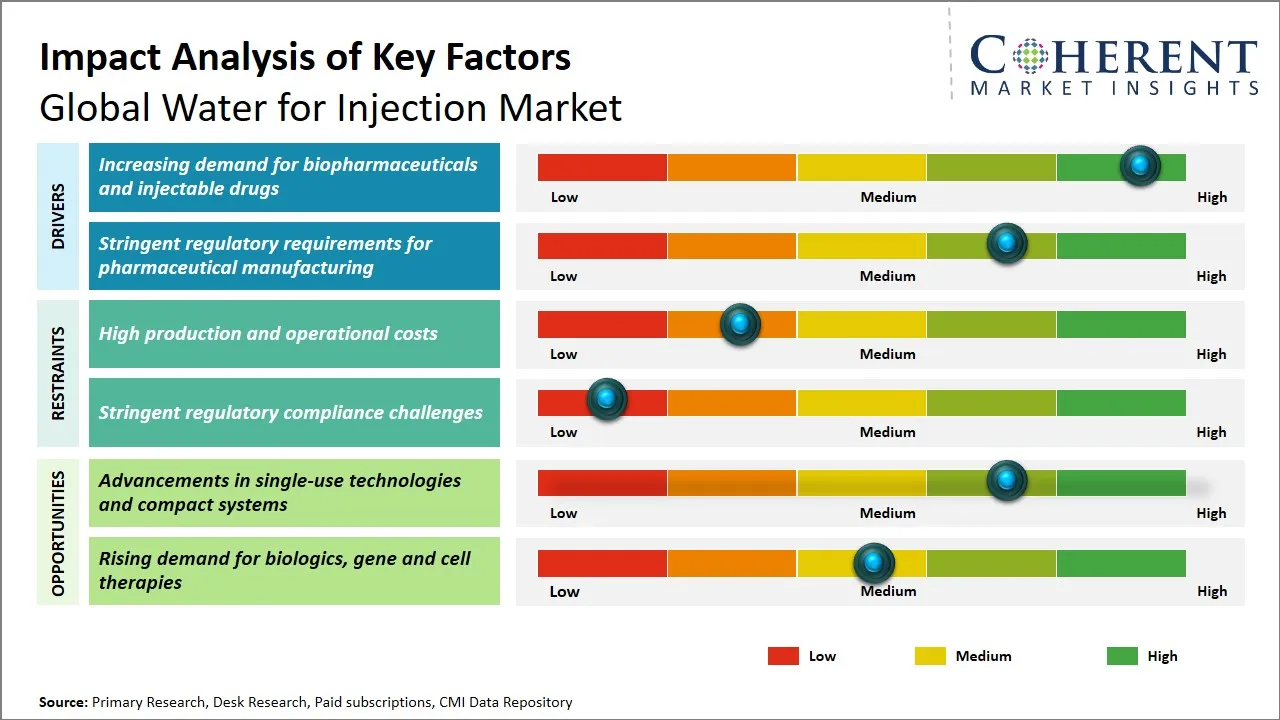
Global Water for Injection Market Driver - Increasing demand for biopharmaceuticals and injectable drugs
The soaring requirement for biopharmaceuticals and injectable drugs is one of the major reasons behind the growth of the global water for injection market. As medical science progresses, there is a notable transition towards biologics, vaccines, and intricate injectable formulations that demand high-purity water and sterility standards which can only be assured by top-quality WFI. Injectables constitute an essential part of the treatments spanning from chronic diseases to emergency care and thus, the use of high-purity water to meet strict pharmaceutical-grade specifications is a must in order to avoid contaminating and thus defeating the purpose of patient safety. Along with that, the growing preference of parenteral administration methods especially in oncology, diabetes, and immunotherapy is to a great extent driving the WFI dependability issue.
In September 2025, Evonik launched MaxiPure Polysorbate 80, a highly pure surfactant designed for injectable and biopharmaceutical applications. The ultra-high purity excipient, aimed at improving protein stability and viral inactivation, ensures consistent solubilization of hydrophobic APIs. With exceptional clarity and over 98% oleic acid content, it meets global regulatory standards such as Ph. Eur., USP, JP, and CP monographs.
Global Water for Injection Market Opportunity - Advancements in Single-Use Technologies and Compact Systems
The global water for injection market is growing significantly due to the technological advancements of single-use systems and compact system designs, which are opening the gates of great opportunity for players in the industry. Single-use systems have been the trend lately because of their benefits such as less chance of cross-contamination, reduced validation work, and increased flexibility in operations. These systems are also a great help in the biopharmaceutical and the sterile manufacturing areas where the quality of ultrapure water is very critical. Compact WFI generating units are a solution to the space issues that pharmaceutical companies usually encounter, thus allowing for installation even in plants with limited space.
In September 2025, Telstar launched an integrated Water-for-Injection system, combining distillation, storage, and distribution in a single compact unit. This solution, under the Telstar Puretech brand, offers a 35% space-saving and improved energy efficiency, reflecting advancements in single-use technologies and compact systems. The system meets GMP standards and reduces operational costs while maintaining high-quality performance, reinforcing Telstar’s leadership in biopharmaceutical solutions.
Analyst Opinion (Expert Opinion)
- Water for injection market is underpinned by technology-driven improvement in water purification and distillation, alongside strengthening regulations for the pharmaceutical and biopharmaceutical sectors. Besides, integrated systems and single-use technologies are among the innovations that have come up with ways to be more profitable and less expensive at the same time. Nevertheless, issues like quality consistency and power efficiency are still hurdles that need to be addressed.
- Knowledge-sharing and policy development in the WFI area have been prompted recently by such industry activities as the International Water Conference and Pharma Water Conference. The unveiling of a compact WFI system by Telstar is a case in point that demonstrates the trend toward energy-saving solutions in the industry. The EU's Green Deal, among other initiatives, is also a force that is advocating for the adoption of environmentally-friendly practices in WFI production, thereby influencing the market.
Speak to the analyst
Want personalized insights?
Take the findings above to one of our principal consultants, or have the report rebuilt around the segments, geographies and competitors you actually track.
Market Segmentation
- Product Type Insights (Revenue, USD Bn, 2021 - 2033)
- Sterile WFI
- Single‑distilled WFI
- Double‑distilled WFI
- Purified WFI
- Bacteriostatic (WFI)
- Packaging Insights (Revenue, USD Bn, 2021 - 2033)
- Vials and ampoules
- Bottles
- Bulk containers/drums
- Pre‑filled syringes/flexible bags
- Production Technology Insights (Revenue, USD Bn, 2021 - 2033)
- Distillation (traditional)
- Membrane‑based systems (e.g., reverse osmosis, ultrafiltration)
- Hybrid/combination systems (distillation + membrane)
- Application Insights (Revenue, USD Bn, 2021 - 2033)
- Product Formulation (as an excipient)
- Cleaning and Rinsing
- Equipment Cleaning
- Component Rinsing
- Reconstitution and Dilution
- Analytical and Laboratory Applications
- End User Insights (Revenue, USD Bn, 2021 - 2033)
- Biopharmaceutical companies
- Contract manufacturing/CDMOs
- Research institutes/academic labs
- Hospitals/healthcare facilities (in‑house use)
- Regional Insights (Revenue, USD Bn, 2021 - 2033)
- North America
- U.S.
- Canada
- Latin America
- Brazil
- Argentina
- Mexico
- Rest of Latin America
- Europe
- Germany
- U.K.
- Spain
- France
- Italy
- Russia
- Rest of Europe
- Asia Pacific
- China
- India
- Japan
- Australia
- South Korea
- ASEAN
- Rest of Asia Pacific
- Middle East
- GCC Countries
- Israel
- Rest of Middle East
- Africa
- South Africa
- North Africa
- Central Africa
- North America
- Key Players Insights
- Pfizer Inc.
- GlaxoSmithKline plc
- Eli Lilly and Co.
- Amgen Inc.
- Merck KGaA
- Fresenius SE & Co. KGaA
- Asahi Kasei Medical Co. Ltd.
- Sandoz International GmbH
- Baxter International Inc.
- Braun Melsungen AG
- Lonza Group AG
- BWT AG
- Sartorius AG
- ICU Medical Inc.
- Evoqua Water Technologies
Sources
Primary Research Interviews
Industry Stakeholders
- Senior engineer (water systems OEM)
- Technical manager (injectable drug manufacturer)
- Validation consultant (WFI systems)
- Procurement head (biotech/CMO)
- Engineering manager (vaccine plant)
- Regulatory affairs lead (parenteral drugs)
End-Users
- Director (sterile manufacturing)
- Supply-chain manager (hospital/clinical pharma)
- Head of aseptic fill operations (CMO)
- QA manager (biologics firm)
- Engineering lead (diagnostics firm)
- Maintenance manager (injectable plant)
Government & International Databases
- FDA (U.S.)
- EMA (EU)
- WHO (global GMP guidelines)
- National regulators (India’s CDSCO, China’s NMPA)
- UN or OECD trade data
- National plant infrastructure statistics
Trade Publications
- ISPE (pharmaceutical engineering)
- PDA (parenteral drug association)
- Pharmaceutical Technology
- BioPharm International
- PharmTech
- Industrial utilities trade magazines
Academic Journals
- Water Research
- International Journal of Pharmaceutical Sciences
- AAPS PharmSciTech
- Journal of Pharmaceutical Innovation
- Journal of Parenteral Science & Technology
- Journal of Industrial and Engineering Chemistry
Proprietary Elements
- CMI Data Analytics Tool: Proprietary analytics tool to analyze real-time market trends, consumer behavior, and technology adoption in market
- Proprietary CMI Existing Repository of Information for Last 8 Years
Get access to 250+ pages report
Every segment, forecast, competitor profile and data table behind the analysis above — available for instant download.
- ESOMAR Member
- ISO 9001:2015 Certified
- D-U-N-S Registered
- GDPR & CCPA Compliant
Missing comfort of reading report in your local language? Find your preferred language:
Transform your Strategy with Exclusive Trending Reports
Frequently Asked Questions
The global water for injection market is estimated to be valued at USD 35.72 Bn in 2026 and is expected to reach USD 62.82 Bn by 2033.
The CAGR of global water for injection market is projected to be 8.4% from 2026 to 2033.
Increasing demand for biopharmaceuticals and injectable drugs and stringent regulatory requirements for pharmaceutical manufacturing are the major factors driving the growth of the global water for injection market.
High production and operational costs and stringent regulatory compliance challenges are the major factors hampering the growth of the global water for injection market.
In terms of product type, sterile WFI is estimated to dominate the market revenue share in 2026.
Pfizer Inc., GlaxoSmithKline plc, Eli Lilly and Co., Amgen Inc., Merck KGaA, Fresenius SE & Co. KGaA, Asahi Kasei Medical Co. Ltd., Sandoz International GmbH, Baxter International Inc., B. Braun Melsungen AG, Lonza Group AG, BWT AG, Sartorius AG, ICU Medical Inc., and Evoqua Water Technologies are the major players.
North America is expected to lead the global water for injection market in 2026.