Ophthalmic Viscoelastic Devices Market Analysis & Forecast: 2026-2033
The ophthalmic viscoelastic devices market is estimated to be valued at USD 1,492.7 Mn in 2026 and is expected to reach USD 2,793.4 Mn in 2033, exhibiting a compound annual growth rate (CAGR) of 9.4% from 2026 to 2033.
Ophthalmic viscoelastic devices play a crucial role in ophthalmic surgeries such as cataract surgery, glaucoma surgery, vitreoretinal surgery, and corneal transplantation surgery. The selection of ophthalmic viscoelastic devices is based on surgical requirement and surgeons’ preferences. Innovative product offerings by major manufacturers such as Sight Sciences, Rayner Surgical Group, and Bausch & Lomb Incorporated who are engaged in the development of ophthalmic products is expected to drive ophthalmic viscoelastic devices market growth.
|
Current Event |
Description and its Impact |
|
Advanced Surgical Technology Integration |
|
|
Regulatory Landscape Evolution and Quality Standards |
|
Uncover macros and micros vetted on 75+ parameters: Get instant access to report
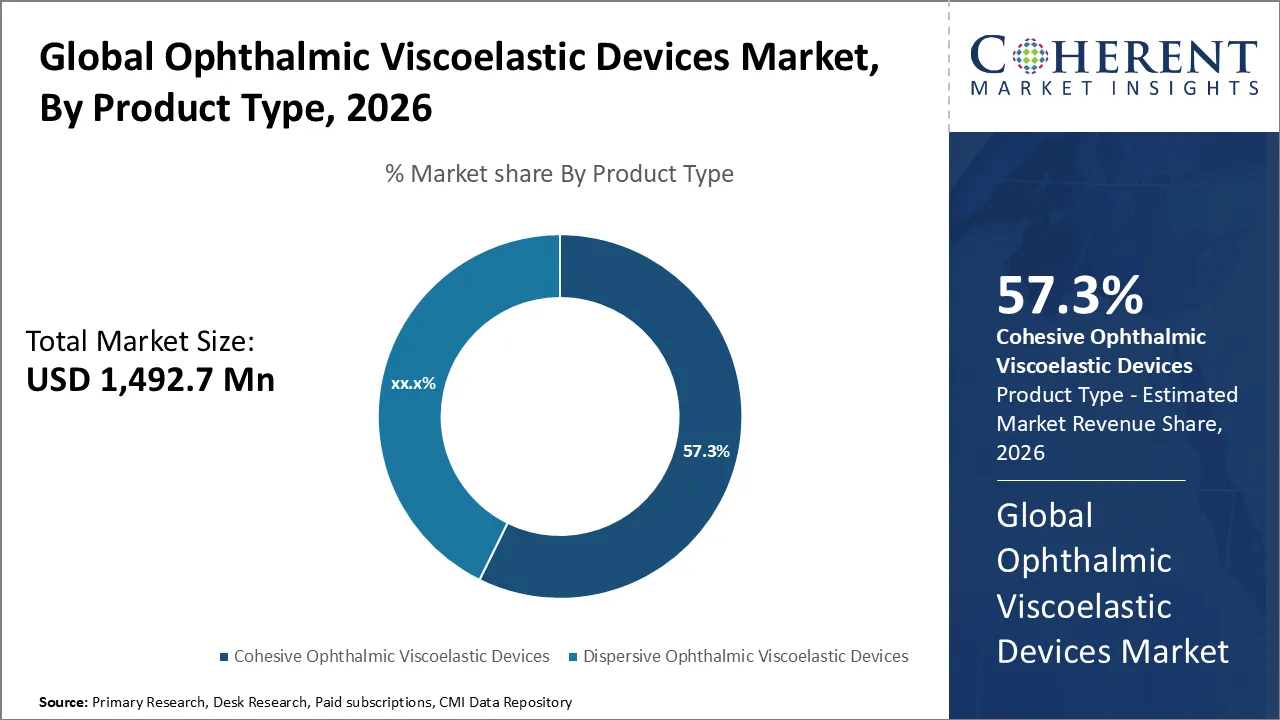
In terms of product type, the cohesive OVDs segment is expected to hold to 57.3% share of the market in 2026, because they are easier to remove after surgery and keep space in the front chamber during cataract surgery. Since they work so well, they lower the risk of complications during surgery, which is why ophthalmologists prefer them. This clinical benefit guarantees that cohesive OVDs will dominate the market in 2026.
In terms of application, the cataract surgery segment is expected to lead the market with 68.1% share of the market in 2026, due to global rise in aging people and high prevalence of cataracts. There are millions of cataract surgeries done every year, so the demand for OVDs in this field is much higher than in other fields. Technological progress and easier access to ophthalmic care around the world make this dominance even stronger.
For instance in February 2025, the FDA's approval of a surgical system for delivering viscoelastic fluid directly helps cataract surgery by making it more accurate and safer. It lowers complications, speeds up procedures, and boosts demand by making it easier to control the use of cohesive and dispersive OVDs.
In terms of composition, the sodium hyaluronate segment is projected to account for 72.6% share of the market in 2026, because its superior biocompatible, has better viscoelastic properties, and is safer. It is often used in cataract and corneal surgeries as it protects tissue well and keeps the chamber stable. Its proven clinical effectiveness and broad acceptance among surgeons secure its commanding share of the OVD market in 2026.
In terms of end user, the hospital segment is projected to capture 59% share of the market in 2026, as they perform majority of the ophthalmic surgeries and have advanced infrastructure, more skilled workers, and higher patients’ inflow. Hospitals will still be the main place where OVD is used considering that they can handle complicated procedures and provide complete care.
To learn more about this report, Download Free Sample
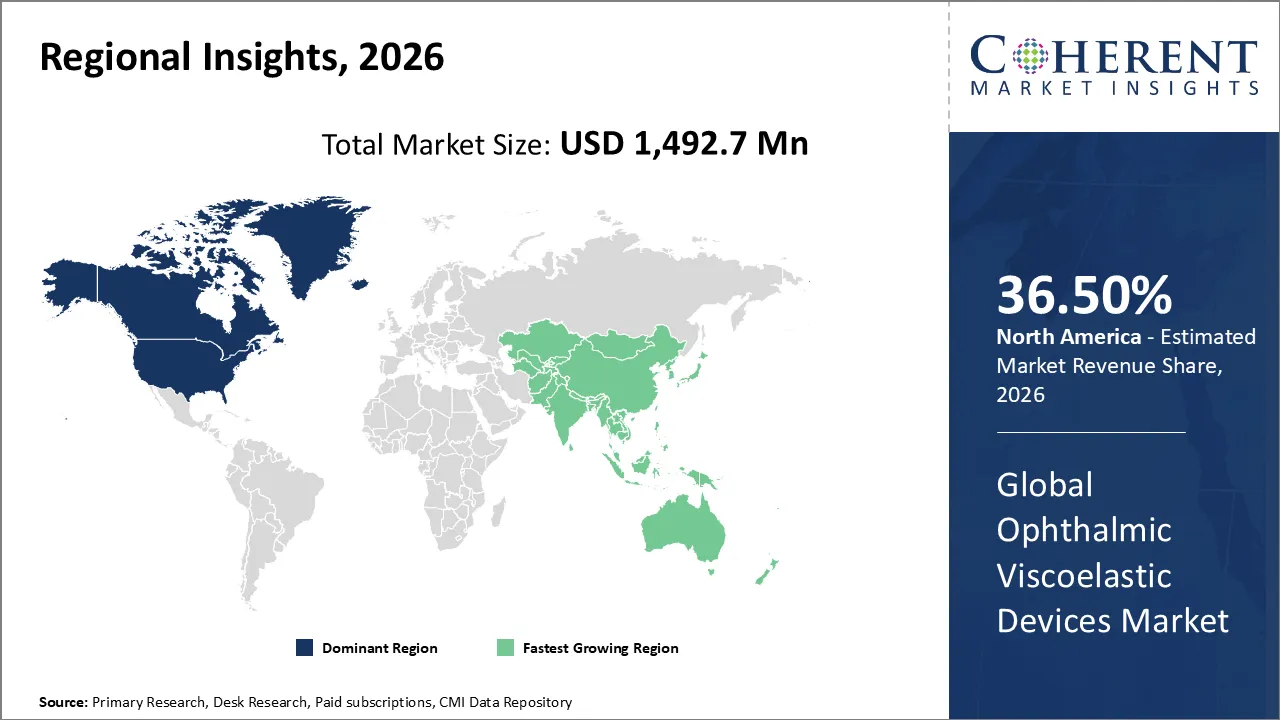
North America is expected to dominate the ophthalmic viscoelastic devices market with 36.5% in 2026, driven by high volume of cataract surgeries, healthcare infrastructure is advanced, and strong presence of leading manufacturers in the area. The region's dominance is further strengthened by an aging population, widespread insurance coverage, and the quick adoption of new surgical techniques. This gives it the largest market share in the world.
For instance, in July 2025, Health Canada has approved Alcon's Unity VCS, a new viscoelastic control system. The technology improves cataract surgery by providing precise control of viscoelastic fluids, which keeps the anterior chamber stable and protects the tissue. This milestone makes Alcon's position as a leader in eye care innovation even stronger, which will lead to safer and more effective surgeries for Canadian patients and surgeons.
Asia Pacific is anticipated to be the fastest growing region, fueled by the population is getting older, cataracts are becoming more common, and countries like India and China are making it easier for people to get advanced eye care. The region is the fastest-growing market in the world driven by government efforts to prevent blindness, more surgeries, and the use of products that are relatively inexpensive.
The United States is one of the largest markets for ophthalmic viscoelastic devices driven by a high prevalence of cataracts in aging population. Advanced surgical techniques, widespread adoption of innovative ophthalmic technologies, and strong FDA-regulated approvals ensure consistent demand. Strong healthcare infrastructure and reimbursement policies make the market even more expansive and accessible.
For instance, in February 2025, New World Medical’s VIA360 Surgical System has received FDA clearance in the United States. The device uses ActiveInject Technology and a Smart Prime System to deliver ophthalmic viscoelastic fluid precisely during cataract and trabeculotomy surgeries, enhancing efficiency, protecting eye tissues, and improving surgical outcomes with controlled viscoelastic delivery.
| Report Coverage | Details | ||
|---|---|---|---|
| Base Year: | 2025 | Market Size in 2026: | USD 1,492.7 Mn |
| Historical Data for: | 2020 To 2024 | Forecast Period: | 2026 To 2033 |
| Forecast Period 2026 to 2033 CAGR: | 9.4% | 2033 Value Projection: | USD 2,793.4 Mn |
| Geographies covered: |
|
||
| Segments covered: |
|
||
| Companies covered: |
Johnson & Johnson, Rumex International Co., Bausch & Lomb Incorporated., Ophtechnics Unlimited, Truviz Ophthalmic, Beye, LLC, Carl Zeiss Meditec AG, Precision Lens, Iso Clear (Pty) Ltd., and Neu Micromed International Pvt. Ltd. |
||
| Growth Drivers: |
|
||
| Restraints & Challenges: |
|
||
Uncover macros and micros vetted on 75+ parameters: Get instant access to report
Cataracts and glaucoma continue to be the most common causes of blindness around the world, affecting millions of people each year. The rising number of these conditions has made it very important to have more advanced surgical procedures. Ophthalmic viscoelastic devices (OVDs) are crucial for keeping the anterior chamber stable during delicate procedures, which makes them safe and accurate. The ophthalmic viscoelastic devices market share is expected to grow steadily as the number of patients grows. This is because there is an urgent need for effective surgical solutions in both developed and developing areas.
According to the London Cataracts Centers, Cataracts are the leading cause of blindness worldwide, responsible for about 45% of all cases, according to the World Health Organization. An estimated 20 million people live without sight due to cataracts, even though a simple surgical procedure could restore vision in most instances.
The burden is even greater in low- and middle-income countries, where cataracts account for up to 60% of blindness. This highlights the critical challenge of limited access to affordable and timely eye care in these regions.
Cataract surgery is the most frequently performed eye surgery in the world, with millions of cases each year. OVDs are also important in glaucoma surgeries, corneal transplants, and vitreoretinal operations, where they protect fragile eye tissues and keep the chamber depth. The growing number of surgeries around the world is directly driving up the demand for ophthalmic viscoelastic devices. Hospitals and clinics are using these devices to improve patient outcomes. This rise in procedures shows the significance OVDs are in modern ophthalmology and gives manufacturers a chance to keep growing.
Ophthalmic viscoelastic device (OVD) formulations are constantly getting advanced, which is changing the way surgery is done by making both cohesive and dispersive properties better. These new ideas make the chamber more stable, protect sensitive eye tissues, and improve the placement of intraocular lenses, which makes the results safer and more accurate. Companies that invest financial resources into research and development of next-generation OVDs are in a good position to get high-end customers and grow their business around the world. The ophthalmic viscoelastic devices market forecast is expected to grow quickly via new technologies and the fact that surgeons prefer them.
The market for ophthalmic viscoelastic devices is growing along with the need for surgeries that need precise control inside the eye and protection of the tissue. Viscoelastic agents are highly utilized in cataract surgery, glaucoma procedures, corneal transplants, and vitreoretinal interventions. They keep space in the eye and protect fragile structures while they are being moved. Cataract surgery, which is the most widely performed kind of eye surgery in the world, is still the main reason people use OVDs. This is because the number of procedures is going up in both developed and developing healthcare systems.
Data on market segmentation show that dispersive and cohesive OVDs are still used in an array of surgeries. However, viscoadaptive formulations are is gaining traction for complex cases because they can be used in a variety of surgical settings. Hospitals are the main end-user setting as these facilities handle a great deal of complicated and high-volume surgical cases. Ambulatory surgical centers and specialty eye clinics are also seeing more use as outpatient procedures become more common.
North America is the largest customer base because it has a well-established healthcare system and a high volume of procedures. Asia-Pacific is seeing faster growth driven by expanding access to ophthalmic care and the population is getting older, which makes them more likely to have vision problems. Demographic and epidemiological factors, such as the worldwide prevalence of vision disorders and age-related ocular conditions, support the sustained demand for viscoelastic devices. Overall, improvements in surgical techniques, more procedures being done, and better access to healthcare are all important factors that are affecting the current direction of the OVD market.
Share
Share
Manisha Vibhute is a consultant with over 5 years of experience in market research and consulting. With a strong understanding of market dynamics, Manisha assists clients in developing effective market access strategies. She helps medical device companies navigate pricing, reimbursement, and regulatory pathways to ensure successful product launches.
Joining thousands of companies around the world committed to making the Excellent Business Solutions.
View All Our Clients