

Animal Antimicrobials And Antibiotics Market Size and Forecast – 2026 to 2033
The Animal Antimicrobials And Antibiotics Market is anticipated to grow at a CAGR of 1.9% with USD 5.6 Bn in 2026 and is expected to reach USD 6.3 Bn in 2033. Rising livestock production, growing bacterial infections, and the need to maintain animal health and productivity drive the Animal Antimicrobials and Antibiotics Market.
Key Takeaways
- Penicillin holds the largest market share of 38.5% in 2026 owing to its rising incidence of bacterial diseases in livestock. According to a study, Salmonella spp. is the predominant bacterial pathogen associated with livestock infections, accounting for 77.79% of reported cases.
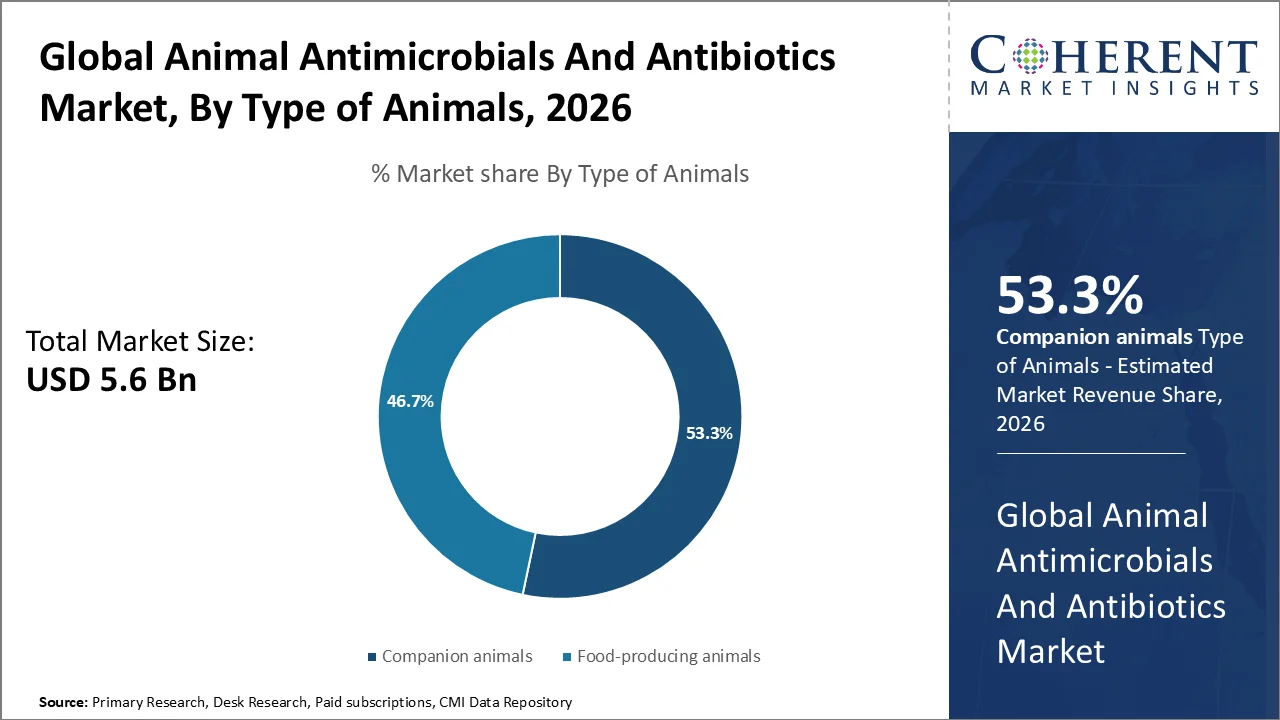
- Companion animals expected to hold largest market share of 53.3% in 2026 owing to its rising pet ownership and pet humanization. As of 2024, 66% of U.S. households, equivalent to approximately 86.9 million homes, owned at least one pet.
- Premix acquired the prominent market share of 41.1% in 2026 owing to the growth of intensive livestock farming.
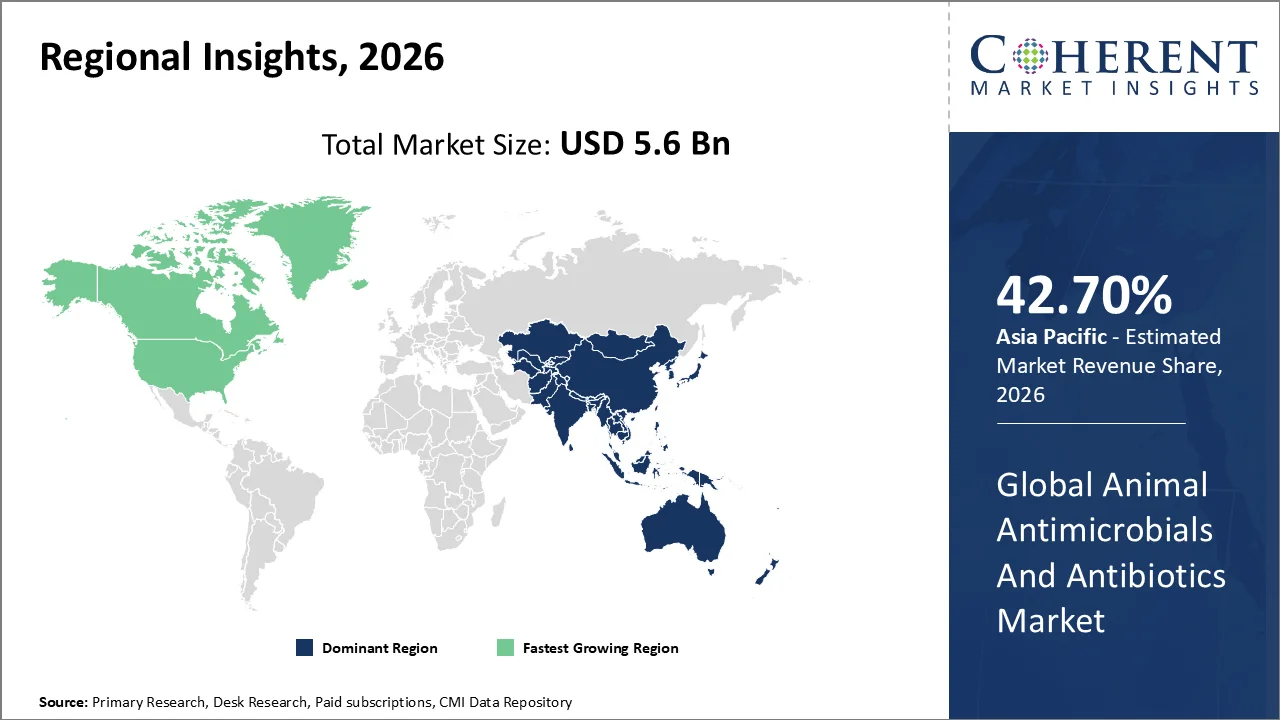
- Asia Pacific is expected to acquire the dominant share of 42.7% in 2026 owing to its large and expanding livestock population. The 20th Livestock Census (2019) recorded 535.76 million livestock animals, representing a 4.8% increase from 2012.
Current Events and Their Impact on the Animal Antimicrobials And Antibiotics Market
Current Event | Description and its Impact |
U.S. FDA fully implemented GFI #263 for medically important animal antimicrobials (June 2023) |
|
EU mandatory antimicrobial sales and use reporting began under Regulation (EU) 2019/6 (January 2024) |
|
Segmental Insights
- Current Industry Events of 2026
- Market Size Estimation
- Regional Breakdown
- Competitive Landscape
- Customer Intelligence
- Segmental Analysis
- Pricing Analysis
- Key Market Drivers, Challenges & Future Trends
- Customized Insights Section
Companion animals expected to hold largest market share
Companion animals expected to hold largest market share of 53.3% in 2026 owing to its close human–pet interaction and one health concerns. Rising pet ownership, pet humanization, and increased spending on veterinary healthcare and diagnostics drive the companion animals segment. India’s pet population increased from 26 million in 2019 to 32 million in 2024, representing a 23.1% increase over five years. Dogs and cats experience bacterial infections such as skin, ear, urinary, and respiratory infections, increasing demand for antimicrobial treatments. Pet owners increasingly prioritize animal welfare and seek timely veterinary care when their animals become ill. The expansion of veterinary clinics and diagnostic services also improves access to treatment. Growing attention to pet health, disease management, and responsible antimicrobial use further strengthens segment growth. In July 2026, the World Small Animal Veterinary Association (WSAVA) launched its first global survey to understand the experiences, challenges, and priorities of companion animal veterinary professionals worldwide. The survey invites veterinarians, veterinary technicians, and other professionals working in companion animal practices to participate and share their insights.
Why is Penicillin Acquiring the Largest Market Share?
Penicillin holds the largest market share of 38.5% in 2026. The penicillin segment benefits from the ongoing need to treat bacterial infections in livestock and companion animals, including respiratory, urinary, gastrointestinal, skin, and systemic infections. Veterinarians use penicillins across cattle, swine, poultry, fish, cats, and dogs because of their established efficacy and wide availability. Limited access to cost-effective alternatives for certain infections further drives demand. Growing awareness of veterinary healthcare and the increasing focus on maintaining animal health, preventing productivity losses, and improving overall animal well-being also contribute to the segment’s growth. Alembic Therapeutics announced the U.S. availability of Pivya (pivmecillinam) 185 mg tablets, an oral prescription antibiotic. Pivya contains pivmecillinam, a beta-lactam antibacterial agent that has been widely used internationally for many years.
Which Mode of Delivery dominates the market?
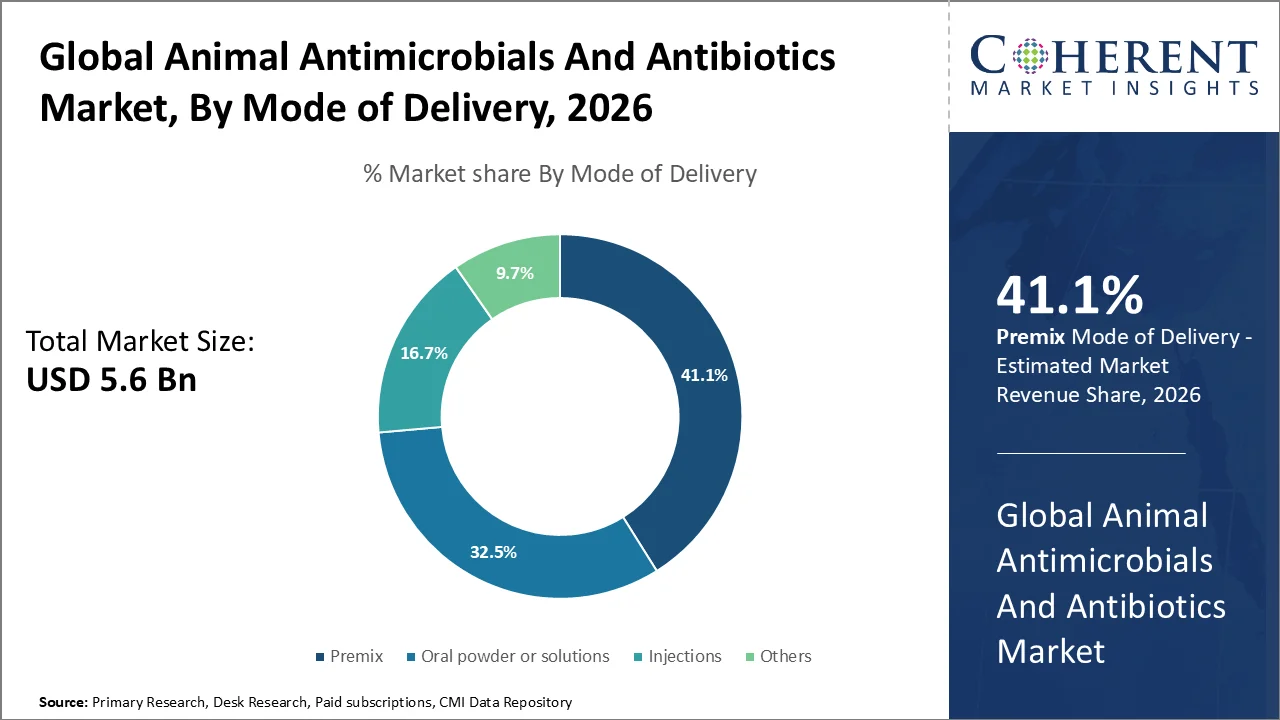
Premix acquired the prominent market share of 41.1% in 2026. The premix segment grows as intensive livestock farming expands and producers seek convenient and efficient ways to administer antimicrobials through animal feed. Feed manufacturers use premixes to distribute veterinary medicines uniformly, enabling consistent treatment across groups of animals. Rising bacterial infections, expanding commercial poultry and swine production, and increasing focus on animal health and productivity further drive demand. The availability of approved medicated premixes and well-established feed manufacturing infrastructure also encourages livestock producers to adopt premix-based antimicrobial treatments.
Animal Antimicrobials And Antibiotics Market Trends
- Increasing use of veterinary diagnostics and antimicrobial susceptibility testing enables faster identification of bacterial infections and helps veterinarians select appropriate antibiotics, reducing unnecessary antimicrobial use. WOAH operates ANIMUSE, a global digital system for monitoring antimicrobial use in animals; participation increased to 157 countries and territories in the 2025 reporting cycle.
- Increasing pet humanization and companion-animal healthcare spending strengthens demand for veterinary antibiotics used to treat bacterial infections in dogs, cats, and other companion animals. However, official global data on antibiotic use specifically in companion animals remain limited compared with food-producing animals; therefore, a precise global percentage should not be stated without a reliable source. The FDA notes that coordinated national-scale monitoring of antimicrobial use across U.S. veterinary sectors is not currently available.
Regional Insights
Asia Pacific dominates owing to growing veterinary healthcare infrastructure
Asia Pacific is expected to acquire the dominant share of 42.70% in 2026. The Asia Pacific market benefits from its large livestock and aquaculture base, rising demand for animal protein, and expanding poultry, swine, cattle, and fish production. India’s fish production increased to 197.75 lakh tonnes in FY 2024–25, more than doubling from 95.79 lakh tonnes in FY 2013–14. Increasing disease incidence encourages producers to use antimicrobials to protect animal health and maintain productivity. Governments and private companies are also strengthening veterinary healthcare infrastructure and improving access to animal medicines, supporting market growth. In November 2025, Union Health Minister Jagat Prakash Nadda launched the second National Action Plan on Antimicrobial Resistance (2025–29), joined by senior health and science officials.
North America Animal Antimicrobials And Antibiotics Market Trends
North America’s animal antimicrobials and antibiotics market is driven by expanding livestock production, the growing incidence of bacterial and infectious diseases, and rising demand for animal-based food products. Strong veterinary healthcare infrastructure and increased investment in animal health further stimulate market growth. The United States has more than 30,000 veterinary practices, according to the American Veterinary Medical Association (AVMA). Meanwhile, regulatory authorities promote antimicrobial stewardship, while improved diagnostics and precision livestock farming help veterinarians and producers adopt targeted treatments and drive demand for advanced animal health solutions.
India Animal Antimicrobials And Antibiotics Market Trends
India’s animal antimicrobials and antibiotics market grows as livestock and poultry production expands and consumers demand more meat, milk, eggs, and other animal-based protein. Farmers increasingly use these products to prevent and treat infectious diseases as intensive farming and aquaculture operations expand. Growing awareness of animal health, food safety, and farm productivity also encourages adoption. Veterinary companies continue to improve formulations and expand distribution networks, while better access to veterinary services enables farmers to use antimicrobial and antibiotic treatments more effectively across the country.
United States Animal Antimicrobials And Antibiotics Market Trends
The United States animal antimicrobials and antibiotics market is propelled by expanding livestock production, rising consumption of meat and dairy products, and the growing need to prevent and treat bacterial infections in animals. Increasing disease risks, particularly in poultry and dairy farming, continue to drive demand for veterinary antimicrobials. Advances in veterinary diagnostics and targeted therapies further support market growth. Meanwhile, FDA antimicrobial stewardship programs, veterinary supervision, resistance monitoring, and improved prescribing practices guide antimicrobial use and promote more responsible treatment approaches. The FAO, UNEP, WHO, and WOAH launched the Antimicrobial Resistance Multi-Stakeholder Partnership Platform to address the global threat of AMR across human, animal, plant, and environmental health.
Who are the Major Companies in Animal Antimicrobials And Antibiotics Industry
Some of the major key players in Animal Antimicrobials And Antibiotics are Merck & Co., Inc., Zoetis, Inc., Bayer AG, Virbac, Eli Lilly Company, Boehringer Ingelheim GmbH, Vetoquinol S.A., Ceva Sante Animale, Dechra Pharmaceuticals PLC and Sanofi.
Key News
- In October 2025, Brazil’s poultry sector launched a campaign promoting prudent antibiotic use to combat resistance. The WHO reported that one in six laboratory-confirmed bacterial infections causing common illnesses worldwide in 2023 resisted antibiotic treatment.
Market Report Scope
Animal Antimicrobials And Antibiotics Market Report Coverage
| Report Coverage | Details | ||
|---|---|---|---|
| Base Year: | 2025 | Market Size in 2026: | USD 5.6 Bn |
| Historical Data for: | 2020 To 2024 | Forecast Period: | 2026 To 2033 |
| Forecast Period 2026 to 2033 CAGR: | 1.9% | 2033 Value Projection: | USD 6.3 Bn |
| Geographies covered: |
| ||
| Segments covered: |
| ||
| Companies covered: | Merck & Co., Inc., Zoetis, Inc., Bayer AG, Virbac, Eli Lilly Company, Boehringer Ingelheim GmbH, Vetoquinol S.A., Ceva Sante Animale, Dechra Pharmaceuticals PLC and Sanofi. | ||
Analyst Opinion
- Animal antimicrobial demand is being shaped by disease prevention and production efficiency, not simply by herd expansion. The United States produces more than 9 billion broiler chickens annually, while the country maintains tens of millions of cattle and hogs, creating a large treatment environment where bacterial disease can directly affect productivity. The strongest demand remains concentrated in high-density production systems, where preventing respiratory, enteric, and systemic infections can protect animal health and reduce production losses.
- Antimicrobial stewardship is becoming a market differentiator rather than a constraint. U.S. FDA data show that medically important antimicrobials sold for use in food-producing animals declined substantially after implementation of veterinary feed-directive and prescription requirements. This shift favors products supported by clearer indications, veterinary oversight, accurate dosing, and diagnostic evidence. In my view, manufacturers that align antibiotics with precision treatment and stewardship requirements will be better positioned than suppliers relying on broad, routine antimicrobial use.
- The poultry and swine sectors will remain particularly important because infectious-disease outbreaks can create immediate economic consequences. For example, the United States experienced highly pathogenic avian influenza outbreaks affecting more than 100 million poultry birds during the 2022–2024 period, demonstrating how rapidly animal-health risks can disrupt production. While antibiotics do not treat viral diseases such as avian influenza, secondary bacterial infections and heightened biosecurity requirements reinforce the importance of veterinary disease-management programs.
Speak to the analyst
Want personalized insights?
Take the findings above to one of our principal consultants, or have the report rebuilt around the segments, geographies and competitors you actually track.
Market Segmentation
- By Type of product (Revenue, USD Bn, 2021-2033)
- Penicillin
- Tetracycline
- Sulfonamides
- Quinolones
- Macrolides
- Cephalosporin
- Amingoglycoside
- Others
- By Type of animals (Revenue, USD Bn, 2021-2033)
- Companion animals
- Food-producing animals
- By Mode of delivery (Revenue, USD Bn, 2021-2033)
- Oral powder or solutions
- Injections
- Premix
- Others
- By Region (Revenue, USD Bn, 2021-2033)
- North America
- U.S.
- Canada
- Latin America
- Brazil
- Mexico
- Argentina
- Rest of Latin America
- Europe
- Germany
- U.K.
- France
- Italy
- Spain
- Russia
- Rest of Europe
- Asia Pacific
- China
- India
- Japan
- Australia
- South Korea
- ASEAN
- Rest of Asia Pacific
- Middle East
- GCC
- Israel
- Rest of Middle East
- Africa
- South Africa
- Central Africa
- North Africa
- North America
Sources
Primary Research interviews
- Veterinary practitioners and animal-health specialists
- Livestock and poultry producers
- Veterinary pharmaceutical distributors and wholesalers
- Animal-health product manufacturers and regulatory specialists
- Feed manufacturers and animal nutrition professionals
- Veterinary diagnostic laboratories and microbiology experts
Databases
- FDA Center for Veterinary Medicine (CVM) antimicrobial sales and distribution databases
- National Antimicrobial Resistance Monitoring System (NARMS) database
- USDA National Agricultural Statistics Service (NASS) databases
- USDA Animal and Plant Health Inspection Service (APHIS) datasets
- WOAH ANIMUSE antimicrobial-use database
- FAOSTAT livestock and animal-production databases
Magazines
- Veterinary Practice News
- DVM360
- Feedstuffs
- Poultry World
- Dairy Herd Management
- Drovers
Journals
- Journal of Veterinary Pharmacology and Therapeutics
- Journal of Antimicrobial Chemotherapy
- Frontiers in Veterinary Science
- Veterinary Microbiology
- Antibiotics
- Journal of Animal Science
Newspapers
- The New York Times
- The Wall Street Journal
- Reuters
- Associated Press
- USA Today
Associations
- American Veterinary Medical Association (AVMA)
- American Association of Bovine Practitioners (AABP)
- American Association of Swine Veterinarians (AASV)
- United States Animal Health Association (USAHA)
- National Pork Producers Council (NPPC)
- National Cattlemen’s Beef Association (NCBA)
- National Chicken Council (NCC)
- World Organisation for Animal Health (WOAH)
Public Domain sources
- U.S. Food and Drug Administration (FDA), Center for Veterinary Medicine (CVM) — antimicrobial policies, stewardship guidance, sales data, and regulatory information
- National Antimicrobial Resistance Monitoring System (NARMS), operated by FDA, CDC, and USDA
- U.S. Department of Agriculture (USDA), including APHIS and NASS
- Centers for Disease Control and Prevention (CDC)
- U.S. Environmental Protection Agency (EPA)
- World Organisation for Animal Health (WOAH) — antimicrobial-use reports, standards, and veterinary antimicrobial guidance
- Food and Agriculture Organization of the United Nations (FAO)
- World Health Organization (WHO)
- FDA Guidance Documents on judicious antimicrobial use and veterinary oversight
Proprietary Elements
- CMI Data Analytics Tool
- Proprietary CMI Existing Repository of information for last 10 years
Get access to 250+ pages report
Every segment, forecast, competitor profile and data table behind the analysis above — available for instant download.
- ESOMAR Member
- ISO 9001:2015 Certified
- D-U-N-S Registered
- GDPR & CCPA Compliant
Missing comfort of reading report in your local language? Find your preferred language:
Transform your Strategy with Exclusive Trending Reports
Frequently Asked Questions
The Animal Antimicrobials And Antibiotics Market is anticipated to grow at a CAGR of 1.9% with USD 5.6 Bn in 2026 and is expected to reach USD 6.3 Bn in 2033.
The market is primarily driven by the need to prevent and treat bacterial infections, protect livestock productivity, and maintain animal health.
Veterinary oversight has become a central market requirement in the United States. FDA states that all medically important antimicrobials sold or distributed for food-producing animals now require oversight by a licensed veterinarian, favoring products with clearly defined indications, dosing, and treatment durations.
Food-producing animals, particularly cattle, swine, chickens, and turkeys, remain major demand segments.
The trend is more nuanced than a simple increase or decline. FDA reported that sales and distribution of medically important antimicrobials for food-producing animals increased between 2023 and 2024, while 2024 sales remained substantially below the 2015 peak.