

Global Array Market (Life Science and Biotechnology Instruments) Analysis 2026-2033
The global array market (life science and biotechnology instruments) size is anticipated to grow at a CAGR of 15.4% with USD 11.4 Bn in 2026 and is expected to reach USD 31.1 Bn in 2033, because it drives cancer diagnostics, genomic research, and precision medicine adoption. Whole-genome microarrays can interrogate over 4 million markers per sample, NGS-based whole-genome sequencing provides a comprehensive base-by-base method for interrogating the 3.2 Bn bases of the human genome.
Key Takeaways
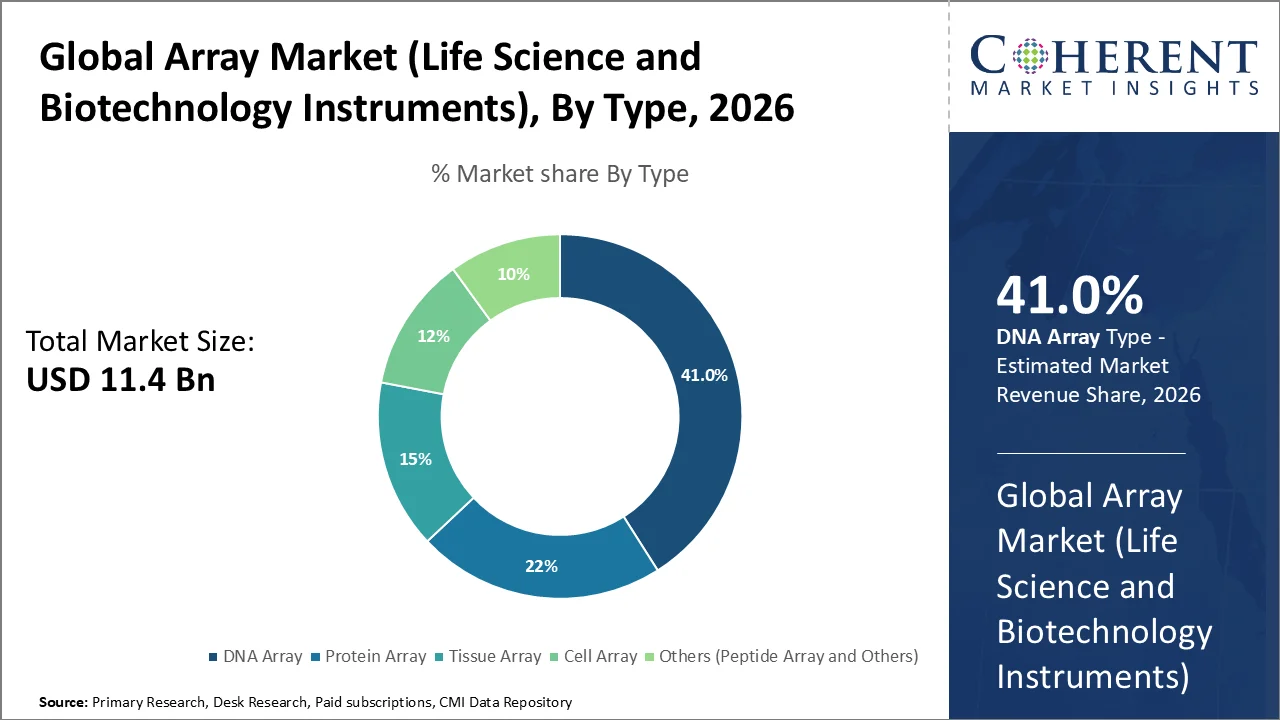
- The DNA arrays segment is expected to lead the market with 41% share in 2026, driven by genomics, diagnostics, and personalized medicine applications. The Taiwan Precision Medicine Initiative enrolled 565,000 participants, with population optimized SNP arrays for genome profiling, to promote GWAS, PRS and pharmacogenetics as the basis for personalized medicine.
- The research laboratories segment will account for a 58% share of the market in 2026, owing to academic and government projects on genomics and drug discovery. In 2025, the EU’s Innovative Health Initiative funded IHI Project Ligand AI, with 20 partners and €24 million of funding, to stimulate AI-driven drug discovery through government-supported collaboration.
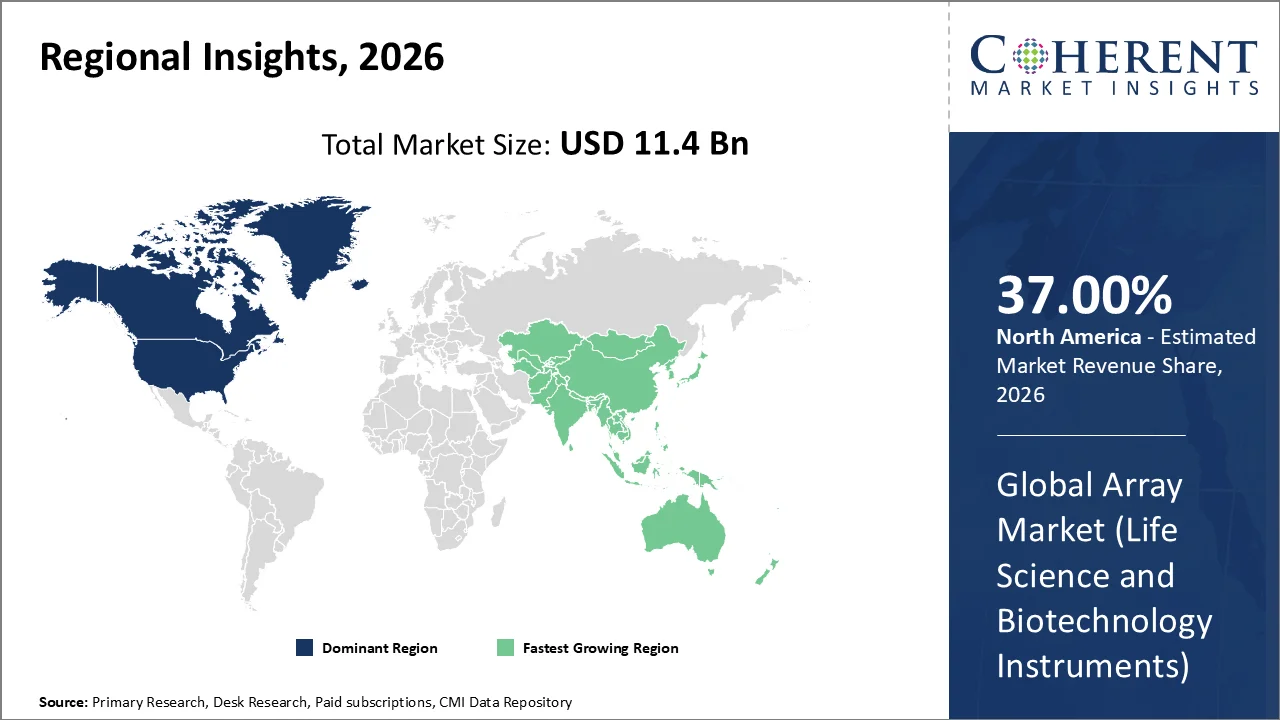
- North America is expected to lead the array market (life science and biotechnology instruments) with 37% share in 2026, driven by strong biopharma infrastructure, high R&D spending, advanced cancer diagnostics demand, and strategic biotech partnerships. Amgen and Lilly invest $2 Bn to expand U.S. biopharma manufacturing, boosting North America’s infrastructure and next‑gen production leadership.
- Asia Pacific is anticipated to be the fastest growing region, driven by genomics initiatives and healthcare investments. Singapore invests $50 million in genomics, advancing precision medicine and global collaborations.
Segmental Insights
DNA arrays dominate the Arrays Market (Life Sciences and Biotechnology Instruments)
In terms of type, the DNA arrays segment is expected to dominate the market in 2026, holding 41% share. Their leadership stems from widespread use in genomics, gene expression profiling, and translational research. Sequencing costs declined from USD 100 million per genome in 2001 to approximately USD 600 in 2025, revolutionizing genomics affordability worldwide. Established infrastructure, standardized protocols, and integration with sequencing technologies make DNA arrays the backbone of molecular biology, ensuring continued demand across diagnostics, oncology, and personalized medicine.
For instance, in February 2026, Researchers from Yonsei University in Seoul, South Korea — led by Haeun Kim, Junhyeong Kim, and Duhee Bang — developed low‑cost 3D‑printed microcolumn arrays for high‑throughput DNA synthesis.
- Current Industry Events of 2026
- Market Size Estimation
- Regional Breakdown
- Competitive Landscape
- Customer Intelligence
- Segmental Analysis
- Pricing Analysis
- Key Market Drivers, Challenges & Future Trends
- Customized Insights Section
Research laboratories surge as primary adopters of array technologies
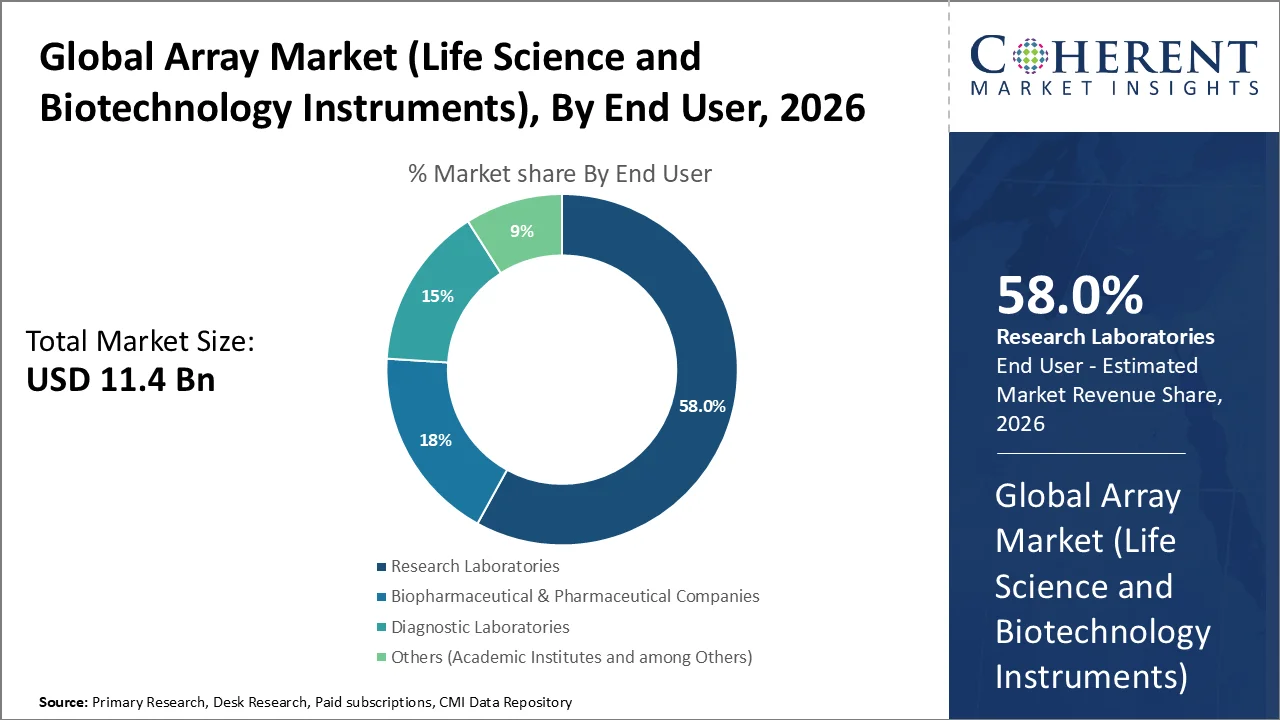
In terms of end user, the Research laboratories segment is anticipated to lead end-user demand with 58% share in 2026. Academic institutions and government-funded projects drive adoption, using arrays for multi-omics, biomarker discovery, and functional genomics. Their dominance reflects the critical role of arrays in advancing scientific knowledge, validating hypotheses, and supporting translational research across genomics, proteomics, and drug development.
For instance, in October 2025, Thermo Fisher Scientific’s next‑generation microarray solution launch is directly tied to arrays in Life Sciences and Biotechnology Instruments for research laboratories. The platform enhances genomics, transcriptomics, and biomarker discovery, offering improved throughput, sensitivity, and reproducibility. This is a true biotechnology product launch for scientific research.
Market Drivers
Nanowire Innovation in Arrays
In 2026, nanowire innovation is transforming array technologies across life science and renewable energy. Ultra‑dense nanowire arrays enable 48.3% efficiency in solar cells while also advancing single‑molecule proteomics and genomic profiling. Their one‑dimensional architecture enhances light absorption, molecular mapping, and high‑throughput analysis. Patent activity surged between 2022–2024, with NTNU and Boeing leading, while China shows strong academic output but limited IP filings. Despite challenges like surface passivation, nanowire arrays are poised to reshape diagnostics, drug discovery, and renewable energy systems, bridging biotechnology and sustainable innovation.
Researchers at Massachusetts Eye and Ear and partner institutions in January 2026 showed ultra-thin nanotechnology with nanowire arrays to enable safe, wireless retinal stimulation for degeneration treatment. These flexible, biocompatible implants restore vision without invasive wiring and represent a breakthrough in biomedical applications of nanowires and array technologies available for healthcare.
Precision Medicine Driving Array Growth in U.S.
In the US, array instruments are gaining traction as chromosomal microarrays are the standard in paediatric genetics and oncology, allowing for early disease detection. Protein microarrays are becoming of importance for vaccine quality control and biomarker discovery. Arrays are used in hospitals and clinical labs for genotyping, DNA methylation, and translational research, and are part of precision medicine workflows. That breadth of use reflects the country’s strong investment in biotech and pharmaceutical R&D, and has made arrays a key tool in diagnostics and personalized healthcare.
For example, in September 2025, Alnylam Pharmaceuticals joined the Alliance for Genomic Discovery (led by Illumina and Nashville Biosciences) to expand a diverse dataset of 31,250 new whole genomes to a cohort of 250,000 genomes. The initiative strengthens the U.S. precision medicine capabilities, using arrays and genomic profiling for clinical diagnostics and drug discovery.
Cancer Incidence Data Driving Array Market (Life Science & Biotechnology Instruments)
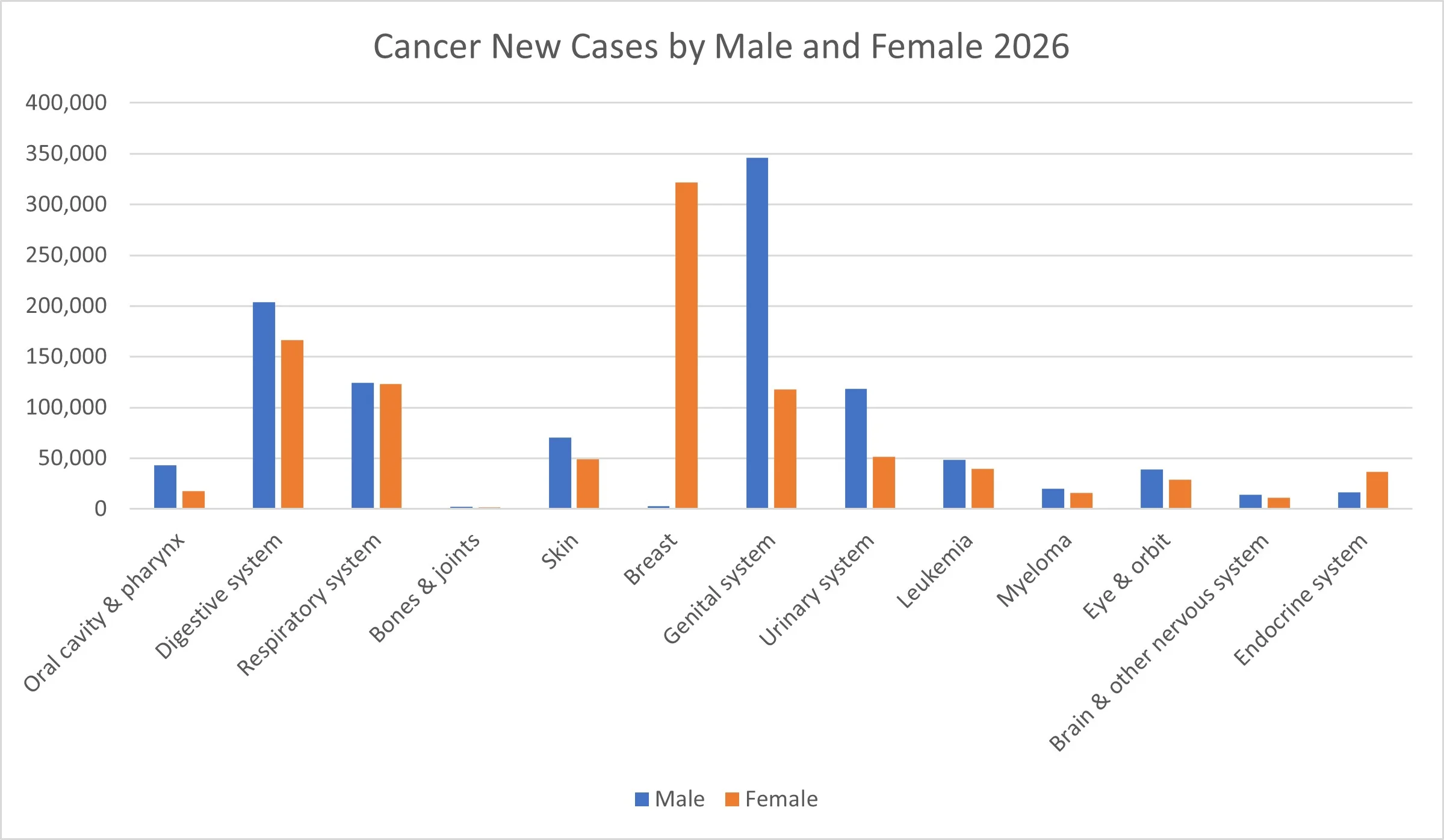
Type of Cancer | Male | Female |
Oral cavity & pharynx | 43,070 | 17,410 |
Digestive system | 203,500 | 166,470 |
Respiratory system | 124,540 | 123,280 |
Bones & joints | 2,290 | 1,820 |
Skin | 70,590 | 49,160 |
Breast | 2,670 | 321,910 |
Genital system | 345,900 | 117,660 |
Urinary system | 118,460 | 51,240 |
Leukemia | 48,660 | 39,580 |
Myeloma | 20,150 | 15,850 |
Eye & orbit | 39,070 | 28,720 |
Brain & other nervous system | 13,830 | 10,910 |
Endocrine system | 16,630 | 36,570 |
Current Events and their Impacts on the Array Market (Life Science and Biotechnology Instruments)
Current Event | Description and its Impact |
Evolution of the European Regulatory Environment |
|
Artificial Intelligence and Machine Learning Integration |
|
Regional Insights
North America Dominance Due to Infrastructure, Funding, and Industry Leadership
North America dominates the global array market in 2026 with 37% share, driven by advanced genomics infrastructure, NIH funding, and leading companies like Illumina, Agilent, Thermo Fisher, and Bio‑Rad. In February 2025, Austin City Council has approved a USD 8.1 million investment by global genomics company 3 billion to establish its first U.S. laboratory. The project will create 200 jobs, strengthen Austin’s biotech ecosystem, and expand genomics infrastructure in North America, focusing on precision medicine and rare disease diagnostics. Strong clinical adoption in oncology, diagnostics, and personalized medicine reinforces its leadership, making the region the global hub for innovation.
For instance, in April 2026, Takara Bio USA validated its new Trekker FX spatial transcriptomics technology through a benchmark study in cancer research. Conducted in San Jose, California, the study demonstrated higher resolution and deeper single‑cell characterization. Results, presented at AACR 2026 in San Diego, strengthen North America’s genomics infrastructure and cancer research capabilities.
Asia Pacific Fastest Growth Fueled by Genomics Initiatives and Healthcare Investments
Asia Pacific is the fastest‑growing region in the global array market. Government genomics initiatives in China and India, rising healthcare investments, and expanding R&D in Japan and South Korea fuel growth. In April 2026, CFA Institute reports rising healthcare investments in Southeast Asia, highlighting growth in telemedicine, digital health platforms, and remote diagnostics. This trend reflects Asia Pacific’s broader push to expand healthcare infrastructure and innovation, driving demand for genomics, biotechnology, and precision medicine across the region’s rapidly evolving healthcare landscape. Large populations and increasing demand for personalized medicine position Asia Pacific as the future powerhouse.
For instance, in November 2025, Singapore launched Phase III of its National Precision Medicine Programme, expanding genomics infrastructure to advance personalized healthcare. The initiative integrates large‑scale genomic data with artificial intelligence, aiming to deliver precision medicine breakthroughs. This marks a significant step in Asia’s growing leadership in genomics and personalized medicine innovation.
Array Market (Life Science and Biotechnology Instruments) Country-Wise
Powering Precision: U.S. Array Boom 2026
In 2026, the U.S. array market in life science and biotechnology instruments is demanding due to strong adoption in cancer diagnostics, genomic research, proteomics, and precision medicine, supported by pharmaceutical R&D, advanced clinical applications, automation integration, and AI‑driven analytics, making North America a global leader in array innovation.
For instance, in February 2026, Nautilus Biotechnology unveiled its Voyager Platform, a U.S.-based innovation enabling single-molecule proteomic analysis through ultra-dense nano-array flow cells. Designed for precision medicine and advanced research, Voyager integrates reagents, imaging, and AI analytics, positioning North America at the forefront of life science array instrumentation.
China’s Array Market Surge 2026
In 2026, China’s array market in life science and biotechnology instruments is demanding due to government investment in genomics, rapid biotech R&D expansion, an aging population driving diagnostics, and strong adoption of precision medicine and proteomics, positioning China as a leading hub for advanced biomedical innovation.
For instance, in December 2026, China’s biopharma sector has entered its “Innovation 2.0” era, marked by advanced R&D, precision medicine, and global collaborations. This transformation indirectly boosts demand for array technologies in genomics, diagnostics, and proteomics, positioning China as a rising hub for life science instrumentation and biotechnology innovation.
Who are the Major Companies in Array Market (Life Science and Biotechnology Instruments)
Major players operating in the global array market (Life Science and Biotechnology Instruments) include Thermo Fisher Scientific Inc., Illumina, Inc., Roche Diagnostics Nederland B.V., Bio-Rad Laboratories, Inc., Life Technologies, Caliper Life Sciences, Perkin Elmer, Inc., Siemens Healthineers, Agilent Technologies Inc., PathogenDx, Inc., Twist Bioscience Corporation, Arraylt Corporation, Molecular Device, LLC and Raybiotech Inc.
Market Report Scope
Array Market (Life Science and Biotechnology Instruments) Report Coverage
| Report Coverage | Details | ||
|---|---|---|---|
| Base Year: | 2025 | Market Size in 2026: | USD 11.4 Bn |
| Historical Data for: | 2020 To 2024 | Forecast Period: | 2026 To 2033 |
| Forecast Period 2026 to 2033 CAGR: | 15.4% | 2033 Value Projection: | USD 31.1 Bn |
| Geographies covered: |
| ||
| Segments covered: |
| ||
| Companies covered: | Thermo Fisher Scientific Inc., Illumina, Inc., Roche Diagnostics Nederland B.V., Bio-Rad Laboratories, Inc., Life Technologies, Caliper Life Sciences, Perkin Elmer, Inc., Siemens Healthineers, Agilent Technologies Inc., PathogenDx, Inc., Twist Bioscience Corporation, Arraylt Corporation, Molecular Device, LLC and Raybiotech Inc. | ||
| Growth Drivers: |
| ||
| Restraints & Challenges: |
| ||
Key News
- In October 2025, Thermo Fisher Scientific launched its next‑generation microarray solution, advancing multi‑omics research by integrating genomics, transcriptomics, and proteomics. The platform delivers higher throughput, reproducibility, and data quality, strengthening U.S. demand for array instruments in precision medicine, biomarker discovery, and clinical diagnostics, fueling biotechnology innovation nationwide.
- In October 2025, Nautilus Biotechnology unveiled the Voyager platform, enabling single‑molecule proteomics through ultra‑dense nanostructured arrays. The breakthrough delivers scalable, high‑resolution protein mapping, advancing multi‑omics research and fueling demand for array instruments in U.S. biotechnology. Voyager positions arrays as critical tools for precision medicine and drug discovery.
Array Market (Life Science and Biotechnology Instruments) Trends
- Cancer diagnostics demand: Rising global cancer prevalence is fueling adoption of DNA and protein microarrays for genome-wide expression profiling and biomarker discovery. Arrays are increasingly used in oncology diagnostics and personalized medicine. CMA detects pathogenic anomalies in 19% of cases, compared to <3% for karyotyping or fragile X testing. This demonstrates superior sensitivity and clinical utility.
- Strategic partnerships Companies like Arrayjet and Chemspace, as well as Oxford BioDynamics and Agilent, are forming collaborations to expand assay development, contract screening, and advanced array kits for 3D genome profiling. In April 2025, Arrayjet partnered with Chemspace to accelerate RNA drug discovery using Small Molecule Microarrays (SMM). Their SMM-10 chip, printed with Arrayjet’s Mercury technology, hosts 10,000 compounds curated by Chemspace. This collaboration expands array applications beyond genomics, enabling high-throughput screening of RNA-binding molecules for precision medicine and therapeutic innovation.
- Automation investments Labs are investing in automated hybridization, washing, and imaging workflows to reduce costs and improve throughput, keeping arrays competitive against next-generation sequencing (NGS). PacBio’s SPRQ‑Nx chemistry streamlines cancer detection by consolidating multiple assays into a single genomic workflow. Traditional testing costs $15,000–$20,000 per patient, while SPRQ‑Nx reduces this to about $1,700 per sample. Consumable costs drop ~30%, making genomic analysis faster, more affordable, and clinically efficient for precision oncology applications.
- AI integration Hardware vendors are embedding artificial intelligence analytics into array systems, enabling smarter data interpretation and reducing lifetime service costs. In June 2025, AlphaGenome by DeepMind uses AI to better understand the genome, predicting the impact of genetic variations on health and disease. Though not directly about microarray automation, it shows how artificial intelligence can enhance genomic analysis, reduce errors, and accelerate precision medicine by complementing or replacing traditional array-based approaches.
- Protein microarrays growth: Beyond gene expression, protein microarrays are expanding rapidly, especially in vaccine quality control and proteomics. Achieving 100% sensitivity and specificity for C-reactive protein (CRP) detection in 1 nL of blood from 112 children, demonstrating clinical-grade performance.
Analyst Opinion
- Oncology-driven breakthroughs: In 2026, 626,140 new cancer cases have been witnessed in the U.S. alone. Rising cancer incidence is expected to accelerate adoption of microarray technologies for precision diagnostics; arrays will increasingly serve as the backbone for gene expression profiling and biomarker discovery. Emerging platforms such as 3D genome mapping arrays are anticipated to redefine personalized medicine, enabling predictive models that guide treatment pathways before symptoms manifest.
- Next-generation innovation: The period from 2024 to 2026 is marked by rapid integration of AI-driven analytics and automated workflows into array systems, reducing human error and accelerating throughput. Laboratories in Asia-Pacific are forecasted to lead adoption, supported by government-backed infrastructure and venture capital. By 2026, arrays are expected to evolve into multi-modal instruments, capable of simultaneously analyzing genomic, proteomic, and epigenomic data streams, positioning them as central hubs in translational research and drug discovery pipelines.
Speak to the analyst
Want personalized insights?
Take the findings above to one of our principal consultants, or have the report rebuilt around the segments, geographies and competitors you actually track.
Market Segmentation
- By Type (Revenue, USD Bn, 2021-2033)
- DNA Array
- Protein Array
- Tissue Array
- Cell Array
- Others (Peptide Array and Others)
- By End user (Revenue, USD Bn, 2021-2033)
- Biopharmaceutical and Pharmaceutical Companies
- Diagnostic Laboratories
- Research Laboratories
- Others (Academic Institutes and among Others)
- By Region (Revenue, USD Bn, 2021-2033)
- North America
- U.S.
- Canada
- Latin America
- Brazil
- Mexico
- Argentina
- Rest of Latin America
- Europe
- Germany
- U.K.
- France
- Italy
- Spain
- Russia
- Rest of Europe
- Asia Pacific
- China
- India
- Japan
- Australia
- South Korea
- ASEAN
- Rest of Asia Pacific
- Middle East
- GCC
- Israel
- Rest of Middle East
- Africa
- South Africa
- Central Africa
- North Africa
Sources
Primary Research Interviews
- Molecular Biologists
- Genomics Researchers
- Proteomics Scientists
- Clinical Laboratory Directors
- Hospital Pathologists
- Biotechnology Instrument Manufacturers
- Academic Research Professors
- Pharmaceutical R&D Heads
- Diagnostic Laboratory Professionals
- Others
Databases
- PubMed / NCBI
- ClinicalTrials.gov
- FDA Device Database
- European Medicines Agency (EMA) Database
- Bloomberg Terminal
- Thomson Reuters Eikon
- Others
Magazines
- Genetic Engineering & Biotechnology News (GEN)
- Nature Biotechnology News Section
- Scientific American – Biotechnology
- The Scientist
- Lab Manager
- BioTechniques
- Others
Journals
- Nature Biotechnology
- Genome Research
- Analytical Chemistry
- Journal of Proteome Research
- Clinical Chemistry
- Lab on a Chip
- The Lancet
- Science Translational Medicine
- Others
Newspapers
- Reuters
- Bloomberg News
- The Wall Street Journal – Health & Science
- Financial Times – Healthcare & Biotech
- The New York Times – Science Section
- The Guardian – Science Section
- STAT News
- BioPharma Dive
- Others
Associations
- American Association for Clinical Chemistry (AACC)
- American Society for Microbiology (ASM)
- International Society for Computational Biology (ISCB)
- European Molecular Biology Organization (EMBO)
- Human Genome Organisation (HUGO)
- Society for Laboratory Automation and Screening (SLAS)
- Federation of European Biochemical Societies (FEBS)
- Biotechnology Innovation Organization (BIO)
- Others
Public Domain Sources
- U.S. Food and Drug Administration (FDA) – Devices Database
- National Institutes of Health (NIH)
- Centers for Disease Control and Prevention (CDC)
- World Health Organization (WHO)
- European Medicines Agency (EMA)
- National Center for Biotechnology Information (NCBI)
- European Centre for Disease Prevention and Control (ECDC)
- National Institute for Health and Care Excellence (NICE)
- Others
Proprietary Elements
- CMI Data Analytics Tool
- Proprietary CMI Existing Repository of information for last 10 years
Definition: A DNA microarray or chip is a semiconductor surface on which sequences of many varied genes are bonded to probes. DNA microarrays are used to quantify the expression levels of large numbers of genes simultaneously or to genotype multiple regions of a genome. The approach finds application in drug R&D, clinical diagnosis, agriculture, environmental control, and other sectors.
Get access to 250+ pages report
Every segment, forecast, competitor profile and data table behind the analysis above — available for instant download.
- ESOMAR Member
- ISO 9001:2015 Certified
- D-U-N-S Registered
- GDPR & CCPA Compliant
Missing comfort of reading report in your local language? Find your preferred language:
Transform your Strategy with Exclusive Trending Reports
Frequently Asked Questions
The global Array Market (Life Science and Biotechnology Instruments) size was valued at 11.4 Bn in 2026 and is expected to reach 31.1 Bn in 2033.
Rising strategic initiatives taken by the market players and increasing prevalence of Cancer are expected to drive the market growth.
High cost of microarray sequencing and lack of technically trained resources are expected to hinder the market over the forecast period.
Major players operating in the market include Thermo Fisher Scientific Inc., Illumina, Inc., Roche Diagnostics Nederland B.V., Bio-Rad Laboratories, Inc., Life Technologies, Caliper Life Sciences, Perkin Elmer, Inc., Siemens Healthineers, Agilent Technologies Inc., PathogenDx, Inc., Twist Bioscience Corporation, Arraylt Corporation, Molecular Device, LLC and Raybiotech Inc.
Strong biotech R&D, precision medicine adoption, and clinical use of chromosomal and protein microarrays drive steady U.S. market growth.
Pharmaceuticals, biotechnology, hospitals, and research labs rely on arrays for genomics, proteomics, drug discovery, and translational medicine applications.