

Canned Tuna Market Size and Forecast – 2026 to 2033
Canned Tuna Market is estimated to be valued at USD 22.34 Bn in 2026 and is expected to reach USD 30.82 Bn in 2033, exhibiting a compound annual growth rate (CAGR) of 4.7% from 2026 to 2033.
Key Takeaways
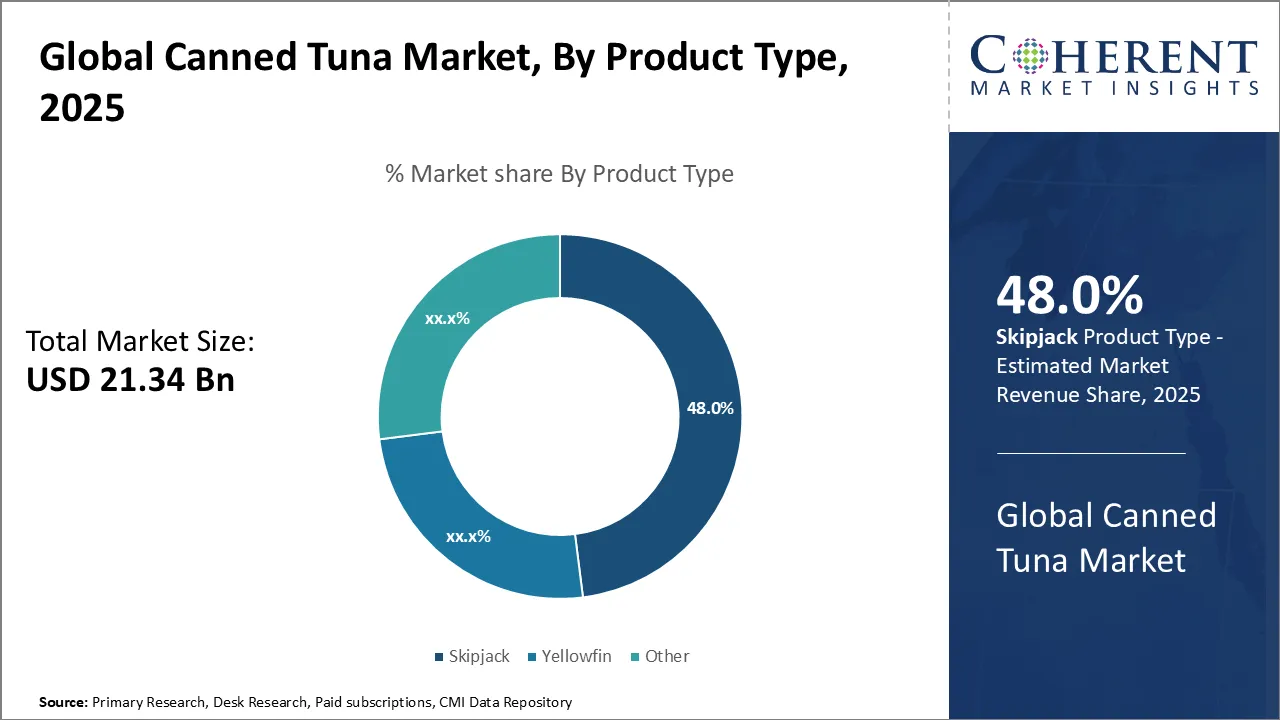
- By Product Type, Skipjack hold the largest market share of 49% in 2026 owing to the abundance & stable supply.
- By Distribution Channel, Hypermarket & Supermarket expected to hold largest market share in 2026 owing to the wide product selection / variety & choice.
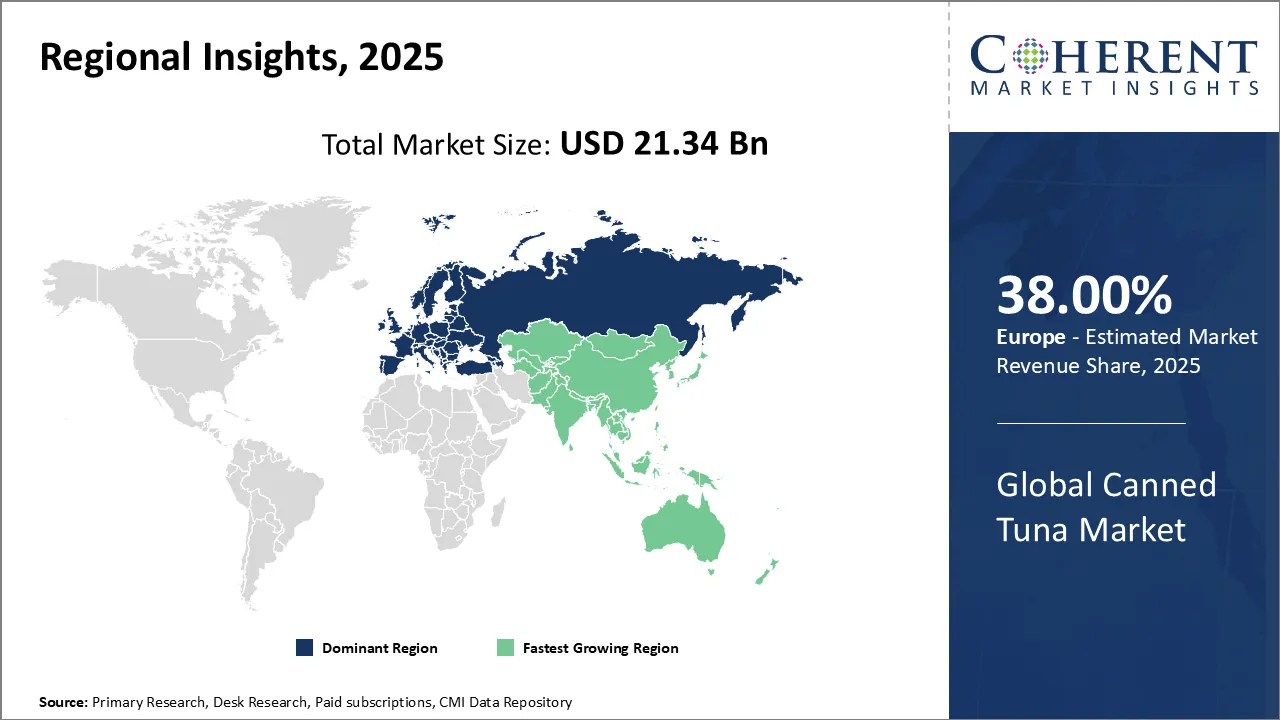
- By Region, Europe dominates the overall market with an estimated share of 38% in 2026 owing to the strong demand for convenient, nutritious protein.
Market Overview
The canned tuna market shows strong global momentum as consumers increasingly seek convenient, protein-rich foods. Shoppers choose canned tuna for its long shelf life, affordability, and versatility in everyday cooking. Expanding retail networks, growing interest in ready-to-eat seafood, and rising focus on healthy nutrition further propel demand. Consumers also drive a shift toward sustainable sourcing and premium options, including flavored and value-added products. Producers actively enhance packaging and product quality to meet evolving expectations and strengthen their market presence.
Current Events and Its Impact on the Canned Tuna Market
Current Events | Description and its impact |
Geopolitical and Regulatory Developments |
|
Economic Factors |
|
Technological and Industry Innovations |
|
Segmental Insights
- Current Industry Events of 2026
- Market Size Estimation
- Regional Breakdown
- Competitive Landscape
- Customer Intelligence
- Segmental Analysis
- Pricing Analysis
- Key Market Drivers, Challenges & Future Trends
- Customized Insights Section
Canned Tuna Market Insights, By Product Type: Skipjack contribute the highest share of the market owing to its consumer health & nutritional appeal.
Skipjack hold the largest market share of 49% in 2026. Skipjack drives the canned tuna market because producers rely on its abundant supply and rapid growth, which keep sourcing steady and cost-efficient. Consumers appreciate its mild taste and versatile texture, making it suitable for many daily meals. Health-conscious buyers value its comparatively lower mercury content. Manufacturers also depend on skipjack’s consistent availability to maintain continuous production, meet global and sustain large-scale canning throughout the year, reinforcing its position as the preferred species for canned tuna processors. For instance, in August 2024, Wild Planet, a leader in sustainably caught canned seafood, has launched its Limited-Edition Wild Tuna Snack Pack in partnership with Simple Mills and Chosen Foods. Available on Wild Planet’s website starting Aug. 1, the pack features the brand’s new pole-and-line-caught Skipjack Wild Tuna blended with diced dill pickle, lemon juice, and sea salt.
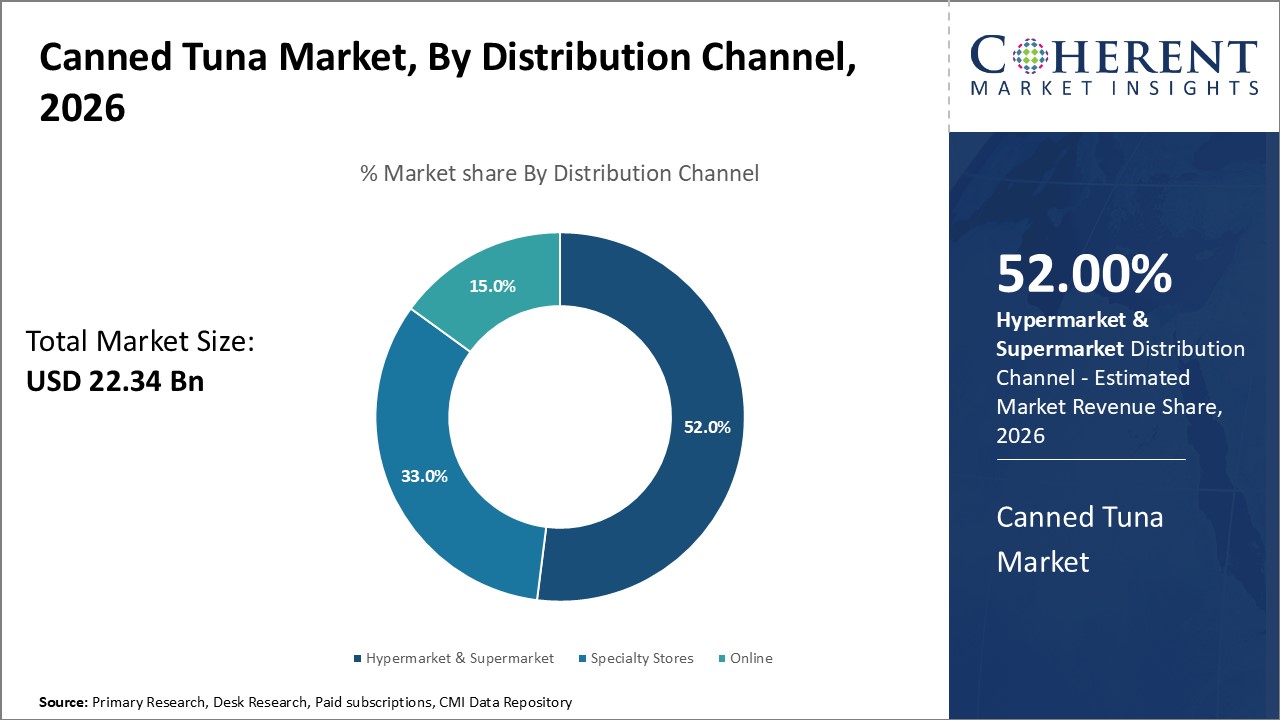
Canned Tuna Market Insights, By Distribution Channel: Hypermarket & Supermarket contribute the highest share of the market owing to its high foot-traffic and impulse buying.
Hypermarkets and supermarkets shape the canned tuna market by presenting wide product choices, attractive prices, and convenient access for everyday shoppers. They draw heavy foot traffic and promote both intentional and impulse buying through their one-stop shopping environment. These stores actively stock various brands and packaging types, ensuring canned tuna reaches a broad customer base. With efficient supply chains, regular discounts, and strong private-label offerings, major retail outlets strengthen sales and firmly establish themselves as the leading channel for canned tuna purchases. For instance, unMEAT, the plant-based protein brand from Century Pacific Food, unveiled its new fish-free canned tuna to online retailers and select supermarkets across the US.
Regional Insights
Europe Canned Tuna Market Trends
Europe dominates the overall market with an estimated share of 38% in 2026. The Europe canned tuna market is evolving as consumers actively seek products that align with changing preferences and retail trends. Shoppers increasingly choose sustainably sourced and responsibly packaged tuna due to growing environmental awareness. Health-conscious and quality-focused buyers drive demand for premium and gourmet options, such as olive oil-packed or ready-to-eat varieties. Manufacturers innovate with new flavors, portion sizes, and recyclable packaging to influence buying behavior, while robust retail networks expand availability and actively sustain steady market growth across the region.
Asia Pacific Canned Tuna Market Trends
The Asia‑Pacific canned tuna market is growing as consumers actively seek convenience, nutrition, and products that fit modern lifestyles. Urbanization and busier schedules push people toward ready-to-eat, easy-to-store tuna for quick meals. Health-conscious shoppers and those seeking affordable protein drive demand, prompting brands to innovate with flavored options, single-serve pouches, and sustainable packaging. Meanwhile, expanding retail networks and increasing online grocery availability actively ensure canned tuna reaches households across cities and towns throughout the region. For instance, in January 2024, NH Foods, known in Japan as Nippon Ham, developed a plant-based tuna sashimi for the food-service sector. The company promotes this alternative as a dependable, eco-friendly protein option designed to address growing pressure on global fishery resources.
United Kingdom Canned Tuna Market Trends
The UK canned tuna market is shifting as British consumers actively prioritize sustainability, convenience, and quality. Shoppers increasingly demand clear labeling of origin and species, often choosing Marine Stewardship Council (MSC)–certified products, which major retailers like Waitrose, Sainsbury's, and Tesco have widely incorporated into their tuna selections. Retailers are responding by offering a wider range of formats, from traditional tins to ready-to-eat options, pouches, and premium olive-oil packed varieties, catering to busy lifestyles and evolving culinary preferences. For instance, UK – Sainsbury’s now sources all of its own-label canned skipjack tuna from the Maldives with full MSC (Marine Stewardship Council) certification.
China Canned Tuna Market Trends
China’s canned tuna market is expanding as consumers actively seek convenient, nutritious foods driven by rising urban incomes and changing lifestyles. Urban households and young professionals increasingly choose canned tuna for quick, easy meals. Health- and quality-conscious shoppers favor tuna for its protein content and affordability compared to fresh fish. Producers are responding by offering a variety of formats, including cans, flaked tuna, ready-to-eat, and single-serve packaging, as well as premium options to meet evolving consumer preferences.
End-user Feedback and Unmet Needs in the Canned Tuna Market
- Taste and Flavor Variety: Consumers often express a desire for more diverse and appealing flavors beyond traditional brine or oil-packed tuna. While some premium and flavored options exist, users seek creative seasonings, ready-to-eat marinades, or spiced varieties that can enhance meal experiences without extra preparation.
- Health and Nutrition Transparency: End-users want clearer nutritional information, including protein content, omega-3 levels, and mercury information. Health-conscious buyers increasingly prioritize products with verified low-mercury levels, sustainable sourcing, and reduced sodium or additives, helping them make informed choices aligned with dietary and wellness goals.
- Convenience and Packaging: Shoppers desire packaging that suits modern, on-the-go lifestyles. Single-serve portions, resealable cans or pouches, and easy-open formats are preferred. Consumers report that current options often lack practicality for lunchboxes, travel, or quick snacks, leaving a gap for more convenient, mess-free packaging innovations.
Canned Tuna Market Trend
Convenience & Ready‑to‑Eat Lifestyle Adaptation
Consumers increasingly treat canned tuna as a go-to protein for quick, no‑fuss meals, driven by busier lives and urban routines. Manufacturers respond by broadening formats — from traditional cans to single‑serve pouches, ready‑to-eat bowls, and snack‑style packs — making tuna appealing for breakfasts, lunches, or on-the-go meals. This convenience helps canned tuna compete with fresh or frozen seafood, especially among young professionals and households that value simplicity, shelf‑stability, and minimal prep time over cooking.
Sustainability, Traceability & Ethical Sourcing
Growing consumer awareness around environmental impact and responsible fishing practices pushes the industry toward sustainable sourcing and transparent supply chains. Brands increasingly adopt eco‑certifications (like sustainable‑fishery certifications), dolphin‑safe labels, and traceability systems from catch to can. Packaging is also evolving: many producers now offer recyclable or BPA-free cans, and some explore innovative methods to reduce environmental footprint. These steps not only align with consumer ethics but also help brands build trust and differentiate in a competitive market.
Canned Tuna Market Opportunity
Innovation in Packaging & Convenience Formats
Modern packaging innovations — such as BPA‑free cans, resealable pouches, vacuum sealing, and easy‑open lids — offer a big opportunity for canned tuna producers to appeal to convenience‑seeking consumers. Single‑serve portions and ready-to-eat tuna also meet growing demand from busy households, office workers, and on-the-go eaters, making tuna more accessible as a snack or quick meal ingredient than ever before.
Market Report Scope
Canned Tuna Market Report Coverage
| Report Coverage | Details | ||
|---|---|---|---|
| Base Year: | 2025 | Market Size in 2026: | USD 22.34 Bn |
| Historical Data for: | 2020 To 2024 | Forecast Period: | 2026 To 2033 |
| Forecast Period 2026 to 2033 CAGR: | 4.7% | 2033 Value Projection: | USD 30.82 Bn |
| Geographies covered: |
| ||
| Segments covered: |
| ||
| Companies covered: | Frinsa, Thai Union Group PCL, Century Pacific Food Inc., Bumble Bee Foods, LLC, Jealsa, Grupo Calvo, PT. Aneka Tuna Indonesia, American Tuna, The Jim Pattison Group, Bolton Group, Dongwon Group | ||
| Growth Drivers: |
| ||
| Restraints & Challenges: |
| ||
Canned Tuna Market News
- In August 2025, Bumble Bee Seafoods has launched Bumble Bee Snackers, a new line of single-serve wild-caught tuna cans—both flavored and unflavored—designed for consumers who want convenient, on-the-go options.
- In August 2025, Berlin-based startup BettaF!sh launched its plant-based canned tuna alternative, TU-NAH, in Portugal’s seafood market. Made from European seaweed, fava beans, and peas, the product is now available in 12 high-traffic Continente stores nationwide.
- In October 2025, Liverpool-based Princes Group, known for its Princes Tuna and Napolina brands, has begun its major London stock market listing with a £1.16bn valuation, placing the nearly 150-year-old company at the lower end of its £1.16bn to £1.24bn target range.
Analyst Opinion (Expert Opinion)
- The current trajectory of the canned tuna sector suggests a growing premiumisation and diversification — not just across markets, but within product tiers — compelling established players and new entrants alike to sharpen their strategies. Data indicates that Marine Stewardship Council‑certified tuna now accounts for hundreds of thousands of tonnes annually, reflecting a robust shift toward sustainability and traceability among consumers.
- Meanwhile, the dominance of Skipjack tuna — representing nearly half of global canned‑tuna revenues — underscores cost‑efficiency and reliable supply as core competitive advantages even as demand rises for premium and ready‑to‑eat variants.
- The concurrent rise of online grocery and direct‑to‑consumer retail channels is reshaping how consumers engage with tuna products: increasingly, consumers are drawn to digital convenience, broader assortments (organic labels, flavored varieties, ready‑to-eat packs), and subscription‑based ordering — trends that were previously rare in canned seafood.
Speak to the analyst
Want personalized insights?
Take the findings above to one of our principal consultants, or have the report rebuilt around the segments, geographies and competitors you actually track.
Market Segmentation
- Global Canned Tuna Market, By Product Type
- Skipjack
- Yellowfin
- Other
- Global Canned Tuna Market, By Distribution Channel
- Hypermarket & Supermarket
- Specialty Stores
- Online
- Regional Insights (Revenue, USD Bn, 2021 - 2033)
- North America
- U.S.
- Canada
- Latin America
- Brazil
- Argentina
- Mexico
- Rest of Latin America
- Europe
- Germany
- U.K.
- Spain
- France
- Italy
- Russia
- Rest of Europe
- Asia Pacific
- China
- India
- Japan
- Australia
- South Korea
- ASEAN
- Rest of Asia Pacific
- Middle East
- GCC Countries
- Israel
- Rest of Middle East
- Africa
- South Africa
- North Africa
- Central Africa
- North America
- Key Players Insights
- Frinsa
- Thai Union Group PCL
- Century Pacific Food Inc.
- Bumble Bee Foods, LLC
- Jealsa
- Grupo Calvo
- Aneka Tuna Indonesia
- American Tuna
- The Jim Pattison Group
- Bolton Group
- Dongwon Group
Sources
Primary Research interviews
- Interviews with seafood processing companies
- Discussions with distributors and wholesalers of canned tuna
- Surveys of retail store managers and supermarket chains
- Interviews with fisheries experts and supply chain stakeholders
Databases
- FAO Fishery Statistics Database
- UN Comtrade Database
- World Bank Commodity Price Data
- National fisheries and trade statistics databases
Magazines
- SeafoodSource
- The Grocer
- Food Business News
- Tuna & Seafood International
Journals
- Journal of Food Science and Technology
- Fisheries Research Journal
- Marine Policy Journal
- International Journal of Food Science & Nutrition
Newspapers
- The New York Times (Food & Business sections)
- The Guardian (Environment & Trade sections)
- Financial Times (Food & Commodities sections)
- Local newspapers covering seafood trade in key markets
Associations
- International Seafood Sustainability Foundation (ISSF)
- National Fisheries Associations (per country)
- Global Tuna Alliance
- World Wildlife Fund – Seafood Program
Public Domain sources
- FAO Publications and Reports
- Government trade and export reports
- United Nations Environment Programme (UNEP) reports
- World Health Organization (WHO) nutrition reports
Proprietary Elements
- CMI Data Analytics Tool
- Proprietary CMI Existing Repository of information for last 8 years
Get access to 250+ pages report
Every segment, forecast, competitor profile and data table behind the analysis above — available for instant download.
- ESOMAR Member
- ISO 9001:2015 Certified
- D-U-N-S Registered
- GDPR & CCPA Compliant
Missing comfort of reading report in your local language? Find your preferred language:
Transform your Strategy with Exclusive Trending Reports
Frequently Asked Questions
The Canned Tuna Market is estimated to be valued at USD 22.34 Bn in 2026, and is expected to reach USD 30.82 Bn by 2033.
The CAGR of the Canned Tuna Market is projected to be 4.7% from 2026 to 2033.
Rising popularity of seafood and increasing awareness regarding the health benefits of tuna are fuelling growth of the market.
The Skipjack segment is the leading product type segment in the market.
Uncertain Climatic Conditions is the major factors restraining growth of the market.
Frinsa, Thai Union Group PCL, Century Pacific Food Inc., Bumble Bee Foods, LLC, Jealsa, Grupo Calvo, PT. Aneka Tuna Indonesia, American Tuna, The Jim Pattison Group, Bolton Group, Dongwon Group