

China Ulcerative Colitis Market Analysis & Forecast 2026-2033
The China ulcerative colitis market is estimated to be valued at USD 280.9 Mn in 2026 and expected to reach USD 352.0 Mn by 2033, witnessing a CAGR of 3.3% over the forecast period 2026-2033.
Key Takeaways
- Based on Drug Therapy, the 5-aminosalicylates segment is expected to hold 37.8% share of the market in 2026.
- Based on Dosage Form, the oral segment is expected to lead the market with 62.4% share in 2026.
- Based on Distribution Channel, the hospital pharmacies segment is projected to account for 53.1% share in 2026.
Market Overview
Ulcerative colitis is a category of inflammatory bowel disease that results in inflammation and sores in the digestive tract. Ulcerative colitis affects the inner lining of the large intestine (colon) and rectum. Usually, symptoms can be seen gradually depending upon the severity of inflammation. Mild symptoms can be cured by drug therapy but surgical treatment is needed in case of severity.
Ulcerative colitis may lead to colon cancer if persists for over 8 years or longer. Increasing healthcare preventative measures also progressively becoming more and more sensitive to seek the advantages of the therapy.
The exact cause of ulcerative colitis is not known, but the possible reasons can be genetic factors, environmental changes, or a malfunctioning immune system. The ulcerative colitis can be prevented by simple healthy habits such as eating small meals throughout the day, staying well hydrated throughout the day, avoiding fatty foods, and limiting the intake of high-fiber food.
Current Events and their Impacts on the China Ulcerative Colitis Market
Current Event | Description and its Impact |
Regulatory and Healthcare Policy Developments in China |
|
Technological Advances and R&D Innovations |
|
How Much Does Ulcerative Colitis Truly Cost in China — From Patient Care to Innovation and Clinical Trials?
Category | Estimated Cost (USD) | Notes |
Direct Medical Cost (per patient/year) | 4,000–6,000 | Includes hospital visits, diagnostics, 5-ASA, steroids, and supportive care. |
Biologics Therapy (per patient/year) | 15,000–20,000 | Covers infliximab, vedolizumab, ustekinumab, etc.; higher due to infusion and monitoring. |
Indirect Costs (per patient/year) | 2,000–3,000 | Productivity loss, absenteeism, reduced work capacity. |
Clinical Trial (Phase I) | 2–5 million | Small patient cohorts, safety-focused. |
Clinical Trial (Phase II) | 10–20 million | Larger cohorts, efficacy and dose-ranging. |
Clinical Trial (Phase III) | 40–100 million | Multicenter, thousands of patients, regulatory pivotal data. |
Drug Development (Preclinical R&D) | 5–10 million | Lab research, animal studies, formulation. |
Regulatory Approval & Filing | 2–5 million | NMPA submission, documentation, compliance. |
Post-Marketing Surveillance (per year) | 1–3 million | Safety monitoring, real-world evidence collection. |
Innovation Investment (Biotech Partnerships) | 20–50 million | Joint ventures, licensing, technology transfer. |
- Current Industry Events of 2026
- Market Size Estimation
- Regional Breakdown
- Competitive Landscape
- Customer Intelligence
- Segmental Analysis
- Pricing Analysis
- Key Market Drivers, Challenges & Future Trends
- Customized Insights Section
Segmental Insights
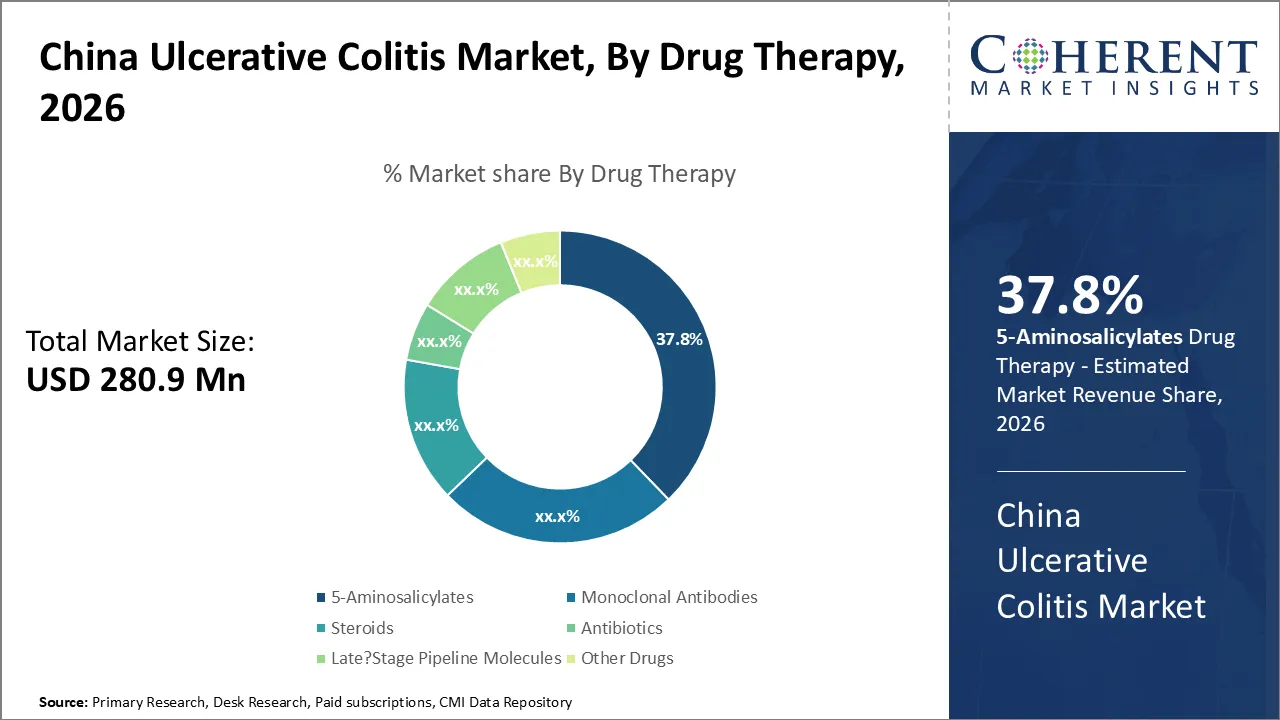
China Ulcerative Colitis Market Insights, By Drug Therapy: 5-Aminosalicylates dominate therapy due to affordability, safety, and effectiveness in mild-to-moderate cases
In terms of drug therapy, the 5-aminosalicylates segment is expected to hold 37.8% share of the market in 2026, due to their safety, relatively affordable and work effectively for mild to moderate cases, ensuring wide used. Biologics are becoming more popular, but these drugs still account for the majority of prescriptions, supported by doctors’ familiarity with them and patients prefer oral, long-term maintenance therapy.
China Ulcerative Colitis Market Insights, By Dosage Form: Oral formulations lead the market, offering convenience, adherence, and widespread patient preference for daily management
In terms of dosage form, the oral segment is expected to lead the market with 62.4% share in 2026, because they are easy to use, adherence, and accessible. Patients prefer tablets and capsules for daily use, especially with drugs like mesalazine. Hospitals and retail pharmacies have a wide stock, which helps them keep their market share. Injectables are becoming more popular with biologics, but most UC patients still prefer oral drugs.
For instance, in February 2026, Everest Medicines stated that the NMPA in China has approved VELSIPITY (etrasimod tablets) for adults with moderately to severely active ulcerative colitis. This oral therapy gives patients who do not respond well to standard or biologic treatments a new option. This is a big step forward in China's UC treatment landscape.
China Ulcerative Colitis Market Insights, By Distribution Channel: Hospital pharmacies dominate distribution, driven by specialist oversight and centralized access to biologics and advanced therapies
In terms of distribution channel, the hospital pharmacies segment is projected to account for 53.1% share in 2026. Hospital pharmacies are in charge of distribution, especially for biologics and advanced therapies that require special care. Patients with moderate to severe UC often need hospital care, ensuring these outlets capture the largest share. In 2026, hospital pharmacies will still be among the most significant driven by strong rules, physicians prescribing patterns, and easy access to expensive biologics.
Market Report Scope
China Ulcerative Colitis Market Report Coverage
| Report Coverage | Details | ||
|---|---|---|---|
| Base Year: | 2025 | Market Size in 2026: | USD 280.9 Mn |
| Historical Data for: | 2020 To 2024 | Forecast Period: | 2026 To 2033 |
| Forecast Period 2026 to 2033 CAGR: | 3.3% | 2033 Value Projection: | USD 352.0 Mn |
| Segments covered: |
| ||
| Companies covered: | AbbVie Inc, Celltrion Healthcare, Johnson & Johnson Services, Inc., F. Hoffmann-La Roche AG, Arena Pharmaceuticals, Takeda Pharmaceuticals Company Ltd., GlaxoSmithKline Plc., Eli Lilly and Company, AstraZeneca, Pfizer Inc., Amgen Inc., BRISTOL-MYERS SQUIBB, ZERIA Pharmaceutical Co., Ltd., InDex Pharmaceuticals Holding AB, Mitsubishi Tanabe Pharma Corporation, Salix Pharmaceuticals, Boehringer Ingelheim International GmbH, Teva Pharmaceutical Industries Ltd., EA Pharma Co., Ltd., Theravance Biopharma, and HUTCHMED | ||
| Growth Drivers: |
| ||
| Restraints & Challenges: |
| ||
China Ulcerative Colitis Market Driver
Rising Prevalence of UC
The fact that ulcerative colitis is gaining traction in China is an important factor for the market growth. A rise in inflammatory bowel disease cases has been caused by rapid urbanization, changes in eating habits, and a lack of physical activity. The need for effective treatments keeps growing as more patients are diagnosed.
This trend is directly driving the China ulcerative colitis market growth, as drug companies and healthcare providers invest into new innovations to help more people with the disease and better manage it over the long term.
Growing Adoption of Biologics & Advanced Therapies
Biologics and new small molecules are changing the way ulcerative colitis is treated in China. These new treatments are more effective, have higher remission rates, and improve patients' quality of life compared to traditional treatments.
Doctors are prescribing more biologics because they work better at reducing inflammation by targeting specific areas. This change is greatly increasing the China Ulcerative Colitis Market demand, as patients and healthcare systems prefer advanced treatments that delivery superior outcomes.
China Ulcerative Colitis Market Opportunity
Expansion of Biologics & Pipeline Therapies
China is a great place for drug companies to make more biologics and late-stage pipeline therapies like ozanimod and etrasimod available. Doctors are increasingly choosing targeted treatments over regular drugs because they have higher remission rates and fewer side effects.
This trend makes it easier for strategic partnerships, licensing agreements, and local production to speed up adoption. As these treatments become more popular, the China Ulcerative Colitis Market forecast shows strong growth due to new ideas and better patient outcomes.
For instance, in Janury 2026, Caldera Biotech and Qyuns Therapeutics are collaborating on a new drug that targets the TL1A and IL-23 pathways for inflammatory bowel diseases like ulcerative colitis. The partnership is based in China and its main goal is to expand pipeline therapies to meet unmet needs. It also focuses on new advanced biologics for patients with chronic gastrointestinal disorders.
Analyst Opinion (Expert Opinion)
- The number of people with ulcerative colitis in China has been steadily rising, with recent epidemiological studies estimating that there are over 350,000 diagnosed cases across the country. The rising rates of inflammatory bowel disease, especially in cities, shows rising incidence rate. Better diagnostic tools and awareness among healthcare professionals are likely to lead to more patients, which makes the need for better treatment options even more urgent.
- Regulatory approvals and inclusion in reimbursement lists are helping biologics and small-molecule therapies gain popularity. For instance, infliximab and vedolizumab are becoming more popular, and pipeline drugs like ozanimod and etrasimod are expected to make treatment options even better. This move toward targeted therapies is part of a larger trend in clinical practice, where doctors prefer treatments based on their effectiveness and safety. This makes China a key area for growth for new ulcerative colitis treatments.
Speak to the analyst
Want personalized insights?
Take the findings above to one of our principal consultants, or have the report rebuilt around the segments, geographies and competitors you actually track.
Recent Developments
- In February 2026, China approved Eli Lilly's drug mirikizumab for treating moderately to severely active ulcerative colitis and Crohn's disease. The announcement came from Shanghai, underscoring the city role as a center for regulation. This approval gives patients with inflammatory bowel disease in China's growing healthcare market more advanced treatment options.
- In July 2025, Falk Pharma and Allianthera Suzhou Biopharma are working together in Suzhou, China, to develop new ways to treat ulcerative colitis. The goal of this partnership is to improve treatment options for people with chronic inflammatory bowel disease. This will help China become more important in global pharmaceutical research and development for gastrointestinal disorders.
Market Segmentation
- By Drug Therapy
- 5-Aminosalicylates
- Mesalazine
- Balsalazide
- Olsalazine
- Others
- Monoclonal Antibodies
- Vedolizumab
- Adalimumab
- Infliximab
- Golimumab
- Ustekinumab
- Steroids
- Budesonide
- Prednisone
- Beclomethasone
- Deflazacort
- Others
- Antibiotics
- Late-Stage Pipeline Molecules
- Zeposia
- Etrasimod
- Others
- Other Drugs
- 5-Aminosalicylates
- By Dosage Form
- Oral
- Parenteral
- By Distribution Channel
- Hospital Pharmacies
- Retail Pharmacies
- Online Pharmacies
- Key Players
- AbbVie Inc
- Celltrion Healthcare
- Johnson & Johnson Services, Inc.
- Hoffmann-La Roche AG
- Arena Pharmaceuticals
- Takeda Pharmaceuticals Company Ltd.
- GlaxoSmithKline Plc.
- Eli Lilly and Company
- AstraZeneca
- Pfizer Inc.
- Amgen Inc.
- BRISTOL-MYERS SQUIBB
- ZERIA Pharmaceutical Co., Ltd.
- InDex Pharmaceuticals Holding AB
- Mitsubishi Tanabe Pharma Corporation
- Salix Pharmaceuticals
- Boehringer Ingelheim International GmbH
- Teva Pharmaceutical Industries Ltd.
- EA Pharma Co., Ltd.
- Theravance Biopharma
- HUTCHMED
Sources
Primary Research Interviews
- Gastroenterologists / IBD Specialists (Tier-3 to Tier-1 hospitals)
- Colorectal Surgeons managing refractory UC cases
- Hospital Pharmacists & Formulary Committee Members
- IBD Nurses / Infusion Center Coordinators
- Diagnostic Laboratory Managers (histopathology, fecal calprotectin, microbiology)
- Drug Distributors & Specialty Pharmacy / DTP stakeholders (where applicable)
- Domestic Biopharma & Biosimilar Manufacturers (GI/immunology portfolios)
- Multinational Pharma China Teams (medical affairs / market access)
- CROs supporting GI clinical trials (site managers / PMs)
- Payers / Health Insurance & DRG/DIP policy experts
- Others
Databases
- National Medical Products Administration (NMPA) drug approvals & registries
- China National Knowledge Infrastructure (CNKI)
- Wanfang Data
- VIP Database (CQVIP)
- National Reimbursement Drug List (NRDL) publications
- Provincial procurement / tendering & centralized purchasing platforms (VBP-related where applicable)
- National Bureau of Statistics of China (NBS)
- World Health Organization (WHO) – Global Health Observatory
- Institute for Health Metrics and Evaluation (IHME) – Global Burden of Disease
- OECD Health Statistics (for benchmarking where relevant)
- Others
Magazines / Trade Publications
- Nature Reviews Gastroenterology & Hepatology (news/features)
- Gastroenterology & Endoscopy News (regional updates where relevant)
- Pharma & healthcare trade media covering China market access and policy (industry portals)
- Hospital pharmacy / procurement trade publications (China-focused)
- Others
Journals
- Gastroenterology
- Inflammatory Bowel Diseases
- Gut
- Journal of Crohn’s and Colitis
- Alimentary Pharmacology & Therapeutics
- Digestive Diseases and Sciences
- World Journal of Gastroenterology
- Chinese Journal of Gastroenterology
- Chinese Journal of Digestion
- Others
Newspapers / Business & Policy News
- Reuters
- Bloomberg News
- Financial Times
- The Wall Street Journal
- China Daily (policy/health coverage)
- Caixin Global (health policy, pharma, reimbursement/procurement coverage)
- Others
Associations / Societies
- Chinese Society of Gastroenterology (CSGE), Chinese Medical Association
- Chinese Society of Inflammatory Bowel Disease (where applicable under CSGE/affiliated groups)
- Chinese Medical Association (CMA) – relevant branches
- Chinese Pharmacists Association (hospital pharmacy/pricing context)
- Asia Pacific Association of Gastroenterology (APAGE)
- European Crohn’s and Colitis Organisation (ECCO) (benchmarking guidelines)
- Crohn’s & Colitis Foundation (global benchmarking)
- Others
Public Domain Sources
- National Health Commission of the PRC (NHC) – health statistics, policy notices
- National Healthcare Security Administration (NHSA) – NRDL, reimbursement, procurement policy releases
- NMPA – drug registration/approval announcements
- National Bureau of Statistics of China (NBS) – macro and healthcare indicators
- WHO
- IHME (GBD)
- World Bank Open Data
- National and provincial tendering/procurement portals (public notices)
- Others
Proprietary Elements
- CMI Data Analytics Tool
- Proprietary CMI Existing Repository of Information for the Last 8 Years
Get access to 250+ pages report
Every segment, forecast, competitor profile and data table behind the analysis above — available for instant download.
- ESOMAR Member
- ISO 9001:2015 Certified
- D-U-N-S Registered
- GDPR & CCPA Compliant
Missing comfort of reading report in your local language? Find your preferred language:
Transform your Strategy with Exclusive Trending Reports
Frequently Asked Questions
The global China Ulcerative Colitis Market size was valued at USD 280.9 Mn in 2026 and is expected to reach USD 352.0 Mn in 2033.
The China ulcerative colitis market is expected to exhibit a CAGR of 3.3% during the forecast period (2026-2033).
AbbVie Inc, Celltrion Healthcare, Johnson & Johnson Services, Inc., F. Hoffmann-La Roche AG, Arena Pharmaceuticals, Takeda Pharmaceuticals Company Ltd., GlaxoSmithKline Plc., Eli Lilly and Company, AstraZeneca, Pfizer Inc., Amgen Inc., BRISTOL-MYERS SQUIBB, ZERIA Pharmaceutical Co., Ltd., InDex Pharmaceuticals Holding AB, Mitsubishi Tanabe Pharma Corporation, Salix Pharmaceuticals, Boehringer Ingelheim International GmbH, Teva Pharmaceutical Industries Ltd., EA Pharma Co., Ltd., Theravance Biopharma, and HUTCHMED are some of the prominent players operating in the market.
5-aminosalicylates segment among the drug therapy is leading the market.
Rising prevalence of UC and growing adoption of biologics & advanced therapies are some of the driving factors for the market growth.