

Chloramine B Market Size and Forecast — 2026 - 2033
The Global Chloramine B Market size is estimated to be valued at USD 320 million in 2026 and is expected to reach USD 510 million by 2033, exhibiting a compound annual growth rate (CAGR) of 7.2% from 2026 to 2033.
Overview
The Chloramine B market is driven by its widespread use as a disinfectant, antiseptic, and oxidizing agent across healthcare, water treatment, pharmaceuticals, and laboratory applications. Growing concerns regarding infection control, hospital-acquired infections, and public health safety are increasing demand for effective disinfection solutions. The expansion of healthcare infrastructure and stricter hygiene regulations further support market growth. In addition, rising investments in water and wastewater treatment facilities are boosting the consumption of chloramine-based disinfectants. Demand from research laboratories and the chemical industry for analytical and synthesis applications also contributes to market expansion. Increasing awareness of sanitation and disease prevention continues to drive global adoption.
Key Takeaways
Water treatment application segment holds the largest share at 42%, driven by strict regulatory mandates and global health safety standards, with strong reliance on chloramine B for disinfection and purification processes.
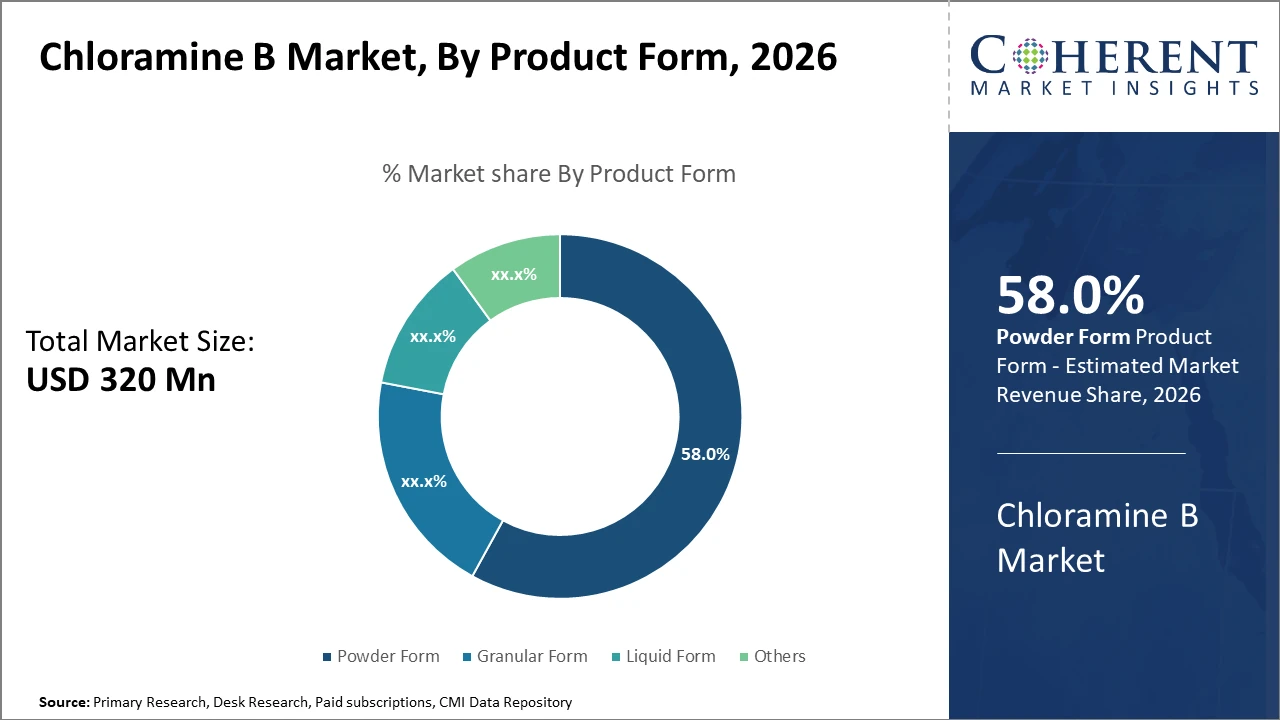
Powder form product segment dominates the market with a 58% share due to its ease of handling, longer shelf life, and cost-effectiveness compared to liquid formulations.
Europe shows significant growth potential, supported by stringent environmental regulations that encourage the use of chloramine B in water treatment and healthcare sanitation applications.
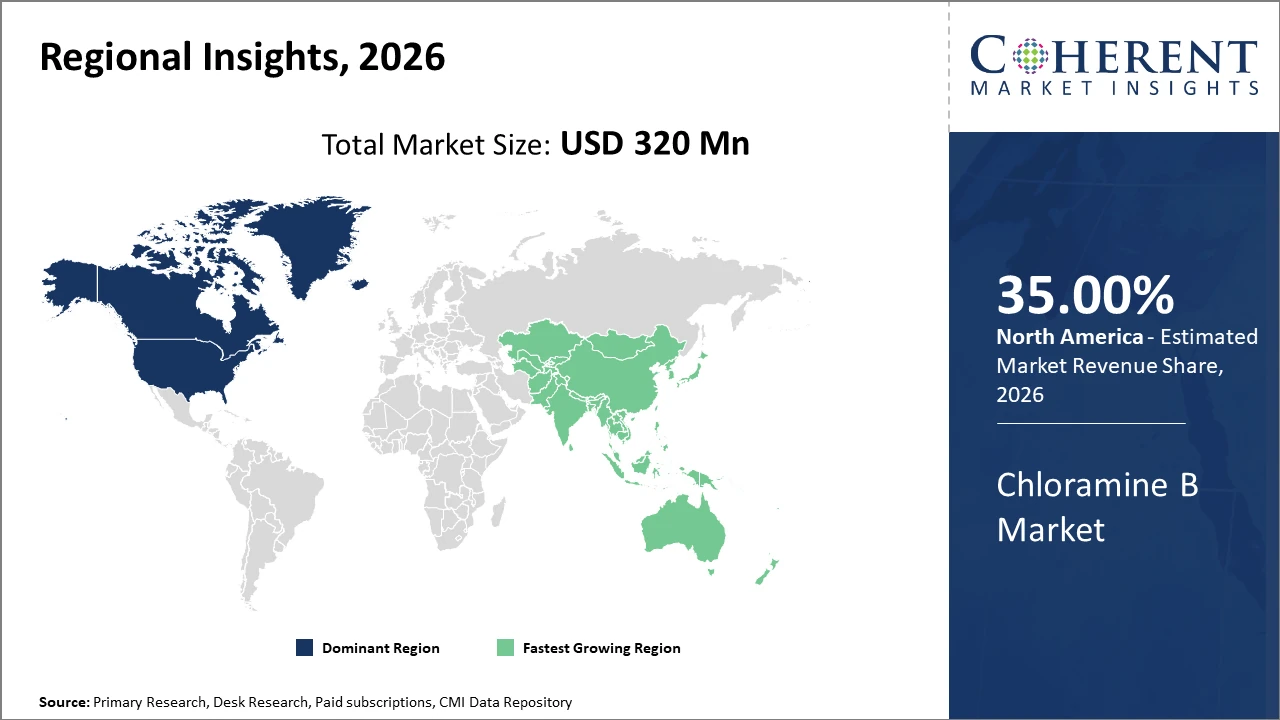
Asia Pacific is the fastest-growing region, driven by rapid industrialization, expansion of water treatment infrastructure, and rising agricultural demand, recording a CAGR above 8% in recent years.
Chloramine B Market Segmentation Analysis
Chloramine B Market Insights, By Product Form
Powder form dominates the chloramine B market with a 58% share due to its longer shelf life, ease of storage and transportation, and cost effectiveness, making it highly suitable for water disinfection and agricultural use. Its stable composition and uniform concentration support widespread adoption in municipal water treatment facilities, especially in developed regions. Granular form is gaining steady traction owing to its controlled release characteristics, which are ideal for specialized and long-duration disinfection applications. Liquid form, while less dominant, is valued for rapid solubility in healthcare sterilization processes.
Chloramine B Market Insights, By Application
Water treatment holds the largest share of the chloramine B market at 42%, driven by its strong effectiveness in eliminating pathogens and meeting strict regulatory standards for safe drinking water. The agriculture segment is the fastest growing, supported by increasing adoption of chloramine B as a safer and more sustainable alternative to conventional pesticides. Disinfectant and antiseptic applications maintain a stable position, boosted by rising hygiene awareness and infection control requirements in healthcare facilities. Industrial biocides represent a smaller but evolving segment, with use in cooling towers and process water systems. Other niche applications, including pharmaceutical manufacturing, contribute steady but limited demand overall.
Chloramine B Market Insights, By End User Industry
The municipal sector leads the chloramine B market due to large-scale water infrastructure upgrades and the need for reliable, cost-effective disinfectants for safe public water supply systems. Healthcare is the fastest-growing end-user segment, driven by rising hygiene standards, stricter regulatory enforcement, and increasing use of chloramine B-based antiseptics in hospitals and clinical settings. The food and beverage industry shows steady growth, supported by stringent sanitation requirements and the use of chloramine B in cleaning and sterilization processes. The textile industry also contributes moderate demand by using it as a biocide to prevent microbial contamination during production. Other industries add diversified, niche consumption.
Chloramine B Market Trends
The chloramine B market is increasingly shifting toward sustainability and smarter operational practices, with advanced dosing systems improving efficiency in water treatment plants and reducing chemical waste and environmental impact.
A growing trend toward eco-friendly disinfectants is evident across agriculture and healthcare, where safer chemical alternatives are being rapidly adopted to meet sustainability and safety requirements.
In Europe, strict REACH regulations are driving higher adoption of chloramine B, as industries move toward compliant and environmentally responsible water disinfection solutions.
Asia Pacific is witnessing strong demand growth, with a 15% rise in chloramine B consumption in 2026, supported by industrial expansion, agricultural needs, rising water contamination concerns, and healthcare infrastructure development.
Chloramine B Market Insights, By Geography
North America Chloramine B Market Analysis and Trends
North America holds a strong position in the chloramine B market, supported by strict EPA regulations and ongoing investments in modernizing municipal water treatment infrastructure. This regulatory push has strengthened adoption across municipal utilities and industrial applications. Established suppliers such as Dalton Chemicals and ChemPro Industries maintain well-developed distribution networks, ensuring stable supply. Continuous technological upgrades and compliance requirements further reinforce sustained demand across the region.
Asia Pacific Chloramine B Market Analysis and Trends
Asia Pacific exhibits the fastest growth in the chloramine B market, with a CAGR surpassing 8%, driven by rapid industrialization and a rising emphasis on safe and clean water supply across major economies such as China and India. Strong government initiatives focused on water pollution control, sanitation improvement, and sustainable agricultural expansion are significantly boosting demand. Increasing agricultural output also supports higher consumption of chloramine B as a disinfectant and biocide. Additionally, local manufacturers in China have expanded production capacities by more than 20% since 2024, strengthening supply chains and supporting both domestic consumption and growing export demand across global markets.
Chloramine B Market Outlook for Key Countries
USA Chloramine B Market Analysis and Trends
The USA chloramine B market recorded around 10% growth in 2026, supported by stricter water treatment regulations introduced by the Environmental Protection Agency. These regulations encourage the shift from traditional chlorination methods to chloramine-based disinfectants to improve drinking water safety and reduce harmful byproducts. Increasing adoption across municipal water utilities and healthcare facilities has further strengthened demand. Key industry players, including Dalton Chemicals, have expanded production capacities to meet rising consumption needs. Additionally, government stimulus programs focused on infrastructure modernization and water system upgrades continue to support long-term market expansion and reinforce steady growth across end-use sectors.
Germany Chloramine B Market Analysis and Trends
Germany’s chloramine B market is shaped by strict environmental regulations under EU frameworks, particularly REACH compliance, which encourages the use of safer and more sustainable disinfectants in water treatment and healthcare applications. The country’s advanced municipal infrastructure and strong emphasis on wastewater recycling drive steady demand for chloramine B in public utilities. Industrial applications, especially in pharmaceuticals and food processing, also support market growth due to high hygiene standards. Increasing investment in eco-friendly chemical solutions and digital water management systems further enhances adoption. Germany’s focus on sustainability and chemical safety continues to position it as a stable and mature European market for chloramine B.
Analyst Opinion
Production capacity increased by nearly 15% in 2025, driven mainly by expansions in Asia Pacific, particularly China and India, leading to a 12% rise in export volumes amid strong global demand.
Water treatment remains the key revenue driver, accounting for over 42% market share in 2026, supported by stricter potable water safety regulations and a 10% rise in municipal chloramine usage in the U.S.
Growing shift toward sustainable biocides has boosted chloramine B adoption by around 20% in eco-conscious industries such as food processing and textiles, especially in Europe.
Raw material cost fluctuations in 2026 caused about 5% price volatility, impacting supply chains and influencing short-term procurement decisions across key market players.
- Current Industry Events of 2026
- Market Size Estimation
- Regional Breakdown
- Competitive Landscape
- Customer Intelligence
- Segmental Analysis
- Pricing Analysis
- Key Market Drivers, Challenges & Future Trends
- Customized Insights Section
Market Scope
| Report Coverage | Details | ||
|---|---|---|---|
| Base Year: | 2025 | Market Size in 2026: | USD 320 million |
| Historical Data for: | 2020 To 2024 | Forecast Period: | 2026 To 2033 |
| Forecast Period 2026 to 2033 CAGR: | 7.2% | 2033 Value Projection: | USD 510 million |
| Geographies covered: |
| ||
| Segments covered: |
| ||
| Companies covered: | Dalton Chemicals, Wuhan Yusen, Henan Yucheng, ChemPro Industries, Pacific Biochemicals, Jiangsu Sosci, Anging Xinsheng, Changshu Yuanhua | ||
| Growth Drivers: |
| ||
Chloramine B Market Growth Factors
The chloramine B market revenue growth is primarily driven by strict global water safety regulations, particularly in North America and Europe, where investments in municipal water infrastructure are expanding product usage. Rising cases of waterborne diseases in emerging economies are accelerating adoption, as chloramine B offers an effective and economical disinfection solution. Increasing demand from the agriculture sector for safer pesticide alternatives is creating new application opportunities. Growing awareness of its effectiveness in healthcare disinfection, especially in controlling hospital-acquired infections, further supports demand. Additionally, advancements in manufacturing technologies have improved production efficiency, increased yields, and reduced costs, enabling wider global market penetration.
Chloramine B Market Development
In February 2026, construction of Vietnam’s Duc Giang Nghi Son Chemical Complex accelerated under a 100-day campaign to enable Phase 1 trial operations by Q2 2026. Phase 1, valued at approximately US$100 million, includes an annual production capacity of 2,000 tons of Chloramine B alongside other chemical products.
Key Players
Leading Companies of the Market
Dalton Chemicals
ChemPro Industries
Henang Yucheng
Jiangsu Sosci
Anging Xinsheng
Pacific Biochemicals
Changshu Yuanhua
Wuhan Yusen
Dalton Chemicals expanded its production footprint in 2025 by opening a new facility in East Asia, increasing output by 25% and strengthening its global market share. ChemPro Industries formed strategic partnerships with municipal water authorities in Europe, securing long-term supply contracts that contributed to a 15% revenue growth in 2026. Pacific Biochemicals focused on sustainability by introducing biodegradable packaging for healthcare products, improving its brand image and attracting more eco-conscious clients and contracts.
Chloramine B Market Future Outlook
The chloramine B market future outlook is positive, supported by rising demand for efficient and safer disinfectants across water treatment, healthcare, and industrial applications. Increasing global focus on potable water safety and stricter environmental regulations will continue to drive adoption, particularly in North America and Europe. Rapid urbanization and industrial growth in Asia Pacific are expected to generate strong new demand, making it the fastest-growing region. Advancements in production technologies and smart dosing systems will improve efficiency and reduce costs, further supporting market expansion. Additionally, growing emphasis on sustainable and eco-friendly chemicals will create new opportunities for chloramine B applications globally.
Chloramine B Market Historical Analysis
The chloramine B market historical analysis shows steady growth driven by increasing demand for safe and effective disinfectants across water treatment and healthcare sectors. Over the past decade, rising concerns over waterborne diseases and stricter environmental regulations significantly boosted adoption, especially in developed regions such as North America and Europe. Early usage was largely limited to laboratory and industrial applications, but expanding municipal water infrastructure gradually increased consumption. In emerging economies, adoption accelerated with improvements in sanitation systems and public health initiatives. Continuous advancements in chemical production and formulation techniques further supported market stability, enabling chloramine B to transition into broader industrial and municipal applications.
Sources
Primary Research Interviews:
Chloramine B manufacturers, chemical producers, water treatment solution providers, disinfectant formulation companies, and contract manufacturing organizations (CMOs) involved in production and commercialization of chloramine-based compounds.
Municipal water treatment authorities, environmental engineers, industrial hygiene specialists, healthcare facility managers, regulatory consultants, toxicologists, and R&D scientists specializing in disinfectants, biocides, and water purification chemicals.
Magazines:
Chemical Week – Coverage of industrial chemicals, disinfectant market trends, production technologies, and supply chain developments.
C&EN (Chemical & Engineering News) – Insights into chemical innovations, chlorinated compounds, and regulatory impacts on chemical usage.
Water & Wastewater International – Updates on water treatment technologies, municipal infrastructure, and disinfection chemical applications.
Journals:
Journal of Water Process Engineering – Research on water purification methods, disinfection efficiency, and chemical treatment processes.
Environmental Science & Technology – Studies on environmental impact, chemical safety, and water quality management.
Journal of Hazardous Materials – Research on toxicity, environmental behavior, and safety assessment of disinfectant chemicals including chloramine compounds.
Newspapers:
Financial Times – Coverage of chemical industry investments, infrastructure spending, and global water treatment market developments.
Reuters – Reporting on environmental regulations, industrial chemical demand, and public health initiatives affecting disinfectant usage.
Bloomberg – Insights into chemical company performance, commodity pricing trends, and global supply-demand dynamics in specialty chemicals.
Associations:
American Water Works Association (AWWA) – Standards, guidelines, and research on drinking water treatment and disinfectant usage.
International Water Association (IWA) – Global research and policy guidance on sustainable water management and treatment technologies.
European Water Association (EWA) – Regulatory insights and best practices in water treatment and environmental compliance across Europe.
Get access to 250+ pages report
Every segment, forecast, competitor profile and data table behind the analysis above — available for instant download.
- ESOMAR Member
- ISO 9001:2015 Certified
- D-U-N-S Registered
- GDPR & CCPA Compliant
Missing comfort of reading report in your local language? Find your preferred language:
Transform your Strategy with Exclusive Trending Reports
Frequently Asked Questions
The dominant firms include Dalton Chemicals, ChemPro Industries, and Pacific Biochemicals, which account for a significant portion of market revenue due to capacity expansion and strategic partnerships.
The market size is expected to grow from USD 320 million in 2026 to USD 510 million by 2033, reflecting a CAGR of 7.2%.
Water treatment remains the largest growth opportunity, accounting for over 40% market share, supported by rising investments and stringent regulations worldwide.
Emerging trends include the adoption of sustainable disinfection solutions, integration of smart dosing controls, and expansion into agriculture and healthcare applications.
The market is competitive, with companies focusing on capacity expansion, sustainability, and digital supply chain improvements. Key challenges include raw material price volatility and regulatory compliance costs.
Market players leverage strategic partnerships, production capacity expansion, and sustainability initiatives to strengthen market presence and secure long-term customer contracts.