

Citrus Oil Market Size and Trends Forecast: 2026 - 2033
The citrus oil market is estimated to be valued at USD 10.81 Bn in 2026 and is expected to reach USD 18.89 Bn by 2033, exhibiting a compound annual growth rate (CAGR) of 8.3% from 2026 to 2033.
Key Takeaways of the Citrus Oil Market
- By product material, the orange segment is expected to contribute the highest share of the citrus oil market with 32.7% in 2026.
- By application, the personal care segment is expected to contribute the highest share of the citrus oil market with 29.8% in 2026.
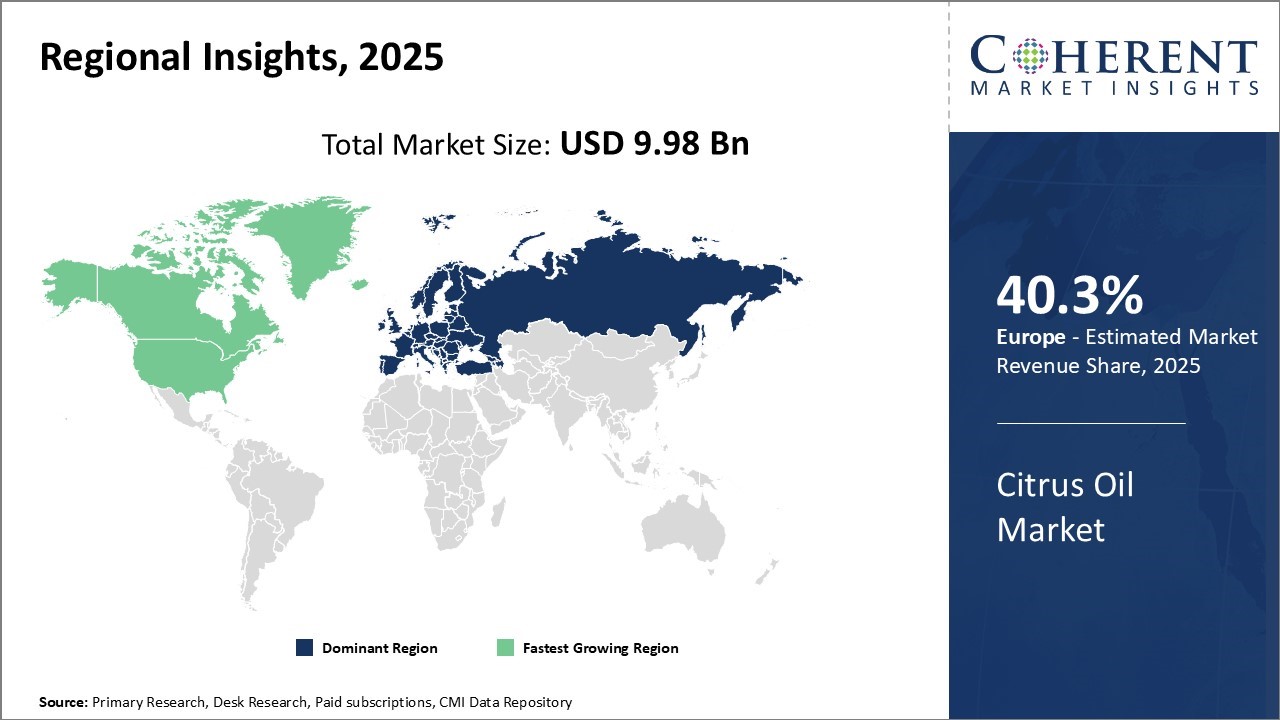
- Europe is expected to dominate the citrus oil market, holding the largest share of 40. 3% in 2026.
- North America region is expected to exhibit the fastest growth over the forecasted period.
Market Overview
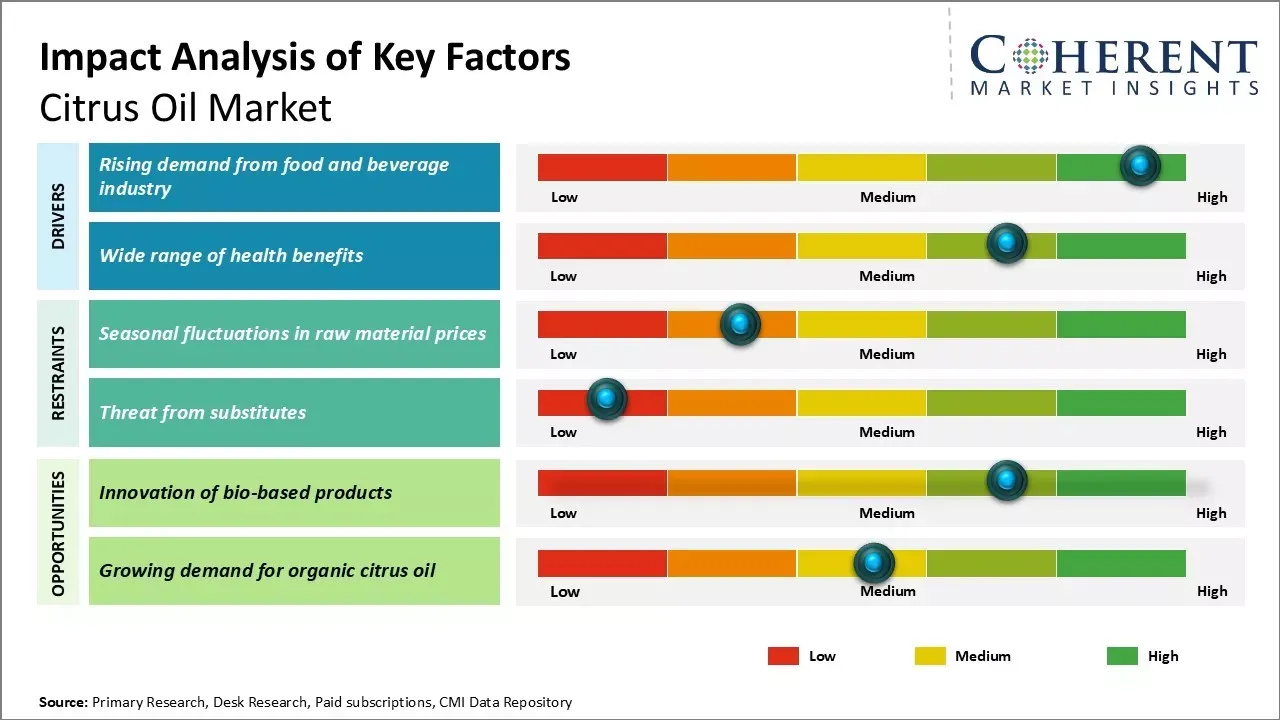
The growing demand for natural ingredients from the personal care and food and beverage industries is expected to drive this market during the forecast period. Key applications of citrus oil include food products, fragrances, cleaners, and natural medicine where it is widely used as a flavoring agent and in aromatherapy.
However, fluctuations in citrus fruit production and availability of substitutes may pose a threat to market growth.
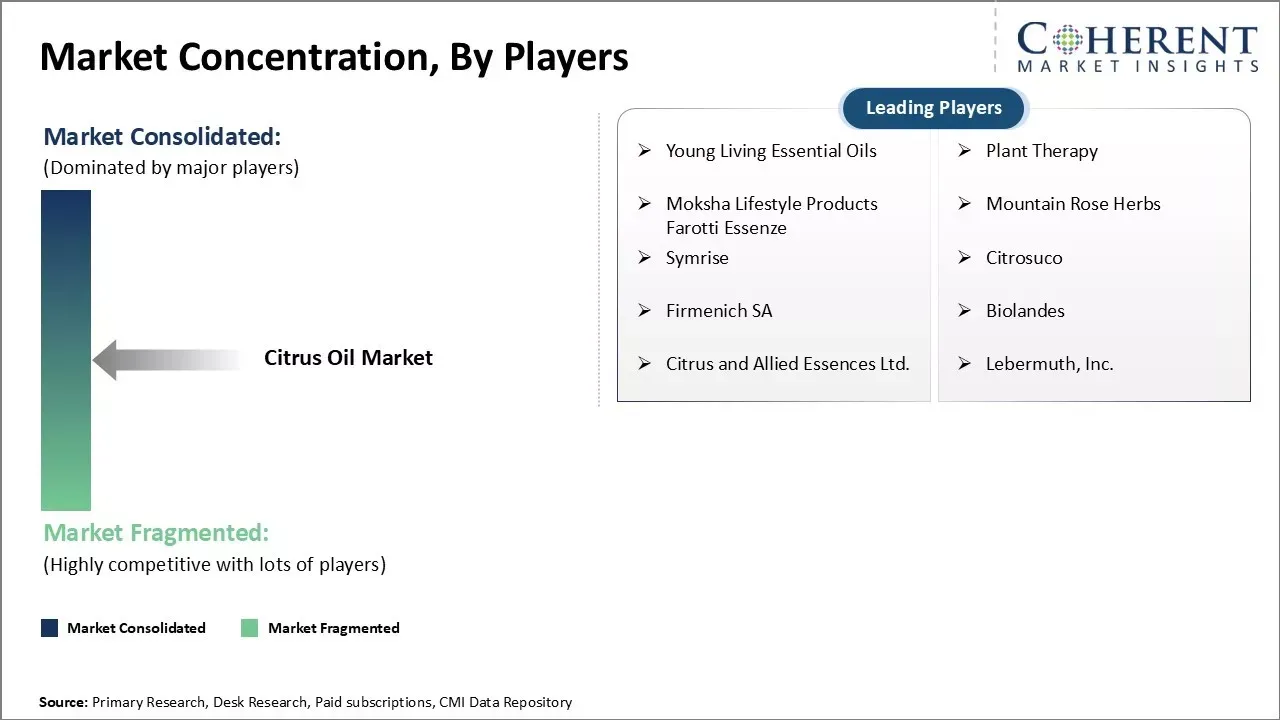
Market Concentration and Competitive Landscape
Current Events and their Impact on the Citrus Oil Market
Current Events | Description and its impact |
Supply Chain Adjustments and Raw Material Shortages |
|
Investment in Disease-Resistant Varieties |
|
- Current Industry Events of 2026
- Market Size Estimation
- Regional Breakdown
- Competitive Landscape
- Customer Intelligence
- Segmental Analysis
- Pricing Analysis
- Key Market Drivers, Challenges & Future Trends
- Customized Insights Section
Market Trends
Increasing Demand for Natural and Organic Products
The growing consumer preference for natural and organic products is significantly driving the demand for citrus oil across various industries, contributing to the market's upward growth trajectory. Today’s consumers are increasingly health-conscious and environmentally aware, opting for ingredients derived from natural sources over synthetic alternatives. Citrus oils—extracted from fruits such as oranges, lemons, and limes—are widely recognized for their versatility and clean-label appeal, making them highly sought-after in cosmetics, personal care, food flavoring, and aromatherapy.
For instance, according to Naturally Network in January 2025, over 95% of U.S. households purchased organic products in the past year, with 2 million new buyers entering the market. This expanding consumer base underscores a strong and sustained demand for natural ingredients like citrus oil, reinforcing its growing importance in product formulation and innovation across key sectors.
Segmental Insights
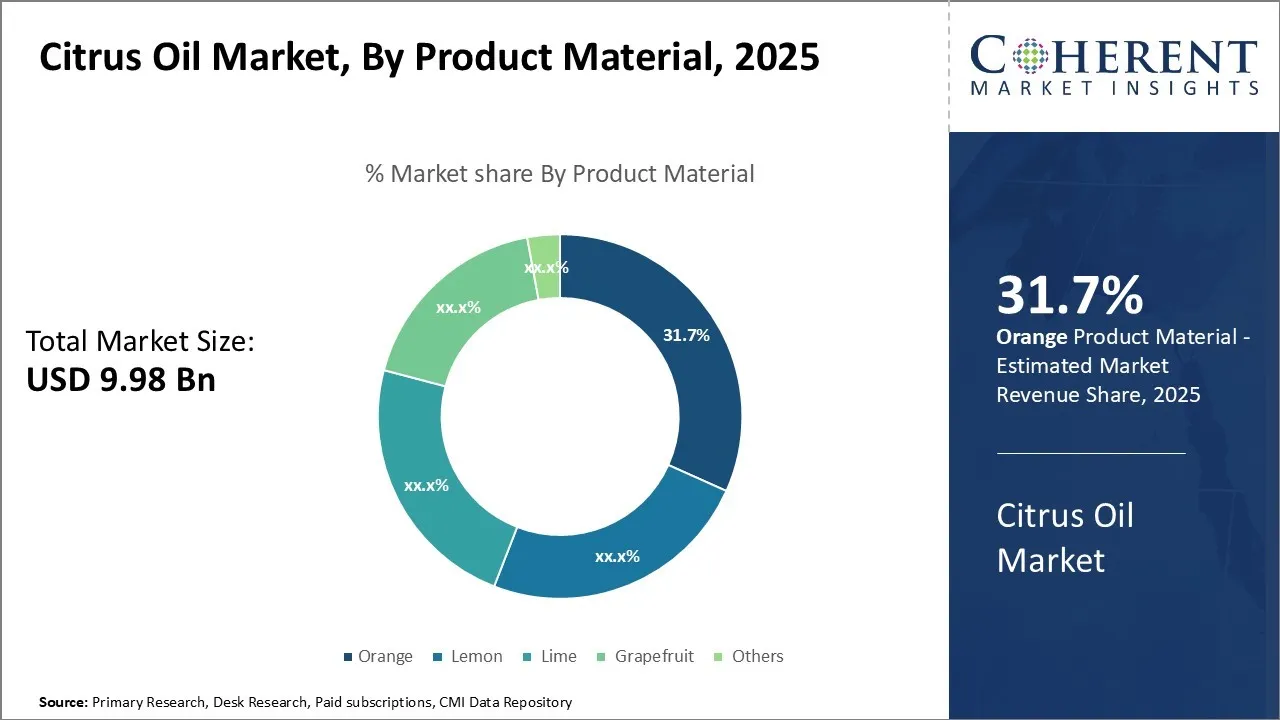
Citrus Oil Market Insights, By Product Material: Orange Dominates the Citrus Oil Market Due to Wide Range of Applications
In terms of product material, orange segment is estimated to contribute the highest market share of 32.7% of the global citrus oil market in 2026, owing to its diverse range of applications.
Orange has long been valued for its refreshing scent and flavor, making orange oil a popular ingredient in personal care and food & beverage products. The agreeable aroma of orange is widely used in cleaning supplies like all-purpose cleaners and air fresheners. It leaves a pleasant scent that masks underlying malodors without overpowering the senses.
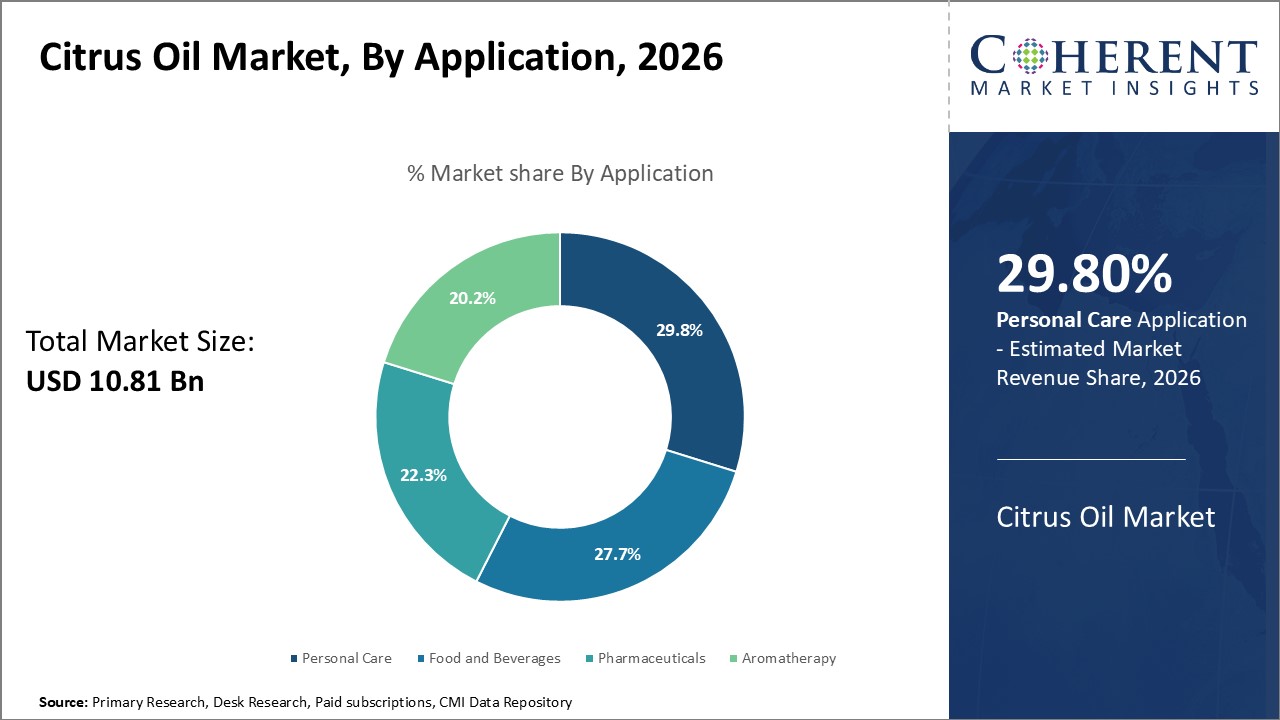
Citrus Oil Market Insights, By Application: The Demand for Citrus Oil is Being Driven by the Personal Care Sector, and the Increasing Popularity of Natural Products
In terms of application, personal care segment is estimated to contribute the highest market share of 29.8% of the global citrus oil market in 2026. Rising demand for natural ingredients is a key driver of personal care sector growth and citrus oil sales.
Consumers are seeking out products with simple, recognizable components they perceive as ‘purer’ or safer than synthetic imitations. Citrus oils fit this mold with their easy-to-understand natural sourcing. Personal care brands have responded with ingredient transparency and expanded natural/organic lines capitalizing on citrus oils' versatility.
Emerging Innovations in the Citrus Oil Market
- The Adoption of Green Extraction Technologies
- Traditional methods such as cold pressing and steam distillation, while effective, often come with limitations including lower yields, significant energy consumption, and environmental concerns. The push for sustainability has incentivized companies and researchers to explore alternative extraction solutions such as supercritical carbon dioxide (CO2) extraction, microwave-assisted extraction (MAE), and ultrasound-assisted extraction (UAE). These techniques enable the extraction of higher purity oils with enhanced retention of bioactive compounds while reducing the use of harmful solvents and lowering energy inputs.
- Microencapsulation
- Microencapsulation has become prominent in incorporating citrus oils into textiles, packaging materials, and cleaning products. Functionalized packaging infused with encapsulated citrus oils offers antimicrobial surfaces that prolong shelf life and maintain hygiene. In textiles, citrus oil microcapsules contribute to odor control and insect repellent properties, expanding the market reach into smart textiles and wearable technologies.
Impacts of Artificial Intelligence (AI) on the Citrus Oil Market
Artificial Intelligence (AI) is transforming industries across the globe, and the citrus oil market is no exception. By integrating AI technologies, companies in this sector are driving innovation, improving operational efficiency, and enhancing product offerings.
- The agri-tech company, AgroSense, has implemented AI-based image recognition tools to analyze citrus crops in real time. This enables early detection of pests and nutrient deficiencies, drastically reducing crop loss and ensuring higher quality fruit for oil extraction. The result is enhanced efficiency, better resource management, and consistent raw material quality—all vital for the citrus oil industry.
- Firmenich, a Switzerland-based fragrance and flavor company, has integrated AI into its product development process by deploying machine learning models that analyze consumer trends and sensory data. This approach allows Firmenich to design citrus oil scents and flavors optimized for specific markets more rapidly than traditional methods. The AI-driven innovation leads to more appealing products, faster time-to-market, and stronger customer engagement. End users benefit from high-quality, tailored citrus oil products that meet evolving tastes and functional expectations.
Regional Insights
Europe Citrus Oil Market Analysis and Trends
Europe is expected to account for the largest revenue share, with 40.3% in 2026. In Europe, the dominance in the citrus oil market can be attributed to favorable policies that support the agriculture sector alongside the growing popularity of natural products. Furthermore, trade alliances such as Agriculture & rural development European Commission have strengthened regional collaboration and networks for distribution of citrus produce within the continent.
For instance, Spain’s extensive citrus groves, which span nearly 300,000 hectares, provide a continuous and sustainable supply of oranges and lemons, the primary citrus fruits used for oil production. This traditional cultivation aligns with the demand for cold-pressed, pure citrus oils that maintain the natural bioactive compounds important for flavor and therapeutic uses.
North America Citrus Oil Market Analysis and Trends
North America region exhibits the fastest growth over the forecast period, driven by factors such as rising spending power, increasing health consciousness, and expansion of spas and aromatherapy centers. Developing countries like U.S. and Canada are witnessing a surge in demand for therapeutic-grade essential oils. Local companies, such as Firmenich S.A., in these markets have also ramped up extractions to fulfill domestic needs and engage in overseas trades.
For instance, in March 2026, Global citrus product supplier MCI Miritz Citrus Intercontinental acquired a majority stake in Florida Worldwide Citrus Products Group. This strategic move aims to enhance the capabilities of both companies and extend their presence across the U.S. and neighboring markets.
Citrus Oil Market Outlook for Key Countries
U.S. Citrus Oil Market Analysis and Trends
The U.S. stands as one of the leading players in the global citrus oil market, driven by its advanced food and beverage, cosmetics, and wellness industries. The growing consumer shift toward natural and organic products has spurred demand for citrus oils in aromatherapy, skincare, and clean-label food products. Florida, a major citrus-producing state, plays a critical role in domestic production and exports. Additionally, strong R&D capabilities and high consumer awareness have made the U.S. a hub for innovation in citrus oil applications.
Brazil Citrus Oil Market Analysis and Trends
Brazil is a dominant force in the citrus oil market, particularly as the world’s largest producer and exporter of orange oil. The country’s vast citrus plantations, especially in São Paulo, provide a reliable supply base for global manufacturers. Brazil’s citrus oil industry benefits from large-scale, cost-efficient production methods and close ties to international fragrance and flavor companies. Its robust agricultural infrastructure and export-oriented model make Brazil essential to the global citrus oil supply chain.
Italy Citrus Oil Market Analysis and Trends
Italy holds a prominent position in the citrus oil market, especially for high-quality essential oils derived from lemons, bergamot, and oranges. Italian citrus oils are prized for their superior aroma profiles, making them highly sought after in the luxury fragrance and cosmetic industries. Regions like Calabria and Sicily are known for traditional cultivation methods and premium-grade oil production. Italy’s reputation for quality and heritage in citrus farming has helped it maintain strong demand in both European and global markets.
India Citrus Oil Market Analysis and Trends
India has rapidly emerged as a key player in the citrus oil market, driven by its expanding agricultural sector and rising domestic demand for natural ingredients. The country's abundant citrus fruit production, particularly in states like Maharashtra and Andhra Pradesh, supports the growing extraction of essential oils for use in Ayurveda, personal care, and food industries. Additionally, India's large population, increasing health awareness, and export growth in natural products have strengthened its role in the global citrus oil landscape.
Pricing Analysis of the Citrus Oil Market
Brand Tier | Representative Brands | Price Range |
Premium Brands | doTerra, Young Living, Firmenich, Robertet | USD 40 – More than USD 120 |
Mid-Tier Brands | Eden Botanicals, Plant Therapy, Citrus & Allied Essences | USD 25 – USD 60 |
Private Label/ Bulk | Commodity suppliers from India (e.g., Mysore oils), Brazil, Spain | USD 15 – USD 30 |
Market Report Scope
Citrus Oil Market Report Coverage
| Report Coverage | Details | ||
|---|---|---|---|
| Base Year: | 2025 | Market Size in 2026: | USD 10.81 Bn |
| Historical Data for: | 2020 To 2024 | Forecast Period: | 2026 To 2033 |
| Forecast Period 2026 to 2033 CAGR: | 8.3% | 2033 Value Projection: | USD18.89 Bn |
| Geographies covered: |
| ||
| Segments covered: |
| ||
| Companies covered: | Young Living Essential Oils, Plant Therapy, Moksha Lifestyle Products Farotti Essenze, Mountain Rose Herbs, Symrise, Citrosuco, Firmenich SA, Biolandes, Citrus and Allied Essences Ltd., and Lebermuth, Inc. | ||
| Growth Drivers: |
| ||
| Restraints & Challenges: |
| ||
Citrus Oil Industry News
- In February 2025, ICAR-Central Citrus Research Institute, Nagpur, and Hindustan Petroleum Corporation Limited (HPCL), Mumbai, signed a Memorandum of Understanding (MoU) to conduct a project titled ‘Residual Analysis and Bio-efficacy Study of HP HMO Against Insect Pests of Mandarin and Acid Lime in Four Agro-climatic Zones of India.’ The collaborative research project aims to evaluate HP HMO, a water-emulsifiable horticulture mineral oil, as a sustainable and eco-friendly alternative to traditional insecticides in managing citrus pests.
- In September 2024, Flavorchem introduced innovative orange oil replacers in response to ongoing supply chain challenges. These alternatives appeal to consumers for their familiar citrus taste and perceived health benefits, with growing demand fueled by the clean-label movement and preference for natural flavors.
Analyst View
- The citrus oil market is witnessing significant traction driven by increasing consumer preference for natural and organic products across various end-use industries such as food and beverages, cosmetics, and pharmaceuticals. The rising awareness about the therapeutic properties of citrus oils, including their antimicrobial and antioxidant effects, is propelling demand, particularly in aromatherapy and personal care sectors.
- Moreover, the growing inclination towards clean-label ingredients in the food sector is encouraging manufacturers to incorporate citrus oils as natural preservatives and flavor enhancers.
- However, the market faces challenges related to the volatile raw material supply caused by unpredictable climatic conditions affecting citrus fruit cultivation. Additionally, fluctuations in oil yield and quality can impact production consistency, creating supply chain uncertainties. Regulatory frameworks governing quality and safety standards also demand rigorous compliance, which can increase operational costs for producers.
- Emerging opportunities lie in the expanding application of citrus oils in the wellness and nutraceutical domains, where their health benefits are highly valued. Technological advancements in extraction methods such as cold pressing and steam distillation are improving oil purity and yield, thereby enhancing product appeal.
- Geographically, Asia-Pacific is emerging as the fastest-growing region, owing to increased citrus cultivation, rising disposable incomes, and growing health awareness among consumers. This region’s expanding cosmetic and food industries further fuel market growth. In contrast, North America continues to dominate the market, due to well-established supply chains and high demand for clean-label ingredients. Overall, the citrus oil market presents robust potential, tempered by supply-side challenges that require strategic mitigation.
Market Segmentation
- Product Material Insights (Revenue, USD Bn, 2019 2033)
- Orange
- Lemon
- Lime
- Grapefruit
- Others
- Application Insights (Revenue, USD Bn, 2019 2033)
- Personal Care
- Food and Beverages
- Pharmaceuticals
- Aromatherapy
- Regional Insights (Revenue, USD Bn, 2019 2033)
- North America
- U.S.
- Canada
- Latin America
- Brazil
- Argentina
- Mexico
- Rest of Latin America
- Europe
- Germany
- U.K.
- Spain
- France
- Italy
- Russia
- Rest of Europe
- Asia Pacific
- China
- India
- Japan
- Australia
- South Korea
- ASEAN
- Rest of Asia Pacific
- Middle East
- GCC Countries
- Israel
- Rest of Middle East
- Africa
- South Africa
- North Africa
- Central Africa
- North America
- Key Players Insights (Revenue, USD Bn, 2021 - 2033)
- Young Living Essential Oils
- Plant Therapy
- Moksha Lifestyle Products Farotti Essenze
- Mountain Rose Herbs
- Symrise
- Citrosuco
- Firmenich SA
- Biolandes
- Citrus and Allied Essences Ltd.
- Lebermuth, Inc.
Sources
Primary Research Interviews
- - Citrus Oil Manufacturers
- Distributors and Wholesalers in Citrus Oil Industry
- Industry Experts and Analysts
- Regulatory Authorities in Essential Oils Sector
- Others
Magazines
- Essential Oil Magazine
- Natural Products Insider
- Cosmetics & Toiletries Magazine
- Others
Journals
- Journal of Essential Oil Research
- Industrial Crops and Products
- Journal of Agricultural and Food Chemistry
- Others
Newspapers
- The Economic Times
- Financial Times
- The Wall Street Journal
- The Guardian
- Others
Associations
- International Federation of Essential Oils and Aroma Trades (IFEAT)
- Citrus Growers Association
- American Herbal Products Association (AHPA)
- Others
Public Domain Sources
- Food and Agriculture Organization (FAO) Reports
- United States Department of Agriculture (USDA) Publications
- World Health Organization (WHO) Reports
- Others
Proprietary Elements
- CMI Data Analytics Tool – Citrus Oil Market
- CMI Existing Repository of Information for the Last 8 Years
*Definition: The citrus oil market encompasses the global production, distribution, and consumption of essential oils extracted from the peels of citrus fruits such as oranges, lemons, limes, grapefruits, and bergamots. These oils are widely used across industries including food and beverages, cosmetics and personal care, pharmaceuticals, aromatherapy, and cleaning products, due to their aromatic, antibacterial, and flavor-enhancing properties. The market includes both cold-pressed and distilled citrus oils, and is shaped by factors such as natural product demand, agricultural output, trade dynamics, and evolving consumer preferences for clean-label and plant-based ingredients.
Get access to 250+ pages report
Every segment, forecast, competitor profile and data table behind the analysis above — available for instant download.
- ESOMAR Member
- ISO 9001:2015 Certified
- D-U-N-S Registered
- GDPR & CCPA Compliant
Missing comfort of reading report in your local language? Find your preferred language:
Transform your Strategy with Exclusive Trending Reports
Frequently Asked Questions
The citrus oil market is estimated to be valued at USD 10.81 Bn in 2026, and is expected to reach USD 18.89 Bn by 2033.
The CAGR of the citrus oil market is projected to be 8.3% from 2026 to 2033.
Rising demand from food and beverage industry and wide range of health benefits are the major factors driving the market growth.
Seasonal fluctuations in raw material prices and threat from substitutes are the major factors hampering the market growth.
In terms of product material, the orange segment is estimated to dominate the market revenue share in 2026.
Young Living Essential Oils, Plant Therapy, Moksha Lifestyle Products Farotti Essenze, Mountain Rose Herbs, Symrise, Citrosuco, Firmenich SA, Biolandes, Citrus and Allied Essences Ltd., and Lebermuth, Inc. are the major players operating in the citrus oil market.
Europe is expected to lead the citrus oil market in 2026.