

Global Empty Capsules Market Size and Share Analysis – Growth Trends and Forecasts (2026-2033)
Global empty capsules market is estimated to be valued at USD 3.65 Bn in 2026 and is expected to reach USD 5.75 Bn exhibiting a compound annual growth rate (CAGR) of 6.7% from 2026 to 2033.
Key Takeaways
- In terms of Product, Gelatin Capsules Segment is estimated to contribute the highest market share of 61.7% in 2026. This is due to their convenience and effectiveness.
- In terms of Material, Pig Meat Gelatin Capsules Segment is estimated to contribute the highest market share of 31.71% in 2026. This is due to their widespread acceptance and high yields.
- In terms of Functionality, Immediate-Release Capsules Segment is estimated to contribute the highest market share of 51.6% in 2026. This is due to the need for rapid drug absorption to produce swift therapeutic effects.
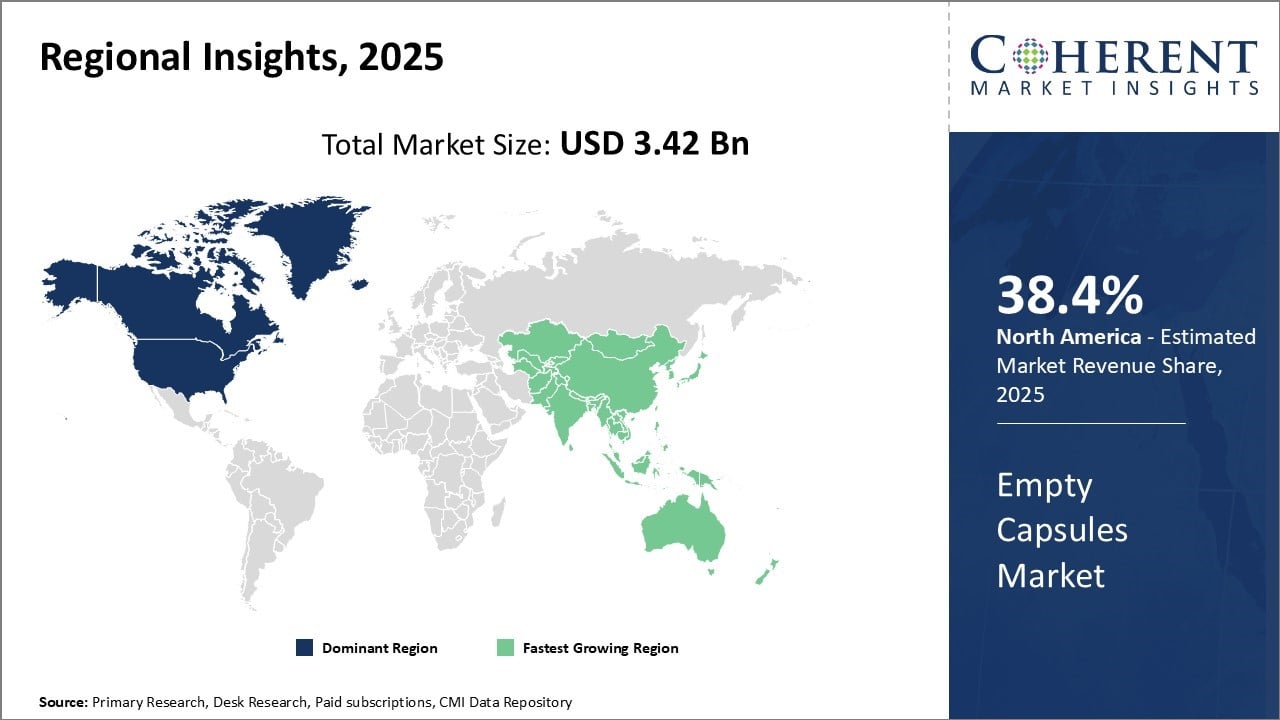
- North America has established itself as the dominant region in the global empty capsules market with an estimated market share of 38.4% in 2026. This is due to presence of leading capsule manufacturers and capsules filling machine suppliers has strengthened the supply chain infrastructure in the region.
Market Overview
The market for empty capsules is expected to have robust growth during the forecast period, stimulated by growing demand from the pharmaceutical, nutraceutical, and food supplement markets. Capsules are popular due to ease of consumption, accurate dosage, and effectiveness in concealing objectionable tastes, providing an appropriate delivery vehicle for many active compounds. Increase in health consciousness and increased global population of older people susceptible to long-term ailments further enhance the demand for capsule pharmaceutical formulations. Governments and manufacturers are also being driven to innovation in empty capsules composition and types, such as vegetarian, organic, and free-from-allergens, to cater to evolving consumer tastes.
Current Events and Its Impact on Offshore Wind Market
Current Events | Description and its impact |
Capsugel launches Plant-Based Capsule Line – Back to Its Roots for Green Pharmaceutical Solutions |
|
ACG Opens New State-of-the-Art Capsule Manufacturing Facility in Thailand |
|
Pipeline Analysis
The empty capsules market is experiencing robust pipeline development driven by rising demand for pharmaceutical, nutraceutical, and cosmetics applications. The pipeline is driven by innovation in capsule formulation (gelatin, hydroxypropyl methylcellulose, pullulan), drug delivery technologies for targeted uses, and consumer needs for vegetarian and clean-label products.
Large industry leaders such as Capsugel (Lonza), ACG Group, and Qualicaps are investing in R&D for bringing new forms of capsules that are tailored to enable extended release, controlled release, and pH-dependent applications. Lonza, during 2024–2025, extended its portfolio of Capsugel with acid-resistant capsules for gastric transit protection of probiotics and sensitive actives. Similarly, ACG launched ACGcaps™ HD to be used for hygroscopic and moisture-sensitive formulation.
In the pharmaceutical sector, ongoing innovation of oncology, cardiovascular, and gastrointestinal disease drugs is fueling growth for the next-generation capsule systems. Different phase II and III clinical trials are bringing capsule form-based oral solid dose forms into play because they are easy to formulate, simple to administer to patients, and have a reduced excipient load. This is particularly common in oncology, where oral chemotherapy drugs are augmented by targeted capsule-based delivery.
Conversely, nutraceuticals are redesigning supplements like omega-3s, botanicals, and adaptogens with plant-based and vegetarian capsules, especially in North America and Europe. This is pushing the pipeline to non-animal-based capsule materials and new encapsulation technologies that preserve bioavailability.
Overall, the market for empty capsules is expanding from traditional gelatin capsules to emerging delivery platforms, specialty coatings, and bio-materials, indicative of a move toward personalization, sustainability, and functional performance in pharmaceutical as well as nutraceutical markets.
- Current Industry Events of 2026
- Market Size Estimation
- Regional Breakdown
- Competitive Landscape
- Customer Intelligence
- Segmental Analysis
- Pricing Analysis
- Key Market Drivers, Challenges & Future Trends
- Customized Insights Section
Patent Landscape
The market for empty capsules is experiencing major patenting interest in plant-based products and release-control capability. To illustrate, a prominent patent family (US20240165038A1 / WO2022189045A1) involves producing pullulan-based capsules with filings across the U.S., EU, Japan, China, and Canada beginning in 2022 and published in May 2024. Formulations involving pullulan are working towards creating acid-resistant, non-animal capsule shells that are of interest to vegetarian and vegan users.
Prior WO2020223003A1 (filed April 2020) details production processes for pullulan capsule production further. In the vegetarian gelatin alternative space, hydroxypropyl methylcellulose (HPMC) capsules are the focus of strong patent activity. A recent U.S. filing (US20240335389, issued October 2024) patents a plant-derived hard capsule for quick disintegration utilizing HPMC and carrageenan-based formulations intended for fast release characteristics. More generally, US20250090553A1 (published March 2025) reveals sustained-release formulations comprising hydroxyalkyl methylcellulose, targeting controlled release drug delivery forms.
These filings indicate a movement toward specialty formulation and innovative material science patents, such as vegetarian, acid-resistant, rapid‑release, and sustained‑release capsule technologies. They demonstrate prioritization of patient‑friendly dissolution profiles and non‑animal excipients, addressing both regulatory and consumer needs. Academic institutions and top performers are now actively claiming IP in the area of capsule shell chemistry, manufacturing processes, and controlled‑release functionality—indicating a matured patent landscape in the area of empty capsules.
Prescribers' Choice in the Empty Capsules Market
Prescribers, especially doctors and pharmacists, are increasingly becoming inclined towards empty capsules as a drug delivery system of choice owing to their customizability, enhanced patient compliance, and adjustment with contemporary therapeutic compounds. Of all the dosage forms, capsules have the added benefit of being tasteless, odorless, and easy to swallow, improving compliance, particularly in the case of pediatric, geriatric, and vulnerable patients.
One of the key trends among prescribers is increasing movement toward vegetarian or plant-based capsules, including hydroxypropyl methylcellulose (HPMC) or pullulan capsules. These products are chosen not just for ethical and dietary purposes but also due to their lower cross-linking risk and superior stability for hygroscopic and water-sensitive drugs. This choice matches increasing demand from consumers for clean-label and non-animal-derived pharmaceutical products.
Prescribers also appreciate acid-resistant and delayed-release capsule shells facilitating targeted drug delivery into the intestine, minimizing gastric irritation, and enhancing bioavailability. These characteristics are especially significant in the treatment of gastrointestinal disorders, infections, and probiotic supplementation. Furthermore, tailored compounded medications, usually dispensed by pharmacies with empty capsules, provide prescribers with more dosing flexibility, potential for multiple actives being combined, or allergen-free and filler-free removal.
In specialized fields such as oncology and neurology, prescribers also have a preference for capsules to allow for accurate dosing of very potent or customized medicines, assuring effective therapy and patient safety. Overall, prescriber preference for empty capsules is highly driven by formulation design flexibility, patient-focused design, and innovation in emerging technologies in empty capsule production that enhance the therapeutic effect.
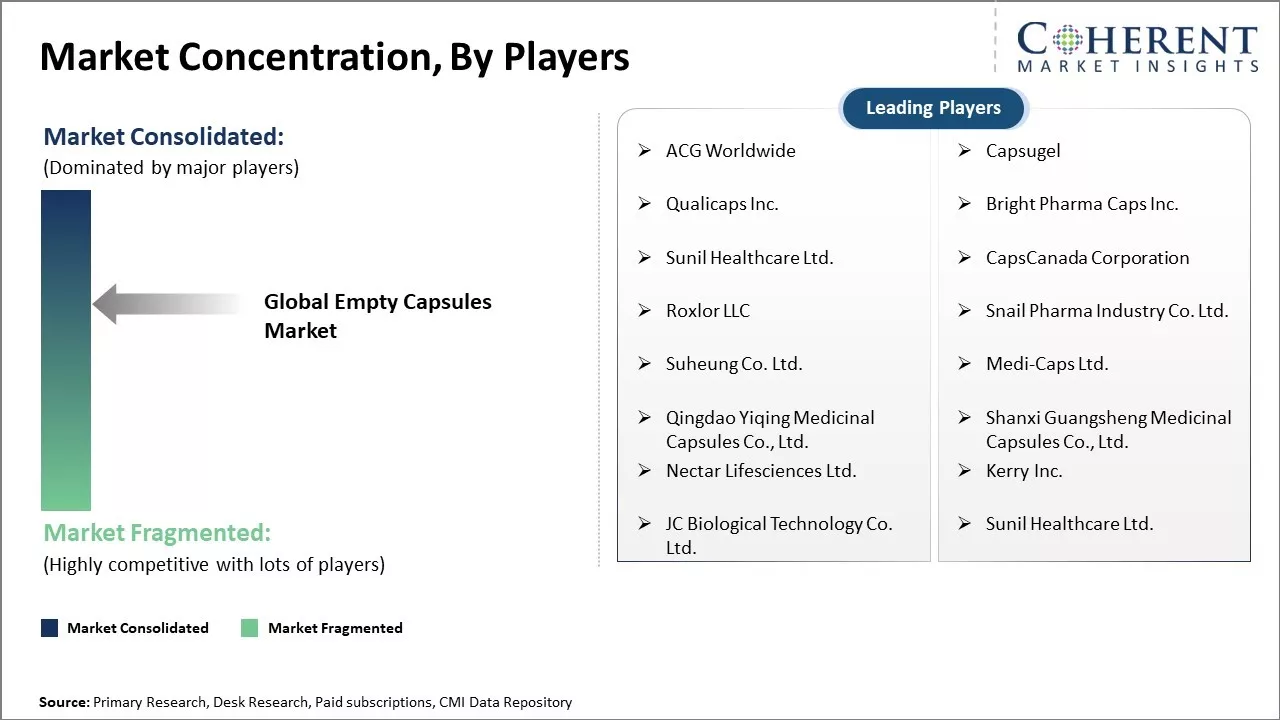
Market Concentration and Competitive Landscape
Market Driver
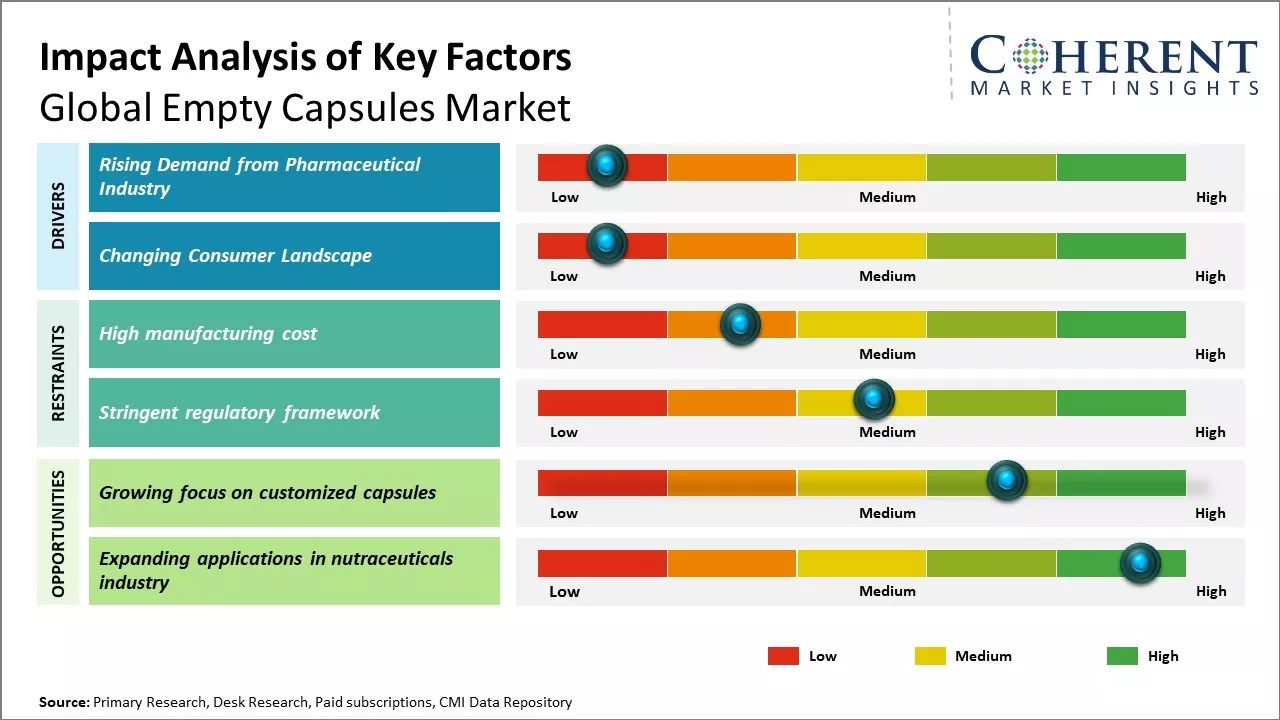
- Rising Demand from Pharmaceutical Industry
Global empty capsules market growth is driven by rising demand for capsules from the pharmaceutical industry. Growing pharmaceutical industry boosts the need for empty capsules. Empty capsules find widespread application in the pharmaceutical sector for manufacturing various medicines such as antibiotics, anti-fungal, anti-depressants, anti-hypertensives and many other drug formulas.
Growing geriatric population worldwide who are more prone to chronic diseases and ailments can also boost demand for various medicines, and this boosts the need for empty capsules from pharmaceutical companies. Furthermore, increasing healthcare expenditure of people and governments across nations contributes to growth of the pharmaceutical industry.
Many new drug molecules and formulations are being developed by companies, and this boosts demand for empty capsules as these are extensively used in the pharmaceutical manufacturing process. Capsule-based drug delivery offers various advantages such as targeted drug release, protection of active pharmaceutical ingredients (APIs) from environmental degradation, and enhanced bioavailability. Growing acceptability of capsule dosage forms by patients and physicians alike as compared to other forms can drive the empty capsules market growth.
In December 2024, Lonza Capsules & Health Ingredients announced the expansion of its empty hard gelatin capsule production capacity at its Rewari (India) and Suzhou (China) facilities. These state-of-the-art manufacturing lines were added specifically to meet growing demand from pharmaceutical firms for capsule-based drug delivery across therapeutic categories such as antibiotics, cardiovascular, and anti-infectives.
- The preference for capsule dosage forms
The preference for capsule dosage forms among consumers and healthcare professionals is a major factor responsible for driving growth in the global empty capsules market. Capsules offer several advantages over other dosage forms like tablets. They are easy to swallow and digest for people of all age groups including children and geriatric patients who may have difficulty swallowing tablets.
The empty shell structure of capsules allows for miniaturization and ensures targeted release of active pharmaceutical ingredients in the gastrointestinal tract. This enhances bioavailability and effectiveness of the drug. Capsules are also considered more elegant and appealing alternatives to tablets by many patients.
Pharmaceutical manufacturers are increasingly opting for capsule dosage forms due to their flexibility in formulations. A wide range of formulations like powders, pellets, granules and liquids can be filled into capsules with tailored drug release profiles.
Market Opportunities: Growing focus on customized capsules
Global empty capsules market growth is driven by growing focus on customized capsules by pharmaceutical manufacturers. Customized capsules allow pharmaceutical companies to develop capsules tailored to specific drug formulations and targeted patient groups. This offers them an opportunity to enhance patient outcomes and experiences.
Various pharmaceutical vendors are now investing in sophisticated technologies and equipment to augment their customized capsule production capabilities. For example, many manufacturers are opting for laser engraving techniques that enable printing logos, graphics and text on capsule shells. This helps increase brand recognition of drugs and also aids pharmacists and patients in identifying each product variety easily.
Vendors can further personalize capsules by offering different colors, shapes and flavors based on patient profiles. This high level of customization as per specific product requirements can boost demand for empty capsules in the near future. Rising uptake of vegetarian and halal capsules can also provide growth opportunities for empty capsules providers.
In 2021, according to the United Nations Report, annual vegetarian capsule demand is expected to increase by over 25% globally by 2025. Several large pharmaceutical manufacturers are expected to launch more vegetarian drugs in the future in response to growing health-conscious demographic worldwide. This will mandate increased use of plant-based or halal empty capsules, thus, driving the market growth.
Segmental Insights
Global Empty Capsules Market Insights, By Product
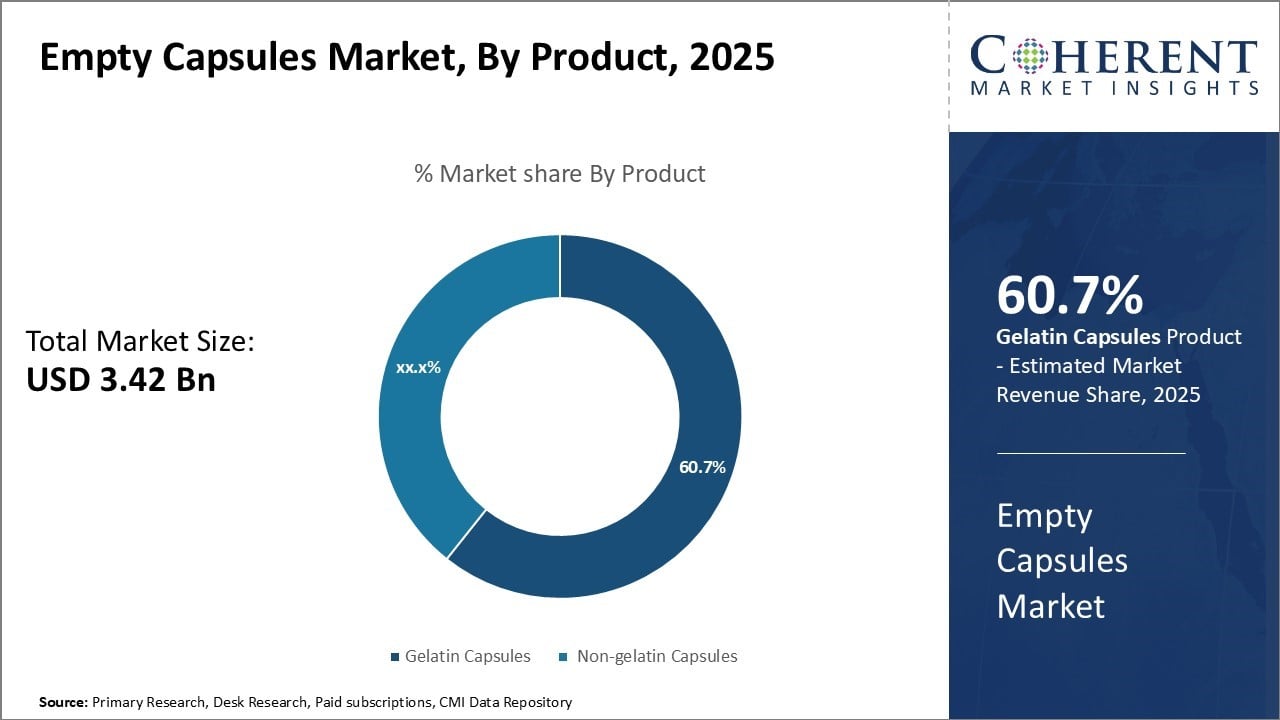
In terms of product, gelatin capsules segment is estimated to contribute the highest market share of 61.7% in 2026 due to their convenience and effectiveness. Gelatin capsules dissolve quickly once ingested, allowing the active ingredients to be released faster into the bloodstream compared to other capsule types. This makes gelatin capsules highly suitable for formulations requiring rapid drug dissolution and absorption such as immediate-release drugs.
Many leading pharmaceutical companies prefer gelatin capsules for drug delivery due to their fast disintegration and dissolution properties. Gelatin capsules are also easy to swallow as compared to large pills, making them a preferred format for pediatric and geriatric applications where pill swallowing can be difficult. Their oval shape and smooth exterior allow for effortless ingestion.
This convenience factor has increased acceptability of gelatin capsules among patients. The transparent nature of gelatin capsules also allows viewing of contents, assisting with compliance. Their popularity in the dietary supplements industry can be attributed to the visibility of contents and perceived purity of gelatin as natural ingredient Gelatin capsules are economical to manufacture due to established formulation and filling technologies.
Empty Capsules Market Insights, By Functionality
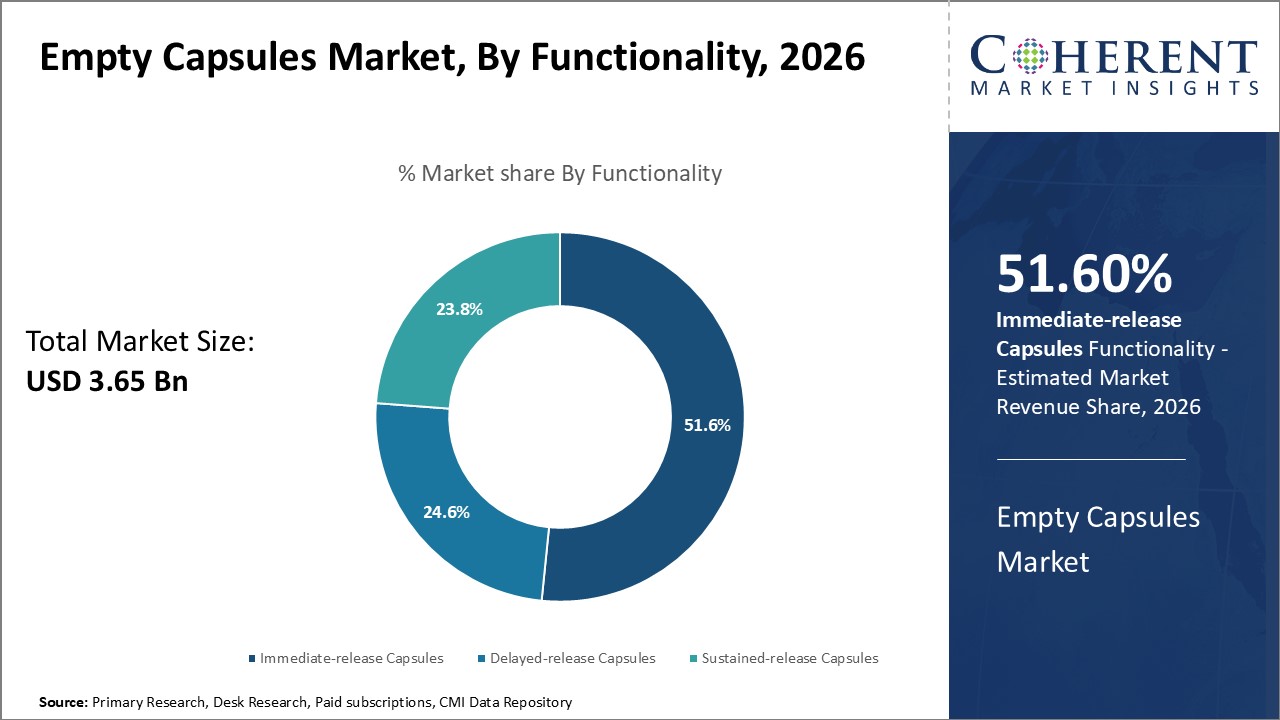
In terms of functionality, immediate-release capsules segment is estimated to contribute the highest market share of 51.6% in 2026, due to the need for rapid drug absorption to produce swift therapeutic effects. An immediate-release formulation is preferred for drugs designed to achieve their purpose in a short time window.
This includes analgesics meant to relieve pain quickly, antibiotics designed to rapidly reach infection sites, and drugs required to be released immediately upon administration such as emergency medications. For conditions requiring prompt relief, immediate-release capsules effectively boost drug concentrations in the bloodstream within minutes of ingestion. Their ability to dissolve rapidly in gastric fluids and release contents means drugs bound for systemic circulation can attain target sites of action with expedited kinetics.
The rapid dissolution properties of immediate-release capsules are well-suited for drugs with short half-lives that necessitate timely absorption for optimal performance. Immediate-release capsules are used in acute treatments like seasickness, allergies and migraine headaches that mandate accelerated onset of drug effect. For patient classes like geriatrics with slowed gastrointestinal motility, immediate capsules compensate by swiftly elevating drug levels before active substances can degrade.
Empty Capsules Market Insights, By Material
In terms of material, pig meat gelatin capsules segment is estimated to contribute the highest market share of 31.71% in 2026, owing to their widespread acceptance and high yields. Pig skin and bones are routinely used sources of gelatin that yield high volumes of the raw material during processing. Their abundance has lowered production costs while ensuring pig gelatin's economy as a commercially preferred capsule coating.
Empty pig gelatin capsules benefit from having no religious restrictions on consumption and are deemed safe for all faiths and medical conditions barring allergies. This promotes their broad applications without formula change. Pig gelatin capsule shells are also versatile excipients compatible with a vast choice of active ingredients, from nutritional to pharmaceutical actives.
Pig gelatin offers favorable physico-mechanical properties as a film-former including elasticity, gastric permeability and disintegration kinetics suited to varying drug release patterns. Capsules produced from it demonstrate adequate stability for recommended shelf-lives without loss of quality. This consistency simplifies scale-up and logistical handling of finished products. Pig gelatin's established history of safe use provides demonstrated compliance with safety regulations of global health authorities.
Global Empty Capsules - Regional Insights
North America Empty Capsules Market Analysis and Trend
North America has established itself as the dominant region in the global empty capsules market with an estimated market share of 38.4% in 2026. The presence of leading capsule manufacturers and capsules filling machine suppliers has strengthened the supply chain infrastructure in the region. Growing nutraceutical and pharmaceutical industries in the U.S. and Canada boosts demand for empty capsules.
With the significant geriatric population suffering from chronic conditions, the regional healthcare expenditure is also increasing steadily to treat age-related diseases, thus, boosting product sales. Moreover, the region is an attractive market for pharmaceutical companies to launch their drugs due to streamlined regulatory approval process as compared to other areas of the world.
Asia Pacific Empty Capsules Market Analysis and Trend
Asia Pacific region has emerged as the fastest growing market for empty capsules globally. Rapidly increasing healthcare expenditure, large patient pool, and rising per capita income have boosted the regional pharmaceutical industry. Countries like China, India, and Japan are prominent manufacturers and consumers of empty capsules for domestic as well as international markets.
India in particular has gained significance with its cost competitive manufacturing base and presence of numerous nutraceutical manufacturers. Rising health awareness has prompted consumers to opt for dietary supplements and functional foods which employ gelatin capsules for delivery. The international players in the empty capsules domain are focusing on strategic investments and partnerships in Asia Pacific to gain early mover advantage in the developing markets.
Empty Capsules Market Dominating Countries
United States Empty Capsules Market Analysis and Trend
The U.S. dominates the global market for empty capsules owing to its well-established pharmaceuticals industry, significant presence of capsule manufacturers such as Capsugel (Lonza), and high demand for nutritional supplements. Support from regulatory for personalized medicine and compound prescriptions also fuels capsule use in clinical and retail spaces.
India Empty Capsules Market Analysis and Trend
India is a significant center for production of empty capsules, due to its large base of generic drug manufacturing and low-cost production facilities. Indian firms such as Sunil Healthcare and ACG are dominant exporters, and increasing domestic demand for nutraceuticals also supports its position in the international market.
Germany Empty Capsules Market Analysis and Trend
Germany dominates European demand, fueled by its expenditure on high pharmaceutical R&D, robust regulatory environments, and trend towards clean-label, plant-based capsule ingredients. German businesses are now investing more in the manufacturing of vegetarian and HPMC capsules to meet changing health patterns.
China Empty Capsules Market Analysis and Trend
China is fast growing in the space of empty capsules through huge drug and supplement production on a large scale and increasing investments in pharmaceutical manufacturing technology. The movement towards quality-oriented, export-oriented manufacturing is enhancing China's position in the global chain of capsules supply.
Market Report Scope
Empty Capsules Market Report Coverage
| Report Coverage | Details | ||
|---|---|---|---|
| Base Year: | 2025 | Market Size in 2026: | USD 3.65 Bn |
| Historical Data for: | 2020 To 2024 | Forecast Period: | 2026 To 2033 |
| Forecast Period 2026 to 2033 CAGR: | 6.7% | 2033 Value Projection: | USD 5.75 Bn |
| Geographies covered: |
| ||
| Segments covered: |
| ||
| Companies covered: | ACG Worldwide, Capsugel, Qualicaps Inc., Bright Pharma Caps Inc., Sunil Healthcare Ltd., CapsCanada Corporation, Roxlor LLC, Snail Pharma Industry Co. Ltd., Suheung Co. Ltd., Medi-Caps Ltd. , Qingdao Yiqing Medicinal Capsules Co., Ltd., Shanxi Guangsheng Medicinal Capsules Co., Ltd., Nectar Lifesciences Ltd., Kerry Inc., JC Biological Technology Co. Ltd. | ||
| Growth Drivers: |
| ||
| Restraints & Challenges: |
| ||
Empty Capsules Industry News
- In December 2024, Swiss contract drugmaker Lonza announced plans to exit its Capsules and Health Ingredients (CHI) business due to a decline in demand for pharmaceutical supplies post-pandem This strategic move aims to refocus on its core Contract Development and Manufacturing Organization (CDMO) business.
- In May 2024, Roquette, a global leader in pharmaceutical and nutraceutical excipients, introduced its LYCAGEL Flex hydroxypropyl pea starch premix for soft gel capsules. This innovative excipient enhances capsule functionality, catering to a wide range of pharmaceutical and nutraceutical applications while promoting sustainability.
Key Takeaways from Analyst
- Global empty capsules market growth is driven by increasing adoption of capsule dosage forms over tablets. Capsules are increasingly becoming the preferred form for various active pharmaceutical ingredients due to better absorbability and targeted release provided by capsules. The gelatin capsules segment dominates the market due to widespread usage. However, vegetarian capsule segment is also expected to witness growth over the forecast period, owing to growing demand for plant-based capsules.
- North America dominates the market currently due to strong pharmaceutical industry and healthcare spending in the region. However, Asia Pacific region excluding Japan is expected to emerge as the fastest growing market due to increasing generic production, rising healthcare spending and rapidly growing senior population in several countries in the region.
- The availability of alternative dosage forms coupled with high manufacturing and R&D costs of capsules can hamper the market growth. Stringent regulations associated with capsule production increases the production costs. Furthermore, supply chain complexities can pose challenges particularly for global expansion of small and medium players in the market.
Market Segmentation
- Product Insights (Revenue, USD Bn, 2021 - 2033)
- Gelatin Capsules
- Non-gelatin Capsules
- Functionality Insights (Revenue, USD Bn, 2021 - 2033)
- Immediate-release Capsules
- Delayed-release Capsules
- Sustained-release Capsules
- Material Insights (Revenue, USD Bn, 2021 - 2033)
- Pig Meat Gelatin Capsules
- Bovine Gelatin Capsules
- Plant-based Capsules
- Starch-based Capsules
- Pullulan Capsules
- Others
- End User Insights (Revenue, USD Bn, 2021 - 2033)
- Pharmaceutical Companies
- Cosmetic & Nutraceutical Companies
- Clinical Research Organizations (CRO'S)
- Others
- Regional Insights (Revenue, USD Bn, 2021 - 2033)
- North America
- U.S.
- Canada
- Latin America
- Brazil
- Argentina
- Mexico
- Rest of Latin America
- Europe
- Germany
- U.K.
- Spain
- France
- Italy
- Russia
- Rest of Europe
- Asia Pacific
- China
- India
- Japan
- Australia
- South Korea
- ASEAN
- Rest of Asia Pacific
- Middle East
- GCC Countries
- Israel
- Rest of Middle East
- Africa
- South Africa
- North Africa
- Central Africa
- Key Players Insights
- ACG Worldwide
- Capsugel
- Qualicaps Inc.
- Bright Pharma Caps Inc.
- Sunil Healthcare Ltd.
- CapsCanada Corporation
- Roxlor LLC
- Snail Pharma Industry Co. Ltd.
- Suheung Co. Ltd.
- Medi-Caps Ltd.
- Qingdao Yiqing Medicinal Capsules Co., Ltd.
- Shanxi Guangsheng Medicinal Capsules Co., Ltd.
- Nectar Lifesciences Ltd.
- Kerry Inc.
- JC Biological Technology Co. Ltd.
Sources
Primary Research Interviews
- Empty Capsule Manufacturers and Suppliers
- Pharmaceutical Companies and Drug Developers
- Contract Manufacturing Organizations (CMOs)
- Nutraceutical and Dietary Supplement Companies
- Others
Databases
- FDA Orange Book Database
- WHO Global Health Observatory
- Pharmaceutical Research and Manufacturers of America (PhRMA) Database
- IMS Health Market Research Database
- Others
Magazines
- Pharmaceutical Manufacturing Magazine
- Capsugel Capsules & Health Ingredients Magazine
- Nutraceuticals World Magazine
- Contract Pharma Magazine
- Others
Journals
- International Journal of Pharmaceutics
- Pharmaceutical Technology Journal
- Journal of Pharmaceutical Sciences
- Others
Newspapers
- Financial Times
- The Wall Street Journal
- Reuters Health News
- Pharmaceutical Executive News
- Others
Associations
- International Pharmaceutical Excipients Council (IPEC)
- American Society of Health-System Pharmacists (ASHP)
- European Medicines Agency (EMA)
- Council for Responsible Nutrition (CRN)
- Others
Public Domain Sources
- U.S. Food and Drug Administration (FDA) Publications
- European Medicines Agency (EMA) Reports
- World Health Organization (WHO) Publications
- National Institute of Health (NIH) Database
- Others
Proprietary Elements
- CMI Data Analytics Tool
- Proprietary CMI Existing Repository of information for last 8 years
*Definition: Global empty capsules market is focused on providing empty capsules to pharmaceutical companies for filling with various pharmaceutical ingredients like drugs, powders, liquids, and others. Empty capsules are essentially gelatin-based or non-gelatin-based shells that hold and deliver medications in the body. The global empty capsules market offers a variety of capsule sizes and types like hard gelatin capsules and softgels to meet varied pharmaceutical needs. Key players in this market work with capsule manufacturers to produce capsules tailored to specific drug delivery applications.
Get access to 250+ pages report
Every segment, forecast, competitor profile and data table behind the analysis above — available for instant download.
- ESOMAR Member
- ISO 9001:2015 Certified
- D-U-N-S Registered
- GDPR & CCPA Compliant
Missing comfort of reading report in your local language? Find your preferred language:
Transform your Strategy with Exclusive Trending Reports
Frequently Asked Questions
The Empty Capsules Market size is estimated to be valued at USD 3.65 Bn in 2026, and is expected to reach USD 5.75 Bn by 2033.
The CAGR of the global Market is projected to be 6.7% from 2026 to 2033.
Rising demand from pharmaceutical industry and changing consumer landscape are the major factors driving the growth of global market.
High manufacturing cost and stringent regulatory framework are the major factors hampering the growth of global empty capsules industry.
In terms of product, gelatin capsules segment is estimated to dominate the market in 2026.
Empty capsules are used to encase powdered, liquid, or granular supplements, making them easier to consume, accurately dosed, and fast-dissolving for better absorption.
Top empty capsule manufacturers include Capsugel (Lonza), ACG Worldwide, Qualicaps, Suheung Co. Ltd., and CapsCanada.