

Esophageal Stethoscope Market Size and Share Analysis: 2026 - 2033
The global Esophageal Stethoscope market size is expected to reach approximately USD 126 Mn in 2026 and is projected to grow at a compound annual growth rate (CAGR) of 5% during the forecast period (2026-2033), reaching USD 180 Mn by 2033. This is attributable to increasing demand for advanced patient monitoring devices in surgical and critical care settings.
Key Takeaways from the Esophageal Stethoscope Market Report
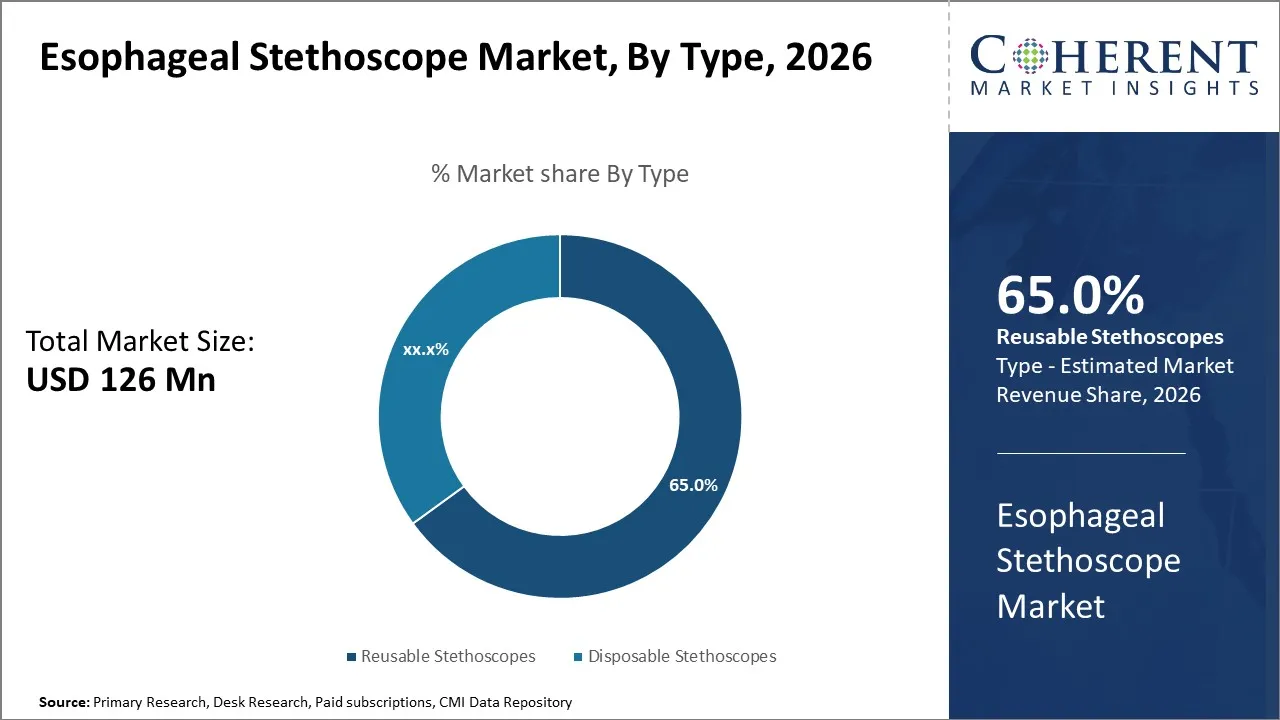
- Reusable stethoscopes segment is expected to dominate the market, accounting for a 65% market share in 2026, due to their cost-effectiveness, durability, and wider clinical adoption. On the other hand, demand for disposable stethoscopes is likely to grow at a higher CAGR because of rising hygiene preferences.
- Based on application, surgeries segment is projected to account for a market share of over 45% in 2026, owing to rising adoption of esophageal stethoscopes during surgeries for continuous cardiac and respiratory monitoring, enhanced patient safety, and accurate intraoperative assessment of heart and lung functions.
- Hospitals are expected to remain the leading end users of esophageal stethoscopes, accounting for over 50% of the market share in 2026, due to their high volume of surgeries and critical care requirements.
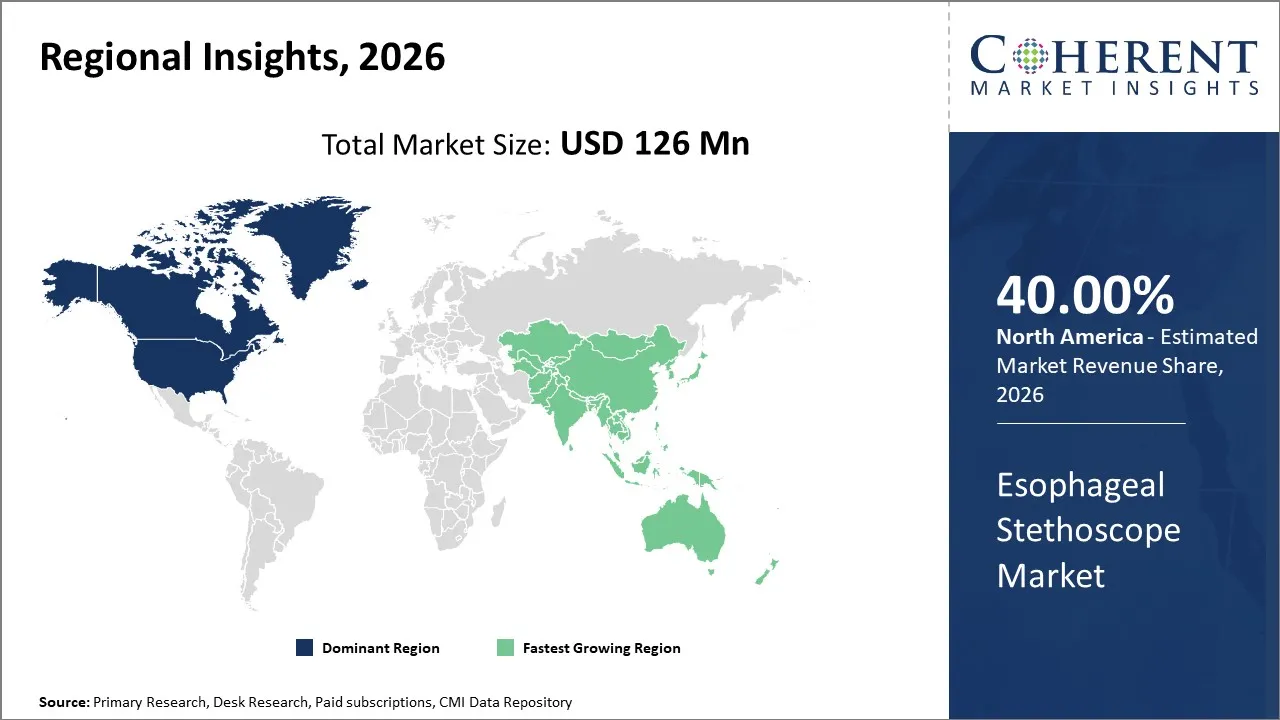
- North America is slated to dominate the global esophageal stethoscopes industry, capturing a share of 40% in 2026, thanks to high adoption of minimally invasive cardiac monitoring devices, the presence of key manufacturers like 3M and GE Healthcare, and growing use of esophageal stethoscopes in cardiac surgeries and ICU procedures.
- Asia Pacific, with about 30% share in 2026, is poised to emerge as the hotbed for esophageal stethoscope manufacturers during the assessment period, mostly due to rising healthcare infrastructure investments in countries like China and India, increasing number of cardiac surgeries, and the availability of cost-effective manufacturing and labor.
Esophageal Stethoscope Market Overview
The global esophageal stethoscope market is expected to witness steady growth during the forecast period. This is primarily due to rising demand for advanced monitoring devices in surgical and critical care settings, increasing awareness about patient safety, and growing adoption of minimally invasive procedures that require continuous intraoperative monitoring. Advancements in esophageal stethoscope technology and rising demand for surgical monitoring equipment are also supporting market expansion.
An esophageal stethoscope is a device with a thin elastic tube connected to a regular stethoscope, usually through a small plastic adapter. It is used to monitor heart and respiratory sounds during surgeries. It can also help detect displacement of the endotracheal tube, which delivers oxygen to the lungs. Some esophageal stethoscopes include temperature sensors, allowing anesthesiologists or surgeons to track the patient’s body temperature during surgery.
Esophageal stethoscopes are generally safe and can be used in various clinical settings, including the operating room, emergency department, intensive care units, post-anesthesia care units, and general care floors. Proper insertion technique is important to ensure patient comfort and minimize the risk of esophageal irritation. High adoption of these medical devices across hospitals, ambulatory clinics, and home care is expected to boost market growth.
Rising prevalence of cardiac conditions like cardiac arrhythmias is contributing to the adoption of esophageal stethoscopes. According to the European Society of Cardiology, approximately one in three people worldwide will be at risk of developing a serious heart rhythm disorder during their lifetime. The use of esophageal stethoscopes in intraoperative and anesthesia monitoring, including detection of heart rhythm abnormalities, is expected to positively impact sales of esophageal stethoscopes during the forthcoming period.
Current Events and Their Impact on the Esophageal Stethoscope Market
Current Event | Description and its Impact |
Post-Pandemic Healthcare Infrastructure Expansion |
|
Technological Advancement Integration |
|
Segmental Insights
- Current Industry Events of 2026
- Market Size Estimation
- Regional Breakdown
- Competitive Landscape
- Customer Intelligence
- Segmental Analysis
- Pricing Analysis
- Key Market Drivers, Challenges & Future Trends
- Customized Insights Section
Esophageal Stethoscope Market Insights, By Type - Reusable Esophageal Stethoscope Remains Top-Selling Type in the Market
Based on type, esophageal stethoscopes segment is expected to lead the market with a revenue share of 65% in 2026. This is mostly due to their cost‑effectiveness and long‑term usability in clinical settings, especially in hospitals and surgical centers where frequent auscultation is required.
Reusable esophageal stethoscopes offer durable performance, reducing overall procurement costs compared with single‑use alternatives. In addition, advancements in hygienic design and sterilization protocols have increased clinician confidence in reusable models, driving higher adoption rates among anesthesiologists and critical care teams.
However, disposable esophageal stethoscopes segment is poised to grow at a higher CAGR during the assessment period. This can be attributed to rising preference for disposable medical devices because of stringent infection control protocols, heightened awareness of hospital-acquired infections, and increasing number of surgeries and critical care procedures requiring close intraoperative monitoring.
Esophageal Stethoscope Market Insights, By Application -Surgeries Segment to Account for a Bigger Piece of Pie at 45% in 2026
By application, surgeries segment is projected to account for 45% of the global esophageal stethoscope market share in 2026. This is attributable to increasing number of surgical procedures worldwide, particularly in cardiovascular, thoracic, and critical care surgeries, where continuous intra‑operative monitoring of heart and lung sounds is essential for patient safety.
Rising prevalence of chronic conditions such as heart disease and respiratory disorders is leading to a higher volume of surgical interventions. This, in turn, is expected to drive demand for reliable monitoring tools like esophageal stethoscopes. In addition, growing adoption of minimally invasive and advanced surgical techniques has increased the need for precise, real‑time auscultation during complex procedures, further boosting the preference for esophageal stethoscopes in operating rooms.
Regional Insights
North America Remains at the Epicenter of Esophageal Stethoscope Market Growth
North America esophageal stethoscope market is poised to register steady growth during the forecast period. It is likely to account for over 40% of the global market share in 2026. This is mostly due to advanced healthcare infrastructure, high adoption of modern surgical technologies, and the presence of leading medical device manufacturers. Hospitals and surgical centers in the United States and Canada are increasingly using continuous intraoperative monitoring to improve patient safety. This directly fuels demand for esophageal stethoscopes.
Growing awareness about minimally invasive surgeries and patient monitoring is also fueling esophageal stethoscope market growth. Increasing number of surgeries and perioperative monitoring practices encourages hospitals to invest in high-quality esophageal stethoscopes with enhanced acoustic performance, reliability, and ergonomic designs.
Asia Pacific Becoming a Central Hub for Esophageal Stethoscope Companies
Asia Pacific is slated to emerge as the fast-growing market, owing to rapid expansion of healthcare facilities, rising number of surgeries, and increased government spending on medical infrastructure in nations like China, India, and Japan. It is likely to account for 30% of global esophageal stethoscope sales in 2026.
Growing prevalence of cardiovascular and respiratory diseases also supports esophageal stethoscope market expansion in the region. Increasing cases of heart-related illnesses are leading to a higher requirement for precise intraoperative monitoring. In addition, adoption of minimally invasive and robotic-assisted surgeries in metropolitan hospitals is encouraging the use of esophageal stethoscopes that provide accurate real-time monitoring.
Esophageal Stethoscope Market Outlook – Country-wise
U.S. Esophageal Stethoscope Market Trends
The U.S. is expected to lead the global esophageal stethoscope industry during the forecast period. This is mostly due to advanced healthcare infrastructure, high surgical volumes, and widespread use of patient monitoring devices. Hospitals are increasingly investing in intraoperative monitoring to improve patient outcomes, particularly in cardiac and thoracic surgeries. The use of robotic-assisted surgeries, enhanced recovery protocols, and the move toward value-based healthcare models are also increasing the demand for esophageal stethoscopes in the nation.
China Esophageal Stethoscope Market Forecast
China is a key growth hub for the esophageal stethoscope market, driven by rapid expansion of modern hospitals, increasing number of surgical procedures, and rising healthcare expenditure. Government initiatives like the Healthy China 2030 plan are supporting hospital modernization and advanced monitoring equipment adoption. The nation is seeing a rise in minimally invasive and robotic-assisted surgeries in tier-1 and tier-2 cities, which is boosting demand for high-precision intraoperative monitoring tools like esophageal stethoscopes.
Esophageal Stethoscope Industry News
- In March 2026, Medtronic announced a deal to acquire Scientia Vascular for about $550 million. This acquisition will strengthen the company’s stroke care device portfolio.
- In December 2025, Medtronic received FDA 510(k) clearance for its Mon‑a‑Therm Esophageal Stethoscope with Temperature Sensor 400TM. This approval expands its U.S. use and strengthens the company’s perioperative monitoring offerings.
- In July 2025, Medtronic partnered with Philips to make patient monitoring technology more widely available. The two companies have worked together on patient monitoring for more than 30 years.
Market Report Scope
Esophageal Stethoscope Market Report Coverage
| Report Coverage | Details | ||
|---|---|---|---|
| Base Year: | 2025 | Market Size in 2026: | USD 126 Mn |
| Historical Data for: | 2020 To 2024 | Forecast Period: | 2026 To 2033 |
| Forecast Period 2026 to 2033 CAGR: | 5% | 2033 Value Projection: | USD 180 Mn |
| Geographies covered: |
| ||
| Segments covered: |
| ||
| Companies covered: | Medtronic, ICU Medical, Welch Allyn, NOVAMED USA, American Diagnostic Corporation, GF Health Products, Inc., DeRoyal Industries, Inc., Medline Industries, Inc., Yu Yue medical, AUMA Riester GmbH & Co. KG, Starboard Medical, INC, Hull Anesthesia, Truer Medical, Inc., 3M, Mainline Medical Inc., and SUZUKEN CO., LTD | ||
| Growth Drivers: |
| ||
| Restraints & Challenges: |
| ||
Esophageal Stethoscope Market Drivers
Rising Prevalence of Cardiovascular and Respiratory Diseases
The global burden of heart and lung conditions, such as heart failure and COPD, is increasing significantly. Epidemiological studies project that the number of COPD cases could rise by around 23% by 2050. This growing patient population is likely to increase the need for continuous and accurate monitoring during surgeries and critical care, which supports greater adoption of advanced intraoperative monitoring devices, including esophageal stethoscopes.
Increasing Volume of Surgical Procedures Globally
Rising number of surgical procedures performed worldwide is providing a strong impetus for the growth of esophageal stethoscope market. Esophageal stethoscopes are specialized monitoring tools used during anesthesia and complex surgeries to provide real‑time auscultation of heart and lung sounds, supporting patient safety in the operating room.
As surgical volumes grow, particularly in cardiac, thoracic, and other major procedures, demand for reliable intraoperative monitoring devices like esophageal stethoscopes is also rising. Esophageal stethoscopes are designed specifically to assess cardiac and respiratory function in anesthetized patients during surgery. Modern electronic versions have been developed to improve sound quality and allow continuous monitoring.
According to estimates from the World Health Organization, approximately 234 million surgical procedures are performed worldwide each year, and this volume continues to rise with expanding healthcare access and technological advancements in surgical care. This growing number of surgeries, alongside increased clinical emphasis on precise monitoring, is expected to support esophageal stethoscope market growth over the forecast period.
Esophageal Stethoscope Market Trends
Shift Towards Disposable Esophageal Stethoscopes
Rising adoption of disposable esophageal stethoscopes is a key growth-shaping trend in the market. Healthcare professionals worldwide are increasingly preferring disposable devices to enhance patient safety as well as reduce the risk of infections. Single-use esophageal stethoscopes are gaining popularity as they help reduce cross-contamination and infection risks, especially in high-risk or high-volume surgical environments. This trend is expected to drive growth of the esophageal stethoscope industry during the assessment period.
Digital and Connected Monitoring
The use of digital technologies with wireless features and integration with Hospital Information Systems or Electronic Health Records (EHRs) is a major trend in the esophageal stethoscope market. This enables easier data recording and remote analysis. There is also a shift toward lighter, portable, and easy-to-use devices suitable for various clinical settings.
Esophageal Stethoscope Market Opportunities
Rising Adoption of Minimally Invasive Surgery
Minimally invasive procedures, which require continuous, real-time monitoring during anesthesia, are becoming more common. They support the use of specialized esophageal stethoscopes for better intraoperative assessment. These procedures provide benefits like shorter recovery times, improved safety, and a lower risk of complications. Thus, rising interest in minimally invasive surgeries is expected to create growth opportunities for esophageal stethoscope market during the forecast period. Similarly, increasing emphasis on patient safety and infection prevention in surgical and critical care settings is driving the demand for reliable monitoring devices like esophageal stethoscopes.
Esophageal Stethoscope Market Opportunities
Technological Advancements in Monitoring Devices
Innovations like digital signal processing, better sound quality, wireless connectivity, and built-in sensors (such as temperature monitoring) are being added to esophageal stethoscopes. These improvements make them more effective in clinical use and more appealing, which is expected to drive growth in the esophageal stethoscope market in the coming years.
Advanced esophageal stethoscope technology is being explored for improved monitoring. Wireless and electronic esophageal stethoscope prototypes have been developed in research settings to address noise interference in the OR and enable continuous auscultation without tethering the clinician, helping maintain accurate heart and respiratory sound monitoring.
Industry trend reports indicate digital signal enhancements, AI diagnostics integration, and improved sensor technology are evolving in the broader stethoscope space. For example, research published in the European Heart Journal – Digital Health shows that the use of AI-enabled digital stethoscopes more than doubled the identification of moderate to severe valvular heart disease during routine clinical examinations, showing the potential benefits of intelligent auscultation technologies.
Analyst Opinion (Expert Opinion)
- Clinical utility is redefining adoption, not legacy familiarity. Unlike traditional auscultation tools relegated to routine checks, esophageal stethoscopes demonstrate unmistakable value in intraoperative monitoring: about 27% of general anesthesia cases worldwide utilize them for real‑time cardiac and respiratory sounds due to superior clarity and reduced signal loss compared to surface methods. This niche adoption reflects performance‑driven procurement clinicians choose esophageal placement because surface signals often fail under anesthesia noise and surgical interference.
- Technology integration is shifting buyer expectations. Unlike decades‑old passive tubes, the next wave of products embed digital amplification and multi‑parameter sensing (heart, lung, temperature) with ~70 % of providers preferring devices that transmit enriched physiological data rather than simple acoustic signals. The appetite for integrated monitoring over basic auscultation suggests that future competitive advantage lies not in brand but in real‑time decision support capabilities.
- Reliability under real conditions is the true performance metric. Bench studies of advanced sensor variants show significant improvements in noise handling and signal fidelity a clear differentiator in noisy OR environments where traditional acoustic stethoscopes falter. Wireless, noise‑canceling esophageal systems have been ranked “good to very good” by anesthesiologists across diverse surgical scenarios, indicating that usability under stress, not cost, drives acceptance among high‑volume surgical teams.
- Safety and ergonomic design are emerging purchase filters. Incidents reported in regulatory databases linked poor probe design to esophageal trauma reveal that clinical risk profiles now matter as much as acoustic performance. Analysts see growing preference for ergonomically optimized devices with beveled tips and patient‑centric materials a trend signaling that product quality and safety track record increasingly influence buying committees in anesthesia and critical care.
Speak to the analyst
Want personalized insights?
Take the findings above to one of our principal consultants, or have the report rebuilt around the segments, geographies and competitors you actually track.
Esophageal Stethoscope Market Segmentation
- By Type Insights ( Revenue, USD Mn, 2020 - 2033)
- Disposable Stethoscope
- Reusable Stethoscope
- By Application Insights ( Revenue, USD Mn, 2020 - 2033)
- Cardiac Arrhythmias
- Surgeries
- Wheezing
- Others (Monitoring Blood Pressure, Airway Obstruction, Laryngospasm, Obstacle of the Endotracheal Tube, etc.)
- By End Users ( Revenue, USD Mn, 2020 - 2033)
- Hospitals
- Ambulatory Clinics
- Clinics
- Others (Home care, Research Centers, etc.)
- By Region Insights ( Revenue, USD Mn, 2020 - 2033)
- North America
- U.S.
- Canada
- Latin America
- Brazil
- Argentina
- Mexico
- Rest of Latin America
- Europe
- Germany
- U.K.
- Spain
- France
- Italy
- Russia
- Rest of Europe
- Asia Pacific
- China
- India
- Japan
- Australia
- South Korea
- ASEAN
- Rest of Asia Pacific
- Middle East & Africa
- GCC Countries
- Israel
- Rest of Middle East & Africa
- North America
- Key Players in the Esophageal Stethoscope Market
- Medtronic
- ICU Medical
- Welch Allyn
- NOVAMED USA
- American Diagnostic Corporation
- GF Health Products, Inc.
- DeRoyal Industries, Inc.
- Medline Industries, Inc.
- Yu Yue medical
- AUMA Riester GmbH & Co. KG
- Starboard Medical, Inc.
- Hull Anesthesia
- Truer Medical, Inc.
- 3M
- Mainline Medical Inc.
- SUZUKEN CO., LTD
Sources
Primary Research interviews
- Interviews with cardiothoracic anesthesiologists
- Interviews with operating room (OR) nurses and clinicians
- Interviews with biomedical engineers in hospital settings
- Discussions with hospital procurement & purchasing managers
Databases
- PubMed
- Scopus
- Embase
- Web of Science
- ClinicalTrials.gov
- WHO Global Health Observatory
Magazines
- Anesthesiology News
- Operating Room Management Today
- Medical Device & Diagnostic Industry (MD+DI)
Journals
- Anesthesia & Analgesia
- British Journal of Anaesthesia
- Journal of Clinical Monitoring and Computing
- Journal of Cardiothoracic and Vascular Anesthesia
- Critical Care Medicine
Newspapers
- The New York Times – Health Section
- The Guardian – Health and Science
- The Washington Post – Health
Associations
- American Society of Anesthesiologists (ASA)
- European Society of Anaesthesiology and Intensive Care (ESAIC)
- World Federation of Societies of Anaesthesiologists (WFSA)
- Society for Technology in Anesthesia (STA)
Public Domain sources
- World Health Organization (WHO) publications and datasets
- U.S. National Library of Medicine resources
- Centers for Disease Control and Prevention (CDC) data
- U.S. Food & Drug Administration (FDA) medical device databases
- National Center for Biotechnology Information (NCBI)
Proprietary Elements
- CMI Data Analytics Tool
- Proprietary CMI Existing Repository of information for last 8 years
Get access to 250+ pages report
Every segment, forecast, competitor profile and data table behind the analysis above — available for instant download.
- ESOMAR Member
- ISO 9001:2015 Certified
- D-U-N-S Registered
- GDPR & CCPA Compliant
Missing comfort of reading report in your local language? Find your preferred language:
Transform your Strategy with Exclusive Trending Reports
Frequently Asked Questions
The global market is estimated to be valued at USD 126 Mn in 2026.
The global Esophageal Stethoscope Market value is expected to reach USD 180 Mn by 2033
The global market is poised to exhibit a CAGR of 5% from 2026 to 2033.
Major growth factors include increasing number of surgeries and advancements in esophageal stethoscopes.
High costs of advanced esophageal etethoscopes is slowing down market growth.
Some major companies in the Esophageal Stethoscope Market include Medtronic, ICU Medical, Welch Allyn, NOVAMED USA, American Diagnostic Corporation, GF Health Products, Inc., DeRoyal Industries, Inc., Medline Industries, Inc., Yu Yue medical, AUMA Riester GmbH & Co. KG, Starboard Medical, INC, Hull Anesthesia, Truer Medical, Inc., 3M, Mainline Medical Inc., and SUZUKEN CO., LTD.
North America, with 40% share in 2026, is expected to lead the market during the forecast period.