

Fermentation Chemicals Market Size & Trends
Fermentation Chemicals Market is estimated to be valued at USD 83.33 Bn in 2026 and is expected to reach USD 133.81 Bn in 2033, exhibiting a compound annual growth rate (CAGR) of 7.0% from 2026 to 2033.
Key Takeaways
- Based on Product Type, the Alcohols segment is expected to command a 54% share of the global market in 2026, primarily due to its wide range of industrial applications and strong global consumption trends.
- Based on Application, the Industrial segment is set to account for the largest share of the market tin 2026, due to increasing adoption of bio-based and eco-friendly alternatives across various sectors.
- Based on Region, North America is set to lead the global fermentation chemicals market in 2026 with a 34% While, Asia Pacific is anticipated to be the fastest growing region during the forecast period.
Market Overview
The fermentation chemicals market is witnessing growing demand due to its critical role in food & beverages, pharmaceuticals, and bio-based industries. These chemicals, such as alcohols, enzymes, and organic acids are essential in producing fermented foods, antibiotics, and environmentally friendly products.
Rising health awareness and preference for natural ingredients are fueling fermentation chemicals market demand, especially in functional foods and drugs. Additionally, the push for sustainable manufacturing and biochemicals is accelerating adoption across industries. Advancements in biotechnology and increased R&D investments are expected to further expand the market’s scope, reinforcing its importance in both traditional and emerging applications.
Current Events and their Impact on the Fermentation Chemicals Market
Current Event | Description and its Impact |
Inflation Reduction Act (IRA) Incentives |
|
Sanctions and Geopolitical Tensions |
|
Regional Market Growth and Challenges |
|
End-User Feedback and Unmet Needs in the Fermentation Chemicals Market
End-User Feedback
- Pharmaceutical and biotech companies appreciate fermentation chemicals for enabling sustainable and high-purity production, especially for APIs, enzymes, and organic acids.
- Food and beverage manufacturers value their role in natural preservation, flavor enhancement, and the production of organic acids and amino acids.
- Industrial users (biofuels, plastics, detergents) highlight improved efficiency and reduced environmental impact when using fermentation-derived inputs.
Unmet Needs
- Cost Competitiveness vs. Petrochemical Alternatives
- High production and purification costs of fermentation chemicals remain a concern, especially for large-scale industrial use.
- Feedstock Flexibility and Availability
- Dependence on sugar/starch-based feedstocks raises concerns over food vs. fuel conflict and price volatility.
- Strain Optimization and Yield Improvement
- End users require more robust microbial strains for higher yield, faster fermentation cycles, and tolerance to harsh process conditions.
- Standardization and Regulatory Clarity
- Varying global standards for fermentation-based ingredients cause hurdles in international trade and product development.
- Scalability of Green Alternatives
- While fermentation-based chemicals are eco-friendly, many bio-alternatives lack proven, scalable production technologies.
- Current Industry Events of 2026
- Market Size Estimation
- Regional Breakdown
- Competitive Landscape
- Customer Intelligence
- Segmental Analysis
- Pricing Analysis
- Key Market Drivers, Challenges & Future Trends
- Customized Insights Section
Segmental Insights
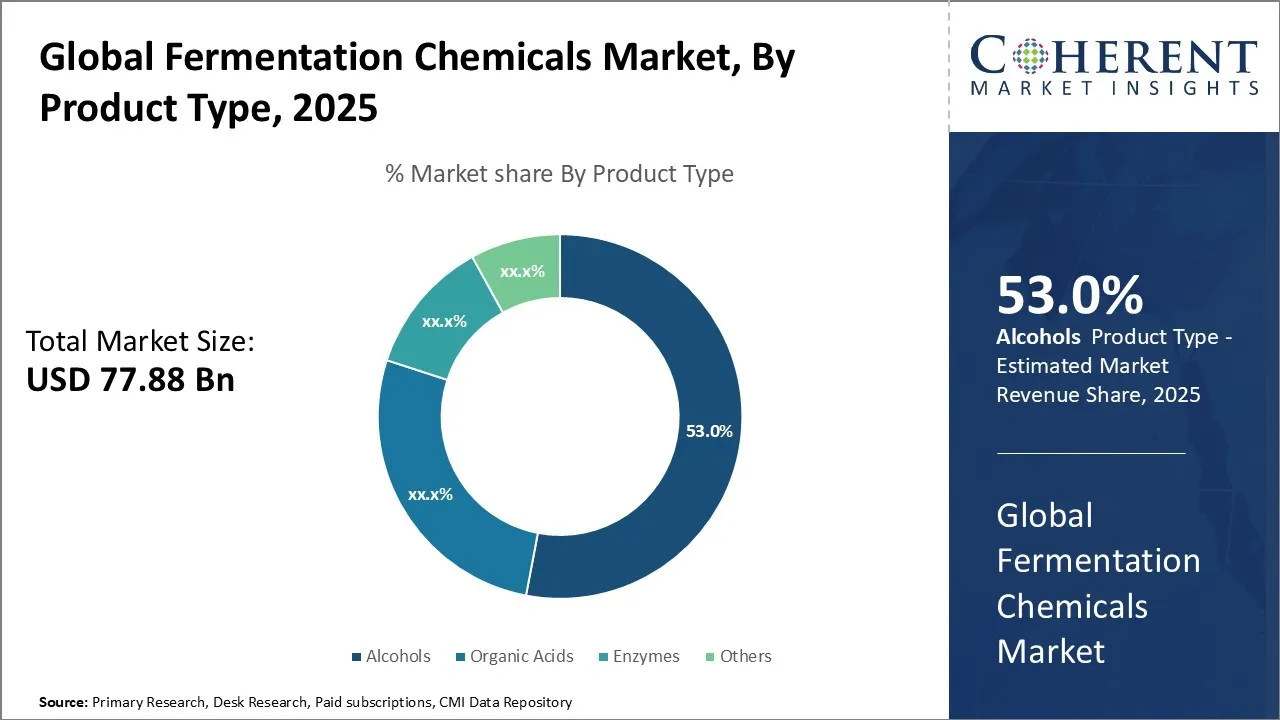
Fermentation Chemicals Market Insights, By Product Type - Alcohol Holds the Dominant Share owing to Wide Industrial Application
In terms of product type, the alcohol segment is expected to hold 54.0% share within the global fermentation chemicals market in 2026, primarily due to its wide range of industrial applications and strong global consumption trends. Ethanol, the most prominent type, is heavily used in alcoholic beverages, biofuels, pharmaceuticals, and industrial solvents. Its role as a clean-burning fuel additive has gained momentum, especially with many countries pushing for lower carbon emissions—making bioethanol a strategic product in energy transition plans.
In the pharmaceutical sector, ethanol acts as a key ingredient in sanitizers, tinctures, and drug formulations. Meanwhile, rising demand for alcoholic beverages, particularly in emerging economies with growing middle-class populations, is also driving production. Additionally, the alcohol segment benefits from relatively simple and cost-effective fermentation processes, which make it easier to scale production across regions. All of this contributes to the alcohol segment being one of the most commercially viable and fast-growing areas in the fermentation chemicals space.
In May 2025, Grupo Modelo introduced Model0%, a low-alcohol beer with 0.4% ABV, created using a proprietary yeast that completes fermentation while preserving the traditional Modelo flavor. The launch includes two variants—Model0% Dorada and Model0% Negra—both crafted with the brand’s signature ingredients and fermentation process.
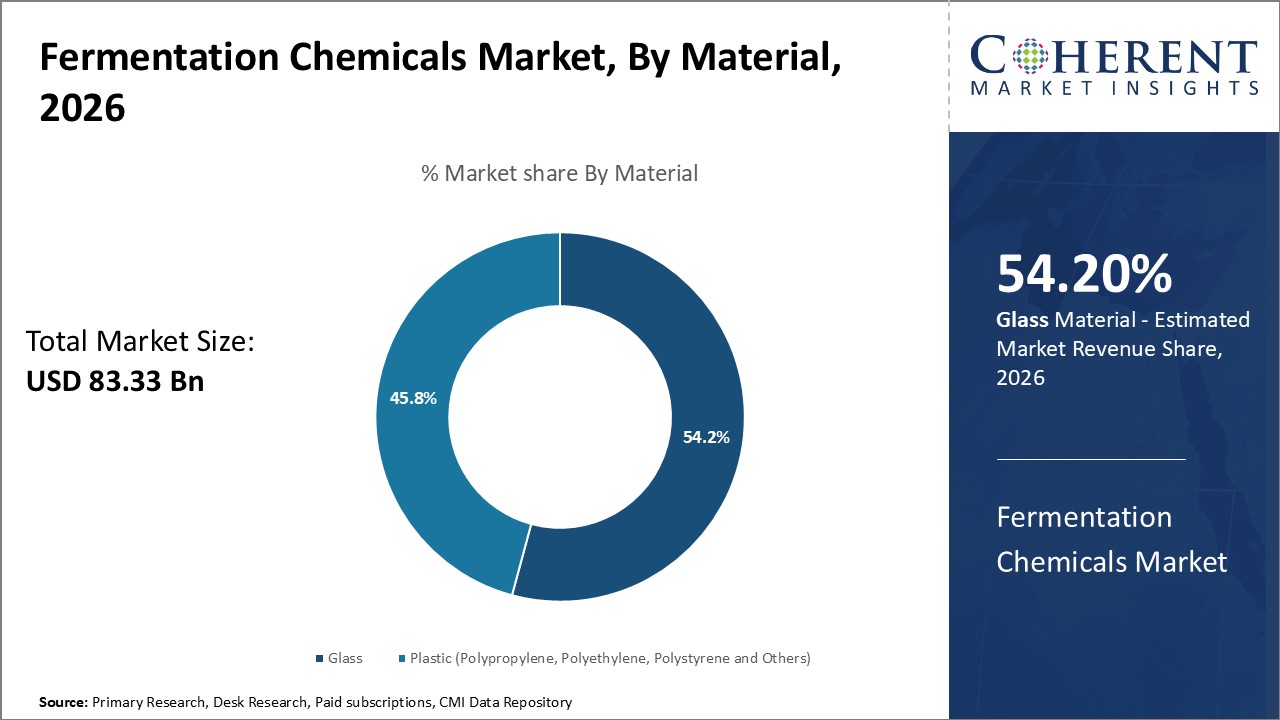
Fermentation Chemicals Market Insights, By Application - Industrial Application Holds the Largest Share
In terms of application, the industrial application is set to capture the dominating shares of the market in 2026, due to increasing adoption of bio-based and eco-friendly alternatives across various sectors. As industries shift away from petrochemical-derived products, fermentation chemicals such as bio-alcohols, organic acids, and enzymes are being widely used in the production of biodegradable plastics, green solvents, and bio-lubricants. This shift is supported by stringent environmental regulations and the global push for sustainable manufacturing. Additionally, fermentation processes offer cost-effective and scalable production solutions, making them attractive for large-scale industrial applications. Key industries such as textiles, pulp & paper, and detergents are increasingly using fermentation-derived enzymes to enhance efficiency, reduce energy consumption, and minimize environmental impact. These factors are driving robust demand for fermentation chemicals within the industrial segment.
In January 2025, Norwex introduced its latest laundry innovation, PowerZyme™, an ultra‑concentrated enzyme‑based detergent powder that harnesses potent enzymes and plant‑based surfactants to tackle stubborn stains and odors with minimal chemicals.
Regional Insights
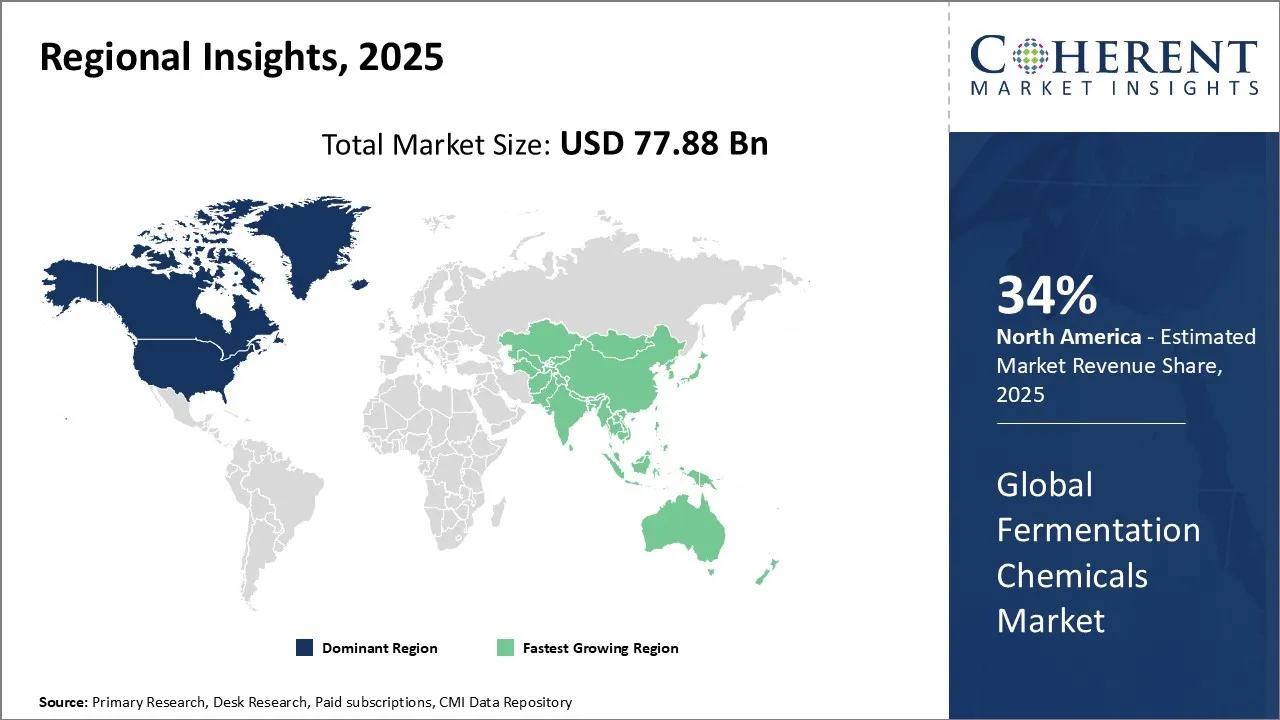
North America Fermentation Chemicals Market Analysis & Trends
North America is region is projected to lead the market with 34% share in 2026, driven by a combination of industrial maturity, innovation in biotechnology, and sustainability-focused regulations. One key factor is the region’s strong presence of bio-based industries, including biofuels, bioplastics, and organic food production, which extensively use fermentation-derived compounds such as ethanol, citric acid, and amino acids.
For Instance, in March 2026, the Biotechnology Innovation Organization (BIO) unveiled a new report highlighting the enormous economic impact of the U.S. bioeconomy. The study reveals that America’s bioeconomy contributes approximately $210 billion in direct economic activity, with indirect and induced benefits pushing total impact beyond $830 billion, and supports 430,000 jobs across agriculture, food, manufacturing and biotechnology industries. BIO projects that by 2030, biobased products and plant/animal biotech could generate up to $400 billion in annual economic output.
Additionally, the U.S. and Canada host some of the world's leading biotechnology companies, which are actively developing microbial fermentation processes for pharmaceuticals, enzymes, and specialty chemicals. Rising demand for clean-label food ingredients, coupled with a growing trend toward plant-based and natural additives, further fuels the fermentation chemicals market demand in food and beverage applications.
Asia Pacific Fermentation Chemicals Market Analysis & Trends
Asia Pacific is expected to exhibit the fastest growth in the market during the forecast period. The region’s expansion is witnessed due to expanding consumer markets and supportive government policies. Rapid industrialization in countries like China, India, and South Korea is driving the need for fermentation-based products in sectors such as chemicals, pharmaceuticals, textiles, and biofuels.
Additionally, the growing food and beverage industry across the region, fueled by a rising middle class and changing dietary habits, is increasing the consumption of fermentation chemicals like citric acid, enzymes, and amino acids.
The pharmaceutical and nutraceutical sectors are also witnessing high demand for fermentation-based ingredients due to increasing healthcare awareness and the rise in chronic diseases. Furthermore, governments across Asia Pacific are promoting sustainability and bio-based manufacturing, encouraging the adoption of fermentation processes as eco-friendly alternatives to synthetic chemical production. Combined with the region's cost-effective manufacturing environment and skilled workforce, these factors are significantly boosting Fermentation Chemicals Market demand in Asia Pacific.
For instance, in March 2026, AGAE Technologies launched the largest rhamnolipid biosurfactant production facility in Asia, marking a significant milestone in sustainable surfactant manufacturing. The newly retrofitted plant spans 41,000 ft² and can yield over 1,000 metric tonnes annually, enabling the company to meet surging global demand for eco‑friendly alternatives to petrochemical surfactants. Rhamnolipids are biodegradable, low‑toxicity glycolipid surfactants which are increasingly used across personal care, agriculture, environmental remediation, oil recovery, and pharmaceutical applications.
Fermentation Chemicals Market Outlook Country-Wise
The U.S. Fermentation Chemicals Market Trends
The United States is a key demand center in the fermentation chemicals market due to its strong biotech and food-tech industries. High usage in pharmaceuticals, personal care, and sustainable bioplastics drives demand. The country leads in precision fermentation, with growing applications in specialty enzymes, recombinant proteins, and alternative proteins for plant-based and cultured foods. Supportive R&D infrastructure and consumer preference for eco-friendly products further fuel fermentation chemicals market growth.
China Fermentation Chemicals Market Trends
China is a major driver in the fermentation chemicals market due to its vast manufacturing base and strong demand from the pharmaceutical, food processing, and biotech industries. High consumption of amino acids, citric acid, enzymes, and ethanol for biofuels supports growth. Additionally, China’s cultural use of traditional fermented foods and government support for bio-based industries further boost fermentation chemicals market demand.
Market Report Scope
Fermentation Chemicals Market Report Coverage
| Report Coverage | Details | ||
|---|---|---|---|
| Base Year: | 2025 | Market Size in 2026: | USD 83.33 Bn |
| Historical Data for: | 2020 To 2024 | Forecast Period: | 2026 To 2033 |
| Forecast Period 2026 to 2033 CAGR: | 7.0%2033 Value Projection: | USD 133.81 Bn | |
| Geographies covered: |
| ||
| Segments covered: |
| ||
| Companies covered: | Ajinomoto Company Corporation, AB Enzymes, BASF SE, Amano Enzymes Inc., Dow Chemicals, Archer Daniels Midland Company, Novozymes A/S, Cargill Incorporation, Evonik Industries AG, Du Pont Danisco A/S, and DSM | ||
| Growth Drivers: |
| ||
| Restraints & Challenges: |
| ||
Fermentation Chemicals Market Drivers
- Growing demand for fermentation chemicals from the pharmaceutical industry
Strong demand for fermentation chemicals from the pharmaceutical industry is expected to drive the fermentation chemicals market research and growth. These chemicals are used in the production of formulation such as anti-acne solutions, parenteral solutions, and ointments. Moreover, it is used in the manufacturing of calcium drugs that are used to treat calcium deficiency problems. Thus, rapid growth in the pharmaceutical industry is expected to drive the market growth of Fermentation Chemicals.
Fermentation Chemicals Market Opportunity
- High demand for bio-based products
The market is driven by the increasing use of fermentation chemicals in food, pharmaceutical, and plastic manufacturing. High demand for bio-based feedstocks, especially in industrial biotechnology, is expected to boost demand for fermentation chemicals. Demand for methanol and ethanol also contributes to the fermentation chemicals market growth. Demand for various organic acids from textile and plastic manufacturers is expected to influence the market growth. Fermentation chemicals are considered to be environmentally friendly, beneficial, and inexpensive as compared to petroleum-derived chemicals. These factors collectively shape a strong fermentation chemicals market forecast for the coming years.
Fermentation Chemicals Market Trends
- Demand for polymer industry
Growing polymer industry due to increasing disposable income and improving standard living of the consumers is expected to drive the market growth. These chemicals are widely used as additives in the production of polymers. Again, it is anticipated that rising consumer spending and a changing industrial application trend toward high-performance polymers will fuel the market expansion of fermentation chemicals.
Growing demand for enzymes from various industries is expected to drive the market growth. Enzymes are widely used skin glow across personal care and cosmetic industry in the production of cosmetic products. A growing sense of fashion coupled with increasing awareness regarding the personal hygiene and aspire to look presentable is driving demand for cosmetic and personal care products. This boosts demand for enzymes, and this is expected to drive the market growth of the fermentation chemicals.
Analyst Opinion (Expert Opinion)
The fermentation chemicals market value is undergoing a critical transition, pivoting from traditional bulk applications to highly specialized, value-driven end-uses. This shift is not merely reflective of downstream demand dynamics but is, in fact, structurally redefining the competitive landscape of the industry. The commoditization of alcohols and enzymes, once the bedrock of fermentation output has made margin expansion unsustainable for players that rely solely on volume. This has intensified the need for vertical integration and downstream collaboration with formulators and application developers.
A notable inflection point is visible in biopolymer production. Lactic acid, traditionally associated with food and beverage applications, is now in high demand for biodegradable plastics like polylactic acid (PLA), with companies such as NatureWorks and Total Corbion rapidly scaling production capacities in the U.S. and Europe. This represents a clear example of fermentation chemicals being redefined as platform intermediates in green chemistry ecosystems.
Similarly, the performance materials segment is leveraging fermentation for specialty surfactants, cosmetic actives, and pharmaceutical excipients. Evonik’s investment in rhamnolipid biosurfactants and DSM-Firmenich’s expansion into precision fermentation for cosmetic peptides demonstrate a decisive pivot towards high-purity, low-volume, high-margin niches. This underscores the critical need for fermentation players to invest in bioprocess intensification, advanced downstream purification, and microbial strain IP portfolios.
Further, there is a noticeable decoupling of fermentation chemical growth from traditional feedstock economics. While corn and sugar prices still influence ethanol or citric acid production in countries like Brazil and China, synthetic biology is enabling the use of lignocellulosic biomass and even gaseous substrates like CO₂ or methane for fermentation, an innovation exemplified by companies like LanzaTech and Avantium.
Speak to the analyst
Want personalized insights?
Take the findings above to one of our principal consultants, or have the report rebuilt around the segments, geographies and competitors you actually track.
Recent Developments
- In July 2025, LanzaJet’s ethanol‑to‑jet fuel plant in Soperton, Georgia touted as the world’s first commercial facility announced to begin operations by the end of 2025. The USD 200 million plant will convert low‑carbon ethanol into sustainable aviation fuel (SAF) and renewable diesel, targeting an annual output of approximately 9 million gallons of SAF and 1 million gallons of renewable diesel in its first year.
- In May 2025, DMC Biotechnologies announced the commercial launch of fermentation‑derived myo‑inositol, produced via a solvent‑free, biologically based process that delivers superior purity and reduced environmental impact compared to conventional chemical synthesis.
- In May 2025, Symbiotec unveiled a major expansion into fermentation‑based biomanufacturing, aiming to elevate protein production with industrial‑scale microbial fermentation. The company plans to build a fully integrated facility designed for high‑volume output of bio‑based proteins, targeting markets from food to industrial enzymes.
- In February 2025, International Process Plants (IPP) finalized a lease agreement with Nuol Green Chemistry for its 40‑million‑gallon‑per‑year fermentation plant in Little Falls, Minnesota. The facility, capable of producing biobased acetone and butanol, will support Nuol’s expansion into sustainable chemical manufacturing. Nuol will leverage the plant to ramp up production of advanced bio‑based solvents, marking a significant step forward in renewable chemical supply chains.
Market Segmentation
- Global Fermentation Chemicals Market, By Product Type (Revenue, USD Bn, 2021 - 2033)
- Alcohols
- Enzymes
- Organic Acids
- Others
- Global Fermentation Chemicals Market, By Application (Revenue, USD Bn, 2021 - 2033)
- Industrial Application
- Food & Beverages
- Nutritional & Pharmaceuticals
- Plastics & Fibers
- Others
- Global Fermentation Chemicals Market, By Region (Revenue, USD Bn, 2021 - 2033)
- North America
- U.S.
- Canada
- Europe
- U.K.
- Germany
- Italy
- Spain
- France
- Russia
- Rest of Europe
- Asia Pacific
- China
- Japan
- India
- South Korea
- ASEAN
- Australia
- Rest of Asia Pacific
- Rest of the World
- Middle East
- GCC
- Israel
- Rest of Middle East
- Africa
- North Africa
- Central Africa
- South Africa
- North America
- Key Companies
- Ajinomoto Company Corporation
- AB Enzymes
- BASF SE
- Amano Enzymes Inc.
- Dow Chemicals
- Archer Daniels Midland Company
- Novozymes A/S
- Cargill Incorporation
- Evonik Industries AG
- Du Pont Danisco A/S
- DSM
Sources
Primary Research Interviews from the following stakeholders
Stakeholders
- Interviews with chemical manufacturers, process engineers, bio-refinery operators, R&D scientists, sustainability leads, procurement managers, and logistics heads across key global markets.
Specific Stakeholders
- Process heads at bioplastics and biofuels manufacturers
- Production managers at organic acid and enzyme producers
- Sustainability leads at F&B companies utilizing fermentation-based ingredients
- Procurement officers at agro-based feedstock processors
- R&D managers at pharmaceutical and nutraceutical firms using fermentation derivatives
- Plant engineers and technical heads at specialty chemical firms using bio-based solvents, surfactants, and resins
Databases
- UN Industrial Commodity Statistics Database
- OECD Statistics – Bioeconomy Indicators
- U.S. Energy Information Administration (EIA) – Biofuels & Ethanol Data
- European Environment Agency (EEA) – Bio-based Products and GHG Data
- India Ministry of Chemicals and Fertilizers – Chemical Industry Statistics
- Food and Agriculture Organization (FAO) – Biomass and Feedstock Production
- China Statistical Yearbook – Agro-Processing and Biochemical Sector
- Global Trade Atlas – Organic Chemicals Trade Data
- Eurostat – Biotech and Chemical Manufacturing Indicators
Magazines
- Chemical Engineering
- Biofuels International
- The Chemical Engineer (IChemE)
- Biotechnology Focus
- Bio-Based News
- FoodNavigator – Ingredients & Functional Fermentation
- AgFunder News – Fermentation and Synthetic Biology
- Paints & Coatings Industry (PCI Magazine) – Bio-based Resin and Additives
- Green Chemistry News
Journals
- Journal of Industrial Microbiology & Biotechnology
- Bioresource Technology
- Biochemical Engineering Journal
- Applied Microbiology and Biotechnology
- Journal of Cleaner Production
- Trends in Biotechnology
- Biotechnology Advances
- ChemSusChem
- International Journal of Biological Macromolecules
Newspapers
- The Wall Street Journal – Chemical & Bioeconomy Focus
- Financial Times – CleanTech and Bio-Industry Reports
- The Hindu Business Line – Bio-based Economy & Agriculture
- The Economic Times – Specialty Chemicals and Manufacturing
- Nikkei Asia – Sustainable Manufacturing and Bio-innovation
- South China Morning Post – Agro-Chemical and Biotech Developments
Associations
- Biotechnology Innovation Organization (BIO)
- European Federation of Biotechnology (EFB)
- Biobased and Renewable Products Advocacy Group (BRAG)
- Society for Industrial Microbiology and Biotechnology (SIMB)
- American Chemical Society (ACS) – Green Chemistry Institute
- Confederation of Indian Industry (CII) – Bioeconomy and Chemicals
- Chemical Industries Association (UK) – Sustainable Chemical Manufacturing
- Industrial Biotechnology Innovation Centre (IBioIC), UK
Public Domain Sources
- U.S. Department of Agriculture (USDA) – BioPreferred Program
- Ministry of Renewable Energy (India) – Biofuel & Biomass Policies
- European Commission – Circular Bioeconomy Strategy Documents
- U.S. Department of Energy (DOE) – Fermentation and Biochemical Pathway Reports
- National Renewable Energy Laboratory (NREL) – Bio-based Materials and Energy Reports
- India's Department of Biotechnology – Industrial Biotech Schemes
- Japan Ministry of Economy, Trade and Industry (METI) – Biochemical Policy Updates
- India's Ministry of Environment, Forest and Climate Change – Green Chemistry Policies
- International Energy Agency (IEA) – Bio-based Feedstocks and Fuels Reports
Proprietary Elements
- CMI Data Analytics Tool, and Proprietary CMI Existing Repository of information for last 8 years
*Definition: Fermentation chemicals are used to initiate the chemical reactions for synthesis of various chemicals. These act as a catalyst or initiators to control the speed of the chemical reaction. These chemicals are widely used in food processing industry for the preparation of food products. Moreover, these are also used in the production of Vitamins.
Get access to 250+ pages report
Every segment, forecast, competitor profile and data table behind the analysis above — available for instant download.
- ESOMAR Member
- ISO 9001:2015 Certified
- D-U-N-S Registered
- GDPR & CCPA Compliant
Missing comfort of reading report in your local language? Find your preferred language:
Transform your Strategy with Exclusive Trending Reports
Frequently Asked Questions
The Fermentation Chemicals Market is estimated to be valued at USD 83.33 Bn in 2026, and is expected to reach USD 133.81 Bn by 2033.
The CAGR of the Fermentation Chemicals Market is projected to be 7.0% from 2026 to 2033.
Growing demand for fermentation chemicals from the pharmaceutical industry is expected to drive the market growth.
Key Companies are Ajinomoto Company Corporation, AB Enzymes, BASF SE, Amano Enzymes Inc., Dow Chemicals, Archer Daniels Midland Company, Novozymes A/S, Cargill Incorporation, Evonik Industries AG, Du Pont Danisco A/S, and DSM.
High cost associated with the fermentation of lactic acids is restricting its use across the dairy industry, and this is expected to hamper the market growth.
Yes, fermentation chemicals are cost-effective due to renewable feedstocks, energy-efficient production, and scalability across multiple end-use industries.
Yes, many fermentation chemicals can receive organic certifications if produced using non-GMO organisms and certified organic raw materials.