

High Pressure Processing Equipment Market Analysis & Forecast: 2026-2033
Global high pressure processing equipment market is estimated to be valued at USD 340.5 Mn in 2026 and is expected to reach USD 752.7 Mn by 2033, exhibiting a compound annual growth rate (CAGR) of 12.0% from 2026 to 2033.
Key Takeaways:
- By capacity, the above 300 liters segment is projected to hold 68% of the high pressure processing equipment market in 2026, reflecting its critical role in large-scale food and beverage processing operations.
- By application, fruits & vegetables, juice & beverages, and meat segments dominate the high pressure processing market due to growing consumer demand for fresh, minimally processed products with extended shelf life.
- By Vessel Arrangement, Horizontal systems are widely preferred for their ease of loading and unloading large volumes.
- By Region, North America represents the largest regional HPP equipment market, projected to hold 45% of global market share in 2026, fueled by a mature food processing industry, extensive adoption of HPP for safety and preservation, and strong R&D investment from leading manufacturers headquartered in the U.S. and Canada.
- Asia Pacific is the fastest-growing regional maarket for high pressure processing (HPP) equipment, projected to hold 21.6% of the global market share in 2026, driven by rapid urbanization, rising health awareness, and an expanding middle class in countries.
- Europe is expected to account for 25.6% of the global HPP equipment market in 2026, driven by modernization of food processing facilities, stringent food safety regulations, and consumer demand for high-quality, minimally processed products.
Market Overview
The Global High Pressure Processing Equipment Market is anticipated to experience significant growth owing to the increased need for high shelf life and fresh-like products. The growing popularity of high pressure processing owing to its significant advantages over thermal pasteurization, which include less impact on the sensory and nutritional value of foods, is a major driving factor. Furthermore, the growing health-conscious population and rising investments from industry stakeholders are some of the core factors likely to support increased demand for high pressure processing equipment.
Current Events and Its Impact
Event | Description and Impact |
Global Food Safety Regulatory Tightening |
|
Supply Chain Disruptions and Raw Material Shortages |
|
Technological Advancement in Alternative Processing Methods |
|
Global High Pressure Processing Equipment: Pricing Analysis
High Pressure Processing (HPP) equipment enables non-thermal pasteurization, extending shelf life while preserving nutrition and flavor. Global prices range from $500,000 to $3.5 million, influenced by vessel capacity (35–525L), pressure (up to 87,000 PSI), automation, throughput, and regulatory compliance.
Premium manufacturers like Hiperbaric (Spain) and Avure Technologies (USA) dominate the market, offering systems from $750,000 to $3.2 million, with advanced automation and proven reliability. Mid-tier players such as Kobe Steel (Japan) and Multivac (Germany) provide competitively priced, custom-engineered solutions, typically 15–20% below premium equivalents.
Small-scale systems (35–87L) cost $500,000–$1.2 million, targeting small to medium processors, with ROI in 3–5 years. Medium-scale systems (135–196L) range $1.2–$2.3 million, offering higher throughput and automation for regional manufacturers.
- Current Industry Events of 2026
- Market Size Estimation
- Regional Breakdown
- Competitive Landscape
- Customer Intelligence
- Segmental Analysis
- Pricing Analysis
- Key Market Drivers, Challenges & Future Trends
- Customized Insights Section
Segmental Insights
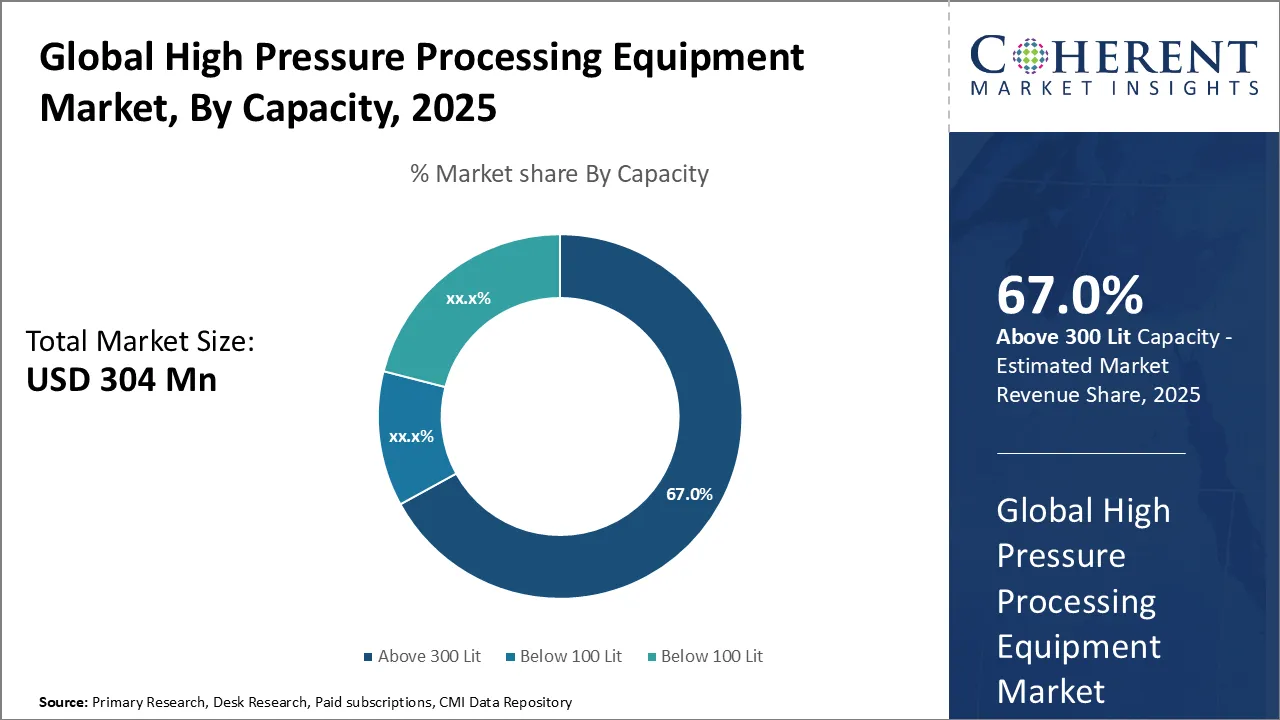
High Pressure Processing Equipment Market Insights, By Capacity: Above 300 Liters Segment Dominates Market Share
By capacity, the above 300 liters segment is projected to hold 68% of the high pressure processing equipment market in 2026, reflecting its critical role in large-scale food and beverage processing operations. These high-capacity systems enable efficient, uniform processing while maintaining product quality and extending shelf life, making them indispensable for commercial applications. Leading manufacturers in Europe, North America, and Asia are focusing on scalable, energy-efficient equipment to meet increasing industrial demand.
For instance, in February 2025, Refrigerated & Frozen Foods reported that unlike traditional heat methods, High Pressure Processing (HPP) uses cold pasteurization with ultra-high pressure purified water — subjecting foods to nearly 90,000 pounds per square inch — effectively destroying harmful bacteria such as Listeria, E. coli, and Salmonella while maintaining freshness, taste, and nutritional value
The 100–300 liters segment accounts for 24.3% of the market, driven by mid-sized processors looking for versatile systems capable of handling moderate production volumes with minimal downtime. Meanwhile, equipment below 100 liters holds an 8.7% market share, catering primarily to research, pilot-scale, and specialty food applications where precision and flexibility are key.
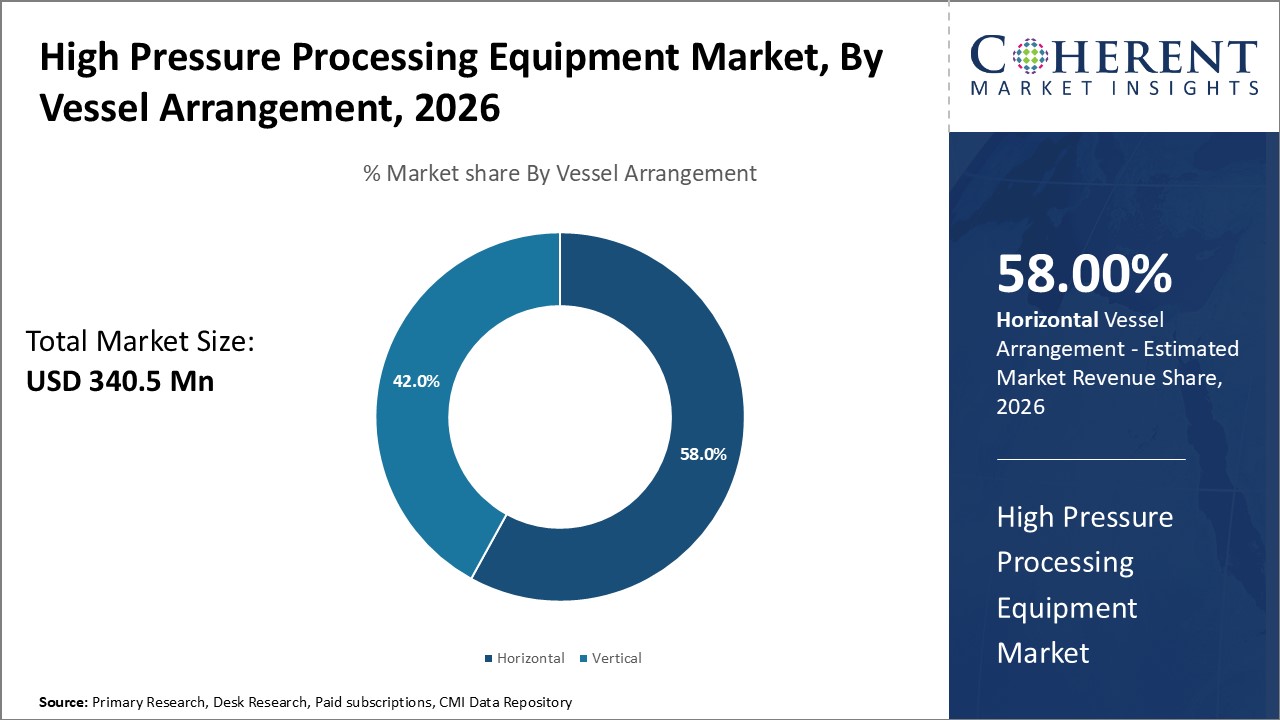
High Pressure Processing Equipment Market Insights, By Vessel Arrangement: Dominance of Horizontal over Vertical HPP Equipment
High pressure processing equipment is available in both horizontal and vertical vessel arrangements. Horizontal high-pressure processing (HPP) equipment is the dominant segment in the market. Horizontal systems are widely preferred for their ease of loading and unloading large volumes, while vertical systems offer compact footprints and efficient integration into automated production lines. Manufacturers are optimizing both configurations to improve energy efficiency, throughput, and operator safety. For instance, in July 2024, it was highlighted that horizontal HPP systems are preferred in large-scale production plants due to their ability to handle higher throughput and efficient loading, whereas vertical systems remain ideal for tolling services and smaller-scale operations due to space constraints and modularity
High Pressure Processing Equipment Market Insights, By Application: Fruits & Vegetables, Juice & Beverages, and Meat Lead Adoption
By application, fruits & vegetables, juice & beverages, and meat segments dominate the high pressure processing market due to growing consumer demand for fresh, minimally processed products with extended shelf life. Seafood and other specialty products are also increasingly processed using HPP technology to meet stringent safety standards and retain natural flavors. Companies are investing in tailored solutions for each product type, leveraging innovations such as adaptive pressure cycles and temperature control systems to maximize product quality and operational efficiency.
For instance, at the Seafood Expo Global held in Barcelona from April 23 to 25, Hiperbaric showcased the benefits of HPP technology for seafood products. The non-thermal process effectively inactivates pathogens such as Vibrio species and Norovirus in bivalves and crustaceans, ensuring food safety and extending shelf life without the need for additives or preservatives. Additionally, HPP facilitates the extraction of 100% raw meat from shellfish by relaxing the adductor muscles, enhancing yield and reducing labor costs
Regional Insights
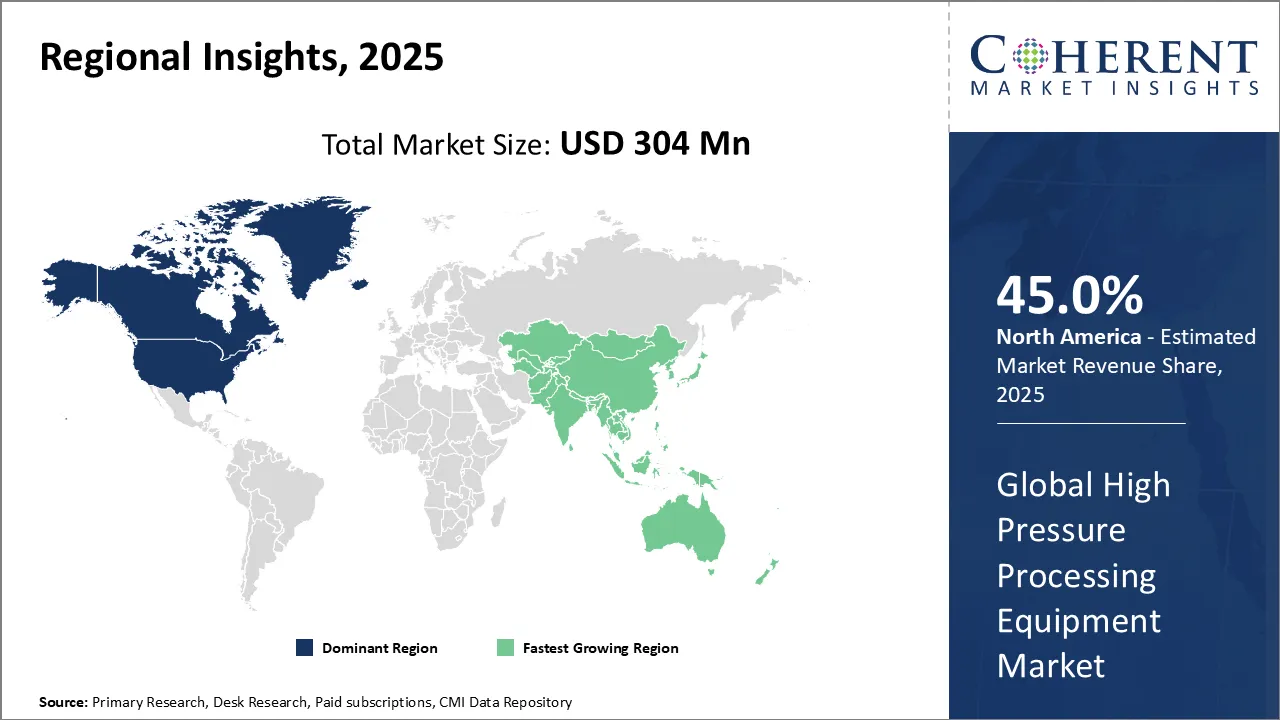
North America High Pressure Processing Equipment Market Trends
North America represents the largest regional HPP equipment market, projected to hold 45% of global market share in 2026. Growth is fueled by a mature food processing industry, extensive adoption of HPP for safety and preservation, and strong R&D investment from leading manufacturers headquartered in the U.S. and Canada. Stringent regulatory standards for food safety and quality further drive market expansion. For instance, in February 2024, Squeezed, a juice company, installed a Hiperbaric 525L HPP system, the most productive unit with a 525-liter capacity, capable of processing over 8,000 pounds per hour. This move exemplifies North America's leadership in adopting and providing HPP equipment and services.
Asia Pacific High Pressure Processing Equipment Market Trends
Asia Pacific is the fastest-growing regional market for high pressure processing (HPP) equipment, projected to hold 21.6% of the global market share in 2026. Growth is driven by rapid urbanization, rising health awareness, and an expanding middle class in countries such as China, India, and Japan, which are increasingly demanding convenient, ready-to-eat, and minimally processed foods. For instance, in June 2024, Henan Shangpin Food Co., Ltd., a Chinese meat processor, announced plans to install a High Pressure Processing (HPP) system from Quintus Technologies. This move aligns with China's broader efforts to enhance food safety and quality through advanced preservation technologies. The adoption of HPP technology is part of a growing trend among Chinese food manufacturers to meet clean-label demands and extend product shelf life without the use of preservatives.
Global HPP equipment manufacturers are establishing localized production facilities to serve this growing demand. Cost advantages in labor and raw materials in countries like China and India make the region a strategic hub for both domestic production and exports. Technology transfers from international players are enabling local manufacturers to offer customized HPP solutions for small and medium-sized food enterprises.
Europe High Pressure Processing Equipment Market Trends
Europe is expected to account for 25.6% of the global HPP equipment market in 2026, driven by modernization of food processing facilities, stringent food safety regulations, and consumer demand for high-quality, minimally processed products. European manufacturers are focusing on sustainability, efficiency, and regulatory compliance while integrating advanced HPP technologies. For instance, In June 2024, the European Union launched the FutureFoodS partnership to coordinate and leverage European and national research and innovation efforts aimed at future-proofing food systems. This initiative aligns with Europe's focus on innovation, sustainability, and adherence to strict food safety standards.
Global Hydro Turbine Generator Unit Market Outlook: Country-Wise
China High Pressure Processing Equipment Market TrendsChina is the largest contributor to the Asia Pacific HPP market, driven by rising demand for processed meats, beverages, and ready-to-eat foods. Growth is fueled by investments from both domestic and global manufacturers establishing local production facilities. Cost advantages in labor and raw materials support China’s role as a hub for regional exports. For instance, In June 2024, Quintus Technologies announced that FRUBAÇA, a Chinese juice processor, had invested in their High Pressure Processing (HPP) technology to expand clean-label juice processing capabilities. This move reflects China's strategic emphasis on adopting advanced food preservation technologies to enhance shelf life, maintain nutritional quality, and meet clean-label standards, underscoring the nation's growing role in the Asia Pacific market
United States High Pressure Processing Equipment Market TrendsThe United States is a key contributor to North America’s HPP market, driven by a mature food processing industry and strict food safety regulations. Demand is supported by both new installations and upgrades of existing HPP lines. Leading global players, including Avure Technologies and Hiperbaric, continue to expand their manufacturing and service capabilities in the U.S. to ensure timely delivery of advanced HPP systems. For instance, In February 2024, JBT Corporation highlighted the growing adoption of High Pressure Processing (HPP) technology among U.S. meat and poultry producers. The company emphasized that HPP serves as a clean-label solution for sterilizing meat products without compromising flavor, color, or texture. This trend underscores the industry's commitment to enhancing food safety and shelf life while meeting consumer demand for minimally processed foods.
India High Pressure Processing Equipment Market TrendsIndia is an emerging contributor to the Asia Pacific HPP market, driven by urbanization, growing health awareness, and rising demand for packaged and ready-to-eat foods. Growth is supported by cost-effective and small-scale HPP solutions tailored for small and medium-sized food enterprises. For instance, In July 2026, India’s food processing industry is increasingly adopting high-pressure processing (HPP) technology, alongside AI-based grading, blockchain traceability, and cryogenic freezing, to enhance product quality, operational efficiency, and global competitiveness in processed foods. This reflects the sector’s growing focus on innovation, clean-label products, and advanced preservation technologies amid rapid industry expansion
Market Report Scope
High Pressure Processing Equipment Market Report Coverage
| Report Coverage | Details | ||
|---|---|---|---|
| Base Year: | 2025 | Market Size in 2026: | USD 340.5 Mn |
| Historical Data for: | 2020 To 2024 | Forecast Period: | 2026 To 2033 |
| Forecast Period 2026 to 2033 CAGR: | 12.0% | 2033 Value Projection: | USD 752.7 Mn |
| Geographies covered: |
| ||
| Segments covered: |
| ||
| Companies covered: | Hiperbaric S.A, Stansted Fluid Power Ltd, Avure Technologies, Multivac Group, Bau Tou KeFA High Pressure Technology Co., Ltd | ||
| Growth Drivers: |
| ||
| Restraints & Challenges: |
| ||
Market Driver - Growing demand for safe and minimally processed food products
The food processing industry has seen a significant rise in demand for products that undergo minimal processing and are deemed safe for consumption. With growing health consciousness among consumers, especially in western nations, there is increased focus on products with cleaner labels and those that do not involve extensive use of preservatives, chemicals, or high temperatures during processing. High pressure processing has emerged as an attractive non-thermal pasteurization technology to address these needs. Several types of fresh produce, meats, seafood, and prepared foods that are high pressure processed have gained widespread popularity among health-conscious consumers.
The technology allows manufacturers to pasteurize thick foods and those with low acidity, which were previously very difficult to preserve without thermal treatment. It has proven effective in significantly extending the shelf life of fresh and minimally processed products while maintaining their raw-like nutritional and sensorial qualities. This has encouraged many companies dealing in fresh noodles, dressed salads, smoothies, guacamole and other dips to switch to HPP. It is also enabling processors to tap into the growing demand for extended shelf life ready meals and portions that can be easily reheated and consumed. The availability of high capacity and continuous flow HPP systems further helps address this demand from mass caterers and foodservice providers. With more studies validating its efficacy as a non-thermal pasteurization technology, high pressure processing equipment sales are expected to steadily grow alongside the booming market for minimally processed and fresh prepared foods.
For instance, on June 30, 2025, ICPG highlighted how High Pressure Processing (HPP) is rapidly gaining traction across food categories such as ready-to-eat meals, cold-pressed juices, fresh dips, baby food, and plant-based proteins. The technology enables pathogen control, extends refrigerated shelf life by two to three times, and preserves flavor, texture, and nutrients—all without heat or preservatives. ICPG’s recyclable XPP® polypropylene packaging solutions were showcased as engineered to withstand the extreme pressure of HPP while ensuring seal integrity, barrier protection, and sustainability.
Increasing adoption of high-pressure processing in the beverage industry
The beverage industry has exhibited strong growth worldwide, especially driven by the rising consumption of juices, alternative milks and other drinkables. However, pasteurization of these products via conventional thermal technologies often leads to loss of flavors, colors and nutrients. High pressure processing is gaining prominence as a superior non-thermal alternative for maintaining the critical quality attributes that consumers seek in beverages. Its ability to effectively inactivate pathogenic microorganisms without compromising the taste and nutritional value of beverages has persuaded many juice, coconut water and plant milk producers to adopt HPP. It allows creating longer shelf life products while retaining their fresh, raw food-like characteristics. This has helped brands strengthen their value propositions based on minimal processing.
Continuous flow HPP systems tailored for liquid applications have enhanced the technology's scalability and efficiency for large scale beverage processing. Their installation is growing across major juice and dairy facilities globally. Recently, craft brewers and cider makers have also started incorporating HPP into their pasteurization operations, helping address the challenges associated with thermal pasteurization of beer and cider. The approval of HPP by food regulatory agencies worldwide for commercializing a wide range of treated beverages is further fueling its adoption momentum. As the natural and health beverage economy expands aggressively, driven by trends like clean labeling and plant-based diets, HPP equipment providers are well positioned to capture the investment needs of emerging and dominant brands looking to ensure safety without compromising purity.
For instance, on January 29, 2025, Health Canada issued a notification of no objection to A. Lassonde Inc. for the commercial use of high-pressure processing (HPP) on raw fruit juices such as apple, orange, cranberry, and blueberry. The juices were validated at 80,000 psi (≈550 MPa) for 1–9 minutes. Following a full toxicological, nutritional, and microbiological safety assessment, Health Canada concluded that the HPP-treated juices are as safe as conventionally pasteurized juices, and no labeling changes are required.
Analyst Viewpoint
- Global high pressure processing equipment market is experiencing steady growth driven by the increasing demand for processed and ready-to-eat food products among consumers. The market is gaining tremendous traction from food producers who are actively adopting HPP to preserve freshness and extend shelf life without use of preservatives. North America currently dominates the market owing to stringent food safety regulations and strong presence of major F&C players. Europe is expected to witness lucrative opportunities in the coming years supported by increasing consumer preference for natural and clean label products.
- However, high initial capital requirement for installation and modernization of HPP systems acts as a major barrier, especially for small and medium enterprises. Lack of awareness about food safety benefits of HPP technology in developing regions also restrains the market potential. But growing health-conscious population and improving economic conditions in Asia Pacific provide attractive opportunities for market participants. Adoption in non-food applications like vegetable extracts, beverages and botanical products will further support market expansion.
- Players are investing in R&D to develop integrated systems with enhanced processing capacities and compatible packaging solutions. Collaboration with F&B companies and regulatory approval for new application areas are some key strategies adopted. The future outlook remains positive with continued technology advancements and expansion of application scope beyond traditional product segments.
Speak to the analyst
Want personalized insights?
Take the findings above to one of our principal consultants, or have the report rebuilt around the segments, geographies and competitors you actually track.
High Pressure Processing Equipment Industry News
- In July 2025, Hiperbaric announced the HPP Innovation Week 2025, a free online event designed to educate and connect professionals across the global food industry. The event featured live demonstrations, packaging and regulatory sessions, and business case studies, focusing on the transformative impact of HPP in advancing food safety and sustainability.
- In March 2025, GEA showcased its latest technological innovations at IFFA 2025 in Frankfurt, Germany, highlighting solutions for meat, alternative proteins, and cheese production. The company presented equipment designed to enhance efficiency, reduce energy consumption, and support sustainability, including advanced automation systems, cloud-connected monitoring, and IoT-ready machinery. These innovations empower food processors to optimize production, minimize waste, and lower greenhouse gas emissions, reflecting the growing global demand for sustainable and cost-effective food processing solutions
Market Segmentation
- Capacity Insights (Revenue, USD Mn, 2026 - 2033)
- 100 Lit
- 100 lit–300 lit
- Above 300 Lit
- Vessel Arrangement Insights (Revenue, USD Mn, 2026 - 2033)
- Horizontal
- Verticle
- Application Insights (Revenue, USD Mn, 2026 - 2033)
- Fruits & Vegetables
- Juice & Beverages
- Meat, Sea Food
- Others
- Regional Insights (Revenue, USD Mn, 2026 - 2033)
- North America
- U.S.
- Canada
- Latin America
- Brazil
- Argentina
- Mexico
- Rest of Latin America
- Europe
- Germany
- U.K.
- Spain
- France
- Italy
- Russia
- Rest of Europe
- Asia Pacific
- China
- India
- Japan
- Australia
- South Korea
- ASEAN
- Rest of Asia Pacific
- Middle East
- GCC Countries
- Israel
- Rest of Middle East
- Africa
- South Africa
- North Africa
- Central Africa
- North America
- Key Players Insights (Revenue, USD Mn, 2021 - 2033)
- Hiperbaric
- Stansted Fluid Power Ltd
- Avure Technologies
- Multivac Group
- Bau Tou KeFA High Pressure Technology Co., Ltd
Sources
Primary Research interviews
- Food Processing Equipment Manufacturers
- Food & Beverage Industry Experts
- High Pressure Processing Technology Providers
- Distributors & Suppliers of HPP Equipment
- Others
Magazines
- Food Engineering Magazine
- Processing Magazine
- Food Technology Magazine
- High Pressure Processing Magazine
- Others
Journals
- Journal of Food Engineering
- Innovative Food Science & Emerging Technologies
- Food Control
- Journal of Food Science
- Others
Newspapers
- The Economic Times (Food & Beverage section)
- The Wall Street Journal (Food Industry section)
- FoodNavigator-USA
- Food Manufacture
- Others
Associations
- Institute of Food Technologists (IFT)
- High Pressure Processing Alliance (HPPA)
- International Association for Food Protection (IAFP)
- Global Cold Chain Alliance (GCCA)
- Others
Public Domain sources
- U.S. Food & Drug Administration (FDA)
- European Food Safety Authority (EFSA)
- World Health Organization (WHO)
- United Nations Food and Agriculture Organization (FAO)
- Others
Proprietary Elements
- CMI Data Analytics Tool
- Proprietary CMI Existing Repository of information for last 8 years
*Definition: Global high pressure processing equipment market covers equipment used for high pressure processing of food and other products. It involves using ultra-high hydrostatic pressure to preserve and package foods without heat or chemical processing. The equipment includes horizontal and vertical high pressure processing (HPP) systems, valves, pumps and controls that are used to subject food and other products to extremely high pressure, ranging from 87,000 to 621,000 pounds per square inch. The equipment is used by food manufacturers, retailers and contract packagers to safely process ready-to-eat foods to eliminate pathogens and extend shelf life without changing the taste or quality.
Get access to 250+ pages report
Every segment, forecast, competitor profile and data table behind the analysis above — available for instant download.
- ESOMAR Member
- ISO 9001:2015 Certified
- D-U-N-S Registered
- GDPR & CCPA Compliant
Missing comfort of reading report in your local language? Find your preferred language:
Transform your Strategy with Exclusive Trending Reports
Frequently Asked Questions
The High Pressure Processing Equipment Market is estimated to be valued at USD 340.5 Mn in 2026, and is expected to reach USD 752.7 Mn by 2033.
The CAGR of the High Pressure Processing Equipment Market is projected to be 12.0% from 2026 to 2033.
Growing demand for safe and minimally processed food products and increasing adoption of high-pressure processing in the beverage industry are the major factors driving the growth of the global high pressure processing equipment market.
High initial investment costs for high pressure processing equipment and limited awareness of technology benefits among small manufacturers are the major factors hampering the growth of the global high pressure processing equipment market.
In terms of equipment type, batch processing equipment is estimated to dominate the market revenue share in 2026.
Hiperbaric S.A, Stansted Fluid Power Ltd, Avure Technologies, Multivac Group, Bau Tou KeFA High Pressure Technology Co., Ltd* are the major players.
North America is expected to lead the global high pressure processing equipment market.