

Luxury Perfumes Market Size and Forecast — 2026 - 2033
The Global Luxury Perfumes Market size is estimated to be valued at USD 15.7 billion in 2026 and is expected to reach USD 26.4 billion by 2033, exhibiting a compound annual growth rate (CAGR) of 7.8% from 2026 to 2033.
Overview
The luxury perfumes market is driven by rising disposable income, growing consumer preference for premium personal care products, and increasing demand for unique and long-lasting fragrances. Expanding urbanization and changing lifestyle trends, particularly among millennials and Gen Z consumers, continue to boost the adoption of high-end perfumes as status and fashion symbols. Celebrity endorsements, social media influence, and luxury brand marketing strategies further accelerate product demand globally. Additionally, the increasing popularity of niche and customized fragrances, coupled with growth in e-commerce and duty-free retail channels, supports market expansion. Innovation in sustainable packaging and natural ingredients also strengthens consumer interest in luxury perfumes worldwide.
Key Takeaways
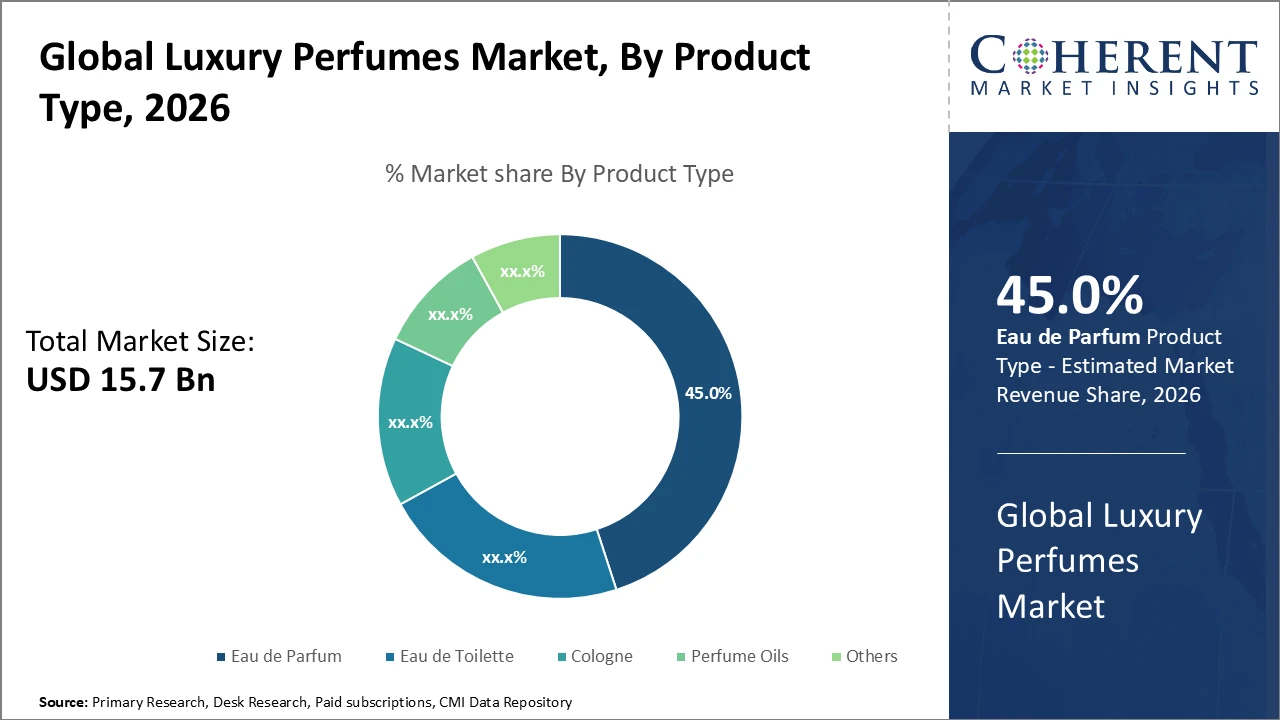
By product segment, Eau de Parfum dominates the market with 45% share due to its long-lasting fragrance appeal, while niche perfumes are the fastest-growing subsegment driven by personalization trends.
Women comprise the majority share at 60%, supported by premiumization trends and diversified fragrance portfolios targeting female consumers.
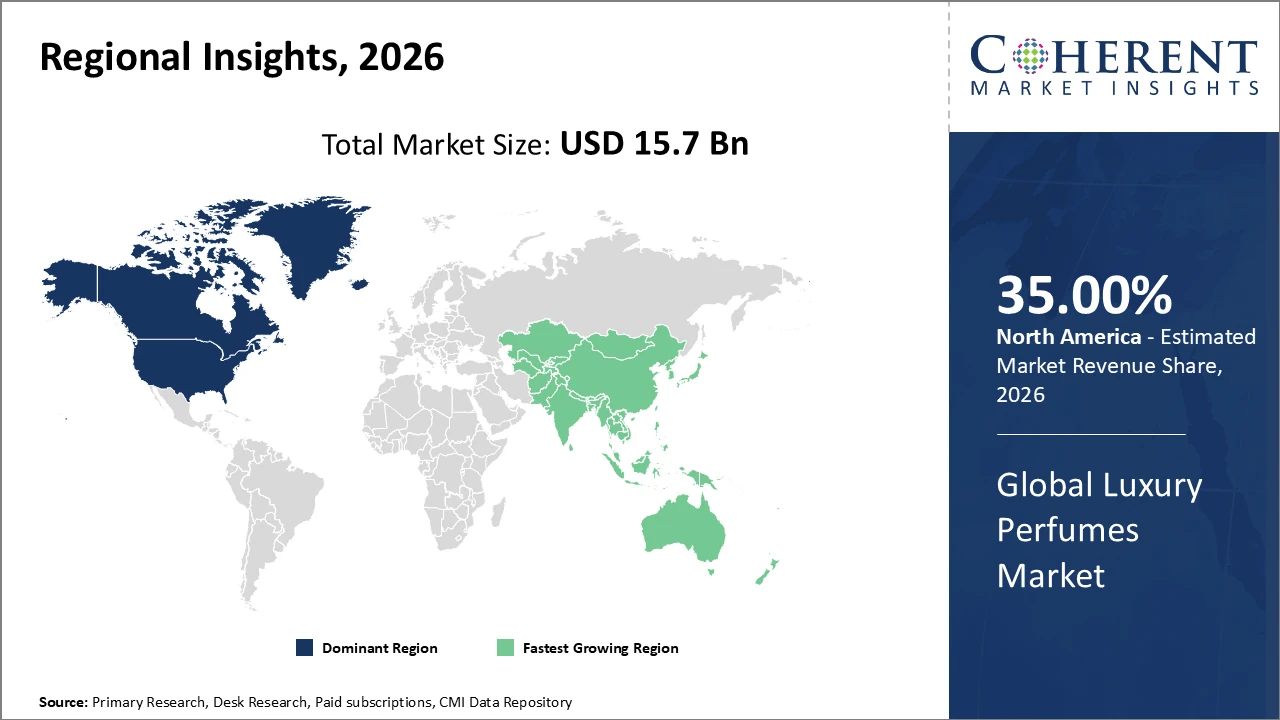
North America leads the regional market, holding nearly 35% market share due to a mature consumer base and established companies investing heavily in innovation.
Asia Pacific is the fastest-growing region with a CAGR of approximately 9.5%, fueled by a rising luxury consumer base and expanding e-commerce infrastructure.
Luxury Perfumes Market Segmentation Analysis
Luxury Perfumes Market Insights, By Product Type
Eau de Parfum dominates the market share at 45%, driven by its higher concentration of fragrance oils that provide long-lasting scents favored by luxury consumers. This subsegment benefits from growing demand among women and the premiumization trend, where buyers invest in rich, enduring fragrances for enhanced sensory experiences. Perfume Oils are the fastest-growing subsegment, valued for their intensity, natural ingredients, and suitability for personalized blends, appealing to eco-conscious and clean-beauty consumers. Eau de Toilette and Cologne maintain steady shares, catering to younger consumers and men, while the ‘Others’ category includes exclusive and limited-edition releases for collectors and brand loyalists.
Luxury Perfumes Market Insights, By End User
Women hold a dominant 60% market share, driven by extensive product offerings and targeted marketing by leading brands. Female consumers favor complex aromatic compositions and are primary contributors to premium and niche fragrance sales, shaping product strategies in 2025–2026. The fastest-growing subsegment is Unisex fragrances, fueled by cultural shifts toward inclusivity and appealing to millennials and Gen Z who value self-expression and sustainability. Men’s perfumes maintain moderate share but are innovating with fresh, herbal scents for active lifestyles. The ‘Others’ category covers professional and exclusive users seeking bespoke or limited-edition fragrances, adding a specialized dimension to market growth.
Luxury Perfumes Market Insights, By Distribution Channel
Specialty stores lead the market with a 40% share, driven by curated brand experiences and premium customer service that foster strong loyalty among affluent consumers. These stores are central to experiential marketing, allowing shoppers to explore fragrances with expert guidance, enhancing perceived value. The fastest-growing channel is online retail, which reached 35% of market revenue in 2025 due to digital adoption, global accessibility, and AI-driven personalized recommendations. Department stores and other outlets, including duty-free shops and boutiques, maintain stable shares, benefiting from foot traffic and seasonal luxury purchases. Together, these channels support omni-channel strategies for optimized consumer engagement.
Luxury Perfumes Market Trends
The luxury perfumes market is increasingly adopting sustainable ingredients, with over 30% of new product launches in 2025 featuring eco-friendly certifications, reflecting growing consumer preference for environmentally responsible products.
Digital innovation is a key trend, exemplified by AI-driven customization tools that allow brands to create personalized scents, enhancing customer engagement and brand loyalty.
Virtual fragrance try-on experiences introduced by leading brands boosted online sales by up to 20% in 2026, demonstrating the effectiveness of tech-enabled shopping solutions.
Market players are investing in omni-channel strategies to integrate premium in-store experiences with expanding e-commerce opportunities.
Luxury Perfumes Market Insights, By Geography
North America Luxury Perfumes Market Analysis and Trends
In North America, the luxury perfumes market holds the largest share at around 35%, led by the U.S. due to affluent consumers, strong retail infrastructure, and high per capita luxury spending. Mature distribution channels and a strong presence of premium brands reinforce market dominance. U.S. companies significantly expanded e-commerce luxury perfume sales by 25% in 2025, leveraging digital engagement and personalized marketing to attract and retain high-value customers, further solidifying the region’s leadership in global luxury fragrance revenue.
Asia Pacific Luxury Perfumes Market Analysis and Trends
Asia Pacific is the fastest-growing region in the luxury perfumes market, with a CAGR of approximately 9.5%, driven by rising disposable incomes in countries such as China, India, and Southeast Asia. Rapid urbanization and expanding luxury retail networks, coupled with the influence of social media, are fueling demand for premium fragrances. Both local and international brands are focusing on regional customization and targeted marketing strategies to capture consumer attention. In 2026, over 15% of luxury perfume launches in the region were tailored to local cultural preferences, highlighting the importance of localization in driving market expansion and revenue growth.
Luxury Perfumes Market Outlook for Key Countries
USA Luxury Perfumes Market Analysis and Trends
The USA continues to lead the global luxury perfumes market, supported by a diverse and affluent consumer base that prioritizes exclusivity and innovation. In 2025, premium and niche fragrances represented 60% of total U.S. perfume sales, highlighting sophisticated consumer preferences. Leading companies have embraced AI-driven scent customization and strengthened omni-channel retail strategies, boosting revenue and enhancing brand loyalty. Additionally, regulations promoting ingredient transparency have encouraged responsible innovation, aligning with growing environmental and ethical consumer concerns. This combination of advanced technology, regulatory compliance, and premiumization sustains the U.S.’s dominant position and drives continued market growth.
Germany Luxury Perfumes Market Analysis and Trends
Germany’s luxury perfumes market is characterized by a mature consumer base with a strong preference for high-quality, artisanal fragrances. In 2025, premium and niche perfumes accounted for over 55% of sales, reflecting the country’s focus on exclusivity and craftsmanship. Leading market players emphasize sustainable and natural ingredients, catering to environmentally conscious consumers, while AI-powered customization and limited-edition releases are increasingly popular. Department stores and specialty retailers remain dominant distribution channels, complemented by growing online sales. Germany’s strategic location in Europe and well-established retail infrastructure make it a hub for luxury fragrance launches and innovation, supporting steady market growth.
Analyst Opinion
Supply Chain Optimization Enhancing Market Revenue: Enhanced sourcing strategies for rare ingredients such as oud and natural essential oils from the Middle East and Southeast Asia led to a 12% reduction in production costs in 2024–2025, boosting profit margins and strengthening market share for leading luxury perfume companies.
Surge in Customized and Niche Fragrances: Consumer demand for bespoke perfumes grew over 20% year-on-year from 2024 to 2026. Companies leveraging AI-driven scent personalization saw increased revenue, significantly impacting market growth strategies.
Expanding Online Retail Channels Influencing Market Access: Online luxury perfume sales rose to nearly 35% of total revenue in 2025 from 22% in 2024, emphasizing the role of e-commerce and omni-channel marketing in broadening market reach.
Emerging Markets Boosting Revenue Growth: Luxury perfume consumption in Latin America and Asia Pacific increased by approximately 15% between 2024 and 2026, driven by urbanization and rising middle-class spending power, fueling global market expansion.
- Current Industry Events of 2026
- Market Size Estimation
- Regional Breakdown
- Competitive Landscape
- Customer Intelligence
- Segmental Analysis
- Pricing Analysis
- Key Market Drivers, Challenges & Future Trends
- Customized Insights Section
Market Scope
| Report Coverage | Details | ||
|---|---|---|---|
| Base Year: | 2025 | Market Size in 2026: | USD 15.7 billion |
| Historical Data for: | 2020 To 2024 | Forecast Period: | 2026 To 2033 |
| Forecast Period 2026 to 2033 CAGR: | 7.8% | 2033 Value Projection: | USD 26.4 billion |
| Geographies covered: |
| ||
| Segments covered: |
| ||
| Companies covered: | Chanel S.A, Dior, Coty Inc., Shiseido Company, Procter & Gamble, L’Oreal Luxe, Puig, Clarins Group | ||
| Growth Drivers: |
| ||
Luxury Perfumes Market Growth Factors
The accelerated growth in the luxury perfumes market is primarily driven by a rising consumer preference for premium and niche fragrances, with personalization demand increasing by over 20% between 2024 and 2026. The expansion of digital and mobile commerce channels has further broadened market access, with online sales contributing 35% of total luxury perfumes revenue in 2025. Rapidly growing urban middle-class populations in Asia Pacific and Latin America provide a high-purchasing-power customer base, supporting revenue growth. Additionally, innovations in sustainable and ethically sourced ingredients appeal to environmentally conscious consumers, enabling brands to differentiate their offerings and sustain long-term market expansion.
Luxury Perfumes Market Development
In May 2026, Perfumer’s Club launched its premium Imperial and Grenade Series, its most luxurious fragrance line to date. The collection includes Submarine, Atomic, Whales Whisper, Tobacco Reverie, Chocolate Fume, Pistachio Kiss, and Bleu De Marine.
Key Players
Leading Companies of the Market
Chanel S.A
Dior
Koty Inc.
Procter & Gamble
Shiseido Company
L’Oreal Luxe
Puig
Clarins Group
Luxury Perfumes Market Future Outlook
The Luxury Perfumes market is poised for sustained growth, driven by rising disposable incomes, evolving consumer preferences, and increasing demand for personalized and niche fragrances. Digital innovations, including virtual scent consultations and AI-driven fragrance recommendations, are expected to enhance customer engagement and expand online sales channels. Sustainable and ethically sourced ingredients will continue to shape product development, reflecting growing environmental awareness among luxury consumers. Emerging markets in Asia-Pacific and the Middle East offer significant expansion opportunities, supported by a growing affluent population. Overall, the market trajectory emphasizes premiumization, customization, and experiential offerings, ensuring long-term revenue growth and brand differentiation.
Luxury Perfumes Market Historical Analysis
The Luxury Perfumes market has historically experienced steady growth, driven by rising consumer spending on premium personal care products and the influence of fashion and celebrity endorsements. In the early 2010s, established brands such as Chanel, Dior, and Tom Ford dominated the high-end segment, leveraging heritage, craftsmanship, and exclusive distribution channels. Limited-edition launches and signature fragrances fueled brand loyalty and repeat purchases. Over the past decade, emerging trends such as niche artisanal perfumes and celebrity collaborations reshaped market dynamics, while growing international travel and tourism contributed to global exposure. Overall, historical growth reflects strong brand equity and evolving consumer demand for luxury fragrances.
Sources
Primary Research Interviews:
Brand managers, perfumers, and R&D heads from leading luxury fragrance companies such as Chanel, Dior, and Tom Ford.
Marketing executives, retail managers, and supply chain specialists responsible for distribution, sales, and promotional strategies of luxury perfumes.
Industry analysts and consultants providing insights on global fragrance trends, niche markets, and consumer behavior in the luxury segment.
Magazines:
Fragrantica – Updates on perfume launches, trends, and consumer reviews.
Perfumer & Flavorist – Insights on fragrance formulation, raw materials, and market innovations.
Vogue Beauty – Analysis of luxury beauty trends, celebrity endorsements, and seasonal fragrance releases.
Journals:
International Journal of Cosmetic Science – Research on fragrance formulation, olfactory studies, and consumer sensory preferences.
Journal of Retailing and Consumer Services – Studies on luxury retail behavior, premium product marketing, and purchasing patterns.
Cosmetics & Toiletries – Insights on formulation, innovation, and regulatory compliance for high-end perfumes.
Newspapers:
The Wall Street Journal – Reports on company strategies, mergers, acquisitions, and investments in the luxury fragrance sector.
Financial Times – Market trends, consumer spending insights, and global luxury industry analysis.
Reuters – News on product launches, marketing campaigns, and company performance in the fragrance market.
Bloomberg – Corporate financials, market forecasts, and competitive landscape for luxury perfume brands.
Associations:
Fragrance Creators Association (FCA) – Standards, guidelines, and market reports on fragrance formulation and safety.
The International Fragrance Association (IFRA) – Global regulations, best practices, and industry research on fragrance ingredients.
Luxury Institute – Research, consumer insights, and benchmarking for luxury brand performance, including perfumes.
Get access to 250+ pages report
Every segment, forecast, competitor profile and data table behind the analysis above — available for instant download.
- ESOMAR Member
- ISO 9001:2015 Certified
- D-U-N-S Registered
- GDPR & CCPA Compliant
Missing comfort of reading report in your local language? Find your preferred language:
Transform your Strategy with Exclusive Trending Reports
Frequently Asked Questions
The market is led by major companies such as Coty Inc., Procter & Gamble, Chanel S.A., and Dior, which maintain strong market positions through continuous product innovation, acquisitions, and global brand recognition.
The Luxury Perfumes market is projected to reach USD 26.4 billion by 2033, growing at a compound annual growth rate of 7.8% from 2026 to 2033.
The women’s segment leads with a 60% market share, while unisex fragrances are emerging rapidly, creating new growth avenues driven by inclusivity and personalization trends.
Key trends include sustainable ingredient sourcing, AI-powered scent personalization, digital marketing, and omni-channel retail expansion, supporting premiumization and enhanced customer engagement.
Competition is defined by brand consolidation, fast-paced innovation, and niche entrants, with challenges including raw material scarcity, rising sustainability expectations, and maintaining exclusivity.
Companies focus on influencer partnerships, limited-edition launches, digital transformation, and regional expansion through tailored marketing and luxury retail collaborations to capture emerging consumer segments.