

Global Monoethylene Glycol Market Size and Forecast – 2026-2033
The Global Monoethylene Glycol Market is estimated to be valued at USD 24.93 Bn in 2026 and is expected to reach USD 31.50 Bn by 2033, exhibiting a compound annual growth rate (CAGR) of 3.4% from 2026 to 2033.
Key Takeaways of the Monoethylene Glycol Market
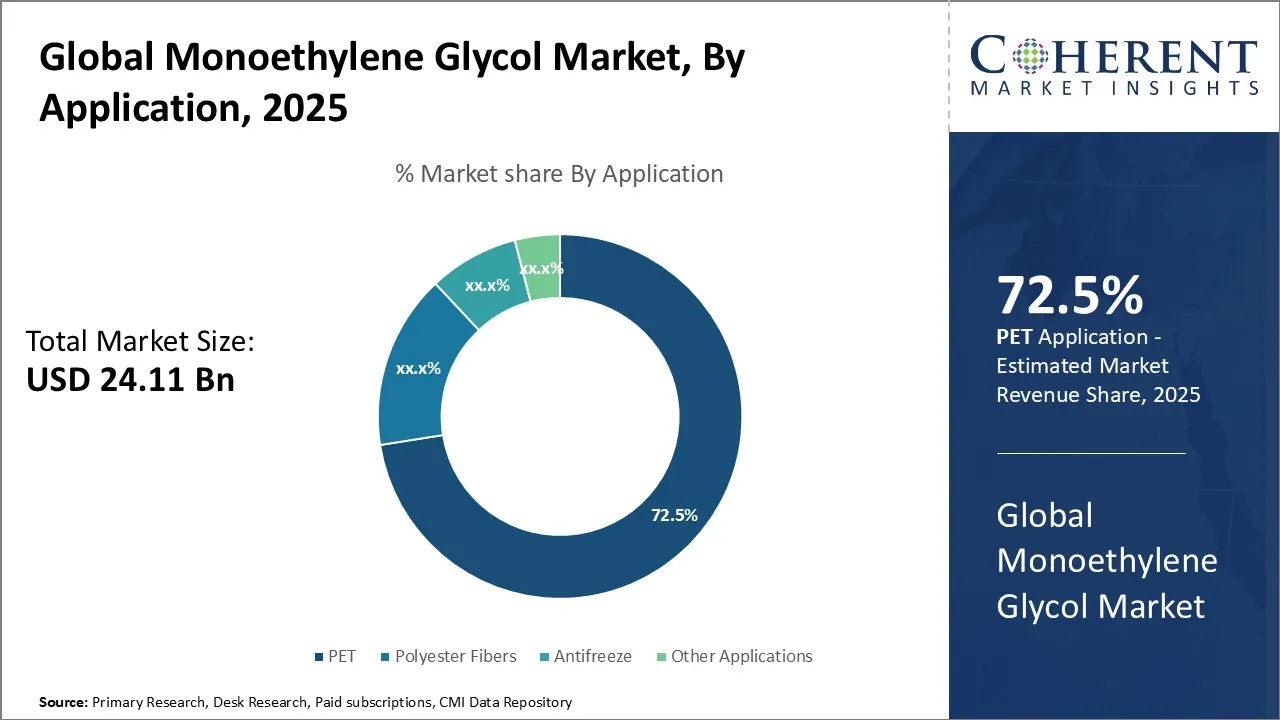
- The PET segment is expected to account for 73.5 % of the global monoethylene glycol market in 2026, driven mainly by the growing demand for PET in the packaging and textile industries.
- The packaging segment is projected to hold a 40.3 % share of the market in 2026, driven by the increasing demand for MEG in the production of PET, the leading polymer used in packaging applications globally.
- Asia Pacific is expected to lead the global monoethylene glycol market in 2026 with a 57.3 % share, driven by rapid industrialization, significant investments in infrastructure, and the growing demand for MEG in the production of PET. North America, with a 13.5% share in 2026, will be the fastest-growing region, fueled by increasing demand from the automotive and packaging industries, along with rising government initiatives to support sustainable manufacturing processes.
Market Overview
A key market trend is the rising focus on sustainable and bio-based monoethylene glycol alternatives, as industries strive to reduce carbon footprints and adhere to stricter environmental regulations aimed at carbon footprint reduction. Additionally, growth in the automotive and packaging sectors continues to fuel demand, alongside advancements in manufacturing technologies that improve efficiency and product quality. The increasing adoption of carbon credit initiatives further enhances the market's potential, as companies seek to offset emissions and meet sustainability goals. These factors together support a positive outlook for the monoethylene glycol market over the next decade.
Current Events and Its Impact
Current Events | Description and its impact |
Price Volatility and Oversupply in North America |
|
Shift Toward Bio-based and Sustainable MEG |
|
Segmental Insights
- Current Industry Events of 2026
- Market Size Estimation
- Regional Breakdown
- Competitive Landscape
- Customer Intelligence
- Segmental Analysis
- Pricing Analysis
- Key Market Drivers, Challenges & Future Trends
- Customized Insights Section
Monoethylene Glycol Market Insights, By Application – PET Segment Dominates the Market due to its Extensive Use in Packaging and Textile Industries
PET segment is expected to hold 73.5% share of the global monoethylene glycol market in 2026, and is primarily driven by the increasing demand for PET as a raw material in the packaging and textile industries. Monoethylene glycol is a critical feedstock in the production of PET, where it acts as a glycol component, facilitating the polymerization process. PET is widely valued for its lightweight, durable, and recyclable properties, making it an ideal choice in packaging applications such as bottles for beverages, food containers, and other consumer goods packaging. This growing consumer preference for sustainable and convenient packaging solutions significantly fuels the demand for PET, thereby augmenting the consumption of MEG.
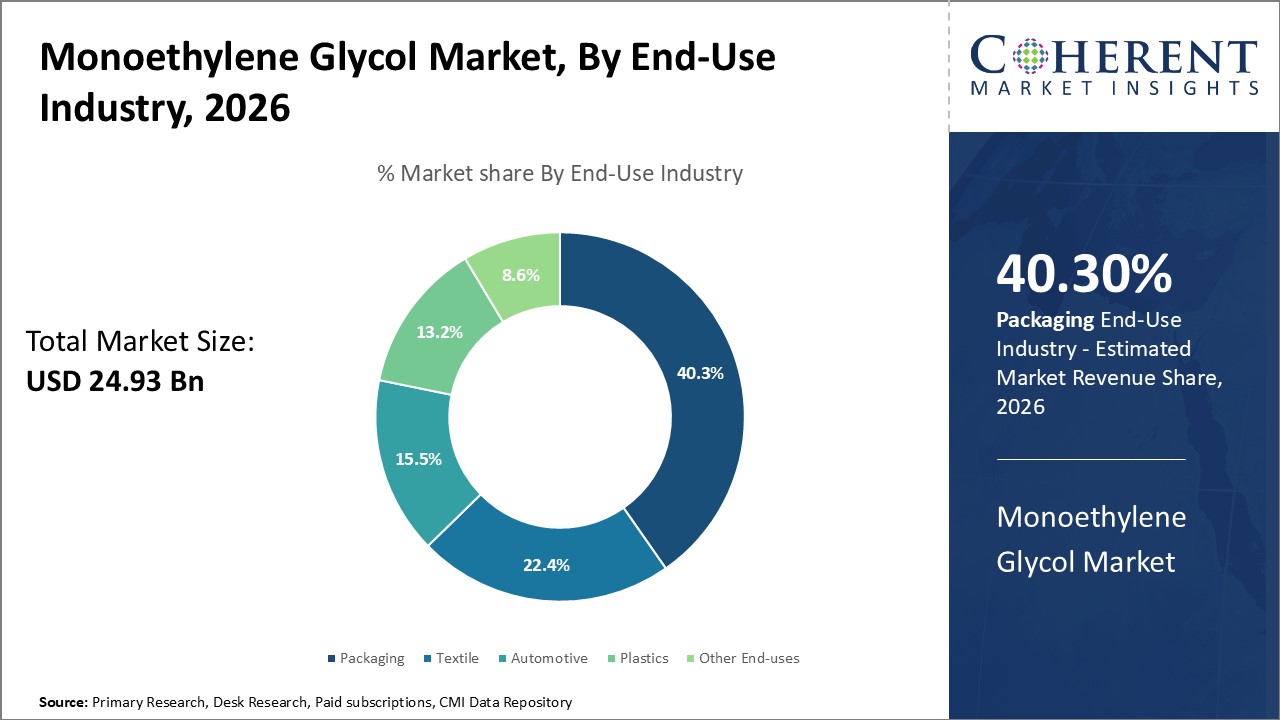
Monoethylene Glycol Market Insights, By End-use Industry – Packaging Segment Dominates the Market due to Escalating Demand for Safe and Sustainable Consumer Packaging Solutions
The packaging segment is projected to hold 40.3% share of the market in 2026. This surge in demand is mainly attributed to the widespread use of MEG in the production of PET, which is the preferred polymer for packaging applications worldwide. The packaging sector’s rise is fueled by rapid urbanization, expanding retail landscapes, and increasing consumer inclination towards convenience-oriented packaged products.
Packaging applications for monoethylene glycol-derived PET encompass a broad spectrum, from beverage bottles and food containers to personal care and pharmaceutical packaging. The need for packaging materials that offer enhanced barrier properties, safety, and recyclability has heightened the importance of MEG as a vital raw material, contributing to this industry's robust demand. Consumers’ growing awareness about food safety and hygiene standards have led manufacturers to adopt high-quality packaging materials, where PET, facilitated by MEG, plays an integral role.
Regional Insights
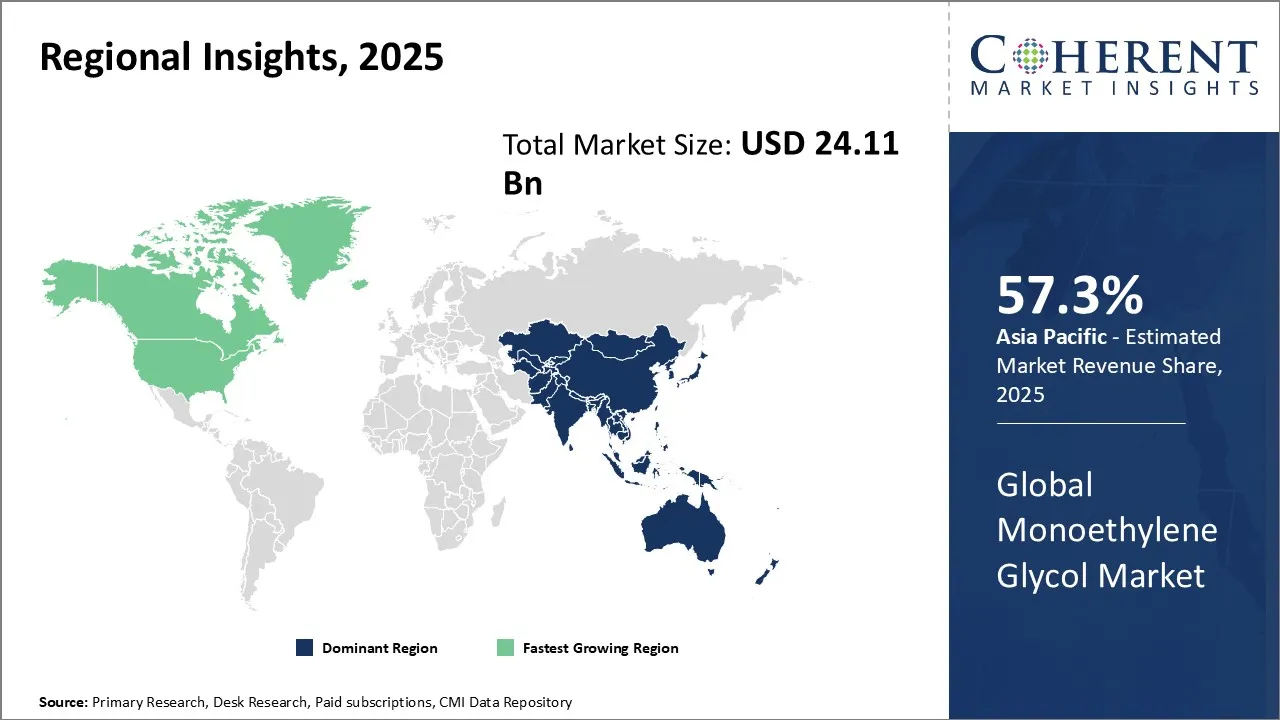
Asia Pacific Monoethylene Glycol Market Analysis and Trends
The Asia Pacific region is projected to lead the market with a 57.3% share in 2026. The region's robust chemical manufacturing ecosystem and the expansive downstream industries such as polyester fiber, PET resin, and automotive sectors. Countries like China, India, South Korea, and Japan host a concentrated industrial base where MEG is a crucial raw material. Government policies focused on industrial growth, export incentives, and investments in petrochemical infrastructure further solidify the region’s commanding position.
Asia Pacific benefits from integrated supply chains and proximity to raw material sources like ethylene, boosting operational efficiency. Major players such as Sinopec, Reliance Industries, LG Chem, and Mitsubishi Chemical have significantly contributed by expanding capacities and adopting technological advancements, enhancing the supply-demand balance within the region. Furthermore, trade dynamics involving both import and export activities allow Asia Pacific companies to serve global markets effectively.
North America Monoethylene Glycol Market Analysis and Trends
The North America region is expected to exhibit the fastest growth in the market contributing 13.5% share in 2026, driven by technological advancements, access to low-cost shale-based ethylene feedstock, and a robust petrochemical infrastructure. The U.S., in particular, benefits from its shale gas revolution, which ensures cost-effective ethylene production—a critical input for MEG. Investments in capacity expansion, especially along the Gulf Coast, are boosting MEG output to meet both domestic and export demand.
Major players such as LyondellBasell, and Eastman Chemical Company are actively enhancing their production capabilities through strategic collaborations and advanced process technologies. Additionally, the presence of integrated supply chains, proximity to key end-use markets (such as textiles and packaging), and favorable trade agreements position North America as a competitive hub for MEG production and exports, particularly to Latin America, Europe, and Asia Pacific. The region’s growth is further supported by increased consumption of polyethylene terephthalate (PET) and antifreeze products across automotive and packaging industries.
Monoethylene Glycol Market Outlook for Key Countries
China Monoethylene Glycol Market Trends
China's monoethylene glycol market remains the global heavyweight, driven by strong domestic polyester production and expansive textile industries. The government's industrial policies promoting chemical manufacturing and export provide a robust support system. Chinese giants such as Sinopec and Hengli Petrochemical have made substantial capacity expansions and technology upgrades, enhanced the production efficiency and met escalating demand in both domestic and international markets.
India Monoethylene Glycol Market Trends
India's rapidly industrializing economy coupled with the growth of textile and packaging sectors fuels sustained demand for MEG. Supportive policies focused on the Make in India initiative and petrochemical sector enhancements attract investments from firms like Reliance Industries and Indian Oil Corporation. These companies are strategically expanding capacities to cater to domestic consumption and the export market, promoting India’s emerging position in the MEG landscape.
South Korea Monoethylene Glycol Market Trends
South Korea continues to lead with sophisticated manufacturing capabilities and innovations in chemical production technologies. The country’s well-established petrochemical industry benefits from strong corporate players like LG Chem and Lotte Chemical, which actively invest in capacity expansion and eco-friendly production processes. South Korea’s integration of upstream and downstream sectors ensures a stable MEG supply and boosts its regional competitive edge.
Saudi Arabia Monoethylene Glycol Market Trends
Saudi Arabia’s monoethylene glycol market is deeply influenced by the Kingdom’s large oil reserves and petrochemical investment plans. Companies such as SABIC and Sadara Chemical Company spearhead MEG production, supported by government initiatives aiming to diversify the economy beyond crude oil exports.
U.S. Monoethylene Glycol Market Trends
The U.S. monoethylene glycol market is characterized by advancements in shale gas exploitation and established chemical manufacturing hubs. Firms like Eastman Chemical and LyondellBasell play critical roles in this market, focusing on innovation and sustainability. U.S. government policies supporting energy independence and petrochemical infrastructure upgrades contribute to a mature yet evolving market dynamic, with significant export capabilities to meet global demand.
The Monoethylene Glycol (MEG) market growth is influenced by a range of macroeconomic and microeconomic factors
Macroeconomic Factors
- Growth in downstream industries such as packaging, automotive production, and construction supports MEG demand. The packaging industry’s expansion, sustainable packaging trends, and automotive electrification are notable macro-level drivers.
- Trade policies and tariffs especially between countries like the U.S., South Korea, and Middle East affect prices and supply chains, with tariffs causing a slight reduction in forecasted growth rates due to increased raw material costs.
- Global economic conditions, including crude oil price volatility, geopolitical tensions, and trade conflicts, indirectly influence MEG pricing, availability of raw materials (ethylene oxide), and production costs.
Microeconomic Factors
- Fluctuating raw material prices, mainly ethylene (derived from crude oil), cause cost volatility for producers, which impacts MEG prices and profit margins.
- Supply-demand balance in regional markets like Europe and Asia-Pacific fluctuates due to seasonal demand shifts, production disruptions, and inventory management by manufacturers. For example, supply tightening and operational challenges in Q2-Q3 2024 caused price surges in Europe.
- Technological advancements in production methods and R&D spending by companies help improve operational efficiency, impacting market competitiveness and profitability.
- Growing urbanization, increasing disposable income, and consumer purchasing behaviors at the local level influence MEG consumption through increased demand for textile products and packaged goods
Market Players, Key Development, and Competitive Intelligence
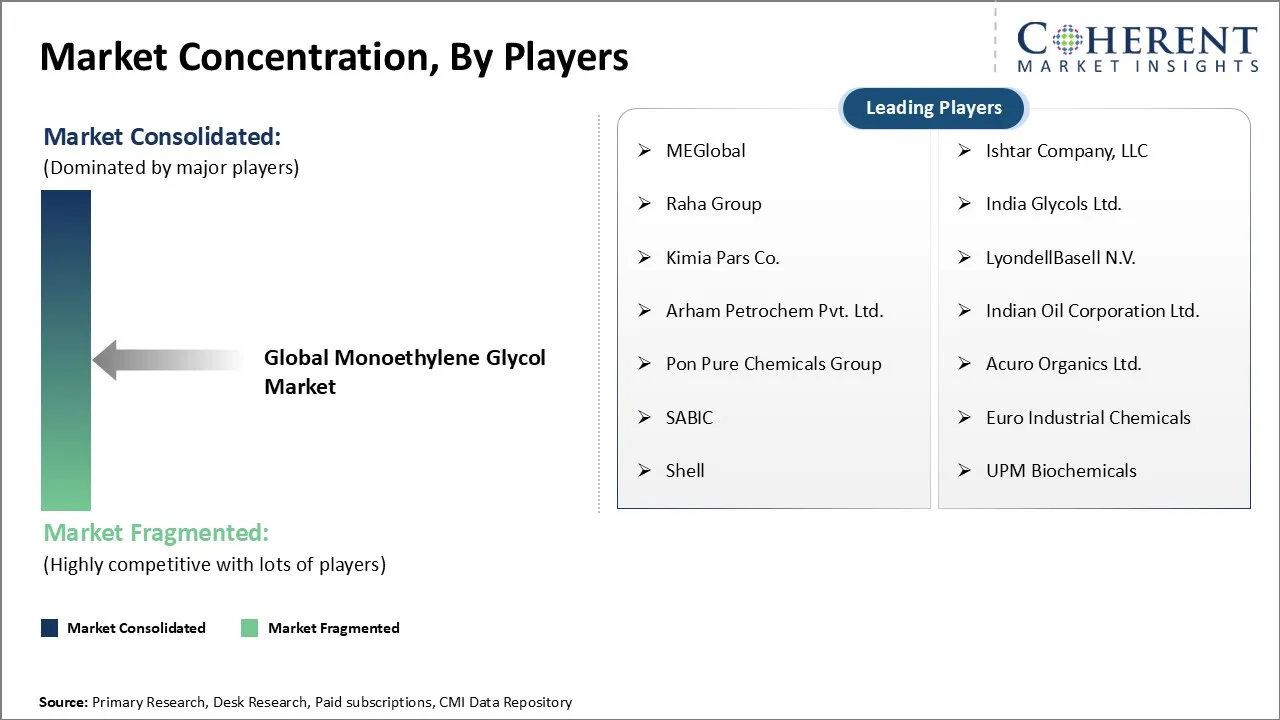
Key Developments
- In May 2022, LanzaTech, a biotechnology company based in Illinois, U.S., announced a breakthrough in producing monoethylene glycol (MEG) directly from carbon emissions. This innovative method simplifies the conventional production chain and leverages the company’s existing carbon capture technology. The direct route to MEG not only enhances process efficiency but also aligns with sustainable chemical manufacturing by utilizing industrial waste gases as feedstock.
- In January 2022, ExxonMobil and SABIC announced the commencement of operations at their joint venture, Gulf Coast Growth Ventures, located in San Patricio County, U.S. The world-scale manufacturing facility includes a 1.8 million metric ton per year ethane steam cracker, two polyethylene units with a combined capacity of 1.3 million metric tons per year, and a monoethylene glycol (MEG) unit with a capacity of 1.1 million metric tons per year. The facility will produce essential materials for packaging, agricultural film, construction, textiles, and automotive applications, marking a significant expansion in petrochemical production capacity in the U.S. Gulf Coast.
Top Strategies Followed by Global Monoethylene Glycol Market Players
- Established companies dominate the industry by heavily investing in research and development (R&D) to drive innovation and produce high-performance MEG products that meet evolving industry standards and customer demands. These market leaders often develop proprietary technologies that enhance product efficiency, sustainability, and application versatility.
- For instance, Shell’s OMEGA (Only MEG Advantage) technology has gained industry recognition for its high selectivity, low by-product formation, and lower capital costs, making it a preferred process for new plants.
- Mid-level players in this market adopt a distinct approach, focusing primarily on offering cost-effective solutions that strike a balance between product quality and affordability. Catering largely to price-sensitive consumers, these companies tailor their product offerings to meet the needs of industries and regions where budget constraints are significant. Their competitive edge stems from their ability to efficiently manage production costs without compromising essential performance characteristics of MEG.
- For example, Reliance Industries leverages its integrated petrochemical operations in Jamnagar, India to maintain low production costs, which allows it to offer competitively priced MEG for the textile and polyester film industries in India and neighboring countries.
- Small-scale players in the global MEG arena carve out specialized niches by focusing on unique product features and innovative offerings tailored to specific industrial applications or regional needs. Competition at this scale is driven by agility and the ability to rapidly adapt to shifting market dynamics. To maintain relevance, these smaller companies often adopt cutting-edge technologies such as green synthesis methods, bio-based MEG production, or customized formulations that larger players may overlook.
- For example, companies like India-based Godavari Biorefineries and Avantium are pioneering bio-based ethylene and MEG production from renewable resources like corn or sugarcane.
Market Report Scope
Monoethylene Glycol Market Report Coverage
| Report Coverage | Details | ||
|---|---|---|---|
| Base Year: | 2025 | Market Size in 2026: | USD 24.93 Bn |
| Historical Data for: | 2020 To 2024 | Forecast Period: | 2026 To 2033 |
| Forecast Period 2026 to 2033 CAGR: | 3.4% | 2033 Value Projection: | USD 31.50 Bn |
| Geographies covered: |
| ||
| Segments covered: |
| ||
| Companies covered: | MEGlobal, Ishtar Company, LLC, Raha Group, India Glycols Ltd., Kimia Pars Co., LyondellBasell N.V., Arham Petrochem Pvt. Ltd., Indian Oil Corporation Ltd., Pon Pure Chemicals Group, Acuro Organics Ltd., SABIC, Euro Industrial Chemicals, Shell, and UPM Biochemicals | ||
| Growth Drivers: |
| ||
| Restraints & Challenges: |
| ||
Monoethylene Glycol Market Dynamics
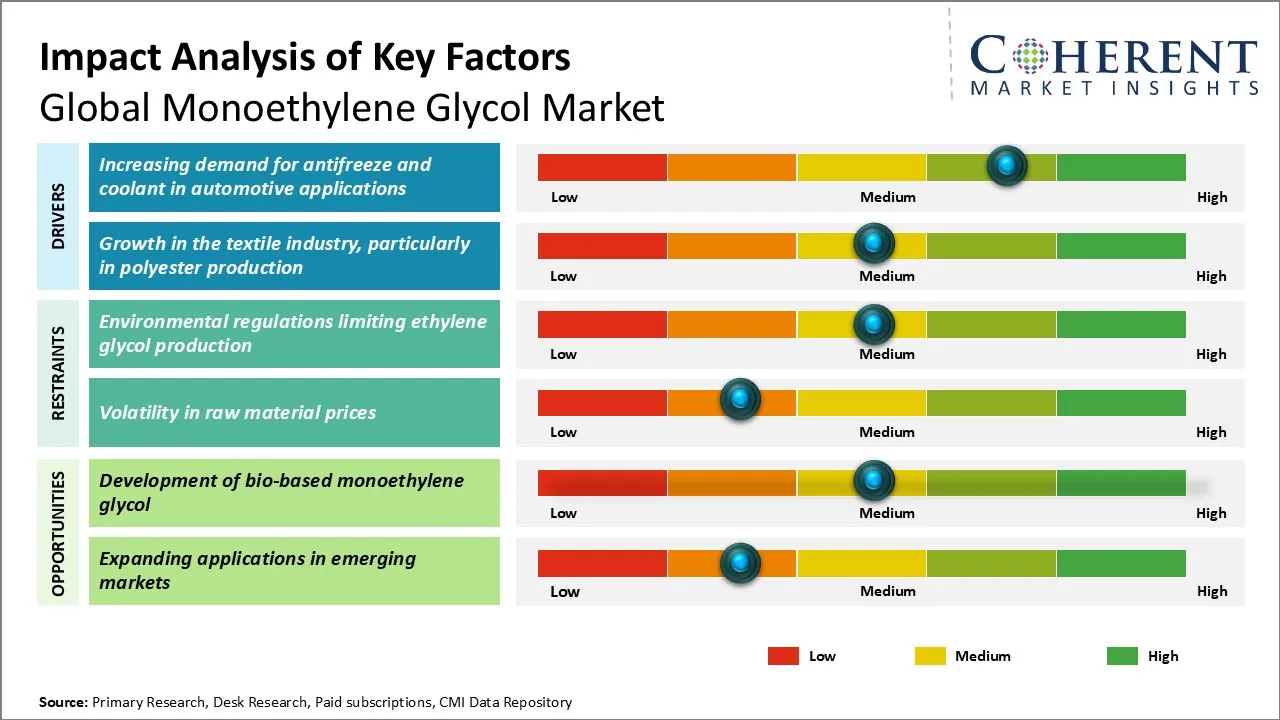
Monoethylene Glycol Market Driver - Increasing Demand for Antifreeze and Coolant in Automotive Applications
The growing need for efficient thermal management systems in the automotive industry is significantly driving the demand for monoethylene glycol (MEG). As vehicles become more advanced and engines operate at higher temperatures, the importance of reliable antifreeze and coolant solutions has increased, positioning MEG as a critical component in automotive coolant formulations. MEG’s excellent freezing point depression and boiling point elevation properties make it ideal for protecting engines against extreme temperature fluctuations, preventing overheating and freezing, thereby enhancing engine performance and longevity.
For example, General Motors and Ford use MEG-based coolants in their vehicles to maintain optimal engine temperatures. This is particularly crucial in regions with extreme weather conditions, where the risk of engine overheating or freezing is high. Additionally, Tesla, with its electric vehicles, requires specialized coolants to prevent battery and engine overheating, further driving the demand for MEG in the electric vehicle (EV) sector.
Monoethylene Glycol Market Opportunity - Development of Bio-Based Monoethylene Glycol
The development of bio-based monoethylene glycol (MEG) presents a significant opportunity within this market, driven by increasing environmental concerns and regulatory pressures aimed at reducing carbon footprints. Traditional MEG production relies heavily on petrochemical feedstocks, which are associated with high greenhouse gas emissions. In contrast, bio-based MEG, derived from renewable resources such as sugarcane, corn, or cellulose, offers a sustainable alternative that aligns with the growing demand for green and eco-friendly products.
For example, Purac Biochem, a subsidiary of Corbion, has developed a proprietary technology that enables the production of bio-based MEG derived from renewable feedstocks like corn. This product offers a more sustainable alternative to conventional MEG derived from petrochemical sources. The bio-based MEG produced by Purac is being used in various applications, including antifreeze formulations, plastics, and packaging materials, aligning with increasing demand for green products across industries.
Analyst Opinion (Expert Opinion)
- The global monoethylene glycol (MEG) market is on the brink of significant evolution, driven by rising demand in the polyester and antifreeze sectors. Insights gathered from the Global Petrochemical Conference (2023) and the International Chemical Engineering Symposium (2022) highlighted the critical need for innovative production methods that reduce environmental impact.
- For instance, companies like LyondellBasell are investing in bio-based MEG production technologies, which not only address sustainability concerns but also align with the increasing regulatory pressures for greener alternatives. Furthermore, discussions at these conferences underscored the impact of the automotive sector's shift towards electric vehicles, which is expected to alter MEG demand dynamics, particularly in cooling systems and battery technologies.
- The potential integration of circular economy practices, such as recycling MEG from post-consumer PET, was also a focal point, signaling a transformative direction for the market. As consumer and regulatory demands continue to evolve, companies that prioritize sustainability and invest in innovative technologies will likely lead the market, positioning themselves favorably in a landscape that increasingly values environmental stewardship alongside economic growth.
Speak to the analyst
Want personalized insights?
Take the findings above to one of our principal consultants, or have the report rebuilt around the segments, geographies and competitors you actually track.
Market Segmentation
- Application Insights (Revenue, USD Bn, 2021 - 2033)
- PET
- Polyester Fibers
- Antifreeze
- Other Applications
- End-use Industry Insights (Revenue, USD Bn, 2021 - 2033)
- Packaging
- Textile
- Automotive
- Plastics
- Other End-uses
- Regional Insights (Revenue, USD Bn, 2021 - 2033)
- North America
- U.S.
- Canada
- Latin America
- Brazil
- Argentina
- Mexico
- Rest of Latin America
- Europe
- Germany
- U.K.
- Spain
- France
- Italy
- Russia
- Rest of Europe
- Asia Pacific
- China
- India
- Japan
- Australia
- South Korea
- ASEAN
- Rest of Asia Pacific
- Middle East
- GCC Countries
- Israel
- Rest of Middle East
- Africa
- South Africa
- North Africa
- Central Africa
- North America
- Key Players Insights
- MEGlobal
- Ishtar Company, LLC
- Raha Group
- India Glycols Ltd.
- Kimia Pars Co.
- LyondellBasell N.V.
- Arham Petrochem Pvt. Ltd.
- Indian Oil Corporation Ltd.
- Pon Pure Chemicals Group
- Acuro Organics Ltd.
- SABIC
- Euro Industrial Chemicals
- Shell
- UPM Biochemicals
Sources
Primary Research Interviews
- R&D Director – Leading MEG Manufacturer (e.g., Reliance, SABIC)
- Procurement Manager – Major Polyester or PET Resin Producer
- Product Development Head – Global Chemical Conglomerate
- Sustainability Manager – Industry Environmental Compliance Body
Stakeholders
- Manufacturers (e.g., Shell, Dow, SABIC, BASF, Sinopec, Reliance Industries)
- End-use Sectors:
- Polyester Fiber Producers (Textile & Apparel Industries)
- PET (Packaging/Bottling) Manufacturers
- Automotive Industry (Antifreeze/Coolants)
- Chemical Intermediates Producers
- Regulatory & Certification Bodies
- E-commerce Platforms and Distributors (e.g., ChemPoint)
- Technology Integration Players (Process Automation & Sustainability Tech Providers)
Databases
- UN Comtrade Database
- India Import Export (EXIM) Database
- US Energy Information Administration (EIA)
Magazines
- Chemical Week – monoethylene glycol market updates and chemical industry trends
- ICIS Chemical Business – Insights on petrochemical prices and plant developments
- European Chemical News – MEG regulations and market moves
- Asia Chemical Weekly – APAC region supply/demand and price movements
Journals
- Journal of Applied Polymer Science – Application advances in polyester/PET
- Journal of Industrial & Engineering Chemistry – Catalyst/process technology for MEG
- Chemical Engineering Journal – Production, sustainability, and bio-based MEG research
- Journal of Cleaner Production – Environmental impact of MEG
Newspapers
- The Financial Times – M&A, global plant investments, feedstock volatility impacts
- The Guardian – PET/MEG recycling and sustainability news
- Asia Chemical Journal – Supply-demand dynamics in Asia
- European Chemical News – Policy and trade issues in EU chemical sector
Associations
- American Chemistry Council (ACC)
- European Chemical Industry Council (CEFIC)
- Indian Chemical Council (ICC)
- International Chemical Trade Association
- World Petrochemical Conference (WPC)
Public Domain Sources
- US Environmental Protection Agency (EPA) – Environmental and safety guidelines on MEG usage
- European Chemicals Agency (ECHA) – REACH compliance and safety documentation
- U.S. Food & Drug Administration (FDA) – Food contact guidelines for PET/MEG
Proprietary Elements
- CMI Data Analytics Tool, Proprietary CMI Existing Repository of information for last 8 years.
Get access to 250+ pages report
Every segment, forecast, competitor profile and data table behind the analysis above — available for instant download.
- ESOMAR Member
- ISO 9001:2015 Certified
- D-U-N-S Registered
- GDPR & CCPA Compliant
Missing comfort of reading report in your local language? Find your preferred language:
Transform your Strategy with Exclusive Trending Reports
Frequently Asked Questions
The global monoethylene glycol market is estimated to be valued at USD 24.93 Bn in 2026 and is expected to reach USD 31.50 Bn by 2033.
The CAGR of global monoethylene glycol market is projected to be 3.4% from 2026 to 2033.
Increasing demand for antifreeze and coolant in automotive applications and growth in the textile industry, particularly in polyester production are the major factors driving the growth of the global monoethylene glycol market.
Environmental regulations limiting ethylene glycol production and volatility in raw material prices are the major factors hampering the growth of the global monoethylene glycol market.
In terms of application, PET is estimated to dominate the market revenue share in 2026.
MEGlobal, Ishtar Company, LLC, Raha Group, India Glycols Ltd., Kimia Pars Co., LyondellBasell N.V., Arham Petrochem Pvt. Ltd., Indian Oil Corporation Ltd., Pon Pure Chemicals Group, Acuro Organics Ltd., SABIC, Euro Industrial Chemicals, Shell, and UPM Biochemicals are the major players.
Asia Pacific is expected to lead the global monoethylene glycol market in 2026.