

Pasta And Couscous Market Size and Forecast — 2026-2033
Pasta and couscous market is estimated to be valued at USD 39.11 Bn in 2026 and is expected to reach USD 56.14 Bn by 2033, exhibiting a compound annual growth rate (CAGR) of 5.3% from 2026 to 2033.
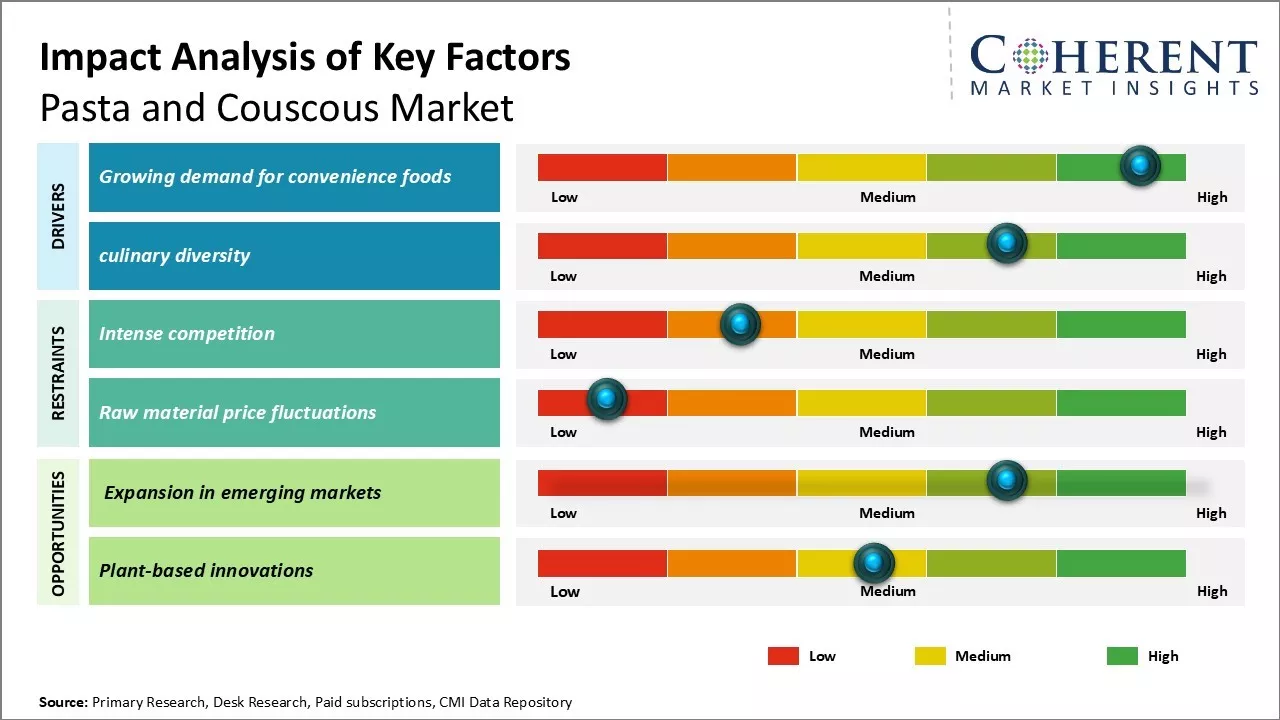
Consumers are increasingly preferring pasta and couscous products due to their convenience, ease of preparation, and nutritional value. Pasta and couscous can be easily incorporated into meals due to their versatility and ability to complement a variety of main dishes. Increasing health consciousness among consumers is expected to drive the demand for pasta and couscous made from alternative flour such as quinoa, amaranth and lentils. Rising demand for gluten free and organic pasta and couscous is also expected to support the market growth.
Insights, By Form
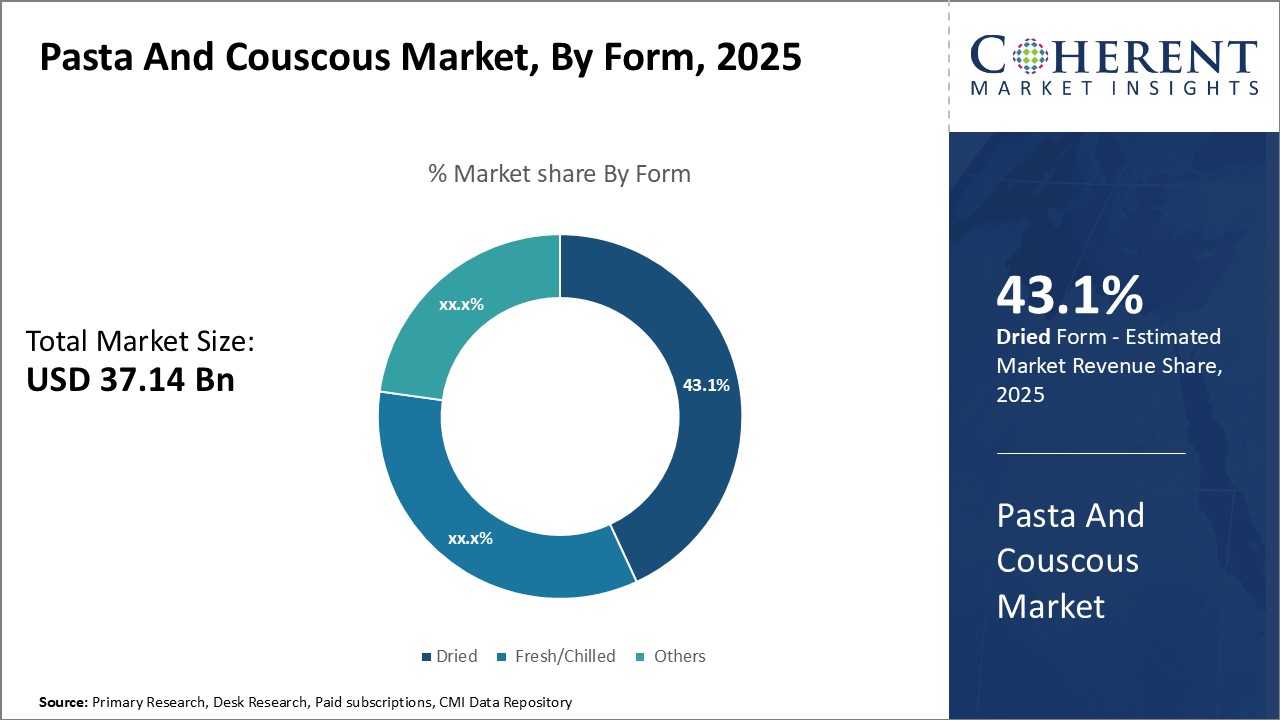
Insights, By Form- Convenience shapes popularity in the pasta and couscous market
In terms of form, dried segment is estimated to contribute the highest market share of 44.1% in 2026, owing to its convenience of use and longer shelf life. Dried pasta and couscous do not require refrigeration, making it easy for consumers to stock up and use as needed. The dehydration process eliminates moisture from the products, allowing dried varieties to remain fresh for months when stored properly. This makes dried pasta and couscous very convenient for busy lifestyles with unpredictable meal schedules.
Insights, By Raw Material
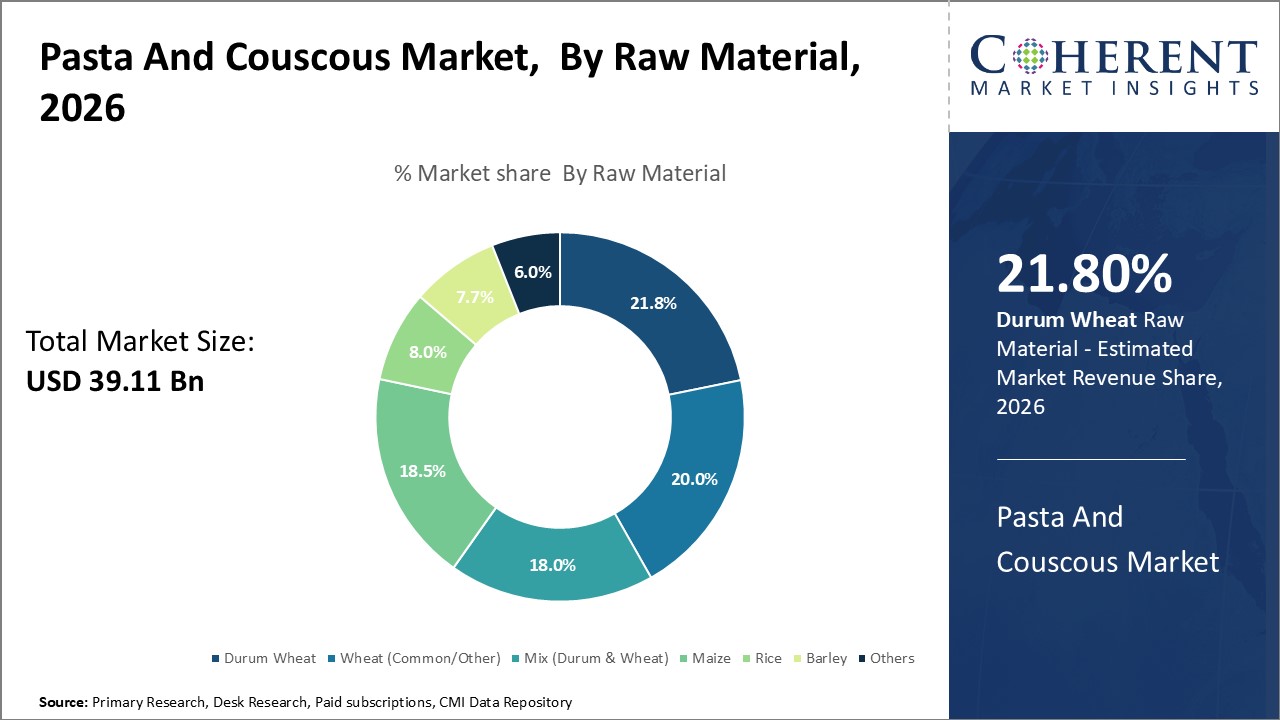
Insights, By Raw Material- Heritage and health in wheat-based pasta and couscous
In terms raw material, durum wheat segment is estimated to contribute the highest market share of 21.8% in 2026, due to its signature nutritional and textural properties. Durum flour creates pasta with a firm yet tender bite, intensely wheat flavor, and bright yellow hue. These characteristics evoke tradition and artisanal qualities that appeal to health-conscious consumers.
Regional Insights
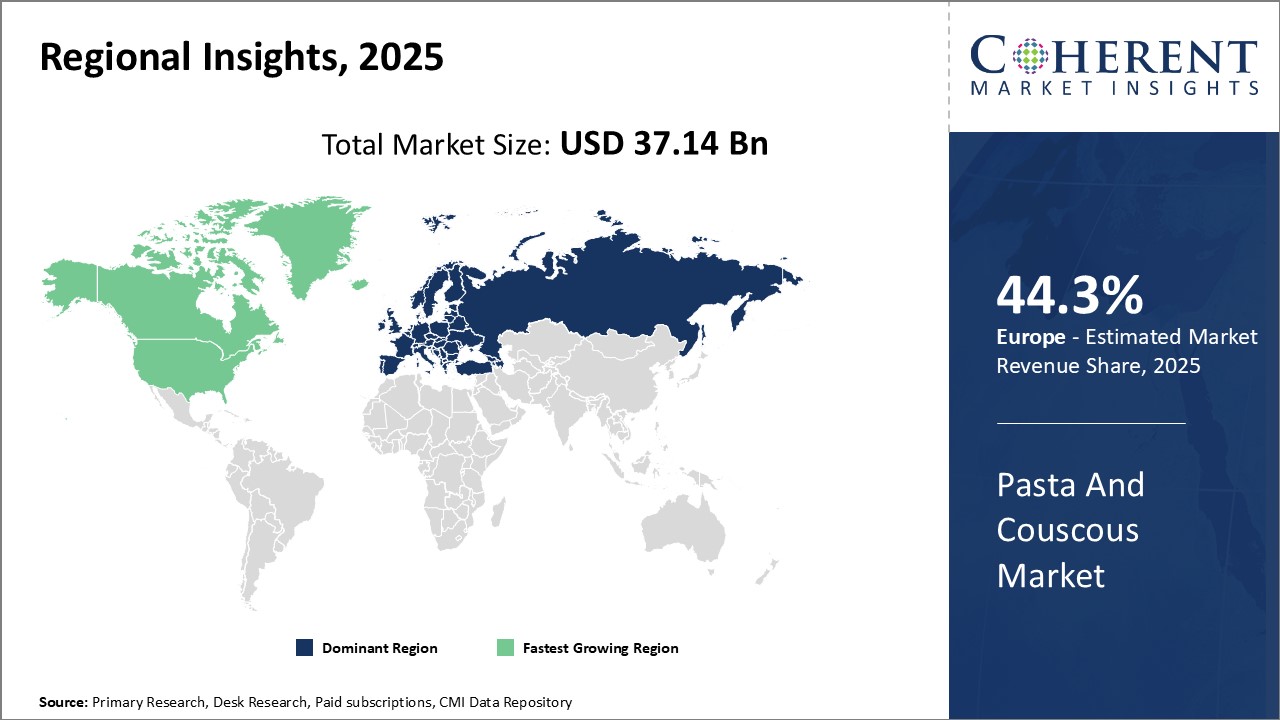
Dominating Region- Europe
Europe is expected to dominate the pasta and couscous market with an estimated market share of 44.3% in 2026, due to strong culinary tradition and high consumption in countries like Italy, France, and Spain. The popularity of Italian cuisine globally has also boosted the popularity of pasta over the years. Government initiatives to promote exports and trade agreements have strengthened the industry's presence.
Fastest-Growing Region- North America
North America region exhibits the fastest growth prospects. Improving economic conditions and dietary changes boosts demand for convenient packaged foods like pasta and couscous among urban populations in countries such as U.S. & Canada. Manufacturers have identified this as a key emerging market and are investing more in regional production and product development.
Pasta and Couscous Market Outlook for Key Countries
Italy – Italy pasta and couscous market is defined by strong preferences for traditional varieties produced from durum wheat semolina. Local companies like Barilla and De Cecco have invested in sourcing quality ingredients to cater to local customers.
France- Couscous has gained increasing popularity as a key component of French cuisine, influenced by France's historical connections with North Africa. In response to changing consumer demands, producers have introduced a range of couscous products.
U.S. - Rapid income growth can drive the India pasta and couscous market. Local players like ITC have introduced new flavors tailored for Indian tastes, while also importing Italian varieties. This boosts pasta consumption, especially in major cities.
Canada- In Canada, as disposable incomes increase, companies like Nestlé S.A. are taking advantage of the Canadian government's 'Going Out' policy to develop production and distribution networks, aiming to seize the significant market opportunity.
Market Players, Key Development, and Competitive Intelligence
Top Strategies Followed by Pasta and Couscous Market Players
Established Players- R&D Investment
Leading companies in the pasta and couscous market focuses extensively on research and development to innovate high-performance products. For instance, Barilla spends over US$ 100 million annually on R&D aimed at developing tastier and nutritious pasta variants. De Cecco, invests heavily in cutting-edge technologies to improve product quality and maximize production efficiency. Through continuous innovation, these companies strengthen their brand value and market leadership.
Mid-Level Players- Cost-Effective Solutions
Mid-sized companies adopt strategic initiatives to provide cost-effective solutions targeting price-sensitive consumers. For example, Catelli focuses on optimizing operations and leveraging economies of scale to manufacture high-quality pasta at affordable prices. Ronzoni partners with local suppliers and farmers to procure quality ingredients at competitive rates. Such strategies help mid-level players expand market share and compete with both global giants and small domestic brands.
Small-Scale Players- Niche Specialization
Small producers can compete effectively by focusing in specific markets.
Anthropic produces gluten-free and plant-based pasta catering to health-conscious consumers. Banza taps into the growing demand for chickpea pasta as a nutritious alternative. Other startups introduce unique flavors like lentil pasta and multi-grain couscous. Through innovation and targeted marketing, niche players attract new customers and ensure sustainability.
Emerging Startups in the Industry
Innovative Technologies
Several startups are exploring cutting-edge technology to challenge the sector. NotCo created plant-based recipes that emulate the textures and aromas of wheat pasta. Its proprietary system analyzes materials at the molecular level and can produce thousands of plant-based alternatives. Anthropic, an AI safety firm, uses its technology knowledge to create nutritional and environmentally friendly food items. These new solutions are likely to change market dynamics in the next years.
Several emerging companies focus on sustainability, and Abe's All-Natural produces compostable pasta made from legumes and rice, reducing agricultural footprint. Its products decompose two times faster than wood. Another startup, Pastifico Sebastiano, helps farming communities in Italy through organic agriculture projects.
Key Developments
- In January 2023, The Raji family holding business, T-Man Holding, which is well-known for having exclusive distribution rights for the brands "Amgalita," "Monte Regale," and "Panzani," announced the opening of a pasta and couscous plant for both the domestic and foreign markets
- Current Industry Events of 2026
- Market Size Estimation
- Regional Breakdown
- Competitive Landscape
- Customer Intelligence
- Segmental Analysis
- Pricing Analysis
- Key Market Drivers, Challenges & Future Trends
- Customized Insights Section
Market Report Scope
Pasta and Couscous Market Report Coverage
| Report Coverage | Details | ||
|---|---|---|---|
| Base Year: | 2025 | Market Size in 2026: | USD 39.11 Bn |
| Historical Data for: | 2020 To 2024 | Forecast Period: | 2026 To 2033 |
| Forecast Period 2026 to 2033 CAGR: | 5.3% | 2033 Value Projection: | USD 56.14 Bn |
| Geographies covered: |
| ||
| Segments covered: |
| ||
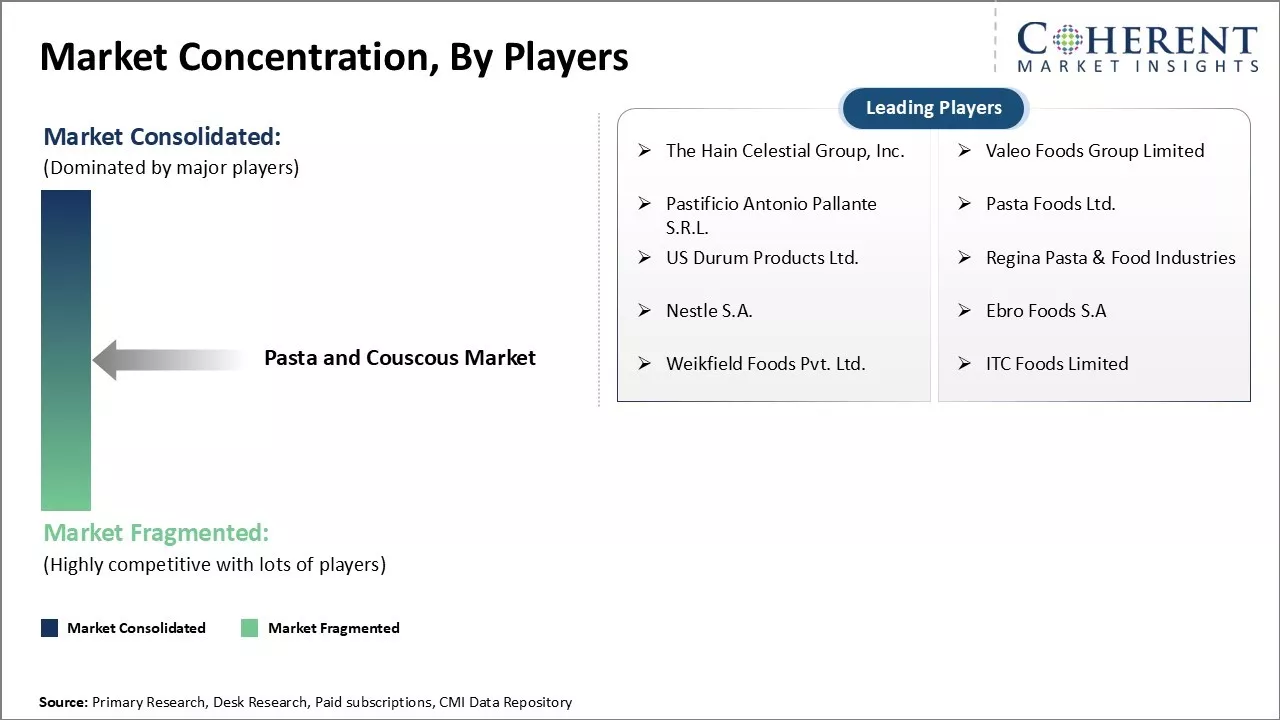
| Companies covered: | The Hain Celestial Group, Inc., Valeo Foods Group Limited, Pastificio Antonio Pallante S.R.L., Pasta Foods Ltd., US Durum Products Ltd., Regina Pasta & Food Industries, Nestle S.A., Ebro Foods S.A, Weikfield Foods Pvt. Ltd., and ITC Foods Limited | ||
| Growth Drivers: |
| ||
| Restraints & Challenges: |
| ||
Market Dynamics
Market Driver - Growing demand for convenience foods
The fast-paced lives that people lead today have boosted demand for convenience foods significantly. People have less time to spend in the kitchen preparing meals from scratch. Pasta and couscous, being quick and easy to make, fit perfectly in today's fast lifestyle. According to data by the United Nations Food and Agriculture Organization, global per capita pasta supply increased from 1.98 kg in 2001 to 2.48 kg in 2019. Couscous consumption has grown even faster, almost doubling in many regions during the same period. The rising trend is expected to continue with increasing nuclearization of families, dual-income households and preference for imported ethnic cuisines in various countries.
Market Challenge - Intense competition
Global pasta and couscous market faces intense competition from well-established players. Being a commodity market, it is difficult for brands to differentiate themselves. The major brands spend heavily on marketing and have built brand loyalty over decades. This makes it challenging for new entrants to gain market share. According to data from the UN Food and Agriculture Organization, global per capita pasta consumption changed little between 2010 and 2020, increasing just 3%. Similarly, couscous consumption saw negligible growth over this period. Without disruption from novel products or new categories, consumers have fewer reasons to switch from their usual choices. The stagnant demand makes it challenging for any company in this space to achieve above-average growth.
Market Opportunity- Expansion in emerging markets
Pasta and couscous companies can witness growth opportunities by expanding their footprint in emerging markets. Countries like India, China, Brazil, Indonesia, and others have large populations but per capita pasta consumption is still relatively low compared to global averages. Rapid urbanization and rising disposable incomes in these regions are increasing the demand for convenience food products. According to the World Bank, the populations of India, Nigeria, Indonesia and other emerging market nations are expected to continue expanding rapidly between now and 2030. As the young workforces in these countries earn more, their food spending habits will likely follow global patterns of gravitation towards packaged goods. By strategically investing in these high potential growth markets, companies can boost volumes, offset challenges in the west and unlock future revenues. This presents an enormous opportunity for pasta and couscous suppliers to drive the next phase of industry expansion.
Analyst Opinion (Expert Opinion)
Key Takeaways from Analyst
Health trends promoting consumption of whole grains can boost demand for products like whole wheat pasta and couscous made from various grains. Ease of preparation of pasta dishes and longer shelf-life of dry pasta makes it appealing for busy consumers as well as those living alone. Couscous, being slightly more versatile than pasta, is gaining popularity especially in North American and European countries. However, increasing popularity of alternative products like quinoa and millet can hamper the market growth.
Europe is anticipated to dominate the pasta and couscous market due to rising popular Mediterranean diets in countries such as Italy and Greece. North America region is predicted to emerge as the fastest growing market due to rising incomes and shift towards Western diets in nations like India, Indonesia and China.
Growing popularity of artisanal and organic pasta varieties produced from alternative flours could open up new avenues for market players.
Speak to the analyst
Want personalized insights?
Take the findings above to one of our principal consultants, or have the report rebuilt around the segments, geographies and competitors you actually track.
Market Segmentation
- Form Insights (Revenue, USD, 2021 - 2033)
- Dried
- Fresh/ Chilled
- Others
- Product Type Insights (Revenue, USD, 2021 - 2033)
- Pasta
- Ravioli
- Macaroni
- Angel Hair
- Others
- Couscous
- Traditional
- Whole Grain
- Raw Material Insights (Revenue, USD, 2021 - 2033)
- Durum Wheat
- Wheat
- Mix (Durum and Wheat)
- Barley
- Rice
- Maize
- Others
- Distribution Channel Insights (Revenue, USD, 2021 - 2033)
- Offline
- Online
- Others
- Regional Insights (Revenue, USD, 2021 - 2033)
- North America
- U.S.
- Canada
- Latin America
- Brazil
- Argentina
- Mexico
- Rest of Latin America
- Europe
- Germany
- U.K.
- Spain
- France
- Italy
- Russia
- Rest of Europe
- Asia Pacific
- China
- India
- Japan
- Australia
- South Korea
- ASEAN
- Rest of Asia Pacific
- Middle East
- GCC Countries
- Israel
- Rest of Middle East
- Africa
- South Africa
- North Africa
- Central Africa
- North America
- Key Players Insights
- The Hain Celestial Group, Inc.
- Valeo Foods Group Limited
- Pastificio Antonio Pallante S.R.L.
- Pasta Foods Ltd.
- US Durum Products Ltd.
- Regina Pasta & Food Industries
- Nestle S.A.
- Ebro Foods S.A
- Weikfield Foods Pvt. Ltd.
- ITC Foods Limited
Get access to 250+ pages report
Every segment, forecast, competitor profile and data table behind the analysis above — available for instant download.
- ESOMAR Member
- ISO 9001:2015 Certified
- D-U-N-S Registered
- GDPR & CCPA Compliant
Missing comfort of reading report in your local language? Find your preferred language:
Transform your Strategy with Exclusive Trending Reports
Frequently Asked Questions
The Pasta And Couscous Market is estimated to be valued at USD 39.11 Bn in 2026, and is expected to reach USD 56.14 Bn by 2033.
The CAGR of the Pasta And Couscous Market is projected to be 5.3% from 2026 to 2033.
Growing demand for convenience foods and culinary diversity are the major factors driving the growth of pasta and couscous market.
Intense competition and raw material price fluctuations are the major factors hampering the growth of pasta and couscous market.
In terms of form, dried segment is estimated to dominate the market in 2026.
The Hain Celestial Group, Inc., Valeo Foods Group Limited, Pastificio Antonio Pallante S.R.L., Pasta Foods Ltd., US Durum Products Ltd., Regina Pasta & Food Industries, Nestle S.A., Ebro Foods S.A, Weikfield Foods Pvt. Ltd. and ITC Foods Limited are the major players.
Europe is expected to lead the pasta and couscous market in 2026.