

Petroleum Waxes Market Size and Forecast — 2026-2033
The Global Petroleum Waxes Market size is estimated to be valued at USD 2.09 billion in 2026 and is expected to reach USD 3.10 billion by 2033, exhibiting a compound annual growth rate (CAGR) of 7.0% from 2026 to 2033.
Overview
Petroleum waxes are crystalline, hydrophobic solids derived from refined crude oil fractions, typically categorized into paraffin wax, microcrystalline wax, and slack wax. Known for their lubricity, moisture resistance, and thermal stability, they are key ingredients in cosmetics, packaging, candles, rubber processing, corrugated boards, and food coatings.
Key Takeaways
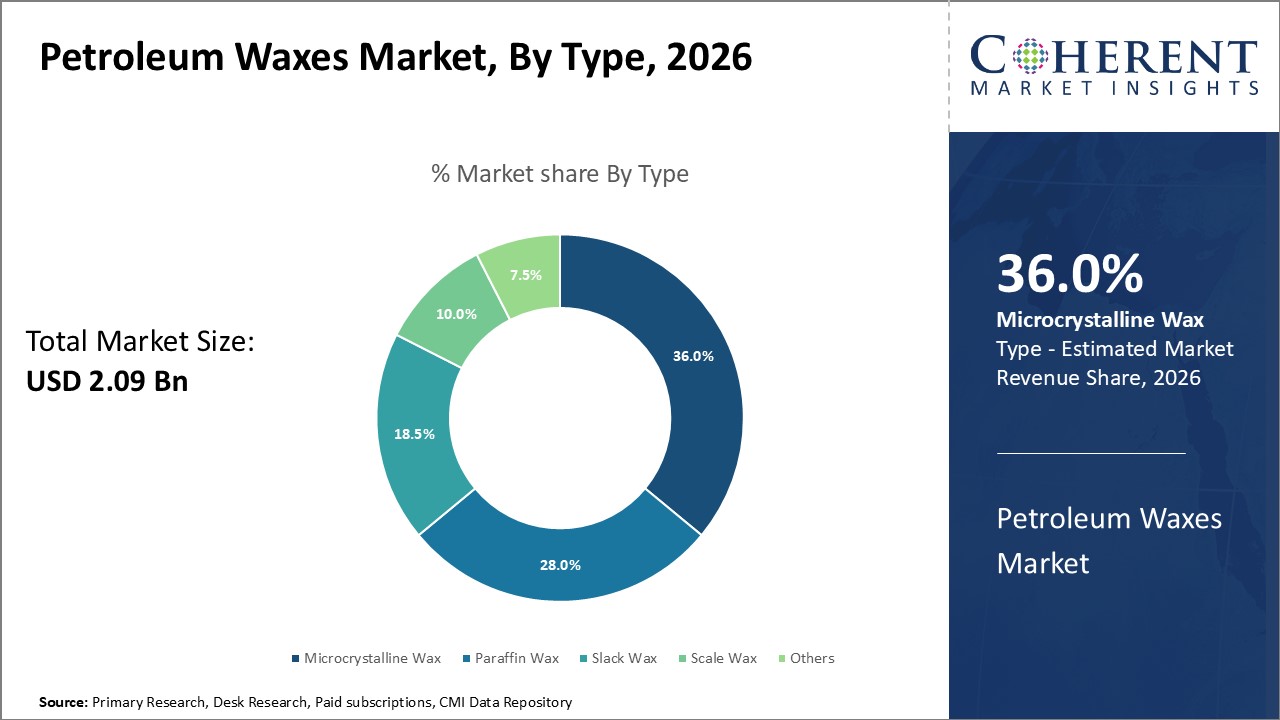
In the segment of Type, Microcrystalline Wax leads with a commanding 36% industry share, driven primarily by its superior adhesive and thermal properties suitable for advanced applications, while Paraffin Wax maintains steady growth due to its cost-effectiveness in candle production.
Within Applications, packaging holds the largest growth opportunity due to rising demand for wax-coated biodegradable materials, with cosmetics also showing strong expansion spurred by premium product innovation.
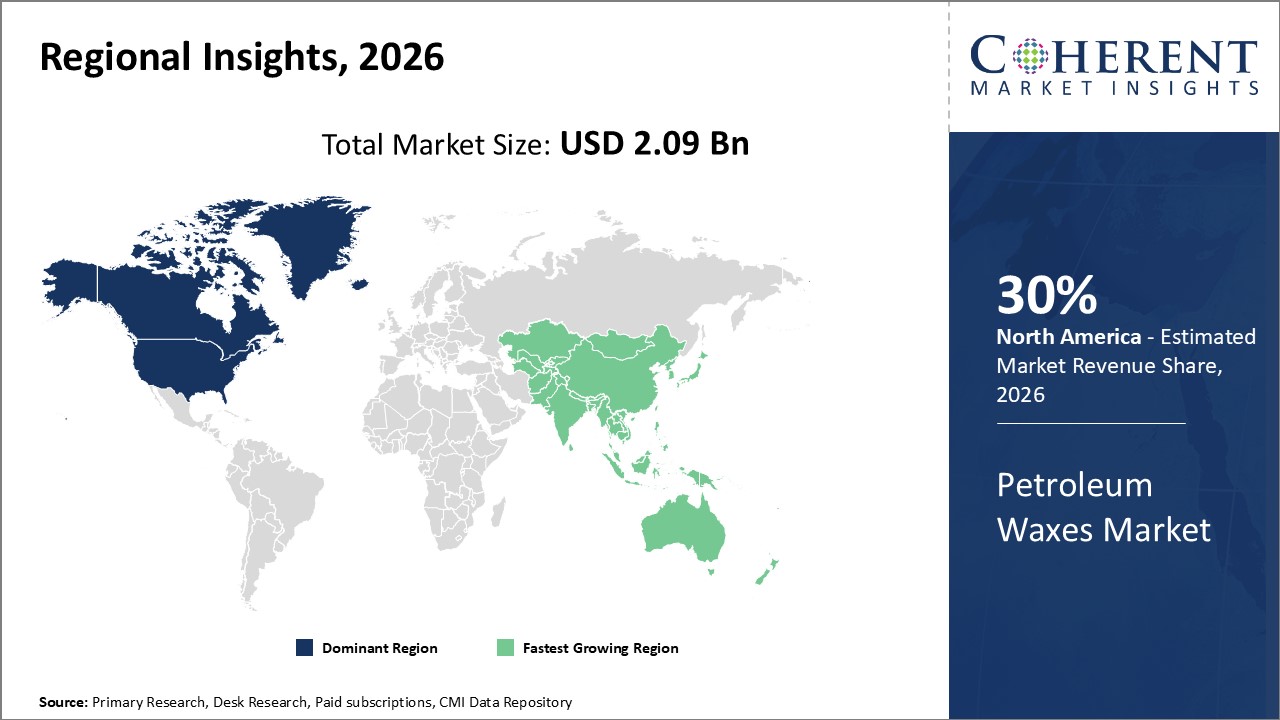
Regionally, Asia Pacific emerges as the fastest-growing market, propelled by rapid industrialization and refining capacity expansions in China and India, exhibiting a CAGR exceeding 8%.
North America retains market dominance with extensive industrial base and sophisticated supply chain infrastructure, accounting for nearly 30% of the global petroleum waxes market share, backed by robust demand in personal care and automotive industries.
Petroleum Waxes Market Segmentation Analysis
Petroleum Waxes Market Insights, By Type
Microcrystalline Wax dominates the market share at 36%. Microcrystalline Wax’s distinct molecular structure confers properties such as higher melting points, stronger adhesive qualities, and superior flexibility, making it indispensable in sophisticated applications like cosmetics, flexible packaging, and automotive thermal management. The rising demand for speciality waxes in premium skincare and packaging applications is a key growth driver for this segment. The fastest growing subsegment within this category is Slack Wax, benefiting from increased blending into more refined wax formulations, facilitating cost optimization and product customization in industrial applications.
Petroleum Waxes Market Insights, By Application
Packaging is the leading segment driven by demand for wax-coated biodegradable materials enhancing product shelf lives and sustainability profiles. The application of petroleum waxes in packaging has broadened significantly to include flexible films and cartons, underpinning a strong market share. Cosmetics, the fastest-growing subsegment in this domain, is propelled by rising consumer preference for wax-infused personal care products offering hypoallergenic and texture-enhancing benefits. Candle application, while stable, faces moderated growth due to environmental concerns and substitution by alternative lighting solutions. Rubber and Polishes applications continue to support market revenue by providing critical performance ingredients but lack the aggressive expansion seen elsewhere.
Petroleum Waxes Market Insights, By End-User Industry
Automotive stands out as the dominating segment due to the increasing use of petroleum waxes in lubricants, coatings, and thermal interface materials critical for modern vehicle efficiency and sustainability requirements. The sector’s persistent innovation drive, integrating wax-enhanced elements for electric and hybrid vehicles, fuels consistent revenue growth. Conversely, Food Packaging is the fastest-growing subsegment, benefitting from rising consumer demand for safe, wax-coated packaging that preserves freshness and extends shelf life. Personal Care maintains a solid market presence through wax formulations that improve product texture and longevity.
Petroleum Waxes Market Trends
The Petroleum Waxes market is increasingly aligning with global sustainability trends, prompting key manufacturers to pivot toward more eco-friendly wax options that cater to regulatory policies emphasizing reduced carbon footprints.
The rise of bio-based and specialty wax variants aligns well with consumer preferences for natural and biodegradable products, as observed in luxury packaging solutions introduced by leading companies in 2025.
Additionally, the digitization of supply chains has enhanced responsiveness to volatile demand patterns, especially in North America and Europe, reducing inventory costs and improving market agility.
The growing application spectrum, including high-tech segments such as thermal management materials in the automotive sector, underlines the shift from conventional waxes to high-performance variants, driving diversified demand.
Petroleum Waxes Market Insights, By Geography
North America Petroleum Waxes Market Analysis and Trends
In North America, the dominance in the Petroleum Waxes market is underpinned by mature industrial infrastructure, strong demand from the automotive and personal care sectors, and the concentrated presence of major market companies. The region accounts for approximately 30% of the total global market share in 2026. Regulatory frameworks promoting eco-friendly industrial materials have accelerated the adoption of sustainable waxes, creating favourable business growth conditions.
Asia Pacific Petroleum Waxes Market Analysis and Trends
Meanwhile, the Asia Pacific exhibits the fastest growth, with an expected CAGR of over 8% due to rapid economic development, expanding petrochemical refining capacities, and burgeoning packaging and cosmetics industries. Countries like China and India lead demand growth, supported by government policies encouraging domestic production and import substitution. Emerging market players and multinational companies have ramped up investments in these countries, driving regional market dynamics.
Petroleum Waxes Market Outlook for Key Countries
USA Petroleum Waxes Market Analysis and Trends
The USA’s petroleum waxes market continues to be a crucial engine of market revenue due to its robust automotive, packaging, and personal care industries. Ongoing investments to enhance refinery technologies and meet environmental standards have increased availability of high-quality waxes. Leading companies such as ExxonMobil and Shell have augmented their production capacities with a focus on microcrystalline waxes, responding to a 7% increase in domestic demand in 2025. Moreover, innovation in wax-based sustainable packaging solutions contributes to the country’s significant market share globally.
China Petroleum Waxes Market Analysis and Trends
China’s petroleum waxes market has expanded significantly, supported by domestic refining capacity growth and increasing downstream consumption, especially in packaging and candle industries. The government’s focus on petrochemical self-sufficiency incentivizes local manufacturers to invest in advanced wax production technologies. Sinopec and Hengli Petrochemical have spearheaded capacity expansions in recent years, capturing rapidly growing demand and contributing to Asia Pacific’s position as the fastest-growing region. This growth trajectory is expected to sustain increased market revenue and share through 2033.
Analyst Opinion
Supply-side indicators reveal that global production capacity for petroleum waxes has grown by approximately 9% in 2025 alone, led by capacity expansions in refining hubs across Asia-Pacific and the Middle East. This is a key factor supporting the anticipated surge in market size as producers optimize output to meet industrial demand.
Demand-side analysis shows increased consumption from packaging and cosmetics industries, which collectively account for over 45% of import volumes in North America and Europe. For example, North American imports of specialty petroleum waxes rose by 7.3% in 2025, highlighting growing use in eco-friendly candle manufacturing and sustainable packaging.
Pricing trends reflect a moderate but steady increase, with average prices of high-grade petroleum waxes rising 5.5% globally in early 2026 due to feedstock constraints and rising crude oil costs. This pricing dynamic is influencing market growth by elevating revenue despite slight margin pressure on some market players.
Use case diversification, especially in automotive applications such as thermal interface materials and lubricants, contributed an estimated 15% growth in volume demand in 2025. This trend signals expanding industrial reliance on petroleum waxes for innovative solutions, reinforcing market growth trajectory.
- Current Industry Events of 2026
- Market Size Estimation
- Regional Breakdown
- Competitive Landscape
- Customer Intelligence
- Segmental Analysis
- Pricing Analysis
- Key Market Drivers, Challenges & Future Trends
- Customized Insights Section
Market Scope
| Report Coverage | Details | ||
|---|---|---|---|
| Base Year: | 2025 | Market Size in 2026: | USD 2.09 billion |
| Historical Data for: | 2020 To 2024 | Forecast Period: | 2026 To 2033 |
| Forecast Period 2026 to 2033 CAGR: | 7.0% | 2033 Value Projection: | USD 3.10 billion |
| Geographies covered: |
| ||
| Segments covered: |
| ||
| Companies covered: | ExxonMobil, Shell plc, Sinopec, Sasol Ltd., PetroChina, Nynas AB, Hengli Petrochemical, Nippon Oil Corporation, TotalEnergies, Chevron Corporation. | ||
| Growth Drivers: |
| ||
Petroleum Waxes Market Growth Factors
The surge in packaging industry demand, particularly for wax-coated sustainable packaging, remains the primary growth driver, with an estimated 10% increase in demand over 2025-25 due to regulatory pressures for biodegradability. Growth in personal care and cosmetics sectors is another significant factor, as demand for refined waxes with superior quality attributes climbed 12% in volume in 2025, driven by premium skincare product launches. Advancements in automotive lubricants and thermal applications continue to widen the end-user base, fostering a compound effect on market revenue. Additionally, expanding petrochemical refining capabilities in Asia-Pacific are enabling localized supply, reducing dependence on imports, and stimulating regional market growth.
Petroleum Waxes Market Development
In 2026, ExxonMobil introduced the Prowaxx™ product line as part of a strategic effort to modernize and broaden its global wax portfolio, offering fully refined, semi-refined, and slack wax grades for diverse industrial applications. The launch enhances ExxonMobil’s ability to serve high-demand downstream sectors—such as packaging, adhesives, construction materials, personal care, and rubber—by delivering greater formulation flexibility, supply reliability, and consistent performance.
In 2025, Sasol Chemicals expanded its micronized wax portfolio with the introduction of SASOLWAX LC Spray 30 G and LC Spray 30 G-EF, engineered to improve processing, surface protection, and performance in coatings, inks, plastics, and specialty manufacturing. Both new grades feature a 32% lower Product Carbon Footprint (PCF) compared with existing options, demonstrating Sasol’s commitment to sustainability-focused product development and lower-emission raw materials. The expansion aligns with tightening regulatory standards, rising ESG expectations, and increasing global demand for environmentally optimized wax technologies across industrial supply chains.
Key Players
Leading Companies of the Market
ExxonMobil
Shell plc
Sinopec
Sasol Ltd.
PetroChina
Nynas AB
Hengli Petrochemical
Nippon Oil Corporation
TotalEnergies
Chevron Corporation
Competitive strategies deployed by key market players include strategic partnerships and capacity expansion. For example, ExxonMobil’s 2025 initiative to increase microcrystalline wax production by 16% across its US Gulf Coast facilities resulted in improved supply chain resilience and enhanced market share. Meanwhile, Sasol Ltd. focused on product innovation by launching bio-based wax variants, securing a niche in sustainable waxes, which expanded its market footprint in Europe by 9% in 2025.
Petroleum Waxes Market Future Outlook
In the coming years, the petroleum waxes market will evolve as sustainability expectations and packaging innovation reshape material usage. Demand will remain stable in industrial and cosmetic sectors, but long-term growth may be moderated by rising adoption of plant-based waxes, Fischer–Tropsch waxes, and biodegradable alternatives. Emerging economies—particularly in Asia—will continue to drive consumption in packaging and construction materials. Refinery modernization, improved wax recovery technologies, and strategic integration with specialty chemical suppliers are expected to improve product availability and quality consistency.
Petroleum Waxes Market Historical Analysis
Historically, the petroleum waxes market experienced steady demand due to its long-standing use in packaging, rubber processing, candles, corrugated boards, cosmetics, and coatings. Market growth was closely tied to crude oil refining output, as most waxes are by-products of lubricant and fuel production. Through the 1990s and early 2000s, paraffin wax dominated global consumption, with microcrystalline wax gaining traction in adhesives and personal care formulations. However, increasing competition from synthetic and bio-based waxes, along with restructuring in global refinery infrastructure, created supply fluctuations that shaped pricing and trade patterns.
Sources
Primary Research Interviews:
Refinery Operations Managers
Chemical Procurement Heads
Packaging Material Specialists
Candle Manufacturers
Databases:
U.S. EIA Petroleum Data
ICIS Wax Pricing Database
Magazines:
Hydrocarbon Processing
Packaging World
Chemical Week
Oil & Gas Journal
Journals:
Energy & Fuels
Journal of Petroleum Science and Engineering
Fuel Processing Technology
Industrial & Engineering Chemistry Research
Newspapers:
Financial Times (Energy)
The Economic Times (Oil & Chemicals)
The Wall Street Journal (Commodities)
The Hindu BusinessLine (Refining)
Associations:
American Fuel & Petrochemical Manufacturers (AFPM)
International Wax Association (IWA)
OPEC
World Petroleum Council
Get access to 250+ pages report
Every segment, forecast, competitor profile and data table behind the analysis above — available for instant download.
- ESOMAR Member
- ISO 9001:2015 Certified
- D-U-N-S Registered
- GDPR & CCPA Compliant
Missing comfort of reading report in your local language? Find your preferred language:
Transform your Strategy with Exclusive Trending Reports
Frequently Asked Questions
Dominant players include ExxonMobil, Shell plc, Sinopec, Sasol Ltd., and PetroChina, who together command significant production capacity and market share through product innovation and capacity expansions.
The market size is projected to grow from USD 2.09 billion in 2026 to USD 3.10 billion by 2033, reflecting a CAGR of 7.0% driven by rising demand from packaging, cosmetics, and automotive sectors.
The packaging industry represents the largest growth opportunity, fueled by the escalating shift to sustainable wax-coated packaging solutions across North America, Europe, and Asia Pacific.
Market trends will emphasize bio-based waxes, digitized supply chains, and integration of automation in refining processes, enabling enhanced product quality and diversified applications.
The competitive landscape is characterized by the consolidation of leading market players investing heavily in capacity and product differentiation, underpinned by challenges such as feedstock volatility and regulatory compliance.
Players focus on strategic capacity expansion, innovation of sustainable wax products, alliances with end-user industries, and regional market penetration initiatives to bolster market share and revenue.