

Pyrazinamide Market Size and Share Analysis- Growth Trends and Forecasts (2026-2033)
The pyrazinamide market size is anticipated to grow at a CAGR of 10.9% with USD 7.53 Bn in 2026 and is expected to reach USD 17.23 Bn in 2033. The market is growing with the rising global tuberculosis (TB) incidence and increased use of first‑line anti‑TB drugs. In 2023, the United States reported 9,633 TB cases, a 15.6% increase from 2022, with an incidence rate of 2.9 cases per 100,000 persons, highlighting ongoing TB challenges and demand for effective treatments.
Key Takeaways
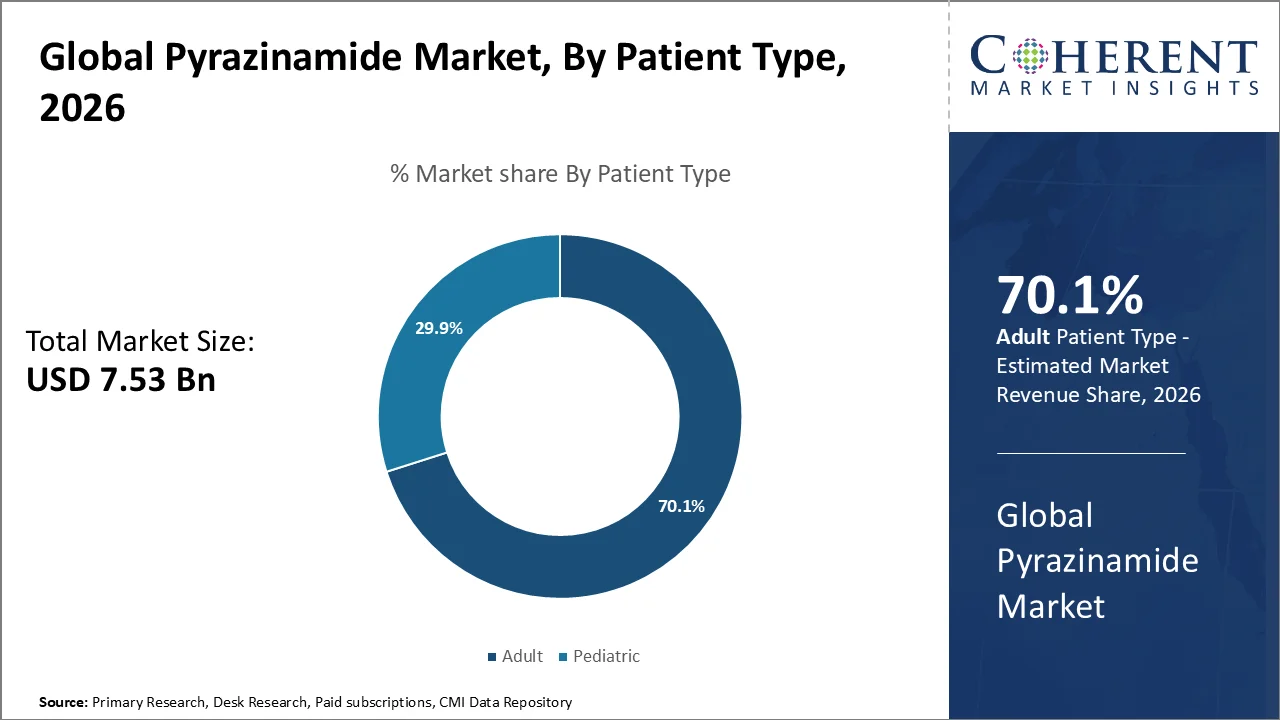
- The adult segment is projected to account for the largest share of 70.10% in 2026. The growth is because of the fact that adults aged ≥15 years carry the majority of the global tuberculosis (TB) burden. The WHO reports that in 2024, about 54% of global incident TB cases were in adult men and 35% were in adult women, together representing nearly 89% of all TB cases, while children (0–14 years) accounted for only about 11% of cases.
- The hospital pharmacies segment is projected to account for the largest share of 48.3% in 2026. The segment’s growth is due to the increasing number of TB treatment protocols that involve hospitalized care as well as the rise in TB-related inpatient admissions. In the United States in 2023, 94.6% of persons with tuberculosis (TB) disease began treatment on a regimen with at least four anti
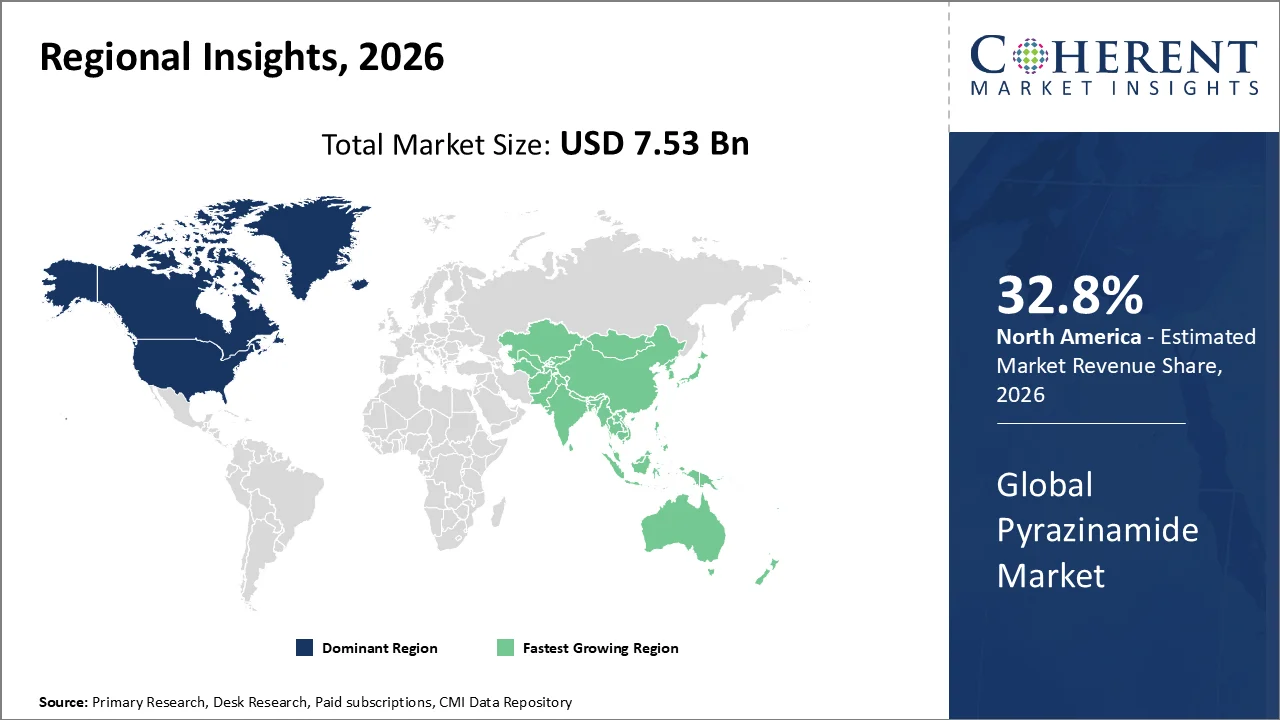
- North America is expected to secure the highest proportion of 32.8% in 2026. The growth is attributable in large part to robust national TB surveillance and treatment programs which includes the provision of pyrazinamide‑inclusive regimens as well as high treatment initiation rates. In the United States alone, provisional 2025 data reported 10,260 TB cases at a rate of 3.0 cases per 100,000 population, thereby underscoring continual public health focus on comprehensive drug regimens in the region
Segmental Insights
Which Patient Type Segment Dominates the Market?
On the basis of patient type, the adult segment accounts for the largest pyrazinamide market share of 70.10% in 2026. The segment’s growth is driven by the higher incidence of active tuberculosis (TB) disease in adults, who represent the majority of global TB cases.
According to the World Health Organization’s Global Tuberculosis Report 2024 data, the adults aged more than 15 years accounted for an estimated 88% of total TB incidence in 2023 in comparison with 12% in children aged 0-14 years. This age distribution demonstrates the greater disease prevalence amongst adults. They are more likely to develop active disease and also require full course combination therapy like pyrazinamide.
In the United States, provisional CDC data for 2025 indicated that total tuberculosis (TB) case counts remained high, with 10,260 cases reported, the majority of which occurred in adults. This highlights the ongoing clinical need for TB treatment regimens specifically targeting adult populations.
- Current Industry Events of 2026
- Market Size Estimation
- Regional Breakdown
- Competitive Landscape
- Customer Intelligence
- Segmental Analysis
- Pricing Analysis
- Key Market Drivers, Challenges & Future Trends
- Customized Insights Section
Hospital Pharmacies Segment to Secure the Largest Share
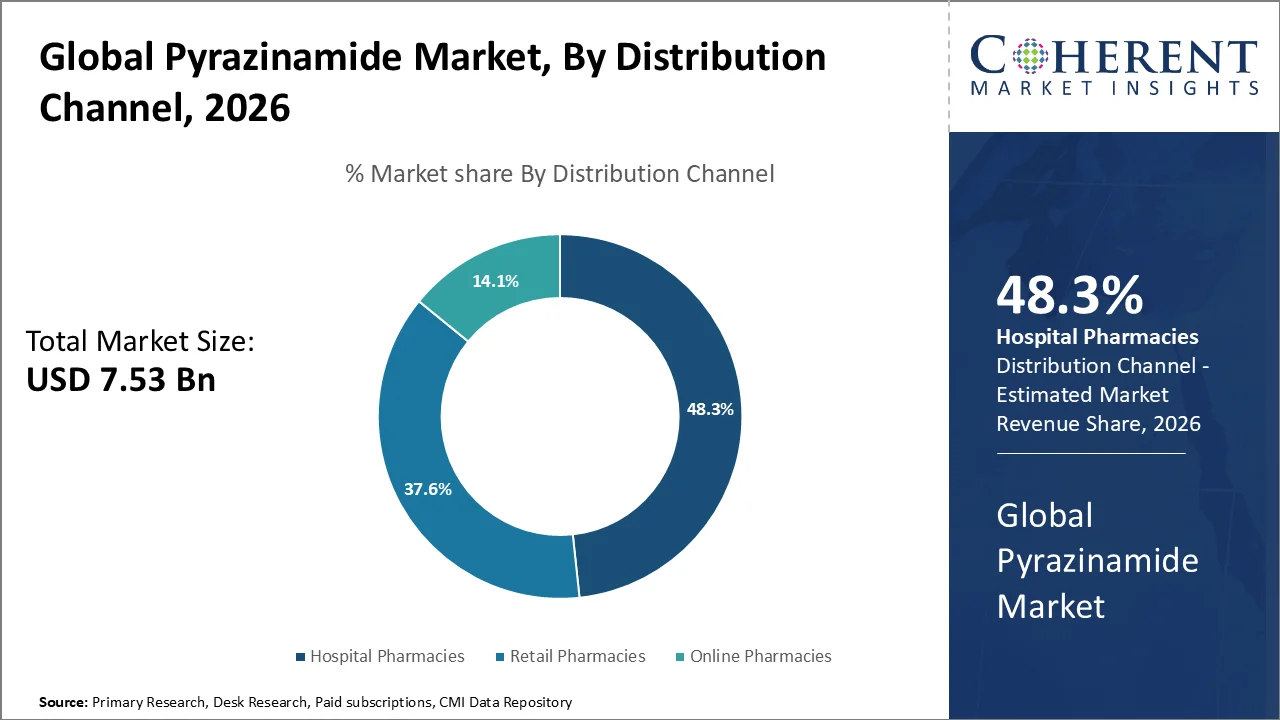
By distribution channel, the hospital pharmacies segment accounts for the largest pyrazinamide market share of 48.30%in 2026. The hospital pharmacies are the main source for dispensing pyrazinamide to patients diagnosed with tuberculosis.
The segment’s growth is owing to the increasing global burden of tuberculosis, particularly in low- and middle-income countries where hospital pharmacies are the primary point of access for essential medicines. The rise in hospital admissions due to severe cases of multi-drug-resistant tuberculosis (MDR-TB) as well as the greater availability of affordable medications is also contributing to the segment’s growth.
According to the World Health Organization (WHO) Global Tuberculosis Report 2025, nearly 10.7 million people across the globe were diagnosed with tuberculosis (TB) in 2024. This marks a substantial increase in drug-resistant cases. In addition, the Centers for Disease Control and Prevention (CDC) reported in 2023 that there were 9,633 documented cases of active tuberculosis in the United States, with a considerable number of patients receiving treatment in hospital pharmacies. This trend has led to a heightened demand for pyrazinamide in hospital pharmacies.
The segment’s leadership is also linked to the government healthcare programs aimed at combating TB, like the U.S. National TB Program, which allocates funds for the procurement of essential TB medicines including Pyrazinamide.
Market Driver
Increase in TB Cases is Transforming the Pyrazinamide Market in the U.S.
The demand for TB-related therapies such as pyrazinamide is increasing in the United States owing to a surge in reported TB disease cases in 2023. The CDC documented 9,633 cases of TB in the U.S. during this year, thereby resulting in an incidence rate of 2.9 per 100,000 persons. This is the highest case count since 2013 and the highest incidence rate since 2016, with both figures increasing about 15% in comparison with 2022.
This resurgence is widely reflected across reporting areas. California, Texas, New York, and Florida together accounted for over half of all TB cases, thus underscoring regional burdens driving clinical demand. Pyrazinamide, a key first‑line anti‑TB agent alongside isoniazid and rifampicin, remains central to U.S. treatment regimens recommended by CDC and the U.S. Preventive Services Task Force, particularly in combination therapy for drug‑susceptible TB.
The procurement and use of pyrazinamide are directly influenced by public health priorities and funding aimed at TB control and elimination as healthcare systems respond to the rising incidence and intensified screening efforts.
Key Advancement in Pyrazinamide: Uncovering Molecular Targets and Resistance Mechanisms
A considerable advancement in the pyrazinamide market is the improved understanding of molecular resistance mechanisms. According to U.S. government surveillance, tuberculosis (TB) case counts in the United States reached 9,633 in 2023, with an incidence rate of 2.9 per 100,000 people, thereby indicating an increase compared to 2022. Although still rare, drug-resistant TB cases were reported, with 589 cases (8.5%) showing resistance to at least isoniazid and 100 cases (1.4%) classified as multidrug-resistant (MDR TB) in 2023.
The effectiveness of pyrazinamide is closely linked to the pncA gene, which encodes the enzyme required to activate the drug. The mutations in this gene are the primary mechanism of pyrazinamide resistance in Mycobacterium tuberculosis. This molecular insight is pivoting treatment strategies. The clinicians are progressively using comprehensive susceptibility testing (including genetic pncA analysis) to tailor regimens and mitigate resistance risk. Together with CDC data showing MDR TB remains largely uncommon, these advances support optimized use of pyrazinamide in combination therapies that shorten and strengthen treatment courses for drug‑susceptible and some resistant TB cases in the U.S. regime.
Current Events and Their Impact on the Pyrazinamide Market
Current Event | Description and its Impact |
WHO Global Tuberculosis Report 2025 - Pyrazinamide in Treatment Regimens |
|
Increase in Multidrug-Resistant TB Treatment with Shortened Regimens |
|
Pyrazinamide Market Trends
- Increasing global tuberculosis burden is supporting demand for Pyrazinamide as a key first‑line anti‑TB treatment. According to the World Health Organization, in 2024 an estimated 10.7. This highlights the continued need for effective regimens which include pyrazinamide combined with other drugs for curative therapy.
- Drug‑resistant tuberculosis (DR‑TB) remains a major public health challenge, thus prompting broader pyrazinamide use in multi‑drug protocols. WHO estimates a persistent burden of drug‑resistant TB which requires sustained treatment strategies, thereby reflecting Pyrazinamide’s role as part of combination regimens in both first‑line as well as resistant TB therapy.
- The national TB surveillance data show continued TB incidence in developed markets, thereby constituting to the treatment demand. The U.S. CDC reported 10,260 TB cases in 2025 with a rate of 3.0 cases per 100,000 population. This indicates the continual needs for standardized treatments including pyrazinamide in public health efforts in order to control tuberculosis (TB).
- The global treatment guidelines are putting a greater emphasis on the significance of pyrazinamide. WHO consolidated recommendations include regimens combining pyrazinamide with other first‑line drugs (isoniazid, rifampicin, ethambutol) for effective therapy of drug‑susceptible TB, thus reinforcing its role in standardized care protocols worldwide.
- National elimination programmes continue efforts that support standardized use of Pyrazinamide in treatment regimens. For example, India’s National TB Elimination Programme reports substantial reductions in TB incidence rates and deaths between 2015 and 2023, thereby reflecting intensified case detection and treatment strategies that include essential drugs like Pyrazinamide.
Regional Insights
North America Leads Owing to Ongoing Burden of Tuberculosis (TB)
The North America region accounts for 32.8% of the market in 2026. The region’s growth is backed by ongoing burden of tuberculosis (TB) and the public health strategies implemented in both the U.S. and Canada to manage and treat TB infections. In the U.S., Pyrazinamide remains a core first‑line medication in combination therapy. According to the CDC, thus emphasizing the continuous treatment needs for the disease.
The public health investment plays a crucial role in TB management in the U.S. The federal and state programs are prioritizing expanded diagnosis as well as treatment access. The US FDA regularly checks and approves TB treatment plans, including those with pyrazinamide.
In Canada, the Public Health Agency of Canada (PHAC) reported 2,508 new TB cases in 2024, with an incidence rate of about 6.1 per 100,000 people. The TB control strategy in Canada emphasizes on treatment availability as well as enhanced monitoring, thereby promoting the use of recommended first‑line drugs like pyrazinamide. The continuing surveillance efforts as well as government health initiatives are placing a greater emphasis on high‑risk populations, which sustains the demand for anti‑TB therapies, including pyrazinamide.
The persistent TB incidence, health priorities, and government-supported programs in both the U.S. as well as Canada sustain North America’s leadership in the pyrazinamide industry, offering strong growth prospects and sustained demand for treatment.
Asia Pacific Pyrazinamide Market Trends
The Asia Pacific region is poised to be as the fastest-growing region through 2026-2033, driven by ongoing national tuberculosis (TB) control programs, high TB incidence, and increasing adoption of standard first‑line treatment regimens that include pyrazinamide alongside rifampicin and isoniazid. According to the World Health Organization (WHO), in 2024 an estimated 10.7, thereby underscoring the scale of demand for essential tuberculosis drugs like pyrazinamide.
In India, which contributes substantially to global TB burden, the government’s National TB Elimination Programme (NTEP) continues to employ pyrazinamide as part of the standard 6‑month antibiotic regimen of isoniazid, rifampicin, pyrazinamide, and ethambutol for drug‑susceptible TB, thus emphasizing its role in national treatment protocols. China, similarly bearing a large share of TB cases, maintains pyrazinamide use within public health treatment strategies backed by expanded diagnostic and treatment infrastructure, thereby reflecting sustained public sector procurement of first‑line TB medicines.
In addition, the region has witnessed key developments in the tuberculosis therapeutics landscape. In May 2024, Moreover, the leading generic manufacturers in India continue to supply pyrazinamide-based fixed-dose combinations, thus strengthening the region's position as a key supplier for essential TB drugs worldwide.
Ongoing U.S. Tuberculosis (TB) Treatment Practices is Accelerating the Pyrazinamide Demand in United States
The United States Pyrazinamide Market is witnessing steady growth. The market is being driven by ongoing U.S. tuberculosis (TB) treatment practices, where pyrazinamide continues to be a key component of first‑line therapy in combination with isoniazid, rifampin, and ethambutol, as recommended by the CDC in standard TB regimens (HRZE) for drug‑susceptible TB patients. In 2023, 82.6, underscoring its clinical importance in treatment plans.
Market interest is also affected by shifts in TB incidence. According to the CDC’s TB Surveillance Report, the United States reported 9,633 TB cases in 2023 with an incidence rate of 2.9 per 100,000 persons, a rise in case counts for the third consecutive year, indicating sustained need for anti‑TB drugs like pyrazinamide.
China Pyrazinamide Market Trends
China’s Pyrazinamide market is closely tied to the country’s national priorities for tuberculosis (TB) control, treatment access and public health policy. Pyrazinamide is a key first‑line antibiotic in standard TB therapy alongside isoniazid and rifampicin, recommended for effective shorter regimens and improved cure rates. China is one of the top global TB burden countries, with national policy placing a greater emphasis on expanding preventive treatment as well as systematic screening. These include increasing Tuberculosis Preventive Treatment (TPT) coverage targets to 60% by 2025 and 80% by 2030 for close contacts of TB cases. These efforts are supported by guidance from the China CDC and national plans.
The government surveillance systems in China (NNIDRS) provide continual reporting of TB incidence and treatment outcomes via the Chinese Center for Disease Control and Prevention, thereby supporting policy adjustments and treatment strategies which include first‑line drugs like pyrazinamide. In recent industry developments, major pharmaceutical firms like in October 2022, Lupin Limited have collaborated with global health initiatives like the Clinton Health Access Initiative to enhance availability and reduce the burden of TB medications, reflecting partnership momentum in anti‑TB therapeutics.
Who are the Major Companies in Pyrazinamide Market
Some of the major key players in Pyrazinamide are Pure Chemistry Scientific, LGM Pharma, TCI, HBCChem, Alfa Chemistry, Toronto Research Chemicals, Acros Organics, AlliChem, Waterstone Technology, City Chemical, EDQM, J & K SCIENTIFIC, Meryer (Shanghai) Chemical Technology, Energy Chemical, and Beijing Ouhe Technology.
Key News
- In November 2023, the CDC's Tuberculosis Trials Consortium (TBTC) initiated an international clinical trial called Combination Regimens for Shortening Tuberculosis Treatment (CRUSH-TB). This promising trial seeks to identify new drug combinations to offer additional options for shortening the treatment of tuberculosis (TB) disease. The trial evaluates the effectiveness and safety of a new four-month regimen based on bedaquiline, moxifloxacin, and pyrazinamide.
- In July 2021, Metropolis Healthcare Ltd., one of the prominent diagnostic service provider of India, introduced NEXTGEN TB whole genome sequencing for tuberculosis. This innovative approach uses the Next Generation Sequencing (NGS) platform to quickly identify drug resistance in TB patients and deliver genotypic-level data on drug-resistant genes for up to 18 Anti-TB antibiotics, including Pyrazinamide.
Market Report Scope
Pyrazinamide Market Report Coverage
| Report Coverage | Details | ||
|---|---|---|---|
| Base Year: | 2025 | Market Size in 2026: | USD 7.53 Bn |
| Historical Data for: | 2020 To 2024 | Forecast Period: | 2026 To 2033 |
| Forecast Period 2026 to 2033 CAGR: | 10.9% | 2033 Value Projection: | USD 17.23 Bn |
| Geographies covered: |
| ||
| Segments covered: |
| ||
| Companies covered: | Pure Chemistry Scientific, LGM Pharma, TCI, HBCChem, Alfa Chemistry, Toronto Research Chemicals, Acros Organics, AlliChem, Waterstone Technology, City Chemical, EDQM, J & K SCIENTIFIC, Meryer (Shanghai) Chemical Technology, Energy Chemical, and Beijing Ouhe Technology. | ||
| Growth Drivers: |
| ||
| Restraints & Challenges: |
| ||
Analyst Opinion
- The pyrazinamide market is experiencing growth as global initiatives to combat tuberculosis (TB) continue to rely heavily on pyrazinamide as a core first-line treatment. In the US, 94.6% of TB patients began treatment in 2023 with the standard four-drug regimen including pyrazinamide alongside isoniazid, rifampin, and ethambutol, thereby indicating the continual significance of this medication in TB control efforts.
- The national TB programs and health organizations like the WHO continue to emphasize the role of pyrazinamide in shortening TB treatment regimens. The WHO’s latest guidelines advocate for its use in the initial two-month phase of a six-month drug-sensitive TB regimen, a standard now adopted globally to improve treatment outcomes.
- The ongoing challenge of drug-resistant TB strains, particularly pyrazinamide-resistant strains, continues to be a main concern. The CDC’s 2023 report indicated that pyrazinamide resistance is on the rise, which is propelling the need for better diagnostics as well as combination therapies. As a result, the governments worldwide are putting greater efforts to optimize treatment regimens.
- Strategic collaborations in the TB treatment sector are shaping future growth. For example, Lupin Limited and TB Alliance’s partnership announced in February 2026 aims to advance new TB treatments. This is likely to affect future demand for pyrazinamide and other components of the regimen. This partnership highlights the ongoing innovation in TB therapies with potential long-term implications for the market.
Speak to the analyst
Want personalized insights?
Take the findings above to one of our principal consultants, or have the report rebuilt around the segments, geographies and competitors you actually track.
Market Segmentation
- By Patient Type (Revenue, USD Bn, 2021-2033)
- Adult
- Pediatric
- By Distribution Channel (Revenue, USD Bn, 2021-2033)
- Hospital Pharmacies
- Retail Pharmacies
- Online Pharmacies
- Global Pyrazinamide Market, By Region (Revenue, USD Bn, 2021-2033)
- North America
- U.S.
- Canada
- Latin America
- Brazil
- Mexico
- Argentina
- Rest of Latin America
- Europe
- Germany
- U.K.
- France
- Italy
- Spain
- Russia
- Rest of Europe
- Asia Pacific
- China
- India
- Japan
- Australia
- South Korea
- ASEAN
- Rest of Asia Pacific
- Middle East
- GCC
- Israel
- Rest of Middle East
- Africa
- South Africa
- Central Africa
- North Africa
- North America
Sources
Primary Research Interviews
- Pyrazinamide Manufacturers
- Pharmaceutical Distributors & Suppliers
- Research and Development (R&D) Organizations
- Regulatory Authorities (e.g., FDA, EMA)
- Healthcare Providers (Hospitals, Clinics)
- Others
Databases
- Bloomberg Terminal
- Thomson Reuters Eikon
- IHS Markit
- Euromonitor International
- S&P Global Market Intelligence
- Others
Magazines
- Pharmaceutical Technology
- BioPharma Dealmakers
- Drug Discovery Today
- Journal of Pharmaceutical Sciences
- Others
Journals
- Journal of Antimicrobial Chemotherapy
- International Journal of Infectious Diseases
- The Lancet Infectious Diseases
- European Journal of Clinical Microbiology & Infectious Diseases
- Others
Newspapers
- The New York Times (Health Section)
- The Guardian (Health & Science)
- Reuters Health
- Bloomberg News (Health)
- Others
Associations
- World Health Organization (WHO)
- International Union Against Tuberculosis and Lung Disease (The Union)
- Global Alliance for TB Drug Development (GATB)
- American Society for Microbiology (ASM)
- Others
Public Domain Sources
- U.S. Food and Drug Administration (FDA)
- European Medicines Agency (EMA)
- Centers for Disease Control and Prevention (CDC)
- World Health Organization (WHO) – Tuberculosis Department
- National Institutes of Health (NIH)
- Others
Proprietary Elements
- CMI Data Analytics Tool
- Proprietary CMI Existing Repository of Information for the Last 8 Years
Get access to 250+ pages report
Every segment, forecast, competitor profile and data table behind the analysis above — available for instant download.
- ESOMAR Member
- ISO 9001:2015 Certified
- D-U-N-S Registered
- GDPR & CCPA Compliant
Missing comfort of reading report in your local language? Find your preferred language:
Transform your Strategy with Exclusive Trending Reports
Frequently Asked Questions
The Pyrazinamide Market is expected to reach USD 17.23 Bn in 2033.
Major players operating in the global Pyrazinamide Market include Pure Chemistry Scientific, LGM Pharma, TCI, HBCChem, Alfa Chemistry, Toronto Research Chemicals, Acros Organics, AlliChem, Waterstone Technology, City Chemical, EDQM, J & K SCIENTIFIC, Meryer (Shanghai) Chemical Technology, Energy Chemical, and Beijing Ouhe Technology.
The rising resistance to the drug, severe side effects like hepatotoxicity and hyperuricemia, and competition from new, more effective MDR-TB regimens are the key factors hampering growth of the market.
The high, rising prevalence of tuberculosis (TB), particularly multi-drug resistant (MDR-TB) strains, necessitating its use in essential combination therapies is boosting demand for pyrazinamide services.
The pyrazinamide market is anticipated to grow at a CAGR of 10.9% between 2026 and 2033.
Among regions, North America is expected to account for a largest market share in the global pyrazinamide market over the forecast period.
Pyrazinamide is most effective against Mycobacterium tuberculosis, the bacterium responsible for tuberculosis (TB). It is particularly effective in the acidic environment of macrophages and helps eliminate the bacteria during the initial phase of TB treatment.