

Single Use Packaging Market Analysis & Forecast: 2026-2033
Single Use Packaging Market is estimated to be valued at USD 121.53 Bn in 2026 and is expected to reach USD 182.73 Bn in 2033, exhibiting a compound annual growth rate (CAGR) of 6.0% from 2026 to 2033.
Key Takeaways
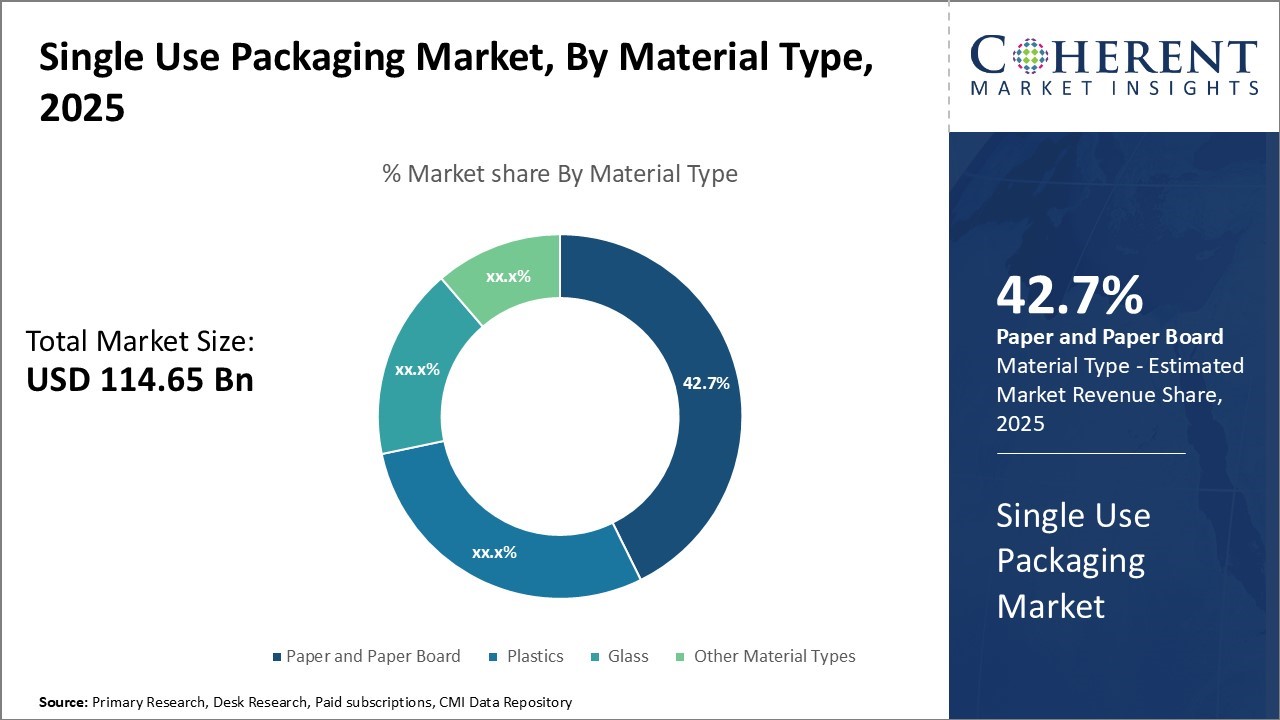
- According to Material Type, The Paper And Paper Board Category is anticipated to account for the largest share of 43.7% for the Single Use Packaging market in 2026. Compared to plastics, paper and paper board are preferred because they are recyclable, biodegradable, and have a smaller environmental impact.
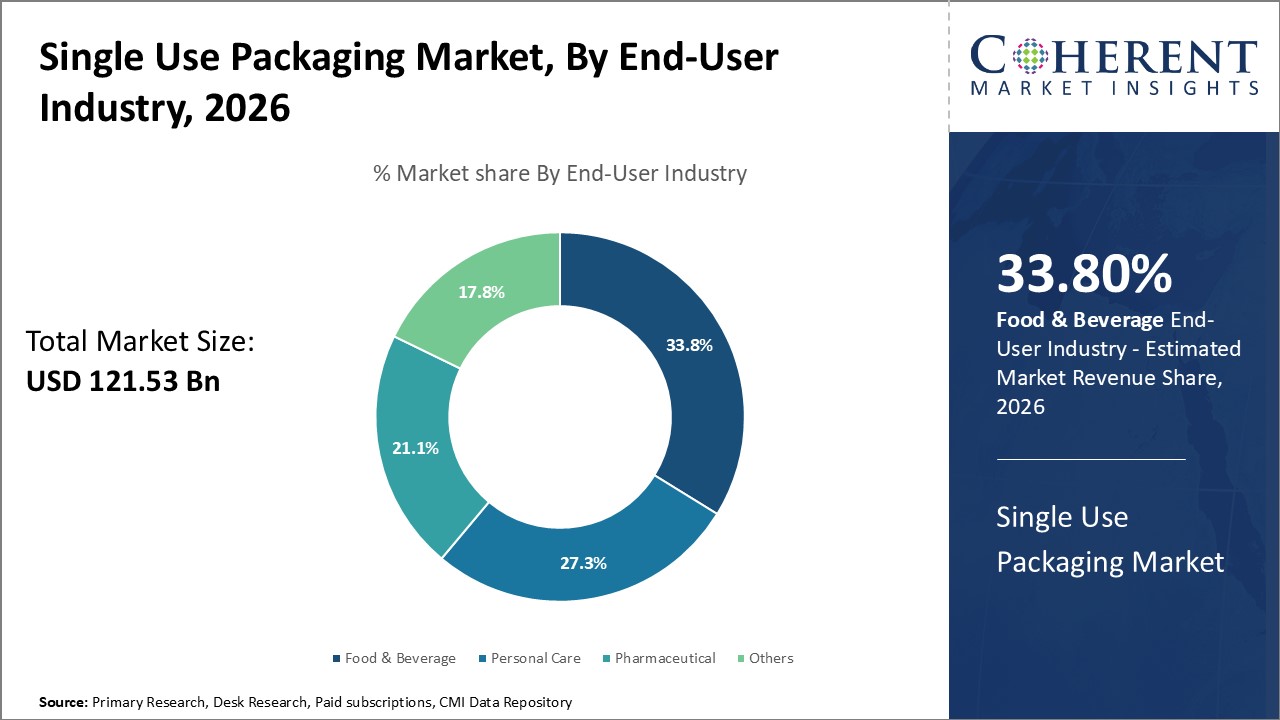
- According to End-User Industry, The Food & Beverage Segment is anticipated to hold 33.8% of the single use packaging market share in 2026. Convenience, hygiene, portion control, and prolonged shelf life are among benefits of single-use food packaging that are highly regarded by both customers and businesses.
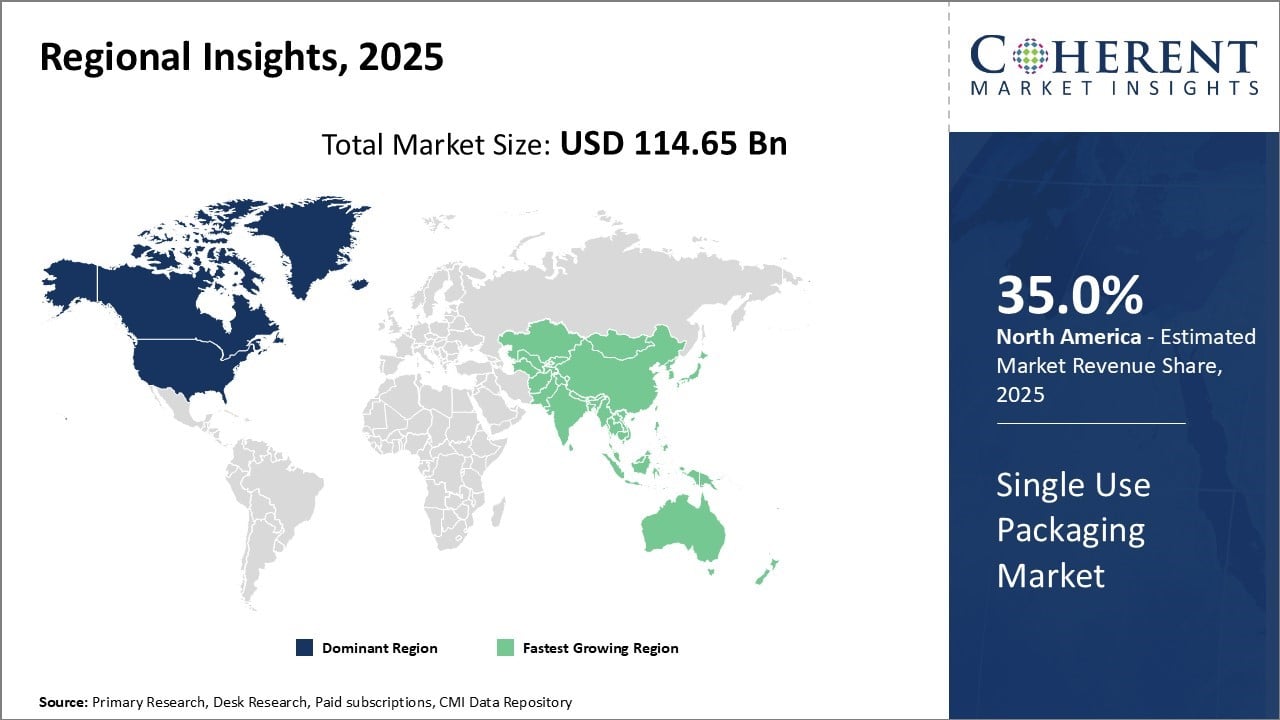
- According to region, North America holds the largest market share of 35.0% for Single Use Packaging market growth by 2026. The region’s strong industry base and regulatory momentum make it ideally positioned to spearhead the shift to more eco-friendly single use solutions.
Market Overview
The Single Use Packaging Market Size is developing rapidly due to the growing need for single-serve, hygienic, and convenient products in sectors like food and beverage, healthcare, and personal care. The single use packaging market is expected to witness positive growth over the forecast period. The increasing demand from foodservice outlets and on-the-go food and beverage consumption are driving the growth of the market. Strong economic growth and changing lifestyles in developing countries are increasing the demand for convenience packaging solutions. Growth in the e-commerce industry is also favoring the market as more packages are needed for product delivery.
Current Events and Its Impact on the Single Use Packaging Market
Event | Description and Impact |
Rise of Sustainable Packaging Materials |
|
Growth of E-commerce and On-the-Go Consumption |
|
Emergence of New Technology
- Technological innovation is reshaping the single-use packaging landscape in Europe. Companies are investing in biodegradable and compostable materials, such as polylactic acid (PLA) and polyhydroxyalkanoates (PHA), which offer reduced environmental impact compared to traditional plastics.
- Production capacity for these sustainable materials increased by over 15% globally in 2024, enabling a broader supply pipeline for eco-friendly packaging.
- For example, leading market players like Berry Global and Novolex are developing advanced packaging solutions that incorporate higher recycled content and improved barrier properties.
- Additionally, digital printing and smart packaging technologies are being adopted to enhance traceability, branding, and consumer engagement.
- Current Industry Events of 2026
- Market Size Estimation
- Regional Breakdown
- Competitive Landscape
- Customer Intelligence
- Segmental Analysis
- Pricing Analysis
- Key Market Drivers, Challenges & Future Trends
- Customized Insights Section
Demand for Sustainable and Eco-Friendly Packaging
- There is a significant and growing demand for sustainable and eco-friendly packaging in Europe, driven by consumer awareness and strict environmental regulations.
- The shift away from traditional plastics is evident, with paper and paperboard packaging gaining market share due to their recyclability and lower environmental footprint.
- Regulatory measures, such as the EU’s ban on certain single-use plastics and ambitious recycling targets, are compelling manufacturers to adopt biodegradable, compostable, and recyclable alternatives. This trend is further amplified by the expansion of quick service restaurants and online food delivery, both of which require efficient yet sustainable packaging solutions.
- As a result, companies are prioritizing innovations that reduce plastic usage and enhance recyclability to align with evolving consumer preferences and regulatory requirements.
Pricing Analysis
- The single-use packaging market in Europe is experiencing moderate price increases, primarily due to rising raw material costs. In 2024, the cost of raw materials including bioplastics and sustainable alternatives rose by approximately 3–5%. This increase is driven by higher demand for eco-friendly materials, supply chain disruptions, and regulatory pressures. As a result, manufacturers are facing tighter margins and are compelled to innovate in order to balance cost and sustainability.
- Additionally, import volumes for single-use packaging in the foodservice sector grew by about 9% in 2024, indicating shifting demand and cost dynamics within the region. These pricing trends are pushing the industry toward alternative materials and more efficient production processes to remain competitive.
Segmental Insights
Single Use Packaging Market Insights, By Material Type
The paper and paper board segment is expected to hold 43.7% share of the single use packaging market in 2026, due to strong consumer preference for more eco-friendly options. Paper products are widely considered to have a lower environmental impact than plastic or glass alternatives. As sustainability becomes an increasingly important factor in purchasing decisions, demand has grown for packaging made from renewable, natural materials like paper.
A key strength of paper is its ability to be recycled multiple times with minimal loss of quality. Recycling programs for paper are also more widespread and efficient than those for plastic or other materials. Single use packaging with manufacturing process is increasingly being scrutinized for its environmental impact, making paper a preferred choice for brands seeking sustainable alternatives.
This supports the perception of paper as a "green" packaging solution that can be reused or recycled responsibly at the end of its useful life. Companies promoting paper products emphasize their commitment to sustainability goals through the use of recycled content and fibers from responsible forestry sources.
Beyond environmental benefits, paper also performs well from a functional perspective for certain applications. Properties like printability, writability, and barrier qualities make paper well-suited for areas like food service disposables, paper bags, carton packaging, and protective wrapping or cushioning. Improvements in coating and lamination techniques further expand the versatility of paper-based solutions.
Single Use Packaging Market Insights, By End-User Industry
The food & beverage industry is expected to dominate the end-user segment with 33.8% of the market share in 2026, due to widespread reliance on single-use packaging for safe, hygienic and convenient product handling. Single-use packaging of condiments is a key example, ensuring portion control and minimizing contamination risks in both retail and foodservice settings.
Whether shipping raw ingredients and goods or ringing up prepared meals and drinks to go, disposable containers, bags, wrappers, and other packaging play a fundamental role throughout food/beverage supply chains.
From grocery stores to quick service restaurants, takeaway and delivery have become essential channels powered by single-use packaging. During the pandemic, demand skyrocketed as more consumers opted for contactless purchasing of prepared food ordered online or via mobile apps. Even as dining rooms reopen, off-premise consumption habits developed during lockdowns will likely remain significant drivers of food packaging consumption.
Within grocery, single-use formats are indispensable for everything from sliced meats and cheeses to bakery items, produce, snacks and frozen goods. Their tamper-evidence and protective properties preserve freshness throughout transport from manufacturers to retailers to homes. Similar needs apply in institutional foodservice serving cafeterias, hospitals, schools and airlines.
Regional Insights
North America Single Use Packaging Market
North America has established itself as the dominant region in the global single use packaging market. The region is expected to account for 35.0% of the market share in 2026. With the strong presence of major packaging producers as well as manufacturers across industries that consume significant amounts of single use packaging, the market has achieved notable scale.
Being an early adopter of single use packaging solutions to meet various needs has given North American players considerable experience and expertise. Meanwhile, growing environmental concerns have spurred innovation towards more sustainable product offerings in the region. This positions North America favorably to lead the transition towards greener single use solutions.
Asia Pacific Single Use Packaging Market
Among all regions, Asia Pacific has emerged as the fastest growing market for single use packaging. Rapid economic development and industrialization have fueled demand from diverse end-use sectors for conveniently packaged goods. At the same time, vast populations and urbanization and Westernization of lifestyles have increased consumption of ready-to-eat and on-the-go food products.
This has led Asian manufacturers to heavily rely on single use packaging materials to meet these needs efficiently. Countries like China, India, and other developing Asian nations also serve as key export hubs, giving an added boost to packaging requirements. As disposable incomes rise across the region, greater affordability also supports market expansion. While environmental issues pose future challenges, Asia Pacific's continued growth presents sizable opportunities for players to tap into the region's growing packaging needs.
Single Use Packaging Market In Europe
The expanding food and beverage sector, the growing need for easy-to-use packaging options, and the ongoing regional growth of e-commerce are the main drivers of this growth.
Although plastic continues to be a prominent market due to its affordability and adaptability, materials like paper and paperboard are becoming more well-known due to their sustainability credentials and growing consumer preference for eco-friendly solutions, meal and beverage, personal care, and medicines are important end-user industries. The demand for effective single-use packaging is being driven by quick service restaurants and online meal delivery services.
Single Use Packaging Market Dominating Countries
U.S Single Use Packaging Market
Growth in the U.S. is driven by consumer demand for convenience, the rapid expansion of e-commerce, and the popularity of ready-to-consume food and beverages. The market is also seeing a shift toward sustainability, with companies increasingly adopting biodegradable and recyclable materials to meet both regulatory requirements and evolving consumer preferences.
India Single Use Packaging Market
India’s single-use packaging market is expanding rapidly, fueled by strong economic growth, urbanization, and a burgeoning food and beverage industry. The increasing penetration of organized retail, rising disposable incomes, and the growth of e-commerce platforms have significantly boosted demand for convenient and hygienic packaging solutions.
Single Use Packaging Market In China
The single-use packaging industry is expected to play a significant role in the growth of the worldwide market, with China leading the Asia-Pacific region in both size and growth. The country's enormous population, rising urbanization, and the dominance of food delivery services and e-commerce are all factors contributing to the market's explosive expansion. From food containers to medical packaging, China's extensive production and manufacturing skills provide a broad range of single-use packaging options.
Market Report Scope
Single Use Packaging Market Report Coverage
| Report Coverage | Details | ||
|---|---|---|---|
| Base Year: | 2025 | Market Size in 2026: | USD 121.53 Bn |
| Historical Data for: | 2020 To 2024 | Forecast Period: | 2026 To 2033 |
| Forecast Period 2026 to 2033 CAGR: | 6.0% | 2033 Value Projection: | USD 182.73 Bn |
| Geographies covered: |
| ||
| Segments covered: |
| ||
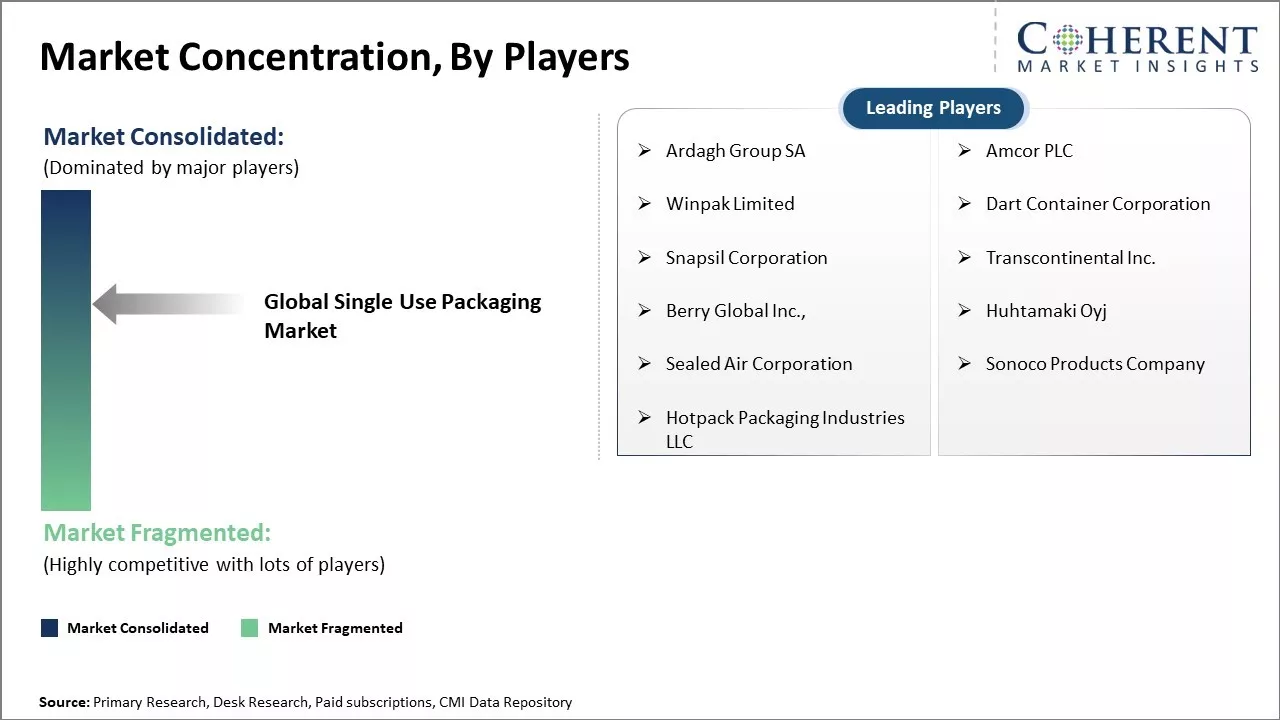
| Companies covered: | Ardagh Group SA, Amcor PLC, Winpak Limited, Dart Container Corporation, Snapsil Corporation, Transcontinental Inc., Berry Global Inc., , Huhtamaki Oyj, Sealed Air Corporation, Sonoco Products Company, and Hotpack Packaging Industries LLC | ||
| Growth Drivers: |
| ||
| Restraints & Challenges: |
| ||
Market Concentration and Competitive Landscape
Single Use Packaging Market: Growth Drivers
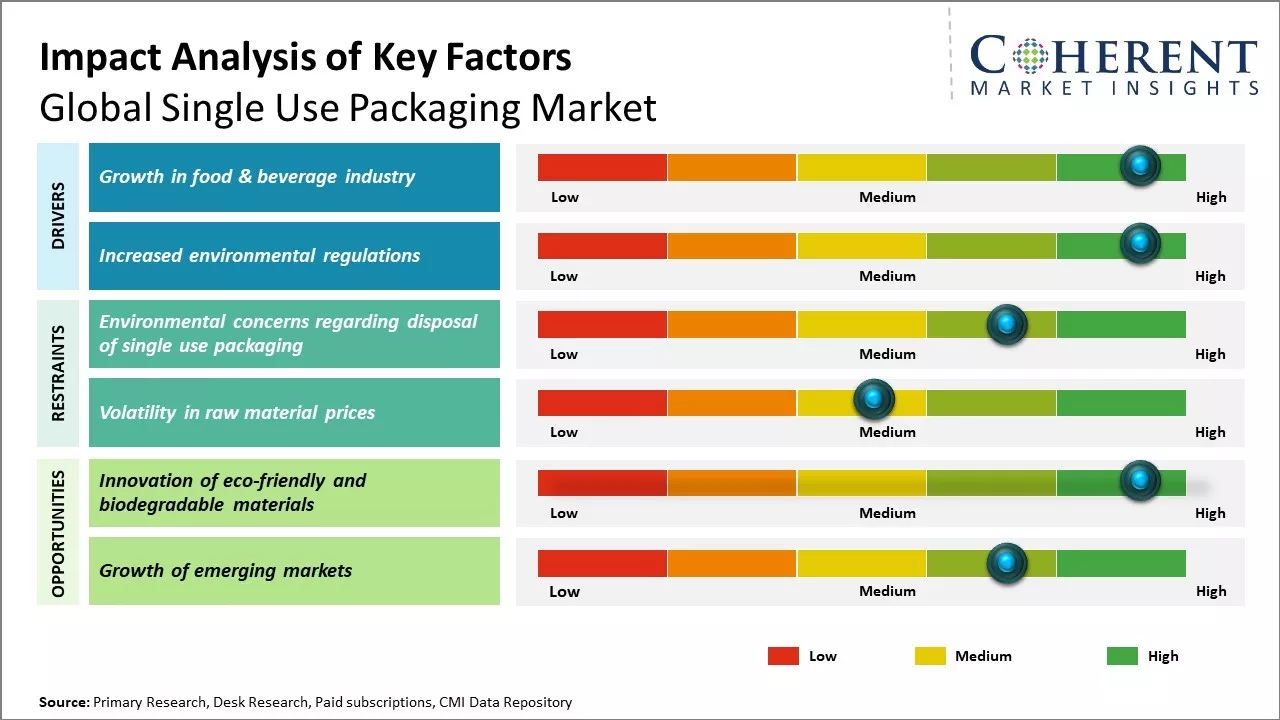
- Growth in food & beverage industry
The growth and expansion of the food & beverage industry continues to be a major driver for the increased adoption of single use packaging solutions globally. As consumer lifestyles and preferences evolve, there is a constant demand for new, convenient and on-the-go packaging formats that allow consumers to enjoy their snacks, meals or beverages wherever and whenever they want.
In response, companies in the food and beverage space are innovating and launching an array of ready-to-eat and ready-to-drink products that are packaged in single-serve containers which can be easily transported and disposed of after single use.
A prime example is how the quick service restaurant industry has expanded rapidly during recent years. Food chains are introducing new snacking and smaller meal options that are packaged in disposable containers suitable for eating outside the restaurant premises such as in offices, parks, or during travel.
Additionally, the thriving food delivery business has increased the need for stackable and leak-proof single-use packaging for transporting hot and cold food items safely to customers' doorsteps. On the beverage front, the rise of energy drinks, bottled coffees, juices, and flavored water segments have all contributed to higher consumption of single-portion plastic, glass or carton bottles instead of traditional multi-serve containers.
- Increased environmental regulations
Heightened regulatory scrutiny on environmental pollution from plastic waste globally has emerged as a strong driver for the single use packaging market, particularly biodegradable and recyclable packaging materials. Various governments are implementing stricter rules around the usage of conventional plastic bags, straws, cutlery, and other disposable items due to the growing solid waste problem.
Single Use Packaging Market: Restraints
- Environmental concerns regarding disposal of single use packaging
Environmental concerns around disposal of single-use packaging have emerged as a major restrainer for the growth of the single use packaging market. There is a rising awareness among consumers and regulators about the harmful impact of non-biodegradable and plastic packaging on the environment.
Large quantities of such packaging ends up in landfills or oceans every year, where it takes centuries to degrade and breaks down into microplastics that enters the food chain. This has led to governments across many countries introducing strict regulations around usage of certain kinds of plastics and mandates for minimum recycled content in packaging.
Single Use Packaging Market: Trends
The market is also changing as a result of sustainability and regulatory demands. Due to strict laws such as the UK's Extended Producer Responsibility (EPR) standards and the EU's Packaging and Packaging Waste Regulation (PPWR), there is a noticeable shift toward the usage of recyclable, biodegradable, and paper-based packaging materials. Manufacturers are being pushed by these regulations to develop packaging made of fiber-based materials and monomaterials, which are less harmful to the environment and easier to recycle.
Single Use Packaging Market: Opportunities
- Innovation of eco-friendly and biodegradable materials
The single use packaging market currently faces significant opportunities with the rising demand for eco-friendly and biodegradable materials. As consumers become more environmentally conscious, they are increasingly looking for sustainable alternatives to traditional plastic packaging. Brands and retailers recognize the need to shift toward more sustainable options in order to appeal to these consumers and meet their expectations. Innovation in plant-based bioplastics made from agricultural byproducts offers a promising solution.
Materials like bio-PET (made from sugarcane), PHA (made by bacteria from plant oils), and cellulose (from wood or non-food plants) allow producers to create packaging that is largely biodegradable and compostable within just a few months. Some big brands have already started utilizing these materials for certain product lines, improving their green credentials amongst customers. For example, Nestle Waters North America has replaced the plastic rings on its water bottles with plant-based materials for certain brands which now decompose more quickly should they end up as litter.
Single Use Packaging Market: Key Developments
- February 2025, The European Outdoor Group (EOG) and more than 30 outdoor brands, retailers, and packaging firms are taking action to reduce the environmental impact of single use plastic packaging. The Single Use Plastics Project (SUPP), launched in 2018, focuses on cutting plastic waste, particularly garment poly bags. EOG has released guidelines for merchants on eliminating poly bags from their operations as part of this program. A recently launched movie and website highlight the project's advancements and entice further sponsors to join.
- February 2025, Clemson FRESH has launched a new Compostable Packaging Research and Design Center to accelerate the development of sustainable, next-generation packaging. The facility was built with $690,000 in funding from the South Carolina Department of Commerce and Clemson University. The Center aims to attract industry investment, boost Clemson FRESH’s competitiveness for federal grants and cultivate talent in sustainable packaging design to meet growing industry needs.
- November 2024, Berry Global has launched a revolutionary packaging solution to help Finnish dairy pioneer Valio meet its commitment to significantly reduce plastic usage by 2026. In an effort to reduce the amount of plastic used in its single-use and single-serve packaging by 15%, Valio is replacing its well-liked line of PROfeel protein puddings with a specially made Berry'sCombiLight pot.
- August 2024, Google says it has met its 2025 goal to make all of the packaging for its newly launched hardware including Pixel, Fitbit and Nest devices — without plastic, according to an announcement Tuesday. It set the goal in October 2020, when 94% of its product packaging was already free of plastic.
- October 2024, Reuse Ottawa, a groundbreaking pilot program launching during Circular Economy Month, is set to transform the food service industry by offering reuseable packaging options to consumers. Participating locations in Ottawa including grocery stores and restaurants, will be able to provide reusable containers to customers at no cost.
Analyst Opinion
- The single use packaging market is experiencing steady growth driven by the expanding foodservices and F&B industries. Growing consumer preference for convenience foods and ready-to-eat meals is increasing the demand for disposable packaging such as paper bags, cups, and plastic containers.
- North America currently dominates the market owing to the large population and rising food consumption. Asia Pacific is also a major region supported by the fast paced lifestyle of consumers that favors packaged food products.
- Stricter environmental norms around plastic waste management could restrain the market growth in the coming years. Many countries and local authorities have either banned or imposed levies on single use plastics which will compel packaging manufacturers to invest in eco-friendly alternatives. Recyclability issues with material composites pose a challenge as well.
- On the flip side, changing consumer preference for sustainable packaging presents an opportunity for biodegradable and compostable packaging formats in the market. Innovation in materials and machinery will help overcome the performance deficit of alternatives to petroleum-based plastics.
- The foodservice packaging segment is expected to offer the most lucrative opportunities owing to the rapid expansion of the food delivery and takeaway market globally. Growing demand for smaller pack sizes from small and medium retailers also works in favor of single use packaging.
Speak to the analyst
Want personalized insights?
Take the findings above to one of our principal consultants, or have the report rebuilt around the segments, geographies and competitors you actually track.
Market Segmentation
- By Material (Revenue, USD Bn, 2021 - 2033)
- Paper and Paper Board
- Plastics
- Glass
- Other Material Types
- By End-User Industry (Revenue, USD Bn, 2021 - 2033)
- Food & Beverage
- Personal Care
- Pharmaceutical
- Others
Regional Insights (Revenue, USD Bn, 2021 - 2033)
- North America
- U.S.
- Canada
- Latin America
- Brazil
- Argentina
- Mexico
- Rest of Latin America
- Europe
- Germany
- U.K.
- Spain
- France
- Italy
- Russia
- Rest of Europe
- Asia Pacific
- China
- India
- Japan
- Australia
- South Korea
- ASEAN
- Rest of Asia Pacific
- Middle East
- GCC Countries
- Israel
- Rest of Middle East
- Africa
- South Africa
- North Africa
- Central Africa
- North America
- Company Profiles
- Ardagh Group SA
- Amcor PLC
- Winpak Limited
- Dart Container Corporation
- Snapsil Corporation
- Transcontinental Inc.
- Berry Global Inc.,
- Huhtamaki Oyj
- Sealed Air Corporation
- Sonoco Products Company
- Hotpack Packaging Industries LLC
Sources
Primary Research Interviews
- Packaging engineers at FMCG companies
- Sustainability managers at food & beverage brands
- Procurement heads at pharmaceutical companies
- Logistics and supply chain heads at e-commerce firms
Databases
- IHS Markit
- Orbis
- S&P Capital IQ
- IBISWorld
- Factiva
Magazines
- Food Packaging Forum
- Label & Narrow Web
- Sustainable Packaging News
- Packaging Strategies
- The Dieline
- Paper360°
Journals
- International Journal of Life Cycle Assessment
- Waste Management
- Environmental Science & Technology
- International Journal of Packaging Science
- Journal of Industrial Ecology
Newspapers
- The Times of India (Business section)
- The New York Times (Climate & Business sections)
- The Hindu (Business Line)
- Nikkei Asia
Associations
- Paperboard Packaging Council
- Plastics Industry Association
- American Packaging Corporation (Industry arm)
- World Packaging Organisation
- Australian Packaging Covenant Organisation
Proprietary Elements
- CMI Data Analytics Tool, Proprietary CMI Existing Repository of information for last 8 years
*Definition: The single use packaging market consists of companies that manufacture disposable packaging products that are used only once before they are thrown away. This includes items like paper bags, plastic film wrap, plastic bottles and containers, aluminum foil, plastic cups and plates, straws, plastic cutlery, coffee sleeves, and lids. Single-use packaging is very commonly used for food service, takeout and delivery, as well as industrial and institutional applications where sanitary, disposable packaging is required or preferred.
Get access to 250+ pages report
Every segment, forecast, competitor profile and data table behind the analysis above — available for instant download.
- ESOMAR Member
- ISO 9001:2015 Certified
- D-U-N-S Registered
- GDPR & CCPA Compliant
Missing comfort of reading report in your local language? Find your preferred language:
Transform your Strategy with Exclusive Trending Reports
Frequently Asked Questions
The Single Use Packaging Market size is estimated to be valued at USD 121.53 Bn in 2026, and is expected to reach USD 182.73 Bn by 2033.
The CAGR of the global Market is projected to be 6.0% from 2026 to 2033.
Growth in food & beverage industry and increased environmental regulations are the major factors driving the growth of the global single use packaging industry.
Environmental concerns regarding disposal of single use packaging and volatility in raw material prices are the major factors hampering the growth of the global single use packaging industry.
In terms of material type, paper and paper board is estimated to dominate the market revenue share in 2026.
Ardagh Group SA, Amcor PLC, Winpak Limited, Dart Container Corporation, Snapsil Corporation, Transcontinental Inc., Berry Global Inc., , Huhtamaki Oyj, Sealed Air Corporation, Sonoco Products Company, and Hotpack Packaging Industries LLC are the major players.
North America is expected to lead the global market.