

Smart Highway Market Size and Trends
The smart highway market is estimated to be valued at USD 77.14 Bn in 2026 and is expected to reach USD 205.20 Bn by 2033, growing at a compound annual growth rate (CAGR) of 15.0% from 2026 to 2033.
Key Takeaways
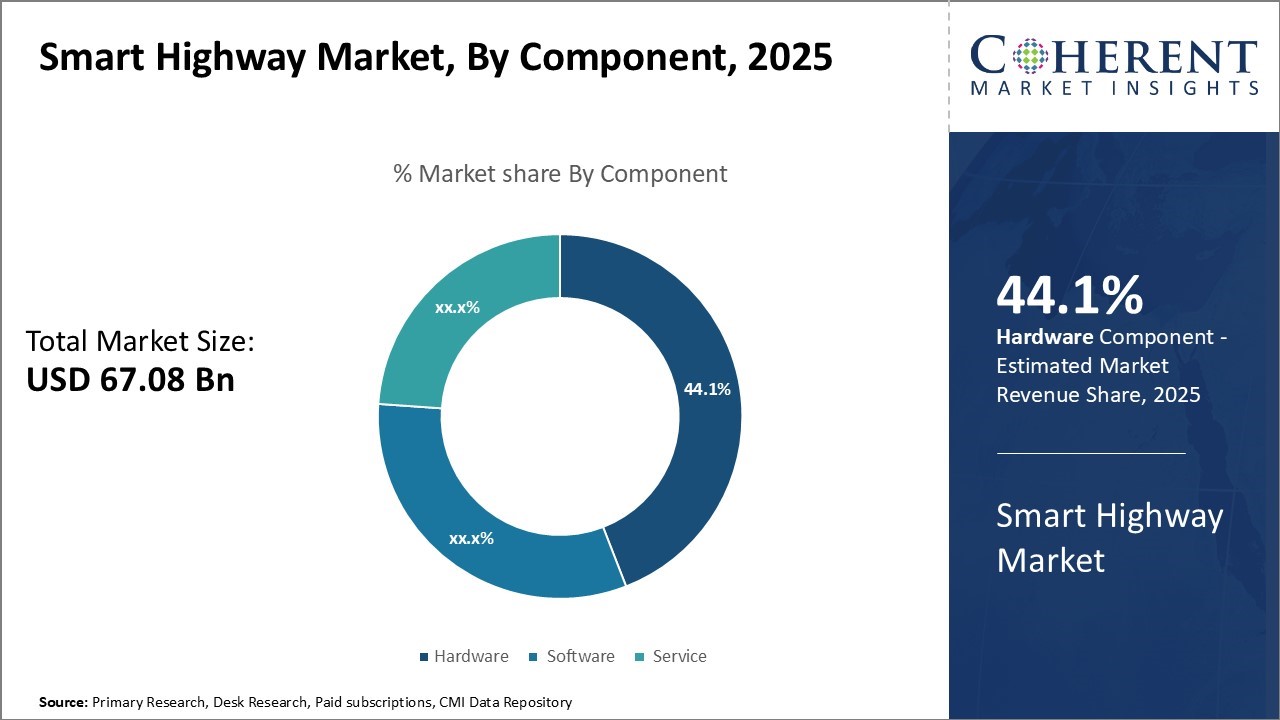
- Based on Component, the Hardware segment is expected to dominate the global smart highway market in 2026, accounting for 45.1% of the market share, due to the indispensable nature of physical infrastructure for smart highway systems.
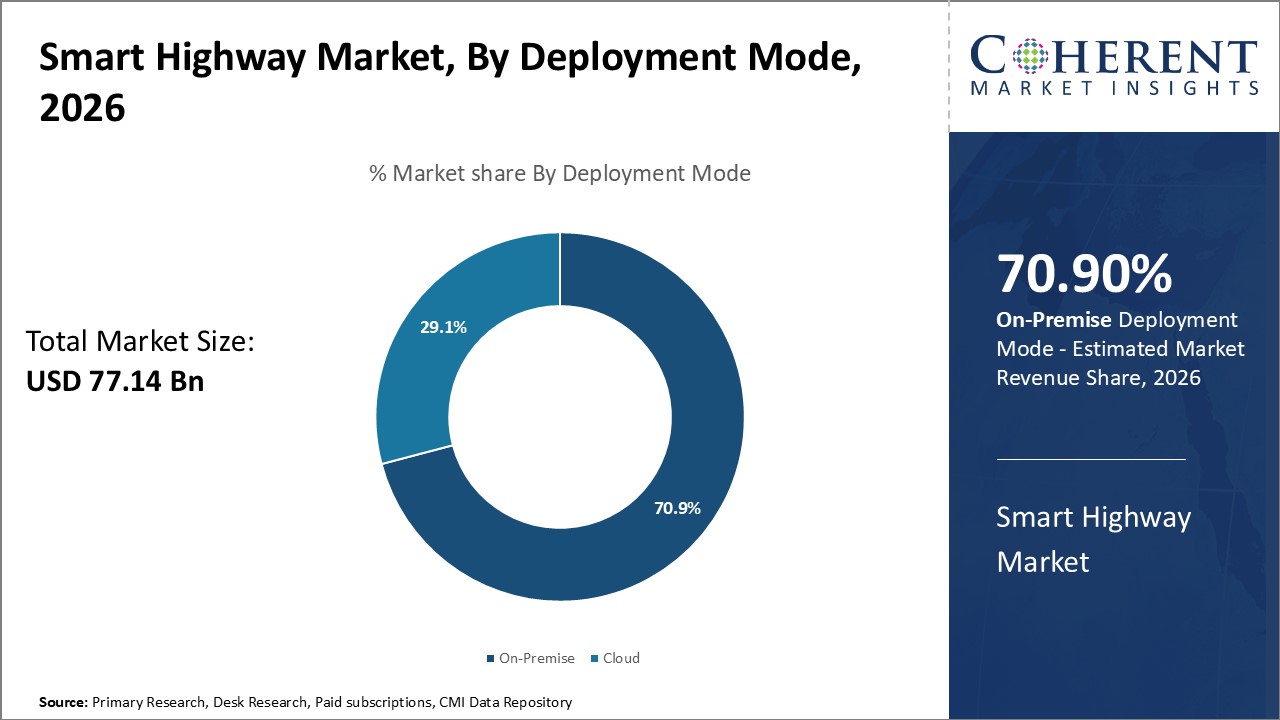
- Based on Deployment Mode, the On-Premise segment is projected to hold the largest share at 70.9% in 2026, due to security and operational considerations specific to the transport infrastructure.
- Based on Technology, the Intelligent Transportation Management System segment is set to lead the market with a 38.2% share in 2026, due to its centralized role in applying analytics to optimize traffic conditions.
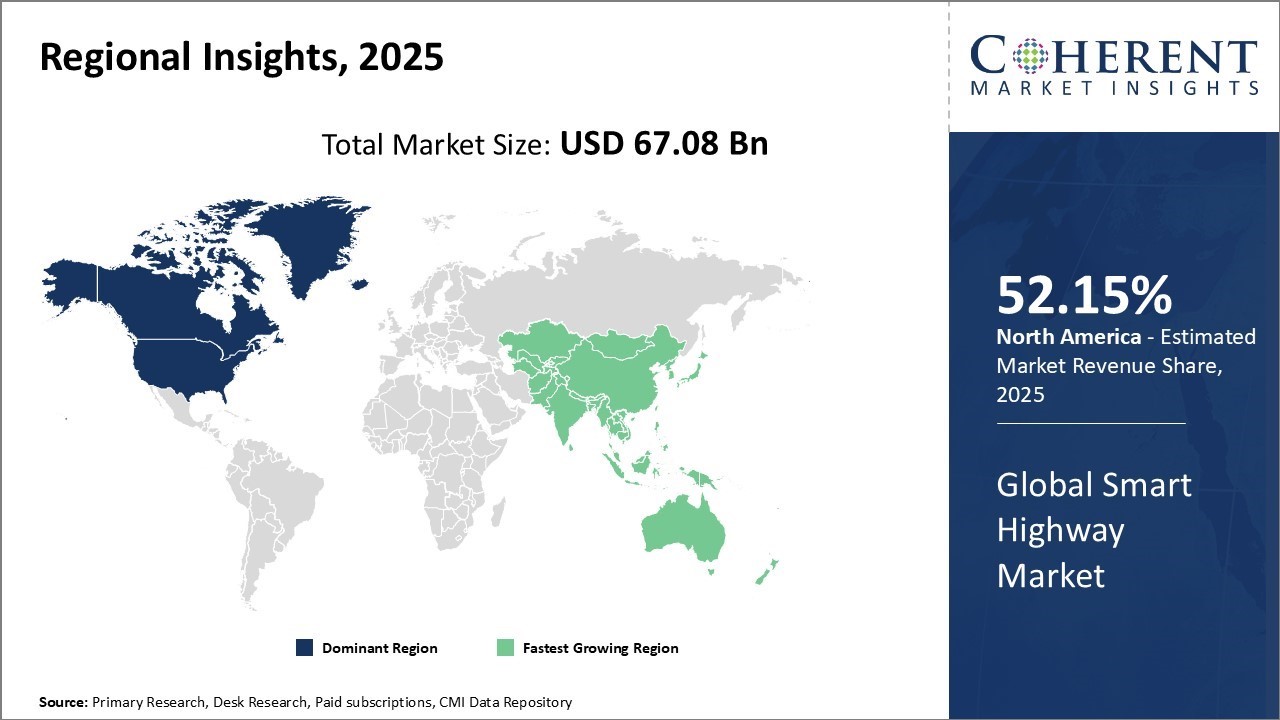
- Based on Region, North America is expected to lead the market, holding a share of 52.15% in 2026. While, Asia Pacific is anticipated to be the fastest growing region during the forecast period.
Market Overview
The smart highway market is growing rapidly due to the rising demand for connectivity, automation, and safer transportation. Key drivers include the increasing use of traffic management systems, intelligent transportation systems (ITS), and real-time vehicle monitoring, which help reduce congestion and enhance road safety.
Government investments in smart city projects worldwide are further boosting the adoption of smart highways, integrating technologies like IoT and AI for dynamic signaling, incident detection, and predictive maintenance. As urbanization and vehicle usage increase, the smart highway market demand is expected to rise steadily, supported by both public and private sector initiatives.
Current Events and their Impact on the Smart Highway Market
Current Events | Description and its Impact |
Major Government Funding Initiatives |
|
Economic and Geopolitical Factors |
|
Role of Artificial Intelligence (AI) In the Smart Highway Market
The integration of artificial intelligence into smart highway is rapidly transforming how roads are managed and how vehicles interact with infrastructure. AI plays a critical role in making highways safer, more efficient, and more responsive to changing conditions. The advancement is observed from predictive traffic management to real-time hazard detection. AI algorithm has the potential to analyses the real-time patterns and predict the congestion before it occurs. This approach leads to smoother traffic, fewer delays and significant reduction in emission caused by vehicles. AI systems can identify hazards, such as stalled vehicles, road debris, or accidents, more quickly than human drivers or traditional systems. Using AI-powered image recognition and sensor data, these systems can instantly alert authorities and vehicles to dangers ahead, enabling faster responses and preventing collisions. Moreover, AI can detect weather related hazards by analyzing the data from road temperature sensors, cameras, and weather forecasts to automatically adjust road speed limits, activate smart road studs, and alert drivers to potential risks.
In June 2025, India's Dwarka Expressway has become India’s first smart highway, launching an AI-powered Advanced Traffic Management System (ATMS) across a key 56.46 km corridor including 28.46 km along the expressway itself and an adjoining stretch of NH‑48. This is developed by IHMCL and implemented by NHAI under 2023 guidelines, the system integrates 110 PTZ cameras, video incident detection, speed display boards, and digital signboards. It can detect 14 traffic violations in real time—ranging from over speeding to seatbelt non‑compliance and auto-generates challans via NIC e‑Challan integration.
- Current Industry Events of 2026
- Market Size Estimation
- Regional Breakdown
- Competitive Landscape
- Customer Intelligence
- Segmental Analysis
- Pricing Analysis
- Key Market Drivers, Challenges & Future Trends
- Customized Insights Section
Segmental Insights
Smart Highway Market Insights, By Component
Reliance on Physical Infrastructure Boosts the Hardware Segment
In terms of component, hardware segment contributes the highest share of the market owing 45.1% in 2026 due to the indispensable nature of physical infrastructure for smart highway systems. As highway agencies aim to maximize efficiency, safety, and sustainability through digital technologies, robust hardware systems are crucial for collecting, analyzing, and responding to real-time data. Road sensors, traffic cameras, variable message signs, and toll collection mechanisms all require durable hardware capable of withstanding weather extremes and high traffic volumes while maintaining round-the-clock functionality. Furthermore, the growth of 5G networks and edge computing heightens dependence on networking hardware like switches, servers, routers, and data transmission equipment, situated both roadside and in central control rooms. Legacy systems also necessitate periodic hardware upgrades to ensure compatibility with new software and interconnectivity standards. With physical infrastructure forming the backbone of any smart roadway initiative, hardware spending is poised to remain a major market driver relative to other components.
In January 2025, Aeva launched Atlas Ultra, its slimmest, high-resolution long-range 4D LiDAR sensor, at CES 2025. It is engineered for highway-speed SAE Level 3/4 automated driving, Atlas Ultra delivers up to three times the resolution of its predecessor and up to 150° field of view. The sensor detects small road objects and tracks dynamic hazards at ranges of 250 m for low-reflectivity targets and up to 500 m maximum, all with a 35 % slimmer form ideal for roofline or windshield integration.
Smart Highway Market Insights, By Deployment Mode
On-premise Deployments Dominate owing to the Growing Need for Data Security and Control
In terms of deployment mode, on-premise segment contributes the highest share of 70.9% in 2026 of the market due to security and operational considerations specific to the transport infrastructure. Given the sensitivity of traffic management and vehicle movement records, highway authorities prioritize data ownership, residency and access governance that on-premise solutions uniquely provide. Keeping mission-critical applications and databases in-house reduces potential vulnerabilities from external threats or service disruptions in the public cloud. It also enables complete control over system and network administration without dependencies on third-party cloud providers. On-premise platforms integrate smoothly with existing highway agency IT environments and standardized protocols. They accommodate emergency scenarios requiring uninterrupted functionality and facilitate stringent compliance with industry regulations around proprietary data. These advantages perpetuate on-premise as the preferred deployment model despite increasing cloud adoption in other industries, further positively influencing the smart highway market forecast.
In April 2025, Maharashtra State Road Development Corporation (MSRDC) commenced work on a ₹1,700 crore intelligent traffic management system (ITMS) along the 701 km Mumbai–Nagpur Samruddhi Mahamarg highway. The project involves laying 500 km of underground optical‑fibre and electrical ducts and will feature 10 traffic management centres, high‑resolution cameras every kilometre, automated number‑plate recognition, speed‑enforcement radars, RFID‑based toll systems, drone surveillance, emergency call booths, mobile radio links and variable message signs.
Smart Highway Market Insights, By Technology
Intelligent Transportation Management Leads in Application of Real-Time Analytics
In terms of technology, intelligent transportation management system segment contributes the highest of 38.2% in 2026 share due to its centralized role in applying analytics to optimize traffic conditions. Transportation management software coordinates input from myriad road sensors, cameras, and vehicle probes to generate real-time insights into congestion hotspots, incidents, and alternative routes. Sophisticated algorithms aid decisions around signal timing, lane configurations, variable speed limits, and predictive accident alerts transmitted to connected vehicles. Advanced traffic modeling and simulation techniques further optimize the movement of people and goods across the wider multi-modal transportation network. User-centered design and open data sharing standards continue expanding intelligent Track Management System capabilities to integrate emerging technologies like artificial intelligence, Blockchain, and smartphone apps. As a core fusion point for all smart highway data sources and control systems, intelligent transportation management drives innovation across the entire technology segment.
For instance, the Bengaluru–Mysuru highway equipped a state‑of‑the‑art Intelligent Traffic Management System (ITMS) to boost safety and streamline travel. The new system includes ANPR and red‑light violation cameras, dynamic signal control, and SMS alerts and challans directly sent to drivers—facilitated via FASTag integration. With cameras now on the highway and surrounding national highways, officials expect reduced accidents and congestion.
Regional Insights
North America Smart Highway Market Analysis & Trends
North America has established itself as the dominant region in the global smart highway market with 52.15% market share in 2026. The large transportation infrastructure spending and presence of major industry players have been the key factors driving North America's leadership position. The U.S. especially has been at the forefront of building intelligent transportation systems and digital infrastructure across major cities and highways.
A notable example is the Smart Columbus project in Ohio, which tested a wide range of smart mobility solutions, including connected vehicle environments, traffic signal prioritization, and integrated data platforms. Similarly, states like California and Texas have implemented smart corridor projects featuring real-time traffic monitoring, adaptive signal controls, and digital tolling systems. These initiatives have not only demonstrated the practicality of smart highway technologies but have also encouraged other transportation agencies to modernize their road networks.
Several pilot projects testing smart technologies such as connected vehicles, smart traffic management tools, and digital payment systems have seen success. This has translated into a strong demand from transportation agencies looking to upgrade existing roads. Furthermore, requirements around sustainable transportation and congestion reduction have boosted investments. As a result, North American companies have gained extensive experience and expertise in implementing advanced solutions.
Asia Pacific Smart Highway Market Analysis & Trends
The Asia Pacific region is expected to exhibit the fastest growth in the global smart highway market due to rapid urbanization, growing transportation needs of the rising middle class and government initiatives around smart cities are fueling market expansion in Asia Pacific. China, in particular, has unveiled ambitious plans to develop a robust connected transportation network through its ‘Digital Silk Road’ initiative. Several major projects are underway, comprising elements like 5G enabled roadside units, Internet of Things (IoT) sensors, Electric Vehicle (EV) charging stations, and Artificial Intelligence (AI)-based traffic coordination systems. These provide a boost to local and global technology providers targeting the region.
Moreover, countries like India, Japan, South Korea, and Indonesia are actively working to adopt smart highway technologies. In India, the National Highways Authority of India (NHAI) is implementing Advanced Traffic Management Systems (ATMS) across major expressways, including the Delhi-Mumbai Expressway, enhancing traffic flow, tolling efficiency, and safety. South Korea’s smart road project, featuring self-driving test lanes equipped with high-precision sensors and V2X communication is another example of the region’s commitment to advanced mobility. This is further accelerating the smart highway market share.
Smart Highway Market Outlook Country-wise
The U.S. Smart Highway Market Trends
The United States is a leading market for smart highway technologies, driven by early adoption of Intelligent Transportation Systems (ITS) and strong federal support through the Bipartisan Infrastructure Law. States like California, Texas, and Florida are advancing smart traffic signals, AI-based monitoring, and vehicle-to-infrastructure (V2I) systems to enhance safety and reduce congestion.
The U.S. also hosts major connected and autonomous vehicle (CAV) test corridors equipped with 5G and sensor networks. Public-private partnerships with tech firms and automakers continue to boost smart highway market demand, making the U.S. a global leader in digital transportation infrastructure.
In December 2024, Michigan DOT has commenced testing of a three‑mile “smart road” pilot on I‑94 between Wayne and Washtenaw counties, equipping the median with sensors and wireless infrastructure to relay real-time traffic, obstruction and environmental data to connected/autonomous vehicles, further supporting the smart highway market revenue.
China Smart Highway Market Trends
China is rapidly advancing in the smart highway market, driven by strong government support and initiatives like the Digital Silk Road. With rising urbanization and traffic congestion, China is investing heavily in intelligent infrastructure to modernize its transport systems.
A key example is the Guangzhou-Shenzhen smart expressway, which features 5G-enabled roadside units, IoT sensors, AI-driven traffic control, and EV charging systems. It is designed to support autonomous vehicles; the project enables real-time communication between vehicles and infrastructure for improved safety and efficiency.
Tech giants such as Huawei and Baidu are actively involved, and local governments are implementing automated tolling, adaptive signals, and smart traffic management. These efforts position China as a global leader in smart highway development, fueling strong smart highway market demand across the region. For instance, in October 2023, China inaugurated its first intelligent expressway designed specifically for autonomous driving. This is further accelerating the smart highway industry growth.
Market Concentration and Competitive Landscape

Recent Developments
- In June 2025, the South Goa highway project announced to deploy cutting‑edge AI‑driven construction technology aimed at boosting efficiency and timely delivery. The initiative integrates real‑time monitoring, predictive maintenance, and smarter resource allocation using AI tools.
- In May 2025, Ghana’s Minister for Roads and Highways introduced a smart tolling system across major highways. The digital platform will feature automated vehicle detection and cashless payments aimed at reducing congestion and leakage. The government estimates it lost around GHS 1 billion annually after replacing traditional tolls with the E‑Levy.
- In May 2023, Italy launched a partnership between the government and private companies to turn the city of "Taormina" into a smart city. The initiative, called "Taormina Technological City System," is a first step in making Italy smarter. The project aims to make everything in the city digital and manage it using smart sensors. One example is the "Smart Roads 4.0" system, which links vehicles together using modern technology to improve transportation.
- In January 2023, China started expanding its smart highway network as part of its new infrastructure projects. The 157-kilometer highway from Chengdu to Yibin is being hailed as China's first fully smart highway. Smart pillars are installed every 800 meters, fitted with radar and cameras to gather road data.
Market Report Scope
Smart Highway Market Report Coverage
| Report Coverage | Details | ||
|---|---|---|---|
| Base Year: | 2025 | Market Size in 2026: | USD 77.14 Bn |
| Historical Data for: | 2020 To 2024 | Forecast Period: | 2026 To 2033 |
| Forecast Period 2026 to 2033 CAGR: | 15.0% | 2033 Value Projection: | USD 205.20 Bn |
| Geographies covered: |
| ||
| Segments covered: |
| ||
| Companies covered: | Schneider Electric SE, Siemens AG, SAP SE, Indra Sistemas S.A., Panasonic Corporation, Honeywell International Inc., Masstrans Technologiies Pvt. Ltd., Kapsch AG, Infineon Technologies AG, ALE International, ALE USA Inc, Kapsch TrafficCom AG, Huawei Technologies Co., Ltd., Cisco Systems Inc., IBM Corporation, General Electric Company, and ABB Ltd. | ||
| Growth Drivers: |
| ||
| Restraints & Challenges: |
| ||
Smart Highway Market Drivers
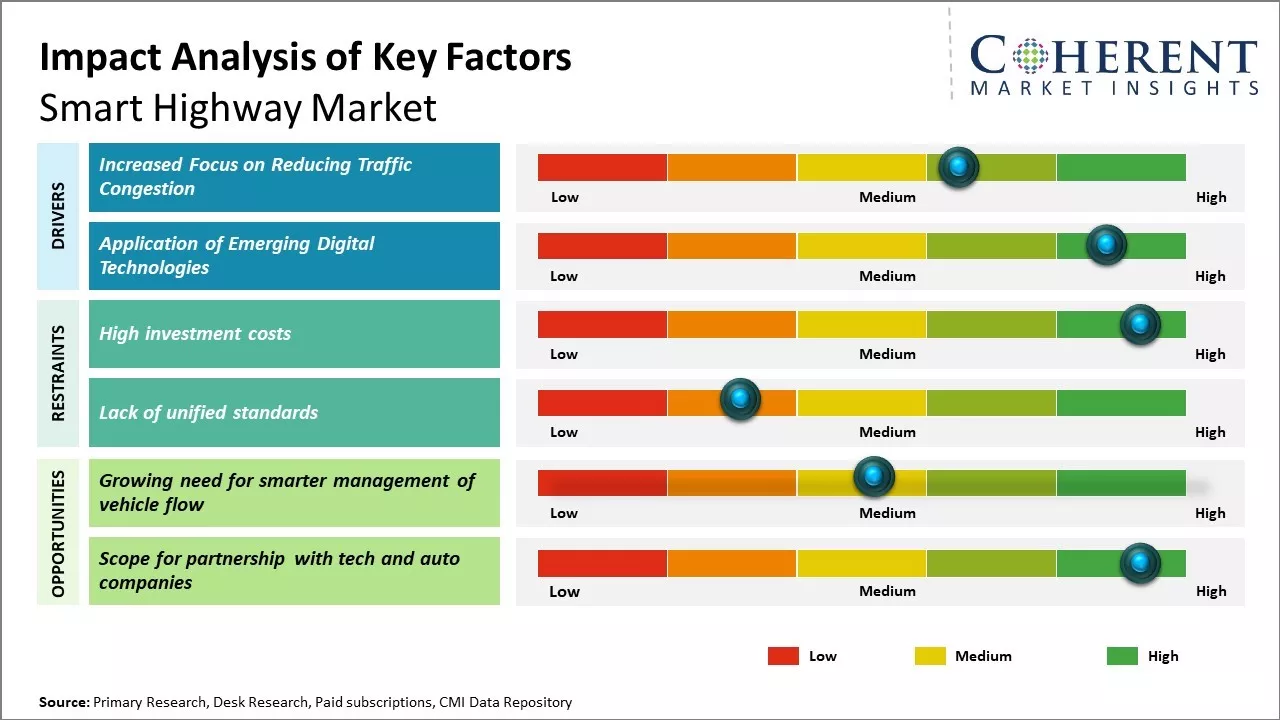
Increased Focus on Reducing Traffic Congestion
With growing urbanization and rising vehicle ownership, traffic congestion has become a massive problem for many cities and countries worldwide. Traffic jams lead to wasted time and fuel for commuters, increased pollution levels, and an overall decline in quality of living. To address this issue, governments and transportation authorities are looking towards innovative solutions that can better manage traffic flow and make commutes smoother. Investing in smart highway infrastructure is seen as a promising approach in this regard.
Smart highways enable the use of technologies like adaptive traffic signals, smart sensors, variable speed limits, and digital signage to collect real-time traffic data, detect incidents, and dynamically route traffic away from congested areas. This helps reduce delays, optimize the use of existing road capacity, and improve overall traffic movement. As per some studies, smart highway systems have been shown to decrease travel times by as much as 15-20% on certain routes. This is further propelling the smart highway market demand.
With growing public frustration over congestion, governments feel increasing pressure to adopt smart solutions that can provide tangible benefits to citizens in the form of quicker commutes. This focus on decongesting roads and optimizing traffic flow is a major driver boosting investments in the development of smart highway infrastructure worldwide. The rising adoption of these systems is directly contributing to the expansion of smart highway market share, particularly in urban and high-traffic corridors where congestion relief is most urgently needed.
Application of Emerging Digital Technologies
The integration of cutting-edge digital technologies is opening up new possibilities for enhancing the operation and management of highways. Technologies like 5G cellular connectivity, Internet of Things (IoT) sensors, artificial intelligence, and Blockchain are being applied to upgrade conventional roads into smart connected corridors.
Use of Artificial Intelligence (AI) and machine learning helps transportation agencies to better analyze patterns in traffic load, driver behavior, and road usage. It also aids in the predictive maintenance of infrastructure assets. Digital technologies further allow new intelligent transportation services such as electronic toll collection, dynamic usage-based insurance, and integration with mobility apps. The capabilities offered through digitalization are finding wider adoption as they enhance safety, sustainability, and user experience on highways. With technology companies making big investments in this area, emerging digital solutions are poised to become an integral part of the smart highway ecosystem going forward.
Smart Highway Market Opportunities
Growing need for smarter management of vehicle flow
One of the key future opportunities in the smart highway market lies in the growing need for smarter management of vehicle flow. With rising urbanization and increasing vehicle density, traditional traffic management systems are struggling to keep pace with congestion, travel delays, and road safety concerns. Smart highways aim to address these issues by integrating technologies such as AI-based traffic monitoring, real-time data analytics, adaptive traffic signals, and vehicle-to-infrastructure (V2I) communication.
These intelligent systems enable dynamic lane management, predictive traffic rerouting, and real-time alerts to drivers, significantly improving road efficiency and reducing bottlenecks. As cities and governments prioritize intelligent transportation systems, the demand for advanced vehicle flow solutions is expected to rise.
According to the smart highway market forecast, this need for enhanced traffic control and seamless mobility is projected to be a major growth driver. Investment in smart infrastructure will continue to accelerate, supported by public-private partnerships and national policies focused on digital infrastructure and sustainable urban mobility.
Analyst Opinion (Expert Opinion)
The smart highway market is entering a phase of strategic necessity for future-ready infrastructure. In my view, any national transport ecosystem that fails to invest in smart highways in the next five years risks systemic inefficiency and missed economic multipliers.
The future of highway systems is not just digital, it is autonomous, predictive, and interoperable. Countries like China are already demonstrating this with assertive momentum. For instance, the Guangzhou-Shenzhen expressway, equipped with 5G-enabled vehicle-to-everything (V2X) systems and AI-driven traffic analytics, has achieved real-time response times below 0.1 seconds between vehicles and infrastructure. This is not a concept; it is operational, and it raises the global benchmark.
Europe, while methodical, risks falling behind unless regulatory harmonization accelerates. Germany’s A9 Digital Testbed is a commendable model, integrating embedded sensors and edge computing to assist autonomous navigation. However, deployments remain isolated. A federated but interoperable smart highway network across the EU remains elusive and politically encumbered.
The United States presents a unique paradox. It houses the most advanced autonomous vehicle R&D hubs, yet lacks a coherent federal vision for smart highway deployment. The sporadic adoption of intelligent transport systems (ITS) at the state level such as California’s I-10 smart corridor, reflects the absence of centralized momentum. This fractured approach is limiting private-sector investment confidence.
Critically, the integration of AI and edge computing will define market leadership. Traditional ITS is based on static sensors and hardwired signals are being superseded by AI-powered dynamic traffic systems that process and respond to congestion, weather, and accidents autonomously. South Korea’s smart tolling system, which combines ANPR, ML algorithms, and adaptive pricing, has reduced urban congestion by 17% year-over-year, a compelling data point for scalability.
The single greatest enabler, however, remains government-backed digital infrastructure mandates. The UAE's National Smart Mobility Strategy aims for 25% autonomous transport by 2030, underpinned by highways that serve as command-and-control layers. Investors and operators should note that smart highways will increasingly become defensive infrastructure, protecting against economic inefficiencies caused by traffic fatalities (which cost the U.S. alone over $400 billion annually, per NHTSA).
Speak to the analyst
Want personalized insights?
Take the findings above to one of our principal consultants, or have the report rebuilt around the segments, geographies and competitors you actually track.
Market Segmentation
- Component Insights (Revenue, USD BN, 2026 - 2033)
- Hardware
- Software
- Service
- Deployment Mode Insights (Revenue, USD BN, 2026 - 2033)
- On-Premise
- Cloud
- Technology Insights (Revenue, USD BN, 2026 - 2033)
- Intelligent Transportation Management System
- Intelligent Management System
- Communication System
- Monitoring System
- Others
- Regional Insights (Revenue, USD BN, 2026 - 2033)
- North America
- U.S.
- Canada
- Latin America
- Brazil
- Argentina
- Mexico
- Rest of Latin America
- Europe
- Germany
- U.K.
- France
- Italy
- Russia
- Rest of Europe
- Asia Pacific
- China
- India
- Japan
- Australia
- South Korea
- ASEAN
- Rest of Asia Pacific
- Middle East & Africa
- GCC Countries
- South Africa
- Rest of Middle East & Africa
- North America
- Key Players
- Schneider Electric SE
- Siemens AG
- SAP SE
- Indra Sistemas S.A.
- Panasonic Corporation
- Honeywell International Inc.
- Masstrans Technologiies Pvt. Ltd.
- Kapsch AG
- Infineon Technologies AG
- ALE International, ALE USA Inc.
- Kapsch TrafficCom AG
- Huawei Technologies Co., Ltd.
- Cisco Systems Inc.
- IBM Corporation
- General Electric Company
- ABB Ltd.
Sources
Primary Research Interviews from the following stakeholders
Stakeholders
- Interviews with highway infrastructure authorities, ITS (Intelligent Transportation System) integrators, road safety OEMs, telecom vendors, EV infrastructure developers, and urban planning directors.
Specific stakeholders
- Smart mobility directors at national and regional highway authorities
- Project heads and site engineers at EPC companies handling ITS deployment
- Heads of innovation and digital transport at city municipalities
- AV and IoT deployment lead at smart infrastructure arms of telecom companies
- ITS product managers at radar, V2X, and ANPR equipment manufacturers
- Operations heads at electric vehicle charging infrastructure providers and traffic signal companies
- Smart mobility researchers and engineers in public sector R&D labs and transportation universities
Databases
- International Transport Forum (ITF-OECD) Data Portal
- Ministry of Road Transport and Highways (MoRTH), India
- Eurostat – Transport and Mobility Section
- US Department of Transportation (DOT) Bureau of Transportation Statistics
- China Transport Yearbook
- Transport Canada Open Data Portal
- National Highway Traffic Safety Administration (NHTSA), U.S.
- Japan Ministry of Land, Infrastructure, Transport and Tourism (MLIT)
Magazines
- Traffic Technology International
- ITS International
- Smart Highways Magazine
- Highways Today
- TransportXtra
- Infra Journal
- Mobility Outlook
- Roads & Bridges Magazine
Journals
- IEEE Transactions on Intelligent Transportation Systems
- Journal of Transportation Engineering (ASCE)
- Journal of Intelligent Transportation Systems
- Transportation Research Part C Emerging Technologies
- International Journal of Transportation Science and Technology
Newspapers
- The Economic Times – Infrastructure & Smart Mobility
- Business Standard – Transport & Technology
- The Hindu – Urban Affairs & Highways
- Financial Times – Smart Infrastructure
- Nikkei Asia – Mobility Innovations
- Washington Post – Cities and Tech Section
Associations
- ITS India
- Intelligent Transportation Society of America (ITS America)
- ERTICO – ITS Europe
- Asia-Pacific ITS Forum
- Transportation Research Board (TRB), U.S.
- World Road Association (PIARC)
- International Road Federation (IRF)
- Confederation of Indian Industry (CII) – Infrastructure Council
Public Domain Sources
- Smart Cities Mission – Government of India
- NITI Aayog Mobility Reports
- U.S. Smart Infrastructure Act Public Records
- EU Mobility Strategy Reports
- Transport for London (TfL) Open Data
- Central Road Research Institute (CRRI), India
- National Transport Development Policy Committee (India)
- EU C-Roads Platform (for cooperative ITS deployments)
Proprietary Elements
- CMI Data Analytics Tool, and Proprietary CMI Existing Repository of information for last 8 years
*Definition: The smart highway product is an intelligent transportation system designed for highways and motorways. It utilizes advanced sensors, communication networks, and control mechanisms to continuously monitor traffic conditions, detect congestions and accidents in real-time. The system manages traffic automatically to ensure smoother and safer driving experiences. It provides drivers information on traffic, road conditions, incidents, and alternate routes through connected vehicles and roadside displays.
Get access to 250+ pages report
Every segment, forecast, competitor profile and data table behind the analysis above — available for instant download.
- ESOMAR Member
- ISO 9001:2015 Certified
- D-U-N-S Registered
- GDPR & CCPA Compliant
Missing comfort of reading report in your local language? Find your preferred language:
Transform your Strategy with Exclusive Trending Reports
Frequently Asked Questions
The Smart Highway Market is estimated to be valued at USD 77.14 Bn in 2026, and is expected to reach USD 205.20 Bn by 2033.
The CAGR of the Smart Highway Market is projected to be 15.0% from 2026 to 2033.
Increased focus on reducing traffic congestion and application of emerging digital technologies are the major factors driving the growth of the smart highway market.
High investment costs and lack of unified standards are the major factors hampering the growth of the smart highway market.
In terms of component, hardware is estimated to dominate the market revenue share in 2026.
Schneider Electric SE, Siemens AG, SAP SE, Indra Sistemas S.A., Panasonic Corporation, Honeywell International Inc., Masstrans Technologiies Pvt. Ltd., Kapsch AG, Infineon Technologies AG, ALE International, ALE USA Inc, Kapsch TrafficCom AG, Huawei Technologies Co., Ltd., Cisco Systems Inc., IBM Corporation, General Electric Company, and ABB Ltd. are the major players.
North America is expected to lead the smart highway market in 2026.