Super Absorbent Polymers Market Analysis & Forecast: 2026-2033
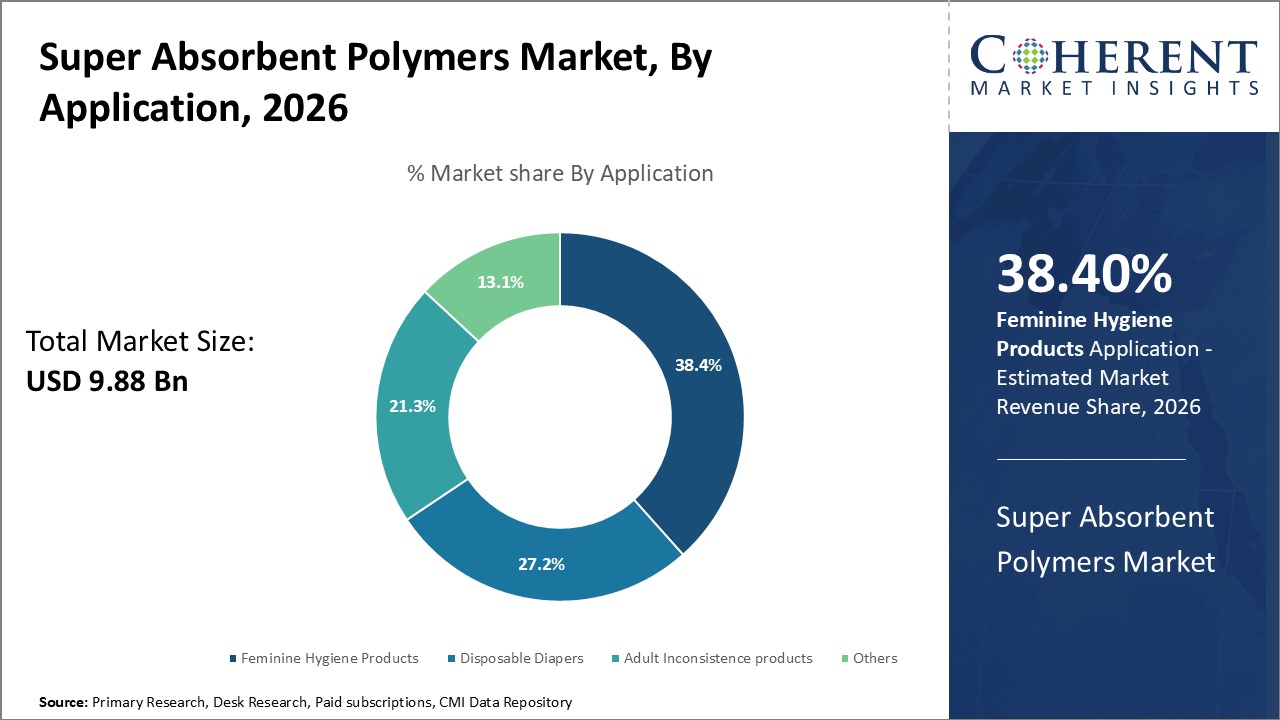
Global super absorbent polymers (SAP) market size is expected to reach USD 15.56 Bn by 2033, from USD 9.88 Bn in 2026, exhibiting a compound annual growth rate (CAGR) of 6.7% during the forecast period.
The Super Absorbent Polymers (SAP) market is rapidly expanding as consumers and industries increasingly demand products for personal hygiene, agriculture, and healthcare. Manufacturers leverage polymers like sodium polyacrylate and polyacrylamide copolymers for their outstanding liquid absorption and retention capabilities. Rising hygiene awareness, growing disposable incomes, and urbanization, along with innovations in SAP formulations, actively drive adoption worldwide. Emerging regions are also contributing to growth as they adopt modern hygiene products and water-efficient solutions in agriculture
|
Current Events |
Description and its impact |
|
Geopolitical Tensions and Trade Policies |
|
|
Raw Material Availability and Pricing |
|
|
Regulatory and Environmental Policies |
|
Uncover macros and micros vetted on 75+ parameters: Get instant access to report
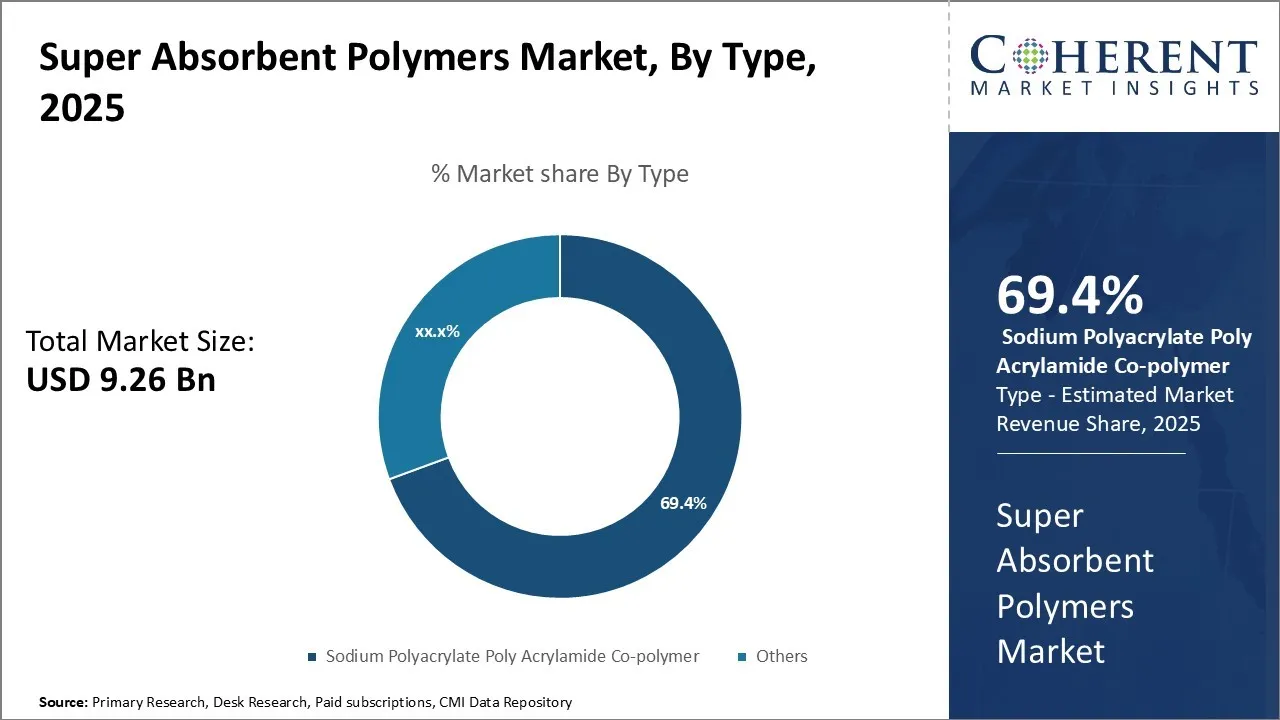
Sodium Polyacrylate Poly Acrylamide Co-polymer hold the largest market share of 70.4% in 2026. Consumers and industries are driving the demand for sodium polyacrylate–polyacrylamide copolymers in the Super Absorbent Polymers (SAP) market due to their excellent water absorption and retention, which make them vital for personal hygiene, agriculture, and medical applications. Increased focus on convenience and hygiene, combined with advancements in polymer technology, boosts their performance and attractiveness. Companies are also expanding their use in soil moisture management, improving access to hygiene products in emerging markets, and developing innovative, high-efficiency solutions, further accelerating adoption across industries.
To learn more about this report, Request Free Sample
Increasing awareness of menstrual health and hygiene is driving women to adopt reliable, high-performance feminine hygiene products, boosting demand for Super Absorbent Polymers (SAP). Consumers actively choose SAP-based pads, liners, and tampons for their comfort, discretion, and superior leak protection. Urbanization, lifestyle changes, and rising disposable incomes further fuel consumption, while manufacturers continue to innovate with thinner, more absorbent, and eco-friendly designs, encouraging wider adoption in both emerging and developed markets.
To learn more about this report, Request Free Sample
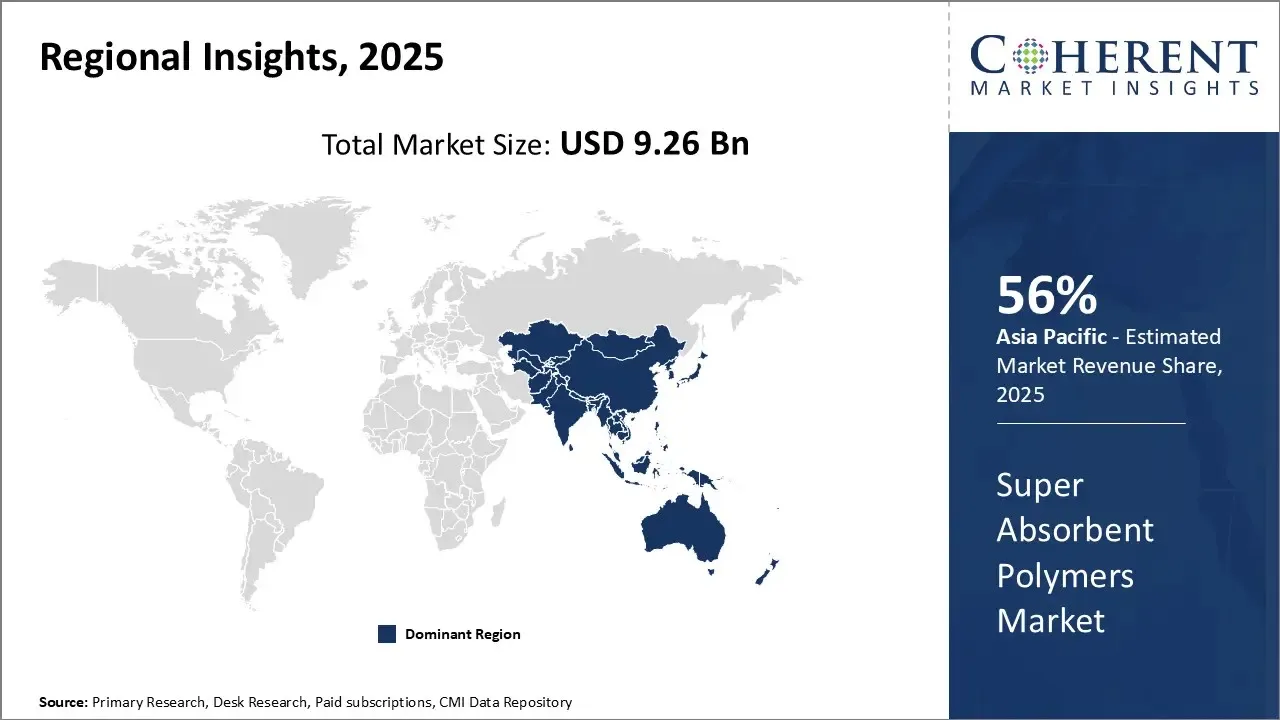
Asia Pacific dominates the overall market with an estimated share of 56% in 2026. Rising demand for personal hygiene products, including baby diapers, adult incontinence items, and feminine care products, is driving trends in the Asia Pacific Super Absorbent Polymers (SAP) market. Manufacturers are actively developing high-performance, eco-friendly SAP formulations to satisfy consumer expectations for comfort and sustainability. Expanding urbanization, higher disposable incomes, and growing hygiene awareness are influencing purchasing behaviors, while farmers and agricultural businesses increasingly adopt SAPs for soil moisture retention and water-efficient farming, establishing a notable growth trend across the region. For instance, Bharat Petroleum Corporation Limited (BPCL) has dispatched the first consignment of indigenous super absorbent polymer (SAP) from its propylene derivatives complex at Kochi Refinery.
Strong demand from the personal hygiene and healthcare sectors is driving the North American Super Absorbent Polymers (SAP) market, as consumers actively seek high-quality, reliable products. Manufacturers are advancing SAP technologies to improve absorption, comfort, and eco-friendly features, addressing sustainability concerns. The region is also expanding SAP use in medical applications such as wound care and surgical products. Rising hygiene awareness, an aging population, and well-established distribution networks further accelerate adoption and encourage continuous innovation in this mature market. For instance, in October 2024, BASF’s Petrochemicals division has upgraded its Superabsorbent Polymers (SAP) plant in Freeport, Texas, after a $19.2 million investment to boost production and optimize processes.
Strong consumption of personal hygiene products, especially baby diapers, adult incontinence items, and feminine care products, is driving the rapid expansion of China’s Super Absorbent Polymers (SAP) market. Manufacturers are actively producing high-performance, cost-effective, and environmentally friendly SAPs to satisfy both domestic demand and export opportunities. Urbanization, rising disposable incomes, and increased health and hygiene awareness are shaping consumer choices. At the same time, farmers and agricultural businesses are increasingly adopting SAPs for soil moisture retention and water-efficient farming, boosting market growth in China.
High demand for personal hygiene, healthcare, and adult incontinence products is driving the United States Super Absorbent Polymers (SAP) market. Manufacturers are actively developing advanced SAP formulations that deliver superior absorption, comfort, and eco-friendly features to meet consumer expectations. Increasing hygiene awareness, an aging population, and strong retail and distribution networks are promoting widespread adoption. At the same time, growing use of SAPs in medical and specialty applications, such as wound care and surgical products, is creating new opportunities and fostering innovation in the U.S. market. For instance, in July 2024, ZymoChem has launched BAYSE™, the world’s first scalable, 100% bio-based, biodegradable Super Absorbent Polymer (SAP).
SAPs are increasingly used in diapers, adult incontinence products, and feminine hygiene items due to their superior absorption and dryness retention. Consumer preference for comfort, leak protection, and skin-friendliness is driving innovation in SAP formulations. Manufacturers are focusing on softer textures, improved odor control, and fast absorption to enhance user experience. This trend highlights continuous product development tailored to evolving hygiene standards and lifestyle needs globally.
Environmental concerns are pushing the SAP market toward biodegradable and bio-based polymers. Companies are investing in renewable resources to produce SAPs that reduce ecological impact. End-users are showing preference for products that combine high performance with sustainability. Innovations in compostable SAPs for hygiene and agricultural applications are becoming central to market strategies, reflecting a broader industry shift toward greener and more socially responsible materials.
| Report Coverage | Details | ||
|---|---|---|---|
| Base Year: | 2025 | Market Size in 2026: | USD 9.88 Bn |
| Historical Data for: | 2020 To 2024 | Forecast Period: | 2026 To 2033 |
| Forecast Period 2026 to 2033 CAGR: | 6.7% | 2033 Value Projection: | USD 15.56 Bn |
| Geographies covered: |
|
||
| Segments covered: |
|
||
| Companies covered: |
Nippon Shokubai Co. Ltd., Evonik Industries AG, BASF SE, Yixing Danson Technology, Kao Corporation, Sumitomo Seika Chemicals Co. Ltd, San-Dia Polymers Global Co. Ltd., Sanyo Chemicals Industries, Formosa Plastics Corporation, and LG Chemicals Ltd. |
||
| Growth Drivers: |
|
||
| Restraints & Challenges: |
|
||
Uncover macros and micros vetted on 75+ parameters: Get instant access to report
Share
Share
Yash Doshi is a Senior Management Consultant. He has 12+ years of experience in conducting research and handling consulting projects across verticals in APAC, EMEA, and the Americas.
He brings strong acumen in helping chemical companies navigate complex challenges and identify growth opportunities. He has deep expertise across the chemicals value chain, including commodity, specialty and fine chemicals, plastics and polymers, and petrochemicals. Yash is a sought-after speaker at industry conferences and contributes to various publications on topics related commodity, specialty and fine chemicals, plastics and polymers, and petrochemicals.
Joining thousands of companies around the world committed to making the Excellent Business Solutions.
View All Our Clients