

Sustainable Aviation Fuel Market Size and Forecast: 2026 to 2033
Sustainable Aviation Fuel Market is estimated to be valued at USD 3,094.7 Mn in 2026 and is expected to reach USD 87,533.9 Mn in 2033, exhibiting a compound annual growth rate (CAGR) of 61.2% from 2026 to 2033.
Key Takeaways
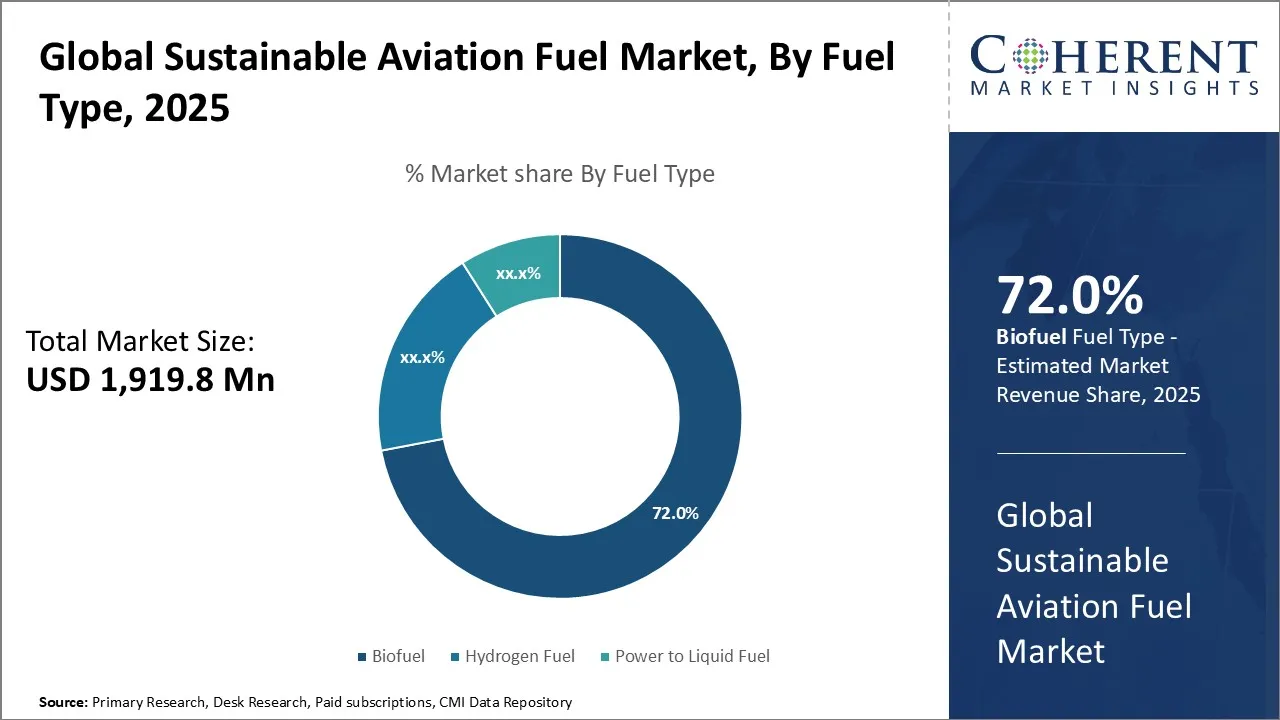
- By Fuel Type, Biofuel hold the largest market share of 73% in 2026 owing to its regulatory push & emission‑reduction mandates.
- By Aircraft Type, Fixed Wings expected to hold largest market share in 2026 owing to the large fuel consumption due to scale of operations.
- By Platform, Commercial Aviation acquired the prominent market share in 2026 owing to the regulatory mandates & emissions‑reduction requirements.
- By Region, North America dominates the overall market with an estimated share of 42% in 2026 owing to the strong government policies, incentives & regulatory push.
Market Overview
The Sustainable Aviation Fuel (SAF) market is evolving rapidly as airlines and governments actively work to reduce carbon emissions and promote greener air travel. Environmental regulations, corporate sustainability initiatives, and increasing consumer awareness drive the adoption of SAF as a practical, drop-in alternative to conventional jet fuel. Technological advancements and the use of diverse feedstocks, including waste oils and biomass, enhance production efficiency and scalability. Ongoing investments in infrastructure and strong airline commitments further accelerate market growth, establishing SAF as a key solution for decarbonizing aviation worldwide
Current Events and Its Impact on the Sustainable Aviation Fuel Market
Current Events | Description and its impact |
Regulatory and Policy Developments |
|
Technological Innovations and Advancements |
|
Segmental Insights
- Current Industry Events of 2026
- Market Size Estimation
- Regional Breakdown
- Competitive Landscape
- Customer Intelligence
- Segmental Analysis
- Pricing Analysis
- Key Market Drivers, Challenges & Future Trends
- Customized Insights Section
Sustainable Aviation Fuel Market Insights, By Fuel Type - Biofuel contribute the highest share of the market owing to its technological advances in biofuel production & feedstock diversification
Biofuel hold the largest market share of 73% in 2026. Biofuels are accelerating the growth of the Sustainable Aviation Fuel (SAF) market by providing a renewable, lower‑carbon alternative to conventional jet fuels. Governments and regulators actively promote biofuel adoption through emission reduction mandates and blending requirements, prompting airlines to incorporate it into their operations. Advances in technology and the use of diverse feedstocks, including waste oils and agricultural residues, improve production efficiency. Increasing consumer environmental awareness and corporate sustainability initiatives further drive adoption, while airline commitments and expanding infrastructure reinforce biofuels as a central pillar of sustainable aviation.
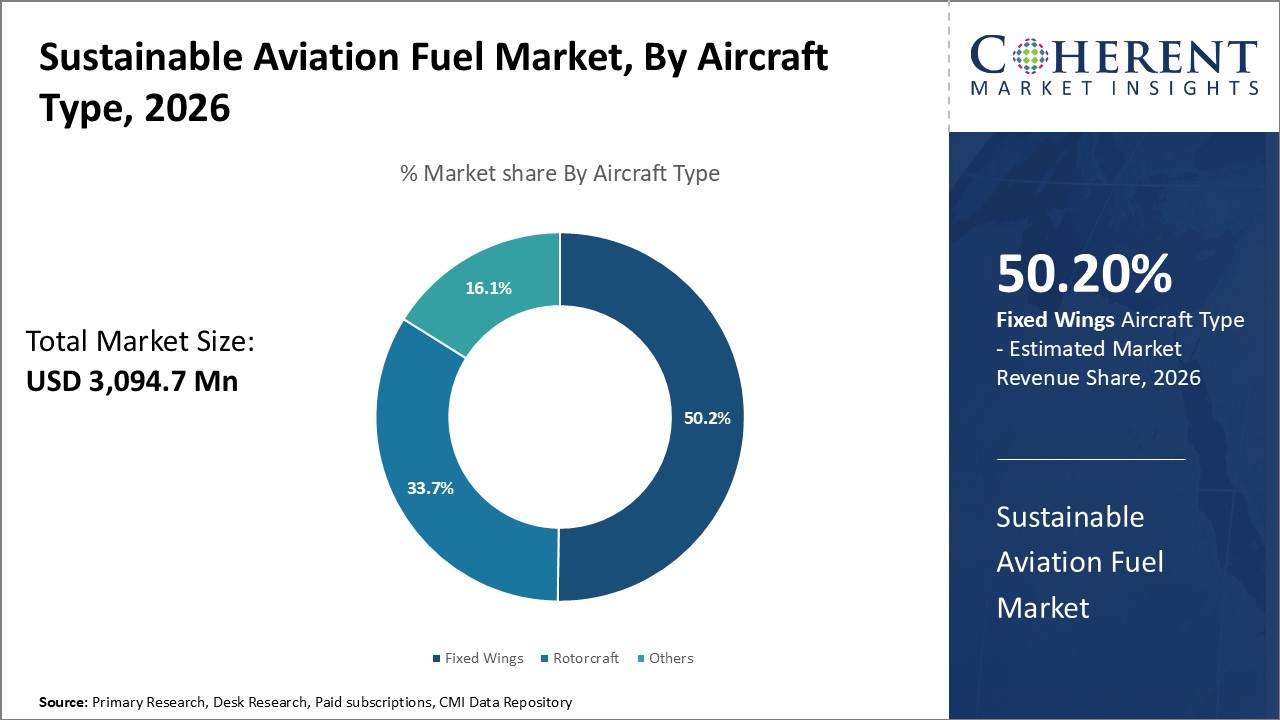
Sustainable Aviation Fuel Market Insights, By Aircraft Type - Fixed Wings contribute the highest share of the market owing to its commercial airlines’ sustainability commitments & pressure from consumers / stakeholders
High fuel consumption and the demands of long‑haul operations drive the adoption of Sustainable Aviation Fuel (SAF) in the fixed‑wing aircraft segment, making emissions reduction a key priority. Airlines actively integrate SAF to comply with regulations and fulfill sustainability commitments, while passengers and stakeholders increasingly seek greener travel options. The technology allows SAF to operate seamlessly in existing jet engines, and ongoing investments in infrastructure, along with long‑term supply agreements, strengthen availability, establishing fixed‑wing aircraft as a major force in SAF adoption.
Sustainable Aviation Fuel Market Insights, By Platform - Commercial Aviation contribute the highest share of the market owing to its rising passenger demand and growing air travel volumes
Airlines in commercial aviation are actively driving the Sustainable Aviation Fuel (SAF) market growth by reducing carbon emissions and meeting regulatory and sustainability goals. Increasing passenger traffic and stronger demand for eco-friendly travel prompt carriers to adopt SAF. Advances in technology and the availability of diverse feedstocks enhance production feasibility, while airline investments in fueling infrastructure secure reliable supply. Corporate sustainability commitments, investor expectations, and rising public awareness further boost adoption, establishing commercial aviation as a central force expanding the SAF market worldwide. For instance, in September 2025, oneworld Alliance and its member airlines partnered with Breakthrough Energy Ventures (BEV) to launch a new investment fund to tackle the limited supply and high cost of Sustainable Aviation Fuels (SAF).
Regional Insights
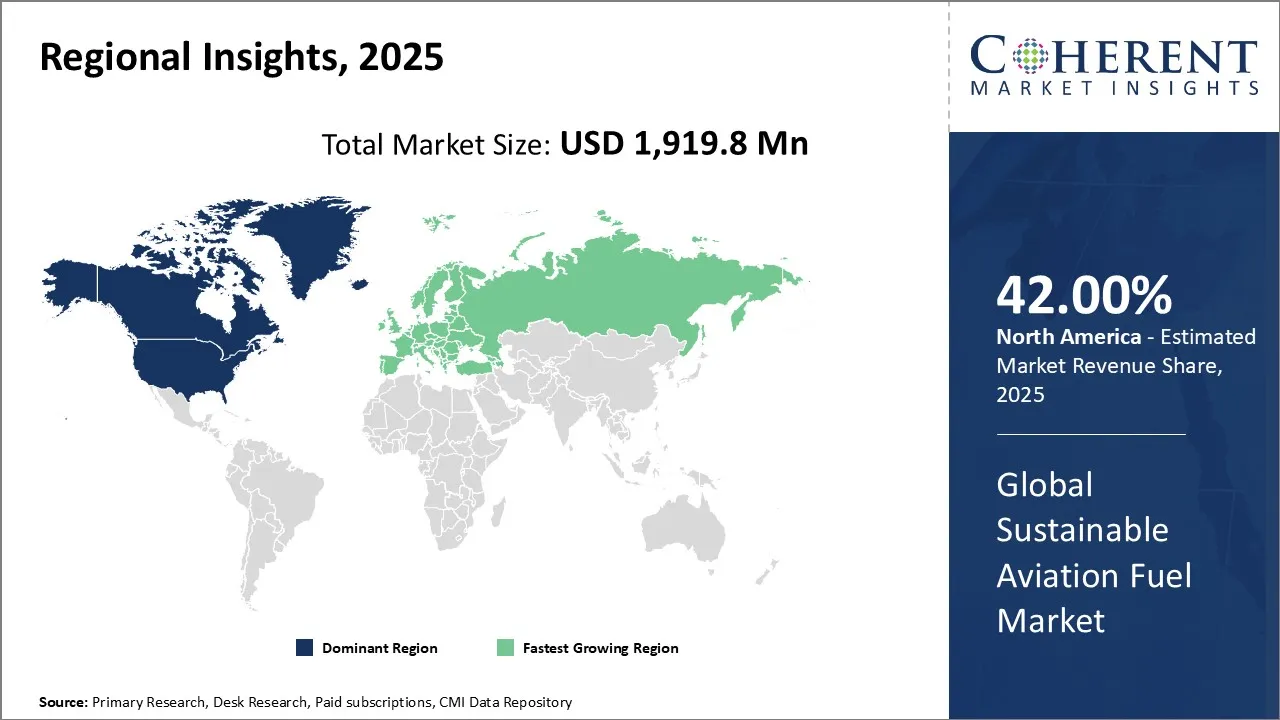
North America Sustainable Aviation Fuel Market Trends
North America dominates the overall market with an estimated share of 42% in 2026. Strong policy support and growing industry commitment are actively shaping the North American Sustainable Aviation Fuel (SAF) market revenue. Governments and states promote SAF production and fuel‑supply investments through tax incentives and credits. Airlines are securing long‑term offtake agreements and incorporating SAF into their operations, while producers utilize diverse feedstocks, from waste oils to agricultural residues, to expand supply. Innovations in production methods and the use of existing fuel infrastructure enable efficient deployment, and rising environmental awareness and corporate decarbonization initiatives position North America as a leader in advancing SAF adoption. For instance, in October 2026, Montana Renewables, in partnership with Calumet Montana Refining, launched MaxSAF™ Blended by commissioning onsite blending and shipping facilities to supply a certified 50/50 renewable–fossil jet fuel mix under ASTM D7566 and D1655 standards.
Europe Sustainable Aviation Fuel Market Trends
Europe’s sustainable aviation fuel (SAF) market is moving quickly from a niche experiment to a mainstream solution, driven by strict regulations and airlines’ growing commitments. The ReFuelEU Aviation Regulation now requires SAF blending at European airports, boosting production across the EU. In 2024, most SAF came from bio‑based feedstocks like used cooking oil and waste animal fats, while synthetic fuels remain limited. Although production costs are high and feedstocks compete with other sectors, investments in infrastructure and long-term supply agreements are establishing SAF as a key step toward aviation decarbonization. For instance, in November 2026, The European Commission launched the Sustainable Transport Investment Plan (STIP), a roadmap to expand renewable and low-carbon fuels in aviation and waterborne transport. Introduced under the EU’s Clean Industrial Deal and Competitiveness Compass, the plan aims to close the investment gap in sustainable fuel production and support Europe’s 2050 climate-neutrality target.
United States Sustainable Aviation Fuel Market Trends
The U.S. sustainable aviation fuel (SAF) market is accelerating as producers expand capacity and airlines adopt cleaner fuels. New bio-refineries and increased use of waste oils and fats have significantly boosted domestic SAF output. Government incentives and tax credits are driving biofuel production and encouraging airlines to switch to SAF. Major U.S. airports are now accepting SAF blends, prompting fuel suppliers and carriers to secure long-term agreements. While SAF supply remains limited compared to total jet fuel, investments in infrastructure are actively advancing greener aviation nationwide. For instance, Boeing and the United States launched an initiative to accelerate Sustainable Aviation Fuel (SAF) development and adoption among APEC member countries. SAF, which lowers the lifecycle carbon emissions of jet fuel, is essential for meeting ICAO and industry net-zero targets.
United Kingdom Sustainable Aviation Fuel Market Trends
The UK is actively transforming its sustainable aviation fuel market through new laws and fresh investments aimed at greening air travel and supporting local industry. The government enforces the Sustainable Aviation Fuel Mandate, requiring fuel suppliers to blend SAF with jet fuel, which drives demand and stimulates economic activity. Simultaneously, funding programs are backing multiple production projects nationwide, including waste-to-fuel conversions and advanced biofuel technologies. Despite initial supply challenges, regulation, financial support, and rising environmental awareness are actively shaping SAF as a central part of the UK’s future aviation landscape. For instance, in December 2026, Argus, a global energy and commodity price reporting agency, launched the world’s first assessed price for UK sustainable aviation fuel (SAF) certificates, expanding its coverage of the northwest European SAF market.
End-user Feedback and Unmet Needs in the Sustainable Aviation Fuel Market
- Cost pinch & economic burden: Airlines often say SAF remains far more expensive than conventional jet fuel, which squeezes already tight profit margins and makes widespread adoption financially risky. This cost premium deters many carriers from fully committing to SAF usage.
- Supply shortages & feedstock constraints: Many operators report difficulty sourcing consistent volumes of SAF, due to limited feedstocks (waste oils, biomass) and competition with other industries. This inconsistency undermines planning and long‑term reliance on SAF supply.
- Infrastructure and distribution gaps: Airlines note that airports and fuel supply chains frequently lack the storage, blending, and distribution infrastructure needed for SAF — which prevents smooth integration even when SAF is available.
Sustainable Aviation Fuel Market Trend
Diversified feedstocks and advanced production technologies
The SAF market is embracing a broader array of raw materials beyond traditional bio‑oils, including agricultural waste, municipal solid waste and CO₂‑derived synthetic fuels. Advanced pathways such as power‑to‑liquid (PtL), alcohol‑to‑jet and other next‑gen technologies are gaining traction, improving energy density and production efficiency. This diversification helps reduce dependence on limited feedstocks and enhances supply resilience. As a result, SAF production is becoming more scalable and adaptable to varying environmental and regulatory demands.
Policy mandates and regulatory support fueling demand
Governments and regulatory bodies worldwide are pushing SAF adoption through blending mandates, emissions targets, and incentives. These mandates require airlines and fuel suppliers to include SAF in their fuel mix, creating a stable demand framework. Coupled with carbon‑reduction goals and net‑zero commitments, such regulations give SAF projects long‑term visibility. As a result, airlines and producers gain confidence to sign long‑term supply agreements, invest in infrastructure, and expand production capacity.
Sustainable Aviation Fuel Market Opportunity
Broader feedstock base and technological innovation
Emerging‑generation technologies now enable SAF production from waste oils, agricultural residues, municipal solid waste, and even captured CO₂ — expanding potential raw‑material sources. Continuous innovation in conversion pathways such as hydro‑processing, synthetic‑kerosene (e.g. Fischer‑Tropsch), and alcohol‑to‑jet fuels improves yields and boosts scalability. This diversification of inputs and upgrading of production methods reduces dependence on specific feedstocks and creates new value chains, offering a strong foundation for long‑term SAF growth.
Market Report Scope
Sustainable Aviation Fuel Market Report Coverage
| Report Coverage | Details | ||
|---|---|---|---|
| Base Year: | 2025 | Market Size in 2026: | USD 3,094.7 Mn |
| Historical Data for: | 2020 To 2024 | Forecast Period: | 2026 To 2033 |
| Forecast Period 2026 to 2033 CAGR: | 61.2% | 2033 Value Projection: | USD 87,533.9 Mn |
| Geographies covered: |
| ||
| Segments covered: |
| ||
| Companies covered: | Neste, AEMETIS INC., Gevo, Shell PLC, Lanza Jet, and Sky NRG | ||
| Growth Drivers: |
| ||
| Restraints & Challenges: |
| ||
Sustainable Aviation Fuel Market News
- In November 2025, Spring GDS, a global cross-border logistics provider, launched its Book & Claim solution for sustainable aviation fuel (SAF) to help reduce air transport emissions and enable customers to meet sustainability goals with verified, transparent reporting.
- In August 2025, F&B Bio Recyclage Ltd in Ghana launched a pioneering project to convert municipal solid waste into Sustainable Aviation Fuel (SAF), reinforcing its commitment to sustainability and reducing aviation-sector emissions.
- In November 2025, Singapore’s Civil Aviation Authority (CAAS) announced to introduce a Sustainable Aviation Fuel (SAF) levy on all departing flights, ranging from S$1.00 for an economy passenger on a short-haul route to S$41.60 for a business-class passenger on a long-haul Americas flight.
Analyst Opinion (Expert Opinion)
- The International Air Transport Association (IATA)’s latest projections—indicating that global SAF production may double to roughly 2 million tonnes in 2025—are encouraging, yet the volume remains negligible relative to total aviation fuel demand. This trend underscores a structural imbalance: although the industry increasingly views SAF as the primary lever for decarbonizing aviation, current production levels are insufficient to create meaningful sector-wide impact.
- Several industry developments signal growing commitment—for example, Airbus reports that 75% of its 2024 aircraft deliveries incorporated SAF blends. However, without broader changes, these achievements risk becoming isolated milestones rather than evidence of systemic transition. SAF continues to cost two to three times more than conventional jet fuel, weakening the economic incentive for widespread adoption unless stronger policy support or carbon-pricing mechanisms emerge.
- The rise in offtake agreements—more than 80 airlines worldwide have committed to SAF procurement deals by mid-2025—demonstrates expanding demand. Yet these agreements alone cannot establish SAF as a structural alternative unless they are matched by significant investment in scalable production capacity and feedstock supply chains. Without this alignment, the SAF market may devolve into a patchwork of premium, limited-use offerings rather than a foundational fuel for a decarbonized aviation system.
- SAF remains essential but insufficient in its current trajectory. To elevate SAF from a niche sustainability initiative to mainstream aviation fuel, regulators, producers, and airlines must jointly accelerate feedstock diversification, expand production infrastructure, and adopt mechanisms—such as carbon pricing—that reflect the true environmental cost of fossil jet fuel. Until these conditions materialize, SAF represents a promising development but not a definitive solution.
Speak to the analyst
Want personalized insights?
Take the findings above to one of our principal consultants, or have the report rebuilt around the segments, geographies and competitors you actually track.
Market Segmentation
- Global Sustainable Aviation Fuel Market, By Fuel Type
- Biofuel
- Hydrogen Fuel
- Power to Liquid Fuel
- Global Sustainable Aviation Fuel Market, By Aircraft Type
- Fixed Wings
- Rotorcraft
- Others
- Global Sustainable Aviation Fuel Market, By Platform
- Commercial Aviation
- Military Aviation
- Business & General Aviation
- Unmanned Aerial Vehicle
- Regional Insights (Revenue, USD Mn, 2021 - 2033)
- North America
- U.S.
- Canada
- Latin America
- Brazil
- Argentina
- Mexico
- Rest of Latin America
- Europe
- Germany
- U.K.
- Spain
- France
- Italy
- Russia
- Rest of Europe
- Asia Pacific
- China
- India
- Japan
- Australia
- South Korea
- ASEAN
- Rest of Asia Pacific
- Middle East
- GCC Countries
- Israel
- Rest of Middle East
- Africa
- South Africa
- North Africa
- Central Africa
- North America
- Key Players Insights
- Neste
- AEMETIS, INC.
- Gevo
- Shell PLC
- Lanza Jet
- Sky NRG
Sources
Primary Research interviews
- Industry experts from airlines, fuel producers, and regulatory bodies
- Engineers and R&D personnel in biofuel and aviation fuel sectors
- Government officials involved in renewable energy and transportation policies
Databases
- International Air Transport Association (IATA) fuel statistics
- US Energy Information Administration (EIA) renewable fuel data
- European Alternative Fuels Observatory (EAFO) database
- ICAO (International Civil Aviation Organization) environmental data
Magazines
- Aviation Week & Space Technology
- Biofuels International
- Air Transport World
- Renewable Energy World
Journals
- Renewable & Sustainable Energy Reviews
- Journal of Cleaner Production
- Fuel
- Energy Policy
- Transportation Research Part D: Transport and Environment
Newspapers
- The Guardian – Environment section
- The New York Times – Climate & Energy
- Financial Times – Energy & Aviation
- Reuters – Energy & Transportation
Associations
- International Air Transport Association (IATA)
- ASTM International (fuel standards)
- Sustainable Aviation Fuel Users Group (SAFUG)
- Renewable Energy Association (REA)
Public Domain sources
- Government reports (e.g., US Department of Energy, European Commission)
- ICAO and UN Environment Programme publications
- Open-access technical papers on SAF production and adoption
- National renewable energy policy documents
Proprietary Elements
- CMI Data Analytics Tool
- Proprietary CMI Existing Repository of information for last 8 years
Get access to 250+ pages report
Every segment, forecast, competitor profile and data table behind the analysis above — available for instant download.
- ESOMAR Member
- ISO 9001:2015 Certified
- D-U-N-S Registered
- GDPR & CCPA Compliant
Missing comfort of reading report in your local language? Find your preferred language:
Transform your Strategy with Exclusive Trending Reports
Frequently Asked Questions
The Sustainable Aviation Fuel Market is estimated to be valued at USD 3,094.7 Mn in 2026, and is expected to reach USD 87,533.9 Mn by 2033.
The CAGR of the Sustainable Aviation Fuel Market is projected to be 61.2% from 2026 to 2033.
Growing focus on reducing carbon emissions and growing initiatives to increase supply chain process are fuelling the market.
The Biofuel segment is the leading component segment in the market.
High cost of sustainable fuel is the major factors restraining growth of the market.
Neste, AEMETIS, INC., Gevo, Shell PLC, Lanza Jet, and Sky NRG