

Vegan Fashion Market Analysis & Forecast: 2026-2033
The vegan fashion market is estimated to be valued at USD 557.72 Bn in 2026 and is expected to reach USD 925.29 Bn by 2033, exhibiting a compound annual growth rate (CAGR) of 7.5% from 2026 to 2033.
Key Takeaways
- Based on product type, the footwear segment is projected to account for 36.7 % of the market share in 2026, driven by ethical and eco-friendly approach.
- Based on gender, women segment is expected to hold the largest share of the market in 2026, owing to rising demand for cruelty-free products in female consumers.
- Based on price point, the economic segment is projected to hold a highest share of the market in 2026, owing to price-conscious consumers.
- Based on distribution channel, the online segment is projected to account for the greatest share of the market in 2026, owing to wider range of niche vegan brands and products that may not be available in the physical stores.
Market Overview
Vegan Fashion means the product such as footwear, cosmetics, clothing, and others made from natural resources without using any animal by product such as milk, fat, wool, fur, and others. The vegan cosmetics are made of extract from honey, beeswax, organic oil and others. Now a day’s more consumers are focusing on sustainability, which can affect on cosmetic brands to rethink ingredients used in manufacturing. The manufactures are improving sustainability to increase the production & sale of their product. For making the vegan footwear manufactures are used sticky rubber outsole, removable foot bed, water resistant upper, straps, laces, and all other component of the shoe. However, vegan shoes often end up being less expensive rather than animal-based product prices.
Current Events and Its Impact
Current Events | Description and its Impact |
Growing awareness of animal welfare and environmental sustainability |
|
Advancements in plant-based and recycled materials |
|
Consumer Feedback and Unmet Needs
- Quality and Durability: A common concern is that vegan alternatives, particularly in leather and other materials, sometimes lack the same quality and durability as traditional options. Consumers may worry that these products won’t last as long or may not have the same premium feel as conventional fashion items.
- Style and Variety: While there has been significant progress, some consumers feel that vegan fashion options are limited in terms of style, variety, and cutting-edge designs. Many vegan fashion brands are still working on offering trendy, diverse collections that appeal to a wide audience, including those seeking high-fashion or luxury pieces.
- Price Point: Vegan fashion is often priced higher due to the use of specialized materials and ethical production methods. Many consumers express concerns about the affordability of vegan products, especially when compared to traditional, non-vegan options.
- Current Industry Events of 2026
- Market Size Estimation
- Regional Breakdown
- Competitive Landscape
- Customer Intelligence
- Segmental Analysis
- Pricing Analysis
- Key Market Drivers, Challenges & Future Trends
- Customized Insights Section
Segmental Insights
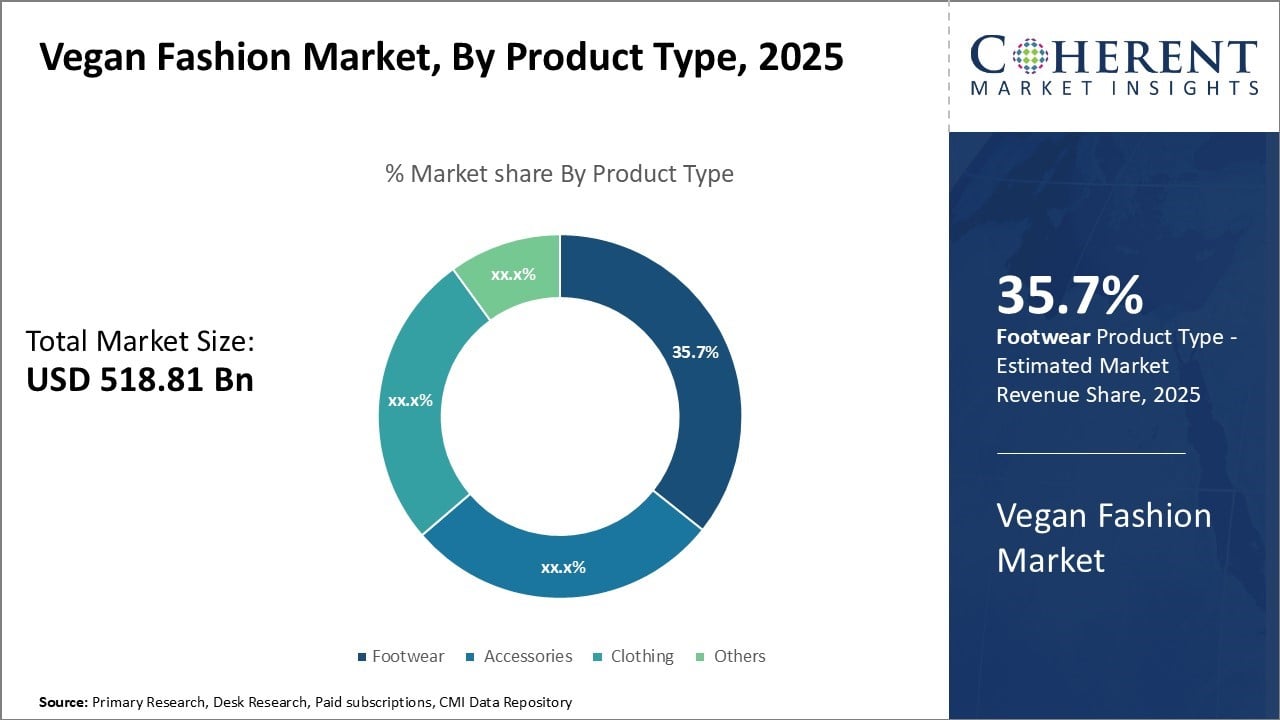
Vegan Fashion Market Insights, By Product type: Rising Health-Conscious Consumers is Driving the Footwear Industry
The footwear segment is expected to contribute 36.7% share of the market in 2026, owing to its ethical and eco-friendly approach. Along with that, the health-conscious and stylish choice preference of the consumers is driving to the vegan fashion market growth. Consumers are ditching animal-based material promotes non-violence and sustainability. In recent times, there is an innovation in synthetic leathers, textures, and constructions reflects in not compromising on quality. Vegan material often has a lesser environmental foot print than traditional leather and they are also hypoallergic suitable for sensitive people.
In May 2025, Skechers has introduced its latest summer footwear collection, featuring the new vegan Slip-Ins Sandals designed for effortless wear and enhanced comfort. These sandals incorporate the brand's patented Hands-Free Slip-ins® technology, allowing users to easily slide into their shoes without the need to bend down or use their hands.
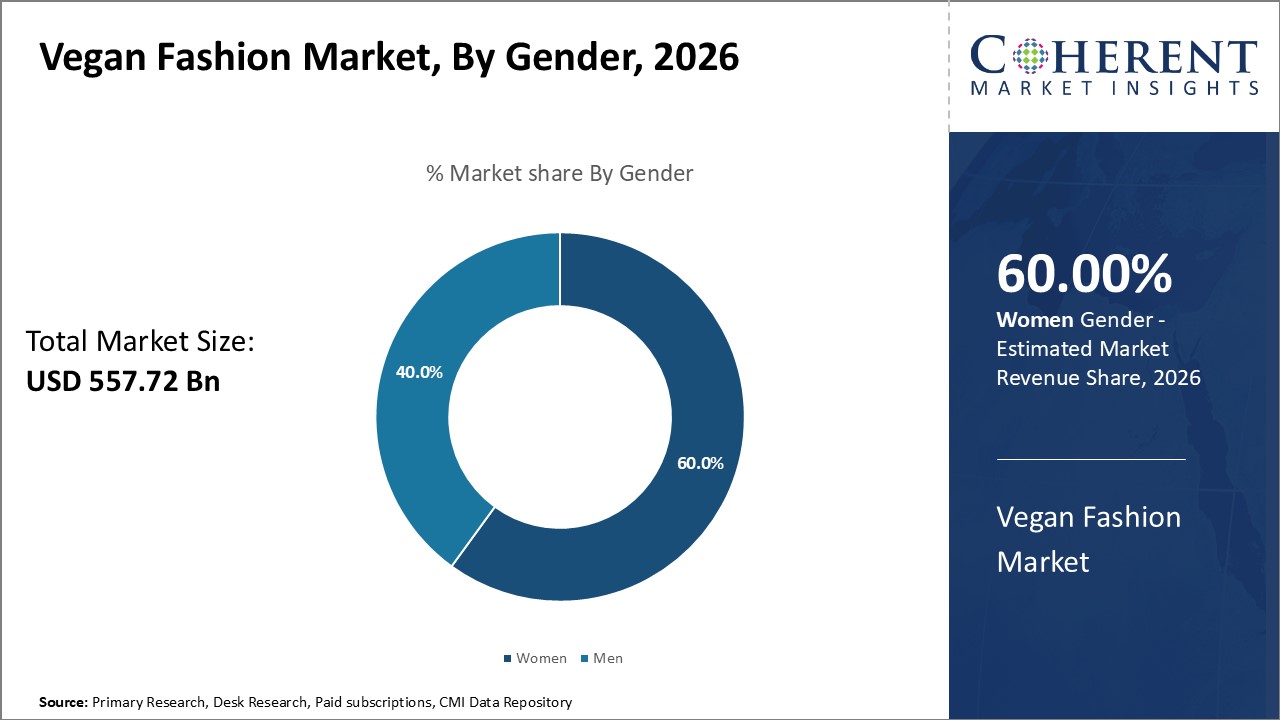
Vegan Fashion Market Insights, By Gender: Women Acquires the Largest Vegan Fashion Market Share Owing to the Rising Demand for Cruelty-Free Products
The women segment is expected to contribute the largest shares of the market in 2026, owing to the rising demand for cruelty-free products among female consumers. Women are mainly targeted with the wider variety and availability of vegan fashion items including handbags, shoes, accessories and cosmetics. In October 2024, Allen Solly, a leader in modern fashion, introduced its new line of premium, PETA-approved vegan handbags. With a strong focus on sustainability, this collection blends stylish designs with a commitment to cruelty-free materials and eco-conscious innovation. Women often seek out for vegan products due to ethical, health and environmental concerns. This is further proliferating the vegan fashion market demand.
Vegan Fashion Market Insights, By Price Point: Economic Segment Dominates the Market Owing to Growing Price-Conscious Consumer
The economic segment is expected to contribute the highest share of the market in 2026, driven by the consumers who are price-conscious and motivated by ethical or environmental convers. Economic option is more accessible to the wider population, particularly as fast fashion brands adopt vegan alternatives. According to Bain & Company’s latest Annual Luxury Report, in 2024, around 50 million people walked away from luxury labels such as Dior and Burberry.
Vegan Fashion Market Insights, By Distribution Channel: Online Segment Dominates the Overall Industry Owing to Wide Range of Collection
The online segment is expected to contribute the greatest share of the market in 2026, supported by the wider range of collection, convenience, growing digital penetration and rise in ethical consumerism among young population such as millennials and Gen z. Online platforms also enables direct-to-consumer (D2C) brans to thrive, reducing costs and promoting sustainable practices. The rising online shoppers is also adding to the vegan fashion market share. In 2023, approximately 250 million people in India were estimated to shop online annually, marking a notable rise from the previous year. This number is projected to surpass 400 million by 2027.
Regional Insights

Asia Pacific Vegan Fashion Market Analysis and Trends
Asia Pacific held a dominant position in the global vegan fashion market in 2026, accounting for 37.0% market revenue share. The market in Asia Pacific region is primarily driven by increasing demand for vegan handbags and cork wallets worldwide and the benefits of vegan products can drive the market growth over the forecast period. Along with that, population of Asia Pacific region has a rising health consciousness, environmental concerns and ethical considerations. The Asia-Pacific region has the highest share of vegetarians (19%) and vegans (9%) among the world's regions. According to the vegan Society, India has the population of vegetarians, followed by South Korea with approximately 2.5 million vegans. This further propels the vegan fashion market revenue.
North America Vegan Fashion Market Analysis and Trends
North America is considered to have the fastest growing share in the vegan fashion market forecast period. The growth is experienced due to rising health consciousness, increasing awareness of veganism and its environmental impacts. North America has the rising number of individuals adopting to plant-based diets. According to a study, there are out 3 % of Americans identifying themselves as vegan and the number is constantly rising.
Vegan Fashion Market Outlook Country-wise
India Vegan Fashion Market Trends
India is considered to be the number one vegan country in the world. The primary reason for India to have majority of the vegetarian population is due to its religious and ethical culture. India comprises of various religion such as Hinduism, Buddhism and Jainism which teach the practices of ahimsa or non-violence towards other living beings. PETA India’s booth at the India Fashion Forum (IFF) 2026, that took place on January 28 and 29 2026 at Whitefield, Bengaluru, showcased top sustainable and cruelty-free innovations, presenting brands that are transforming the fashion landscape.
China
China has a growing trend towards veganism, especially in urban areas, despite the country having a long history of meat consumption. The populations highly influenced by the Western counties and the growing vegan community. Chinese cuisine is being natural and plant-based. At present, China has 14% of vegetarians and 2% of vegan population. A new sustainable vegan fashion brand has debuted in Guangzhou, China, aiming to revolutionize the global fashion scene. Veshin specializes in high-end bags and accessories crafted entirely from vegan materials. This is further propelling the vegan fashion industry in China.
Market Report Scope
Vegan Fashion Market Report Coverage
| Report Coverage | Details | ||
|---|---|---|---|
| Base Year: | 2025 | Market Size in 2026: | USD 557.72 Bn |
| Historical Data for: | 2020 To 2024 | Forecast Period: | 2026 To 2033 |
| Forecast Period 2026 to 2033 CAGR: | 7.5% | 2033 Value Projection: | USD 925.29 Bn |
| Geographies covered: |
| ||
| Segments covered: |
| ||
| Companies covered: | Insecta Shoes Canada Inc., ROMBAUT, Nike, Adidas, Beyond Skin UK, Monk Story, Hexa Vegan Shoes, Ethletic, Matt & Nat, MooShoes, Susi Studio, Veerah, AVESU GmbH., ASICS Corporation, Ahimsa, Niche, Lusso Lifestyle, Vritti Designs, and Bar One Clothing. | ||
| Growth Drivers: |
| ||
| Restraints & Challenges: |
| ||
Vegan Fashion Market Drivers
Vegan cosmetics
Vegan fashion has arrived the new horizon for consumers and brands that can help to boost the vegan fashion market growth in upcoming years. Furthermore, vegan cosmetics are better for the skin which can attract customers to purchase vegan cosmetics and help to increase the global vegan fashion market growth. Additionally, the vegan cosmetics are derived from plants, they are considered to be a more nutritious and richest source of vitamins, minerals and antioxidants which are used to improve healthier looking skin.
For instance, in June 2025, a South Korea-based consumer goods company ‘LG Household & Health Care’, launched a vegan-certified color cosmetic brand ‘Freshian’, to attract Generation Y & Z beauty clients. It launched two different types of cushion compacts, a variety of lip balms, and a sunscreen that can help to increase the sale of vegan cosmetics in the market.
Key Developments
- In May 2025, Natural grocers, launched a new line of luxury, vegan skincare products under its house brand. The collection is free from parabens, petroleum products and synthetic fragrances, which aligns with eh company’s commitment to natural and organic offers.
- In May 2025, KAESA, a Korean fashion brand, launched a crowdfunding campaign and introduced its new cruelty-free product, the KAE Backpack. This new product aims to promote sustainable fashion by offering consumers an eco-friendly alternative to traditional leather backpacks.
- In April 2025, Under Armour, Inc., an American sportswear company, launched clothing collection in collaboration with regenerative fashion label Unless. These clothing collections are fully compostable, pant-based sportswear designed to return safely in to the earth. These designed were revealed at Milan design Week. The aim of this collaboration is to tackle the waste and pollution often associated with traditional sportswear, especially plastic.
- In 2024, Hylo Athletics and BLOOM Paris are at the forefront of sustainable and vegan footwear offerings, catering to consumers who prioritize eco-conscious and cruelty-free fashion choices. Hylo Athletics distinguishes itself by crafting sneakers from renewable materials sourced from sustainable origins. These materials may include recycled plastics, organic cotton, natural rubber, and innovative plant-based alternatives like pineapple leaf fibers or mushroom leather.
Analyst Opinion (Expert Opinion)
- Collaborations between vegan fashion brands and mainstream retailers. Partnerships between vegan fashion brands and large retail chains are helping bring cruelty-free fashion to a broader audience. By working together, these brands can expand their reach and make vegan options more accessible to everyday shoppers. This not only boosts market presence but also raises general awareness of sustainable alternatives in the fashion industry.
- Additionally, co-branded collections that combine mainstream style with innovative vegan materials are changing how consumers view plant-based fashion. These collaborations help show that vegan clothing can be both stylish and high-quality, making it a more appealing choice for fashion-conscious consumers.
- Regulatory changes and eco-labeling initiatives where stricter regulations around the use of animal-derived materials are pushing the fashion industry to adopt more vegan-friendly practices. As these rules become more widespread, they are expected to speed up the shift toward animal-free materials, providing a major boost to the vegan fashion industry.
- At the same time, the introduction of clear, standardized eco-labels for vegan and sustainable products is improving transparency. With better labeling, consumers can make informed choices more easily, which builds trust and encourages more people to choose vegan fashion over traditional options.
Speak to the analyst
Want personalized insights?
Take the findings above to one of our principal consultants, or have the report rebuilt around the segments, geographies and competitors you actually track.
Market Segmentation
- By Product Type (Revenue, USD Bn, 2021 - 2033)
- Footwear
- Accessories
- Clothing
- Others
- By Gender (Revenue, USD Bn, 2021 - 2033)
- Men
- Women
- By Price Point (Revenue, USD Bn, 2021 - 2033)
- Premium
- Economic
- By Distribution Channel (Revenue, USD Bn, 2021 - 2033)
- Offline
- Supermarket
- Hypermarket
- Specialty Stores
- Online
- Offline
- By Region (Revenue, USD Bn, 2021 - 2033)
- North America
- U.S.
- Canada
- Latin America
- Brazil
- Argentina
- Mexico
- Rest of Latin America
- Europe
- Germany
- U.K.
- Spain
- France
- Italy
- Russia
- Rest of Europe
- Asia Pacific
- China
- India
- Japan
- Australia
- South Korea
- ASEAN
- Rest of Asia Pacific
- Middle East
- GCC Countries
- Israel
- Rest of Middle East
- Africa
- South Africa
- North Africa
- Central Africa
- North America
- Key Players
- Insecta Shoes Canada Inc.
- ROMBAUT
- Nike
- Adidas
- Beyond Skin UK
- Monk Story
- Hexa Vegan Shoes
- Ethletic
- Matt & Nat
- MooShoes
- Susi Studio
- Veerah
- AVESU GmbH.
- ASICS Corporation
- Ahimsa
- Niche
- Lusso Lifestyle
- Vritti Designs
- Bar One Clothing
Sources
Primary Research Interviews from the following stakeholders
Stakeholders
- Interviews with sustainable fashion designers, ethical fashion brands, textile technologists, supply chain managers, plant-based material developers, circular fashion experts, and retail merchandisers across key global markets.
Specific stakeholders
- Product development heads at vegan fashion brands
- Sustainability officers at major apparel retailers
- Procurement managers for cruelty-free materials at luxury brands and eco-boutiques
- Textile engineers specializing in bio-based leathers and plant-derived fibers
- E-commerce category managers for ethical fashion platforms
- Founders and creative leads at independent vegan fashion startups
- Heads of environmental compliance in apparel manufacturing zones
Databases
- United Nations Industrial Development Organization (UNIDO)
- FAOSTAT
- Eurostat
- U.S. Department of Agriculture (USDA)
- World Integrated Trade Solution (WITS)
- Japan Ministry of Economy, Trade and Industry (METI)
- India’s Ministry of Textiles
- Korea International Trade Association (KITA)
Magazines
- Vogue Business – Sustainability & Innovation
- Ethical Consumer
- Fashion Revolution’s Transparency Index Reports
- Ecotextile News
- Textile Today – Sustainable Fashion Section
- Apparel Resources – Green Fashion Updates
- Sustainable Brands – Fashion Industry Insights
- Plant Based News – Ethical Fashion Section
Journals
- Journal of Fashion Marketing and Management
- Fashion and Textiles (Springer)
- International Journal of Sustainable Fashion & Textiles
- Journal of Cleaner Production (Elsevier)
- Sustainable Materials and Technologies
- Journal of Textile and Apparel, Technology and Management
- Environmental Research Letters – Fashion & Consumer Goods Section
Newspapers
- The Guardian
- The New York Times
- The Times of India
- The Financial Times
- South China Morning Post
- The Hindu Business Line
Associations
- Textile Exchange
- PETA – Approved Vegan Fashion Network
- Global Organic Textile Standard (GOTS)
- Fashion for Good
- Global Fashion Agenda
- Sustainable Apparel Coalition
- World Fair Trade Organization (WFTO)
- India Fashion Forum – Sustainability Track
- Natural Fiber Convergence Platform
Public Domain Sources
- European Commission
- U.S. Environmental Protection Agency (EPA)
- Ministry of Environment, Forest and Climate Change (India)
- National Institute of Fashion Technology (NIFT), India
- United Nations Environment Programme (UNEP)
- Bioresource Technology Reports (India, EU, US)
- Ministry of Agriculture (Brazil, Mexico)
- Environment Agency (UK)
Proprietary Elements
- CMI Data Analytics Tool, and Proprietary CMI Existing Repository of information for last 8 years
Get access to 250+ pages report
Every segment, forecast, competitor profile and data table behind the analysis above — available for instant download.
- ESOMAR Member
- ISO 9001:2015 Certified
- D-U-N-S Registered
- GDPR & CCPA Compliant
Missing comfort of reading report in your local language? Find your preferred language:
Transform your Strategy with Exclusive Trending Reports
Frequently Asked Questions
The Vegan Fashion Market is estimated to be valued at USD 557.72 Bn in 2026, and is expected to reach USD 925.29 Bn by 2033.
The CAGR of the Vegan Fashion Market is projected to be 7.5% from 2026 to 2033.
Vegan fashion is the new horizon that consumers and brands have arrived that can help to boost the market growth in upcoming years.
High cost of vegan products such as footwear, clothing, and others can hamper the market growth.
In terms of product type, footwear is estimated to dominate the market revenue share in 2026.
Insecta Shoes Canada Inc., ROMBAUT, Nike, Adidas, Beyond Skin UK, Monk Story, Hexa Vegan Shoes, Ethletic, Matt & Nat, MooShoes, Susi Studio, Veerah, AVESU GmbH., ASICS Corporation, Ahimsa, Niche, Lusso Lifestyle, Vritti Designs, and Bar One Clothing are the major players.
Asia Pacific is expected to lead the vegan fashion market.