

Wearable Patch Market Size and Forecast – 2026 to 2033
Wearable Patch Market is estimated to be valued at USD 1,340.2 Mn in 2026 and is expected to reach USD 5,773.4 Mn in 2033, exhibiting a compound annual growth rate (CAGR) of 23.2% from 2026 to 2033.
Key Takeaways
- By Technology, connected hold the largest market share of 66% in 2026 owing to the rising health and wellness awareness.
- By Application, Monitoring acquires the prominent market share in 2026 owing to the surging demand for real-time data and remote monitoring.
- By End-User, Healthcare segment is expected to dominate the market share in 2026 on account of the surging penetration towards chronic disease management.
- By Region, North America dominates the overall market with an estimated share of 45.1% in 2026 on account of increasing burden of chronic diseases across the United States.
Market Overview
The wearable patch market has grown significantly due to the rising demand for continuous health monitoring and personalized healthcare solutions. Wearable patches, which adhere to the skin, track various physiological parameters like heart rate, glucose levels, oxygen saturation, temperature, and stress indicators. These patches deliver non-invasive, real-time data, enabling both consumers and healthcare professionals to monitor health conditions more accurately and efficiently.
Current Events and Its Impact
Current Events | Description and its impact |
Security and Data Privacy Developments |
|
Healthcare Policy and Reimbursement Shifts |
|
Semiconductor Supply Chain Dynamics |
|
Role of AI (Artificial Intelligence) in the Wearable Patch Market
Artificial Intelligence (AI) is transforming the wearable patch market by actively improving data analysis, prediction accuracy, and personalized healthcare delivery. AI algorithms analyze large volumes of real-time health data gathered by wearable patches to identify patterns, anticipate potential health problems, and send timely alerts to users and healthcare professionals. This enables more accurate diagnoses, promotes early intervention, and helps tailor treatment plans to individual needs. Moreover, AI supports adaptive learning, allowing wearable patches to evolve and improve continuously based on user habits and health data.
- Current Industry Events of 2026
- Market Size Estimation
- Regional Breakdown
- Competitive Landscape
- Customer Intelligence
- Segmental Analysis
- Pricing Analysis
- Key Market Drivers, Challenges & Future Trends
- Customized Insights Section
End-user Feedback and Unmet Needs in the Wearable Patch Market
End-user Feedback and Unmet Needs
- Comfort and Skin Compatibility: Many end users report discomfort when wearing patches for extended periods, citing skin irritation, redness, or allergic reactions. The current materials used in some patches can cause itching or sweating, especially in sensitive skin types. There is a strong unmet need for hypoallergenic, breathable, and flexible materials that maintain adhesion without compromising skin health.
- Accuracy and Reliability of Data: Users frequently express concerns about the accuracy and consistency of the data collected by wearable patches, especially for health monitoring such as glucose levels or vital signs. Inconsistent readings or delayed updates can reduce trust and limit usage. Improving sensor precision and ensuring real-time, reliable data output remains a critical unmet need.
- Battery Life and Power Efficiency: End users often face frustration with limited battery life requiring frequent charging or replacement. This disrupts continuous monitoring and user convenience. There is a growing demand for wearable patches with longer-lasting, energy-efficient power sources that can operate reliably for days or weeks without compromising device size or comfort.
Segmental Insights
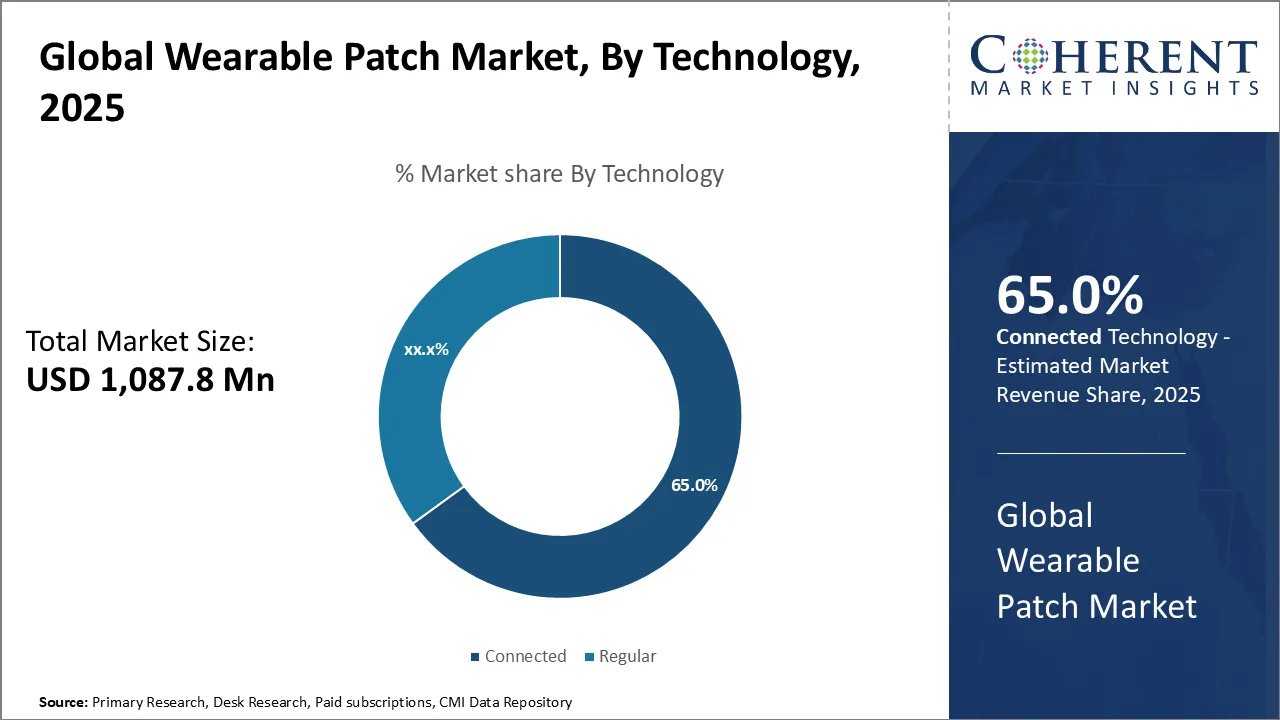
Wearable Patch Market Insights, by Technology - Connected contribute the highest share of the market owing to its Improved Data Security and Privacy
Connected hold the largest market share of 66% in 2026, growing rapidly as consumers increasingly demand real-time health monitoring and remote patient care. Smart patches use integrated sensors and wireless technology to actively collect data such as heart rate, glucose levels, and body temperature, then transmit it to healthcare providers or mobile applications. The surge in chronic diseases and advancements in digital health tools are driving their adoption in medical, fitness, and wellness applications. Investors are also pouring resources into telemedicine and personalized healthcare, further accelerating market growth. As more people prioritize proactive health management, connected wearable patches are gaining widespread traction. For instance, in March 2025, CardioComm Solutions, Inc., a well-established manufacturer of medical electrocardiogram software and devices, introduced a wearable product line of Bluetooth-connected ECG chest patches designed for active consumers. This is further accelerating the wearable patch market demand.
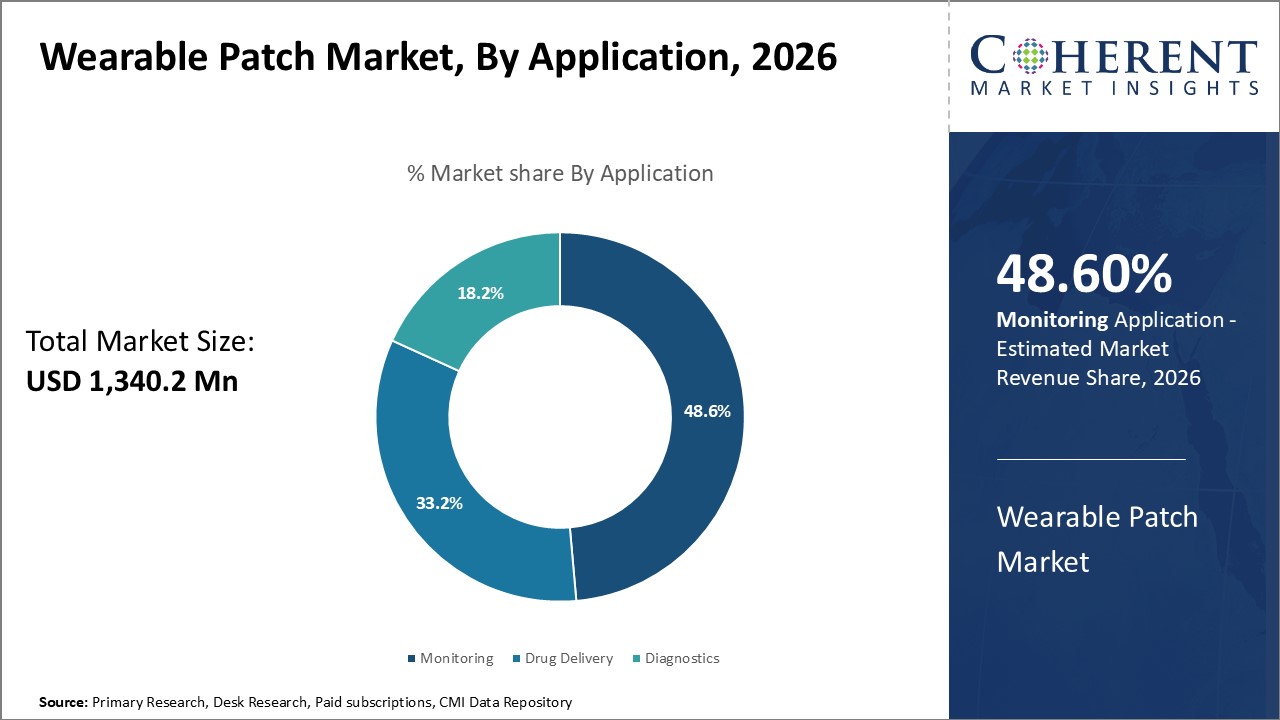
Wearable Patch Market Insights, by Application - Monitoring contributes the highest share of the market owing to its Cost-Effectiveness for Healthcare Systems
Monitoring drives the growth of the wearable patch market by enabling users to continuously track vital health metrics such as heart rate, glucose levels, respiration, temperature, and hydration. These patches actively collect and transmit real-time data through advanced sensors and wireless connectivity to healthcare providers or mobile apps for immediate analysis. This steady stream of data helps medical professionals detect issues early, manage chronic conditions, and tailor personalized treatment plans. As lifestyle-related health problems rise and more people adopt preventive healthcare practices, the need for accurate, non-invasive monitoring tools grows.
For instance, SmartCardia has launched its 7L patch, a 7-lead Cardiac Monitoring Patch, in India on Thursday. The company stated that this patch integrates medical wearable technology with AI to deliver predictive and personalized patient insights through remote monitoring.
Wearable Patch Market Insights, by End-User - Healthcare contributes the highest share of the market owing to its Enhanced Patient Empowerment
Healthcare applications actively fuel the growth of the wearable patch market by offering real-time monitoring and efficient disease management solutions. Medical professionals rely on wearable patches to track vital signs such as heart rate, glucose levels, and body temperature, allowing them to diagnose conditions early and intervene promptly. These patches enable remote monitoring, which helps reduce hospital visits and improve outcomes for patients with chronic illnesses.
Regional Insights
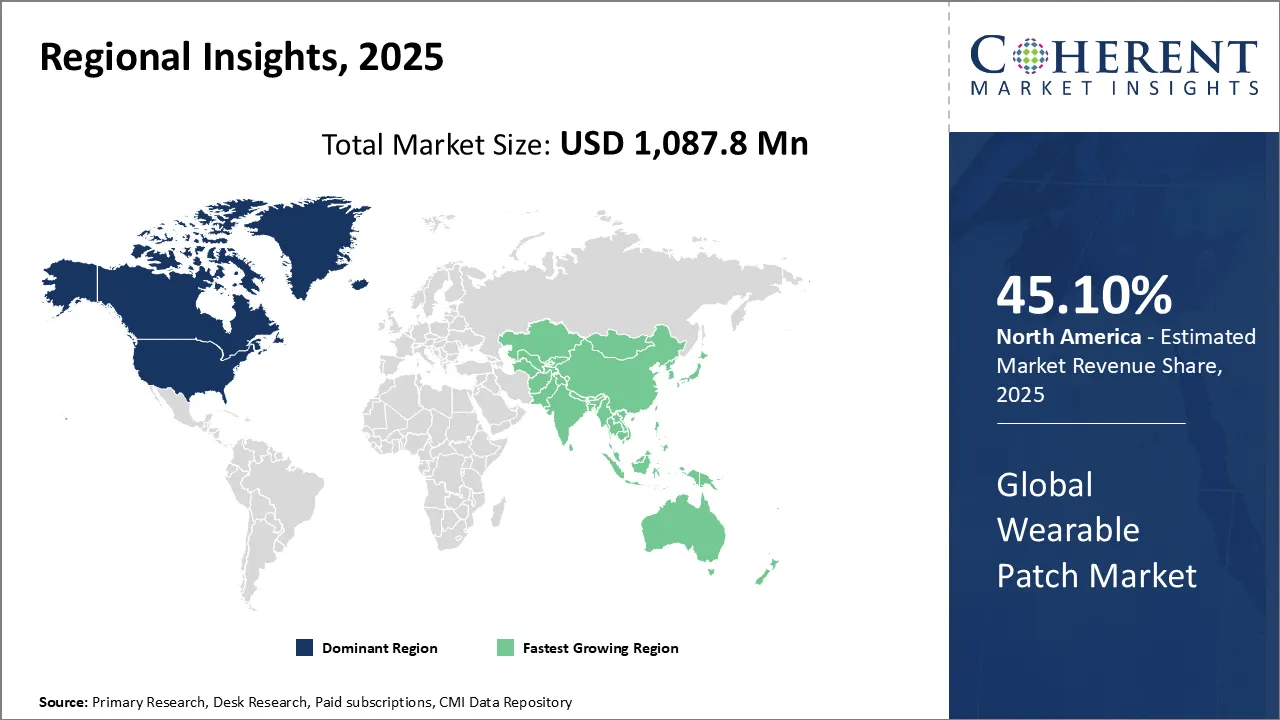
North America Wearable Patch Market Trends
The North American wearable patch market holds largest market share of 45.1% and experiencing robust growth, driven by the increasing demand for remote patient monitoring and personalized healthcare solutions. Technological advancements in connected wearable patches, which enable real-time health data transmission, are significantly contributing to this expansion. The growing prevalence of chronic diseases and the emphasis on preventive care are further propelling market growth. Additionally, the integration of wearable patches in homecare settings is enhancing patient compliance and reducing the need for frequent hospital visits. For instance, the Kailo Partner Program was introduced by Pain Relief Technologies LLC, the company that makes the Kailo Pain Patch®, which has benefited millions of people with pain worldwide. The program's goal is to attract reseller partners throughout North America.
Asia Pacific Wearable Patch Market Trends
The Asia-Pacific wearable patch market is poised for significant growth, driven by rising demand for remote patient monitoring, advancements in digital healthcare, and increasing adoption of wearable technology. Additionally, the integration of artificial intelligence and data analytics enhances the functionality of wearable patches, enabling real-time health monitoring and personalized care. As healthcare systems in the region increasingly adopt these advanced solutions, the Asia-Pacific wearable patch market is expected to continue its upward trajectory.
Chinese researchers at Lanzhou University have developed a transparent, soft wearable patch with exceptional optical and electrical properties, designed to be placed under the skin to raise body temperature for treating subcutaneous tumors.
United States Wearable Patch Market Trends
The United States wearable patch market is experiencing significant growth, driven by advancements in technology and increasing demand for non-invasive health monitoring solutions. This expansion is fueled by the rising prevalence of chronic diseases, such as diabetes and cardiovascular conditions, which necessitate continuous monitoring. Technological innovations, including the integration of artificial intelligence and wireless connectivity, are enhancing the functionality and appeal of wearable patches. For instance, in April 2024, Epicore Biosystems, a U.S.-based digital health startup developing advanced wearables that monitor sweat and deliver real-time, personalized hydration data for performance and safety, announced today the commercial launch of Connected Hydration.
India Wearable Patch Market Trends
Advancements in digital health technologies are driving significant growth in India’s wearable patch market. These patches actively use sensors and wireless connectivity to track vital signs like heart rate, glucose levels, and body temperature in real time. The increasing prevalence of chronic diseases, along with a stronger focus on preventive healthcare, is boosting the adoption of wearable patches across healthcare, fitness, and wellness industries. As a result, more users and providers are embracing these devices to enhance health monitoring and management. For instance, in January 2024, India Medtronic Private Limited announced a strategic partnership with Cardiac Design Labs (CDL) to launch, scale, and expand access to CDL’s innovative diagnostic technology, Padma Rhythms—an external loop recorder (ELR) patch developed for comprehensive, long-term heart monitoring and diagnosis.
Market Report Scope
Wearable Patch Market Report Coverage
| Report Coverage | Details | ||
|---|---|---|---|
| Base Year: | 2025 | Market Size in 2026: | USD 1,340.2 Mn |
| Historical Data for: | 2020 To 2024 | Forecast Period: | 2026 To 2033 |
| Forecast Period 2026 to 2033 CAGR: | 23.2% | 2033 Value Projection: | USD 5,773.4 Mn |
| Geographies covered: |
| ||
| Segments covered: |
| ||
| Companies covered: | Medtronic Plc, Hill-Rom Holdings, Inc. (Welch Allyn), iRythm Technologies, Inc., AliveCor, Inc., Vivalnk, Inc., Cardiac Insight Inc., VitalConnect, LifeSignals, Inc., L’oreal Group, Dexcom, Inc., GENTAG, Inc., Abbott Laboratories, Koninklijke Philips N.V. and other prominent players. | ||
| Growth Drivers: |
| ||
| Restraints & Challenges: |
| ||
Wearable Patch Market Trend
Growing Adoption of Remote Health Monitoring
The wearable patch market is witnessing rapid growth driven by the increasing adoption of remote patient monitoring devices. Patients and healthcare providers alike are embracing these patches for continuous, non-invasive monitoring of vital signs and chronic conditions, enabling timely interventions and reducing hospital visits.
Integration of Advanced Biosensors
Modern wearable patches are increasingly incorporating advanced biosensors capable of detecting multiple biomarkers such as glucose, lactate, and electrolytes. This technological advancement allows for more comprehensive health tracking, opening new possibilities for personalized medicine and real-time biochemical monitoring.
Wearable Patch Market Opportunity
Expansion in Chronic Disease Management
Wearable patches offer significant opportunities in managing chronic diseases such as diabetes, cardiovascular disorders, and respiratory conditions. Continuous monitoring enables early detection of complications and better disease control, reducing hospitalizations and healthcare costs. As chronic disease prevalence rises globally, demand for such solutions is expected to surge.
Increasing Adoption in Preventive Healthcare
There is growing consumer interest in preventive health and wellness, which wearable patches can address by providing real-time physiological data and lifestyle insights. This shift towards proactive health management creates an opportunity to develop user-friendly patches focused on fitness tracking, stress monitoring, and early risk identification.
Wearable Patch Market News
- In April 2025, Turkish scientist and Massachusetts Institute of Technology professor sent its wearable ultrasound device into space. The conformable Ultrasound Breast Patch (cUSBr-Patch) allow for frequent, non-invasive breast cancer screenings.
- In February 2025, Department of Robotics and Mechatronics Engineering research team at the Daegu Gyeongbuk Institute of Science and Technology (DGIST) created a smart patch capable of real-time biometric signal monitoring and medicine delivery.
- In October 2022, Mawi, the developer of AI-powered wearable medical devices for diagnosing and monitoring cardiac diseases, unveiled the Mawi Heart Patch—the market’s first-ever single-use 2-lead cardiac monitor.
- In October 2023, DuPont introduced DuPont™ Liveo™ Soft Skin Conductive Tape 1-3150, a silicone-based thermoset adhesive designed for electrical biosignal sensing and transfer.
Analyst Opinion (Expert Opinion)
- The wearable patch market is on the cusp of a profound transformation, driven not just by incremental technological advances but by a fundamental shift in how healthcare data is generated and utilized. In my expert view, the true potential of wearable patches lies in their ability to seamlessly integrate continuous biosensing with personalized, actionable insights—yet the industry still struggles with delivering on this promise at scale.
- One critical bottleneck remains the accuracy and clinical validation of sensor outputs. Despite the proliferation of wearable biosensors, studies suggest that up to 30% of devices on the market fail to meet clinically acceptable accuracy standards, undermining user confidence and clinician adoption. For example, Dexcom’s continuous glucose monitoring (CGM) patches have set a benchmark for accuracy in diabetes care, but many emerging competitors lag behind due to inadequate calibration and sensitivity to motion artifacts. Until the entire market converges on robust, validated sensing technologies, widespread clinical integration will remain elusive.
- Moreover, the user adherence challenge cannot be overstated. Despite advances in flexible and skin-friendly materials, adherence rates drop sharply beyond a week of continuous wear, with dermatological reactions cited in over 20% of long-term users according to peer-reviewed dermatology journals. This signals a clear unmet need for novel materials science innovations—possibly inspired by biomimicry—that can maintain skin integrity while ensuring consistent sensor contact.
- From a data perspective, the promise of wearable patches as standalone devices is limited. The future is in ecosystem integration—patches must become nodes within sophisticated, AI-powered health networks. Apple’s HealthKit and Google’s Fit platforms illustrate the benefits of data aggregation, yet current wearable patches often operate in silos. Without interoperability standards and seamless cloud integration, patches risk relegation to niche status.
Speak to the analyst
Want personalized insights?
Take the findings above to one of our principal consultants, or have the report rebuilt around the segments, geographies and competitors you actually track.
Market Segmentation
- Global Wearable Patch Market, By Technology (Revenue, USD Mn, 2021 - 2033)
- Connected
- Regular
- Global Wearable Patch Market, By Application (Revenue, USD Mn, 2021 - 2033)
- Monitoring
- Drug Delivery
- Diagnostics
- Global Wearable Patch Market, By End User (Revenue, USD Mn, 2021 - 2033)
- Healthcare
- Fitness & Sports
- Global Infection Surveillance Market, By Region (Revenue, USD Mn, 2021 - 2033)
- North America
- U.S.
- Canada
- Latin America
- Brazil
- Argentina
- Mexico
- Rest of Latin America
- Europe
- Germany
- U.K.
- Spain
- France
- Italy
- Russia
- Rest of Europe
- Asia Pacific
- China
- India
- Japan
- Australia
- South Korea
- ASEAN
- Rest of Asia Pacific
- Middle East
- GCC Countries
- Israel
- Rest of Middle East
- Africa
- South Africa
- North Africa
- Central Africa
- North America
- Company Profiles
- Medtronic Plc
- Hill-Rom Holdings, Inc. (Welch Allyn)
- iRythm Technologies, Inc.
- AliveCor, Inc.
- Vivalnk, Inc.
- Cardiac Insight Inc.
- VitalConnect
- LifeSignals, Inc.
- L’oreal Group
- Dexcom, Inc.
- GENTAG, Inc.
- Abbott Laboratories
- Koninklijke Philips N.V.
Sources
Primary Research interviews
- Interviews with biomedical engineers specializing in wearable biosensors
- Discussions with dermatologists on skin compatibility of wearable patches
- Conversations with endocrinologists using continuous glucose monitoring systems
- Feedback sessions with fitness professionals utilizing wearable patches for athlete monitoring
- Interviews with product developers at leading medical device manufacturers
Databases
- PubMed (for biomedical research papers and clinical trial data)
- IEEE Xplore Digital Library (for technology and engineering research on wearable sensors)
- ClinicalTrials.gov (for ongoing and completed trials involving wearable patch devices)
- FDA’s Medical Device Database (for regulatory approvals and device listings)
- National Library of Medicine (NLM) databases
Magazines
- IEEE Spectrum (technology and engineering innovation in wearables)
- MIT Technology Review (emerging technologies including healthcare wearables)
- Wired (consumer tech trends and wearable devices)
- MedTech Dive (healthcare technology advancements)
- Nature Biotechnology (innovation in biomedical devices)
Journals’
- Journal of Biomedical Materials Research
- Sensors and Actuators B: Chemical
- IEEE Journal of Biomedical and Health Informatics
- Advanced Healthcare Materials
- Skin Research and Technology
Newspapers
- The New York Times – Health Section (technology in healthcare)
- The Guardian – Science and Technology Section
- The Washington Post – Health and Science Coverage
- Financial Times – Health Technology News
- The Wall Street Journal – Medical Technology Updates
Associations
- IEEE Engineering in Medicine and Biology Society (EMBS)
- The Society for Biomaterials
- The American Diabetes Association (ADA)
- The International Society of Wearable Technology (ISWT)
- The Association for the Advancement of Medical Instrumentation (AAMI)
Public Domain sources
- U.S. National Institutes of Health (NIH) publications and reports
- World Health Organization (WHO) health technology reports
- U.S. Centers for Disease Control and Prevention (CDC) data sets
- Open-access scientific repositories like arXiv.org
- Government health agencies’ digital health strategy documents
Proprietary Elements
- CMI Data Analytics Tool, and Proprietary CMI Existing Repository of information for last 8 years
Get access to 250+ pages report
Every segment, forecast, competitor profile and data table behind the analysis above — available for instant download.
- ESOMAR Member
- ISO 9001:2015 Certified
- D-U-N-S Registered
- GDPR & CCPA Compliant
Missing comfort of reading report in your local language? Find your preferred language:
Transform your Strategy with Exclusive Trending Reports
Frequently Asked Questions
The Wearable Patch Market is estimated to be valued at USD 1,340.2 Mn in 2026, and is expected to reach USD 5,773.4 Mn by 2033.
The CAGR of the Wearable Patch Market is projected to be 23.2% from 2026 to 2033.
Rising in research and development activities in wearable patch is expected to drive the market over the forecast period
Connected is the leading technology segment in the market.
High cost of the sensor monitoring patch is expected to hamper the growth of the market.
Major players operating in the market include Medtronic Plc, Hill-Rom Holdings, Inc. (Welch Allyn), iRythm Technologies, Inc., AliveCor, Inc., Vivalnk, Inc., Cardiac Insight Inc., VitalConnect, LifeSignals, Inc., L’oreal Group, Dexcom, Inc., GENTAG, Inc., Abbott Laboratories, Koninklijke Philips N.V. and other prominent players.