Automotive Aluminum Market Analysis & Forecast: 2026-2033

Automotive Aluminum Market Size and Forecast – 2026 – 2033
The Global Automotive Aluminum Market size is estimated to be valued at USD 32.4 billion in 2026 and is expected to reach USD 56.7 billion by 2033, exhibiting a compound annual growth rate (CAGR) of 8.4% from 2026 to 2033.
Global Automotive Aluminum Market Overview
The automotive aluminum market includes a wide range of products used to reduce vehicle weight, improve fuel efficiency, and enhance performance. Key product segments include aluminum sheets and plates, extrusions, castings, and forgings. These materials are widely used in body panels, chassis structures, engine components, wheels, heat exchangers, and battery enclosures for electric vehicles. Aluminum alloys offer high strength-to-weight ratios, corrosion resistance, and recyclability, making them ideal for modern automotive applications. Growing demand for lightweight vehicles and stricter emission regulations are accelerating aluminum adoption across passenger cars, commercial vehicles, and electric mobility segments worldwide.
Key Takeaways
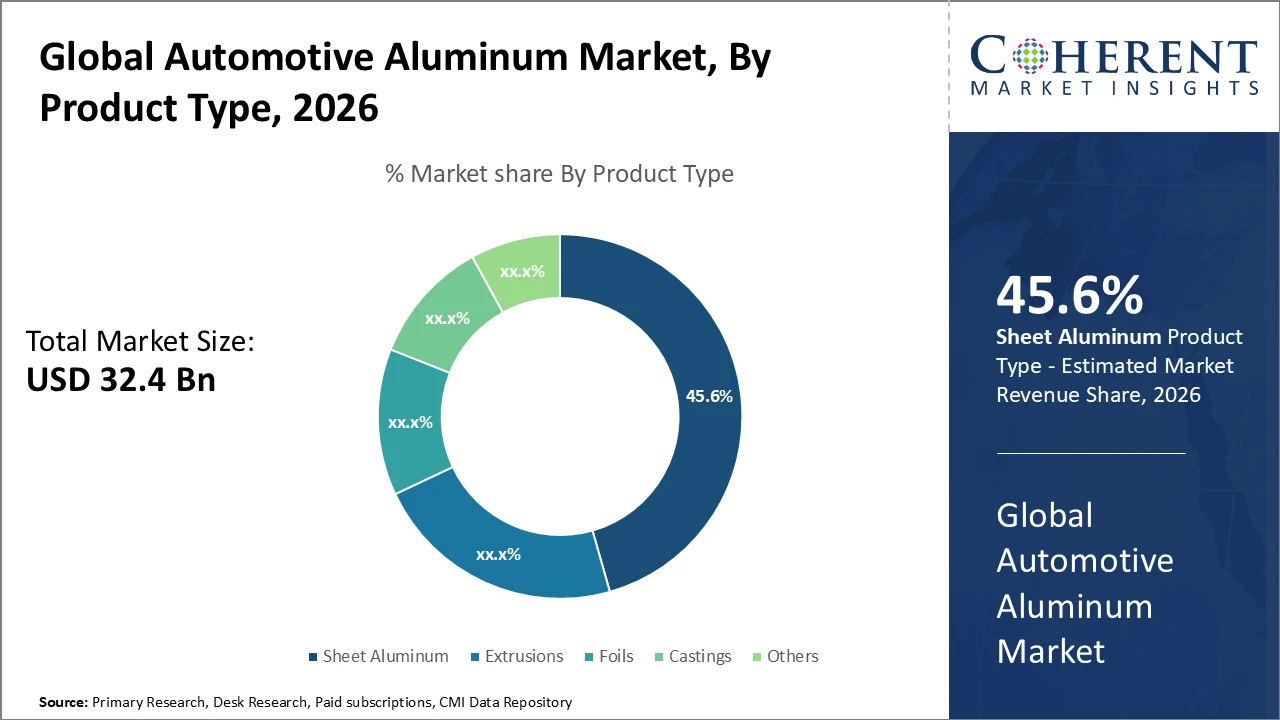
The sheet aluminum segment dominates the automotive aluminum market, accounting for over 45.6% of the total market share by product type, driven by its adaptability and cost-efficiency in large-scale vehicle production.
Passenger cars represent the leading vehicle category, holding 52.3% of the market share, supported by increasing global demand for fuel-efficient and lightweight personal vehicles.
Body structure and closure applications form the largest application segment, capturing 48.8% of the market, as manufacturers focus on improving crash safety standards and reducing overall vehicle weight.
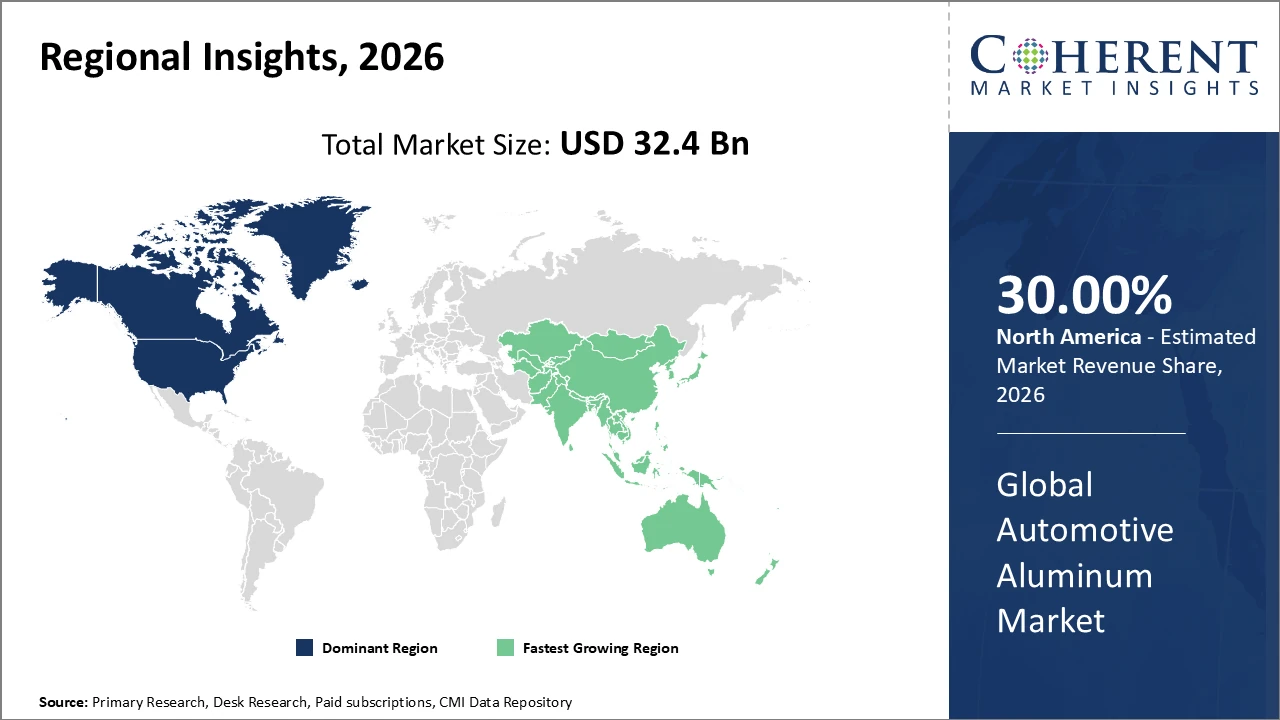
North America leads the global automotive aluminum market with nearly 30% share, backed by a well-established automotive ecosystem and a strong presence of electric vehicle manufacturing.
Asia Pacific is the fastest-growing regional market, registering a CAGR of over 10%, driven by expanding automotive production in China and India along with supportive government infrastructure initiatives.
Europe demonstrates steady market growth, supported by stringent emission regulations that encourage innovation and increased adoption of aluminum in automotive manufacturing.
Automotive Aluminum Market Segmentation Analysis
To learn more about this report, Request Free Sample
Automotive Aluminum Market Insights, By Product Type
Sheet Aluminum holds the largest market share at 45.6%, driven by its versatility and cost-effectiveness in automotive manufacturing. It is widely used for body panels, closures, and chassis components due to its corrosion resistance and ease of fabrication. Its lightweight properties support improved fuel efficiency and performance across passenger and commercial vehicles. Extrusions represent the fastest-growing subsegment, fueled by rising demand for complex structural profiles that enhance energy absorption and reduce vehicle weight. Foils and castings cater to specialized applications requiring precise shapes and efficient thermal management. Other forms, including aluminum powders for additive manufacturing, are steadily gaining market interest.
Automotive Aluminum Market Insights, By Vehicle Type
Passenger cars account for a dominant 52.3% market share, supported by large-scale production volumes and stringent global fuel efficiency regulations focused on the car segment. The rapid expansion of electric passenger vehicles, which emphasize lightweight construction to enhance battery efficiency and driving range, further strengthens this segment’s growth. Light commercial vehicles are witnessing strong growth due to rising demand for delivery and logistics fleets that use aluminum to improve payload capacity and fuel savings. Two wheelers and heavy commercial vehicles hold smaller shares but show steady potential as manufacturers gradually replace heavier steel components with aluminum.
Automotive Aluminum Market Insights, By Application
Body Structure and Closure lead the application segment with a 48.8% market share, driven by the dual focus on enhanced safety and vehicle weight reduction. Aluminum in this segment improves crashworthiness while maintaining lightweight performance, making it highly attractive to manufacturers. It is also the fastest-growing application area, supported by advancements in alloy strength and innovative joining technologies. Chassis applications follow, benefiting from aluminum’s ability to enhance vehicle dynamics and durability. Powertrain applications are expanding steadily, particularly with the growth of electric drivetrain components. Heat exchange systems rely on aluminum for efficient thermal management, while other uses include seating structures and interior components.
Automotive Aluminum Market Trends
The automotive aluminum market is increasingly shifting toward hybrid aluminum composites reinforced with carbon fiber to achieve greater weight reduction and improved structural performance.
In 2025, several OEMs initiated pilot programs incorporating these hybrid materials into limited production vehicles, signaling early-stage commercial adoption.
The growth of electric and autonomous vehicles is driving demand for specialized aluminum alloys with superior thermal management properties, particularly for efficient battery cooling systems.
Sustainability initiatives are strengthening the circular economy approach, with automotive aluminum recycling rates surpassing 75% in 2026 due to stricter government regulations and industry commitments.
Automotive Aluminum Market Insights, By Geography
To learn more about this report, Request Free Sample
North America Automotive Aluminum Market Analysis and Trends
North America holds nearly 30% of the automotive aluminum market share, supported by a well-established automotive manufacturing base in the United States and Canada. The region benefits from advanced research and development capabilities, enabling continuous innovation in lightweight materials and vehicle design. Early adoption of aluminum-intensive electric vehicles has further accelerated demand, as manufacturers focus on improving battery efficiency and vehicle range. Government incentives and sustainability policies promoting low-emission transportation also contribute to market growth. Additionally, leading industry players maintain significant production capacities and strong supply chain networks across the region, ensuring stable aluminum supply and operational resilience.
Asia Pacific Automotive Aluminum Market Analysis and Trends
Asia Pacific is the fastest-growing region in the automotive aluminum market, registering a CAGR exceeding 10%. This growth is fueled by expanding automotive manufacturing hubs in China and India, where rising vehicle production significantly boosts aluminum demand. Cost-effective aluminum processing capabilities and abundant raw material availability further strengthen the region’s competitive advantage. Governments are implementing stricter emission regulations and fuel efficiency standards, encouraging automakers to adopt lightweight materials such as aluminum. Additionally, the growing presence of domestic manufacturers integrating aluminum into electric and hybrid vehicle platforms is accelerating innovation and supporting sustained market expansion across the region.
Automotive Aluminum Market Outlook for Key Countries
USA Automotive Aluminum Market Analysis and Trends
The U.S. automotive aluminum market is distinguished by its advanced manufacturing capabilities and strong research focus on lightweight vehicle technologies. In 2025, U.S. manufacturers contributed approximately 28% of total automotive aluminum market revenue, reflecting the country’s significant industry presence. Major companies such as Alcoa Corporation and Novelis have expanded production capacities and launched next-generation aluminum alloys to address rising demand from electric vehicle manufacturers including Tesla and Ford. Supportive policy frameworks promoting fuel efficiency and carbon emission reduction continue to accelerate aluminum adoption. Moreover, well-established recycling infrastructure enhances sustainability initiatives, reinforcing the U.S. leadership position in automotive aluminum market development strategies.
Germany Automotive Aluminum Market Analysis and Trends
Germany’s automotive aluminum market is shaped by its strong automotive engineering heritage and focus on innovation, lightweighting, and sustainability. The country is home to major OEMs such as Volkswagen, BMW, and Mercedes-Benz, driving consistent demand for aluminum in body structures, chassis, and electric vehicle components. Stringent European emission and fuel efficiency regulations encourage the adoption of aluminum to reduce vehicle weight and enhance performance. Advanced research in high-strength alloys and joining technologies supports market growth. Germany also emphasizes recycling and circular economy practices, with increasing use of secondary aluminum, making it a key hub for sustainable and technologically advanced automotive aluminum applications.
Analyst Opinion
Automotive aluminum production capacity increased by approximately 12% in 2025, driven largely by expanded facilities in Asia Pacific and North America, supporting higher output levels.
Price trends for automotive aluminum alloys remained relatively stable between 2024 and 2026, sustaining demand without causing significant market volatility.
Demand from electric vehicle manufacturers significantly influenced imports of aluminum components, with a 14% rise in EV-related aluminum parts imports in 2025, reflecting the push for lightweight materials to improve battery efficiency.
Aluminum content per vehicle grew from 150 kg to 175 kg in 2024, indicating increased adoption in chassis and body structures across multiple vehicle types.
Nano-scale innovations led to the introduction of ultra-high-strength aluminum alloys in late 2025, enhancing durability and crash resistance, impacting overall market size and share.
Market Scope
| Report Coverage | Details | ||
|---|---|---|---|
| Base Year: | 2025 | Market Size in 2026: | USD 32.4 billion |
| Historical Data for: | 2020 To 2024 | Forecast Period: | 2026 To 2033 |
| Forecast Period 2026 to 2033 CAGR: | 8.4% | 2033 Value Projection: | USD 56.7 billion |
| Geographies covered: |
|
||
| Segments covered: |
|
||
| Companies covered: | Alcoa Corporation, Novelis Inc., Rusal, Kaiser Aluminum, UACJ Corporation, Sapa Group, AMAG Austria Metall AG, Aleris Corporation, Constellium SE, Hindalco Industries | ||
| Growth Drivers: |
|
||
Uncover macros and micros vetted on 75+ parameters: Get instant access to report
Automotive Aluminum Market Growth Factors
The automotive aluminum market is strongly driven by the industry’s focus on sustainability and fuel efficiency. Stricter government emission regulations across Europe, the U.S., and Asia are encouraging the adoption of lightweight materials like aluminum. Growing electric vehicle (EV) production further fuels demand, as aluminum helps offset heavy battery weight while maintaining performance. Expansion of automotive manufacturing hubs in developing economies supports market growth by lowering production costs and enhancing competitiveness. Continuous innovations in aluminum alloys improve strength, durability, and corrosion resistance, making aluminum an increasingly preferred material for long-term vehicle applications across passenger, commercial, and electric mobility segments.
Automotive Aluminum Market Development
In June 2025, National Aluminium Company Limited (NALCO), a Navratna CPSE under the Ministry of Mines, expanded its portfolio by launching IA90 Grade Aluminium Alloy Ingot for the automobile industry.
Key Players
Leading Companies of the Market
Alcoa Corporation
Novelis Inc.
Rusal
Kiaser Aluminum
UACJ Corporation
Sapa Group
AMAG Austria Metall AG
Aleris Corporation
Constellium SE
Hindalco Industries
Several leading automotive aluminum companies have strategically expanded their manufacturing presence in the Asia Pacific region to leverage the growing automotive production in China and India. For instance, Novelis Inc. established a joint venture in 2024 that boosted its rolled aluminum sheet production capacity by 20%, improving supply chain efficiency and addressing the rising regional demand. Similarly, Alcoa Corporation made significant R&D investments in advanced aluminum alloys for electric vehicle chassis structures, achieving a 15% weight reduction per component. These initiatives not only enhanced product performance but also contributed to a notable increase in market share during 2025.
Automotive Aluminum Market Future Outlook
The automotive aluminum market is expected to continue strong growth, driven by increasing demand for lightweight vehicles, electric mobility, and stringent global emission regulations. Innovations in high-strength and hybrid aluminum alloys will expand applications across body structures, chassis, and powertrain components. The shift toward electric and autonomous vehicles will further accelerate adoption, as aluminum helps offset battery weight and improve efficiency. Emerging markets in Asia Pacific and Latin America will offer significant expansion opportunities, supported by local production and infrastructure investments. Additionally, sustainability trends, including high recycling rates and circular economy initiatives, will reinforce aluminum’s role as a core material in future automotive manufacturing.
Automotive Aluminum Market Historical Analysis
The automotive aluminum market has experienced steady growth over the past decade, driven by the global push for lightweight vehicles and improved fuel efficiency. Historically, the adoption of aluminum increased as manufacturers sought alternatives to steel for body panels, chassis components, and engine parts. Early growth was fueled by passenger car demand in North America and Europe, supported by R&D in high-strength alloys and joining technologies. Over time, the rise of electric and hybrid vehicles further accelerated aluminum integration to reduce battery weight and enhance efficiency. Recycling and sustainability initiatives also began shaping the market, establishing aluminum as a preferred long-term automotive material.
Sources
Primary Research Interviews:
Automotive manufacturers (OEMs)
Aluminum producers and suppliers
EV and lightweight vehicle engineers
Automotive component manufacturers
Databases:
International Aluminium Institute (IAI)
IHS Markit Automotive Data
Magazines:
Automotive News
Light Metal Age
Aluminum International Today
Metal Bulletin
Automotive World
Journals:
Journal of Materials Processing Technology
Materials & Design
International Journal of Automotive Technology
Journal of Light Metals
SAE International Journal of Materials and Manufacturing
Newspapers:
The Wall Street Journal (Business & Automotive)
Financial Times (Automotive & Industry)
The New York Times (Automotive/Tech)
The Guardian (Automotive/Environment)
Reuters (Automotive News)
Associations:
Aluminum Association
European Aluminium
Society of Automotive Engineers (SAE)
International Aluminium Institute (IAI)
Light Metal Age Association
Share
Share
Yash Doshi is a Senior Management Consultant. He has 12+ years of experience in conducting research and handling consulting projects across verticals in APAC, EMEA, and the Americas.
He brings strong acumen in helping chemical companies navigate complex challenges and identify growth opportunities. He has deep expertise across the chemicals value chain, including commodity, specialty and fine chemicals, plastics and polymers, and petrochemicals. Yash is a sought-after speaker at industry conferences and contributes to various publications on topics related commodity, specialty and fine chemicals, plastics and polymers, and petrochemicals.

Credibility and Certifications

860519526


9001:2015
27001:2022


Need a Custom Report?
We can customize every report - free of charge - including purchasing stand-alone sections or country-level reports
Customize NowJoining thousands of companies around the world committed to making the Excellent Business Solutions.
View All Our Clients