Automotive Brake Fluid Market Analysis & Forecast: 2026-2033
Automotive Brake Fluid Market Size and Forecast – 2026 – 2033
The Global Automotive Brake Fluid Market size is estimated to be valued at USD 4.2 billion in 2026 and is expected to reach USD 6.8 billion by 2033, exhibiting a compound annual growth rate (CAGR) of 7.1% from 2026 to 2033.
Global Automotive Brake Fluid Market Overview
The Automotive Brake Fluid market is segmented based on fluid type and performance grade. DOT 3 and DOT 4 fluids dominate due to their widespread use in passenger vehicles, offering reliable viscosity and boiling point performance for standard braking systems. DOT 5.1 and synthetic ester-based fluids are the fastest-growing subsegments, driven by high-performance vehicles and increasing adoption of ABS and ESP technologies requiring superior thermal stability. Additionally, specialty brake fluids with corrosion inhibitors and moisture resistance additives are gaining traction in commercial and industrial applications. Continuous innovation in formulations ensures compatibility with modern braking systems while enhancing safety, reliability, and overall vehicle performance.
Key Takeaways
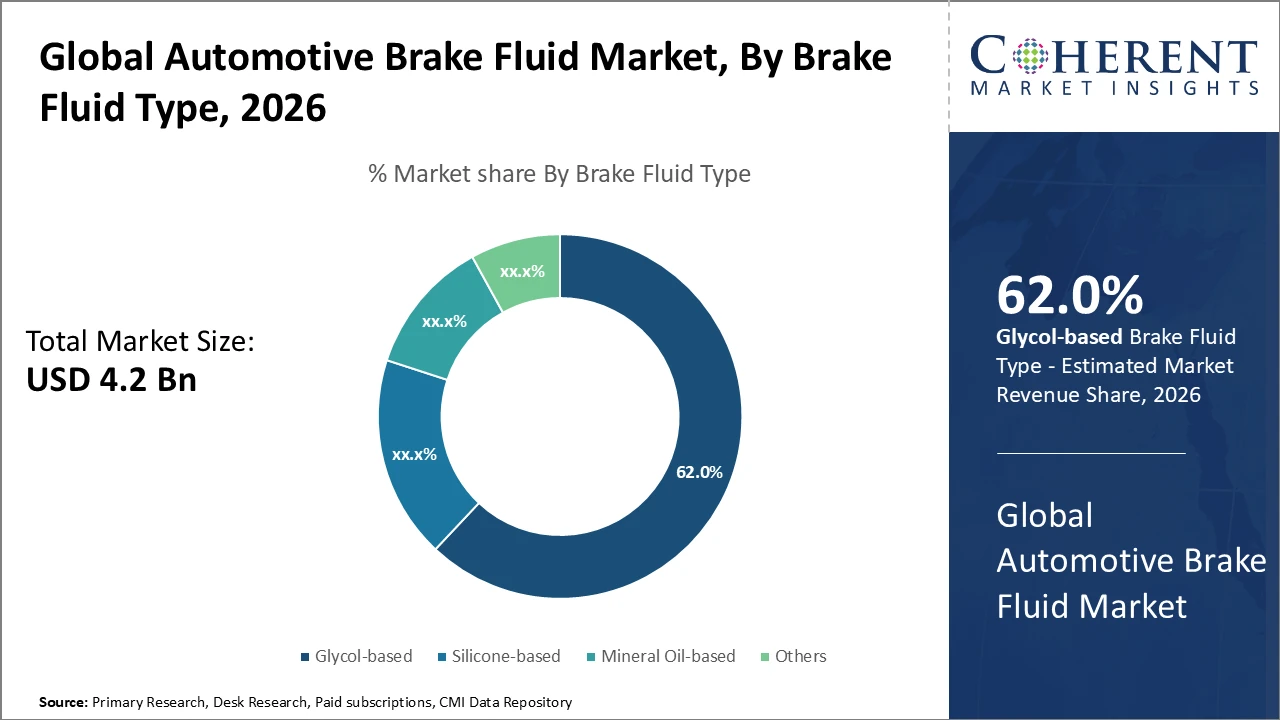
The glycol-based brake fluid segment dominates with a 62% market share due to its compatibility with most passenger cars and cost-effectiveness.
Passenger cars hold the largest market revenue share, surpassing commercial and electric vehicle segments, driven by high sales volume and regular replacements.
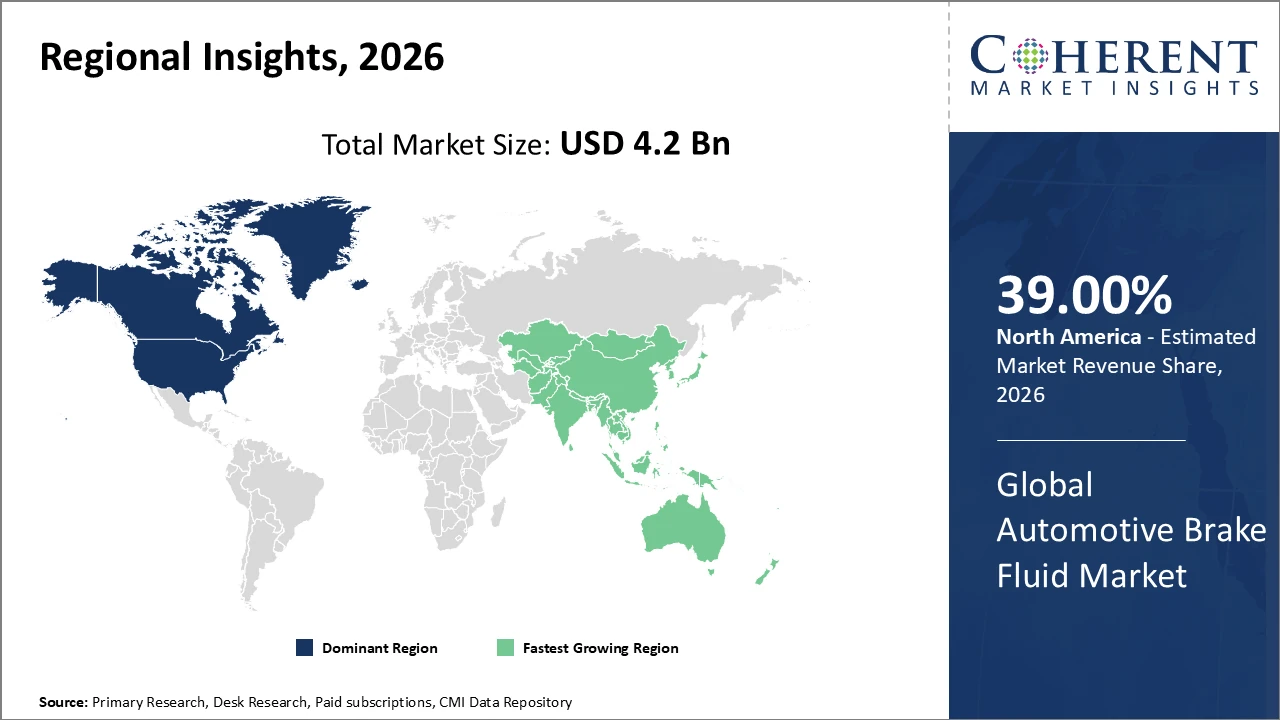
North America accounts for a significant market size, supported by strict safety regulations and well-established automotive maintenance infrastructure.
Asia Pacific is the fastest-growing region, fueled by rapid vehicle adoption and expanding transportation infrastructure, particularly in India and China.
Automotive Brake Fluid Market Segmentation Analysis
To learn more about this report, Request Free Sample
Automotive Brake Fluid Market Insights, By Brake Fluid Type
Glycol-based brake fluid dominates the market with a 62% share, driven by its broad compatibility with passenger vehicles and favorable cost-performance ratio. It is valued for effective water absorption and affordability, making it the standard choice for most automotive braking systems. Silicone-based fluids (DOT 5) are the fastest-growing subsegment, increasingly adopted in luxury, high-performance, and military vehicles for superior moisture resistance, thermal stability, and longevity. Mineral oil-based fluids cater to niche hydraulic braking systems, such as motorcycles, while the “others” category—including bio-based and synthetic ester fluids—is emerging due to environmental regulations. Together, these subsegments expand the market across diverse vehicle platforms.
Automotive Brake Fluid Market Insights, By Vehicle Type
Passenger cars hold the largest market share due to their massive global fleet and high brake fluid replacement frequency, supported by regular maintenance cycles and strict safety standards, generating substantial revenue. Commercial vehicles show steady consumption growth, driven by the durability required in freight and logistics operations. Electric vehicles represent the fastest-growing subsegment, as advanced braking systems and regenerative braking require fluids with enhanced thermal stability and performance. Two-wheelers remain a smaller yet important segment, particularly in emerging markets fueled by urbanization and improved road infrastructure. Each vehicle type requires specific fluid properties, shaping their respective market contributions and growth potential.
Automotive Brake Fluid Market Insights, By Distribution Channel
OEM supply dominates the market as brake fluids are integrated during vehicle assembly, adhering to strict manufacturer specifications, which ensures a strong market share and stable revenue through long-term contracts and bulk procurement. The aftermarket segment is the fastest-growing channel, driven by expanding vehicle parc and routine brake fluid replacements, particularly in rapidly urbanizing countries like India and Brazil. The “others” category, including specialty distributors and online platforms, is gaining traction due to digitalized vehicle servicing and easy access to specialized fluids. While OEM supply emphasizes quality and compliance, the aftermarket prioritizes accessibility and cost efficiency, collectively shaping market dynamics.
Automotive Brake Fluid Market Trends
Shift toward eco-friendly and high-performance synthetic brake fluids, including DOT 4+ and DOT 5.1, offering higher boiling points and lower environmental impact.
2025 trend of integrating IoT-enabled brake fluid monitoring systems, enhancing maintenance scheduling and reducing unplanned downtime.
Rapid growth of the aftermarket segment driven by rising consumer focus on vehicle safety.
Aftermarket revenue growth surpassing OEM supply in regions such as Asia Pacific due to expanding vehicle ownership and service demands.
Emphasis on advanced fluid formulations and digital monitoring technologies shaping future market dynamics and competitive differentiation.
Automotive Brake Fluid Market Insights, By Geography
To learn more about this report, Request Free Sample
North America Automotive Brake Fluid Market Analysis and Trends
In North America, the Automotive Brake Fluid market is dominated by stringent federal safety standards, notably FMVSS 116, which mandate high-performance fluid specifications for all vehicles. The region benefits from a mature automotive aftermarket and widespread adoption of advanced braking technologies, including ABS and regenerative braking systems in electric and hybrid vehicles. OEMs and aftermarket suppliers maintain robust distribution networks, ensuring consistent product availability. The United States and Canada collectively account for around 35% of global market share, supported by significant R&D investments from leading companies. High consumer awareness and regulatory enforcement further reinforce North America’s market leadership.
Asia Pacific Automotive Brake Fluid Market Analysis and Trends
Meanwhile, the Asia Pacific Automotive Brake Fluid market demonstrates the fastest growth, with a CAGR exceeding 9%, fueled by rapid expansion of vehicle production in countries such as China and India. Rising consumer awareness regarding vehicle safety and maintenance is boosting demand for high-quality brake fluids, while the growing automotive aftermarket infrastructure facilitates accessibility and replacement cycles. Government policies promoting electric vehicle adoption and stricter emission and safety regulations are accelerating market uptake of advanced fluid formulations. Additionally, increasing industrialization and urbanization, coupled with expanding road networks, are supporting both OEM and aftermarket sales, positioning the region as a key growth hub for the industry.
Automotive Brake Fluid Market Outlook for Key Countries
USA Automotive Brake Fluid Market Analysis and Trends
The U.S. Automotive Brake Fluid market continues to lead globally, driven by the concentration of major OEMs and suppliers emphasizing vehicle safety and braking system innovation. In 2025, brake fluid demand grew by 10%, reflecting increased servicing intervals and compliance with federal safety standards. Key market players, including Shell plc and Dow Inc., have intensified efforts in developing high-performance and environmentally friendly fluid formulations, enhancing thermal stability and longevity. Strong aftermarket infrastructure, combined with widespread adoption of advanced braking technologies in passenger and commercial vehicles, further reinforces the U.S. market’s revenue generation and sustains its dominant position within North America.
Germany Automotive Brake Fluid Market Analysis and Trends
Germany’s automotive brake fluid market is driven by the country’s strong automotive manufacturing base, stringent vehicle safety regulations, and high adoption of advanced braking technologies. Passenger cars dominate consumption due to the large domestic fleet and regular maintenance requirements, while commercial vehicles and electric vehicles are steadily increasing their share. Market growth is supported by leading players like Bosch and Fuchs Petrolub investing in high-performance and eco-friendly brake fluids. Additionally, regulatory standards aligned with the European Union’s safety and environmental directives encourage the adoption of high-quality DOT 4 and DOT 5.1 fluids. Aftermarket expansion and technological innovations further enhance market dynamics.
Analyst Opinion
Enhanced Replacement Rates Due to Thermal Stability Advancements: Automotive workshops in Germany and the US reported a 12% year-over-year increase in brake fluid replacements, driven by DOT 4+ and DOT 5.1 fluids with higher boiling points. Global production of high-performance glycol-based fluids expanded by 15% in 2025 to meet rising aftermarket demand.
Rising Demand from Electric Vehicle Segment: The growing EV market, exceeding 25% share in Europe in 2024, increased demand for specialized brake fluids to manage regenerative braking and higher system pressures, with imports rising 18% compared to 2023.
Shift Towards Synthetic and Silicone-Based Fluids: Silicone-based DOT 5 fluids saw 20% consumption growth in Japan in 2025, driven by luxury and sports vehicles requiring high-performance ABS-compatible fluids.
Escalating Regulatory Pressures: EU and North American regulations limiting VOCs and hazardous substances boosted R&D in biodegradable brake fluids by 13% in 2026, expanding eco-friendly product adoption.
Market Scope
| Report Coverage | Details | ||
|---|---|---|---|
| Base Year: | 2025 | Market Size in 2026: | USD 4.2 billion |
| Historical Data for: | 2020 To 2024 | Forecast Period: | 2026 To 2033 |
| Forecast Period 2026 to 2033 CAGR: | 7.1% | 2033 Value Projection: | USD 6.8 billion |
| Geographies covered: |
|
||
| Segments covered: |
|
||
| Companies covered: | BASF SE, Dow Inc., Lubrax, Motul, Shell plc, ZHONG MAO, Valvoline Inc., Exol Lubricants Ltd., Fuchs Petrolub SE, A. Schulman Inc. | ||
| Growth Drivers: |
|
||
Uncover macros and micros vetted on 75+ parameters: Get instant access to report
Automotive Brake Fluid Market Growth Factors
The global brake fluid market is being increasingly driven by the intensification of vehicle safety regulations, prompting manufacturers to adopt high-performance fluids such as DOT 5.1, which offer superior wet and dry boiling points. By 2026, compliance-related demand is projected to account for over 40% of total market revenue. The growing production and adoption of electric and hybrid vehicles, which require brake fluids compatible with regenerative braking systems, are fueling market expansion, particularly in the Asia Pacific region, where EV sales surged by 26% in 2025. Additionally, rising aftermarket demand, supported by longer vehicle lifespans and enhanced maintenance practices, is boosting brake fluid consumption in mature markets like North America and Europe. Environmental considerations are further shaping the market, with a shift toward biodegradable and less toxic brake fluids, prompting several companies to introduce eco-compliant products by 2024, signaling a significant transformation in market dynamics.
Automotive Brake Fluid Market Development
In 2025, Textar introduced an enhanced DOT 5.1 brake fluid with improved formulation aimed at delivering higher boiling points, lower viscosity, and better corrosion resistance for a wide range of vehicles, including electric and high‑performance models. This development was part of the industry’s response to growing demands for brake fluids compatible with modern braking systems and stringent safety expectations.
In August 2025, NAPA expanded its braking portfolio in the United Kingdom and Ireland by launching a new range of brake drums, strengthening its NAPA Braking lineup and providing more reliable braking options for technicians and vehicle owners.
Key Players
Leading Companies of the Market
BASF SE
Lubrax
Motul
Shell plc
ZHONG MAO
Valvoline Inc.
Exol Lubricants Ltd.
Fuchs Petrolub SE
A. Schulman Inc.
Competitive strategies in the automotive brake fluid market are centered on innovation-driven product differentiation and regional expansion. In 2025, Valvoline collaborated with Asian automotive manufacturers to introduce brake fluids optimized for improved low-temperature performance, resulting in a 10% increase in its market share. Similarly, BASF SE utilized its R&D expertise to launch eco-friendly brake fluids in Europe, which contributed to a 7% growth in market revenue during 2024, highlighting the impact of targeted product development and sustainable initiatives on market positioning.
Automotive Brake Fluid Market Future Outlook
The automotive brake fluid market is expected to grow steadily through 2030, driven by stricter vehicle safety regulations, rising electric and hybrid vehicle adoption, and increasing aftermarket demand. High-performance fluids, such as DOT 5.1, will remain critical as manufacturers seek products with superior wet and dry boiling points and compatibility with regenerative braking systems. Innovation in eco-friendly and biodegradable formulations will gain momentum, particularly in Europe and North America, aligning with environmental regulations. Regional expansion in Asia Pacific, fueled by rapid EV growth, will further support market growth. Overall, technological advancements, sustainability initiatives, and regulatory compliance will shape the market’s future trajectory.
Automotive Brake Fluid Market Historical Analysis
The automotive brake fluid market has experienced steady growth over the past decade, driven by increasing vehicle production, stricter safety regulations, and rising consumer awareness of vehicle maintenance. Historically, DOT 3 and DOT 4 fluids dominated due to their affordability and performance in conventional braking systems. The emergence of high-performance vehicles and hybrid/electric models gradually increased demand for advanced fluids like DOT 5.1, offering higher boiling points and enhanced thermal stability. Mature markets in North America and Europe led consumption, while Asia Pacific began to show significant growth due to rapid automotive production and rising EV adoption, setting the stage for future market expansion.
Sources
Primary Research Interviews:
Automotive OEMs and vehicle manufacturers
Brake system component suppliers and fluid manufacturers
Aftermarket automotive service providers and workshops
Research laboratories and automotive testing facilities
Automotive safety consultants and chemical specialists
Magazines:
Automotive News – Vehicle Technology & Safety
Brake & Safety Systems Magazine – Brake Fluids & Components
AutoTech Review – Automotive Chemicals & Fluids
Motor Vehicle Maintenance & Repair – Aftermarket & Service
Journals:
SAE International Journal of Passenger Cars – Mechanical Systems
International Journal of Automotive Technology – Brake Systems
Tribology International – Automotive Fluids & Lubricants
Journal of Vehicle Dynamics & Control – Safety Systems
Newspapers:
The Wall Street Journal – Automotive Industry & Technology
Financial Times – Vehicle Manufacturing & Components
Reuters – Automotive & Industrial Equipment
Bloomberg – Vehicle Technology & Aftermarket
Nikkei Asia – Automotive Manufacturing & Components
Associations:
Society of Automotive Engineers (SAE International) – Brake System Standards
European Automobile Manufacturers’ Association (ACEA) – Vehicle Safety & Fluids
Automotive Aftermarket Suppliers Association (AASA) – Brake Products
International Organization for Standardization (ISO) – Automotive Brake Fluid Standards
Share
Share
Yash Doshi is a Senior Management Consultant. He has 12+ years of experience in conducting research and handling consulting projects across verticals in APAC, EMEA, and the Americas.
He brings strong acumen in helping chemical companies navigate complex challenges and identify growth opportunities. He has deep expertise across the chemicals value chain, including commodity, specialty and fine chemicals, plastics and polymers, and petrochemicals. Yash is a sought-after speaker at industry conferences and contributes to various publications on topics related commodity, specialty and fine chemicals, plastics and polymers, and petrochemicals.

Credibility and Certifications

860519526

9001:2015
27001:2022

Need a Custom Report?
We can customize every report - free of charge - including purchasing stand-alone sections or country-level reports
Customize NowJoining thousands of companies around the world committed to making the Excellent Business Solutions.
View All Our Clients