Broadcast Infrastructure Market Analysis & Forecast: 2026-2033

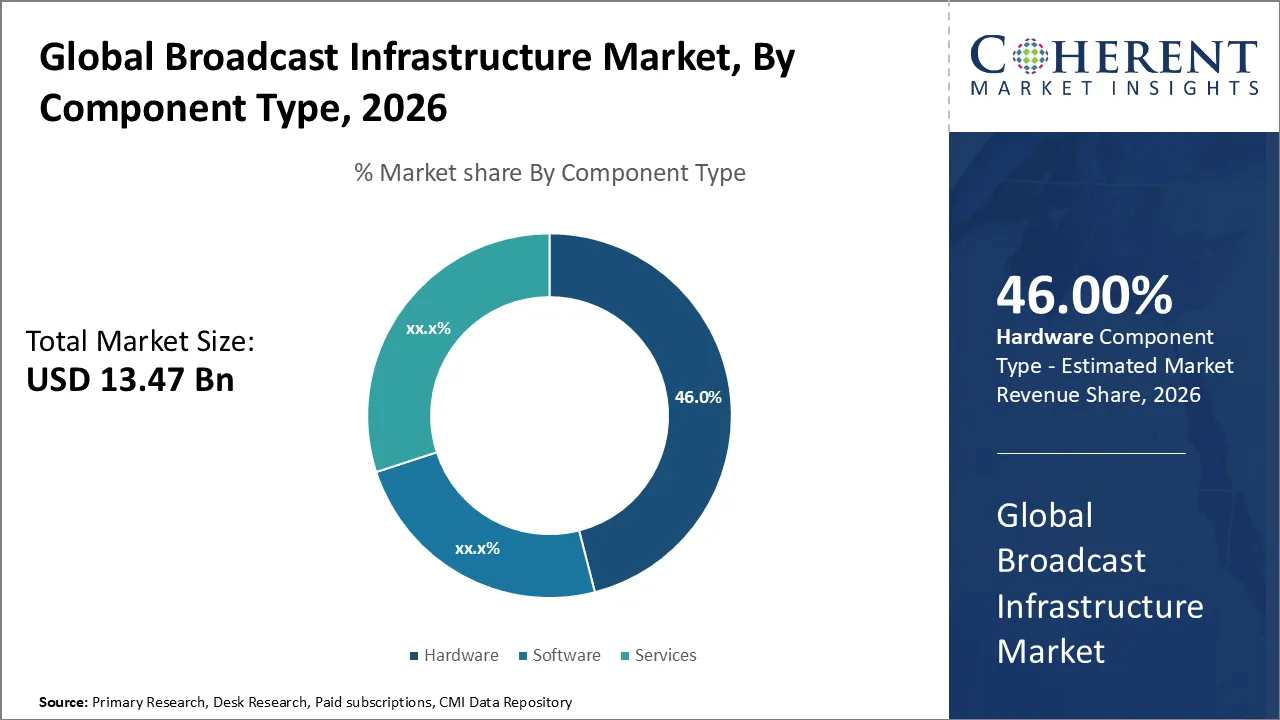
Broadcast infrastructure market is estimated to be valued at USD 13.47 Bn in 2026 and is expected to reach USD 20.8 Bn by 2033, exhibiting a compound annual growth rate (CAGR) of 7.6% from 2026 to 2033.
The global broadcast infrastructure market is witnessing significant growth due to increasing demand for high-quality digital content and the rapid adoption of OTT and IPTV services. The broadcasting industry has been investing in the deployment of new hardware, software, and managed services to convert the old analog broadcasting systems to the digital platform. The demand for on-demand content, sports, and entertainment has been fueling the demand for infrastructure related to transmitters, servers, and content networks.
|
Current Events |
Description and its impact |
|
5G Network Rollout and Broadcasting Technology Evolution |
|
|
Geopolitical Technology Trade Restrictions |
|
Uncover macros and micros vetted on 75+ parameters: Get instant access to report
Based on the component type, the hardware segment is estimated to contribute the highest share of 46% in 2026, owing to several ongoing investments in transmitters, servers, routers, and signal processing equipment. The hardware provides the backbone of broadcasting, guaranteeing that all content is perfectly captured, encoded, transmitted, and distributed smoothly. The broadcasters are upgrading their facilities from analog systems to modern broadcasting platforms, which requires reliable, energy-efficient, and high-performance hardware.
For instance, in September 2025, LiveU unveiled the LU900Q, a next‑generation mobile broadcast unit integrating AI and 5G hardware to enhance live news and sports transmission workflows. This launch reflects ongoing innovations in broadcast hardware that support remote production and high‑quality OTT content delivery.
On the basis of technology type, the digital broadcasting sector is anticipated to have the highest market share of 70% in 2026. The reason for the high market share of the digital broadcasting sector is the increased picture and audio quality due to the transition from analog to digital broadcasting, the optimization of the spectrum, and the ability for interoperability between digital media platforms like OTT and IPTV.
For instance, in August 2025, Brazil adopted the ATSC 3.0‑based DTV+ digital broadcasting standard through a Presidential Decree, marking a major technological advancement in digital broadcasting infrastructure that enables enhanced video/audio delivery and new interactive features.
By application type, the OTT segment is anticipated to offer the largest share by 2026 at 34%. This is due to the increasing acceptance of on-demand streaming. OTT applications need efficient infrastructure such as CDN, edge computing, and cloud-based storage solutions. The increasing acceptance among consumers for internet-based and mobile TV is driving the interest in OTT-based broadcast infrastructure. The OTT market is anticipated to be growing at a significant rate.
For instance, in November 2025, Prasar Bharati announced an expansion of its WAVES OTT platform by inviting TV channels and introducing pay‑per‑view content plans, demonstrating how broadcasters are enhancing OTT infrastructure and business models to capture consumer demand for diverse streaming content delivery.
To learn more about this report, Request Free Sample
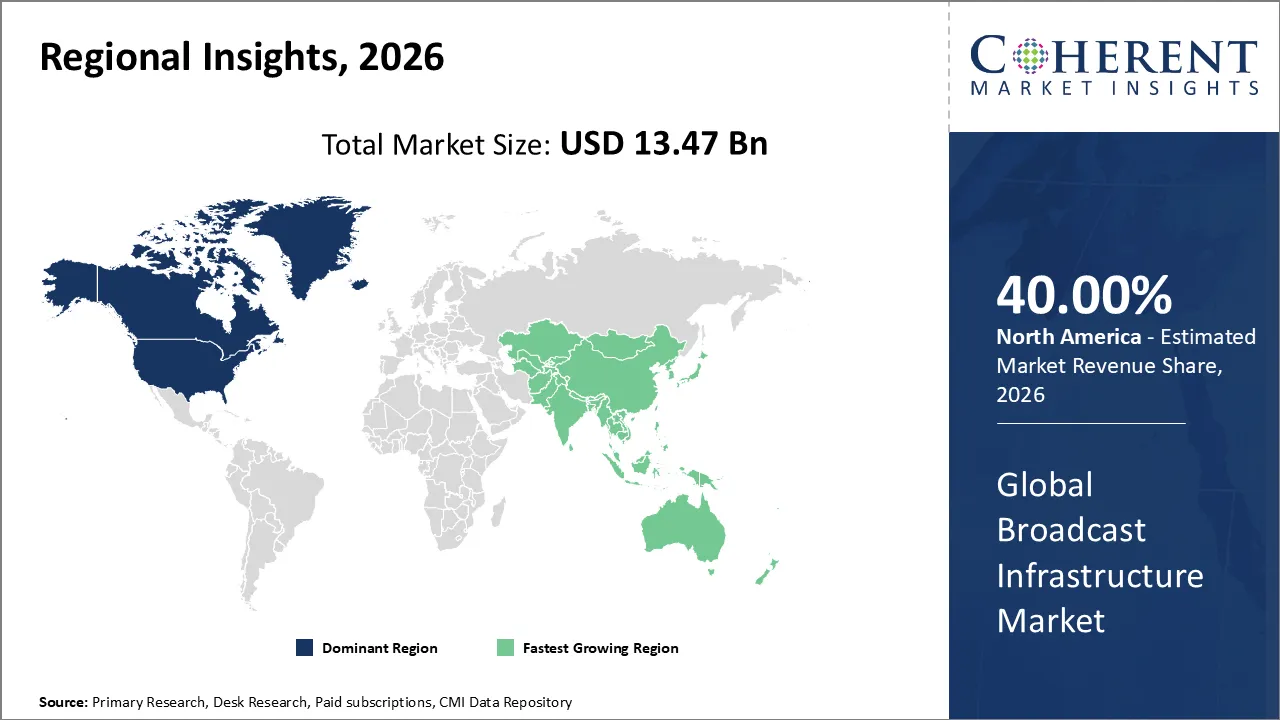
North America is set to accelerate the broadcast infrastructure market in the year 2026 with a predicted market share of 40%. Factors such as the region's history for early adopters for innovative broadcasting technology, large investments in OTT & digital technology, as well as the dominant presence of large broadcasters & technology companies in the region, contribute to the growth of the regional market.
For instance, in October 2025, the NAB Show New York 2025 opened at the Jacob Javits Center with more than 12,000 attendees expected, where major broadcast technology companies showcased the latest broadcast infrastructure products and solutions for live production, IP workflows, cloud‑native platforms, and next‑generation media delivery.
The Asia Pacific market is expected to grow the fastest in the broadcast infrastructure industry due to the increased adoption of digital broadcasting, Internet penetration, OTT services, and infrastructure development in countries such as India, China, and Japan. The growth of the media network and the support of governments in the Asia Pacific in switching to digital broadcasting are factors propelling the industry forward.
For instance, In July 2025, beIN ASIA PACIFIC announced a strategic broadcast infrastructure upgrade by deploying Appear’s X Platform across the region. This collaboration modernizes the broadcaster’s contribution and distribution workflows using advanced IP‑based encoding and transport technologies, enabling high‑quality, efficient broadcast distribution and international content contribution.
The U.S. broadcast infrastructure market is leading in the front row currently because of early adoption of next-generation broadcasting solutions, a high adoption rate of OTT and IPTV, and major spending on hardware and digital solutions. Currently, the broadcasters in the United States are opting for the optimization of traditional infrastructure, IP and cloud-based solutions, and the provision of 4K and 8K signals.
For instance, in August 2025, NEP Group expanded its broadcast infrastructure in the United States by launching new large‑scale production control rooms in South Florida and significantly upgrading its Dallas network operations center, enhancing capabilities for high‑volume live content production and distribution.
The broadcast market in China has been growing rapidly, owing to the country’s transition to digital and ultra-high-definition television, the popularity of OTT, and huge spends on 5G-enabled content distribution. Also, the demand for live, e-sports, and on-demand content has forced the industry to adopt IP-based transmission and cloud playout.
For instance, in November 2025, Shanghai Media Group (SMG) deployed advanced 4K Ultra‑HD live broadcast technology at the China International Import Expo 2025, delivering ultra‑high‑definition coverage across digital and OTT platforms, reflecting China’s investment in next‑generation broadcast infrastructure and digital content delivery.
The Japanese broadcast infrastructure industry is currently concentrating on innovation related to digital broadcasting, including ATSC 3.0 trial broadcasts, IP-based distribution of contents, and harmony with OTT services. The broadcasting industry is investing in cloud-native playout, next-gene encoding, and UHD/4K and 8K transmissions to cater to consumer demands for quality video and engagement.
For instance, in August 2025, Japan’s public and private broadcasters conducted ATSC 3.0 field trials for next-generation digital television, supporting interactive content and improved video quality. These initiatives underscore Japan’s commitment to modernizing its broadcast infrastructure while preparing for wider adoption of digital and hybrid broadcast platforms.
| Report Coverage | Details | ||
|---|---|---|---|
| Base Year: | 2025 | Market Size in 2026: | USD 13.47 Bn |
| Historical Data for: | 2020 To 2024 | Forecast Period: | 2026 To 2033 |
| Forecast Period 2026 to 20323 CAGR: | 7.6% | 2033 Value Projection: | USD 20.8 Bn |
| Geographies covered: |
|
||
| Segments covered: |
|
||
| Companies covered: |
Cisco Systems, Inc., Clyde Broadcast Technology, CS Computer Systems Ltd., Dacast Inc., EVS Broadcast Equipment SA, Grass Valley, Kaltura, Nevion, Ross Video Ltd, and Zixi. |
||
| Growth Drivers: |
|
||
| Restraints & Challenges: |
|
||
Uncover macros and micros vetted on 75+ parameters: Get instant access to report
Some of the factors that influence the growth of the broadcast infrastructure market include increasing content consumption on-demand and live streaming. Due to this, viewers are shifting from traditional TV to digital platforms, which in turn is forcing broadcasters to make huge investments in hardware, software, and IP-based infrastructures that can deliver flawless and consistent content. The global rise in sports, entertainment, news, and e-sports streaming is also forcing broadcasters to upgrade their systems to 4K/8K, cloud-based, and hybrid broadcast systems that ensure smooth content delivery on multiple devices and platforms.
The market offers opportunities in the application of the new generation of digital broadcast norms (such as ATSC 3.0, DVB I) and 5G broadcast solutions. The upgrade of the existing analog and SD-based broadcast solutions in the market to digital platforms supporting UHD/4K/8K broadcast solutions will allow the media companies to boost efficiency and minimize operation expenses. In addition, the development of OTT networks in developing nations and the application of AI-driven content management solutions will open additional revenue streams for the media companies.
The broadcast infrastructure market is also undergoing a paradigm shift in view of the changing demands of consumers seeking high-quality, on-demand, and interactive content. Media organizations are now finding ways to upgrade conventional infrastructure setups in the broadcast sector and are also implementing new digital broadcast technology configurations.
Hardware investments are and will remain the backbone of the development of the market. The installation of modern production control rooms and enhanced network operation centers underlines the significance of sufficient and resilient infrastructure in the delivery of sports, news, and entertainment programming. The broadcasting companies are emphasizing hybrid cloud-IP and automated signal management systems.
The development of digital broadcasting technology such as ATSC 3.0 and DVB I is making way for much more than improved picture quality. These technologies provide the ability for viewers to have interaction capabilities, targeted content delivery, and the flexibility of content delivery in line with the changing demands of the viewers. For instance, the use of UHD and IP-based platforms allows for the delivery of the same content on multiple channels.
Share
Share
Monica Shevgan has 9+ years of experience in market research and business consulting driving client-centric product delivery of the Information and Communication Technology (ICT) team, enhancing client experiences, and shaping business strategy for optimal outcomes. Passionate about client success.
Joining thousands of companies around the world committed to making the Excellent Business Solutions.
View All Our Clients