Leukemia Therapeutics Market Analysis & Forecast: 2026-2033
Leukemia Therapeutics Market Size and Forecast – 2026 – 2033
The Global Leukemia Therapeutics Market size is estimated to be valued at USD 8.7 billion in 2026 and is expected to reach USD 16.4 billion by 2033, exhibiting a compound annual growth rate (CAGR) of 9.3% from 2026 to 2033.
Global Leukemia Therapeutics Market Overview
The Leukemia Therapeutics Market includes a wide range of products used to treat different types of leukemia. Key products include chemotherapy drugs, targeted therapies, immunotherapies, and stem cell transplantation treatments. Chemotherapy drugs remain widely used for destroying rapidly dividing cancer cells. Targeted therapies, such as tyrosine kinase inhibitors, focus on specific genetic mutations associated with leukemia, improving treatment outcomes with fewer side effects. Immunotherapies, including monoclonal antibodies and CAR-T cell therapies, enhance the body’s immune response against cancer cells. Additionally, supportive care drugs help manage treatment-related complications. Continuous research and innovation are driving the development of more effective and personalized leukemia treatment options.
Key Takeaways
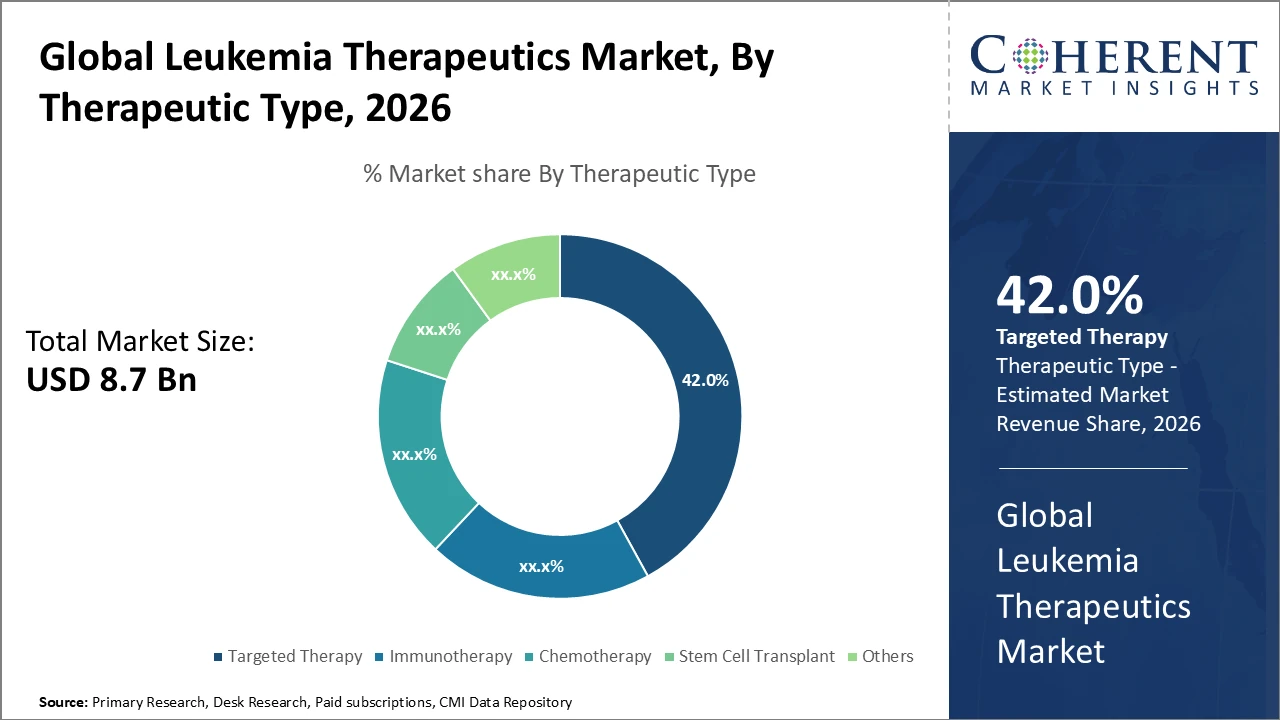
The Targeted Therapy segment leads in terms of market share, commanding approximately 42% of the leukemia therapeutics market revenue, driven by breakthroughs in molecularly targeted agents addressing genetic mutations prevalent in AML and CML subtypes.
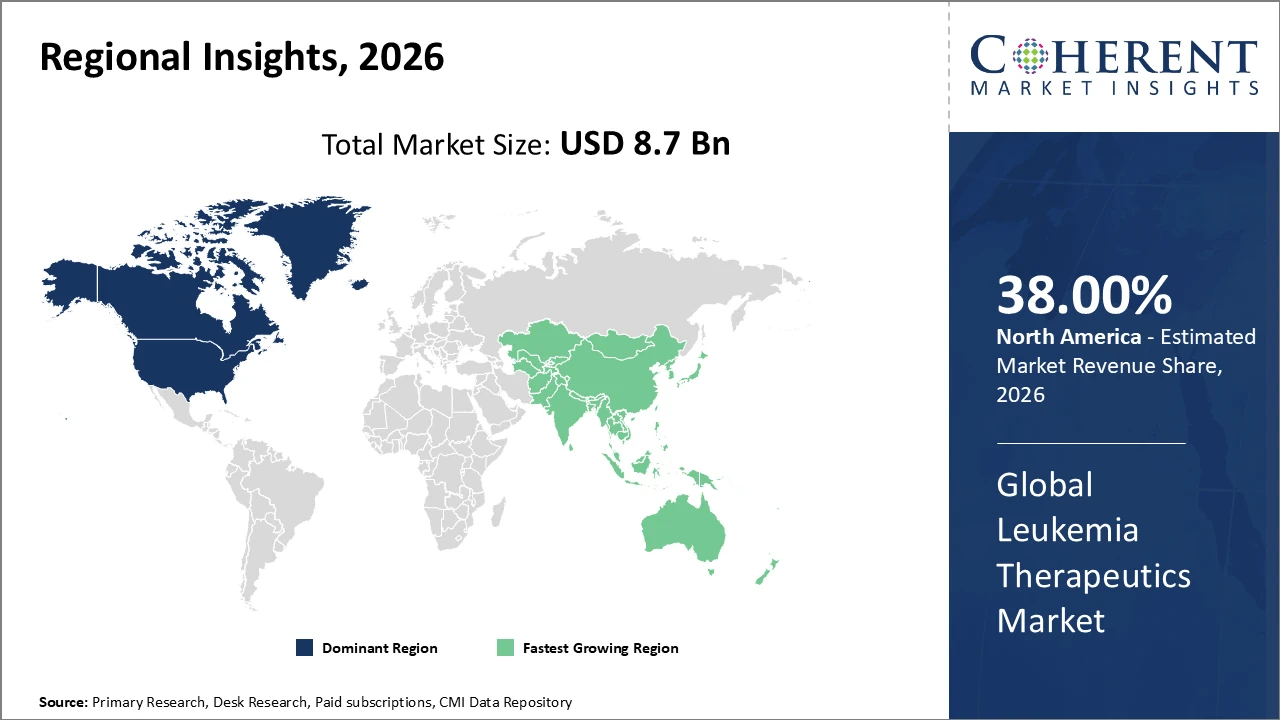
North America dominates the leukemia therapeutics industry share with over 38% market revenue, attributed to robust R&D infrastructure, favorable reimbursement policies, and concentration of leading market companies.
Asia Pacific represents the fastest-growing region with a CAGR surpassing 11%, driven by improved healthcare access, escalating leukemia incidence, and government-backed innovation hubs enhancing business growth trajectories.
Leukemia Therapeutics Market Segmentation Analysis
To learn more about this report, Request Free Sample
Leukemia Therapeutics Market Insights, By Therapeutic Type
Targeted therapy dominates the leukemia therapeutics market due to its ability to precisely target genetic abnormalities such as FLT3 and BCR-ABL, accounting for over 42% of the total market share. Continuous research and development have improved the effectiveness of tyrosine kinase inhibitors, enhancing patient survival outcomes. Immunotherapy is the fastest-growing segment, supported by innovations like CAR-T and BiTE therapies that show strong efficacy in refractory leukemia cases. Chemotherapy remains a widely used foundational treatment, although its share is gradually declining with the rise of targeted and immune-based therapies. Stem cell transplantation continues to be an important curative option for select patients, while emerging therapies such as monoclonal antibodies are under development.
Leukemia Therapeutics Market Insights, By Leukemia Type
Acute Lymphoblastic Leukemia (ALL) dominates the leukemia therapeutics market due to its high incidence in pediatric populations and the availability of expanding treatment options, including multi-targeted protocols and immunotherapies. This segment accounts for nearly 30% of the total market revenue, supported by improved diagnostic technologies that enable earlier detection and treatment. Acute Myeloid Leukemia (AML) is the fastest-growing segment, driven by advancements in targeted therapies addressing genetic mutations such as IDH1 and IDH2, leading to higher clinical adoption. Chronic Myeloid Leukemia (CML) maintains a stable presence due to long-term use of BCR-ABL inhibitors. Chronic Lymphocytic Leukemia (CLL) shows moderate growth with oral targeted therapies.
Leukemia Therapeutics Market Insights, By End-User
Hospitals dominate the leukemia therapeutics market, accounting for approximately 54% of the total market share due to their advanced oncology infrastructure and ability to administer complex treatments such as CAR-T cell therapy and stem cell transplantation. Their dominance is further supported by increasing investments in healthcare infrastructure and integrated care models that improve patient outcomes. Specialty clinics represent the fastest-growing segment as outpatient therapies become more common and specialized leukemia care expands, offering cost-effective and convenient treatment options. Ambulatory surgical centers maintain steady importance through procedural interventions and outpatient hematology services. Other settings, including home care and telehealth platforms, support remote monitoring and follow-up care for leukemia patients.
Leukemia Therapeutics Market Trends
The leukemia therapeutics landscape is experiencing significant growth due to rapid advancements in immunotherapy modalities, particularly CAR-T and BiTE therapies, which have recorded consistent double-digit growth since 2024.
These treatments have transformed refractory leukemia management, with clinical trials reporting remission rates exceeding 70% in acute lymphoblastic leukemia cases by 2026.
Digital transformation through precision diagnostics and integration of real-world patient data is improving treatment personalization, enhancing treatment efficacy and reducing adverse events.
The Asia Pacific region is witnessing strong expansion driven by increasing leukemia incidence and stronger government investment in healthcare infrastructure.
Countries such as China and India are emerging as important clinical trial hubs, supporting market expansion and accelerating therapeutic innovation.
Leukemia Therapeutics Market Insights, By Geography
To learn more about this report, Request Free Sample
North America Leukemia Therapeutics Market Analysis and Trends
North America holds a dominant position in the leukemia therapeutics market, accounting for over 38% of the global market share. This leadership is supported by a well-established pharmaceutical and biotechnology ecosystem, strong research and development investments, and advanced healthcare infrastructure. The presence of major pharmaceutical companies in the United States accelerates the development and adoption of innovative therapies, including targeted treatments and immunotherapies. Supportive regulatory frameworks and government funding for cancer research further contribute to market growth. Additionally, improved patient access to advanced treatment options and ongoing clinical trials continue to strengthen the region’s position in the global leukemia therapeutics market.
Asia Pacific Leukemia Therapeutics Market Analysis and Trends
Asia Pacific is the fastest-growing region in the leukemia therapeutics market, with a CAGR exceeding 11%, driven by expanding healthcare infrastructure, increasing leukemia prevalence, and government initiatives supporting biotechnology and pharmaceutical innovation. The region benefits from rising investments in hospitals, specialty clinics, and diagnostic facilities, improving patient access to advanced therapies. Growing clinical trial activity and strategic collaborations between local and multinational companies facilitate technology transfer, accelerate drug development, and enhance market penetration. Countries such as China, India, and Japan are emerging as key hubs for research, clinical trials, and therapeutic adoption, further strengthening the region’s position in the global leukemia therapeutics landscape.
Leukemia Therapeutics Market Outlook for Key Countries
USA Leukemia Therapeutics Market Analysis and Trends
The U.S. leukemia therapeutics market plays a pivotal role in shaping global trends, driven by a large patient population and a strong emphasis on innovation. Between 2024 and 2026, CAR-T therapy utilization increased by 28%, leading to improved survival rates and better outcomes for aggressive leukemia types. Regulatory reforms, including the 21st Century Cures Act, have facilitated faster approvals, benefiting major market players such as Novartis and Gilead Sciences. Well-established reimbursement mechanisms further enhance patient access to advanced therapies, supporting robust revenue generation and sustaining long-term growth in the U.S. leukemia therapeutics market.
Germany Leukemia Therapeutics Market Analysis and Trends
Germany’s leukemia therapeutics market is a key hub in Europe, supported by progressive healthcare policies and expanding clinical research initiatives. The 2025 implementation of joint health technology assessments shortened drug approval timelines by 15%, enabling earlier market entry for innovative therapies. Collaboration between leading German pharmaceutical companies and local biotech startups has strengthened research and development, particularly in targeted therapy segments. Additionally, Germany’s aging population and relatively high leukemia incidence drive increasing demand for effective treatments. These factors collectively contribute to the country’s expanding market scope, positioning Germany as a central player in the European leukemia therapeutics landscape and fostering continued industry growth.
Analyst Opinion
Precision Medicine Adoption: The surge in adoption of precision medicine approaches is critically reshaping leukemia therapeutics. By 2025, nearly 45% of leukemia treatment protocols integrated precision targeted therapies, contributing to improved remission rates. For instance, therapies targeting the BCR-ABL fusion gene demonstrated a 20% higher survival rate in chronic myeloid leukemia patients in 2024, according to recent patient registry data.
Immunotherapy Advances: CAR-T cell therapies are driving a substantial share of market revenue, with over 1,200 patients treated in North America alone in 2026, marking a 35% year-over-year increase from 2024. The pricing premium commanded by these therapies reflects their high efficacy against previously refractory leukemia cases, adding significant growth momentum for market players focused on cell-based innovations.
Expanding Pediatric Segment Demand: Pediatric leukemia therapeutics witnessed a 12% rise in protocol adoption between 2024 and 2026, reflecting growing focus on improving survival outcomes in younger populations. Pediatric acute lymphoblastic leukemia (ALL) treatments alone contributed approximately 18% to the overall leukemia therapeutics market share in 2026, indicating substantial demand from this demographic.
Market Access and Reimbursement Trends: Governments and healthcare agencies across Europe and North America introduced streamlined reimbursement frameworks in 2025, expediting patient access to novel leukemia therapies. For example, the FDA’s priority review vouchers and joint health technology assessments in Germany shortened market entry timelines, inducing faster revenue realization for therapeutics launched post-2024.
Market Scope
| Report Coverage | Details | ||
|---|---|---|---|
| Base Year: | 2025 | Market Size in 2026: | USD 8.7 billion |
| Historical Data for: | 2020 To 2024 | Forecast Period: | 2026 To 2033 |
| Forecast Period 2026 to 2033 CAGR: | 9.3% | 2033 Value Projection: | USD 16.4 billion |
| Geographies covered: |
|
||
| Segments covered: |
|
||
| Companies covered: | Novartis AG, Pfizer Inc., Johnson & Johnson, Amgen Inc., Kite Pharma, CSL Behring, Sanofi S.A., Incyte Corporation, Celgene Corporation, Astellas Pharma Inc. | ||
| Growth Drivers: |
|
||
Uncover macros and micros vetted on 75+ parameters: Get instant access to report
Leukemia Therapeutics Market Growth Factors
Advancements in molecular diagnostics, which allow for earlier and more accurate identification of leukemia subtypes, are significantly driving market growth, with diagnostic precision improving by approximately 30% since 2024. Rising leukemia incidence, particularly among aging populations, is expanding the patient pool and increasing demand for therapeutics. Government funding and incentives for research and development in hematological cancers grew by 18% between 2024 and 2026, fueling innovation in drug discovery and development. Additionally, the adoption of personalized medicine approaches, combined with strengthened healthcare infrastructure in emerging economies, is further supporting market expansion and driving revenue growth in the leukemia therapeutics sector.
Leukemia Therapeutics Market Development
In December 2025, Quetzal Therapeutics initiated a global, multicenter, randomized Phase III trial of QTX-2101, an oral arsenic trioxide capsule, for newly diagnosed acute promyelocytic leukemia. The study will compare QTX-2101 with standard-of-care therapy and builds on Phase I pharmacokinetic and safety data from the U.S.
Key Players
Leading Companies of the Market
Novartis AG
Pfizer Inc.
Johnson & Johnson
Amgen Inc.
Sanofi S.A.
CSL Behring
Kite Pharma
Incyte Corporation
Celgene Corporation
Astellas Pharma Inc.
Several leading companies in the leukemia therapeutics market have pursued aggressive growth strategies, including strategic partnerships and acquisitions, to strengthen their market presence. In 2025, Novartis acquired a CAR-T focused biotechnology firm, which expanded its treatment portfolio and resulted in a 25% increase in leukemia segment revenue within a year. Similarly, Gilead collaborated with academic institutions to accelerate clinical trials for novel immunotherapies, leading to a more robust market pipeline and a growth of over 15% in 2026. These initiatives highlight the emphasis on innovation and strategic alliances to drive market expansion.
Leukemia Therapeutics Market Future Outlook
The future outlook for the leukemia therapeutics market is highly promising, driven by continued advancements in targeted therapies, immunotherapies, and personalized medicine approaches. Emerging modalities such as next-generation CAR-T, BiTE therapies, and precision gene editing are expected to expand treatment options and improve patient outcomes. Increasing adoption of molecular diagnostics and real-world data integration will enable earlier and more accurate intervention, enhancing efficacy and safety. Growing investments in R&D, supportive government policies, and expansion of healthcare infrastructure in emerging markets will further fuel market growth. Overall, the market is poised for sustained innovation, revenue expansion, and broader global accessibility in the coming decade.
Leukemia Therapeutics Market Historical Analysis
The historical analysis of the leukemia therapeutics market shows steady growth driven by advancements in chemotherapy, targeted therapies, and early immunotherapy approaches. Between 2015 and 2023, the market expanded as novel drugs addressing specific genetic mutations, such as BCR-ABL and FLT3 inhibitors, gained approval, improving survival outcomes for patients with AML, CML, and ALL. The emergence of CAR-T and BiTE therapies in clinical trials marked a shift toward precision and immune-based treatments. Investments in R&D, improved diagnostic capabilities, and increasing awareness of leukemia treatment options contributed to consistent revenue growth, laying a strong foundation for future market expansion.
Sources
Primary Research Interviews:
Hospitals, oncology centers, and specialty leukemia clinics
Hematology and stem cell transplant units
Pharmaceutical and biotech companies developing leukemia therapies
Research laboratories and academic institutions focused on hematological cancers
Clinical trial investigators and medical oncology specialists
Magazines:
Cancer Therapy Advisor – Leukemia & Hematology Updates
Medical Device & Diagnostic Industry (MD+DI) – Oncology Devices
HealthTech Magazine – Hematology and Cancer Care
Oncology Times – Leukemia Clinical Developments
Journals:
Blood – American Society of Hematology Journal
Leukemia – International Leukemia Research Journal
Journal of Clinical Oncology – Hematology and Leukemia Studies
Cancer Medicine – Hematological Cancer Research
Newspapers:
The Wall Street Journal – Healthcare & Oncology
Financial Times – Pharmaceutical and Biotech Insights
Reuters – Healthcare, Biopharma, and Oncology
Bloomberg – Medical and Oncology Market Coverage
Nikkei Asia – Biotech and Healthcare Innovations
Associations:
American Society of Hematology (ASH)
European Hematology Association (EHA)
International Society for Cellular Therapy (ISCT)
National Cancer Institute (NCI) – Leukemia Research & Guidelines
Share
Share
Abhijeet Kale is a results-driven management consultant with five years of specialized experience in the biotech and clinical diagnostics sectors. With a strong background in scientific research and business strategy, Abhijeet helps organizations identify potential revenue pockets, and in turn helping clients with market entry strategies. He assists clients in developing robust strategies for navigating FDA and EMA requirements.

Credibility and Certifications

860519526

9001:2015
27001:2022

Need a Custom Report?
We can customize every report - free of charge - including purchasing stand-alone sections or country-level reports
Customize NowJoining thousands of companies around the world committed to making the Excellent Business Solutions.
View All Our Clients